
数字化发展

Search documents
博瑞传播:暂无IP谷子经济业务,围绕智慧管理、数字文创、现代传播三大方向推动数字化发展
Sou Hu Cai Jing· 2025-12-11 09:58
Core Viewpoint - The company, BoRui Communication, currently does not have any business related to IP agricultural economy and is focusing on three main directions: smart management, digital cultural creation, and modern communication to promote digital and in-depth development of its business [1] Group 1 - Investors inquired about the company's involvement in IP agricultural economy [1] - The company confirmed that it does not have any IP agricultural economy business at this time [1] - The company is concentrating on advancing its operations in digitalization and depth development [1]

中巴科技创新中心落户巴西里约联邦大学
Ren Min Ri Bao· 2025-12-10 20:48
Group 1 - The China-Brazil Technology Innovation Center has been officially launched at the Federal University of Rio de Janeiro, aimed at promoting green low-carbon energy transition and digital development [1][2] - The center is a significant initiative for deepening cooperation between Chinese and Brazilian enterprises and universities, expected to serve as a platform for talent cultivation, innovation results, and industrial upgrading [1] - The center will focus on key technology development paths for clean development of traditional energy and efficient utilization of renewable energy, with a goal of green low-carbon development [1][2] Group 2 - The center is positioned as "technology innovation driving energy cooperation," focusing on cutting-edge technology research and results transformation in the energy sector [2] - The collaboration involves four parties: China National Offshore Oil Corporation, China University of Petroleum (Beijing), Petrobras (Brazilian National Oil Company), and the Federal University of Rio de Janeiro [2] - The center aims to build a bridge for technical exchange and a platform for sharing results among researchers from both countries, transforming research advantages into industrial competitiveness [1]
侯安贵会见法孚集团董事会主席兼总裁弗雷德里克·桑切斯
Xin Lang Cai Jing· 2025-12-05 12:49
Core Viewpoint - The meeting between Baowu's General Manager Hou Angui and Voestalpine's Chairman and CEO Friedrich Santner focused on collaboration in metallurgy equipment, technological innovation, green low-carbon transformation, and digital development in the steel industry [1][7]. Group 1: Company Developments - Baowu and Voestalpine shared updates on their respective business developments and reviewed their past cooperation [4][10]. - Both companies expressed their commitment to deepen strategic cooperation based on long-term friendly relations [4][10]. Group 2: Strategic Initiatives - The two companies aim to expand cooperation areas and innovate collaboration models [4][10]. - There is a focus on strengthening metallurgy equipment and technological innovation to promote green low-carbon transformation and digital development in the steel industry [4][10].


加快推进数字长沙建设专题研讨班开班
Chang Sha Wan Bao· 2025-11-25 04:02
Core Insights - The seminar on accelerating the construction of Digital Changsha was launched on November 24, focusing on the digital economy theme and aiming to build a strong consensus for advancing Digital Changsha [1] Group 1: Seminar Details - The training lasts for five days and includes a systematic review of the evolution and core principles of the Digital China strategy [1] - Wang Jin, Deputy Director of the Provincial Data Bureau, provided insights into Hunan Province's innovative practices in smart governance and the digital economy [1] Group 2: Objectives and Expectations - Vice Mayor Qian Lixia emphasized the importance of adapting to the rapid updates in digital knowledge and encouraged participants to become experts in digital development [1] - Participants are urged to break conventional thinking and explore data sharing, scenario innovation, and management reform [1] - The goal is to translate learning outcomes into actionable strategies to ensure the effective implementation of tasks related to Digital Changsha [1]
祥和实业20251121
2025-11-24 01:46
Summary of Conference Call for Xianghe Industrial and Hezhixiang Company Industry and Company Overview - The conference call discusses Xianghe Industrial and its investment in Hezhixiang Company, focusing on the advancements in modified polytetrafluoroethylene (PTFE) technology and its applications in various high-end industries such as aerospace and nuclear power [2][3][31]. Core Points and Arguments Technological Advancements - Hezhixiang's irradiation-modified PTFE technology addresses issues of creep, porosity, and wear resistance found in traditional PTFE, making it irreplaceable in the chemical industry [2][4]. - The technology transforms the lamellar structure of PTFE into a spherulitic structure, significantly enhancing wear resistance and creep resistance, with some products outperforming high-end 1,700 series products available in the market [2][5]. - The modified domestic materials have shown performance exceeding that of imported materials, such as 3M's 1,700 series, despite a higher initial pricing acceptance period [2][8]. Market Position and Competitive Advantage - There is currently no domestic or global competitor capable of achieving a thousand-ton level of industrial production for this technology, providing Hezhixiang with a clear competitive advantage [6]. - The company has received positive feedback from both domestic and international markets, with applications in high-end fields like nuclear power and aerospace [6][12]. - Hezhixiang is actively competing with international giants like Saint-Gobain and John Crane by offering comprehensive system solutions rather than just individual materials [9][31]. Strategic Partnerships and Collaborations - Hezhixiang has established collaborations with companies such as Sanhua and Geely for testing and joint development agreements in the electronic expansion valve sector [12]. - The company is also working with Xi'an Jiaotong University and other partners to develop products for hydrogen compressors and nuclear applications [13]. Future Development and Market Expansion - The company aims to expand its production capacity significantly, with plans for a new production line expected to be operational by late 2027 or early 2028, which will enhance its output to 600 tons annually [25]. - Hezhixiang is targeting high-end markets, including mechanical dry friction, electronic expansion valves, and nuclear power pumps, while also exploring emerging applications in robotics and rail systems [16][28]. Additional Important Insights - The annual usage of electronic expansion valves is estimated to be between 20 million to 40 million units, with material costs being a minor component of the overall expense [17]. - The company is developing a new version of PTFE that could replace many existing applications and partially substitute PEEK applications, focusing on sectors with strong domestic demand for alternatives to imported materials [26][28]. - Hezhixiang's pricing strategy positions its products competitively against PEEK materials, with modified products priced between 400,000 to 600,000 yuan per ton [29][22]. Conclusion - The investment by Xianghe Industrial in Hezhixiang is a strategic move aimed at diversifying into high polymer material applications, enhancing the overall scale and quality of the listed company while addressing the growing demand for domestic alternatives in high-tech industries [31].

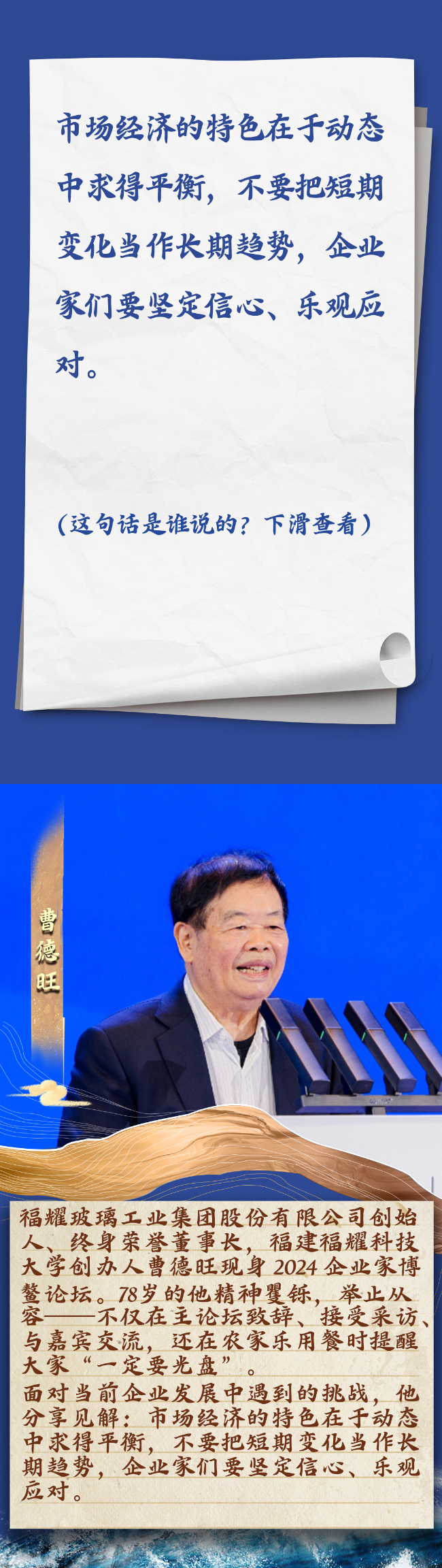
这些穿越时空的大咖观点,每一条都干货满满!
Zhong Guo Zheng Quan Bao· 2025-11-21 06:48
Group 1 - The Boao Forum for Entrepreneurs celebrates its 10th anniversary, highlighting voices that predict the future of China's high-quality economic development [1] - The forum features insights from various entrepreneurs, emphasizing the importance of maintaining a long-term perspective rather than focusing on short-term gains [4][7] - The event showcases the need for innovation and adaptation in the face of industry challenges, particularly in sectors like automotive and technology [17][38] Group 2 - Entrepreneurs are encouraged to embrace social responsibility and avoid short-sighted profit motives, as this can lead to market rejection [7][4] - The automotive industry is undergoing significant changes, with a focus on younger demographics and the integration of new technologies [17][41] - Continuous innovation is deemed essential for product upgrades and industry transformation, which is crucial for achieving high-quality development [20][18] Group 3 - The importance of nurturing talent is highlighted, as it is seen as the core of technological advancement and economic growth [50][48] - Entrepreneurs are urged to have a sense of national responsibility, contributing to society while developing their businesses [54][52] - The future of China's technological development is expected to be driven by AI, new energy technologies, and electric vehicles [58][61]
渤海证券研究所晨会纪要(2025.11.11)-20251111
BOHAI SECURITIES· 2025-11-11 01:29
Macro and Strategy Research - In October 2025, China's exports decreased by 1.1% year-on-year, while imports increased by 1.0%, resulting in a trade surplus of 90.074 billion USD [2][3] - The decline in export growth is attributed to high base effects and seasonal factors, but the overall decrease is considered manageable [2] - Looking ahead, the easing of US-China trade tensions and stable global manufacturing PMI suggest that export uncertainties have significantly reduced [3] Price Data Analysis - In October 2025, the Consumer Price Index (CPI) turned positive with a notable increase driven by rising food prices and core inflation influenced by international gold prices [4][5] - The Producer Price Index (PPI) saw a narrowing year-on-year decline, with improvements in key industries such as coal and photovoltaic equipment due to ongoing capacity management [5][6] Fund Research - The equity market saw most major indices rise, with the Shanghai Composite Index increasing by 1.08% [7] - Bond ETF scales reached new highs, indicating strong investor interest in fixed-income products [7][8] - The average return for equity funds was positive, with quantitative funds leading the gains [8] Industry Research - The light industry and textile sectors are under pressure from export declines, with furniture and clothing exports down by 12.66% and 15.96% respectively in October [11][12] - New government policies aimed at accelerating digital transformation are expected to enhance the competitiveness of these sectors in the medium term [11] - The computer industry reported a revenue of 935.835 billion CNY in the first three quarters of 2025, with a year-on-year growth of 9.14%, driven by strong performance in software development and IT services [13][14]
中国消费品企业大举进入巴西市场
日经中文网· 2025-11-06 02:26
Core Insights - Chinese consumer brands are increasingly entering the Brazilian market, with a focus on low prices and high performance, as exemplified by companies like Mixue Ice City, BYD, Meituan, and Didi [2][6][10] - The Brazilian market is seen as a promising emerging market due to its large population of over 200 million and a growing middle class with strong consumption desires [6][10] Group 1: Mixue Ice City - Mixue Ice City has signed a memorandum with the Brazilian government to create approximately 25,000 jobs and plans to invest 3.2 billion reais (about 4.235 billion yuan) by 2030 [4] - The company aims to open its first store in São Paulo by the end of 2025, with preparations underway in a shopping center [4] - Mixue Ice City has grown to over 47,500 stores globally, surpassing McDonald's in scale, and is now targeting Brazil as a new market [2] Group 2: Other Chinese Brands - Meituan's overseas brand "Keeta" is set to invest 5.6 billion reais in the next five years, starting its services in the suburbs of São Paulo [5] - Didi is rapidly expanding its food delivery service in Brazil, planning to invest 2 billion reais, which is double its original plan, by 2026 [6] - The increasing presence of Chinese brands in Brazil is supported by the strengthening political ties between China and Brazil, which enhances the investment environment [6][10] Group 3: Consumer Perception - A survey in Brazil revealed that over 60% of respondents prefer Chinese products in the mobile and personal computer sectors, surpassing the preference for American products [9] - BYD has significantly increased its market share in Brazil, accounting for about 70% of the electric vehicle sales, reflecting a shift in consumer perception towards Chinese technology [9] - The perception of Chinese brands as offering "low prices and high performance" is becoming more entrenched among Brazilian consumers [9]



宁波银行2025年三季报:营收净利双增长,资产总额突破3.5万亿元
Mei Ri Jing Ji Xin Wen· 2025-10-28 13:07
Core Viewpoint - Ningbo Bank has demonstrated steady growth in its operations, with significant increases in revenue and net profit, while maintaining high asset quality and a low non-performing loan ratio [1][5]. Financial Performance - For the first three quarters of 2025, Ningbo Bank reported a revenue of 54.976 billion yuan and a net profit attributable to shareholders of 22.445 billion yuan, both showing an increase of over 8% year-on-year [1][3]. - The bank's total assets reached 3.578396 trillion yuan, marking a 14.50% increase from the beginning of the year [2]. - The average return on equity for the bank was 13.81% [3]. Asset Quality - As of the end of September, the non-performing loan ratio stood at 0.76%, maintaining a record of being below 1% for 18 consecutive years [5][6]. - The provision coverage ratio was 375.92%, indicating strong risk mitigation capabilities [5]. Loan and Deposit Growth - Total loans and advances amounted to 1.716823 trillion yuan, reflecting a growth of 16.31% since the start of the year [2]. - Total deposits reached 2.047804 trillion yuan, with an increase of 11.52% year-to-date [2]. Profitability and Efficiency - The bank's net interest margin remained resilient at 1.76%, consistent with the previous half-year [4]. - The cost-to-income ratio improved to 30.68%, a decrease of 2.75 percentage points year-on-year, indicating enhanced operational efficiency [4]. Strategic Focus - Ningbo Bank continues to focus on supporting the real economy, particularly in sectors like technology innovation and advanced manufacturing [2][6]. - The bank is committed to a diversified profit structure, with multiple profit centers across various financial services [3].

资产质量持续改善 宁波银行前三季度拨备覆盖率375.92%
Quan Jing Wang· 2025-10-28 07:37
Core Insights - Ningbo Bank's Q3 2025 report shows steady revenue growth, improved asset quality, and stable non-performing loan ratio, indicating resilience in a challenging economic environment [1][2] Financial Performance - For the first nine months of 2025, Ningbo Bank achieved a net profit of 22.445 billion yuan, an increase of 8.39% year-on-year, and operating revenue of 54.976 billion yuan, up 8.32% year-on-year [2] - The annualized weighted average return on equity stands at 13.81% [2] Asset and Loan Growth - As of September 30, 2025, total assets reached 357.8396 billion yuan, a 14.50% increase from the beginning of the year; total loans and advances amounted to 171.6823 billion yuan, up 16.31% year-on-year; total deposits were 204.7804 billion yuan, reflecting an 11.52% increase [1] Risk Management - The bank maintains a non-performing loan ratio of 0.76%, unchanged from the beginning of the year, with a provision coverage ratio of 375.92%, indicating strong risk mitigation capabilities [2] - The bank emphasizes a comprehensive risk management system to safeguard against potential risks in a volatile economic landscape [2] Business Strategy - Ningbo Bank focuses on supporting the real economy, particularly in sectors like small and micro enterprises, manufacturing, and import-export businesses, which has driven public loan growth [1] - The bank operates nine profit centers, including corporate banking, retail banking, and wealth management, enhancing its sustainable development capacity [1]