数字生态

Search documents
补贴催化、数字赋能、供给升级:建行书写促消费“新方程”
华尔街见闻· 2025-11-11 05:59
Core Viewpoint - The article highlights how China Construction Bank (CCB) is leveraging financial tools to stimulate consumer spending through targeted subsidies, digital ecosystems, and supply-side innovations, effectively connecting various consumer scenarios across the country [1][2]. Group 1: Consumer Stimulus through Subsidies - CCB initiated a consumer finance campaign themed "Boosting Consumption and Expanding Domestic Demand" at the beginning of the year, combining supply optimization with demand expansion [1]. - As of September, CCB's personal consumer loan balance reached 645.8 billion yuan, with new loans exceeding 100 billion yuan, leading the industry in both balance and new loans [1][2]. - The "Su Xin Consumption" platform has served nearly 14 million consumers and connected approximately 6,000 home appliance companies, significantly enhancing consumer purchasing power [7][8]. Group 2: Digital Ecosystem Integration - CCB's digital initiatives, such as the "One Mobile Phone to Shop" platform, have facilitated the digital transformation of markets, improving operational efficiency and expanding online sales channels [10][13]. - The platform has attracted over 27,000 merchants and facilitated transactions exceeding 3.87 billion yuan, demonstrating the effectiveness of digital tools in driving consumer engagement [13]. - The integration of financial services with government subsidies has maximized the impact of consumer stimulus policies, with over 900,000 customers signing up for fiscal subsidy agreements [8][13]. Group 3: Supply-Side Empowerment - CCB emphasizes the importance of optimizing supply to activate consumer demand, focusing on sectors like tourism, culture, sports, health, education, and elderly care for credit support [15][19]. - The successful opening of the Lego Park in Shanghai, supported by CCB's long-term financial partnership, illustrates the bank's role in enhancing consumer experiences through financial backing [16][17]. - CCB's support for innovative companies, such as providing 10 million yuan to a robotics firm, showcases its commitment to fostering industry growth and consumer interest through targeted financial solutions [18][19].


666!鸿蒙操作系统的“关键一跃”
Nan Fang Du Shi Bao· 2025-10-22 13:20
Core Insights - HarmonyOS 6 represents a significant evolution in China's digital ecosystem, transitioning from basic adaptation to innovative breakthroughs, enhancing both ecological collaboration and intelligent user experiences [3][4] - The operating system has achieved a remarkable growth trajectory, with over 23 million devices activated, marking it as one of the fastest-growing operating systems globally [4][5] - HarmonyOS 6 introduces a new intelligent framework that allows third-party applications to upgrade their capabilities, enhancing user interaction and experience [12][13] Group 1: Ecosystem Development - HarmonyOS has grown from 0 to over 23 million devices in just a few years, with the activation rate accelerating significantly, indicating a robust user adoption [4][5] - The operating system has captured a 17% market share in China's smartphone market, establishing itself as the second-largest operating system domestically [5] - The ecosystem is evolving from mere compatibility to co-creation, with major applications like WeChat and Alipay fully integrating with HarmonyOS 6 [13][9] Group 2: Technological Advancements - HarmonyOS 6 introduces the Harmony Intelligent Agent Framework, enabling over 80 intelligent applications to provide enhanced user experiences across various daily activities [12][9] - The system supports cross-device collaboration, allowing seamless sharing and interaction between devices, significantly improving user convenience [9][12] - AI capabilities have been integrated into native applications, allowing users to perform complex tasks using natural language, thus enhancing the overall functionality of the operating system [15][17] Group 3: Future Goals and Challenges - The company aims to achieve 100,000 applications by 2025 as a marker of ecosystem maturity, with significant investments planned to reach this goal [15][17] - Despite the progress, challenges remain in achieving a fully mature ecosystem, as some applications still require refinement to enhance user experience [14][17] - The commitment to continuous improvement is evident, with user feedback being a crucial driver for the ongoing development of HarmonyOS [17]

一个平台“智”链三千余家企业
Liao Ning Ri Bao· 2025-10-21 01:09
Group 1 - Shenyang Flying Ship Digital Printing Equipment Co., Ltd. is developing a new generation of digital printing equipment aimed at the global high-end market, requiring high precision and the ability to withstand long-term high-speed operation [1] - The company faced challenges in finding suppliers that meet its precision requirements, leading to collaboration with the Shenyang Service Center, which quickly matched them with capable manufacturers [1] - The partnership with Shenyang Electric Power Equipment Manufacturing Co., Ltd. resulted in a significant reduction in collaboration time by nearly 40% and a substantial decrease in logistics costs [1] Group 2 - More enterprises in Liaoning are leveraging the national digital supply chain platform to reduce collaboration costs and enhance industry chain efficiency, with over 3,000 local companies connected to the platform [2] - The platform has facilitated the listing of nearly 300,000 digital products across key sectors, and some companies have achieved a 30% reduction in product design cycles and a 40% decrease in customer acquisition costs [2][3] - The Shenyang Service Center is evolving into a crucial hub for the national equipment manufacturing digital supply chain system, supported by the China Industrial Internet Research Institute [2] Group 3 - Northern Heavy Industries is focusing on digital upgrades through a dedicated "Northern Heavy Version" on the Shenyang Service Center, addressing challenges in supply chain efficiency and brand influence [3] - The introduction of a "Marking Integration Platform" aims to integrate and streamline the product lifecycle data chain, enhancing supply chain response speed by over 30% and reducing design change costs [3] - The platform's capabilities are expected to improve after-sales service efficiency and provide precise data support for product iteration and upgrades [3] Group 4 - The China Industrial Internet Research Institute aims to establish Shenyang as the first city-level service center, focusing on building a digital ecosystem that empowers regional industrial innovation [4] - Future plans include expanding local enterprise participation in the platform and creating replicable digital benchmark cases to strengthen the manufacturing supply chain in Shenyang and Northeast China [4]
【时代风口】 科技巨头为何大举收购传媒娱乐和社交平台资产
Zheng Quan Shi Bao· 2025-10-20 17:11
Core Insights - The acquisition of Paramount by David Ellison's SkyDance for $8 billion, with Larry Ellison contributing $6 billion, signifies a major consolidation in the media industry, potentially leading to the creation of a media empire that could dominate Hollywood [1] - This trend of tech giants acquiring media and social assets reflects a broader strategy aimed at enhancing content quality and integrating various aspects of the value chain [2][3] Group 1: Acquisition Trends - Tech giants are pursuing acquisitions in media and entertainment to gain access to high-quality content, which is crucial in the digital economy [2] - The acquisition of Paramount includes significant media assets such as CBS, Showtime, and Simon & Schuster, indicating a strategic move to consolidate content ownership [1] Group 2: Vertical Integration - The focus on vertical integration allows tech companies to internalize the entire value chain from content creation to distribution, enhancing operational efficiency and shifting value distribution towards ecosystem leaders [3] - This integration is reshaping the profit distribution landscape within the media and entertainment industry [3] Group 3: Data-Driven Empowerment - Tech giants leverage their technological advantages to enhance acquired assets through data analytics, improving content creation and marketing strategies [4] - For instance, Amazon utilizes user data to inform original content production, maximizing investment returns [4] Group 4: Strategic Transformation - Acquisitions enable tech companies to transition from being mere service providers to becoming comprehensive digital lifestyle operators, creating a holistic ecosystem for users [5] - The competitive landscape is evolving from product-based competition to ecosystem-based competition, raising barriers for new entrants [5][6]
济南| 济水之南新满目 大河万里入胸怀
Da Zhong Ri Bao· 2025-10-20 01:46
Core Insights - Jinan has experienced significant transformation and development over the past five years, particularly during the "14th Five-Year Plan" period, focusing on ecological protection and high-quality development in the Yellow River basin [1][2] - The establishment of the New and Old Kinetic Energy Conversion Pilot Zone has enabled Jinan to achieve its "northward expansion" goal, fostering new industrial growth and urban development [1][2] - Jinan's GDP is projected to reach 1.35 trillion yuan in 2024, marking a significant increase from previous years and positioning the city as a key center in the Yellow River basin [2][3] Economic Development - The New and Old Kinetic Energy Conversion Pilot Zone has developed three major industrial chains: new energy vehicles, general aviation, and new materials, contributing to a billion-level industry [2] - Jinan's industrial enterprises have seen substantial revenue growth, with the total revenue of industrial enterprises exceeding 1 trillion yuan for the first time in 2024 [2][6] - The city has implemented a three-year action plan to promote new industrialization, focusing on optimizing and upgrading its industrial structure [6][7] Infrastructure and Transportation - Jinan has invested significantly in transportation infrastructure, with 235 key projects expected to complete investments of 372.55 billion yuan during the "14th Five-Year Plan" period [3][4] - The city has developed a comprehensive transportation network, including high-speed rail and highways, enhancing connectivity with 366 cities nationwide [3][4] - The second phase of Jinan Airport's expansion is set to be completed next year, increasing its capacity to handle 55 million passengers and 520,000 tons of cargo annually [3][4] Innovation and Technology - Jinan has seen a doubling of high-tech enterprises since 2020, with a significant increase in patent ownership and technology contract transactions [8] - The city ranks 15th in the national urban innovation capability index and has established numerous research and innovation platforms [8] - The financial support for innovation has increased, with loans to tech enterprises rising significantly since the establishment of the national pilot zone for sci-tech finance [8] Quality of Life and Urban Development - Jinan has improved its living environment, with significant investments in public services, education, and healthcare, leading to a more livable city [9][10] - The city has constructed numerous parks and green spaces, contributing to better air quality and overall urban aesthetics [11] - Jinan's population has grown by 270,000 over the past four years, reflecting its attractiveness as a destination for talent and residents [11][12]
海南陵发投正式入股天地在线 共拓数字生态新局
Zheng Quan Shi Bao Wang· 2025-10-09 08:57
Core Viewpoint - Tian Di Online (002995) has successfully completed the transfer of shares to Hainan Lingfa Investment Co., Ltd., marking the introduction of a state-owned strategic shareholder [1] Group 1: Shareholder Changes - After the transaction, Lingfa Investment holds 6.97% of Tian Di Online's shares, becoming a significant strategic shareholder [1] - The original controlling shareholders, Xin Yi'an and Chen Hongxia, along with their concerted parties, retain a combined 47.46% stake, ensuring no change in control and stability in corporate governance [1] Group 2: Strategic Implications - Lingfa Investment, as a wholly-owned subsidiary of Hainan Lingshui Li Autonomous County Development Holding Group Co., Ltd., brings substantial industry resources and capital operation capabilities [1] - The strategic investment reflects confidence in Tian Di Online's prospects in digital marketing, metaverse, digital cultural tourism, and AI technology [1] - The partnership aims to leverage the benefits of Hainan Free Trade Port policies for regional market expansion and resource integration [1] Group 3: Future Collaboration - The completion of the share transfer marks a new starting point for strategic collaboration between Tian Di Online and Lingfa Investment [1] - Both parties will work together to accelerate the construction of an ecosystem integrating "technology + content + scenarios," enhancing innovation in digital technology applications across various sectors [1] - This collaboration is expected to strengthen the company's core competitiveness and profitability in the digital economy [1]

浙数文化:目前未涉及固态电池业务 清陶能源仅为公司间接参投项目
Zheng Quan Shi Bao Wang· 2025-10-09 08:05
Core Viewpoint - Zhejiang Shuju Culture (600633) has invested 7.7% in Shanghai Fengrui Venture Capital Center (Limited Partnership), which holds an 8.98% stake in Qingtao (Kunshan) Energy Development Group Co., Ltd. This investment is part of the company's strategy to enhance its digital ecosystem focused on "digital culture +, digital technology +, data operation +, and innovation track" [1] Group 1 - The company’s subsidiary, Dongfang Xingkong Venture Capital Co., Ltd., is a limited partner in the investment [1] - The investment in Qingtao Energy is an indirect investment project for the company [1] - The company has not yet engaged in solid-state battery business [1]

第四届数贸会主宾国开馆 数字创新成果亮相杭州
Mei Ri Shang Bao· 2025-09-25 22:17
Group 1 - Indonesia is a significant driver of digital economy growth in Southeast Asia, with substantial potential in e-commerce and fintech [2] - The Indonesian pavilion at the expo features 15 companies from sectors such as telecommunications, logistics, fintech, e-commerce, and economic zones, showcasing innovations in digital trade, logistics, finance, education, and sustainable development [2] - Indonesia is actively advancing the construction of its new capital, leading to increased demand in digital infrastructure, green energy, smart logistics, and innovative technologies [2] Group 2 - The UAE delegation at the expo includes 80 members, the largest representation in history, featuring ten leading companies and institutions in the digital trade sector [3] - The UAE pavilion showcases advancements in artificial intelligence, digital entertainment, cybersecurity, cloud services, smart logistics, and medical AI, highlighting the multifaceted achievements of the digital ecosystem [3] - The UAE aims to enhance its leading position in digital trade and services while fostering collaboration with China and other countries through this event [2][3]
激发消费新动能 金融“活水”润长春
Sou Hu Cai Jing· 2025-09-21 04:17
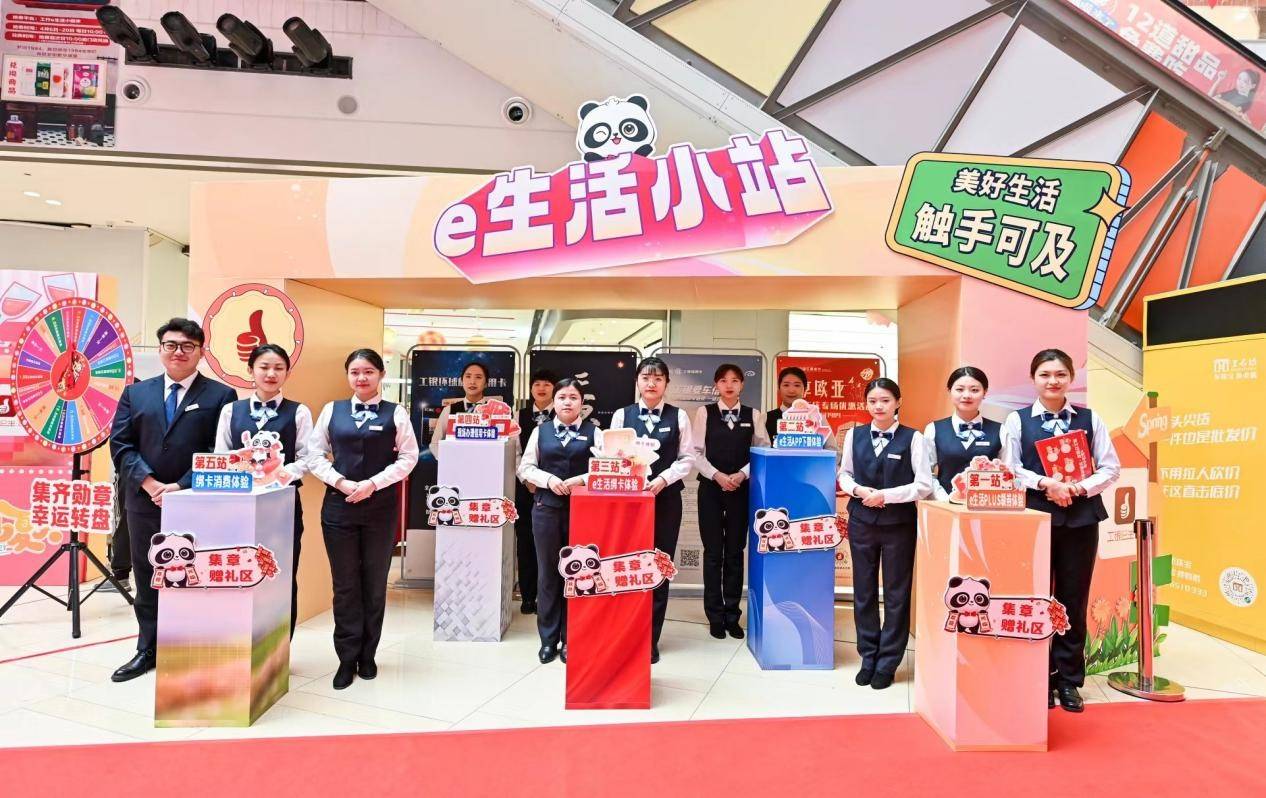
Core Insights - The Industrial and Commercial Bank of China (ICBC) Jilin Branch focuses on "people's livelihood first, consumption-driven" strategies to stimulate local economic growth, achieving over 12 billion yuan in consumer spending by mid-August [1][4][7] Group 1: Consumer Activation Strategies - ICBC Jilin Branch constructs an integrated service ecosystem of "consumption + payment + financing" to direct financial resources towards the consumption sector [2] - The bank enhances customer experience by embedding financial services into daily life through initiatives like "e-life stations" and promotional activities such as "1 yuan purchase" and "check-in gifts" [2][4] - The bank organizes themed marketing events throughout the year, offering exclusive credit card discounts during major holidays and responding to national consumption promotion policies with financing cost reductions [4] Group 2: Elderly Financial Services - The bank prioritizes "elderly finance" as a key area for serving the public, launching the first "smart canteen" project in Changchun to improve dining convenience for seniors [5] - This initiative reflects the bank's commitment to social responsibility and enhancing the quality of life for the elderly through digital payment solutions [5] Group 3: Digital Ecosystem Development - ICBC Jilin Branch actively implements digital transformation strategies to enhance payment ecosystems across various sectors, including retail, healthcare, automotive finance, and cultural tourism [7] - The bank aims to strengthen financial supply capabilities while focusing on stimulating consumer spending and developing elderly care services [7] - Future plans include providing more precise, intelligent, and warm financial services to support high-quality development in the Jilin region [7]

美方重建加沙计划被披露:欲控制该地区至少10年;巴基斯坦与亚美尼亚建交;多地公布七夕结婚登记数据
第一财经· 2025-09-01 00:46
Group 1 - Russian President Putin arrived in Tianjin to attend the 2025 SCO Summit, accompanied by a large delegation including three deputy prime ministers and numerous ministers [2] - The wedding registration data for the Qixi Festival shows a peak in registrations, with Shanghai reaching a ten-year high of 2,310 couples [3] - The manufacturing PMI rose to 49.4% in August, indicating a slight improvement in economic conditions [7] Group 2 - The U.S. is considering a plan to control the Gaza Strip for at least ten years, aiming to transform it into a tourism and manufacturing hub [4][5] - Pakistan and Armenia have established diplomatic relations, with discussions on cooperation in various sectors [6] - The Chinese film box office surpassed 40 billion yuan in 2025, with domestic box office reaching 39.23 billion yuan and over 909 million admissions [11] Group 3 - The China Automobile Dealers Association reported an inventory warning index of 57.0% for August, indicating a decline in the automotive circulation industry's prosperity [10] - The personal account mutual aid under employee medical insurance reached 231 million instances with a total amount of 30.457 billion yuan from January to July 2025 [8] - A total of 29 companies will have their restricted shares released this week, amounting to 2.013 billion shares with a total market value of approximately 18.877 billion yuan [27] Group 4 - The new group insurance products are being developed in Shanghai, focusing on expanding coverage for employees' family members and exploring risk-sharing mechanisms [32] - The upcoming IPO of Aifenda is set for September 1, with an issue price of 27.69 yuan per share [30][31]