新能源汽车产业

Search documents
【建议收藏】重磅!2025年厦门市新能源汽车产业链全景图谱(附产业政策、产业链现状图谱、产业资源空间布局、产业链发展规划)
Qian Zhan Wang· 2026-01-21 03:48
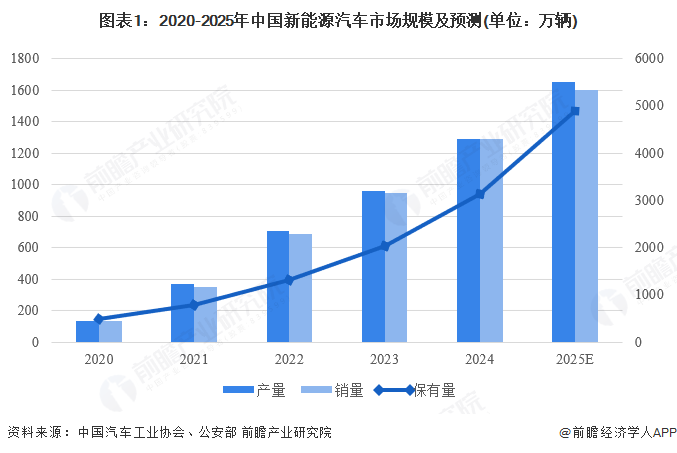
Core Insights - The article highlights the rapid growth and strategic importance of the new energy vehicle (NEV) industry in Xiamen, emphasizing its role in China's transition from a major automotive nation to a strong one, as well as its contribution to climate change mitigation and green development [1][6]. Industry Overview - The NEV industry in China has experienced explosive growth over the past five years, with production and sales increasing from approximately 1.36 million units in 2020 to over 12.8 million units in 2024, representing nearly a tenfold increase [1]. - By the end of 2025, it is projected that NEV production will exceed 16.5 million units, with sales reaching 16 million units and a total ownership of nearly 49 million vehicles [1]. Value Chain Distribution - The NEV value chain consists of upstream raw materials and components, midstream vehicle manufacturing, and downstream services including charging operations and battery recycling [2]. - Profit margins vary across the value chain, with automotive chips yielding the highest gross margins of 31%-38%, while electric drive components have the lowest margins of approximately 4%-15% [2]. Policy Environment - Xiamen's government has established a strategic framework for the NEV industry, aiming to create a "New Energy Commercial Vehicle Capital" and foster a trillion-yuan industry cluster [6]. - Key policies include the "Electric Xiamen" development plan (2023-2025), which outlines goals for vehicle electrification and infrastructure development [6][9]. Market Dynamics - Xiamen's NEV production increased from 0.83 million units in 2020 to 1.87 million units in 2022, with a projected recovery to 1.71 million units in 2024 [17]. - Sales surged from 0.1 million units in 2020 to 80,400 units in 2024, reflecting a twelvefold increase in consumer demand from 2021 to 2022 [17]. Industry Growth and Infrastructure - The number of registered NEV-related enterprises in Xiamen has steadily increased, reaching over 16,000 by November 2025, with a peak of 2,177 new registrations in 2024 [19]. - The charging infrastructure is critical for NEV adoption, with Xiamen planning to establish 16,000 charging stations by the end of 2025 [23]. Future Outlook - Xiamen's NEV industry is positioned for significant growth, supported by favorable policies, a comprehensive ecosystem, and expanding infrastructure [23]. - The city aims to enhance its NEV market by focusing on vehicle electrification, network construction, and ecological innovation, targeting a leading position in the national NEV commercial vehicle sector [23].

“两新政策”补贴汽车报废更新、置换更新,新能车ETF(515700)备受关注
Xin Lang Cai Jing· 2026-01-20 03:42
Core Viewpoint - The Chinese government is enhancing support for the new energy vehicle (NEV) industry through policy adjustments and financial measures, including the issuance of 625 billion yuan in special bonds to stimulate the sector [1][2]. Group 1: Policy and Financial Support - The National Development and Reform Commission has announced the "Two New Policies" for 2026, which aim to optimize support for the NEV sector, including subsidy standards and implementation mechanisms [1]. - The government plans to lower investment thresholds for project applications and increase support for small and medium-sized enterprises, thereby expanding the reach of these policies [1]. - A unified subsidy standard will be implemented nationwide for vehicle scrappage and replacement, as well as for various electronic products [1]. Group 2: Market Performance and Trends - As of December 2025, China's NEV sales reached 1.71 million units, with a market share exceeding 50%, indicating a sustained upward trend in the industry [2]. - The installed capacity of power batteries grew by 30.11% year-on-year, reflecting the industry's ongoing growth and resilience [2]. - The overall prices of upstream raw materials, including lithium carbonate and lithium hydroxide, have increased significantly, with expectations of short-term fluctuations [2]. Group 3: Index and ETF Information - The CSI New Energy Vehicle Industry Index (930997) includes 50 listed companies involved in various aspects of the NEV sector, serving as a benchmark for the industry's leading firms [2]. - The top ten weighted stocks in the index account for 54.65% of the total, with major players including BYD, CATL, and Huichuan Technology [2]. - The New Energy Vehicle ETF (515700) closely tracks the performance of the CSI New Energy Vehicle Industry Index [2].

12306务工人员春运预约购票服务上线|首席资讯日报
首席商业评论· 2026-01-18 04:41
Group 1 - The 12306 mobile app has launched a ticket reservation service for migrant workers for the 2026 Spring Festival, allowing verified workers to book tickets from February 2 to March 13, 2026 [2] - Capital Airport Group reported a 4.1% year-on-year increase in passenger throughput for 2025, reaching 223 million passengers, with Beijing's two airports seeing a 6.5% increase [3] - The Ministry of Industry and Information Technology announced a management approach for the recycling and comprehensive utilization of used power batteries from electric vehicles, indicating a potential market worth hundreds of billions [4] Group 2 - The resignation of Konka's president, Cao Shiping, was announced, with expectations that executives with China Resources backgrounds will take over [5] - Aikewai Technology has initiated A-share listing guidance, focusing on high-end chip design in wireless communication [6] - The China Passenger Car Association predicts a significant optimization in the structure of automobile exports by 2025, with a focus on leading companies and domestic brands [7] Group 3 - Starting February 1, the railway department will expand the "quiet carriage" service to more train types, enhancing passenger travel experience [8] - South Korea's trade minister stated that the impact of the US's 25% tariff on advanced computing chips will be limited for Korean companies, as the main products exported are not affected [9] - Huatai Securities reported that the State Grid's planned investment of 4 trillion yuan will benefit power grid equipment manufacturers [10] Group 4 - Harbin Yuyuantang has submitted an application for an IPO in Hong Kong, operating 48 self-owned medical institutions in northern China [11] - Shandong Huawutang Cosmetics has filed for an IPO in Hong Kong, projecting a 249.4% increase in adjusted net profit from 23.7 million yuan in 2023 to 82.8 million yuan in 2024 [12] - The founder of Duyuan Technology expressed ambitions to create a trillion-dollar company ecosystem, aiming to be among the first to achieve this milestone [13]


冰天雪地试车,“冷资源”有“热动力”
Xin Lang Cai Jing· 2026-01-18 04:03
Core Insights - The development of the cold-weather vehicle testing industry in Heihe, Heilongjiang Province, is transforming local economic conditions by attracting numerous automotive companies for winter performance testing [3][4] - The establishment of specialized testing facilities and improved services has positioned Heihe as a key player in the national automotive cold-weather testing market, with significant growth in both local employment and industry collaboration [4][5] Group 1: Industry Development - Heihe has become a vital location for automotive cold-weather testing, with 34 specialized testing bases and over 120 performance testing roads established to meet the increasing demand from automotive companies [4] - The city has formed partnerships with over 170 domestic and international companies, with 92 companies conducting tests this winter, involving more than 5,000 personnel and over 3,100 vehicles [4][6] Group 2: Economic Impact - The growth of the cold-weather testing industry has led to increased local employment, with residents earning additional income as testing assistants and in related automotive services [5][6] - The integration of testing events with tourism and sports has generated over 600 million yuan in revenue, further enhancing the local economy [6] Group 3: Future Prospects - The upcoming launch of a four-season low-temperature testing facility in September 2025 is expected to reduce the R&D cycle for automotive companies by 30% to 40%, making Heihe a year-round testing destination [4][7] - The local government aims to further develop extreme environment testing scenarios and enhance the infrastructure to support the growing automotive industry [7][8]

废旧动力电池回收迎新规 六部门划定全链条监管红线
Zheng Quan Shi Bao· 2026-01-16 17:47
Core Viewpoint - The Ministry of Industry and Information Technology, along with five other departments, has issued the "Interim Measures for the Management of Recycling and Comprehensive Utilization of Waste Power Batteries for New Energy Vehicles," which will take effect on April 1, 2026, aiming to establish a regulated and efficient recycling system for waste power batteries to support the high-quality development of the new energy vehicle industry [1][2]. Group 1: Regulatory Framework - The new management measures are a significant step in implementing the "Action Plan for Improving the Recycling and Utilization System of Power Batteries for New Energy Vehicles" [3]. - The measures emphasize a comprehensive supervision system to address the complexities and challenges in the recycling process, including the management of various sources of waste power batteries [4]. Group 2: Industry Development - The new energy vehicle industry in China is expected to see production and sales reach 16.626 million and 16.49 million units respectively by 2025, marking a year-on-year growth of 29% and 28.2%, with new energy vehicles accounting for 47.9% of total new car sales [2]. - The country is projected to enter a large-scale "retirement" phase for power batteries, with an estimated waste battery generation of over 1 million tons by 2030 [2]. Group 3: Recycling and Utilization - By 2025, the comprehensive utilization of waste power batteries in China is expected to exceed 400,000 tons, reflecting a year-on-year increase of 32.9%, with leading companies achieving international advanced levels in the recovery rates of lithium, cobalt, and nickel [2]. - The management measures will establish a nationwide information platform for tracking waste power batteries, including a digital identity system for batteries to enhance monitoring throughout their lifecycle [4]. Group 4: Quality and Safety Standards - The management measures will no longer use the concept of "cascade utilization," which has led to quality inconsistencies in recycled battery products, emphasizing that all battery products must meet quality standards for their intended applications [6]. - Violations of the new regulations regarding the recycling and utilization of waste batteries will result in administrative penalties, reinforcing the regulatory framework [4][6].
废旧动力电池回收迎新规六部门划定全链条监管红线
Zheng Quan Shi Bao· 2026-01-16 17:38
Core Viewpoint - The Ministry of Industry and Information Technology, along with five other departments, has issued the "Interim Measures for the Management of Recycling and Comprehensive Utilization of Used Power Batteries for New Energy Vehicles," which will take effect on April 1, 2026, aiming to establish a regulated, safe, and efficient recycling system for used power batteries to support the high-quality development of the new energy vehicle industry [1][2]. Group 1: Regulatory Framework - The new management measures are a significant step in implementing the "Action Plan for Improving the Recycling and Utilization System of Power Batteries for New Energy Vehicles" [3]. - The measures emphasize a comprehensive supervision system to address the complexities and challenges in the recycling process, including the management of various sources of used batteries [4]. - A nationwide information platform for tracking used power batteries will be established, incorporating a digital identity system for batteries to enhance monitoring and traceability [4]. Group 2: Industry Development - The new energy vehicle industry in China is experiencing rapid growth, with production and sales expected to reach 16.626 million and 16.49 million units respectively by 2025, marking year-on-year increases of 29% and 28.2% [2]. - The country is projected to enter a phase of large-scale retirement of power batteries, with an estimated generation of over 1 million tons of used batteries by 2030 [2]. - By 2025, the comprehensive utilization of used power batteries is expected to exceed 400,000 tons, reflecting a year-on-year growth of 32.9% [2]. Group 3: Environmental and Safety Considerations - The management measures will no longer recognize the concept of "cascade utilization," which has led to quality inconsistencies in recycled battery products [6]. - All battery products produced from used batteries must meet quality standards for their intended applications, ensuring safety for consumers [6]. - Regulatory bodies will enhance enforcement against illegal disposal and ensure that more used batteries are funneled into legitimate recycling channels [5].
进阶第一梯队,陕西汽车产业“换道超车”
Xin Lang Cai Jing· 2026-01-16 06:11
Core Viewpoint - The automotive industry in Shaanxi has significantly transformed, moving from 16th to 7th in national production rankings, with a strong focus on electric vehicles, which now account for over 63% of total production [2][15]. Industry Transformation - Shaanxi's automotive production increased from 342,000 units in 2015 to 1,576,000 units by November 2025, with a total industrial output value growth of 14.4% [14][20]. - The shift towards electric vehicles represents a strategic pivot, as traditional fuel vehicles were not competitive for Shaanxi [5][7]. Strategic Focus - Shaanxi's strategy involved deep partnerships with key players like BYD and Shaanxi Automobile, focusing on enhancing the entire supply chain rather than merely investing capital [9][11]. - The local government provided substantial support to these core enterprises, creating a robust industrial ecosystem [10][13]. Supply Chain Development - The local supply chain has reached a 57% self-sufficiency rate, indicating a strong foundation for sustainable growth in the electric vehicle sector [17][25]. - The strategy emphasizes the importance of local component manufacturing, which has led to a comprehensive industrial cluster around electric vehicles [18][20]. Export Growth - In 2024, Shaanxi's automotive exports reached 240,000 units, marking a 215% increase, with significant market share in Central Asia for heavy-duty trucks [23]. - The combination of electric vehicles, commercial vehicles, and the Belt and Road Initiative has created a unique competitive advantage for Shaanxi in international markets [23][24]. Long-term Vision - Shaanxi's approach to the electric vehicle industry is characterized by a long-term perspective, focusing on building a complete industrial system rather than just competing for immediate gains [24][26]. - The region's historical strengths in coal chemical, new materials, and power equipment provide a solid foundation for the upstream segments of the electric vehicle supply chain [25][26].

上汽集团2025年 归母净利润预增超430%
Zheng Quan Shi Bao· 2026-01-15 18:12
Core Viewpoint - SAIC Motor Corporation expects significant profit growth in 2025, driven by increased vehicle sales, particularly in the electric vehicle segment [1][2]. Group 1: Financial Performance - The company forecasts a net profit attributable to shareholders of between 9 billion to 11 billion yuan for 2025, representing a year-on-year increase of 438% to 558% [1]. - The expected net profit excluding non-recurring items for 2025 is projected to be between 7 billion to 8.2 billion yuan, reflecting a year-on-year growth of 229% to 251% [1]. - In 2024, the company reported a net profit of 1.666 billion yuan, with a non-recurring net profit of -5.409 billion yuan [2]. Group 2: Sales and Production - SAIC Motor anticipates a wholesale vehicle sales volume of 4.5075 million units in 2025, a 12.32% increase compared to the previous year [1]. - The company expects to sell 1.6428 million new energy vehicles in 2025, marking a year-on-year increase of 33.12% [1]. - The cumulative sales of the company's new energy vehicle brand, Zhiji Motors, are projected to reach 81,000 units in 2025, a growth of approximately 24% [1]. Group 3: Strategic Initiatives - The company has invested over 150 billion yuan in the electric and intelligent vehicle sectors, resulting in nearly 26,000 effective patents across various platforms [2]. - In January, the company announced a 270 million yuan investment to establish an industrial investment fund aimed at enhancing the smart electric vehicle ecosystem [2]. - The company plans to launch over ten new models in overseas markets over the next three years, covering various powertrain types and vehicle categories [3]. Group 4: Market Performance - The MG brand has performed well in overseas markets, with over 285,000 units delivered in Europe from January to November 2025 [2]. - The company views international markets as a key growth area for future performance [3].

新能源车ETF(159806)收涨超1%,行业拐点与竞争格局演变引关注
Mei Ri Jing Ji Xin Wen· 2026-01-09 07:40
Core Insights - The new energy vehicle (NEV) ETF (159806) has seen a rise of over 1%, drawing attention to the industry's turning point and evolving competitive landscape [1] Industry Overview - The NEV industry experienced an upward turning point in 2020, marked by a year-on-year increase in sales and a significant shift in penetration rates, with domestic brands gaining substantial market share [1] - The launch of the domestically produced Tesla Model 3 has reinforced industry trends, while improvements in the economic viability of the supply chain have led to a diverse range of offerings [1] Supply Chain Dynamics - From 2021 to 2022, the industry faced constraints due to chip shortages and rising battery costs, highlighting the advantages of vertically integrated companies like BYD [1] - In 2023, the supply-demand dynamics shifted, leading to a price war driven by the logic of "oil-electric substitution," with electric technology and product definition becoming core competitive factors [1] Future Projections - Competition is expected to intensify in 2024, necessitating that automakers enhance their electric technology, product definition, and brand marketing capabilities [1] - By 2025, the growth rate of NEV penetration is anticipated to slow significantly, marking the onset of a fully competitive phase in the industry, with elements of intelligence and globalization beginning to emerge [1] Profitability and Valuation - Despite the bullish market for new energy vehicles, the profitability of complete vehicles has not significantly improved due to unchanged business models, intensified competition, and profit distribution favoring upstream players [1] - Valuations are expected to rise, reflecting expectations of increased volume and price for domestic brands, although industry barriers remain low and competitive factors are easily imitated [1]
“全球第一岛”资源是个宝!竟可支持造10亿辆电动汽车?
Zhong Guo Qi Che Bao Wang· 2026-01-09 04:49
Core Insights - Greenland has become a focal point due to its vast natural resources and strategic location, with significant reserves of rare earth elements, oil, natural gas, and minerals essential for electric vehicle production [3][8][9] Resource Potential - Greenland's proven rare earth reserves amount to 28.2 million tons, ranking it among the top globally [3] - The island is estimated to hold up to 90 billion barrels of oil and over 1,600 trillion cubic feet of natural gas, which could significantly impact global energy dynamics [8] - Lithium reserves in Greenland, particularly at Cape Farewell, are estimated at 2.8 million tons, accounting for about 10% of the world's current lithium resources, attracting interest from companies like Tesla [9] Strategic Importance - Greenland's geographical position makes it a key hub for the Arctic shipping routes, which can save 9 to 15 days of transit time compared to traditional routes, enhancing its commercial viability [5][6] - The Arctic shipping routes are viewed as potentially transformative for global trade, akin to the Suez and Panama Canals [6] Environmental and Cultural Considerations - The indigenous Inuit population has a deep connection to the land, and large-scale industrial development could disrupt their traditional lifestyle and cultural heritage [10] - Experts emphasize the need for respecting indigenous rights and ensuring their participation in resource development to achieve sustainable growth [10]