智能体

Search documents
专访凯文·凯利:还没有真正的AI专家出现!
第一财经· 2026-03-23 12:31
Core Viewpoint - Artificial intelligence (AI) is evolving at an unprecedented pace, transitioning from a tool to a "subject" in its own right, with significant uncertainties surrounding its future development [3]. Group 1: AI Development and Predictions - Kevin Kelly emphasizes that there are still no true AI experts at this stage, and opportunities in AI will arise from new models, emotions, and agents [3]. - In his new book "2049," Kelly discusses various cutting-edge fields, including AI in healthcare, brain-machine interfaces, robotic factories, autonomous driving, and space competition [5]. Group 2: Brain-Machine Interfaces - Kelly expresses surprise at the advancements in brain-machine interface technology, noting that what was once deemed impossible is now achievable, particularly with AI's ability to read and understand brain signals more accurately [5]. - He distinguishes between science and science fiction regarding brain-machine interfaces, predicting that non-invasive interfaces will become common in the next 25 years, while invasive interfaces, like those promoted by Neuralink, face significant biological and technological challenges [5][6]. - Kelly warns against overly optimistic claims about achieving "uploading consciousness" or immortality, stating that such concepts remain in the realm of science fiction and are unlikely to be realized within the next century [5][6]. Group 3: Future of Brain-Machine Interfaces - The effectiveness of invasive brain-machine interface chips is limited, requiring surgical implantation and regular replacement due to biological rejection and signal degradation over time [6]. - Kelly highlights the potential for non-invasive brain-machine interfaces to enable "telepathic" communication in certain scenarios, such as controlling devices with thoughts, which could evolve into more complex applications like driving [6][7]. - He notes that the ability to express actions through thought could significantly expand the scope and creativity of tasks, particularly in creative fields like entertainment [7].

速递 | 快看!微信可以直接养龙虾了,不用电脑也可以!
未可知人工智能研究院· 2026-03-22 06:35
Core Insights - WeChat is evolving from a messaging platform to an AI operation interface with the introduction of the ClawBot plugin, allowing users to interact with AI directly within the app [4][8][12] - This update is considered a significant breakthrough rather than a superficial innovation, as it enhances user accessibility to AI tools [6][7] WeChat ClawBot Plugin - The ClawBot plugin connects OpenClaw with WeChat, enabling users to execute commands and manage AI tasks through simple messaging [2][8] - Users can bind their OpenClaw environment to WeChat by scanning a generated QR code, making AI assistance more integrated into daily communication [11][19] User Experience and Accessibility - The integration reduces the barrier to entry for using AI tools, as users no longer need to switch between multiple applications [25][28] - The plugin is currently in a gradual rollout phase, meaning not all users will have immediate access [15][19] Practical Steps for Users - Users should first check if they have access to the plugin in their WeChat settings [20][22] - The process to bind OpenClaw involves generating a QR code and scanning it with WeChat, transforming the user experience from merely using a chatbot to actively managing an AI assistant [23][24] Market Implications - The introduction of AI tools within WeChat signifies a shift in the competitive landscape, where the focus will be on who can secure the most frequent user entry points [40][41] - The ability to integrate AI into the most commonly used app in China positions these tools for greater adoption and utility in everyday life [42][44] Future Considerations - Users are encouraged to recognize the importance of integrating AI into their daily workflows, as the future value will lie in how effectively these tools are incorporated into personal and professional routines [50][52]

AI周报|黄仁勋抛出英伟达万亿美元收入预期;三星面临史上最大罢工威胁
Di Yi Cai Jing· 2026-03-22 01:52
Group 1: Nvidia's Revenue Forecast - Nvidia CEO Jensen Huang predicts revenue from Blackwell and Rubin will reach $1 trillion from 2025 to 2027, up from a previous estimate of $500 billion [1] - The revenue forecast does not include income from CPUs, Groq, storage systems, and other diversified business lines [1] - Nvidia's product lineup is expanding, showcasing collaborative design and vertical integration, with implications for space computing and autonomous driving [1] Group 2: AI Impact on Workforce - Huang asserts that AI will not eliminate jobs but will make people busier, similar to past technological advancements [2] - The efficiency brought by AI allows tasks to be completed faster, leading to increased workloads rather than leisure time [2] - Historical examples suggest that technological progress creates new job opportunities despite initial fears of job loss [2] Group 3: Alibaba's New Business Unit - Alibaba is forming a new business unit called Alibaba Token Hub to consolidate its AI services and R&D efforts [3] - The unit will oversee the development of the Qwen large model and integrate various AI-related products [3] - This restructuring aims to enhance collaboration among teams and signals Alibaba's intent to commercialize AI [3] Group 4: Baidu's Organizational Changes - Baidu has appointed He Jingzhou to lead the APP development center, promoting the integration of large models with search and recommendation services [4] - This personnel change is part of a broader strategy to enhance the application of cutting-edge technologies in core business areas [4] - The move reflects Baidu's commitment to leveraging AI to reconstruct its core products and improve competitiveness [4] Group 5: Samsung's Labor Issues - Samsung Electronics faces a significant strike threat, with a 93.1% approval rate for a planned 18-day strike starting in late May [6] - The strike could disrupt production and exacerbate global semiconductor supply shortages, with potential losses estimated between 5 trillion to 9 trillion KRW (approximately 230 million to 414 million RMB) [6] Group 6: Kioxia's Production Changes - Kioxia has announced the discontinuation of TSOP packaging products due to lifecycle, market demand, and production constraints [7] - The shift in focus towards high-performance storage products for AI data centers indicates a strategic realignment in the semiconductor industry [7] - The industry is increasingly prioritizing advanced technologies like PCIe 5.0 and QLC SSDs over older storage solutions [7] Group 7: Tencent's AI Investment - Tencent's Q4 revenue reached 194.37 billion RMB, with AI being a key focus area, driving growth in content production and marketing efficiency [8] - The company plans to double its investment in AI products this year, following a 180 billion RMB investment last year [8] - Despite the commitment to AI, Tencent's stock price fell by 6.81% after the earnings report, indicating market skepticism [8] Group 8: OpenAI's New Model Launch - OpenAI has introduced two new small models, GPT-5.4 mini and nano, optimized for high-frequency workloads with lower latency and cost [10][11] - These models aim to provide developers with options for building systems that combine large and small models for efficient task execution [11] - The competitive landscape for AI models is intensifying, particularly with lower-priced alternatives from Chinese developers [11] Group 9: Google and Apple Collaboration - Google is testing a native Gemini application for macOS, moving beyond web-based access to enhance user experience [12] - This development reflects a deeper integration of Google's AI capabilities within Apple's ecosystem, balancing competition and collaboration [12] Group 10: Rakuten's AI Model Controversy - Rakuten's new AI model has been criticized for closely resembling a Chinese open-source model without proper attribution [13] - The controversy highlights issues of transparency and ethical considerations in AI development and commercialization [13] Group 11: AI Model Poisoning Incident - A recent report revealed that an AI model was manipulated to promote false information, raising concerns about the integrity of AI systems [14] - The incident underscores the importance of maintaining authenticity and trust in AI-driven information dissemination [14] Group 12: BioMap's IPO Plans - BioMap, an AI life sciences company led by Baidu's Li Yanhong, has reportedly filed for an IPO in Hong Kong to raise several hundred million dollars [15] - The company aims to address challenges in the AI and biopharmaceutical sectors, facing competition from established players [15][16] Group 13: KH Robotics Formation - KH Robotics, a joint venture between Kandi Technology and HawkRobo, will focus on deploying quadruped robots for security inspections in North America [17] - The venture aims to address labor challenges in the logistics sector, with plans for commercial delivery by 2026 [17]



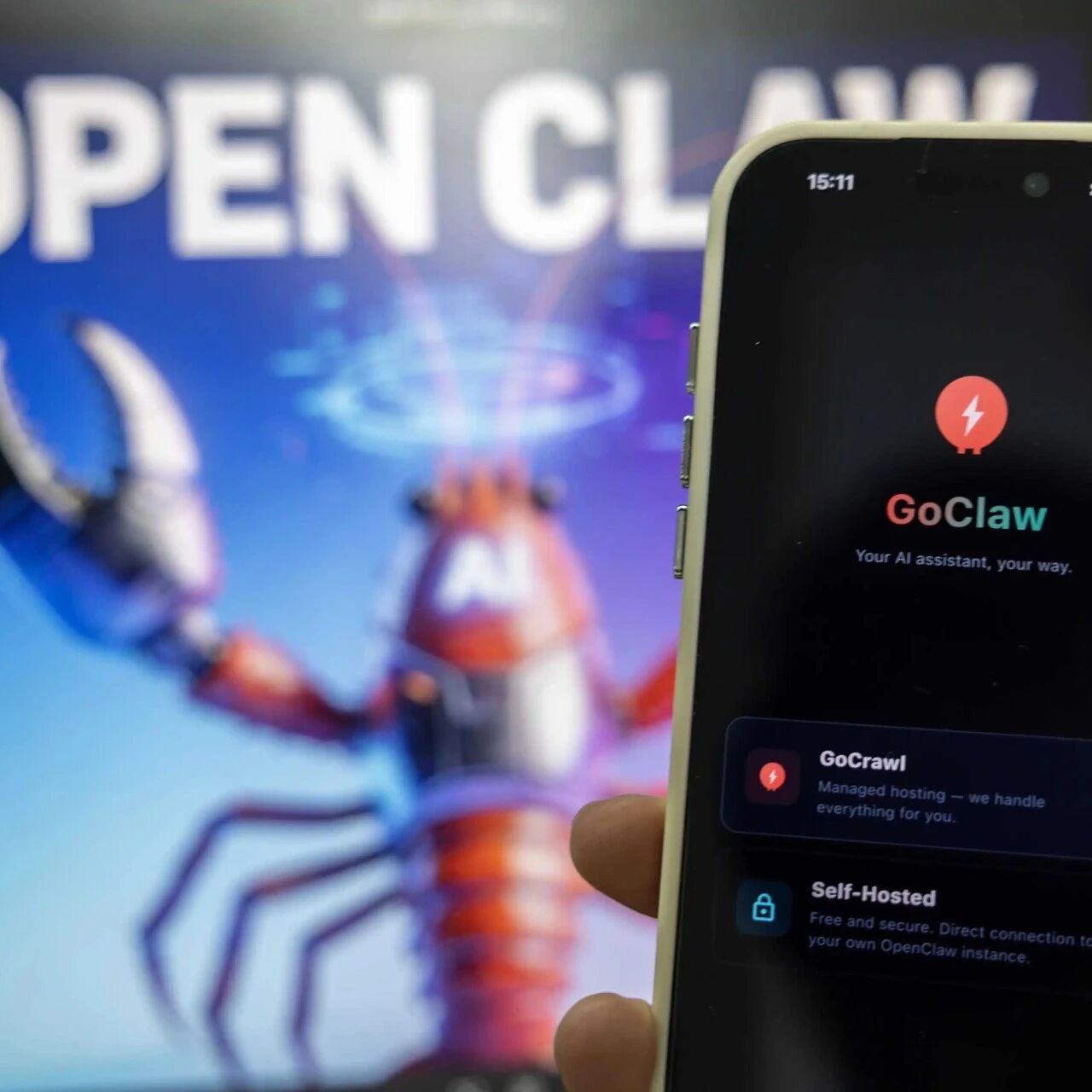
大公司,想养“龙虾”也不容易
第一财经· 2026-03-20 06:28
Core Viewpoint - The article discusses the challenges and opportunities of integrating AI technologies, particularly intelligent agents like "OpenClaw," into non-tech industries such as healthcare and banking, highlighting the need for proper infrastructure, talent, and data management for successful implementation [3][12]. Group 1: AI Integration Challenges - Many large non-tech enterprises, including those in healthcare and banking, are unprepared for AI integration due to a lack of core talent skilled in fine-tuning large models and the inability to utilize internal data effectively [3][12]. - A survey by PwC revealed that 61% of financial institutions have less than 10% of their tech budget allocated to AI, with aspirations to increase this to 50%, but current profit declines limit their ability to invest significantly in AI [6][8]. - The cost of building the necessary infrastructure to support AI technologies is substantial, and companies face budget constraints that hinder their ability to invest in AI [7][8]. Group 2: Talent Shortage - The scarcity of core AI talent is a significant barrier for non-tech companies, as many skilled professionals are concentrated in tech giants like Google and Alibaba, making it difficult for traditional industries to attract them [12][13]. - Existing IT personnel in large enterprises may only be familiar with outdated AI technologies, which complicates the transition to new models that require advanced skills in fine-tuning and reinforcement learning [12][13]. Group 3: Data Management Issues - Data availability and quality are major challenges for AI deployment, particularly in the pharmaceutical industry, where companies struggle to gather sufficient real-world data for effective AI training [13]. - Financial institutions face significant data management challenges related to security and privacy, which limits their ability to leverage internal proprietary data for AI applications [13]. - The lack of standardized data management practices within large organizations can lead to inefficiencies, with data cleaning and processing consuming a significant portion of AI project timelines [13].
罗福莉自曝“Hunter Alpha”:不是DeepSeek V4,是她的作业;小米推出三款大模型丨AIGC日报
创业邦· 2026-03-20 00:16
Group 1 - Xiaomi launched three self-developed large models: Xiaomi MiMo-V2-Pro, Xiaomi MiMo-V2-Omni, and Xiaomi MiMo-V2-TTS, with the first two models now offering API services [2] - The mysterious model "Hunter Alpha," initially thought to be an early version of "DeepSeek V4," is revealed to be the internal testing version of Xiaomi's flagship model MiMo-V2-Pro, indicating Xiaomi's significant commitment to the agent era [2][3] - Amazon announced the launch of its smart assistant Alexa+ in the UK as part of a "preview experience" program, which will be free during the trial period, with Prime members receiving it for free afterward, while non-Prime users will pay £19.99 per month [2] Group 2 - TaiChu YuanQi introduced an enterprise-level "shrimp farming" solution and launched the TaiChu Lobster integrated machine (TecoClaw), which is based on a fully domestic OpenClaw solution, enhancing security through various technological measures [2]


被全网猜是DeepSeek V4的神秘大模型,被小米认领了!还能免费「养龙虾」
36氪· 2026-03-19 13:43
Core Insights - Xiaomi has launched three major models in its MiMo series: MiMo-V2-Pro, MiMo-V2-Omni, and MiMo-V2-TTS, aimed at enhancing the capabilities of intelligent agents [6][12][14] - The MiMo models are designed to optimize performance in various applications, with MiMo-V2-Pro being a flagship model that supports complex workflows and long-term planning [12][19] - The models are positioned competitively in the market, with MiMo-V2-Pro ranking third domestically and ninth globally in comprehensive intelligence rankings [19][22] Model Features - MiMo-V2-Pro has over 1 trillion parameters and can handle a context length of 1 million tokens, significantly expanding its capabilities compared to previous versions [19][22] - MiMo-V2-Omni is a multimodal model that integrates text, visual, and audio inputs, enabling it to understand complex environments and execute plans autonomously [30][32] - MiMo-V2-TTS focuses on voice synthesis, allowing agents to communicate in a more human-like manner, with support for multiple dialects and emotional tones [41][43] Performance Metrics - MiMo-V2-Pro's API pricing is competitive, being one-fifth of the cost of similar models like Claude Opus 4.6, making it an attractive option for developers [12][27] - In benchmark tests, MiMo-V2-Pro demonstrated performance comparable to leading models in programming and task planning, indicating its advanced capabilities [24][22] - MiMo-V2-Omni's performance in multimodal tasks is close to that of Gemini 3 Pro, showcasing its effectiveness in real-world applications [33][30] Market Positioning - Xiaomi's release of these models suggests a strategic move towards integrating large models with system-level capabilities, potentially positioning the company as a leader in the intelligent agent market [46][45] - The models are designed to be accessible to developers, with a week-long free API access for testing, which may encourage widespread adoption [17][9] - Xiaomi aims to enhance its models' reasoning and decision-making abilities in complex environments, indicating a focus on advancing towards general intelligence [45][46]
【快讯】每日快讯(2026年3月19日)
乘联分会· 2026-03-19 08:38
Domestic News - Jiangsu plans to support over 300 typical application scenarios for urban models and intelligent agents by 2030, focusing on digital transformation of infrastructure and smart city applications [7] - In Shaanxi, the industrial added value above designated size grew by 4.1% year-on-year in the first two months of the year, with fixed asset investment increasing by 1.9% [8] - Shanghai has recognized 30 new regional headquarters of multinational companies and 15 foreign-funded R&D centers, primarily in key industries such as biomedicine and high-end equipment [9] - Chery Automobile's solid-state battery is expected to achieve a range of over 1500 km, with plans for vehicle validation by 2027 [10] - Zhiji released the IM Ultra Agent, the first super intelligent agent in the industry, which integrates advanced AI capabilities into vehicles [11] - Geely's CFO stated that the impact of rising upstream commodity prices is manageable, and the company aims to achieve autonomous driving capabilities comparable to Tesla's within the year [13] - Xiaomi's ultra-strong steel has won a national innovation award, with applications in new vehicle models [14] - Pony.ai and Ruqi Mobility have established a Robotaxi fleet, with over 100 vehicles delivered and operational in major cities [15] International News - Germany plans to double its general data center computing power by 2030, with AI-specific computing power expected to increase fourfold [16] - Japan's exports to the U.S. have declined for three consecutive months, with a notable drop in automotive exports [17] - Hyundai Motor Group has launched an autonomous taxi service in Las Vegas in partnership with Uber, utilizing the IONIQ 5 model [18] - Vietnam's fuel vehicle sales have significantly decreased, while hybrid vehicle sales have increased, indicating a shift in consumer preferences [19] Commercial Vehicles - Shenzhen has announced restrictions on diesel trucks starting April 6, 2026, to improve air quality [22] - Jiangling Motors has been awarded the title of National Excellent Intelligent Factory, recognizing its advancements in smart manufacturing [23] - Dongfeng and Cummins have signed a memorandum of cooperation to enhance their strategic partnership and focus on sustainable development in commercial vehicles [24] - Yuanmeng and Anbang have signed a strategic agreement to launch a methanol electric super VAN for security transport, emphasizing green and intelligent innovations [25]

英伟达首台DGX GB300,老黄亲自登门送给他
量子位· 2026-03-19 07:09
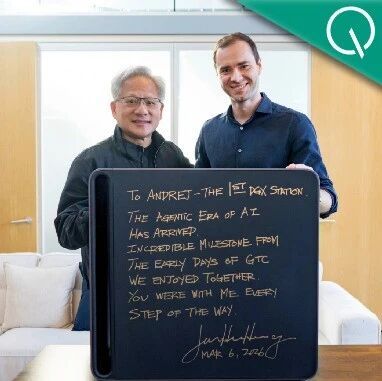
Core Viewpoint - The article discusses the significance of NVIDIA's CEO Jensen Huang personally delivering the first DGX Station (GB300) to Andrej Karpathy, highlighting the rise of individual developers in the AI era and the importance of computational power in the ongoing AI model competition [1][9][58]. Group 1: Delivery of DGX Station - Huang's delivery of the DGX Station to Karpathy symbolizes a milestone in the AI era, marking the emergence of personal developers as key players [1][9]. - This event is reminiscent of Huang's previous deliveries, such as the first DGX-1 to OpenAI, which played a crucial role in the deep learning revolution [8][39]. - The DGX Station (GB300) is designed for individual developers, providing data center-level AI computing power in a compact form [28][30]. Group 2: Significance of Individual Developers - Karpathy is recognized as a representative of individual developers, transforming AI from a corporate domain to a system manageable by individuals [17][19]. - His recent work focuses on creating systems that allow a single person to complete the entire process from idea to product [18][19]. - The choice of Karpathy for this delivery underscores the shift towards distributed computing and the importance of individual contributions in the AI landscape [58][61]. Group 3: Technical Specifications of DGX Station - The DGX Station (GB300) features 748GB of unified memory and 20 PFLOPS of computing power, enabling the execution of large-scale AI models [30]. - It allows seamless migration of local projects to cloud environments, addressing the need for continuous AI operation [31][32]. - The system is tailored for developing and running AI agents, reflecting the growing trend of personal AI applications [24][34]. Group 4: Broader Implications for the Industry - Huang's actions signal a strategic move by NVIDIA to position itself as a foundational supplier in the AI model competition, emphasizing the necessity of computational resources [50][56]. - The article suggests that the future of AI development will increasingly rely on individual developers rather than large organizations, as computational power becomes more accessible [58][61]. - NVIDIA is also enhancing its infrastructure for AI agents, indicating a comprehensive approach to support developers from hardware to software [34][36].
面壁智能发布EdgeClaw Box:要让每个人都能把「龙虾」跑在自己的盒子里
IPO早知道· 2026-03-19 05:54
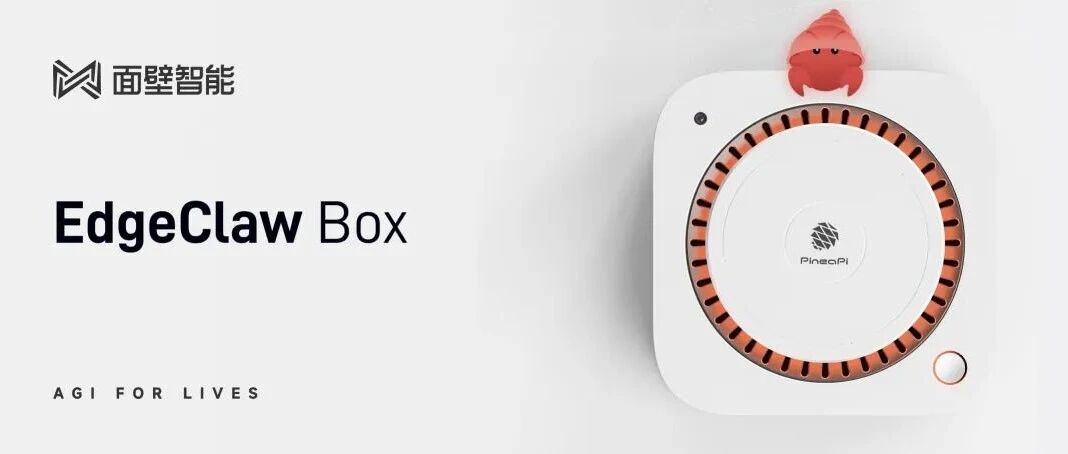
Core Viewpoint - The article discusses the launch of EdgeClaw Box by Mianbi Intelligent, which aims to address key pain points in data security and deployment for users of the OpenClaw platform, particularly in sensitive data environments [2][4]. Group 1: Product Features - EdgeClaw Box is designed for safety and ease of use, featuring a local deployment framework that enhances data security and reduces reliance on cloud services [2][4]. - The product includes a self-developed privacy routing middleware that categorizes user messages based on sensitivity, offering three processing modes: default, desensitized, and secure [3][4]. - EdgeClaw Box supports a variety of hardware, including Mianbi Intelligent's own devices and popular products from Nvidia and Apple, allowing for a plug-and-play experience [5]. Group 2: Innovations and Advantages - The system incorporates a dual-memory mechanism that ensures sensitive data remains local while allowing cloud models to access only desensitized information, mitigating privacy risks [4]. - EdgeClaw Box is characterized by four main advantages: multi-device compatibility, quick setup, local data retention, and cost efficiency by minimizing token consumption for simple tasks [5]. - Mianbi Intelligent emphasizes the importance of open-source development for EdgeClaw, aiming for widespread accessibility and user control over their data by 2026 [6]. Group 3: Future Prospects - The company plans to expand EdgeClaw Box's compatibility with various hardware forms and functionalities, aiming to create a comprehensive intelligent ecosystem [7].
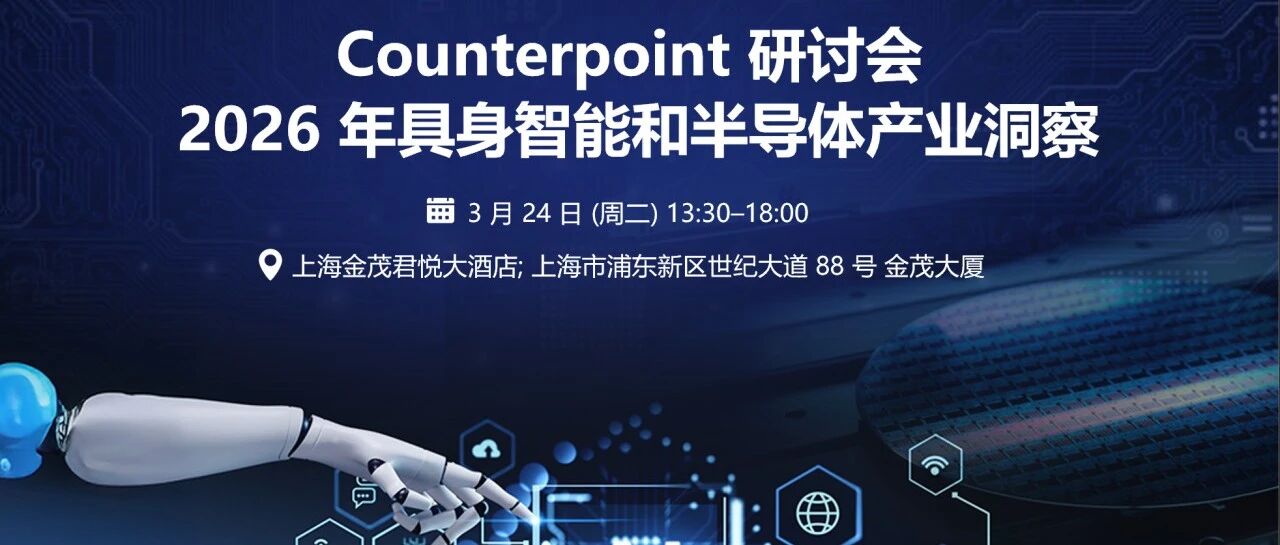
欢迎报名参加Counterpoint 2026 科技生态与半导体产业洞察上海线下研讨会
Counterpoint Research· 2026-03-19 04:45
Core Insights - The article emphasizes the accelerating transition of AI towards "agentic AI" and "physical AI" by 2026, significantly impacting global storage and semiconductor manufacturing, altering supply-demand structures, capacity layouts, pricing, and competitive strategies [5]. Event Information - The Counterpoint Research seminar will provide insights into the AI ecosystem and its implications for various industries, focusing on the critical inflection points in 2026 [7][9]. - The event is scheduled for March 24, 2026, at the Grand Hyatt Shanghai, featuring discussions on key drivers such as smart cities, humanoid robots, and autonomous driving [8]. Agenda Highlights - The seminar will cover six main topics: 1. AI ecosystem and its transformative impact [7]. 2. The rhythm of embodied intelligence and key driving factors [8]. 3. Trends in manufacturing and market dynamics, including wafer foundry capacity and pricing [8]. 4. New cycles in storage, including price outlook and vendor strategies [8]. 5. The evolving landscape of edge AI, with mobile devices remaining central [8]. 6. The role of generative AI in advancing robotic intelligence and its implications for computational needs [14]. Speaker Profiles - Marc Einstein, Director of AI Research, will discuss the implications of agentic AI on the industry [8]. - Ethan Qi, Deputy Director of Robotics Research, will focus on the evolution of "robot brains" and their computational demands [14]. - Kevin Li, Deputy Director of Automotive Research, will analyze the progress of domestic automotive chips and overall vehicle intelligence [14]. - Jake Lai, Head of Foundry Services, will provide insights into the 2026 foundry market and the structural impacts of AI [14]. - MS Hwang, Director of Storage Research, will discuss storage price trends and their downstream effects [14]. - Shiwen Ma, Analyst in Mobile Research, will explore how AI is reshaping consumer electronics and growth opportunities [14].