本地化策略

Search documents
拼技术、比质量、树品牌 国产机器人出海“闯”市场
Ren Min Ri Bao· 2025-08-14 23:58
Group 1 - The core viewpoint of the article highlights the successful international expansion of Chinese robotics companies, particularly in Japan, where they adapt their products to meet local market demands and cultural preferences [1][3]. - Shanghai Qingtian Intelligent Technology Co., Ltd. has successfully introduced service robots in Japan, addressing labor shortages due to high human resource costs and an aging population [1][3]. - The company faced initial challenges in selling their larger robots in Japan, leading to a redesign for smaller, more agile robots that cater to local needs [2][3]. Group 2 - Qingtian has established over 200 technical support points in Japan to ensure rapid response and repair services, enhancing customer satisfaction and operational efficiency [3]. - The cost-effectiveness of using robots compared to human labor is emphasized, with robots costing about one-third of the price of hiring a service worker in Japan [3]. - The article also mentions the growing presence of logistics robots from Chinese companies like Muxing Robotics in Japan, which have gained traction in various sectors, including pharmaceuticals and automotive [4][5]. Group 3 - Muxing Robotics has seen significant growth, with a nearly 30% year-on-year increase in sales, indicating a strong demand for their logistics automation solutions in Japan [5]. - The company’s products are designed to handle a wide range of weights, from 50 kg to 1.5 tons, showcasing their versatility in different operational environments [5]. - Muxing Robotics aims to continue developing products tailored to local logistics needs, reinforcing their commitment to localization and innovation in the Japanese market [5].

圈粉海外 国产机器人出海“闯”市场
Ren Min Ri Bao· 2025-08-12 00:15
Group 1 - The article highlights the increasing adoption of service robots in Japan's hospitality industry due to high labor costs and an aging population, with a focus on the success of Shanghai Qianlang Intelligent Technology Co., Ltd's delivery robots [3][6] - Qianlang Intelligent faced initial challenges in the Japanese market, including cultural differences and the size of their robots, which were not suitable for local environments [4][5] - The company adapted by designing a smaller, more agile robot that meets local needs, including language and aesthetic preferences, and established over 200 technical support points in Japan for efficient service [5][6] Group 2 - The logistics robot sector is also thriving, with companies like Muxing Robotics gaining attention for their sorting systems and solutions, which are increasingly adopted in Japan's pharmaceutical and automotive industries [7] - Muxing Robotics reported a significant increase in sales, with a nearly 30% year-on-year growth in the first half of the year, indicating strong demand for their products in overseas markets [7] - The company emphasizes the importance of innovation and localization strategies to meet the specific needs of the Japanese logistics industry [7]

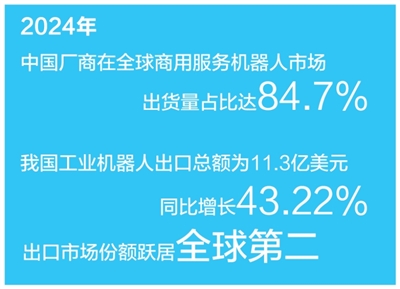
国产机器人出海“闯”市场(经济聚焦·中国品牌圈粉海外)
Ren Min Ri Bao· 2025-08-11 22:01
Core Viewpoint - The article highlights the increasing adoption of service robots in Japan, particularly from Chinese companies like Qianlang Intelligent Technology, due to rising labor costs and an aging population [4][6]. Group 1: Company Overview - Qianlang Intelligent Technology has successfully integrated service robots into Japanese restaurants, addressing local needs by redesigning robots to be smaller and more user-friendly [5][6]. - The company has established over 200 technical support points in Japan to ensure quick response and repair times for their robots [6]. Group 2: Market Dynamics - The demand for service robots in Japan is driven by high labor costs, with robots costing about one-third of hiring a human worker [6]. - The company has adapted its products to meet local cultural and operational requirements, including language and design changes [5][6]. Group 3: Industry Trends - The logistics robot market is also expanding, with companies like Muxing Robotics gaining traction in Japan, showcasing their sorting systems and solutions at trade exhibitions [7]. - Muxing Robotics reports a significant increase in sales, with a nearly 30% year-on-year growth, indicating a robust demand for automation in logistics [7].
长视频出海困局:学不会的 Netflix,破不了的局
3 6 Ke· 2025-08-08 07:05
Group 1 - The core viewpoint of the articles highlights the challenges faced by Chinese long-video platforms in expanding into Southeast Asia, particularly with the failure of the dual male lead genre to gain traction [1][3][13] - The long-video industry has struggled to replicate the success of Netflix in Southeast Asia, with platforms like iQIYI and Tencent's WeTV attempting to adopt similar strategies without significant results [3][9][27] - Despite initial optimism, the long-video platforms have not effectively localized their content or identified a clear strategy for the Southeast Asian market, leading to stagnation in growth [13][26][41] Group 2 - Netflix's entry into the Asian market, particularly Japan, was marked by strategic pricing and local partnerships, which allowed it to establish a strong foothold [4][5][7] - The success of Netflix in Japan was attributed to its ability to adapt to local consumer preferences and invest heavily in local content, which has not been mirrored by Chinese platforms in Southeast Asia [28][31][33] - The article suggests that long-video platforms need to explore new strategies beyond mere replication of Netflix's model, focusing on unique content that resonates with local audiences [39][41]




阿联酋:“免税天堂”的AB面
3 6 Ke· 2025-08-05 10:46
Core Viewpoint - The uncertainty brought by the US tariff policy in 2025 continues to cast a shadow over global trade, presenting unprecedented challenges for Chinese companies venturing abroad. However, these companies demonstrate resilience and adaptability by seeking new opportunities in regions like Southeast Asia, Mexico, and the Middle East, turning external shocks into chances for market expansion [1]. Group 1: Investment Opportunities in the UAE - The UAE market is particularly promising, with bilateral trade between China and the UAE expected to reach $200 billion by 2030. The UAE has established itself as the first Gulf nation to form a strategic partnership with China and officially joined the BRICS group in January 2024 [2]. - In the context of increasing cooperation, a conference was held to discuss investment opportunities in the UAE, focusing on key issues such as compliance risks in legal, financial, and talent aspects for Chinese companies [2]. Group 2: Chinese Automotive Companies in the UAE - Chinese automotive companies are beginning to enter the UAE market, particularly in the new energy vehicle sector, which is a key area of support for the UAE's energy transition. However, only a few companies like Xiaopeng, Arcfox, and Zhiqi have made their mark, with sales in the hundreds compared to traditional fuel vehicles [3]. - The local demand for high-end new energy vehicles is anticipated to grow, with local dealers already seeking partnerships with Chinese electric vehicle brands [3]. Group 3: Compliance Risks and Taxation - The UAE's attractive investment environment includes low corporate tax rates in free trade zones, but companies must be cautious of compliance risks related to transactions with related parties, which could lead to tax liabilities [5][6]. - Companies must adhere to OECD principles in international taxation, particularly regarding transfer pricing, to avoid issues with tax authorities [6]. Group 4: Financial Solutions for Overseas Operations - Companies face challenges in overseas financing and cross-border settlements, particularly in the new energy vehicle sector, where cash flow pressures are significant due to upfront payment requirements from suppliers [10]. - The introduction of direct currency settlement between China and the UAE aims to reduce transaction costs, although the benefits may be limited due to the peg of the dirham to the dollar [12]. Group 5: Localization Strategies - Companies must decide whether to operate as "selling companies" or "global native enterprises," which will influence their tax structures and talent strategies [15]. - In the UAE, the workforce is highly internationalized, allowing companies to hire talent that understands local markets without being constrained by local hiring quotas [16]. - Building a localized ecosystem requires collaboration with local partners and a deep understanding of the market, as seen in the strategies of companies like Zhanmei Automotive [18].
本地化策略持续生效,阿迪达斯大中华区2025年Q2营收同比增长11%|最前线
3 6 Ke· 2025-07-30 13:11
Core Insights - Adidas reported a global revenue of €6 billion for Q2 2025, a 12% year-on-year increase, with operating profit rising to €546 million, up 58% [1] - The company's gross margin improved to 51.7% due to reduced discounts and lower product and freight costs [1] - The "Performance + Fashion" dual strategy continues to drive growth, particularly in the running shoe segment, with ADIZERO series sales increasing over 25% globally [1] Financial Performance - Total revenue for the first half of the year reached €12.105 billion, a 14% increase year-on-year, with operating profit at €1.2 billion, a 70% rise [1] - The Greater China region achieved revenue of €798 million in Q2, an 11% increase, contributing €1.827 billion in the first half, up 13% [1] Strategic Initiatives - Adidas is enhancing its localization strategy in China through collaborations with local universities and designers, as well as flagship store openings [2] - The opening of the first flagship store on Anfu Road in Shanghai showcased local culture and featured exclusive product launches [2] Challenges and Outlook - The company faced a significant impact from tariffs, estimating a €20 million cost in Q2, with an expected increase of €200 million in product costs for the year due to U.S. tariffs on imports from Indonesia and Vietnam [4] - Despite these challenges, Adidas maintains a forecast for double-digit revenue growth for the year, aiming to enhance product competitiveness and marketing efficiency [4]


本地化加速,速卖通巴西迎来收获期
Hua Er Jie Jian Wen· 2025-07-16 09:19
Core Viewpoint - The shift towards "localization" has become a crucial strategy for cross-border e-commerce platforms, with overseas warehouses emerging as a key focus for competition [2][4]. Group 1: Overseas Warehouse Strategy - AliExpress, one of the "four small dragons" of overseas expansion, has seen significant sales growth in its Brazilian overseas warehouse during the recent overseas 618 shopping festival, achieving a 4.3 times increase in daily sales compared to previous periods [2]. - The top three categories driving this growth were consumer electronics, computer office supplies, and outdoor sports [2]. - AliExpress is investing heavily in local shipping in Latin American markets to enhance delivery efficiency and improve consumer purchasing experiences [2][4]. Group 2: Support Policies for Merchants - Since June, AliExpress has intensified support for merchants in its Brazilian overseas warehouse, aiming to attract more sellers [2]. - Specific measures include substantial subsidies for brands, resource allocation for in-platform promotion, and dedicated support from local influencers [2]. - A recent live-streaming event for a consumer electronics brand on AliExpress in Brazil resulted in a GMV increase of over 10 times compared to regular sales, with significant viewer engagement [3]. Group 3: Shift Towards High-Value Strategies - The global trade landscape is shifting from aggressive growth to a focus on profitability, with cross-border e-commerce moving from low-cost exports to high-value branding strategies [4]. - During the overseas 618 period, several high-value Chinese brands experienced explosive growth in Brazil, with products like gaming controllers and high-end cycling equipment selling out rapidly [4]. - AliExpress has expanded its localization efforts beyond Brazil, partnering with over ten leading overseas warehouse service providers in various markets, including the U.S. and Europe [5][6]. Group 4: Operational Strategies - AliExpress has adopted a dual-track strategy of "self-operation + management" to enhance its overseas business, supporting various operational models for merchants [7]. - The platform's multi-modal operation and localization strategy position it well for competition in the evolving cross-border e-commerce landscape [8].

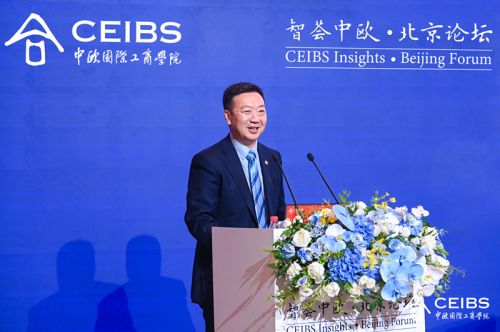
智荟中欧·北京论坛 | 全球经贸变局下,中企如何以“差异化出海”破局
Jing Ji Guan Cha Wang· 2025-07-12 08:29
Core Insights - The forum discussed strategies for Chinese companies to adapt to the reshaping of the global economic landscape due to geopolitical challenges, trade barriers, financial volatility, and technological changes [2][3] Group 1: Global Economic Landscape - The pressure of global supply chain restructuring highlights China's strong production, logistics, and human resources, which can still provide competitive advantages [3] - The "dual circulation" strategy emphasizes the importance of enhancing negotiation skills with the world and identifying systematic opportunities for international expansion [3] - The World Bank indicates that since 2004, the share of global goods and services trade in global GDP has steadily increased, showing that globalization has not halted [6] Group 2: Digital Currency and Regulation - The U.S. and global regulatory frameworks are evolving, particularly with the introduction of the U.S. Stablecoin Innovation Act and Hong Kong's Stablecoin Regulations, which may diminish the decentralized nature of stablecoins [4] - The development of stablecoins by the U.S. is seen as a strategy to reinforce the dominance of the dollar in the global economy [4][5] - There is a call for China to accelerate legislation and regulation regarding digital currencies and stablecoins to enhance the internationalization of the renminbi [4][5] Group 3: Localization and Global Strategy - Companies must implement localization strategies to succeed in overseas markets, as evidenced by Ganfeng Lithium's approach to respecting local cultures and sharing benefits [7] - The integration of new technologies like artificial intelligence with China's manufacturing advantages is crucial for addressing challenges in overseas operations [7] - Key experiences for state-owned enterprises in international expansion include global resource allocation, differentiation, compliance, and low-carbon transformation [8] Group 4: Economic Challenges and Policy - Domestic economic challenges in China include a decline in import ratios, fluctuating real estate markets, and a need for more proactive monetary policies to stimulate investment and consumption [6] - The future of China's economy relies not only on macroeconomic policy adjustments but also on the ability of enterprises to find differentiated paths in the new phase of globalization [8]

第五届智荟中欧·北京论坛|全球经贸格局重构下的企业策略解读
Cai Jing Wang· 2025-07-11 08:25
Core Insights - The global economic and trade landscape is undergoing significant structural adjustments, with challenges arising from geopolitical tensions, trade barriers, financial volatility, and technological changes [1][3] - Companies need to develop resilience, innovate, and create safer global supply chains while leveraging regional cooperation and exploring emerging markets to secure value and influence in uncertain international markets [3][4] Group 1: Globalization Challenges and Strategies - The future of globalization is characterized by resilience, integration, innovation, and rules, necessitating companies to move beyond traditional thinking [3] - The systemic decline in investment returns globally, particularly in the U.S., raises questions about the sustainability of growth policies and their impact on efficiency [4][6] - The U.S. trade deficit is exacerbated by debt reliance, and tariffs may not effectively address trade imbalances, highlighting the importance of adapting supply chains [6] Group 2: Digital Currency and Regulatory Insights - The rise of stablecoins is reshaping the monetary landscape, with regulatory frameworks emerging to ensure their stability and utility as payment tools [7][8] - China is encouraged to accelerate the development of its digital currency to compete with stablecoins, emphasizing the need for effective legislation and international coordination [8] Group 3: Localization and Global Operations - Companies like GE Aviation emphasize the importance of localization in their success in China, with significant investments in local talent and infrastructure [11] - Ganfeng Lithium's global expansion reflects the necessity for Chinese firms to respect local cultures and regulations while leveraging their competitive advantages [11] - Lenovo's strategy combines Chinese manufacturing strengths with digital management to navigate global market uncertainties [12] Group 4: Internationalization and Corporate Strategies - China National Petroleum Corporation's internationalization strategy involves a three-phase approach, focusing on global standardization while maintaining local responsiveness [13] - The need for Chinese enterprises to innovate beyond mere product exports to achieve sustainable growth is highlighted, with examples of successful international strategies [17] Group 5: Economic Outlook and Future Growth - Despite challenges, global trade has maintained a stable share of GDP, with China showing strong performance in exports, although structural issues remain [16] - The future of China's economy relies on both macroeconomic policy adjustments and the ability of enterprises to find differentiated paths in the new phase of globalization [17]
2025全球汽车零部件供应商百强榜公布,宁德时代挺进前五
汽车商业评论· 2025-06-23 15:00
Core Insights - The 2025 Global Automotive Parts Supplier Top 100 list highlights the competitive landscape influenced by electrification, intelligence, and regional market changes [6] - Traditional giants maintain dominance through strategic adjustments, while Chinese suppliers excel in the electric vehicle sector [7][11] Group 1: Traditional Giants - Bosch remains the largest global supplier with automotive revenue of $54.372 billion in 2024, a nearly 3% decline, reflecting challenges in traditional internal combustion systems [9] - Denso ranks second with $47.9 billion in sales, followed by Magna at $42.836 billion and ZF at $37.318 billion [10] Group 2: Chinese Suppliers - CATL ranks fifth with $35.249 billion in revenue, remaining the only Chinese company in the top five despite a drop in ranking [13] - BYD Electronics and Desay SV are reshaping the infotainment and electric vehicle components sectors, with Desay SV leading in global in-car entertainment sales and BYD's vertical integration strategy boosting its market share by 47% [14] Group 3: Regional Dynamics - China continues to be a growth engine with the highest operating profit margin of 5.7% in 2024, benefiting from policy support and export demand [15] - European suppliers face significant challenges with a profit margin of only 3.6% in 2024, leading to restructuring efforts by companies like Continental and Mahle [17] - North American parts companies see stagnant production due to labor shortages, which counterbalances operational improvements [18] Group 4: Mergers and Strategic Alliances - Motherson's potential acquisition of Marelli could alter the top 20 rankings, positioning Motherson as a leading global player [21] - Denso expands its footprint in China through new electric vehicle thermal management plants and blockchain-based battery recycling systems [22] Group 5: Emerging Trends - Electrification dominates with over 60% growth in electric vehicle components, as manufacturers like Tesla and BYD produce over 50% of their battery packs in-house [23] - Software-defined vehicles are on the rise, with companies like Harman and Panasonic developing centralized computing platforms for smart cabins and autonomous driving [25] - Localization strategies are being accelerated by multinational companies like Bosch and ZF to meet the demand for cost-effective and advanced solutions in China [26] Group 6: Risks and Challenges - Global production growth stagnation poses a long-term challenge, with excess capacity projected to exceed 100 million units from 2020 to 2030 [27] - The slowdown in pure electric vehicle adoption is influenced by the withdrawal of government subsidies and hesitance in transitioning from combustion engines [28] - Increased competition in the Chinese market is reshaping the landscape for both local and foreign parts suppliers [29] - The shift towards software-defined vehicles is accelerating, with rising software costs and value becoming a focal point for the industry [30] - Technological disruptions from solid-state batteries and AI-based advanced driver-assistance systems threaten traditional suppliers [31] Group 7: Geopolitical Dynamics - Geopolitical changes are significantly impacting the global automotive industry, with rising tariff barriers affecting trade in parts and vehicles across regions [32] - The industry is undergoing a transformation, with Chinese suppliers challenging traditional giants in electric vehicles and smart mobility, while European and North American firms adapt through collaboration and localization [34]