
机器换人

Search documents
关注人形机器人、工程机械及流程工业
Xinda Securities· 2025-11-10 09:13
Investment Rating - The investment rating for the machinery equipment industry is "Positive" [2] Core Views - The report highlights a significant growth in the sales of excavators and loaders, with excavator sales reaching 18,096 units in October, a year-on-year increase of 7.8%, and loader sales increasing by 27.7% [12][58] - The humanoid robot sector is experiencing rapid advancements, with companies like Xiaopeng and ZhiYuan launching new models aimed for mass production by 2026 [12][55] - The report emphasizes the resilience of companies like Rihuan Technology and Kangst, which have shown strong revenue growth despite external pressures [3][4][14] Summary by Sections 1. Company Highlights - Rihuan Technology, a leading supplier of industrial X-ray intelligent detection equipment, saw a nearly 100% increase in new orders year-on-year and a 44.01% revenue growth in the first three quarters [3] - Kangst, involved in digital detection instruments, reported a 22.24% increase in revenue and a 30.66% increase in net profit in Q3, demonstrating strong operational resilience [4][14] - Newrui Co., which produces hard alloys and tools, experienced a significant profit increase of 75.40% in Q3, driven by effective cost management amid rising raw material prices [5][15] 2. Industry Trends - The machinery sector is witnessing a broad recovery, with excavator and loader sales showing strong growth, indicating a positive trend in construction and infrastructure investment [12][58] - The humanoid robot market is set for significant growth, with advancements in technology and increasing investments from major companies [12][55] 3. Market Performance - The machinery index saw a slight decline of 0.25% last week, while other major indices like the Shanghai Composite Index increased by 1.08% [16] - The report notes that the machinery industry is experiencing varied performance across sub-sectors, with some segments like power distribution equipment showing strong gains [22] 4. Policy Support - Recent government policies are aimed at enhancing the industrial machinery sector, including support for high-end machine tools and automation technologies [28][35]


人形机器人迎持续催化,重视三季报预期
Xinda Securities· 2025-10-12 14:26
Investment Rating - The report maintains a "Positive" investment rating for the machinery equipment industry [2]. Core Views - The humanoid robot sector is experiencing continuous catalysts, with significant attention on the upcoming Q3 earnings reports [3][12]. - The report emphasizes the growth potential in humanoid robots and PCB equipment, alongside a focus on industries like process engineering and construction machinery that are expected to show improved performance [3][14]. Summary by Sections Humanoid Robots - Tesla announced plans to scale up humanoid robot production, aiming to launch the third generation by the end of 2025 and start mass production in 2026 [12][58]. - Figure AI introduced the Figure03, designed for household tasks, with a manufacturing base targeting an initial annual capacity of 12,000 units and a total of 100,000 units over four years [12][58]. Machinery Sales Performance - In August, excavator sales reached 16,523 units, a year-on-year increase of 12.8%, with domestic sales up 14.8% and exports up 11.1% [13][68]. - Loader sales also showed strong growth, with 9,440 units sold in August, reflecting a 13.3% increase year-on-year [76]. Company Highlights 1. **Lvtian Machinery** - Focuses on general power machinery and has begun mass production of energy storage products. Projected net profit growth rates for Q3 2024 to Q2 2025 are 24.1%, 55.9%, 56.3%, and 70.4% respectively [3][14]. 2. **Rilian Technology** - A leading supplier of industrial X-ray inspection equipment, with a nearly 100% increase in new orders and a 38.34% revenue growth year-on-year [4][15]. 3. **Xinxin Shares** - Specializes in hard alloy tools, reporting a revenue growth of 28.97% and a net profit increase of 2.88% in the first half of the year [5][16]. Market Trends - The manufacturing PMI in September 2025 was reported at 49.8%, indicating a slight recovery, with production indices improving [26]. - The report notes a significant increase in industrial profits, with a year-on-year growth of 20.4% in August, driven by a low base from the previous year [26][34]. Policy Support - Continuous government support for the humanoid robot industry is noted, with local governments actively implementing development plans [61][62].

中金:“机器换人”已迎来关键机遇期 智慧农业、农机步入快车道
Zhi Tong Cai Jing· 2025-09-30 01:29
Core Insights - The report emphasizes that smart agricultural equipment is a key lever for ensuring food security, aligning with the "storing grain in the ground and technology" strategy, and that the "machine substitution" trend is at a critical opportunity phase [1][2]. Group 1: Industry Opportunities - Smart agricultural equipment is identified as a core tool for food security, with the 2025 Central Document No. 1 listing "smart agricultural machinery and smart agriculture" as part of "new agricultural productivity" [2]. - The core sectors include smart tractors and harvesters, which have significant room for technological upgrades, while agricultural drones align with China's unique agricultural characteristics [2]. - The scale of China's agricultural machinery and agricultural drones is projected to be approximately 300 billion and 29 billion yuan in 2024, respectively [2]. Group 2: Market Dynamics - The trend of "machine substitution" is driven by rural labor reduction, rising costs, and decreasing equipment costs, marking an industrialization inflection point [2]. - The mechanization rate in the "management" segment of farming is the lowest, with estimates suggesting that agricultural drones could save over 100 billion yuan annually in pesticide costs [2]. - The penetration rates for large horsepower, power-shifting, and smart tractors in 2024 are projected to be 10.7%, 3.7%, and 3.8%, respectively [2]. Group 3: Policy Support - Policies are increasingly favoring high-quality machinery, with agricultural machinery purchase subsidies expected to rebound to a historical high of 24.6 billion yuan in 2024, reflecting a CAGR of 10% from 2020 to 2024 [2]. Group 4: Competitive Landscape - The industry is characterized by high technical barriers, deep service moats, and strong ecological stickiness, with the CR3 for agricultural drones, smart agricultural machinery, and agricultural machinery being 88%, 71%, and 48% respectively in 2024 [3].

中金 | 农业科技专题#2:智能农业装备—机器换人,未来已来
中金点睛· 2025-09-29 23:35
Core Viewpoint - The article emphasizes that smart agricultural equipment is a key driver for ensuring food security in China, highlighting the strategic importance of "storing grain in the land and technology" as the country faces a reduction in agricultural labor and increasing demand for mechanization [4][9]. Industry Overview - Smart agricultural equipment is positioned as a core tool for enhancing national food security, with a significant focus on the integration of technology and policy support [4][6]. - The central government's policy documents have elevated "smart farming" and "smart agricultural machinery" to new strategic heights, indicating a strong push towards modernization in agriculture [4][9]. Market Dynamics - The demand for smart agricultural equipment is rapidly increasing due to the reduction of agricultural labor and the acceleration of land transfer, which promotes large-scale agricultural production [12]. - The agricultural labor force in rural areas is declining, with projections indicating a drop from 4.1 billion in 2000 to 1.6 billion by 2024, necessitating the adoption of efficient smart agricultural equipment [12][31]. Technological Advancements - The transition from traditional agricultural machinery to large-scale, high-end, and intelligent machinery is underway, with significant room for technological upgrades in smart tractors and harvesters [27][39]. - The penetration rate of smart agricultural machinery is expected to increase significantly, with projections indicating a rise from 7.2% in 2024 to 33.1% by 2030 [27][30]. Policy Support - The Chinese government has been enhancing its support for smart agriculture through various policies, including the recent issuance of guidelines to promote the development of smart agriculture [13][44]. - Agricultural machinery subsidies have been adjusted to favor advanced equipment, with the subsidy amount expected to reach a historical high of 246 billion yuan in 2024 [44][46]. Export Opportunities - China's agricultural machinery exports are on the rise, particularly in emerging markets where the demand for practical and cost-effective agricultural equipment is growing [48][49]. - The export value of agricultural machinery is projected to increase from 34.79 billion yuan in 2020 to 50.96 billion yuan in 2024, reflecting a compound annual growth rate of 10% [49][50]. Competitive Landscape - The competitive landscape for smart agricultural equipment is characterized by high technological barriers, deep service capabilities, and strong ecological connections, with leading companies capturing significant market shares [5][51]. - Continuous investment in research and development is crucial for maintaining competitive advantages in the rapidly evolving agricultural technology sector [51][52].


中金:产业与政策机遇共振 看好智能农业装备龙头引领“机器换人”革新
智通财经网· 2025-09-29 07:56
Core Viewpoint - The report from CICC emphasizes that the implementation of the "storing grain in the ground and storing grain in technology" strategy positions smart agricultural equipment as a key driver for the "machine substitution" trend, which is entering a critical opportunity period [1] Group 1: Agricultural Security and Policy Opportunities - Smart agricultural equipment is identified as a core tool for ensuring food security, with the 2025 Central Document No. 1 listing "smart agricultural machinery and smart agriculture" as part of "new agricultural productivity" [2] - The core sectors include smart tractors and harvesters, which have significant room for technological upgrades, while agricultural drones align with China's unique agricultural characteristics [2] - The scale of China's agricultural machinery and agricultural drones is projected to be approximately 300 billion and 29 billion yuan in 2024, respectively [2] Group 2: Trends Driving "Machine Substitution" - The reduction of rural labor and rising costs, along with decreasing equipment costs, indicate that the industrialization of machine substitution is at a turning point [3] - The mechanization rate for the "management" segment of "planting, management, and harvesting" is the lowest, with estimates suggesting that plant protection drones could save over 100 billion yuan annually in pesticide costs [3] - Traditional agricultural machinery is transitioning towards larger, high-end, and intelligent models, with projected penetration rates for large horsepower, power-shifting, and smart tractors at 10.7%, 3.7%, and 3.8% in 2024 [3] - Agricultural machinery subsidy policies are shifting towards supporting superior machines, with the 2024 subsidy expected to reach a historical high of 24.6 billion yuan, reflecting a CAGR of 10% from 2020 to 2024 [3] Group 3: Leading Companies in Smart Agricultural Equipment - The landscape of smart agricultural equipment features high technological barriers, deep service moats, and strong ecological ties, with market shares for agricultural drones, smart agricultural machinery, and agricultural machinery CR3 at 88%, 71%, and 48% respectively in 2024 [4] - Key players include: - XAG, a leader in agricultural drones, with projected revenue and net profit margins of 740 million yuan and 17.5% for the first half of 2025 [4] - Topcloud, a leader in smart agriculture, with projected revenue and net profit margins of 490 million yuan and 25% for 2024 [4] - John Deere, a global leader in smart agricultural machinery, with projected revenue of 51.7 billion USD and a net profit margin of 22% for 2024 [4]
中国制造业升级,为何能打破“产业转移魔咒”?
Hu Xiu· 2025-09-26 13:16
Core Insights - The manufacturing sectors in the Yangtze River Delta and the Pearl River Delta have distinct developmental timelines, with the former being about 5 to 10 years behind the latter in terms of industrialization and investment attraction [1][2] - The Pearl River Delta has a higher concentration of labor-intensive industries, while the Yangtze River Delta has more advanced manufacturing processes and larger industrial parks [2][3] - The automation wave, referred to as "machine replacement," has affected both regions similarly, driven by national policies and the need for labor due to workforce shortages [3][5] Group 1: Regional Differences - The Pearl River Delta began its industrialization earlier, attracting significant investment in the 1980s, while the Yangtze River Delta saw large-scale industrialization in the 1990s [1] - Industrial parks in the Pearl River Delta are often smaller and less organized, leading to a predominance of small, labor-intensive factories [2] - In contrast, the Yangtze River Delta has larger, more modern industrial parks with better living conditions for workers, reflecting a higher level of land development [2] Group 2: Automation and Labor Dynamics - The automation trend began around 2014-2015, influenced by both government policies and the internal drive of companies facing labor shortages [3][5] - Despite the rise of automation, there has not been a significant increase in layoffs; instead, workforce reductions have occurred through natural attrition [6][7] - The labor force in manufacturing has decreased significantly over the past decade, with many workers transitioning to the service industry, particularly after 2015 [10][11] Group 3: Global Context and Future Trends - Developed countries experienced automation earlier, but faced limitations due to high labor costs and technological bottlenecks, leading to industrial transfers to China [12][13] - China's labor costs have risen, making automation more economically viable, while the country has also begun transferring labor-intensive industries to Southeast Asia [14][15] - The automation rate in low-end, repetitive tasks has reached 80-90%, particularly in the automotive sector, while assembly processes remain around 70% automated [21][22] Group 4: Labor Market Shifts - Workers displaced by automation have often transitioned to new roles within companies or returned to rural areas where industrial development has increased [24][25] - The shift from manufacturing to service industries has been significant, with many workers finding opportunities in sectors like ride-sharing and delivery services [10][11] - The future of automation in manufacturing may plateau, with more focus shifting towards artificial intelligence in service-oriented roles [38]
我国工业机器人系统集成市场潜力巨大,发展空间广阔。
Xin Lang Cai Jing· 2025-09-18 01:12
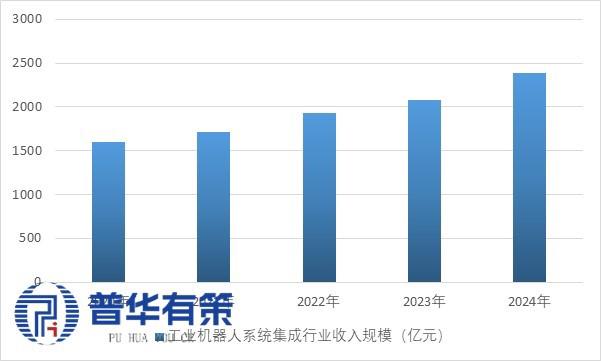
Core Insights - The Chinese industrial robot system integration market is entering a new stage of high-quality development, driven by policy incentives, technological upgrades, and market demand [1] - The market is projected to reach CNY 238.1 billion in 2024 and exceed CNY 499.6 billion by 2031, with a compound annual growth rate (CAGR) of 10.6% [2] Group 1: Policy and Market Demand - Recent national policies, including the "14th Five-Year Plan for Intelligent Manufacturing," aim to double the density of manufacturing robots by 2025 compared to 2020, and to cultivate over 150 specialized system solution providers [2] - The aging population and rising labor costs are accelerating the "machine substitution" process in manufacturing [2] Group 2: Downstream Applications - Industrial robot system integration is penetrating various sectors, including automotive manufacturing, electronics, and renewable energy [4] - The automotive sector accounts for over 40% of the market, with ongoing demand for new energy vehicle production line upgrades [4] - The electronics sector is benefiting from the recovery of consumer electronics and innovations in AI hardware [4] Group 3: Domestic Market Dynamics - The domestic system integration market is primarily composed of domestic enterprises, but over 80% of these companies have annual revenues below CNY 100 million [7] - Leading companies are enhancing market share through technological accumulation, cross-industry mergers, and international expansion [7] - The domestic core component substitution rate has surpassed 50%, although high-end fields still rely on imports [7] Group 4: Future Trends - The industry is expected to evolve towards greater intelligence and flexibility, with AI, digital twins, and 5G integration driving robots to become "intelligent decision-makers" [8] - Modular and standardized designs are being adopted to reduce customization costs and improve project reuse and delivery efficiency [8] - A shift towards service-oriented and ecosystem-based solutions is anticipated, enhancing customer loyalty through comprehensive lifecycle services [8] Group 5: Market Potential - The industrial robot system integration industry has vast growth potential, driven by the decreasing trend of industrial workers and the demand for automation in sectors like carbon neutrality and manufacturing transformation [9] - The market is expected to experience rapid and sustainable growth as applications diversify beyond traditional sectors and as domestic component localization reduces costs [9]

富佳股份机器人新品发布推动智慧农业与智能仓储变革
Zheng Quan Shi Bao· 2025-08-28 17:56
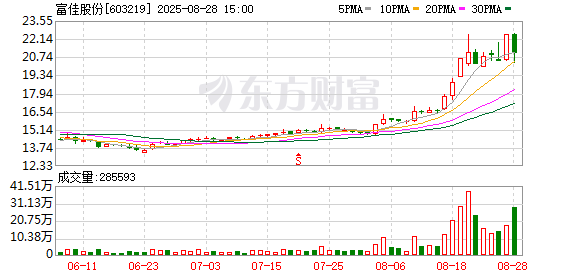
Core Insights - The robot industry is experiencing explosive growth driven by policies and market demands, with China's robot industry expected to achieve an average annual revenue growth of over 20% by 2025 [1] - The logistics and specialty robot segments are particularly prominent, with the grain storage robot sector facing unprecedented development opportunities [1][2] Industry Overview - The introduction of intelligent grain storage robots addresses significant industry pain points such as inefficiency, high labor intensity, and safety risks in grain storage [1][2] - Traditional grain storage methods heavily rely on manual labor, leading to substantial food loss and economic damage, with millions of tons lost annually due to storage inefficiencies [1] Technological Advancements - The newly launched intelligent grain leveling robot features a comprehensive system including a leveling robot, environmental sensing system, AI decision-making system, and visual operation system, enabling fully automated grain storage operations [2][5] - The robot can operate at speeds of 2 meters per second, has a battery life of over two hours, and can adapt to various grain types, significantly improving operational efficiency and safety [5][10] Market Dynamics - The demand for intelligent grain storage solutions is driven by labor shortages, safety concerns, and the need for increased operational efficiency [9][10] - The market for grain storage robots is projected to be substantial, with over a million grain storage facilities in need of equipment upgrades, representing a potential market size of hundreds of billions [10][12] Policy Support - National policies are crucial in promoting the development and application of grain storage robots, with strategic frameworks established to modernize agricultural practices and enhance storage efficiency [7][8] - The government has initiated various programs to support the construction of smart grain storage facilities, ensuring safety and quality in grain management [8] Competitive Landscape - Fuhua Co., Ltd. has made significant strides in the specialty robot sector, marking its strategic entry into the grain storage market with the launch of the intelligent grain leveling robot [4][12] - The company leverages its extensive experience in clean home appliances to enhance its competitive edge in the grain storage robot market, aiming for sustainable growth through innovation and diversification [12][13]

海晨股份(300873):汇兑和利息影响业绩表现 扣非后归母净利润符合预期
Xin Lang Cai Jing· 2025-08-28 06:42
Core Viewpoint - The company reported a revenue of 872 million yuan for the first half of 2025, representing a year-on-year growth of 7.46%, while the net profit attributable to shareholders decreased by 13.30% to 130 million yuan [1][2]. Financial Performance - The logistics business in the manufacturing sector achieved a revenue of 739 million yuan, up 7.77% year-on-year, with the consumer electronics segment generating 686 million yuan, a 7.96% increase, and the new energy vehicle segment reaching 53 million yuan, growing by 5.39% [2]. - The semiconductor equipment and logistics automation business reported a revenue of 93 million yuan, reflecting an 8.94% year-on-year growth, with successful project deliveries for several well-known clients [2]. - The net profit attributable to shareholders was 130 million yuan, while the non-recurring net profit was 111 million yuan, impacted by a foreign exchange loss of 6 million yuan and a decrease in interest income [2]. Future Outlook - The company is committed to its strategies of "new infrastructure, carbon neutrality, and automation," actively advancing the construction and upgrading of smart logistics warehouses [3]. - The smart equipment in the Hefei automated warehouse has been put into operation, significantly enhancing operational efficiency and automation levels, with ongoing projects in Shenzhen and Changzhou expected to be completed next year [3]. - The company plans to increase investments in smart logistics warehouse construction and cutting-edge technology research, aiming to maintain industry leadership in automation, intelligence, and sustainability [3]. - Earnings per share (EPS) forecasts for 2025-2027 are projected at 1.44, 1.61, and 1.84 yuan, with corresponding price-to-book (PB) ratios of 1.6, 1.5, and 1.4 times [3].
科森科技: 2025年半年度报告
Zheng Quan Zhi Xing· 2025-08-26 09:22
Core Viewpoint - Kunshan Kersen Science & Technology Co., Ltd. reported a decline in revenue and net profit for the first half of 2025, primarily due to challenges in product gross margins and increased costs associated with research and development efforts aimed at overcoming technical bottlenecks [2][3][7]. Company Overview and Financial Indicators - The company’s revenue for the first half of 2025 was approximately CNY 1.58 billion, a decrease of 9.13% compared to the same period last year [3][7]. - The total profit for the period was a loss of approximately CNY 105 million, an improvement from a loss of CNY 175 million in the previous year [3][7]. - The net profit attributable to shareholders was approximately CNY -105 million, compared to CNY -161 million in the same period last year [3][7]. - The company’s total assets decreased by 4.09% to approximately CNY 5.33 billion, while net assets attributable to shareholders decreased by 4.87% to approximately CNY 2.14 billion [3][7]. Industry and Main Business Situation - The company operates in the precision metal manufacturing industry, utilizing modern technologies such as computer technology, new materials, and precision manufacturing techniques to produce components for various sectors including consumer electronics, medical devices, and automotive [6][7]. - The demand for high-precision and high-quality components is increasing, driven by rapid advancements in industries such as telecommunications, computing, and aerospace [6][7]. - The company employs various manufacturing processes including precision die-casting, stamping, CNC machining, and laser cutting to meet the diverse needs of its clients [7][8]. Operational Analysis - The company’s product sales remained stable, benefiting from a recovery in the consumer electronics sector, which is the primary source of revenue [8][9]. - The company has made progress in new product areas, such as the assembly of folding phone hinges, which has contributed to improved gross margins [8][9]. - Future growth is anticipated in sectors such as new energy vehicles and solid-state battery materials, with the company actively seeking to expand its client base in these emerging markets [8][9]. Competitive Advantages - The company has developed a robust manufacturing technology system and holds over 400 patents, including more than 100 invention patents, enhancing its competitive edge in the market [9][10]. - Continuous investment in research and development has strengthened the company's ability to respond to customer needs and market changes effectively [9][10]. - The company maintains a strict quality control system and has received multiple certifications, ensuring compliance with international standards and enhancing product quality [10][11].
