
泛安全化

Search documents
波及中企?欧盟拟强制淘汰“高风险供应商”设备,外交部回应
Di Yi Cai Jing· 2026-01-21 09:04
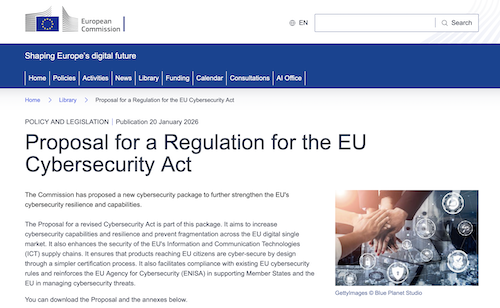
Core Viewpoint - The European Union's proposed amendments to the Cybersecurity Act aim to phase out "high-risk suppliers" in critical sectors, which may significantly impact Chinese tech companies like Huawei and ZTE [1][3]. Industry Impact - The revised measures will apply to 18 critical sectors, including telecommunications, cloud services, medical devices, and more, with a 36-month timeline for mobile operators to phase out key components from high-risk suppliers [5][7]. - The proposal is expected to impose substantial costs on the telecommunications industry, with potential replacement and regulatory costs reaching billions of euros [7]. - The EU's move reflects a broader trend of increasing scrutiny on Chinese technology, as seen in Germany's recent decisions regarding 6G networks and the U.S. ban on Huawei and ZTE equipment [6]. Company Reactions - Chinese companies, including Huawei, have expressed serious concerns over the EU's proposed measures, arguing that they violate market principles and fair competition rules [4][8]. - Huawei has stated that the legislative proposal contradicts fundamental legal principles of the EU and its obligations under the World Trade Organization framework [8][9]. - The company plans to closely monitor the legislative process and reserves the right to take measures to protect its legal rights [9].


阎学通:欧洲自身难保还往东亚派兵
Xin Lang Cai Jing· 2026-01-13 14:35
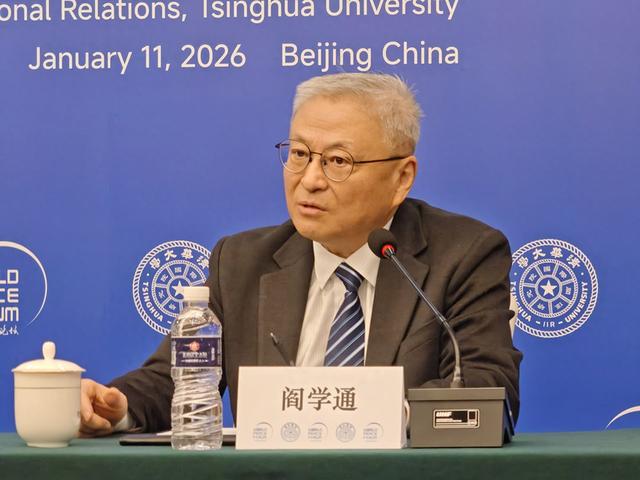
Core Viewpoint - The current state of European security is inadequate, leading to criticism of Europe's decision to deploy troops to East Asia while failing to ensure its own safety [1] Group 1: European Security and Responsibility - Europe is unable to guarantee its own security and should reflect on its responsibilities instead of blaming external factors [1] - European leaders lack a sense of responsibility for maintaining their own security, often attributing failures to the United States [1] - The rise of populism in Europe has contributed to internal and transatlantic divisions, with leaders prioritizing their political survival over national interests [1] Group 2: U.S.-Europe Relations - The relationship between the U.S. and Europe is characterized by three levels of division: between the U.S. and Europe, within Europe, and within each of their internal politics [1] - The potential for increased conflict exists if internal political divisions continue, affecting cooperation on security and trade [1] - The U.S. under Trump's administration has adopted a bullying approach towards allies, which may lead to further deterioration of U.S.-Europe relations [1] Group 3: Future Implications - If Europe does not address its internal issues, it risks worsening relations not only with the U.S. and Russia but also with other countries [1] - The possibility of military conflict between the U.S. and Europe could increase, particularly in areas like arms control, despite the current cooperation against Russia [1] - Trump's ambitions, such as the attempt to claim Greenland, could provoke extreme responses from Europe if realized [1]
阎学通:欧洲连自己的安全都保证不了,居然还往东亚地区派兵
Xin Lang Cai Jing· 2026-01-13 13:36
Group 1 - The core viewpoint is that Europe is currently unable to guarantee its own security while attempting to deploy troops to East Asia, indicating a need for self-reflection among European leaders [1][2] - The root cause of the turmoil in US-Europe relations is identified as the political division within the United States, which has led to three levels of division: between the US and Europe, within Europe itself, and within each of their internal politics [1][3] - The rise of populism in Europe has resulted in a prioritization of security over development, leading to reduced cooperation, decoupling, and trade protectionism among Western nations [3][4] Group 2 - European leaders are criticized for lacking a sense of responsibility regarding their own security, often blaming the US for failures in maintaining safety and security [2][4] - There is a call for European leaders to adopt a more humble and self-reflective attitude to recognize their shortcomings, which is essential for correcting their course and improving transatlantic relations [4][5] - The potential for increased military conflict between the US and Europe is highlighted, particularly in the context of aggressive actions such as Trump's ambitions regarding Greenland, which could provoke unexpected responses from Europe [5]
社评:欧洲的焦虑不该由中国电动大巴“背锅”
Huan Qiu Wang Zi Xun· 2025-11-10 15:46
Core Viewpoint - Recent investigations by Norway, Denmark, and the UK into Chinese-made buses suggest potential "remote control" risks, reflecting underlying political biases rather than actual safety concerns [1][2] Group 1: Safety Investigations - The UK claims that a significant number of Chinese electric buses may pose national security risks, with media exaggerating the potential for these vehicles to disrupt London [1] - No evidence has been presented to support claims that Chinese electric buses have been remotely controlled to stop in Europe, indicating a lack of substantiation for these safety investigations [1][2] - European experts acknowledge that while electric buses can theoretically be remotely disabled, similar capabilities exist in many Western bus brands, raising questions about the selective targeting of Chinese manufacturers [1] Group 2: Chinese Companies' Response - Chinese bus manufacturer Yutong emphasizes compliance with local laws and standards, asserting that data collected is solely for maintenance and improvement purposes, and cannot be accessed without customer consent [1] - The confidence of Chinese companies in their product safety is highlighted by the fact that over 2 million electric vehicles were exported globally last year without any incidents of remote control issues [1] Group 3: Broader Implications - The narrative of "remote shutdown" reflects a broader trend of irrational fears and biases against Chinese enterprises, which could harm Sino-European relations and hinder technological innovation in Europe [2][3] - The overemphasis on security risks in trade relations may obstruct Europe from embracing new technologies, ultimately threatening its competitive edge in the global market [2] - The current geopolitical climate, characterized by protectionism and unfounded fears, could lead to significant disruptions in global supply chains and energy transition efforts [3]
揭开西方法治假面!安世半导体事件背后透露了什么?
Bei Jing Ri Bao Ke Hu Duan· 2025-11-10 07:56
Core Viewpoint - The takeover of Nexperia by the Dutch government highlights the hypocrisy of Western legal and contractual principles, revealing the geopolitical motivations behind such actions [1][6]. Group 1: Impact on Global Supply Chain - Nexperia holds a 9.4% share of the global automotive chip market, with 40% of Europe's automotive chips relying on its supply, indicating its critical role in the industry [2]. - The Dutch government's unilateral actions, including invoking a 70-year-old law for the takeover, disrupt the established norms of international investment and trade [2][3]. Group 2: Political and Economic Ramifications - The incident reflects the increasing politicization and securitization of international trade relations, with Western nations using security as a pretext for regulatory actions [3][5]. - The actions taken by the Dutch government are seen as influenced by U.S. export control policies, which aim to restrict Chinese companies' access to critical technologies [3][5]. Group 3: Legal and Contractual Integrity - The behavior of the Dutch government is viewed as a blatant challenge to international legal order, undermining the principles of contract and law that are supposed to govern global trade [6]. - The incident raises concerns about the reliability of the Netherlands as a business environment, questioning the commitment to contractual integrity and the rule of law [2][6]. Group 4: Strategic Implications for Europe - The event underscores the need for Europe to avoid falling into the "security trap" set by the U.S. and to adhere to the principles of law and multilateralism to protect its own interests [4][5]. - The EU's so-called "strategic autonomy" is called into question, as its policies towards China appear heavily influenced by U.S. pressures, undermining its independent decision-making [5].
欧盟将调查英国矿业巨头向中企出售镍矿,外交部:望有关方能恪守开放承诺
Xin Lang Cai Jing· 2025-11-05 07:23
Core Viewpoint - The Chinese Ministry of Foreign Affairs expressed support for Chinese companies to engage in mutually beneficial cooperation, responding to the EU's investigation into Anglo American's sale of nickel mining operations to China Minmetals [1] Group 1: Company Actions - The EU has announced an investigation into Anglo American's sale of its nickel mining business to China Minmetals [1] - The Chinese government encourages its enterprises to adhere to principles of mutual benefit and practical cooperation across various sectors [1] Group 2: Market Environment - The Chinese Ministry of Foreign Affairs emphasized the importance of maintaining an open commitment and respecting market economy principles [1] - There is a call for fair competition and a transparent, non-discriminatory business environment for companies from all nations [1]
中企计划在英投资建设风机厂引舆论担忧?中方回应
Zhong Guo Xin Wen Wang· 2025-10-23 09:29
Core Viewpoint - The Chinese government supports its enterprises in conducting international cooperation based on mutual benefit and market principles, while also emphasizing the importance of investment security for Chinese companies [1] Group 1: Investment Plans - Mingyang Smart Energy, a Chinese wind power equipment manufacturer, plans to invest £1.5 billion in building a wind turbine factory in Scotland [1] Group 2: Concerns and Responses - There are concerns in the UK regarding the potential national security threats posed by the investment project [1] - The Chinese government has noted that the politicization of normal economic projects in the UK has been increasing, particularly since the introduction of the UK's National Security and Investment Act in 2022, which has led to prohibitions or conditional approvals of several Chinese investments [1] - The Chinese government opposes the broadening of the national security concept and the politicization of economic issues, arguing that such actions could negatively impact Chinese companies' assessments of the investment environment in the UK [1]

寰宇平:重建国际信任刻不容缓
Ren Min Ri Bao· 2025-08-05 04:48
Group 1 - Trust is the cornerstone of international cooperation, and its erosion has led to a global trust deficit, impacting economic recovery and international collaboration [1][2] - Major powers are increasingly engaging in unilateralism and populism, undermining international agreements and creating uncertainty in global markets [1][2] - The current geopolitical landscape is characterized by a shift from a unipolar to a multipolar world, with some nations clinging to outdated Cold War mentalities, exacerbating tensions and mistrust [2][3] Group 2 - The international community must work collaboratively to rebuild trust, focusing on mutual respect for core interests and avoiding misjudgments [3][4] - China is promoting a vision of a shared future for humanity, advocating for multilateralism and proposing initiatives to address the trust deficit [4][5] - High-level cooperation and cultural exchanges are essential for strengthening global trust and overcoming ideological barriers [3][4]
重建国际信任刻不容缓(寰宇平)
Ren Min Ri Bao· 2025-08-04 22:29
Core Viewpoint - The article emphasizes the critical need to rebuild international trust, which has been eroded by major powers' actions, leading to global instability and a lack of cooperation [1][2][3]. Group 1: Erosion of Trust - The trust deficit among major powers is creating uncertainty and undermining global cooperation, pushing the world towards division and conflict [2][3]. - Some countries are resorting to unilateralism and populism to maintain hegemony, undermining international rules and creating trade barriers [2][3]. - The current international landscape is marked by a profound adjustment, where security concepts are distorted into geopolitical tools, leading to increased competition and military spending [2][3]. Group 2: Need for Collaborative Solutions - The article calls for a collaborative approach to address the trust deficit, highlighting the importance of mutual understanding and respect for core interests among major powers [3][4]. - It advocates for a shift from zero-sum thinking to a focus on shared global interests, promoting high-level cooperation to enhance economic openness [3][4]. - The need for systemic reforms in multilateral institutions is emphasized, particularly in addressing urgent issues like climate change and public health [4][5]. Group 3: China's Role in Rebuilding Trust - China is positioned as a responsible major power, advocating for multilateralism and proposing initiatives to enhance global cooperation and trust [5][6]. - The country has committed significant resources to climate change initiatives, signing numerous cooperation agreements with developing nations [5][6]. - China's efforts to expand visa-free travel and promote cultural exchanges are seen as steps to strengthen international trust and cooperation [5][6].
德国要严查意德企业收购案“中国因素”,专家:对中德深化经贸与投资合作不利
Huan Qiu Shi Bao· 2025-07-14 22:41
Group 1 - Snam plans to acquire nearly 25% of OGE, Germany's largest natural gas network operator, but faces scrutiny from the German government due to concerns over Chinese influence [1][2] - The acquisition is valued at €920 million, with Snam purchasing 24.99% of Vier Gas Holding, which owns all shares of OGE [1] - OGE operates a pipeline network of approximately 12,000 kilometers and has an annual gas transmission capacity of about 21 billion cubic meters, serving over 400 end customers [1] Group 2 - The German Federal Ministry of Economics and Energy has initiated a thorough investment review process to assess potential risks to public order and safety from the transaction [2] - Germany's recent approach towards China has been characterized by a "de-risking" strategy, categorizing infrastructure, especially energy, as critical and sensitive [2][3] - The trend of "pan-security" has emerged, where even ordinary research cooperation and cultural exchanges are subjected to scrutiny, reflecting a decline in trust towards China [3]
