消费升级

Search documents
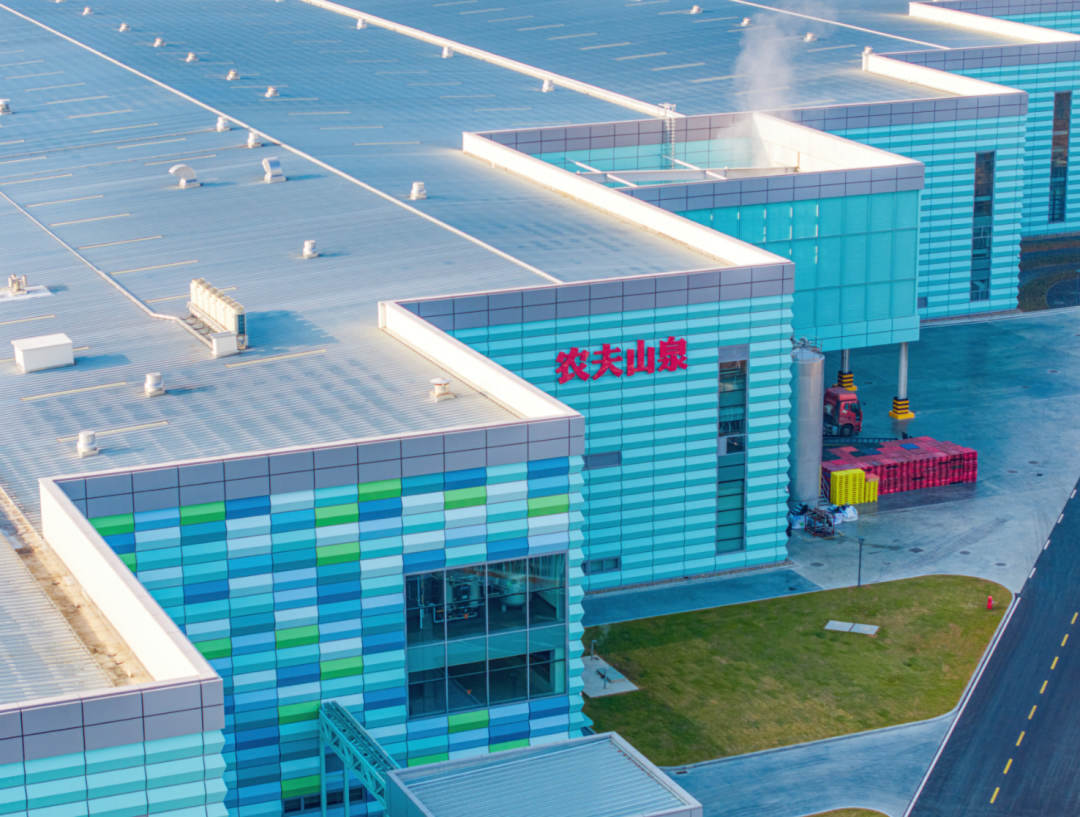
拟派息超111亿元!农夫山泉2025年营收破500亿元
Zhong Guo Zheng Quan Bao - Zhong Zheng Wang· 2026-03-25 01:04
Core Insights - In 2025, the company achieved a revenue of 52.553 billion yuan, marking a 22.5% year-on-year increase, and net profit attributable to shareholders reached 15.868 billion yuan, up 30.9%, reflecting continuous improvement in profitability [1][3] - The company plans to distribute a dividend of 0.99 yuan per share, totaling approximately 11.134 billion yuan, demonstrating confidence in its development [1] Revenue Growth and Cost Control - The increase in profitability was supported by cost control and product structure optimization, with gross margin rising by 2.4 percentage points to 60.5%, primarily due to lower procurement prices for key raw materials such as PET, paper boxes, and sugar [3] - The company effectively managed the sales proportion through e-commerce channels, stabilizing the pricing order of the distribution system, which ensured overall profitability stability [3] Business Structure and Product Performance - The company has established a multi-category collaborative development pattern, with tea beverage products showing the most significant growth, achieving revenue of 21.596 billion yuan, a 29.0% increase, and accounting for 41.1% of total revenue, surpassing packaged drinking water as the largest business segment [3] - The core brand "Oriental Leaf" has been actively expanding, introducing new packaging and flavors, and enhancing user engagement through interactive activities [3] - The newly launched carbonated tea beverage "Ice Tea" features "real tea extraction + dense bubbles," further enriching the tea beverage product matrix [3] Water and Other Beverage Segments - The packaged drinking water business steadily rebounded, generating revenue of 18.709 billion yuan, a 17.3% increase, with new water sources added in Hunan, Sichuan, and Tibet, and another planned in Yunnan for 2026 [4] - Functional beverages, juice drinks, and other products also experienced robust growth, with functional beverages generating 5.762 billion yuan (up 16.8%), juice drinks 5.176 billion yuan (up 26.7%), and other products 1.309 billion yuan (up 10.7%) [4] Strategic Development - The company has set 2026 as a new starting point for its 30th anniversary, proposing a development philosophy of "stability, gradualness, and long-term vision" [4] - While deepening its domestic market presence, the company is also steadily advancing its internationalization efforts, exploring more overseas growth opportunities [4]


华润啤酒去年净利33.7亿元;珍十五·第三代出厂打款价每瓶上调5元丨酒业早参
Mei Ri Jing Ji Xin Wen· 2026-03-24 00:05
Group 1: China Resources Beer Performance - China Resources Beer reported a comprehensive revenue of 37.985 billion yuan for the fiscal year 2025, a year-on-year decrease of 1.68% [1] - The net profit attributable to shareholders was 3.371 billion yuan, down 28.87% year-on-year [1] - The company plans to pay a final dividend of 0.557 yuan per share and aims to strengthen its beer business while positioning its liquor segment as a second growth curve [1] Group 2: Guizhou Zhenjiu Price Adjustment - Guizhou Zhenjiu announced a price increase of 5 yuan per bottle for its Zhen Fifteen third-generation product following the launch of the fifth generation [2] - This price adjustment is part of a strategic arrangement to enhance brand value, product iteration, and healthy channel development [2] - The company’s approach reflects a tactical move to refine its pricing system and restore channel ecology amidst a competitive pricing environment in the liquor industry [2] Group 3: Industry Conference Insights - A seminar on "Development of Liquor Chains and Instant Retail" was held in Chengdu, emphasizing the long-term growth potential of the liquor industry despite short-term challenges [3] - The president of the China Liquor Circulation Association highlighted that consumption remains a primary driver of economic growth, presenting significant future opportunities for the liquor sector [3] - The conference underscored the need for quality upgrades in production and innovative distribution models to seize long-term opportunities arising from consumer upgrades [3]

乐舒适(02698):深耕高潜赛道,量价齐升、品牌强化
Xinda Securities· 2026-03-23 11:40
Investment Rating - The investment rating for the company is not explicitly stated in the provided documents, but the analysis suggests a positive outlook based on growth metrics and market positioning [1][4]. Core Insights - The company reported a revenue of $567 million for 2025, representing a year-on-year increase of 24.9%, with a net profit of $121 million, up 27.4% [1]. - The company is benefiting from increased market penetration, expansion of market share, and regional growth, leading to steady sales growth across product categories [2]. - The product matrix and pricing strategy have been optimized, contributing to upward price coordination [2]. - The company has established significant competitive barriers through localized production, a global supply chain, deep distribution, and localized marketing [2]. - The company aims to strengthen its brand presence in potential markets, particularly in Africa and Latin America, where it has seen substantial growth [2][4]. Financial Performance Summary - For the baby care segment, revenue reached $446 million in 2025, with a year-on-year growth of 23.1%, driven by a 17.9% increase in sales volume and a 4.4% increase in average price [2]. - The female care segment generated $99 million in revenue, reflecting a 27.9% increase, with sales volume and average price rising by 19.4% and 7.1%, respectively [2]. - The home care segment saw a remarkable revenue increase of 53.8%, reaching $22 million, with sales volume up 52.8% [3]. - The gross margin for 2025 was reported at 35.9%, with an adjusted net profit margin of 21.6% [3]. - The company has improved its operational efficiency, with inventory turnover days decreasing from 141 days in 2024 to 132 days in 2025 [3]. Earnings Forecast - The company is projected to achieve adjusted net profits of $150 million, $180 million, and $220 million for the years 2026, 2027, and 2028, respectively [4][5]. - Revenue forecasts for the same period are $702 million, $856 million, and $1.014 billion, indicating a consistent growth trajectory [6].
从“买东西”到“买体验”,扩大服务消费还能怎么做?
券商中国· 2026-03-23 02:41
Core Viewpoint - The article emphasizes the significant potential for service consumption growth in China, driven by rising income levels and changing consumer preferences towards experiences and services rather than just goods [1][2]. Group 1: Service Consumption Growth Potential - The People's Bank of China reported that in a survey, the top five areas where residents plan to increase spending in the next three months are education (30.9%), healthcare (30.8%), tourism (28.4%), social, cultural, and entertainment spending (26.0%), and big-ticket items (18.3%) [2]. - Wang Yiming, former deputy director of the Development Research Center of the State Council, noted that the first four categories are all service consumption, indicating that service consumption will continue to be a key driver of consumption growth [2]. - Over the past five years, the average annual growth rate of per capita service consumption expenditure in China was 8.5%, outpacing the growth rate of overall per capita consumption expenditure by 1.7 percentage points [2]. Group 2: Policy Directions for Consumption - Wang Yiming suggested measures to boost service consumption, including relaxing market access restrictions in the service sector, eliminating unreasonable entry barriers, and increasing the proportion of public service spending in fiscal expenditure [3]. - He highlighted that a significant portion of service consumption is developmental and collective in nature, necessitating government guidance [3]. - Compared to OECD countries, China's public service spending as a percentage of GDP is about 10 percentage points lower, indicating room for improvement in public service investment [3]. Group 3: Insights from Major Cities - Beijing's Vice Mayor Tang Wenhong reported a 5.7% increase in daily sales for key retail and catering enterprises during the 2026 Spring Festival compared to the previous year, with physical retail growth outpacing online retail by 3.9 percentage points [4]. - In the first two months of this year, Beijing's restaurant revenue growth turned positive, and the number of physical restaurants increased from 146,000 to 154,000, indicating a strong preference for offline consumption [4]. - Shanghai's Vice Mayor Lu Shan emphasized that consumers are now seeking experiences and cultural significance in their purchases, marking a shift from merely fulfilling needs to creating meaningful experiences [5]. Group 4: Emotional Consumption Trends - Lu Shan pointed out that emotional consumption is a current trend in service consumption, citing the "LV giant ship" exhibition that significantly boosted foot traffic and sales in surrounding malls [6]. - The exhibition led to over 50% increased foot traffic and sales doubling for many luxury brands, demonstrating that high-end consumption can thrive through immersive experiences rather than just price reductions [6]. - The ultimate battleground for retail has shifted from product shelves to creating emotional connections and experiences for consumers [6].

食品饮料-筑底接近尾声-聚焦高质量增长
2026-03-22 14:35
Summary of Key Points from Conference Call Records Industry Overview: Food and Beverage Sector - The food and beverage sector is nearing a bottoming phase, focusing on high-quality growth as of 2026 [1] - The sector's valuation and institutional holdings are at historical lows, with a notable improvement in consumption during the 2026 Spring Festival [1][2] - The beverage and liquor sales are showing signs of recovery, driven by an 8% increase in cross-regional personnel movement [1][3] Key Insights on Specific Segments Liquor Sector - The liquor sector is expected to see a report clearing phase in April 2026, with a gradual recovery anticipated from May onwards due to low base effects from 2025 [1][4] - High-end liquor brands like Moutai and Wuliangye are experiencing double-digit growth during the Spring Festival, with Moutai's price rising from 1,500 to 1,700 RMB [1][6] - The competitive landscape is shifting, with high-end brands expanding their consumer base while putting pressure on mid-range competitors [6] Soft Drinks - The soft drink industry is witnessing structural changes, with a decline in sugary drinks and growth in healthier options like sugar-free tea and functional beverages [10] - The market share of Nongfu Spring's sugar-free tea has reached 79.8%, indicating a strong trend towards health-oriented products [10][11] Snack Foods - The snack food sector is transitioning to a dual oligopoly, with significant growth in discount snack channels [1][8] - The focus for 2026 will shift from rapid store expansion to improving profitability as the market matures [8] Dairy Products - The raw milk cycle is expected to stabilize in the second half of 2026, improving profitability for downstream dairy companies [1][13] - Long-term growth potential exists in fresh milk and cheese segments, with current penetration rates in China being significantly lower than in mature markets [14][15] Frozen Foods - The frozen food sector is recovering from previous price wars, with a focus on new product launches and channel expansion [16] - The introduction of national standards for prepared dishes is expected to further standardize the industry [16] Beer Industry - The beer sector is experiencing a slowdown in high-end product growth, with the 6-10 RMB price range becoming the main focus for upgrades [18][19] - The overall beer market is expected to remain flat, with a slight increase in profits due to improved cost efficiency [19] Health Supplements - The health supplement market is seeing a decline in concentration due to the rise of content e-commerce, with the CR5 dropping from 32% in 2015 to 26% in 2024 [20] - Major companies are adapting by increasing their presence in emerging online channels, potentially reversing the trend of declining concentration [20] Additional Observations - The overall consumer sentiment remains cautious, with a preference for high-value products in various categories [1][8] - The shift towards healthier options across multiple segments indicates a long-term trend that companies need to adapt to in their product offerings and marketing strategies [10][11][20]


从“买东西”到“买体验”,扩大服务消费还能怎么做?
证券时报· 2026-03-22 13:26
Core Viewpoint - The article emphasizes the significant potential for service consumption growth in China, driven by rising income levels and changing consumer preferences towards experiences and services rather than just goods [1][2]. Group 1: Service Consumption Trends - The latest survey indicates that the top five areas where residents plan to increase spending are education (30.9%), healthcare (30.8%), tourism (28.4%), social, cultural, and entertainment spending (26.0%), and large goods (18.3%), with the first four being service-oriented [3]. - Over the past five years, the average annual growth rate of per capita service consumption expenditure in China has been 8.5%, outpacing the overall per capita consumption expenditure growth by 1.7 percentage points [3]. - As of 2021, China's per capita GDP surpassed the global average, leading to a shift in consumption from necessities to experiences and personal growth [3]. Group 2: Policy Recommendations for Service Consumption - To boost service consumption, it is recommended to relax market access restrictions in the service sector, eliminate unreasonable entry barriers, and increase the proportion of public service spending in fiscal expenditures [4]. - A significant portion of service consumption is development-oriented, necessitating government guidance to enhance public services and consumer spending [4]. - Compared to OECD countries, China's public service spending as a percentage of GDP is approximately 10 percentage points lower, indicating room for improvement in public service investment [4]. Group 3: Insights from Major Cities - In 2026, key retail and catering enterprises in China reported a 5.7% increase in average daily sales during the Spring Festival compared to the previous year, with physical retail growth outpacing online retail by 3.9 percentage points [6]. - In Beijing, restaurant revenue growth turned positive in the first two months of the year, with the number of dining establishments increasing from 146,000 to 154,000, and retail sales in physical stores growing by 14.6% [6]. - The shift in consumer behavior emphasizes a desire for experiences and cultural engagement rather than mere transactions, marking a transformation in consumption patterns [6][7]. Group 4: Event-Driven Consumption - The recent F1 China Grand Prix attracted over 230,000 attendees, with 80% being from outside the province or country, showcasing the economic impact of large events [7]. - The event led to a 125% increase in hotel bookings and generated 132 million yuan in revenue for local businesses, illustrating the potential of event-driven consumption [7]. - The integration of event tickets with local services, such as dining and accommodation, has created a new consumption model that enhances the overall consumer experience [7]. Group 5: Emotional Consumption - Emotional consumption is emerging as a key trend, with events and experiences driving significant increases in foot traffic and sales for luxury brands [8]. - The "LV giant ship" exhibition led to over a 50% increase in customer traffic to surrounding malls and doubled sales for many luxury retailers in the city [8]. - The focus on creating immersive experiences that encourage social sharing is seen as a critical strategy for reviving high-end consumption [9].

食品饮料2026年春季投资策略:转折之年
GUOTAI HAITONG SECURITIES· 2026-03-22 07:45
Investment Rating - The industry investment rating is "Overweight" [3] Core Views - The report emphasizes that the turning point is approaching, highlighting the importance of price increases. The white liquor sector is nearing the end of its adjustment phase, with a long-term focus on pricing and continued concentration. The consumer goods sector is bottoming out, with increasing differentiation among segments, while condiments, beer, and beverages show strong resilience [3]. Summary by Sections White Liquor - The industry is transitioning from a "U-shaped adjustment" to a "V-shaped adjustment." Compared to the adjustment period from 2013 to 2016, the current cycle has a smaller adjustment in demand and expectations, with a notably extended adjustment period. The previous cycle saw a rapid clearing of the industry, while the current adjustment is expected to accelerate the bottoming process starting from Q3 2025 [4][16]. Beer & Beverages - With the stabilization of dining scenarios and gradual recovery of consumer spending, the beer industry is expected to improve. Structural upgrades, price increases, and efficiency optimization will continue to drive profitability. Historical trends during CPI recovery periods show that the beer sector generally benefits from expanded gross sales margins and improved profitability [5][45]. Consumer Goods - As cost advantages diminish, there is an increasing focus on companies with strong price transmission capabilities in the consumer goods sector. The report anticipates a turning point for condiments, with expected price increases. The dairy sector is also expected to see a rebound in supply-demand cycles, while the snack segment favors companies with new product categories and channel expansion logic [6][14]. Market Dynamics - The report notes that the white liquor industry is still in an adjustment phase, while soft drinks and snacks are less affected by economic cycles and are expected to lead in growth rates. Beer, dairy products, and condiments are showing marginal improvements after undergoing stress tests, with consumer goods outperforming white liquor [14][30]. Structural Changes - The report indicates that the current cycle will accelerate the concentration process in the industry, with leading brands benefiting from their brand and channel advantages. The differentiation among brands is expected to increase, with high-end brands like Moutai and Wuliangye continuing to lead, while competition intensifies in the mid-range and lower segments [30][39]. Valuation and Returns - The overall valuation of the white liquor industry and individual stocks is currently at historically low levels, reflecting pessimistic expectations. The report suggests that the micro-structure of the industry has improved, with a potential for recovery in valuations ahead of fundamental improvements [36][39]. Dividend Trends - There is an increasing awareness of shareholder returns in the white liquor industry, with leading companies likely to enhance shareholder value through dividends. The report notes that several companies have raised their dividend rates, making them attractive to investors [39][40].

纺织服装行业2026年一季度业绩前瞻:纺织制造板块和服装家纺板块预计开局表现良好
GF SECURITIES· 2026-03-20 06:40
Investment Rating - The report maintains a "Buy" rating for key companies in the textile and apparel industry, indicating a positive outlook for the sector in 2026 [4]. Core Insights - The textile manufacturing sector is expected to recover in Q1 2026, driven by improved export orders as U.S. tariff policies become clearer. This recovery is anticipated to benefit leading companies in sub-industries such as wool spinning, dyeing, cotton spinning, and nylon, which are expected to see performance exceed expectations due to inventory appreciation and management improvements [3]. - The apparel and home textile sector is projected to perform well, benefiting from a recovering consumer market and an extended sales season due to the later timing of the Spring Festival in 2026. Leading companies in the home textile sub-industry and sports brands are expected to outperform the sector [3]. - Significant growth in textile and apparel exports was noted in January and February 2026, with textile exports increasing by 20.5% and apparel exports by 14.8% year-on-year, marking the highest growth rates since 2022 [3]. - Retail sales of apparel, shoes, and textiles from major enterprises showed a year-on-year increase of 10.4% in early 2026, with online retail sales of clothing items growing by 18.0% [3]. Summary by Sections Q1 2026 Performance Forecast - The report forecasts a positive performance for various segments, including sports apparel, children's clothing, and home textiles, with expected revenue growth across multiple companies [11][12]. - Specific companies such as 比音勒芬 (Biyinlefen) and 海澜之家 (Hailan Home) are projected to see significant revenue increases, with 比音勒芬 expected to grow by 17% and 海澜之家 by 7% year-on-year [11]. Export Growth of Textiles and Apparel - The textile export value is projected to grow significantly, with a year-on-year increase of 20.5% in early 2026, while apparel exports are expected to rise by 14.8% [16][19]. Retail Sales Growth of Major Enterprises - Retail sales for apparel, shoes, and textiles from major enterprises are expected to increase by 10.4% year-on-year in early 2026, indicating a strong recovery in consumer demand [24]. Online Retail Growth - Online retail sales for clothing categories are anticipated to grow by 18.0%, reflecting a robust shift towards e-commerce in the apparel sector [27]. Key Company Valuations and Financial Analysis - The report includes detailed financial projections for key companies, with several firms expected to see improvements in earnings per share (EPS) and return on equity (ROE) in 2026, indicating a favorable investment environment [4].



伊利股份20260319
2026-03-20 02:27
Summary of the Conference Call for Yili Group Company Overview - **Company**: Yili Group - **Industry**: Dairy Products Key Points Industry and Company Performance - In Q1 2026, the inventory of ambient liquid milk was reduced as expected, with inventory days controlled within 30 days, leading to an anticipated year-on-year revenue growth for the company [2][3] - The overall revenue target for 2026 is set for low single-digit to mid-single-digit growth, with ambient liquid milk aiming for stabilization or positive growth, and adult nutrition products and cheese expected to maintain double-digit growth [2][5] - The competitive landscape shows that major brands like Yili performed better than smaller brands during the Spring Festival gifting season, while the infant formula segment is benefiting from increased industry concentration, offsetting risks from declining birth rates [2][4] Cost and Impairment - It is expected that milk prices will stabilize and recover in the second half of 2026, with supply chain financial impairments being a result of proactive provisioning rather than actual defaults [2][3][16] Long-term Strategy - The company plans to focus on deep processing over the next five years, transitioning from primary products to high-value-added products like whey protein and lactose to enhance profitability in the ToB business [2][13] Q1 2026 Business Performance - The adult nutrition segment saw significant growth, achieving over double-digit growth, with gifting scenarios contributing approximately half of the sales in this category [4] - Other categories, including infant formula and cheese, maintained growth consistent with 2025, with overall Q1 revenue expected to show year-on-year growth [4][5] Product Strategy - To achieve growth in the liquid milk segment, the company will continue to implement effective strategies from 2025, focusing on introducing value-for-money products and promoting high-end innovations like "Classic Fresh" [6][9] - The "Classic Fresh" product utilizes a rapid sterilization technique, aiming to compete with low-temperature milk in taste and has received positive market feedback [6][9] Market Dynamics - The company acknowledges that the demand for liquid milk may improve compared to 2025, but achieving overall industry growth remains uncertain [4][11] - The introduction of value-for-money products is a strategic response to the current oversupply of raw milk, aiming to capture market opportunities despite potential short-term profit impacts [8][9] Financial Outlook - The overall expense ratio for 2026 is still under evaluation, with expectations of increased brand investments due to major sporting events [10] - The company is cautious about the sustainability of growth momentum into the second quarter, indicating that if demand does not meet expectations, they will not force revenue growth in the liquid milk segment [11] Supply Chain and Risk Management - The supply chain financial services primarily cater to upstream and downstream enterprises, with low risk due to collateral from biological assets and goods [15] - The company has proactively increased provisions for credit impairment based on the poor profitability of upstream suppliers, which does not indicate an inability to repay loans [15] Market Trends - The industry is witnessing a significant investment in deep processing capacities, particularly in the northwest region, which is seen as a positive development for the market [17][18] - The overall demand for packaged liquid milk has declined due to structural shifts towards B2B channels, such as baking and catering, which has diverted some consumer demand [12][21] Future Projections - The company expects milk prices to stabilize and potentially rise slightly in the second half of 2026, with a focus on maintaining a balance between costs and pricing [19][20] - The infant formula segment is projected to continue growing despite declining birth rates, driven by increased market concentration and brand loyalty [14] This summary encapsulates the key insights and strategic directions discussed during the conference call, providing a comprehensive overview of Yili Group's current performance and future outlook in the dairy industry.

在华30年老超市,亏损超7亿仍坚守,中国市场真有这么香?
商业洞察· 2026-03-18 09:24
Core Viewpoint - The article discusses the challenges faced by Aeon, a Japanese retail giant, in the Chinese market, highlighting its significant financial losses and strategic adjustments in response to changing consumer behavior and market dynamics [1][4][12]. Group 1: Financial Performance - Aeon reported a loss of 193 million in the first half of 2025, with cumulative losses nearing 900 million since 2017 [1][4]. - The company has not made a profit in its mainland operations since 2017, leading to a series of store closures, including the complete exit from Beijing by May 2025 [4][6]. Group 2: Market Dynamics - The rapid rise of e-commerce and local competitors like CR Vanguard and Pang Donglai has significantly impacted Aeon's market share, as consumers prefer faster delivery options over traditional supermarket shopping [4][6]. - Aeon's reliance on imported goods has made it less competitive against local brands that offer better price-performance ratios [6][12]. Group 3: Strategic Adjustments - In response to market challenges, Aeon is shifting its business model by downsizing store formats to focus on smaller, more specialized offerings, such as fresh food and Japanese products [10]. - The company is attempting to align more closely with Chinese consumer preferences, moving away from its traditional "big and comprehensive" approach [10][12]. Group 4: Long-term Perspective - Despite current losses, Aeon's commitment to the Chinese market reflects a belief in its long-term potential, as the market remains one of the largest globally with significant growth opportunities [8][12]. - The article suggests that Aeon's perseverance in the face of adversity may ultimately lead to future success, contrasting it with other foreign retailers that have exited the market [10][12].