用户共创

Search documents
日售2.5万袋苹果干,俞敏洪种了片试验田
2 1 Shi Ji Jing Ji Bao Dao· 2026-01-22 09:35
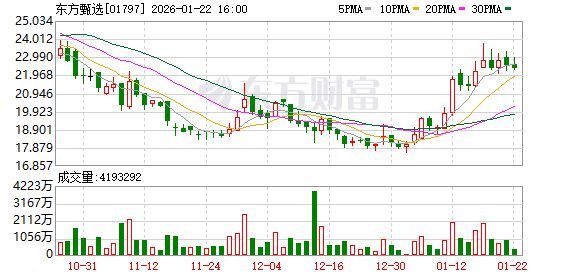
Core Insights - The launch of a new dried apple product by Dongfang Zhenxuan has been highly successful, with 25,000 bags sold out on the first day and a significant number of pre-orders by the end of January [2] - The company aims to become the best agricultural products and daily necessities company in China, as stated by its founder Yu Minhong [3] - The e-commerce community acts as a crucial engine for product co-creation, enhancing customer engagement and product development [4] Product Development and Community Engagement - Self-operated products are a core growth driver for Dongfang Zhenxuan, contributing approximately 44% to the total GMV for the fiscal year 2025, with a significant increase in the number of self-operated products from 488 to 732 [5] - The community within the app serves as a foundation for product development and quality control, allowing users to share experiences and suggestions, which are actively monitored by product managers [6] - User feedback is rapidly integrated into product development, with the turnaround time for new product ideas being as short as two to three months [8] Feedback Mechanism and User Interaction - The company emphasizes a structured approach to distinguishing genuine user needs from superficial ones, involving detailed market research and validation processes [9] - A robust feedback mechanism ensures that every user suggestion is acknowledged and addressed, fostering a sense of participation in product design [9] - Product managers and designers regularly engage with the community to gather insights on product features, categories, and packaging, with a commitment to respond within 18 hours [9][10] User Experience and Adaptability - The community also serves as a hub for addressing user experience issues, with quick adjustments made to existing products based on feedback [10] - The company is proactive in communicating with users about product quality issues, such as variations in agricultural products due to weather conditions [11] - Future developments include features that allow users to vote on live broadcast topics and participate in packaging design, further enhancing community involvement [11]

超越客服:当电商社区进化为“产品共创中枢”
Guan Cha Zhe Wang· 2026-01-21 02:23
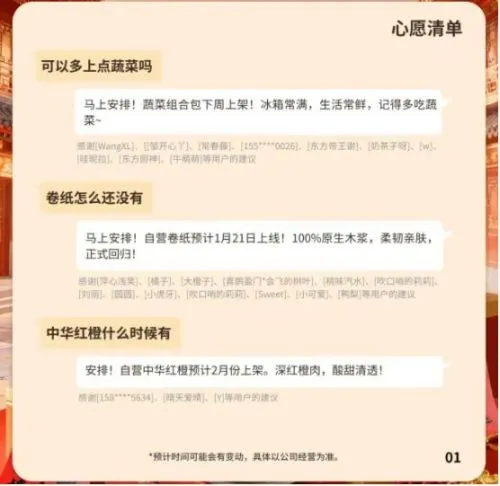
Core Insights - The article discusses how leading brands are transforming user engagement from passive feedback to active co-creation, exemplified by Dongfang Zhenxuan's "Product Co-Creation Community" in its independent app [1][2][3] Group 1: User-Centric Transformation - The shift from traditional customer service feedback to deeper user involvement in product development is highlighted as a key challenge for brands [1][2] - Dongfang Zhenxuan's community aims to integrate users into the product lifecycle, allowing them to become active contributors rather than passive consumers [2][3] - This model signifies a transformation from merely collecting user demands to co-creating them, enhancing brand loyalty and trust [2][3] Group 2: Quality Control and Demand Radar - The community serves as a real-time quality control network, enabling users to act as "grassroots quality inspectors" [3][4] - Feedback from users can lead to immediate adjustments in product quality, preventing larger issues from arising [3][4] - The case of the "刺梨复合果汁气泡水" (Sour Pear Sparkling Juice) illustrates how user demand can directly influence product availability and decisions [4][5] Group 3: Organizational Culture and Role Redefinition - Dongfang Zhenxuan's approach requires a cultural shift within the organization, where product managers become active listeners and communicators with users [6][7] - The emphasis is on genuine interaction rather than mechanical responses, fostering a culture of trust and transparency [7][8] - This transformation leads to a more agile and open organizational structure, enhancing responsiveness to user feedback [6][7] Group 4: Building Emotional Connections - The community initiative transcends mere transactional relationships, fostering deeper emotional connections between users and the brand [8][9] - As users feel heard and respected, their relationship with the brand evolves from simple transactions to partnerships in co-creation [8][9] - Dongfang Zhenxuan envisions a trust-based community where both the brand and users collaboratively maintain product quality and brand reputation [8][9]
用户与产品经理的互动场,东方甄选社区成为产品迭代源动力
Cai Jing Wang· 2026-01-20 09:34
Core Insights - The essence of product success lies in understanding user needs through genuine dialogue rather than closed-door analysis [1] - The community is viewed as a bridge between the brand and users, facilitating product iteration based on user feedback [2][4] Group 1: Community Engagement - The core of a quality community is not merely UGC content but establishing a "no-distance communication channel" between the brand and users [2] - Community operations significantly enhance user loyalty and extend user lifetime value, addressing user retention challenges [2] - Users can find practical information and connect with like-minded individuals through discussions and experience sharing, fostering a strong sense of belonging [2][13] Group 2: Genuine Communication - Genuine communication requires abandoning formalities, focusing on specific and sincere responses to user feedback [3] - The community's approach encourages users to share their true thoughts, reducing their wariness towards the brand [3] Group 3: User Participation in Product Design - The community has established a complete mechanism for user participation in product design, turning feedback into visible product changes [4] - The success of products like "Dongfang Zhenxuan Spring Jian Papaya" demonstrates the effectiveness of user involvement in product development [4][9] Group 4: Building Trust - Trust is built through visible improvements rather than just maintaining a "zero negative feedback" approach [15] - The community's core value lies in sincerity and actionable feedback mechanisms, allowing users to participate in product design [16] - The brand's commitment to genuine communication fosters a unique ecosystem where users actively share experiences and assist new users [15][16] Group 5: Industry Implications - The practice of user co-creation highlights the importance of genuine engagement and respect for user input in product development [16] - The community serves as a space for mutual growth rather than just a traffic entry point, emphasizing the need for brands to listen to users [16]
Leader召开三筒洗衣机用户共创分享会
Zhong Guo Jin Rong Xin Xi Wang· 2026-01-19 06:52
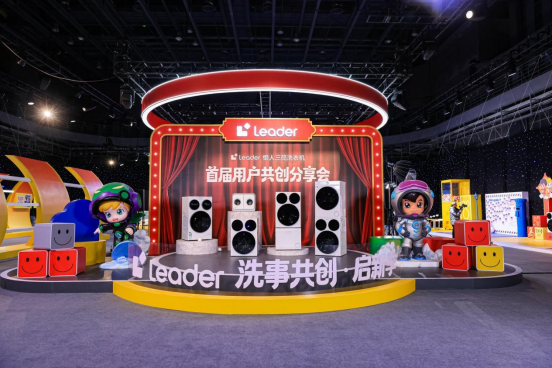
Core Insights - The event "Washing Co-Creation: New Season" hosted by Leader showcased user stories on integrating daily life expectations into product innovation and design, particularly focusing on the new three-tub washing machine [1][3] Group 1: User Engagement and Product Development - The initiative began with in-depth visits to user homes, revealing a common demand for convenience in laundry solutions, leading to the design of the three-tub washing machine [5][6] - User feedback was actively solicited, resulting in over 12,000 suggestions that informed product iterations, including features like "wash-dry integration" and space-saving installations [6] - The three-tub washing machine achieved a total sales volume of 300,000 units by 2025, reflecting its acceptance and popularity among consumers [6] Group 2: User-Centric Innovation - The event highlighted personal stories from users, illustrating how the three-tub washing machine has become an integral part of their daily lives, enhancing convenience and promoting good habits among family members [7][8] - The shared experiences emphasized the machine's versatility, such as separate washing for pet items, showcasing the technology's role in simplifying household tasks [7] - The co-creation model demonstrated that true innovation stems from deep insights into user lifestyles and continuous listening to their needs, reinforcing the relationship between the company and its customers [9]

酒行业周度市场观察-20260118
Ai Rui Zi Xun· 2026-01-18 05:08
Investment Rating - The report does not explicitly provide an investment rating for the industry Core Insights - The liquor industry is undergoing a transformation with the rise of instant retail, prompting companies to adapt their strategies for full-chain competition [2] - The market for loose liquor is expected to grow significantly, from 800 billion yuan in 2024 to over 1 trillion yuan in 2025, driven by community consumption and the appeal to younger consumers [2] - The trend of low-alcohol liquor is gaining traction, with major brands launching products to cater to the preferences of younger consumers, although challenges remain in maintaining flavor and stability [5] - The white liquor market is experiencing a shift from high-end to mid-range products, with a focus on value and quality rather than brand prestige [6] - The concept of "user co-creation" is emerging as a key strategy for brands to engage consumers and enhance brand loyalty [13] Industry Environment - Instant retail is becoming a new frontier for liquor sales, with leading brands exploring online channels and innovative models like live streaming [2] - The loose liquor market is being targeted by several well-known brands as a response to inventory pressures and price discrepancies [2] - The high-end liquor segment is facing challenges with declining sales and inventory issues, prompting brands to adjust their strategies [9] - The 400-600 yuan price range for liquor is disappearing in many markets, with actual transaction prices dropping to 300-400 yuan [9] - The wedding market is seeing a resurgence, but overall liquor consumption is declining due to economic pressures [14] Top Brand Dynamics - Wuliangye is implementing a "youthful and scenario-based" strategy with the opening of a cultural experience center in Hangzhou [21] - Shede Liquor is collaborating with high-end dining experiences to showcase the value of premium liquor [22] - The introduction of light-flavored liquor by Niulanshan aims to attract younger consumers and adapt to changing market demands [22] - The report highlights the success of Jinjiao liquor in appealing to young female consumers, marking a shift in the health liquor market [28] - Muddy Pit Liquor is achieving growth through a focus on quality and brand empowerment during the industry's downturn [25]





记者观察∣北京81背后的硬派越野用户共创实践
Xin Lang Cai Jing· 2026-01-17 01:15
Group 1 - The core concept of the news is the introduction of the Beijing 81 2.0 co-creation version, which emphasizes a unique "tactical style" and "hardcore" design, evolving from the BJ80 model [2] - Beijing 81 pioneers the BIP (Build in Public) vehicle manufacturing model, allowing users to participate in the creation process, thus embodying the idea that "true innovation stems from a deep understanding of user needs" [2][3] - The chairman of Beijing Off-road, Wang Hao, highlighted the evolution from "engineer-driven car manufacturing" to "public co-creation," indicating a paradigm shift where users transition from "value consumers" to "value co-creators" [2] Group 2 - The BIP co-creation model breaks traditional barriers in vehicle design, allowing users to define their needs collaboratively, leading to a fundamental change in product evolution from "one-way output" to "two-way co-creation" [3] - The Beijing 81's development reflects a shift from a product-centric to a user-centric market approach, with over ten thousand user suggestions leading to six core upgrades, demonstrating that "users are the best designers" [3] - The practice of Beijing 81 aligns with the insights of marketing and management experts, emphasizing that businesses must create and co-create value with users to truly understand their purpose [3]

北京越野双车发布 创新共创模式推进产品焕新
Zhong Zheng Wang· 2026-01-16 13:57
Core Insights - Beijing Off-road launched the BJ40 Explorer and the Beijing 812.0 Co-creation Edition at a brand renewal event on January 15, 2026, emphasizing a commitment to innovation and user collaboration [1] Group 1: Product Launch - The BJ40 Explorer is positioned as a refreshed model in the BJ40 series, featuring a 2.0T gasoline and 2.0D diesel dual powertrain, an 8-speed automatic transmission, and an electronic four-wheel drive system [1] - The BJ40 Explorer is equipped with off-road capabilities, including a minimum ground clearance of 220mm and a wading depth of 750mm, along with advanced features like a 15.6-inch central control screen and Qualcomm 8155 chip [1] Group 2: User Collaboration - The Beijing 812.0 Co-creation Edition is based on the BJ80 and utilizes an innovative BIP open co-creation vehicle manufacturing model, which has gathered over 10,000 user suggestions since its launch in August 2025 [1] - The company aims to continuously enhance products through user feedback, as stated by Chairman Wang Hao during the event [1]
一根黄色胶带,给他拽来了16个亿
虎嗅APP· 2026-01-16 13:34
Core Viewpoint - The article discusses the unique "anti-hit product logic" of SmallRig, a Shenzhen-based company that has successfully navigated the overseas market by focusing on user co-creation, a wide range of SKUs, and high-frequency iteration rather than relying on single blockbuster products [4][8]. Group 1: Company Overview - SmallRig was founded in 2013 and specializes in photography and videography equipment, boasting over 1,000 SKUs currently available and plans to launch over 600 new products by 2025 [8][26]. - The company has achieved a GMV exceeding 1.6 billion yuan by 2025 and has consistently ranked at the top of Amazon's imaging accessories categories [8]. Group 2: User-Centric Development - SmallRig's approach involves gathering user feedback to identify pain points and develop products accordingly, rather than preemptively identifying market needs [7][14]. - The company has established a systematic method for collecting user opinions, which are categorized and prioritized for product development [17][18]. Group 3: Product Development Strategy - SmallRig's "DreamRig" project allows users to receive free samples of products, fostering a sense of community and encouraging user promotion [20][21]. - The company emphasizes modularity and standardization in its product design to manage the complexity of a large number of SKUs effectively [27][28]. Group 4: Marketing and Sales Strategy - SmallRig organizes its products around specific imaging scenarios, which enhances customer experience and increases average order value, with independent site customer spending averaging $120 compared to $50 on Amazon [30][29]. - The marketing strategy focuses on scene-based product organization, which contrasts with the single-listing competition on platforms like Amazon [30]. Group 5: Supply Chain and Information Systems - The company has developed its own supply chain and information systems to support its unique business model, which includes self-assembled production processes and custom-built ERP systems [34][35]. - SmallRig's reliance on long-term partnerships with suppliers has fostered mutual growth and innovation [34]. Group 6: Challenges and Future Outlook - Despite past growth rates of doubling revenue annually, the company now faces a more stable growth rate of 30%-40% and acknowledges the need for improved internal management structures to support this growth [52][51]. - The company recognizes that while its user-driven model may not yield the fastest growth, it provides a more sustainable path in a rapidly changing market [53].

从“自嗨”到“共创”
Bei Jing Shang Bao· 2026-01-13 15:42
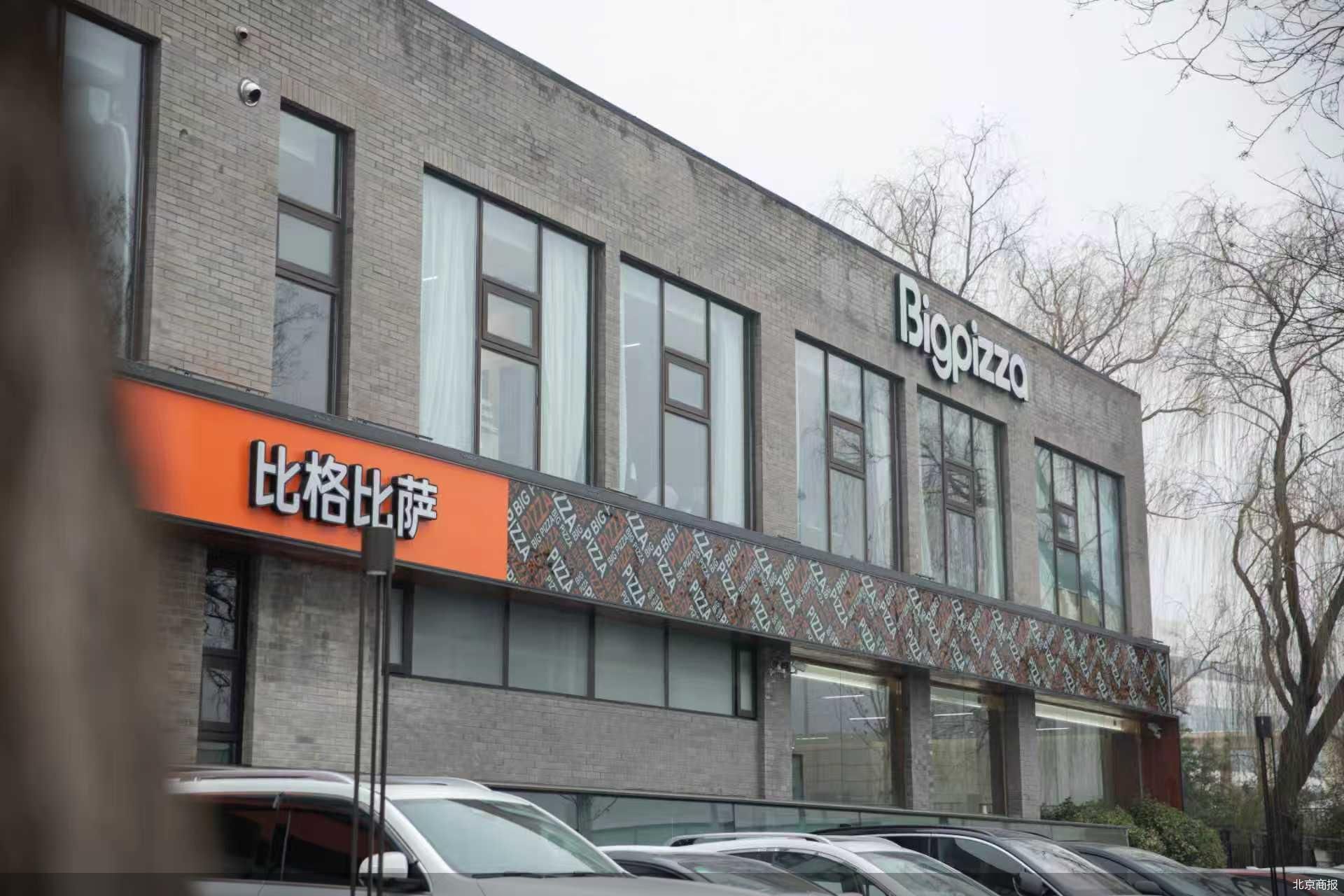
Core Insights - The restaurant industry keyword for 2025 is "caution," yet Big Pizza has achieved "explosive" growth, with overall performance increasing nearly 60%, same-store sales up approximately 18%, and revenue nearing 2 billion yuan [1] - The opening of nearly 160 new stores has brought the total number of direct-operated stores close to 400, surpassing the total number of stores opened in the past 22 years [1] - The core of performance growth lies in accurately understanding consumer needs, as the main consumer group shifts from the "post-80s" and "post-90s" to the "post-00s" and "post-10s" [1] Consumer Behavior Changes - The consumption logic of the "post-00s" and "post-10s" differs fundamentally from previous generations, as they are internet natives with more independent thinking and diverse consumption needs [2] - Young consumers now seek multi-dimensional experiences and are no longer satisfied with singular labels like "authentic" or "local," often combining different food categories in one meal [2] - The decision-making process for young consumers has shifted, with online exposure and transaction conversion becoming crucial, as they often order online before visiting the store for experience and delivery [2] Direct Consumer Engagement - To better connect with new generation demands, the founder has developed a personal IP that serves as a promotional window and a customer feedback channel [3] - This direct connection has allowed the brand to capture previously overlooked consumer needs, such as the texture of ice cream, leading to significant improvements in customer satisfaction [3] - The "user direct connection" model has restructured the product innovation system, with new product directions now driven by consumer feedback rather than solely by the R&D team [3] Product Development Strategy - Big Pizza follows a rhythm of "three new product launches per year, updating every four months," resulting in a 30% SKU iteration annually [4] - The strategy involves replacing the lowest-selling products in each category based on consumer preferences, allowing customers to "vote with their taste buds" on product viability [4] - This user-centric approach has kept the brand closely aligned with market demands, contributing to the 18% same-store sales growth [4]
烟火里的“稳”字歌|新店数量翻番、低效门店业绩赶超 比格比萨创始人赵志强:从“自嗨”到“共创”
Bei Jing Shang Bao· 2026-01-13 12:56
Core Insights - The Chinese catering market is entering a deep stock game era in 2025, with a scale of 5 trillion yuan and 8 million stores competing, while the chain rate steadily rises to 24% and per capita consumption decreases to a rational level [1][4] Industry Overview - The catering industry in 2025 is characterized by cautiousness, yet Big Pizza has achieved a "frenzied" growth with nearly 60% overall performance increase, approximately 18% same-store growth, and revenue nearing 2 billion yuan [3][4] - The opening of nearly 160 new stores this year has brought the total number of direct-operated stores close to 400, surpassing the total number of stores opened in the past 22 years [3][4] Company Performance - Big Pizza's growth is attributed to two key opportunities: the release of quality resources during the industry contraction and the traffic benefits brought by the short video era [4][10] - The new stores have not diluted the brand's profitability; instead, they have optimized the cost structure through economies of scale, contributing to the overall revenue nearing 2 billion yuan [5][11] Consumer Insights - The core of performance growth lies in understanding consumer needs, particularly as the main consumer group shifts from the "80s" and "90s" to the "00s" and "10s" [5][7] - New generation consumers seek diverse experiences and have changed their consumption decision-making paths, often discovering brands online before visiting stores [7][9] Innovation and Product Development - Big Pizza has adopted a user-centric approach, allowing consumer feedback to drive product innovation, with a focus on rapid response to market demands [8][9] - The brand plans to iterate 30% of its SKU annually, replacing the lowest-selling products based on consumer preferences [9] Future Strategy - Big Pizza aims to reach a target of over 1,000 stores by 2025, focusing on four competitive dimensions: innovative multi-category experiences, high cost-performance ratio, alignment with new generation demands, and deep online traffic operations [10][11] - The brand will enhance supply chain optimization, strengthen online operations, and improve operational efficiency to support its growth objectives [11][12]