
白银供应短缺

Search documents
白银直逼80,马斯克直言:这不好!
华尔街见闻· 2025-12-28 12:49
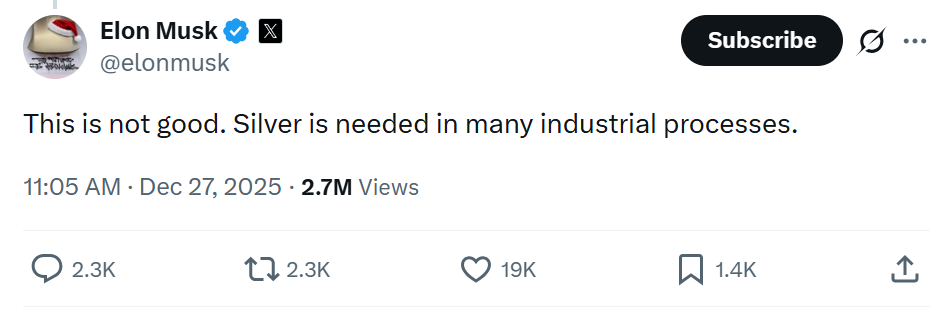
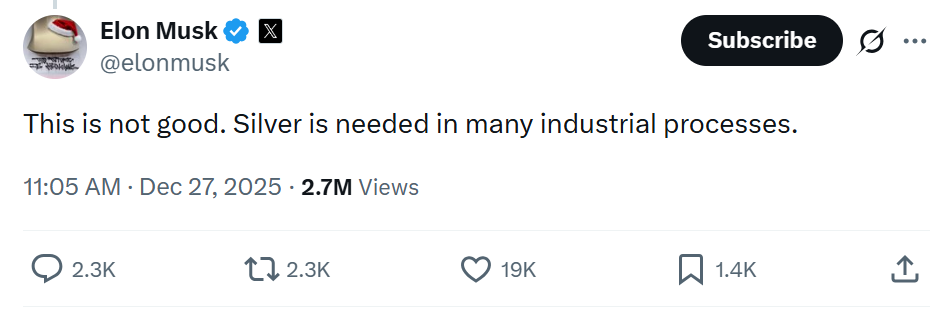
Core Viewpoint - The global silver market is experiencing a structural deficit, with supply shortages leading to significant price increases, driven by industrial demand rather than just safe-haven investment sentiment [3][6]. Supply Gap and Capacity Constraints - In 2025, global silver demand is projected to reach 1.24 billion ounces, while supply is only expected to be 1.01 billion ounces, resulting in a supply gap of 100 to 250 million ounces [5]. - This situation is characterized as a "structural deficit" with no quick fixes in sight [6]. - The rigidity of supply from mining is a core issue, as silver is primarily a byproduct of copper and zinc mining, and new mines typically take over 10 years to develop [7]. - Recycling efforts are insufficient to bridge the supply gap, leaving the supply side weak against rising demand [8]. Inventory Data and Market Dynamics - COMEX silver inventories have plummeted by 70% since 2020, while London vaults have seen a 40% decline [9]. - Current demand rates suggest that available silver inventories in some regions can only sustain 30 to 45 days of supply [10]. Discrepancy Between Paper and Physical Silver - There is a significant imbalance between "paper silver" and physical silver, with an estimated ratio of 356:1, meaning each ounce of physical silver corresponds to hundreds of paper claims [12]. - This disconnection increases market vulnerability, as even a small number of buyers requesting physical delivery could risk system collapse [12]. - Market participants are increasingly aware of this risk, contributing to the recent sharp price increases as banks and institutions react to supply constraints and physical shortages [12]. Industrial Demand and Sensitivity - Industrial applications now account for 50% to 60% of total silver demand [3][13]. - Industrial buyers are less sensitive to price fluctuations due to a lack of effective substitutes, but they are extremely vulnerable in the face of supply shortages [14]. - The volatility in silver prices poses a significant challenge for industries reliant on this critical raw material, as highlighted by concerns from industry leaders like Elon Musk [15].

白银狂飙,马斯克直言:这不好
凤凰网财经· 2025-12-28 12:36
Core Viewpoint - The price of silver is approaching $80 per ounce, driven by a structural deficit in the global market, plummeting inventories, and a disconnection between paper trading and physical supply, which poses significant challenges to modern industrial chains [1][2][5]. Group 1: Supply and Demand Dynamics - The global silver market has been in a structural deficit for five consecutive years, with physical inventories rapidly depleting and major exchange stock levels significantly declining [5][8]. - By 2025, global silver demand is projected to reach 1.24 billion ounces, while supply is only expected to be 1.01 billion ounces, resulting in a supply gap of 100 to 250 million ounces [8]. - The primary cause of this supply issue is the rigidity of mining supply, as silver is often a byproduct of copper and zinc mining, and new mines typically take over 10 years to develop [8]. Group 2: Inventory and Market Imbalance - Since 2020, COMEX silver inventories have decreased by 70%, and London vault stocks have fallen by 40%, with some regions' available silver inventories only able to sustain demand for 30 to 45 days [8]. - There is a significant imbalance between "paper silver" and physical silver, with an estimated ratio of 356:1, meaning each ounce of physical silver corresponds to hundreds of paper claims [9]. - This disconnection heightens market vulnerability, as even a small number of buyers requesting physical delivery could risk system collapse, contributing to the recent sharp price increases [9]. Group 3: Industrial Demand and Implications - Silver is not only a precious metal investment but also a critical raw material for solar panels, electric vehicles, electronic products, and medical devices, with industrial demand accounting for 50% to 60% of total demand [7]. - The lack of effective substitutes in many applications makes industrial buyers less sensitive to price fluctuations, but they are extremely vulnerable in the face of supply shortages [9]. - Elon Musk's concerns highlight the essential role of silver in modern industry, emphasizing that price volatility poses a serious challenge for industries reliant on these key materials [3][9].
白银狂飙,马斯克直言:这不好
Hua Er Jie Jian Wen· 2025-12-28 01:43
Core Viewpoint - Silver prices are nearing $80 per ounce, driven by a structural deficit, plummeting inventories, and a disconnection between paper trading and physical supply, posing significant challenges to modern industrial chains [1][3]. Supply and Demand Dynamics - The global silver market has been in a structural deficit for five consecutive years, with physical inventories rapidly depleting and major exchange stock levels significantly declining [3]. - By 2025, global silver demand is projected to reach 1.24 billion ounces, while supply is only expected to be 1.01 billion ounces, resulting in a supply gap of 100 to 250 million ounces [6]. - The primary cause of this supply-demand imbalance is the rigidity of mining supply, as silver is often a byproduct of copper and zinc mining, and new mines typically take over 10 years to develop [6]. Inventory Concerns - Since 2020, COMEX silver inventories have decreased by 70%, and London vault stocks have fallen by 40%, with some regions' available silver inventories only able to sustain demand for 30 to 45 days [6]. Paper Silver vs. Physical Silver - There is a significant imbalance between "paper silver" and physical silver, with an estimated ratio of 356:1, meaning each ounce of physical silver corresponds to hundreds of claims in paper trading [7]. - This disconnection heightens market vulnerability, as even a small number of buyers requesting physical delivery could risk system collapse, contributing to the recent sharp price increases [7]. Industrial Demand - Silver is not only a precious metal investment but also a critical raw material for solar panels, electric vehicles, electronic products, and medical devices, with industrial demand accounting for 50% to 60% of total demand [5]. - Industrial buyers are less sensitive to price fluctuations due to a lack of effective substitutes, making them particularly vulnerable in the face of supply shortages [8].
白银狂飙 马斯克直言:这不好!
智通财经网· 2025-12-28 01:26
Core Viewpoint - The silver market is experiencing a significant price surge, nearing $80 per ounce, driven by a severe global supply shortage, which is raising concerns about its impact on industrial development [1][3]. Group 1: Supply and Demand Dynamics - The global silver market has been in a structural deficit for five consecutive years, with physical inventories rapidly depleting and major exchange stock levels significantly declining [1][4]. - By 2025, global silver demand is projected to reach 1.24 billion ounces, while supply is expected to be only 1.01 billion ounces, resulting in a supply gap of 100 to 250 million ounces [4]. - The primary cause of this supply issue is the rigidity of mining supply, as silver is often a byproduct of copper and zinc mining, and new mines typically take over 10 years to develop [4]. Group 2: Inventory and Market Vulnerability - Since 2020, COMEX silver inventories have decreased by 70%, and London vault stocks have fallen by 40%, with some regions' available silver inventories only able to last 30 to 45 days at the current demand rate [4]. - There is a significant imbalance between "paper silver" and physical silver, with an estimated ratio of 356:1, indicating that each ounce of physical silver corresponds to hundreds of paper claims [5]. - This disconnection heightens market fragility, as a small number of buyers demanding physical delivery could risk system collapse, contributing to the recent price volatility [5]. Group 3: Industrial Demand and Sensitivity - Silver is not only a precious metal investment but also a critical raw material for solar panels, electric vehicles, electronics, and medical devices, with industrial demand accounting for 50% to 60% of total demand [3][6]. - Industrial buyers are less sensitive to price fluctuations due to a lack of effective substitutes, but they are extremely vulnerable in the face of supply shortages [6]. - The dramatic price volatility poses a significant challenge for industries reliant on these essential materials, as highlighted by concerns from industry leaders like Elon Musk [6].
白银年内涨幅超110%远超黄金 普通投资者如何投资白银?
Sou Hu Cai Jing· 2025-12-13 01:46
Group 1 - The silver market has experienced a significant surge, with London spot silver prices reaching $60.911 per ounce and New York silver futures hitting a record $61.435 per ounce, marking an annual increase of over 110%, far exceeding gold's nearly 60% rise [2][3] - Multiple factors are driving the increase in silver prices, including a weakening dollar, changes in U.S. tariff policies, and a shortage in silver supply. A key factor is the heightened expectation of a rate cut by the U.S. Federal Reserve, which may further depress the dollar and boost silver prices [3] - Industrial demand for silver has been steadily increasing, with the World Silver Association estimating an 18% rise in industrial silver demand over the past four years, accounting for about 50% of total silver demand. Global silver production is expected to be around 813 million ounces this year, slightly lower than in 2021, leading to constrained supply [3] Group 2 - Despite the rising prices, there has been no significant increase in silver jewelry sales in Dalian, as consumers prefer gold and are concerned about silver tarnishing. The current surge in silver prices is primarily attributed to its industrial properties and investment value rather than consumer interest in silver jewelry [5] - Ordinary investors can participate in silver investments through compliant channels, such as domestic silver ETF funds or international silver ETFs. The only domestic fund tracking silver futures is the Guotou Ruijin Silver Futures LOF, while international options like the iShares Silver Trust ETF offer direct exposure to physical silver [6]

银价狂飙为哪般
Qi Lu Wan Bao· 2025-12-11 01:51
Core Viewpoint - Silver prices have surged to historic highs, driven by multiple factors including a weakening dollar, changes in U.S. tariff policies, and supply shortages, with expectations of further interest rate cuts by the Federal Reserve [2][3]. Group 1: Price Movements - On December 10, spot silver prices reached $60 per ounce, marking a historic high, with London silver peaking at $61.607 per ounce, up over 110% from the year's low [2]. - The main contract for silver in China also hit a record high of 14,420 yuan per kilogram [2]. - Year-to-date, silver prices have outperformed gold, which is currently around $4,200 per ounce with a 60% increase this year [2]. Group 2: Supply and Demand Dynamics - The World Silver Association reported that industrial silver demand has increased by approximately 18% over the past four years, with industrial uses accounting for about 50% of total silver demand [3]. - Global silver production is expected to be around 813 million ounces this year, slightly lower than in 2021, with limited new mining capacity contributing to supply constraints [4]. - The rising demand for silver in industries such as electric vehicles and solar panels is a significant driver of this increased industrial demand [3]. Group 3: Market Sentiment and Investment Trends - There has been a notable increase in demand for physical silver in markets like Shenzhen, with reports of a surge in purchases of silver bars and jewelry [6]. - Investors are shifting from gold to silver due to the latter's lower price point and perceived greater upside potential [6]. - Analysts have mixed views on silver's future, with some predicting further price increases while others caution about potential corrections [7][9]. Group 4: Risks and Volatility - Silver is characterized by higher volatility compared to gold, with significant price fluctuations observed, including a notable drop of over 8.7% in late October [8][9]. - The price spread between buying and selling silver is larger than that of gold, making it more challenging for investors to realize gains [7]. - Experts warn that if silver prices continue to rise, alternative materials may be adopted in industries like photovoltaics, potentially reducing future demand [8].
白银价格再飙高 “黑马”后市行情几何
Bei Jing Shang Bao· 2025-12-10 15:44
Group 1 - The core viewpoint of the articles highlights the significant surge in silver prices, with London silver breaking historical records, reaching $61.6 per ounce on December 10, 2023, and COMEX silver futures hitting $62.14 per ounce [1][2] - Silver has outperformed gold significantly in 2023, with a year-to-date increase of over 111%, compared to gold's 59.81% rise, driven by expectations of a Federal Reserve interest rate cut [2][3] - The silver market has been in a structural deficit for five consecutive years, with a projected shortfall of 11.77 million ounces in 2023, supporting the upward price trend [3] Group 2 - The demand for silver is being driven by industrial needs, particularly in the renewable energy sector, with a historical high of 680 million ounces in industrial demand last year [3] - The Federal Reserve's anticipated interest rate cut is expected to influence the entire precious metals sector, with predictions of a potential market correction following the announcement [4] - The outlook for platinum and palladium is cautious, as demand may face pressure from a saturated automotive market and tariff issues affecting new energy vehicle sales [4]
再创新高!现货白银突破61美元,年内翻倍领跑贵金属
2 1 Shi Ji Jing Ji Bao Dao· 2025-12-10 03:47
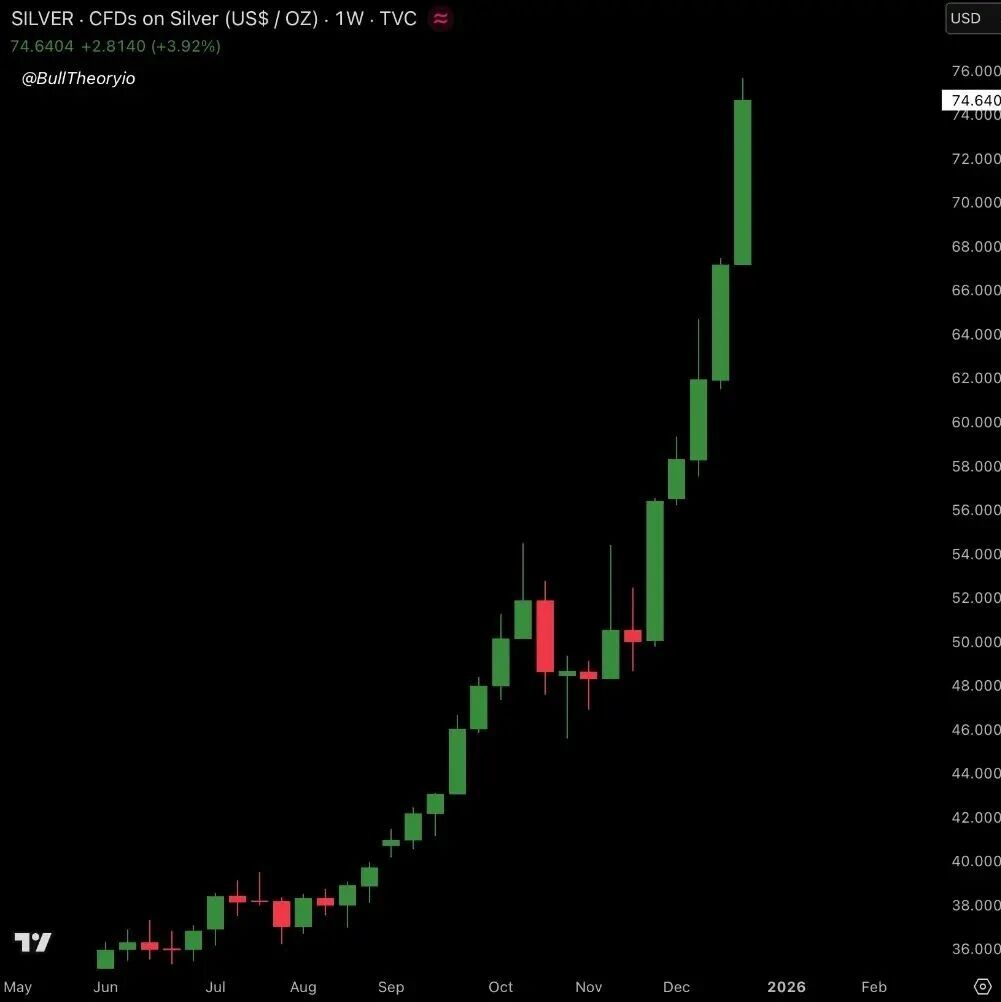
Core Viewpoint - The price of spot silver has surged, breaking the $61 per ounce mark, and has doubled in value this year, significantly outperforming gold [1][2]. Group 1: Price Movement - On December 10, spot silver prices rose to $61.197 per ounce, marking a 0.88% increase [1]. - The Shanghai silver futures contract saw an increase of 5%, reaching a historical high of 14,328 yuan per kilogram [2]. Group 2: Supply and Demand Dynamics - The core driver of rising silver prices has shifted from macroeconomic expectations to a tight physical supply situation, with global silver markets facing structural supply shortages [2]. - COMEX silver inventories have dropped to multi-year lows, contributing to the tight supply outlook [2]. - Industrial demand, particularly from the photovoltaic sector, is expected to drive silver usage to approximately 195.7 million ounces by 2025, setting a new historical high [2]. Group 3: Market Sentiment and Influences - Market sentiment has been bolstered by expectations of monetary easing from the Federal Reserve, with analysts noting that the potential for rate cuts has already been priced into precious metals [3].
白银续刷历史新高!市场豪赌:美联储鸽派新主席+供应短缺=超级周期
Zhi Tong Cai Jing· 2025-12-03 07:14
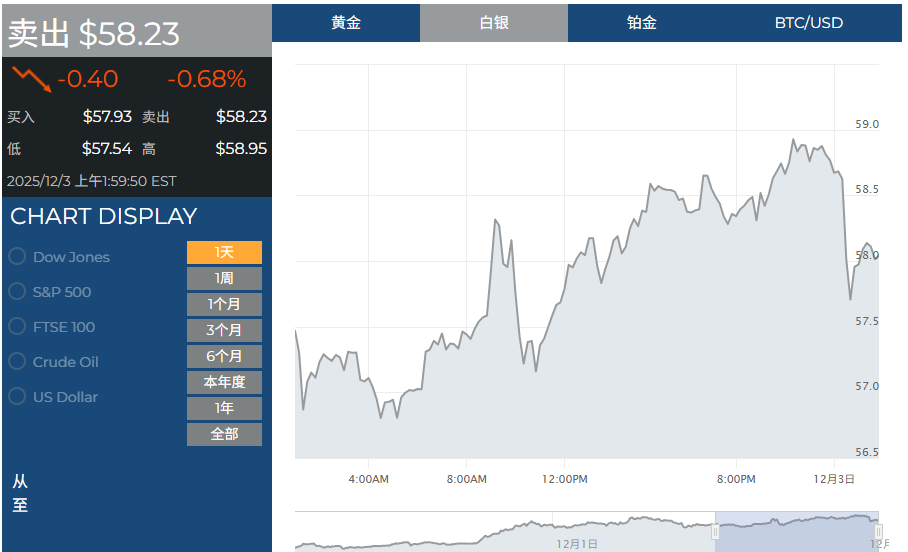
Core Viewpoint - Silver prices have reached record highs due to trader bets on sustained supply tightness and anticipated interest rate cuts by the Federal Reserve [1][3] Group 1: Silver Price Movement - On Wednesday, silver prices rose to a peak of $58.9471 per ounce, surpassing the previous high of $58.84 [1] - After reaching the peak, silver prices retreated to around $58 [1] Group 2: Federal Reserve and Interest Rate Expectations - Global interest rate futures traders are betting on significant rate cuts by the Federal Reserve, particularly with the potential new chairperson taking office in May [3] - Market expectations indicate a cumulative easing of 85 to 100 basis points by the end of next year, suggesting four rate cuts of 25 basis points each [3] - Current pricing in the interest rate futures market shows over 90% probability of a 25 basis point cut in the December meeting [3] Group 3: Silver Demand and Supply Dynamics - The holdings in silver-backed ETFs increased by approximately 200 tons, reaching the highest level since 2022, indicating sustained investor interest [5] - A record influx of silver into London has created pressure on other trading centers, with warehouse inventories at the Shanghai Futures Exchange dropping to a ten-year low [5] - The industrial demand for silver is rapidly increasing, particularly in solar energy, electronics, and AI hardware, highlighting its strategic importance [8]
@青海人!大涨!涨幅远超黄金
Sou Hu Cai Jing· 2025-12-02 10:17
Core Viewpoint - The price of silver has reached a historic high, surpassing $57 per ounce, with a year-to-date increase of over 90%, significantly outperforming gold [1] Market Conditions - The market anticipates a 87.4% probability of a 25 basis point rate cut by the Federal Reserve in December, which supports the silver and precious metals market [1] - The potential appointment of a dovish candidate, Harker, as the next Federal Reserve Chair further boosts confidence in a low-interest-rate environment [1] Supply and Demand Dynamics - There has been a consistent supply shortage in silver due to declining production levels, with global exchange silver inventories at nearly a decade low [1] - Industrial demand for silver, particularly from sectors like photovoltaics and electric vehicles, continues to grow, exacerbating the tightness in the physical market [1] - Short-term leasing rates for silver have surged, indicating a significant supply shortage in the market [1] Price Valuation - The current gold-to-silver price ratio is approximately 75:1, which is notably higher than the 20-year average of 60:1, suggesting that silver is relatively undervalued within the precious metals sector [1] - Bank of America has raised its silver price target for 2026 to $65 per ounce [1]