
碳中和

Search documents
大越期货沪铝周报-20260330
Da Yue Qi Huo· 2026-03-30 02:44
Report Industry Investment Rating - Not provided Core Viewpoints - Last week, Shanghai aluminum fluctuated and declined, with the main contract falling 0.35% and closing at 23,935 yuan/ton on Friday. Under the carbon neutrality policy, long - term production capacity is controlled, domestic real - estate demand is weak, but aluminum replacing copper may bring incremental demand. Middle - East events have disrupted aluminum supply, and the decline of non - ferrous metals has dragged down aluminum prices. The domestic fundamentals are entering the peak season, and later consumption changes should be monitored. Last week, LME inventory was 420,875 tons, slightly decreasing from the previous week, and SHFE weekly inventory increased by 2,527 tons to 454,571 tons [3] Summary by Directory 1. Market Review - Last week, Shanghai aluminum fluctuated and declined. The main contract fell 0.35%, closing at 23,935 yuan/ton on Friday. The decline was due to factors such as long - term production capacity control under carbon neutrality, weak real - estate demand, potential demand from aluminum replacing copper, supply disruptions from Middle - East events, and the drag of non - ferrous metal price declines. The domestic market is entering the peak season, and attention should be paid to consumption changes. LME inventory was 420,875 tons, slightly down from the previous week, and SHFE weekly inventory increased by 2,527 tons to 454,571 tons [3] 2. Fundamentals (Inventory Structure) 2.1 Supply - Demand Balance Sheet - The China annual supply - demand balance sheet for aluminum shows that from 2018 - 2024, production, net imports, apparent consumption, actual consumption, and supply - demand balance have all changed. For example, in 2018, production was 36.09 million tons, net imports were 70,300 tons, apparent consumption was 36.1503 million tons, actual consumption was 36.6263 million tons, and the supply - demand balance was - 476,000 tons. In 2024, production is expected to be 43.1227 million tons, net imports 1.9616 million tons, apparent consumption 45.025 million tons, actual consumption 44.875 million tons, and the supply - demand balance 150,000 tons [11] 3. Market Structure 3.1 Spot - Futures Price Difference - Not provided 3.2 Import Profit - Not provided
2026轻质屋面光伏系统安全技术白皮书
固德威技术股份有限公司· 2026-03-30 01:50
Investment Rating - The report emphasizes the importance of promoting photovoltaic roofing systems as a highly effective means to achieve carbon neutrality goals, indicating a positive investment outlook for the industry [7]. Core Insights - The distributed photovoltaic market has seen rapid growth, with a 104% increase in new installations in Q1 2023 compared to the same period in 2022, highlighting a strong upward trend in the industry [10]. - The report identifies safety as a primary concern for photovoltaic systems installed on single-ply roofs, necessitating a focus on building safety and roof functionality before energy generation [7]. - The introduction of innovative solutions, such as the lightweight photovoltaic membrane product, addresses safety and performance challenges, indicating a shift towards more integrated and efficient roofing solutions [24][26]. Industry Background - The distributed photovoltaic market has surpassed centralized photovoltaic systems for three consecutive years, with a market share of 54% in Q1 2023 [10]. - The Chinese Photovoltaic Industry Association predicts an addition of 140GW of new installations for the year, reflecting sustained high growth in the sector [10]. - The "photovoltaic + building" model is recognized as a significant market opportunity for distributed photovoltaics, supported by various regional energy development plans [12]. Safety Application Trends - Single-ply roof photovoltaic systems face challenges such as water leakage, product aging, and mechanical loads, necessitating careful design and installation [18]. - Various installation methods are discussed, including penetrating supports, adhesive fixing, and weighted ballast, each with its own advantages and disadvantages regarding safety and waterproofing [20][22][36]. Solutions for Safety Applications - The report introduces the "Galaxy Roof" solution, a lightweight photovoltaic product that integrates with TPO waterproofing membranes, enhancing safety and efficiency [24][26]. - The Galaxy product weighs only 6kg per square meter, significantly reducing the load on roofs while maintaining high durability and performance standards [26]. - The installation process involves specific steps to ensure proper adhesion and thermal management, crucial for the longevity of the system [92][94]. Environmental Impact - The report highlights the influence of temperature on TPO roofing materials, emphasizing the need for effective thermal management to prolong material lifespan [27][28]. - Wind and snow loads are critical factors in the design of photovoltaic systems on roofs, with the Galaxy product tested to withstand extreme conditions [60][69]. Fire Safety - Fire safety is a key consideration, with TPO materials rated B2 for fire resistance, and the integration of non-combustible insulation materials can enhance overall fire safety [53]. - The report discusses advanced technologies for arc detection and rapid shutdown to mitigate fire risks associated with photovoltaic systems [54][57]. Case Studies - The report includes a case study of the Zhenjiang Fischer project, which utilizes the Galaxy Ultra product, demonstrating significant energy generation potential and environmental benefits [103].

印尼工业增长下的电力平衡与定价
HTSC· 2026-03-30 00:25
Investment Rating - The report maintains a "Buy" rating for the following companies: Harbin Electric, Sanfeng Environment, Wangneng Environment, and Weiming Environmental [7][9]. Core Insights - Indonesia's electricity supply appears sufficient, but there is a structural electricity shortage due to inadequate grid coverage, leading to regional electricity deficits [4][12]. - Future increases in electricity prices in Indonesia are expected to be driven by adjustments in the energy structure, which will raise generation and operational costs, rather than an apparent electricity shortage [4][12]. - The report highlights the importance of coal as a strategic resource, with a projected increase in coal demand to 1.2 billion tons per year by 2035, driven by domestic needs and metal smelting industries [3][12]. Summary by Sections Investment Overview - The report identifies a need for an average of 3 GW of new coal power installations annually from 2025 to 2035 to ensure electricity supply security, despite the government's restrictions on new coal power plants [12][45]. - The energy transition in Indonesia will require a dual approach of increasing both coal and renewable energy installations to meet industrial electricity demands [12][45]. Demand Side - High-energy-consuming industries are driving electricity demand and GDP growth in Indonesia, with industrial electricity consumption expected to grow by over 10% annually from 2021 to 2024 [17][24]. Supply Side - The rapid growth of self-built power plants (IUPTLS) indicates the inadequacy of PLN's grid coverage, with self-built coal power capacity increasing by 168% from 2021 to 2023 [14][38]. - The report notes that despite a high reserve margin, regional disparities in electricity supply persist, particularly in industrial areas [24][38]. Energy Transition - The report emphasizes that coal remains an indispensable part of Indonesia's energy transition, with plans to add 39.1 GW of renewable energy capacity from 2025 to 2035, while still requiring significant coal power additions [45][59]. - The conflict between economic growth targets and carbon neutrality goals is highlighted, with the need for affordable base-load electricity from coal conflicting with the push for renewable energy [46][48]. Recommendations - The report recommends companies that are likely to benefit from the growing demand for electricity equipment and waste-to-energy projects in Indonesia, including Harbin Electric and Weiming Environmental [5][12].


万凯新材,5000吨生物基聚酯PEF项目备案
DT新材料· 2026-03-29 16:05
Core Viewpoint - The article emphasizes the strategic investment by Wankai New Materials in the development of bio-based polyester PEF, highlighting its potential as a next-generation material that aligns with global carbon neutrality trends and addresses the increasing demand for sustainable packaging solutions [5][9][12]. Group 1: Project Overview - Wankai New Materials has officially filed for a pilot project to produce 5,000 tons of bio-based polyester PEF, with a total investment of 59.945 million yuan, expected to commence construction in March 2026 and be completed by September 2027 [5]. - PEF is recognized for its superior gas barrier properties compared to traditional petroleum-based PET, making it suitable for sensitive beverage packaging [7][8]. Group 2: Market and Policy Context - The approval of PEF for food contact materials by the National Health Commission marks a significant step towards its commercial viability, allowing it to be used in food packaging and catering products [11]. - The Chinese government's 14th Five-Year Plan includes bio-based materials as a key area for development, indicating strong policy support for the industry [13]. Group 3: Industry Implications - Wankai's investment in PEF technology positions the company to capitalize on the growing demand for sustainable materials, driven by major global brands committing to carbon neutrality by 2030-2050 [14]. - The establishment of a closed-loop recycling system through partnerships, such as with Carbios for enzymatic recycling of PET, enhances Wankai's competitive edge in the bio-based materials market [12]. Group 4: Future Outlook - The year 2026 is pivotal as it aligns with national goals for reducing carbon emissions per unit of GDP, positioning bio-based materials like PEF as essential for achieving these targets [13]. - The increasing urgency for brands to green their supply chains transforms the demand for sustainable materials from an option to a necessity, with PEF emerging as a preferred choice for high-performance packaging [14].

环保行业周报:水气污染排放标准升级,环境监测迎结构性机遇
GOLDEN SUN SECURITIES· 2026-03-29 10:24
Investment Rating - The report maintains a "Buy" rating for key companies such as 惠城环保 (Huicheng Environmental) and 高能环境 (Gaoneng Environment) [5][27] Core Insights - The report highlights structural opportunities in environmental monitoring due to the tightening of water pollution discharge standards in the petroleum refining industry and the upgrade of air pollutant discharge standards for hazardous waste incineration [1][17][26] - The macroeconomic environment is characterized by historically low interest rates, making high dividend assets and growth-oriented companies attractive [2][27] - The environmental sector has shown resilience, outperforming the broader market indices, with specific sub-sectors like solid waste management and energy efficiency showing strong performance [3][28] Summary by Sections 1. Investment Views - The revised water pollution discharge standards for the petroleum refining industry will create significant investment demand for upgrading wastewater treatment facilities, particularly in heavy metal wastewater pretreatment and PFAS removal [1][17] - The hazardous waste incineration standards are set to tighten, benefiting companies with advanced gas monitoring technologies [1][26] - The environmental sector is currently at a historical low in terms of institutional holdings and valuations, indicating a potential for sustained rebounds [27] 2. Market Performance Review - The environmental sector outperformed major indices, with a reported increase of 1.67%, while the Shanghai Composite Index fell by 1.09% [3][28] - Notable performers in the A-share environmental stocks included 雪浪环境 (Xuelang Environment) with a 26.98% increase, while stocks like 南方汇通 (Nanfang Huitong) saw declines [3][28] 3. Industry News - Initiatives such as the launch of the 2026 Green Manufacturing List in Guangzhou and the identification of mandatory clean production audit enterprises in Shandong are indicative of ongoing regulatory support for the sector [39][40] - The Fuzhou government has initiated a special fund application for industrial energy conservation, further promoting green development [41] 4. Key Announcements - Companies like 旺能环境 (Wangneng Environment) and 维尔利 (Weili) have made significant announcements regarding share pledges and bond maturities, reflecting ongoing financial activities within the sector [42][43]


【电新】高油价带动电动化渗透率提升,锂电材料有望量价齐升——碳中和领域动态追踪(一百八十)(殷中枢/陈无忌)
光大证券研究· 2026-03-28 00:03
Core Viewpoint - The recent performance of the lithium battery sector is positively influenced by high oil prices and increasing penetration of electrification, resonating with strong Q1 earnings and sustained high production levels in Q2 [4]. Group 1: Commercial Vehicle Sector - The economic viability of commercial vehicles is sensitive to oil prices, with overseas electric heavy truck orders expected to grow over 50% year-on-year since 2026, indicating a potential increase in electrification penetration [5]. - According to ACEA data, electric truck sales in Europe are projected to reach 13,000 units by 2025, representing a year-on-year growth of over 70%, with electric trucks accounting for 4.2% of total truck sales in the EU [5]. Group 2: Electric Vehicle Market - The penetration rate of new energy vehicles (NEVs) in the domestic market is recovering, with an estimated retail market size of approximately 1.7 million units in March, a month-on-month increase of 64.5% but a year-on-year decrease of 12.4% [7]. - The retail volume of new energy vehicles is expected to be around 900,000 units, restoring a penetration rate of about 52.9% [7]. - The domestic sales of new energy passenger vehicles account for 43.7% of total passenger vehicle sales, while new energy commercial vehicles represent 22% of commercial vehicle sales [7]. Group 3: Battery Demand and Performance - The demand for energy storage remains robust, with total sales of power and energy storage batteries in China reaching 262.0 GWh in January-February, a year-on-year increase of 53.8% [8]. - Power battery sales accounted for 177.2 GWh, representing 67.6% of total sales and a year-on-year growth of 36.5% [9]. - Energy storage battery sales reached 84.8 GWh, making up 32.4% of total sales, with a remarkable year-on-year growth of 108.9% [9]. Group 4: Battery Capacity Enhancements - The average battery capacity per new energy vehicle in China increased to 64.9 kWh in January-February, reflecting a year-on-year growth of 32.3% [10]. - For pure electric trucks, the average battery capacity reached 239.8 kWh, up 30.4% year-on-year, while pure electric passenger vehicles had an average capacity of 65.4 kWh, increasing by 22.5% [10]. - Plug-in hybrid passenger vehicles saw an average battery capacity of 35.7 kWh, with a year-on-year growth of 38.6% [10].
新奥能源(02688) - 2025 H2 - 电话会议演示
2026-03-27 10:25
March 2026 1 Business Highlights Core profit reached RMB6.74 bn,gross profit share of IE and smart home businesses reached 41%, an increase of 2.3 percentage points yoy Content Retail gas sales volume increased by 1.5% yoy to 26.61 bn m³ with the newly installed designed daily capacity of 13.44 mn m³ for C/I customers, and newly developed 1.38 mn residential household customers Gross profit of IE business increased by 5.3% yoy to RMB2.34 bn, newly installed photovoltaic capacity increased by 167.4% yoy to 6 ...

百年情缘今再续:巴斯夫项目在粤投产背后的吸引力与支撑力
Nan Fang Du Shi Bao· 2026-03-27 06:53
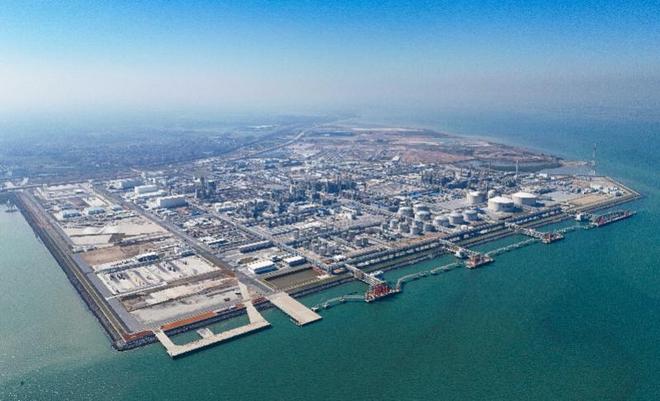
Core Viewpoint - BASF's integrated base in Guangdong, with an investment of approximately €8.7 billion, marks the company's largest single investment in China and signifies its long-term commitment to the Chinese market [1][5][16]. Investment and Development - The BASF (Guangdong) integrated base officially commenced operations on March 26, 2026, and is the company's seventh integrated production facility globally, covering an area of about 4 square kilometers and employing over 2,000 staff [5][10]. - The project aims to produce a diverse range of products, including basic chemicals, intermediates, and specialty chemicals, which will help reduce China's reliance on high-end product imports [5][10]. Strategic Location and Support - Guangdong was chosen for the project due to its status as a strong economic province and a leader in reform and opening-up, with significant demand from industries such as automotive and electronics [7][10]. - The location in Zhanjiang benefits from excellent transportation infrastructure, facilitating efficient import of raw materials and distribution of products [7][10]. Environmental and Technological Innovations - The integrated base is designed to significantly lower carbon emissions, with a potential reduction of up to 50% compared to traditional petrochemical facilities [8][10]. - The facility features the world's first ethylene unit powered entirely by renewable energy, with an annual capacity of 1 million tons, producing high-quality, low-carbon products [8][10]. Market Outlook and Future Plans - BASF's investment reflects confidence in China's chemical market, which is seen as a growth engine due to its transition towards high-quality development [7][13]. - The company aims to align its climate-neutral roadmap with China's dual carbon goals, targeting a 25% reduction in greenhouse gas emissions by 2030 compared to 2018 levels, and achieving net-zero emissions by 2050 [11][12]. Industry Context - The establishment of the BASF integrated base is viewed as a model for foreign enterprises to seize new opportunities in China's evolving market, highlighting the importance of the Chinese market for sustainable growth and technological innovation [17].

熄灯一小时 | 低碳同行,绿色相伴
申万宏源证券上海北京西路营业部· 2026-03-27 05:24
个人金融业务 | 企业金融业务 投资管理业务 │ 机构服务及交易业务 www.swhysc.com 有 信 仰 敢担当 守正创新 · 追求卓越 . 低碳不止一步,守护不止一时。申万宏源始终以责任担当助力碳中和目标,用实际行动守护生 态平衡。 低碳同行,绿色相伴 Low-carbon journey, green companionship. 申万宏源发布 Q 微信公众号 ...
大越期货沪铝早报-20260327
Da Yue Qi Huo· 2026-03-27 02:53
Report Industry Investment Rating - Not available Core Viewpoints - The fundamentals of the aluminum industry are neutral, with carbon neutrality controlling capacity expansion, domestic supply reaching its ceiling, weak downstream demand, and a continued slump in the real - estate market, as well as volatile short - term macro - sentiment [2]. - The basis shows a discount to the futures, which is bearish. The inventory on the Shanghai Futures Exchange increased by 35,619 tons to 452,044 tons last week, remaining neutral. The closing price is below the 20 - day moving average while the 20 - day moving average is upward, also neutral. The main positions are net long and the long positions are increasing, which is bullish [2]. - In the long run, carbon neutrality will drive changes in the aluminum industry and is bullish for aluminum prices. However, macro - sentiment is volatile, and attention should be paid to Middle East events [2]. Summary by Related Catalogs Daily View - The fundamental situation of aluminum is neutral, with carbon neutrality limiting capacity expansion, weak downstream demand, and changeable short - term macro - sentiment. The basis is bearish, inventory is neutral, the price trend is neutral, and the main positions are bullish. Long - term carbon neutrality is bullish for aluminum prices, and attention should be paid to macro - events [2]. Recent利多利空Analysis - Bullish factors include carbon neutrality controlling capacity expansion, geopolitical disturbances in Russia and Ukraine affecting Russian aluminum supply, and potential interest rate cuts [3]. - Bearish factors are the unoptimistic global economy, high aluminum prices suppressing downstream consumption, and the cancellation of export tax rebates for aluminum products [3]. Daily Summary - Shanghai's spot price was 70,770 yesterday, down 375; today it is 70,870, down 400. Nanchu's spot price was 70,690, down 450. The SHFE inventory increased by 29,728 tons to 136,300 tons this week, and the LME inventory decreased by 425 tons to 74,750 tons [4]. Supply - Demand Balance - The supply - demand balance of aluminum in China from 2018 - 2024 shows that there was a supply shortage from 2018 - 2023, and a supply surplus is expected in 2024. In 2024, the production is 43.1227 million tons, the net import is 1.9616 million tons, the apparent consumption is 45.025 million tons, the actual consumption is 44.875 million tons, and the supply - demand balance is 0.15 million tons [24].