
碳达峰

Search documents
“十四五”时期青海省藏语新词术语规范化工作成效显著
Xin Lang Cai Jing· 2026-02-23 18:39
Core Viewpoint - The standardization of Tibetan new terms in Qinghai Province during the "14th Five-Year Plan" period aims to strengthen the awareness of the Chinese national community, promote healthy and harmonious language use, ensure precise information dissemination, and support technological innovation and cultural security, thereby providing a solid linguistic foundation for high-quality economic and social development in Qinghai Province [1] Group 1 - The Qinghai Provincial Tibetan Terminology Standardization Committee has collected, translated, reviewed, and published over 5,000 frequently used new terms in politics, economy, technology, and culture, issuing 26 editions of the "Tibetan New Terms Bulletin" [2] - The published entries focus on new terms, commonly used terms, and current event terminology, covering key areas such as "artificial intelligence, quantum information, life health," "big data, blockchain, information platforms," "carbon neutrality, carbon peak, carbon capture, new energy vehicles," and "epidemic prevention, black soil beach governance" [2] - The standardization efforts have effectively eliminated conceptual confusion and communication ambiguities, ensuring timely and accurate dissemination of new concepts and terms related to major events, meetings, and policies [2] Group 2 - The next steps involve actively adapting to the rapid social development and the emergence of new concepts, industries, and models by further strengthening the standardization of new terms and improving the terminology standardization work mechanism [3] - There is a focus on continuously optimizing the technical support system for standardization work to enhance scientific rigor and efficiency, promoting the social application of standardized terminology results [3]
成县以生态筑基,绘就绿色发展新画卷
Yang Guang Wang· 2026-02-23 05:04
污染防治攻坚成效显著,环境质量硬指标稳步提升。近年来,在蓝天保卫战中,成县细化落实工业减 排、燃煤减量、扬尘管控、尾气达标等系列举措,空气质量持续优化,空气优良天数比率连续多年稳定 保持在95%以上,PM2.5平均浓度降至23微克/立方米,"成县蓝"成为城乡居民的日常标配。 夏季,漫步在甘肃成县青泥河畔,只见碧波荡漾,两岸草木繁茂,成群的候鸟在水面上嬉戏、觅食,给 这宁静的城市增添了勃勃生机,一幅天蓝、水清、土净、山绿的和谐生态画卷正徐徐展开。 近年来,成县始终坚守"生态优先、绿色发展"理念,以绿色生态赋能工程为总抓手,在污染防治、生态 修复、绿色低碳发展三大领域精准发力,用实打实的数据勾勒出生态建设的亮眼答卷,持续擦亮高质量 发展的生态底色,积极探索"绿水青山"与"金山银山"双向转化的新路径。 绿色低碳发展纵深推进,"两山"转化动能强劲。成县坚定不移地实施全面节约战略,严格遵循"四水四 定"原则,推进城镇节水降损、农业节水增效、工业节水减排、生态节水控水。2025年全县征收水资源 税突破200万元,月均水资源税收入比同期月均水资源费收入增长106.97%,积极推广普及生活节水器 具9725个,城市公共供水管 ...
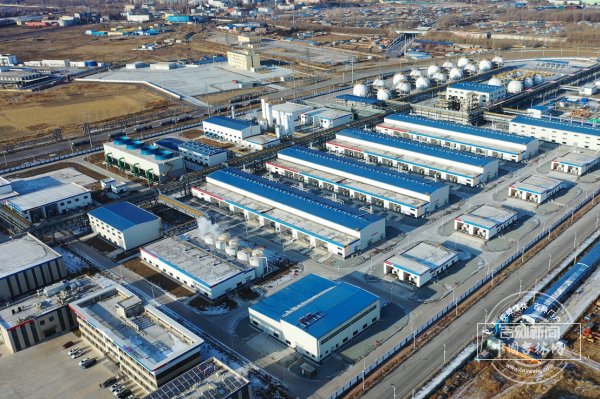
高质量发展新答卷|松原石化园区高位推进国家级零碳园区建设 领跑绿色转型新赛道
Xin Lang Cai Jing· 2026-02-14 09:16
Core Viewpoint - The Songyuan Petrochemical Industrial Circular Economy Park is advancing its development strategy focused on green energy and zero-carbon initiatives, aiming to establish itself as a national-level zero-carbon park and a benchmark for high-quality development in the regional energy and chemical industry [1][8]. Group 1: Development Strategy - During the "14th Five-Year Plan" period, Songyuan City will implement the "1145" development strategy, positioning itself as a "National Comprehensive Demonstration Zone for Green Energy" and promoting the construction of a national-level zero-carbon park [1]. - The park aims to achieve a modern industrial system centered on green chemicals, new materials, and new energy, focusing on the integration of "green electricity + green hydrogen + green chemicals" and "green metallurgy + equipment manufacturing" [1][8]. Group 2: Zero-Carbon Achievements - Since 2021, the park has received seven significant qualifications, including being the first green electricity demonstration zone in Northeast China and a low electricity price demonstration zone [3]. - The park's renewable energy capacity includes one-third of the province's wind and solar power, with a total installed capacity exceeding 10 million kilowatts within a 100-kilometer radius [3]. - Currently, 14 industrial enterprises have settled in the zero-carbon park, with a total industrial output value of 1.816 billion yuan and a carbon emission total of 99,000 tons [3][4]. Group 3: Green Electricity Supply - To address the challenges of power generation and consumption, the park has established a new energy consumption system that allows green electricity to be directly supplied to chemical production facilities [4]. - The park has implemented a long-term power purchase agreement model between chemical enterprises and renewable energy producers, significantly reducing intermediary costs and ensuring stable green electricity supply [4]. Group 4: Green Hydrogen Integration - The park is focusing on the full chain of green hydrogen production, storage, transportation, and utilization, with the "Qing Hydrogen No. 1" project producing 45,000 tons of green hydrogen annually, which is about 20% of China's current green hydrogen production [7]. - The park aims to produce 420,000 tons of green hydrogen and 760,000 tons of green ammonia annually once all related projects are operational, contributing to significant reductions in carbon emissions [7]. Group 5: Future Goals - By 2030, the park aims to achieve near-zero carbon emissions and ensure that clean energy consumption accounts for over 95% of total energy use [8]. - The park's zero-carbon initiatives are positioned as a core engine for the green transformation of Songyuan's economy and a model for energy revolution and industrial upgrading in Jilin Province [8].

读懂省级“十五五”规划建议中的“双碳”关键词
Zhong Guo Neng Yuan Wang· 2026-02-14 00:39
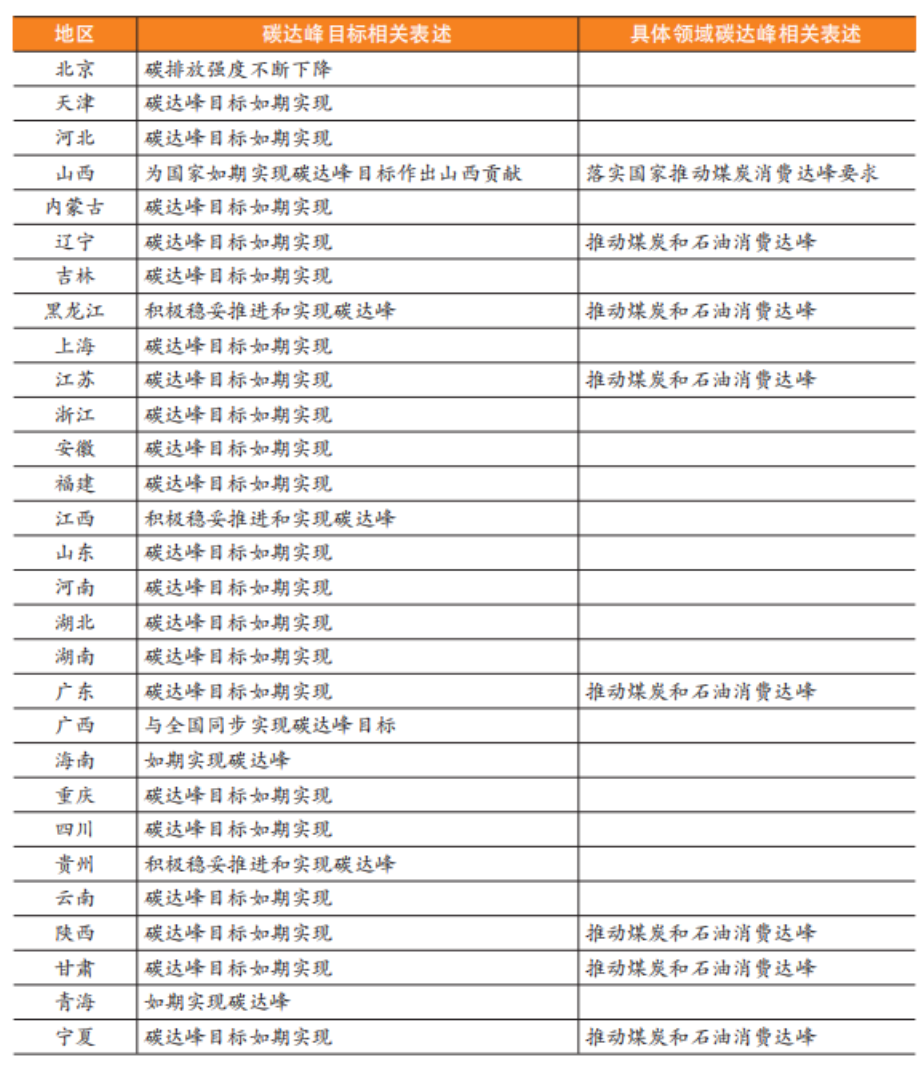
Core Insights - The article emphasizes the alignment of provincial "14th Five-Year" plans with national carbon neutrality goals, highlighting the importance of achieving carbon peak and dual control of carbon emissions as key objectives for local governments [1][2][7] Group 1: Carbon Peak and Dual Control - The "14th Five-Year" period is identified as a critical phase for China to achieve its carbon peak, with 28 provinces mentioning "carbon peak" in their plans [2] - The national strategy includes a shift from energy consumption dual control to carbon emissions dual control, with all 30 provinces committing to implement this system [2] Group 2: Non-CO2 Greenhouse Gas Emissions - There is an increased focus on controlling non-CO2 greenhouse gas emissions, with local plans reflecting a commitment to reduce these emissions in line with national targets for 2035 [3] Group 3: New Energy System Development - The establishment of a new energy system is highlighted as a priority, with all provinces outlining plans to enhance clean and low-carbon energy sources [4] - The national plan advocates for a diversified energy supply, emphasizing the development of solar and wind energy, with 28 provinces mentioning solar energy and 26 focusing on wind energy [4] Group 4: Clean and Efficient Use of Fossil Fuels - The clean and efficient use of fossil fuels is crucial for optimizing energy structure, with various provinces outlining measures to upgrade coal power and reduce coal consumption [5][9] - Specific initiatives include promoting carbon capture technologies and transitioning coal power from a primary energy source to a supportive role [5][9] Group 5: Green and Low-Carbon Energy Consumption - Enhancing electrification across sectors is a key strategy for promoting green energy consumption, with 18 provinces advocating for increased electrification levels [6][11] - Local plans include commitments to improve energy consumption efficiency and promote renewable energy usage in high-energy-consuming industries [6][11]
全社会用电量中每10度电有近4度是绿电
Xin Lang Cai Jing· 2026-02-12 23:45
Core Insights - The National Energy Administration reported that by 2025, the installed capacity of renewable energy in China will reach 450 million kilowatts, a year-on-year increase of 21%, accounting for 83% of the country's new power installations [1][4] - Renewable energy's share of total installed capacity will exceed 60%, with wind and solar power contributing over 430 million kilowatts of new installations, surpassing thermal power for the first time in history [1][4] Installed Capacity - In 2025, the breakdown of new renewable energy installations includes 12.15 million kilowatts from hydropower, 120 million kilowatts from wind power, 318 million kilowatts from solar power, and 1.51 million kilowatts from biomass [1][4] - By the end of 2025, the total installed capacity of renewable energy will reach 2.34 billion kilowatts, a 24% increase year-on-year, representing approximately 60% of the total installed power capacity in the country [1][4] Power Generation - The renewable energy generation in 2025 is projected to be 3.99 trillion kilowatt-hours, a 15% increase year-on-year, accounting for 38% of total power generation, surpassing the combined electricity consumption of the tertiary industry and urban-rural residents [2][5] - The new renewable energy generation will cover the entire increase in social electricity consumption, which is 516.1 billion kilowatt-hours [2][5] Green Development - The share of green electricity in total electricity consumption is significant, with nearly 4 out of every 10 kilowatt-hours being green energy [2][5] - The cumulative installed capacity of wind and solar power reached 1.84 billion kilowatts by 2025, accounting for 47.3% of total capacity, marking a historic surpass of thermal power [2][6] Future Plans - The National Energy Administration aims to continue promoting the share of non-fossil energy consumption during the 14th Five-Year Plan period, with a focus on maintaining an average annual growth of 200 million kilowatts in wind and solar power [3][6] - Efforts will be made to enhance energy efficiency and expand the use of green electricity in key sectors such as industry, construction, and transportation, while also promoting the utilization of biomass and geothermal energy [3][6]
2025年全国风光发电量同比增长25%
Yang Shi Xin Wen· 2026-02-12 03:22
Core Insights - The National Energy Administration reported that by 2025, the national wind and solar power generation is expected to grow by 25%, accounting for 22% of total power generation, significantly boosting the share of renewable energy to nearly 40% of total generation [1] Group 1: Renewable Energy Growth - Since the start of the 14th Five-Year Plan, the cumulative installed capacity of wind and solar energy has reached 3.4 times that of the end of 2020, with the share of electricity generated from these sources increasing by over 12 percentage points [1] - In 2025, China's renewable energy will add 452 million kilowatts of new installed capacity, representing a year-on-year growth of 21% [1] - Over the five years of the 14th Five-Year Plan, a total of 1.389 billion kilowatts of new renewable energy capacity will be added, laying a solid foundation for achieving carbon peak by 2030 and the self-contribution target by 2035 [1]
国家能源局:2025年我国风电太阳能发电新增装机超4.3亿千瓦 再创历史新高
Xin Hua Cai Jing· 2026-02-12 03:20
Core Insights - In 2025, China's wind and solar power generation capacity is expected to exceed 430 million kilowatts, with wind power contributing 120 million kilowatts and solar power 318 million kilowatts, marking a year-on-year growth of 22.0% and setting a new historical record [1] - The cumulative installed capacity of wind and solar power will reach 1.84 billion kilowatts, accounting for 47.3% of the total, surpassing thermal power for the first time [1] - The "green content" of electricity consumption continues to improve, with wind and solar power generation expected to grow by 25% year-on-year, making up 22% of total generation, which significantly boosts the share of renewable energy to nearly 40% [1] Industry Development - Since the 14th Five-Year Plan, the development speed of new energy, represented by wind and solar power, has been unprecedented, with cumulative installed capacity reaching 3.4 times that of the end of 2020 [1] - The contribution of the energy transition is increasingly prominent, with the share of electricity from renewable sources rising by over 12 percentage points [1] - The successful completion of the 14th Five-Year Plan's targets lays a solid foundation for achieving carbon peak by 2030 and the self-contribution goals by 2035 [1]

“双碳”政策专家电话会
2026-02-11 15:40
Summary of Conference Call on Carbon Neutrality and Chemical Industry Industry Overview - The conference focused on the chemical industry in the context of China's dual carbon goals, specifically the 14th Five-Year Plan (14th FYP) and the transition towards carbon neutrality by 2060 [1][2]. Key Points and Arguments 1. **Carbon Peak and Neutrality Goals**: - China aims to reach carbon peak by 2030 and achieve carbon neutrality by 2060, with a specific target of reducing total carbon emissions by 7% to 10% after reaching the peak [2][4]. - The transition from intensity-based targets to total emission reduction is a significant shift in policy [4][6]. 2. **Policy Implementation**: - The 14th FYP emphasizes a comprehensive green transformation across all industries, moving from energy consumption control to carbon emission control [5][6]. - A carbon emission budget mechanism will be established at provincial and municipal levels, with specific targets allocated to each region [6][7]. 3. **Inclusion of Industries in Carbon Market**: - Currently, eight major industries, including power, cement, aluminum, and steel, are included in the carbon market, which accounts for 65% of national carbon emissions [7][8]. - By 2027, additional sectors such as petrochemicals, chemicals, paper, and construction materials will be integrated into the carbon market [7][8]. 4. **Carbon Management and Monitoring**: - Companies will be required to incorporate carbon management into their operational frameworks, with carbon emissions data becoming a prerequisite for project approvals [8][9]. - A product carbon footprint database will be established to track and certify carbon emissions associated with products [9][10]. 5. **Development of Zero-Carbon Facilities**: - The government plans to establish 100 national-level zero-carbon parks by 2030, with ongoing efforts to create zero-carbon factories in high-emission industries [9][10]. 6. **Market Mechanisms and Cost Implications**: - The introduction of paid carbon allowances is anticipated, with a gradual shift from free allocation to auction-based distribution [11][12]. - The carbon market will also facilitate voluntary emission reduction projects, allowing non-regulated companies to participate [12][13]. 7. **Impact on Chemical Industry**: - The chemical industry faces significant pressure due to its reliance on coal, which constitutes over 40% of its emissions [16][17]. - The projected carbon emissions from the chemical sector are expected to increase slightly, posing challenges for compliance with future carbon reduction targets [16][17]. 8. **Technological Innovations**: - The industry is encouraged to adopt renewable resources and improve production processes to reduce carbon emissions, including the use of Carbon Capture, Utilization, and Storage (CCUS) technologies [17][18]. Additional Important Content - The transition to a carbon-neutral economy will require a comprehensive understanding of the carbon footprint across various production processes, particularly in the chemical sector [17][18]. - The government is expected to monitor and adjust carbon emission allowances based on real-time data, although the current monitoring system is still under development [45][46]. - The dual carbon goals will necessitate a balance between maintaining industrial competitiveness and achieving environmental sustainability, particularly in coal-dependent sectors [38][39]. This summary encapsulates the critical discussions and insights from the conference call regarding the implications of China's carbon neutrality goals on the chemical industry and related sectors.
双碳-政策专家电话会
2026-02-11 15:40
Summary of Key Points from the Conference Call on Carbon Neutrality Policies Industry Overview - The conference focused on China's carbon neutrality policies, particularly the chemical and petrochemical industries, and their implications during the 14th Five-Year Plan (2021-2025) period [1][2]. Core Points and Arguments 1. **Carbon Peak and Neutrality Goals**: China aims to peak carbon emissions around 2028 and achieve a 7%-10% reduction in emissions by 2035 after reaching the peak. The long-term goal is carbon neutrality by 2060 [2][10]. 2. **Strict Control Measures**: The chemical and petrochemical industries will face stringent controls, including local carbon budget assessments, inclusion in carbon markets, and enhanced carbon management practices [1][2]. 3. **New Mechanisms for Energy Consumption Control**: A dual control mechanism for energy consumption will be implemented, focusing on total volume control rather than just intensity, with strict evaluations at the local government level [6][5]. 4. **Expansion of Carbon Market**: By 2027, eight high-energy-consuming industries will be included in the national carbon market, with a combination of free and paid quota distribution methods to enhance emission reductions [1][9]. 5. **Challenges from Climate Change**: The chemical industry faces challenges from climate change and extreme weather, necessitating a shift from coal to renewable resources and the adoption of technologies like Carbon Capture, Utilization, and Storage (CCUS) [1][10]. 6. **Carbon Market Development**: The national carbon market has been steadily advancing since its establishment in 2021, with plans to tighten quota issuance requirements starting in 2027 [1][11]. 7. **Support for Enterprises**: The government will provide multi-dimensional support for enterprises to reduce emissions, including financial subsidies, green loans, and trading profits from carbon credits [25][26][27]. Additional Important Content 1. **New Project Approval**: New capacity additions require approval from the National Development and Reform Commission (NDRC), ensuring that total emissions do not exceed provincial limits [3][14]. 2. **Carbon Footprint Accounting**: A carbon footprint accounting system will be established for products to comply with international standards, such as the Carbon Border Adjustment Mechanism (CBAM) [5][10]. 3. **Monitoring and Data Collection**: Real-time monitoring of carbon emissions data is being improved, with expectations for more accurate data collection by 2027 [23][29]. 4. **Market Mechanisms for Emission Reduction**: The government will implement market mechanisms to encourage emission reductions, including voluntary reduction projects and the ability for non-regulated enterprises to participate in the carbon market [8][9]. 5. **Long-term Industry Transition**: The chemical industry, heavily reliant on coal, is expected to gradually reduce its coal usage from over 56% to lower levels, with a focus on sustainable development through carbon cost integration [19][20]. This summary encapsulates the critical insights and implications of the conference call regarding China's carbon neutrality policies and their impact on the chemical and petrochemical industries.
再再推大化工-双登共振系列
2026-02-11 15:40
Summary of Key Points from the Conference Call Industry Overview - The chemical industry is benefiting from capital inflows and carbon emission policies, with a potential reshaping of valuation systems for leading companies [1] - The 2026 carbon peak assessment will accelerate industry consolidation, enhancing profitability for leading firms and creating investment opportunities for licensed companies [1] Key Insights and Arguments - The potassium fertilizer market is stable with limited price correction potential; the government's ability to control prices is relatively weak, and import companies are less affected by policies [1][6] - Imported methanol is performing strongly in the domestic market, with prices following market trends and leading companies' quotes; companies like Baofeng and Hualu have strong competitive advantages and solid growth expectations [1][7][8] - The refrigerant industry shows clear upward price trends and optimistic valuation sentiment, suggesting it is a sector worth monitoring [1][9] - Wanhua Chemical is a benchmark in the chemical sector, with a projected net profit of approximately 16 billion in 2026, corresponding to a valuation of about 17 times its current market value [1][10] Cash Flow and Valuation Changes - Recent capital flows are increasingly directed towards cyclical sectors, including non-ferrous metals and chemicals, leading to a change in overall cash flow structures [3] - The rubber industry is experiencing short-term supply tightness, but long-term supply issues are manageable; demand is supported by the growth of all-steel tires [3][11] Impact of Carbon Emission Policies - The 2026 carbon peak assessment year will have multiple impacts on high-energy-consuming industries, including the exit of outdated capacities and the steepening of cost curves, which will widen the profitability gap between leading and lagging companies [5] Market Dynamics for Specific Products - The organic silicon market is expected to see price increases due to the exit of overseas capacities and support from carbon policies, with companies like Dongyue and Xin'an showing good elasticity [3][12] - The titanium dioxide and PVC industries are at cyclical bottoms, with potential for improvement in supply-demand relationships, although many companies are currently facing profitability pressures [13][18] Future Capacity and Demand Trends - Future capacity additions in the PVC industry are limited, indicating that capital expenditures are nearing the end of the cycle [15] - The demand for titanium dioxide is expected to stabilize, with exports potentially recovering after the removal of anti-dumping duties by India [17] Industry Outlook - The spandex industry is showing significant improvement in fundamentals, with leading companies like Huafeng Chemical and Xinjiang Chemical Fiber expected to benefit from cost advantages and price increases [19]