红利股

Search documents
想赢怕输的普通人,别犹豫,买分红险
Xin Lang Cai Jing· 2026-01-11 17:16
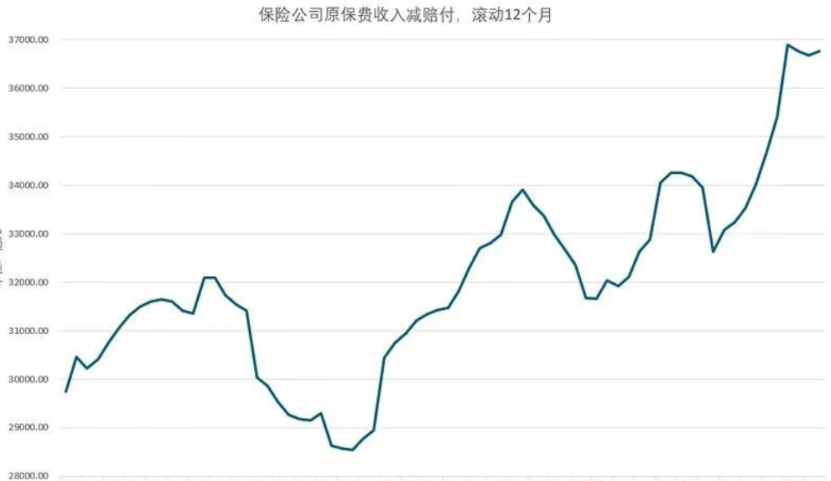
Group 1 - The insurance industry reported a significant performance with a net premium income of approximately 3.7 trillion yuan after deducting claims, indicating a strong financial position despite market anxieties [1] - Financial institutions are preparing for an influx of 50 trillion yuan in maturing deposits, with bank wealth management being the primary investment tool for the public, although its contribution to the stock market remains minimal, with equity allocation below 2% [3] - Insurance companies are expected to have a substantial and long-term impact on the A-share market, with some already holding 20% in stocks and bond funds, while others maintain a 10% allocation [5] Group 2 - A long-term allocation of 15%-20% in stocks is deemed appropriate for insurance companies, as high-dividend stocks provide yields significantly higher than bond rates, thus helping to cover liabilities [7] - The current low-interest-rate environment necessitates a shift from traditional high-yield bonds to equities, as the latter can better cover the rigid costs associated with long-term liabilities [10] - High-dividend stocks, particularly in the banking sector, are favored by insurance companies, which can classify these dividends as profits while stock price fluctuations do not affect their profit statements [11] Group 3 - By Q3 2025, insurance companies' stock investments reached 3.6 trillion yuan, indicating a significant presence in the market, comparable to the scale of actively managed public funds [13] - The stability of insurance capital is crucial for the stock market, as it provides long-term support and helps stabilize investor sentiment, especially in the context of technology sector investments [13] - Insurance companies are positioned to benefit from high-quality development and are expected to reflect this in dividend payouts, enhancing returns for policyholders [10]

英大证券晨会纪要-20251226
British Securities· 2025-12-26 01:56
Market Overview - The A-share market showed a mixed performance with the Shanghai Composite Index supported by heavyweight sectors, while the ChiNext Index faced a pullback due to corrections in some high-valuation stocks [1][9] - The market sentiment improved as the three major indices collectively turned positive, with the Shanghai Composite Index achieving a seven-day winning streak, indicating rising expectations for the year-end market [1][9] - The upward trend in the market is attributed to favorable policies and improvements in the exchange rate, with the central bank signaling a commitment to maintaining market stability and the RMB appreciating against the USD [1][9] Policy and Economic Outlook - The central bank's fourth-quarter meeting emphasized maintaining capital market stability and proposed measures such as stock repurchase loans and exploring regular institutional arrangements [1][9] - Despite marginal improvements in macroeconomic data, a clear recovery point has not yet been established, and corporate earnings recovery requires further observation [2][10] - Incremental policy support is expected to be concentrated around the Lunar New Year, limiting short-term market upside potential [2][10] Sector Analysis - The military industry has shown significant growth, with a 25.27% increase in the sector's overall performance since the second half of 2020, and a 25.46% increase in the first half of 2025 [6][8] - The commercial aerospace sector is experiencing heightened activity due to clear top-level policies and the establishment of dedicated regulatory bodies, providing a stable development environment [7][8] - The robotics industry has seen substantial gains, with the humanoid robot sector increasing by approximately 80% since early January 2025, driven by strong internal growth and supportive government policies [8][9] Investment Strategy - Investors are advised to focus on sectors with strong earnings support, including technology growth areas (semiconductors, AI themes, robotics), cyclical industries (solar, batteries, chemicals), and dividend stocks (banks, utilities) [2][10] - Caution is recommended against high-valuation speculative stocks lacking earnings support, as the market may experience differentiation among individual stocks [2][10]
英大证券晨会纪要-20251224
British Securities· 2025-12-24 03:55
Market Overview - The A-share market showed an upward trend on Tuesday morning, with major indices reaching recent rebound highs, but there was a pullback in the afternoon, reflecting cautious market sentiment [2][9] - The overall market remains in a volatile state, lacking effective support from new momentum, whether from macro policies or micro corporate earnings improvements, which are currently in a relative vacuum period [11] Sector Analysis - **New Energy Sector**: Stocks in the new energy sector, including energy metals, batteries, and lithium mining, showed collective gains. The demand for lithium batteries, photovoltaics, wind power, and energy storage continues to grow as global efforts to achieve carbon neutrality progress [7][9] - **Precious Metals Sector**: The precious metals sector saw an increase, driven by rising prices of gold, silver, platinum, and palladium. Factors contributing to this trend include the onset of a Federal Reserve rate cut cycle, increased geopolitical tensions, and strong demand for gold as a strategic reserve [8][9] Investment Strategy - The report suggests maintaining a consistent investment approach, focusing on sectors with performance support, such as technology growth (semiconductors, AI themes, robotics), cyclical industries (photovoltaics, batteries, chemicals), and dividend stocks (banks, utilities) [3][11] - Investors are advised to avoid high-valuation stocks lacking earnings support and to consider buying on dips in sectors with solid fundamentals [3][11]
股市强势?向切换,债市?端情绪不稳
Zhong Xin Qi Huo· 2025-12-19 02:43
1. Report Industry Investment Rating - Not provided in the content 2. Core Views of the Report - The direction of strength in the stock index futures market has switched again, and it is recommended to allocate cautiously with large - cap stocks performing better recently [1][9] - In the stock index options market, year - end behavior is conservative, and protective put options should be used to deal with risks [2][9] - In the treasury bond futures market, the sentiment of ultra - long - end bonds may remain unstable, and while the bond market is supported in the short term, caution is needed for ultra - long - end bonds [3][9][10] 3. Summary by Related Catalogs 3.1 Market Views 3.1.1 Stock Index Futures - On Thursday, the market failed to continue the Wednesday sentiment, with major broad - based indices weakening. The ChiNext Index dropped 2% and trading volume shrank. The allocation style became more conservative, with dividend and micro - cap structures outperforming. Industries such as airports, coal, and banks rose over 2%. High - dividend and consumer sectors were resilient. In the future, it is in a stage where both bullish and bearish factors are difficult to be falsified, and it is recommended to hold IC & dividend index [1][9] 3.1.2 Stock Index Options - The underlying market was volatile and differentiated. The total turnover of the options market was over 7.099 billion yuan, a 29.54% decrease from the previous day. Mid - term sentiment needs improvement, and the short - term market has turned defensive. Volatility of some ETFs increased. It is recommended to use protective put options [2][9] 3.1.3 Treasury Bond Futures - Treasury bond futures rose across the board. However, the ultra - long - end bonds showed instability, with the 30Y treasury bond yield rising about 0.9BP. The central bank conducted reverse repurchase operations, net injecting 6.97 billion yuan. The market's expectation of loose monetary policy may have increased. It is recommended to adopt different strategies for trends, hedging, basis, and yield curve [3][9][10] 3.2 Economic Calendar - It shows the economic data of China and the US from December 15 - 19, 2025, including China's reserve currency in November, the US non - farm payrolls change in November, and the core CPI in November [11] 3.3 Important Information and News Tracking - **Domestic Macro**: The National Development and Reform Commission will take measures to expand effective investment, including in emerging industries and productive service industries, and address issues in private investment [12] - **Non - ferrous Metals**: Tungsten concept stocks rose. The rise in tungsten prices is due to supply - demand factors and future expectations, and the increase in tungsten powder prices is related to the tight supply of tungsten concentrates [12] - **Energy and Chemicals**: The European Parliament approved a plan to phase out Russian natural gas imports by the end of 2027. The US EIA crude oil inventory decreased last week, while gasoline inventory increased [13] 3.4 Derivatives Market Monitoring - **Stock Index Futures Data**: Not detailed in the provided content - **Stock Index Options Data**: Not detailed in the provided content - **Treasury Bond Futures Data**: Not detailed in the provided content
明年港股的主线搭配
Xin Lang Cai Jing· 2025-12-18 01:41
Core Viewpoint - The Hong Kong stock market has shown weakness since November, diverging from the trends of A-shares and US stocks, primarily due to liquidity sensitivity, year-end fund settlement effects, and the lack of macroeconomic catalysts [1][20]. Group 1: Market Performance and Influencing Factors - The Hong Kong stock market is more sensitive to liquidity and structural changes, which makes it more responsive to fundamental shifts [1][20]. - Year-end fund settlement effects have led to mainstream capital withdrawing for profit-taking, preparing for the next year [1][20]. - Anticipation of upcoming US CPI data and the Bank of Japan's interest rate hike has contributed to the market's weak performance, compounded by a lack of macroeconomic policy or company earnings catalysts [1][20]. Group 2: Fund Flows and Market Sentiment - Foreign capital has reduced its positions in Asian markets, including Hong Kong, mirroring trends in the US where tech stock allocations are also decreasing [3][22]. - Southbound capital inflows have slowed significantly, dropping from an average of 7 billion HKD to 1 billion HKD daily since November, raising concerns about public funds potentially reducing their Hong Kong stock holdings [4][23]. - The market's current sentiment is heavily influenced by liquidity and emotional factors, rather than fundamental issues with leading companies, suggesting that this phase may present buying opportunities for patient investors [4][23]. Group 3: Investment Opportunities - The focus should be on internet leading stocks and dividend stocks, which have been strong themes in the Hong Kong market over the past two years, likely continuing into the next year [5][24]. - The rationale for investing in both internet leading stocks and dividend stocks lies in their ability to provide stability and mitigate risks during market fluctuations [5][24]. - The performance of internet stocks is closely tied to advancements in AI, with companies like Alibaba and Tencent expected to see improved returns from AI investments in the coming year [6][25][30]. Group 4: Dividend Stocks and Future Trends - The misconception that dividend stocks offer low returns is challenged by the trend of insurance companies increasing their allocations to high-yield stocks in a declining interest rate environment [13][32]. - Regulatory changes are encouraging insurance companies to invest more in equities, with an estimated 550-600 billion RMB expected to flow into the market next year, primarily targeting stable dividend stocks [13][32]. - The Hong Kong Dividend ETF (159220) has outperformed the Hang Seng Index since its launch, indicating strong market alignment with dividend stock preferences [15][34].
元旦预订热潮持续攀升,跨年仪式感驱动消费
GUOTAI HAITONG SECURITIES· 2025-12-14 12:40
Investment Rating - The report assigns an "Increase" rating for the industry [3][4]. Core Insights - The upcoming New Year's holiday is expected to drive significant consumer spending, particularly in travel and leisure sectors [2][3]. - Key recommendations include travel agencies like Ctrip Group and Tongcheng Travel, hotel chains such as Huazhu Group and Jinjiang Hotels, and attractions like Changbai Mountain [3][4]. - The report highlights a notable increase in hotel bookings for popular cities, with a threefold growth during the New Year's holiday [3]. Summary by Relevant Sections Travel and Tourism - The report emphasizes optimism for travel and leisure due to the New Year's holiday, recommending specific stocks in the OTA and hotel sectors [3][4]. - Ctrip Group and Tongcheng Travel are highlighted as preferred stocks in the OTA segment [3]. Hospitality - Recommended hotel stocks include Huazhu Group, Jinjiang Hotels, and Shoulv Hotels, with a focus on their growth potential during the holiday season [3][4]. Attractions - Changbai Mountain is recommended as a key investment in the attractions sector, with additional attention on Emei Mountain and Three Gorges Tourism [3][4]. Jewelry and Retail - In the jewelry sector, stocks such as Lao Pu Gold, Cai Bai Shares, and Chow Tai Fook are recommended, indicating strong growth potential [3][4]. Dividend Stocks - The report identifies dividend-paying stocks like Sumida and Chongqing Department Store as attractive options for investors [3][4]. AI and Education - Stocks in the AI and education sectors, including Konnate Optical and Chalk, are also recommended, reflecting the growing intersection of technology and education [3][4].


杨德龙:这轮慢牛长牛行情肩负三重使命
Xin Lang Cai Jing· 2025-12-09 12:24
Economic Outlook - The macroeconomic environment is expected to show steady progress as policies to stabilize economic growth take effect, leading to improved economic data in 2026 [1] - CPI is projected to maintain positive growth in 2026, while PPI is expected to transition from negative to positive growth [1] - More proactive fiscal policies may be introduced in 2026 to stimulate domestic demand, including investment and consumption [1] Capital Market Trends - A significant policy shift for equity assets began on September 24, 2024, leading to a bull market, with the Shanghai Composite Index surpassing 4000 points in 2025 [2][10] - Public fund issuance exceeded 1 trillion yuan in 2025, marking the seventh consecutive year of reaching this milestone, with equity funds accounting for over 50% of new fund issuance [2][10] - There is a notable shift in household asset allocation from real estate to capital markets, driven by changes in market conditions [2][10] Investment Opportunities - The current bull market is seen as a vehicle for increasing household wealth, which may subsequently boost consumption and stabilize the real estate market [3][11] - The technology sector is expected to remain a key investment focus in 2026, with the "AI+" initiative creating opportunities across various industries [4][12] - Robotics is highlighted as a prime application of AI in consumer sectors, with expectations for significant performance in 2026 as companies compete for major orders [5][13] Gold Market Insights - Gold prices are anticipated to continue rising in 2026, supported by increasing dollar issuance and growing skepticism about the dollar's value [6][14] - The People's Bank of China has been increasing its gold reserves for 13 consecutive months, which is expected to continue into 2026 [7][14] - The upcoming Federal Reserve meeting may lead to further interest rate cuts, providing additional support for gold prices [7][14] Banking Sector Dynamics - The banking sector has seen significant gains, with many large banks reaching historical highs, as funds shift from deposits to equities in search of stable returns [8][15] - Dividend stocks are expected to remain attractive in 2026, catering to investors seeking stable returns amidst varying risk appetites [8][15] - The A-share market is projected to transition from a structural market to a comprehensive bull market, with more sectors expected to participate in the upward trend [8][15]
长城基金杨建华:A股存在反弹动力,密切关注重要会议的政策定调
Xin Lang Cai Jing· 2025-12-09 03:02
Core Viewpoint - The market is entering a window period of upward resonance in policy, liquidity, and fundamentals as December approaches, with previous adjustments effectively releasing some valuation and sentiment risks [1][3]. Group 1: Market Outlook - The upcoming Political Bureau meeting and Central Economic Work Conference will be crucial in setting the macroeconomic tone for the next year [1][3]. - The external environment is expected to remain relatively stable, and the A-share market has seen risk release after adjustments, indicating a potential for stabilization and rebound [1][3]. Group 2: Investment Focus for 2026 - Key investment directions include new narratives in AI, particularly the practical application of AI, sectors benefiting from the U.S. entering a rate-cutting cycle, resource stocks amid a new round of U.S. dollar easing, and dividend stocks favored by domestic incremental capital [1][3]. - There is also a focus on cyclical sectors that may bottom out due to sustained domestic demand [1][3].
浙商证券李超:大家要对市场有信心 看好科技与红利
Xin Lang Zheng Quan· 2025-12-01 05:37
Core Viewpoint - The 2025 Analyst Conference and the 7th Sina Finance "Golden Unicorn" Best Analyst Awards highlighted a positive outlook for China's economy and capital markets in 2026, driven by high-quality development and structural transformation [1][3]. Economic Analysis Framework - The four-tier analysis framework proposed by Li Chao emphasizes understanding China's economic fundamentals, identifying four key decision variables: US-China relations, social stability, structural transformation, and economic growth, with a clear prioritization [3]. - The framework indicates that 2026 will focus on high-quality development leading structural transformation, which is expected to proceed steadily while maintaining growth resilience [3]. Market Dynamics - The core driver of the market is identified as the decline in interest rates, which has facilitated the transmission of liquidity to capital markets since 2025, with expectations for continued confidence recovery into 2026 [4]. - Historical examples from the US and Japan demonstrate that a declining interest rate environment can support both stock and bond markets, suggesting that China is in a position to replicate this trend [5]. Investment Directions - Li Chao identifies two primary investment categories benefiting from declining interest rates: technology stocks and dividend stocks, each appealing to different risk appetites influenced by US-China relations [6]. - Technology stocks are expected to see long-term valuation re-pricing due to lower discount rates on future cash flows, supported by a 9.6% year-on-year increase in high-tech manufacturing value added [6]. - Dividend stocks offer relative yield advantages in a low interest rate environment, making them a stable choice for asset allocation, with significant valuation recovery potential in the A-share market [6]. Strategic Allocation - A clear allocation strategy is proposed: focus on dividend stocks during heightened US-China tensions and lower risk appetite, while shifting to technology stocks when relations improve and risk appetite increases [7].


第七届金麒麟银行业最佳分析师第一名浙商证券梁凤洁最新观点:银行股Q4深蹲起跳 推荐稳健高股息大行
Xin Lang Zheng Quan· 2025-12-01 03:49
Core Insights - The article discusses the performance of the banking sector in October 2025, highlighting a decline in credit demand and a shift in deposit trends, indicating ongoing challenges in the financial landscape [1][2][3]. Credit Performance - Excluding non-bank financial institutions, credit showed a negative growth in October, with a decrease in both retail and corporate loans. Residential loans fell by 360.4 billion yuan, a year-on-year decrease of 520.4 billion yuan, indicating a contraction in consumer credit demand [1][2]. - Corporate loans saw an increase of 350 billion yuan, but short-term loans decreased by 190 billion yuan, reflecting limited demand for medium to long-term projects [2]. Social Financing - In October, social financing increased by 815 billion yuan, a year-on-year decrease of 597 billion yuan. Government bond issuance was 489.3 billion yuan, down 560.2 billion yuan from the previous year, suggesting a weakening support from government debt [3]. Deposit Trends - The M1 growth rate decreased to 6.2%, while M2 growth was at 8.2%. There is a continued trend of deposits moving towards non-bank financial institutions, with total deposits increasing by 610 billion yuan, but household deposits fell by 1.3 trillion yuan [4]. - The total scale of wealth management products reached a historical high of 33.2 trillion yuan, reflecting a significant increase of 1.1 trillion yuan from the previous month [4]. Banking Sector Performance - For the first three quarters of 2025, listed banks showed resilience with revenue growth of 0.9% and profit growth of 1.6%. State-owned banks performed well, while the performance of smaller banks varied [5][6]. - The net interest margin for listed banks stabilized at 1.37%, with a slight improvement in the interest spread for smaller banks, indicating a recovery in profitability [9]. Investment Recommendations - The article suggests that the banking sector may experience a rebound in Q4, driven by a rebalancing of market styles and increased interest in high-dividend stocks. Recommendations include both smaller banks in economically developed regions and larger, stable banks [12].