绿色增长

Search documents
英中商业发展中心主席:中国已大幅降低了对美国的依赖
Bei Jing Ri Bao Ke Hu Duan· 2025-11-08 13:18
Group 1 - The core viewpoint is that Chinese electric vehicles are entering the UK market with advantages in technology, quality, and price [1][3] - The UK has not imposed tariffs on Chinese electric vehicles, allowing companies like BYD and Geely to expand their market presence [3] - BYD sold over 11,000 vehicles in the UK in September, making it the largest overseas market for the company [3] Group 2 - The UK and China are discussing cooperation in renewable energy technologies such as wind, solar, and hydrogen, indicating significant potential for collaboration [3] - There is ongoing collaboration in green finance and green bonds, establishing a solid framework in the financial sector [3] - The recent communication between the foreign ministers of the UK and China reflects the strengthening relationship and decreasing uncertainties between the two countries [3]

绘就亚太地区合作新篇章
Ren Min Ri Bao· 2025-11-05 22:12
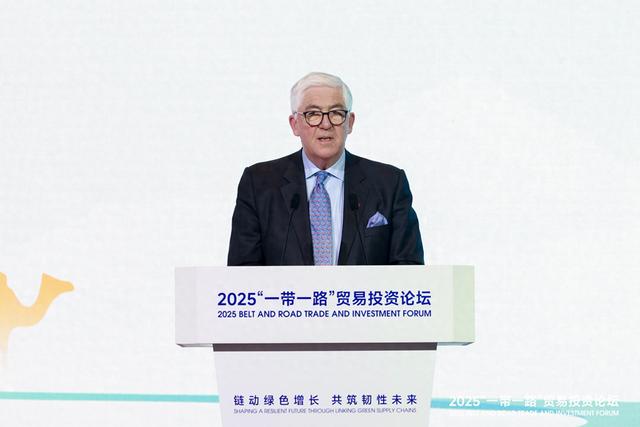
Group 1 - The Asia-Pacific Economic Cooperation (APEC) is the highest-level and most influential economic cooperation mechanism in the Asia-Pacific region, established in 1989 to address uncertainties in the multilateral trade system and promote regional economic cooperation and integration [1] - APEC has consistently adhered to the principle of open regionalism, facilitating trade and investment liberalization, which has significantly contributed to stabilizing the international economic and trade order [1] - Current global challenges such as geopolitical conflicts, trade frictions, technological risks, and climate crises necessitate cooperation among nations, with APEC serving as a vital platform for member economies to address these challenges and explore new forms of international cooperation [1] Group 2 - China played a crucial role in APEC's development, particularly during the 2014 APEC meeting, which approved significant documents like the "Beijing Roadmap for APEC's Free Trade Area" and the "APEC Connectivity Blueprint," essential for translating long-term visions into actionable steps [2] - Green growth and innovative development have emerged as key opportunities in the Asia-Pacific region, with China leading the global green transition in renewable energy and electric vehicles, providing strong momentum for addressing climate crises and promoting industrial upgrades [2] - APEC is approaching a significant historical milestone in 2026, with the completion of the "APEC Connectivity Blueprint" and the action plans for the "APEC Services Competitiveness Roadmap" and the "APEC Internet and Digital Economy Roadmap," necessitating the identification of new development directions [2]
专访|中国-东盟自贸区升级创造广阔产业合作机遇——访印尼工商会中国委员会主席加里巴尔迪·托希尔
Xin Hua She· 2025-11-03 03:01
Core Insights - The recent signing of the China-ASEAN Free Trade Area 3.0 upgrade protocol in Kuala Lumpur creates extensive market and industrial cooperation opportunities for ASEAN and Chinese enterprises [1] - The protocol enhances competitiveness, attracts sustainable investment, and strengthens regional integration for ASEAN member countries like Indonesia [1] - The focus on digital economy and green growth aligns with Indonesia's development agenda, particularly in achieving net-zero emissions through clean energy and green transportation cooperation with China [1] Group 1 - The protocol covers new areas such as digital economy, green economy, and supply chain connectivity, which are crucial for Indonesia's development [1] - Indonesia aims to collaborate with China in e-commerce platforms, AI logistics, and digital payment ecosystems to support SMEs and reduce transaction costs [1] - In the green economy sector, Indonesia seeks to learn from China's experience in renewable energy technology, electric vehicle supply chains, and green finance frameworks [1] Group 2 - The Regional Comprehensive Economic Partnership (RCEP) provides new momentum for Indonesia-China cooperation, especially benefiting SMEs by simplifying customs procedures and promoting e-commerce [2] - The "Two Countries, Twin Parks" cooperation project between Indonesia and China aims to leverage complementary advantages in green energy, digital economy, mineral downstream processing, and sustainable agriculture [2] - The upcoming China International Import Expo in Shanghai offers Indonesian SMEs a platform to find partners, expand markets, and integrate into the global trade ecosystem [2]
专访丨中国-东盟自贸区升级创造广阔产业合作机遇——访印尼工商会中国委员会主席加里巴尔迪·托希尔
Xin Hua Wang· 2025-11-03 01:13
Core Insights - The China-ASEAN Free Trade Area 3.0 upgrade creates extensive market and industrial cooperation opportunities for ASEAN and Chinese enterprises [1] - The agreement enhances competitiveness, attracts sustainable investment, and strengthens regional integration for ASEAN member countries like Indonesia [1] Group 1: Digital and Green Economy - The upgraded protocol covers new areas such as digital economy, green economy, and supply chain connectivity, aligning with Indonesia's development agenda focused on digital transformation and green growth [1] - Indonesia aims to achieve its net-zero emissions target through cooperation in clean energy and green transportation, which aligns with China's development strategy [1] - In the digital economy sector, Indonesia seeks collaboration with China in e-commerce platforms, AI logistics, and digital payment ecosystems to support SMEs and reduce transaction costs [1] Group 2: Regional Comprehensive Economic Partnership (RCEP) - The RCEP provides new momentum for Indonesia-China cooperation, particularly benefiting SMEs by simplifying customs procedures and promoting e-commerce and digital trade [2] - The "Two Countries, Twin Parks" cooperation project between Indonesia and China aims to leverage complementary advantages in green energy, digital economy, mineral downstream processing, and sustainable agriculture [2] - This project is expected to serve as an industrial connector and trade accelerator, providing new platforms for investment, technology exchange, and industrial cooperation [2] Group 3: China International Import Expo - The upcoming China International Import Expo in Shanghai presents a significant opportunity for Indonesian SMEs to find partners, expand markets, and integrate into the global trade ecosystem [2] - The partnership between Indonesia and China is seen as mutually beneficial and a cornerstone for regional stability and development, highlighting the transformative role of platforms like the Import Expo [2]
越日召开九龙江绿色农业投促会
Shang Wu Bu Wang Zhan· 2025-10-31 16:40
Core Points - The meeting focused on promoting investment in the Mekong Delta's high-quality low-emission rice cultivation area, emphasizing the need for sustainable development in response to climate change and environmental challenges [1][2] - Vietnam aims to reduce greenhouse gas emissions by 15% to 20% and increase farmers' income by 10% to 15% through the implementation of a sustainable development plan for 1 million hectares in the Mekong Delta [1] - The collaboration between Vietnam and Japan includes the establishment of around 600 cooperatives to support intensive farming practices, requiring significant technological assistance [1] Group 1 - The Mekong Delta is Southeast Asia's largest rice-producing area, facing severe impacts from climate change, saltwater intrusion, and land subsidence [1] - The meeting was attended by over 150 representatives from relevant departments, industry associations, cooperatives, and enterprises from both countries [1] - The goal is to establish a "green, clean, low-emission Vietnamese rice" brand in the international market [1] Group 2 - Vietnam and Japan reached agreements on multiple cooperation memorandums, marking a significant step in investment and technology transfer collaboration [2] - Key areas of cooperation include artificial intelligence, big data, agricultural robotics, mechanization, carbon emission monitoring and reduction, deep processing of agricultural products, and reuse of rice by-products [2] - The partnership aims to create a multi-layered cooperation ecosystem involving government agencies, research institutions, enterprises, cooperatives, and farmers to promote green growth and sustainable food security [2]
新能源龙头Q3业绩改善显著+顶层设计文件指引,规模最大的新能源ETF(516160)涨2.7%
Ge Long Hui· 2025-10-29 09:47
Core Viewpoint - The renewable energy sector is experiencing a significant rise, with companies like Canadian Solar and Sungrow both increasing by 7%, contributing to a 2.67% rise in the New Energy ETF (516160), which has seen a year-to-date increase of 43.6% [1][2]. Group 1: Company Performance - Sungrow reported a net profit of 4.147 billion yuan for Q3, marking a year-on-year increase of 57.04% [2]. - Ganfeng Lithium achieved a net profit of 25.52 million yuan in the first three quarters, successfully turning a profit compared to the previous year [2]. - TCL Zhonghuan also reported a reduction in losses year-on-year for the same period [2]. - CATL's Q3 profit growth significantly outpaced revenue growth, indicating strong performance in the renewable energy sector [2]. Group 2: Policy and Industry Outlook - The "14th Five-Year Plan" suggests a continuous increase in the proportion of renewable energy supply, promoting high-quality development of clean energy and addressing "involution" competition [2]. - According to Zhongyin International, the plan serves as a guiding document for the development of the renewable energy industry during the "14th Five-Year" period, emphasizing the importance of renewable energy in achieving low-carbon transitions in transportation and promoting green growth [2]. - The ongoing efforts to combat "involution" are expected to gradually restore prices across the industry chain [2]. Group 3: ETF Insights - The New Energy ETF (516160) closely tracks the CSI New Energy Index, covering four major sectors: photovoltaics, lithium batteries, wind power, and nuclear power, providing comprehensive exposure to the renewable energy industry [2]. - The ETF currently has a size of 6.079 billion yuan, leading its category, with a management and custody fee of only 0.2% per year, lower than the 0.6% fee level of similar funds [2]. - The ETF has corresponding off-market funds, including Link A (012831) and Link C (012832) [2].





开创携手前行、共同发展新局面 ——国际社会热议“十五五”发展蓝图的世界意义
Jing Ji Ri Bao· 2025-10-27 22:37
Core Points - The Fourth Plenary Session of the 20th Central Committee of the Communist Party of China concluded successfully, focusing on the formulation of the 15th Five-Year Plan for national economic and social development [1][2] - The session emphasized China's commitment to open cooperation and mutual benefit, signaling a new phase of development in collaboration with other countries [1][2] Group 1: Leadership and Planning - Xi Jinping personally led the drafting of the 15th Five-Year Plan, ensuring it aligns with the long-term strategic goals of the Communist Party [2] - The plan reflects a comprehensive understanding of China's actual development needs and maintains coherence while showcasing a broad strategic vision [2][3] - The Five-Year Plan system is recognized as one of the most effective governance models in contemporary global governance [2][3] Group 2: Economic Development Principles - The session highlighted principles such as "people-centered" and "high-quality development," indicating a commitment to making development benefits accessible to a broader population [3] - Emphasis on high-quality development is seen as a way to enhance resilience and unleash innovation, providing a solid action guide for economic growth [3][4] Group 3: Technological Innovation and Global Impact - The session called for accelerating high-level technological self-reliance, which is deemed strategically necessary for global competition [4] - The integration of scientific research with industrial application is expected to enhance production efficiency and foster future industries like renewable energy and artificial intelligence [4][5] Group 4: Global Governance Insights - China's experience with Five-Year Plans offers valuable governance insights for other countries, particularly developing nations [4][5] - The planning approach demonstrates that a clear strategic vision and sustained execution can effectively counter external shocks and achieve sustainable development [5]
柬埔寨副首相会见中企代表,推动磅通省饲料厂投资
Sou Hu Cai Jing· 2025-10-24 04:48
Core Insights - Cambodia's fuel import total reached $1.84 billion from January to September 2025, a decrease of 12.3% compared to $2.1 billion in the same period of 2024 [1][3] Fuel Import Breakdown - Diesel imports amounted to $992 million, reflecting an 11.8% year-on-year decline [1][3] - Gasoline imports totaled $592 million, showing an 18% decrease year-on-year [1][3] - Liquefied petroleum gas (LPG) imports were $255 million, which is a 2.8% increase year-on-year [1][3] Market Trends and Future Outlook - The decline in fuel imports indicates a slowdown in industrial fuel demand, influenced by global oil price reductions, improved energy efficiency, and the growing role of renewable energy and hydropower in domestic energy consumption [3] - Cambodia's energy security strategy aims to diversify energy sources and enhance regional grid connectivity, potentially reducing reliance on imported fossil fuels, aligning with its green growth objectives [3] - The Ministry of Mines and Energy projects that national oil product demand will continue to grow, increasing from 2.8 million tons in 2020 to 4.8 million tons by 2030, and reaching 8.3 million tons by 2040 [3]

欧盟援助越南4.3亿欧元 促进公平能源转型
Shang Wu Bu Wang Zhan· 2025-10-10 18:02
Core Points - The European Union has announced a €430 million aid package to Vietnam for the North Anh pumped storage power station project, which is a key initiative under the "Just Energy Transition Partnership" (JETP) framework [1][2] - The project aims to enhance the stability of Vietnam's national power system and facilitate the expansion of renewable energy development, contributing to Vietnam's decarbonization and sustainable development goals [1] - The aid is part of the "Team Europe" cooperation framework, which includes contributions from various EU member states and development financial institutions, with a total commitment of at least €293 million in aid to Vietnam from 2021 to 2027 [2] Summary by Sections - **EU Aid Announcement** - The EU's €430 million aid is aimed at promoting the North Anh pumped storage power station project [1] - The announcement was made during the Global Gateway Forum in Brussels [1] - **Project Significance** - The North Anh project is crucial for building a green, stable, and sustainable energy system in Vietnam [1] - It is expected to attract private investment and promote green growth [1] - **Financial Framework** - The aid is part of the "Team Europe" initiative, which includes contributions from the EU, member states, and development financial institutions [2] - The total support for the JETP project is expected to exceed €2.8 billion [2] - The investment will aid in the development of green infrastructure and enhance electricity interconnectivity in the ASEAN region [2]
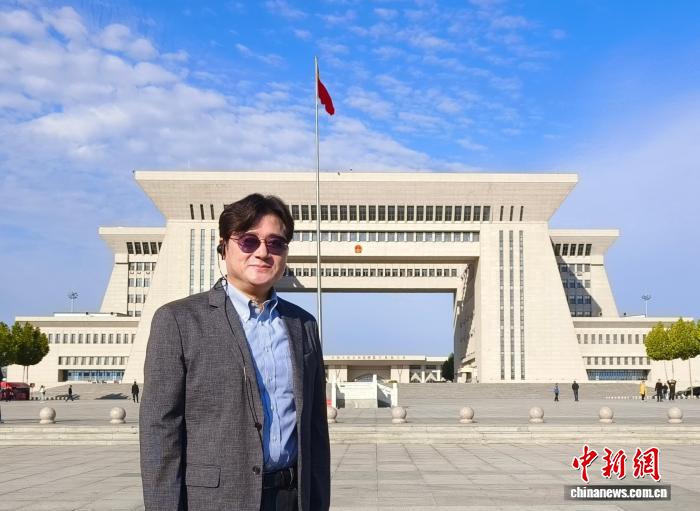
韩国前议员:新疆正成为绿色增长新典范
Zhong Guo Xin Wen Wang· 2025-09-17 02:25
Group 1 - The core viewpoint is that Xinjiang is becoming a new model for green growth, emphasizing the importance of clean energy and sustainable development in the region [1][3] - The 2025 International Forum on Parliamentary Friendship highlighted the significance of cooperation in ecological protection and green development, with discussions on clean energy usage [1][3] - The region's rich renewable energy resources, such as solar and wind energy, are being leveraged to replace fossil fuels in a structured manner [1] Group 2 - The forum produced the "Urumqi Declaration," which supports the collaborative advancement of initiatives like the Belt and Road Initiative and global governance [3] - The resilience of Xinjiang in overcoming ethnic conflicts and promoting harmonious coexistence among diverse groups was noted as a valuable example for the international community [3] - The recent visa exemption policies between China and South Korea are expected to enhance cooperation in various fields, including culture, tourism, and trade [4]