
AI导购

Search documents
三大外卖平台试点取消骑手超时罚款;小米入局短剧丨新鲜早科技
2 1 Shi Ji Jing Ji Bao Dao· 2025-10-17 03:53
Group 1: Delivery and Restaurant Industry - JD.com and Ele.me are testing the cancellation of penalties for delivery riders who exceed order time, shifting to a "service score" management system to promote positive incentives [2] - Meituan's CEO stated that the average dining price has dropped to levels seen a decade ago, indicating a shift towards high cost-performance in the restaurant industry [2] Group 2: Automotive Industry - Lei Jun, CEO of Xiaomi, emphasized the need for the smart connected vehicle industry to unite against online chaos, advocating for a collaborative ecosystem focused on safety, quality, and innovation [3] Group 3: Technology and AI - ByteDance's Volcano Engine announced significant updates to its Doubao model series, with usage increasing from 120 billion tokens in May 2024 to over 30 trillion tokens by September 2024 [4] - Xiaomi launched a short drama app "Weiguan Short Drama," which has quickly gained traction with 20,000 downloads, currently available only for Xiaomi phone users [5] Group 4: Robotics and Automation - Zhiyuan Robotics released the G2 interactive industrial robot, which has already secured orders worth hundreds of millions and is designed for various applications [6] - Zhaofeng Co. signed a strategic cooperation agreement with Neura Robotics to collaborate on humanoid robots and key components [7] Group 5: Semiconductor Industry - TSMC reported a record net profit of 452.3 billion NTD for Q3, with a revenue increase of 30.3% year-on-year, and expects a sales growth of approximately 30% in 2025 [17] - Jing Sheng Machine Electric announced the successful operation of its 12-inch silicon carbide substrate pilot line, marking a significant advancement in domestic technology [10] Group 6: Financial and Investment Activities - ChipLink Integration plans to invest 1.8 billion RMB in its subsidiary to support the ongoing development of a 12-inch integrated circuit project [11] - Hantian Technology has submitted a listing application to the Hong Kong Stock Exchange, focusing on silicon carbide chip production [12] Group 7: E-commerce and Retail - Tmall's Double 11 pre-sale saw 35 brands surpassing 100 million in sales within the first hour, indicating strong consumer engagement [5] - Dong Yuhui's live streaming event generated over 300 million in sales during the Double 11 shopping festival, attracting nearly 70 million viewers [7]

淘宝全新发布“AI万能搜”等6款AI导购应用
Xin Lang Ke Ji· 2025-10-16 09:47
Core Insights - The 2025 Tmall Double 11 shopping festival will officially start on October 20 at 8 PM, marking the first fully AI-integrated event for Tmall [1] - Alibaba's AI applications aim to enhance consumer experience and drive merchant growth by addressing consumer pain points [1] Group 1: AI Integration and Consumer Experience - AI will be utilized in traffic distribution, consumer experience, and e-commerce operations, leading to a double-digit increase in traffic matching efficiency [1] - Key improvements include a 20 percentage point increase in search relevance under complex semantics, a 10% increase in recommendation click-through rates, and a 12% increase in merchant advertising ROI [1] Group 2: AI Applications for Consumers - Six AI shopping applications were launched to cater to various shopping scenarios, including "AI Universal Search," "AI Help Me Choose," and "AI Try-On" [1] - These applications aim to provide personalized shopping experiences, such as generating category lists based on online reputation and real-time shopping assistance [1] Group 3: AI Support for Merchants - Alibaba has established AI operation teams to help merchants reduce costs and improve efficiency, with AI-generated content leading to a 10% increase in product click rates [2] - AI tools have produced over 1 billion images and 5 million videos monthly, and AI customer service has helped merchants save approximately 20 million yuan daily [2] - The AIGX technology system integrates various AI components tailored for e-commerce, enhancing overall operational capabilities [2]

ChatGPT做电商,攻入亚马逊的腹地
美股研究社· 2025-10-09 11:28
Core Insights - ChatGPT has integrated e-commerce capabilities, allowing users to shop directly within its platform, marking a significant shift in the e-commerce landscape [5][6][12] - The introduction of Instant Checkout enables personalized shopping experiences, where users can request specific products, and ChatGPT will recommend suitable items from platforms like Etsy and Shopify [7][9] - ChatGPT positions itself as a "digital shopping assistant," providing unbiased product recommendations based on user needs rather than advertising spend [11][14] E-commerce Impact - The integration of ChatGPT into e-commerce changes the flow of traffic and product visibility, challenging traditional platforms like Amazon and eBay, which have relied heavily on advertising for product ranking [14][15] - Amazon's advertising revenue is projected to reach $56.2 billion in 2024, highlighting its reliance on ad spend for product visibility, which contrasts with ChatGPT's approach of prioritizing user needs [15] - ChatGPT's model may disrupt the traditional e-commerce operational logic, where sellers typically invest in ads to gain visibility, as AI-driven recommendations focus on product quality and user feedback [18][19] Market Dynamics - The shift towards AI-driven shopping experiences may favor niche and long-tail products, as users increasingly seek specific items through detailed queries [20][21] - As ChatGPT connects with more e-commerce platforms, particularly Shopify, it will enhance its product offerings and potentially reshape the competitive landscape [24] - OpenAI's entry into e-commerce is driven by the need for diversified revenue streams, with projected revenues of $12.7 billion by 2025, indicating a strategic pivot to enhance profitability [25]

淘宝、美团、支付宝都在做AI导购,能不能用你的消费数据?
2 1 Shi Ji Jing Ji Bao Dao· 2025-09-17 04:58
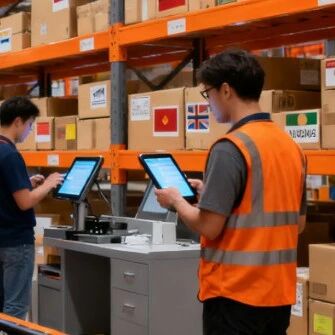
Core Insights - The article discusses the emergence of general-purpose AI agents in various consumer platforms, highlighting their integration into core products to enhance user experience and streamline decision-making processes [1][2] Group 1: AI Integration in Consumer Platforms - Major companies are embedding AI assistants into their applications, such as Taobao's AI assistant for multi-turn dialogue shopping and Meituan's "Xiao Mei" for food delivery and local services [1][2] - Alipay has launched the first "AI payment" service in China, allowing users to place orders and complete payments with a single command through the AI assistant [1] Group 2: Data Utilization and Personalization - AI assistants utilize user data, including order history and behavior information, to provide personalized recommendations, thereby enhancing conversion rates [2][3] - Taobao's "AI Universal Search" and Meituan's "Xiao Mei" both rely on user data to tailor search results and recommendations based on past interactions [2][3] Group 3: User Consent and Compliance - Platforms must obtain explicit user consent to utilize personal data for AI-driven recommendations, as outlined in their user agreements [3][5] - Compliance with regulations, such as the Personal Information Protection Law, requires platforms to inform users about data usage and provide options to opt-out of personalized recommendations [5][6] Group 4: Regulatory Considerations - The design of AI features must include easy opt-out options for users, as mandated by regulations governing algorithmic recommendations [6][8] - The article emphasizes the importance of user choice and transparency in data usage to mitigate regulatory risks and enhance user trust [8][9]

从比价工具到兴趣社区,什么值得买能否成为“导购之王”?
Sou Hu Cai Jing· 2025-07-09 04:38
Core Viewpoint - The article discusses the transformation of "What Worth Buying" (SMZDM) from a traditional e-commerce guide tool to an AI-driven interest-based consumption platform, emphasizing the need to balance efficiency with user trust and content quality [1][18][21]. Group 1: Company Background and Development - "What Worth Buying" started as a blog in 2010 by founder Sui Guodong, aimed at alleviating consumer fears about e-commerce and providing trustworthy product recommendations [2][4]. - The platform officially launched in October 2011, focusing on real recommendations and addressing information asymmetry in e-commerce [4][5]. - The company received its only funding of 100 million yuan from Huachuang Capital in September 2015 and went public in July 2019, becoming the first A-share e-commerce guide stock [4][7]. Group 2: Business Model and Revenue Structure - The primary revenue model is based on information promotion services, including commission from referrals and advertising, with referral commissions making up a significant portion of the income [7][8]. - From 2016 to 2018, the share of information promotion services in total revenue decreased from 98.91% to 80.22%, while advertising revenue increased significantly [7][8]. - User-generated content (UGC) has been a key advantage, with UGC accounting for over 70% of total content, leading to high trust and engagement among users [8][10]. Group 3: Market Position and Challenges - As of June 2024, the platform had approximately 29.64 million registered users, with a year-on-year growth of 7.02%, indicating a stable user base [8]. - The e-commerce guide market in China is projected to grow significantly, with a transaction scale of 433.1 billion yuan in 2022 [11]. - The platform faces challenges from increased competition, including social media platforms like Xiaohongshu and Douyin, which attract consumer attention through different engagement methods [10][13]. Group 4: Strategic Transformation and Future Outlook - The launch of the GEN2 version represents a strategic shift towards an interest-based community, focusing on personalized user needs and AI-driven content recommendations [18][19]. - The platform aims to enhance user engagement while maintaining trust, which is critical given the rise of AI-generated content and advertising [21]. - The future success of "What Worth Buying" hinges on its ability to adapt to the evolving e-commerce landscape and maintain a sustainable narrative amidst growing competition [21].

除了不能当女婿,DeepSeek比董宇辉差到哪了?
36氪· 2025-03-11 13:48
Core Viewpoint - DeepSeek is emerging as a new consumption decision-making tool for young consumers, providing personalized recommendations that challenge traditional influencer-led shopping methods [3][5][46]. Group 1: DeepSeek's Functionality and Impact - DeepSeek offers personalized recommendations based on user-specific queries, such as skin type or reading preferences, providing detailed reports that include product features and suitability [4][12]. - The platform is seen as a more comprehensive alternative to traditional live-streaming influencers, as it utilizes a deep thinking model to deliver tailored suggestions [5][6]. - As of February 9, DeepSeek's app has surpassed 110 million downloads, with weekly active users reaching nearly 97 million, indicating its growing popularity among young consumers [9]. Group 2: Comparison with Traditional E-commerce Platforms - Traditional e-commerce platforms like Taobao and JD have attempted to integrate AI for personalized shopping but have not prioritized these features in their main app interfaces, limiting user engagement [7][8][22]. - DeepSeek's recommendations are based on a broader range of sources compared to existing e-commerce AI assistants, which often rely on fewer references, leading to less comprehensive suggestions [29][30]. - Despite the advantages of DeepSeek, traditional influencers still hold a significant role in the market due to their established trust and the ability to provide curated selections backed by professional institutions [19][20]. Group 3: Challenges and Limitations - DeepSeek faces challenges such as "AI hallucination," where the AI may produce inaccurate or biased recommendations based on its training data, necessitating human oversight for quality control [17][18]. - The platform's current model requires users to transition to e-commerce sites for purchases, which contrasts with the seamless shopping experience offered by influencers [20][21]. - E-commerce platforms are cautious about integrating DeepSeek due to concerns over data sensitivity and the potential disruption of existing business models [40][41][42]. Group 4: Future Prospects - The shift towards AI-driven recommendations is seen as a significant trend in e-commerce, with DeepSeek positioned to capture the preferences of younger consumers [46]. - There is a need for e-commerce platforms to adapt and potentially collaborate with AI technologies like DeepSeek to enhance their offerings and maintain competitiveness in the evolving market landscape [47][48].
除了不能当女婿,DeepSeek比董宇辉差到哪了?
商业洞察· 2025-03-09 08:04
字母榜 . 让未来不止于大 以下文章来源于字母榜 ,作者薛亚萍 从事产品运营工作的陈鹏,今年26岁,他想要通过阅读提高自己的眼界,便向DeepSeek提问"最应 该读的十本书是什么?"DeepSeek同样给他列出了书单,并且分类附上了理由。陈鹏选择了购入其 中几本书。 这曾是李佳琦和董宇辉们在直播间的工作: 导购。 过去几年,头部主播们通过建立和用户之间的信任,构建了以主播为核心的商品分发机制,将他们认 为最好的、最适合的东西推荐给粉丝朋友们。 但现在这套推荐体系,正在被DeepSeek解构。DeepSeek深度思考模式的长思维链优势,能为用户 提供更全面、精准的优质解答,进而形成一对一的个性化推荐,应用到购物领域,俨然已经成为D选 ——DeepSeek优选。 "D选"的本质是"AI导购",辅助用户高效进行消费决策,"AI导购"这个场景并不陌生。 早在多年前,一些电商平台就试图借助大模型实现"种草+购物"的交易闭环。 譬如淘宝的AI助手"淘宝问问"早已接入通义千问,功能包含个性化推荐,并生成选购建议。京东的言 犀大模型,也接入消费导购场景,"京东京言"也被明确定位于"专属AI购物助手"。抖音APP的AI搜索 ...