
AI热潮

Search documents
承认存储涨价影响盈利能力,任天堂Switch 2价格走向成谜
Guo Ji Jin Rong Bao· 2026-02-05 13:42
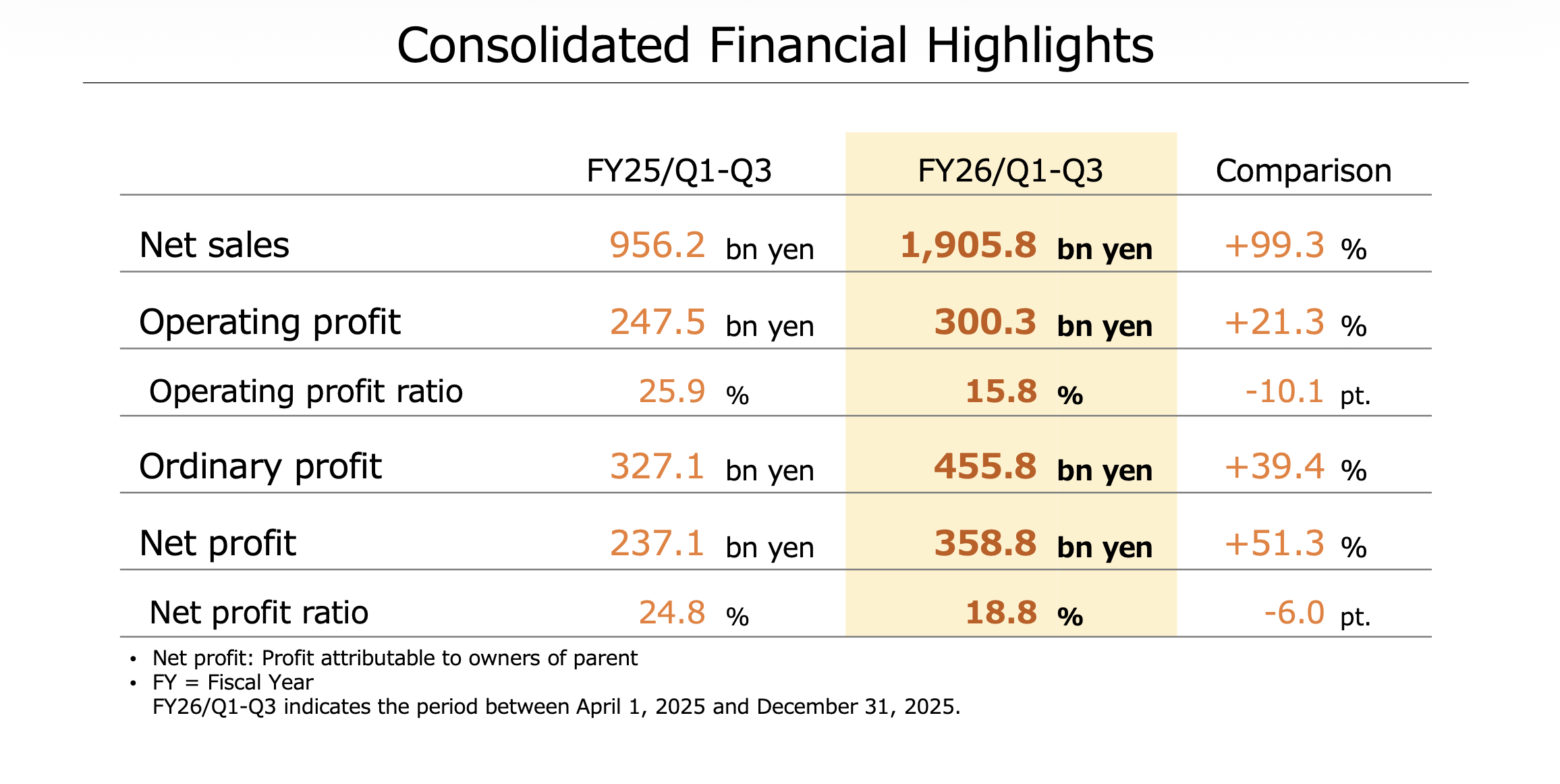
Core Viewpoint - Nintendo's recent financial report fell short of market expectations, raising concerns about future profitability due to rising component costs and conservative sales forecasts [1][3]. Financial Performance - For the first three quarters of fiscal year 2026, Nintendo reported net sales of 1,905.8 billion yen, a year-on-year increase of 99.3%; operating profit was 300.3 billion yen, up 21.3%; and net profit reached 358.8 billion yen, a 51.3% increase. However, the net profit margin decreased by 6 percentage points to 18.8% [1]. - In the third quarter of fiscal year 2026, Nintendo achieved revenue of 806.3 billion yen, an 86% year-on-year increase, but below the market expectation of 847.7 billion yen. Operating profit was 155.2 billion yen, up 23.1%, also below the expected 180.7 billion yen [1]. Hardware and Software Sales - In the first three quarters, the Switch 2 console sold 17.37 million units, making it the fastest console to reach 15 million sales. However, sales of the original Switch console decreased by 66% to 3.25 million units. Software sales for Switch 2 reached 37.93 million copies, while sales for the original Switch declined by 12.1% to 109 million copies [2]. Future Outlook - Nintendo maintained its full-year forecast for fiscal year 2026, projecting Switch 2 sales of 19 million units, with nearly 17.4 million units sold by the end of December 2025. The company also expects a net profit of 350 billion yen for the fiscal year [3]. - Concerns about profit margins are heightened due to ongoing U.S. tariffs and rising storage chip prices, which could pressure future profitability [3]. Component Cost Impact - Nintendo's president stated that the recent rise in memory prices has not significantly impacted hardware profits for the first three quarters, but ongoing price increases could pose risks. The company is monitoring the situation closely [5]. - The global storage chip market is experiencing a "super cycle" driven by AI demand, leading to rising prices that could affect the profitability of consumer electronics [5]. Pricing Strategy - Analysts suggest that raising the price of the Switch 2 may be necessary to maintain profitability amid rising memory costs, with estimates indicating a potential price increase of about 15% [6]. - However, some analysts believe that concerns regarding the profitability of the Switch 2 may be overstated, as Nintendo traditionally adheres to a strategy of not selling hardware at a loss [7].


存储“超级周期”:芯片“一天三个价”,PC全面提价在即
Guo Ji Jin Rong Bao· 2026-02-05 05:29
Core Viewpoint - The shortage of storage chips has become the biggest challenge for AI development, with supply-demand imbalance expected to ease only by 2028, according to Intel's CEO Pat Gelsinger [1]. Group 1: Market Dynamics - The global storage chip market is experiencing a "super cycle" driven by the AI boom, with prices for memory and hard drives rising significantly since mid-2025, with reports of price increases of three to four times compared to last year [1]. - Many PC manufacturers have adjusted their prices due to the rising costs of memory, with increases ranging from 300 to 500 yuan for most models, and some high-end models seeing price hikes exceeding 1,000 yuan [2]. - Sales personnel from various brands, including HP and Lenovo, have indicated that price adjustments are expected to continue, with Lenovo anticipating a 5% to 10% increase across its product line [2][3]. Group 2: Consumer Impact - The rising costs have led to a significant impact on the DIY PC assembly market, with assembly costs increasing by at least 1,200 yuan, making it difficult for shops to attract customers [5]. - Consumers are becoming more cautious, with many opting to wait rather than purchase new components, as the price of memory chips has skyrocketed, with some products increasing by 1,000 yuan or more [7]. - The demand for high-performance components has surged, with reports of memory prices rising to three to four times their previous levels, making them a lucrative investment opportunity for some [7][8]. Group 3: Future Outlook - Despite recent price fluctuations, the overall trend in the storage industry remains upward, driven by increased demand from AI applications and cloud service providers, with DRAM market value projected to reach $165.7 billion in 2025, a 73% year-on-year increase [8]. - Recent reports indicate a slight weakening in DRAM spot prices, but this is not yet seen as a sign of an industry reversal, and price increases are expected to continue as the demand remains strong [8].
存储超级周期助推:三星市值首破1000万亿韩元大关!韩国首家
Sou Hu Cai Jing· 2026-02-04 10:50
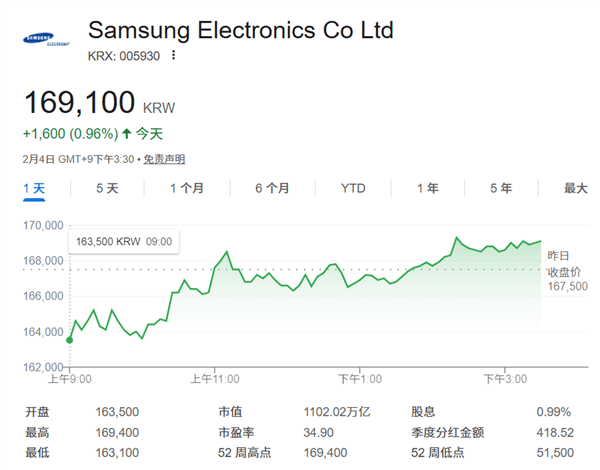
快科技2月4日消息,在AI热潮驱动的存储产业超级周期持续升温之际,韩国存储巨头三星电子迎来历 史性时刻。 今天,三星电子市值突破1000万亿韩元(约合6880亿美元)重要关口,成为韩国首家达成这一里程碑的 企业。 数据显示,三星电子周三盘中市值一度触及约1002万亿韩元,股价攀升至169400韩元,较前一交易日上 涨1.13%。 截至收盘,股价收于169100韩元,涨幅0.96%,市值稳定在约1001万亿韩元。 得益于高性能存储芯片供不应求,三星自去年10月股价突破10万韩元以来,便开启了疯狂拉升模式,去 年股价已暴涨125%,今年更是已累计上涨约41%。 另外今天还有消息称,三星与SK海力士将在今年上半年继续大幅上调NAND闪存价格,产品利润率有 望冲上40%至50%,创下近十年来的最高水平。 SAMSUNG 国 1 ...
AI热潮带飞马桶厂?不起眼的日企,控制了芯片命脉
3 6 Ke· 2026-02-02 04:05
Group 1 - The article highlights the unexpected rise of TOTO, a Japanese toilet manufacturer, whose stock surged by 11% due to its involvement in the semiconductor industry, particularly through its production of specialized ceramics used in semiconductor manufacturing [3][21]. - TOTO's new business in precision ceramics now accounts for 42% of its revenue, with a profit margin of 40%, significantly higher than the average of 7% across all departments [21]. - The company has leveraged its long-standing expertise in ceramics to develop electrostatic chucks, which are crucial for maintaining the precision required in semiconductor manufacturing [11][19]. Group 2 - The article discusses the broader trend of traditional Japanese companies successfully transitioning into the semiconductor industry, citing examples like Ajinomoto, which developed a specialized film for high-performance CPUs from its food production waste [26][28]. - Other companies, such as Kao and Fujifilm, have also found niches in the semiconductor supply chain, with Kao producing cleaning agents for wafers and Fujifilm supplying photoresists and chemicals necessary for semiconductor production [32][38]. - The narrative emphasizes that Japan's historical industrial strength and technological reserves have allowed these companies to adapt and thrive in the high-tech semiconductor market, despite their origins in seemingly unrelated industries [40][42]. Group 3 - The article suggests that China's semiconductor industry is on a similar path, with emerging companies developing high-purity materials and specialized products that could fill gaps in the supply chain, akin to Japan's historical industrial evolution [46][54]. - Companies like Xingfa Group and Huitian New Materials are highlighted for their successful transitions from traditional industries to high-tech sectors, indicating a growing trend of innovation and adaptation within China's industrial landscape [48][51]. - The overall message conveys optimism for China's future in the semiconductor industry, suggesting that with time and continued development, the country can achieve significant advancements [56].
金属狂潮下,全球矿业巨头50强开年暴涨20%
Hua Er Jie Jian Wen· 2026-01-29 01:46
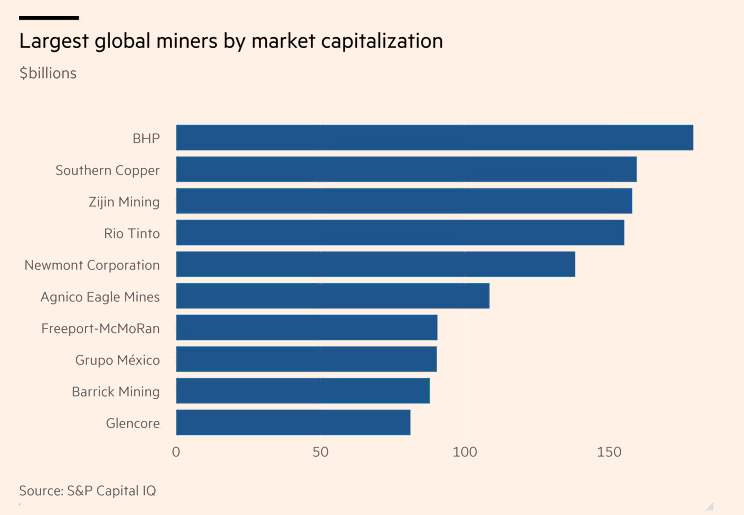
Core Viewpoint - The geopolitical tensions and a weakening dollar have triggered a surge in the global mining sector, with significant increases in the market capitalization of major mining companies and a notable rise in metal prices [1] Group 1: Market Performance - The market capitalization of the world's 50 largest listed mining companies increased by $476 billion, representing a 20% rise over the past month [1] - Over 100 independent metal and mining companies have seen their stock prices double since January [1] - The top three performing sectors in the MSCI's 156 industry stock indices this year belong to the metals sector [1] Group 2: Price Movements - Gold prices surpassed $5,300 per ounce, silver broke the $100 mark for the first time, and copper and tin reached historical highs this month [1] - The demand for metals is primarily driven by risk aversion amid global turmoil and threats from U.S. President Trump, leading to a decline in the dollar to its lowest level in four years [1][2] Group 3: Investor Sentiment - Analysts note that investors are replacing dollar exposure with commodity exposure due to heightened fears in the market [2] - The AI boom is also contributing to increased demand for copper, further driving up its price [2] Group 4: Valuation and Growth Potential - Mining stocks have shown strong performance, with a total market value increase of over 80% year-on-year for a group of nearly 2,400 mining companies [4] - Analysts believe there is still room for growth in the sector, as investor expectations for rising metal prices continue to build [4][5] Group 5: Market Risks and Volatility - Despite the positive market sentiment, analysts warn of the need for substantial capital in the industry, with geopolitical tensions creating uncertainty for mining operations [5] - The influx of speculative funds raises concerns about potential market corrections, as investors may quickly exit if market conditions change [5]
DDR4市场产能供给迎来转机,“疯牛”有望缓解
半导体芯闻· 2026-01-26 08:44
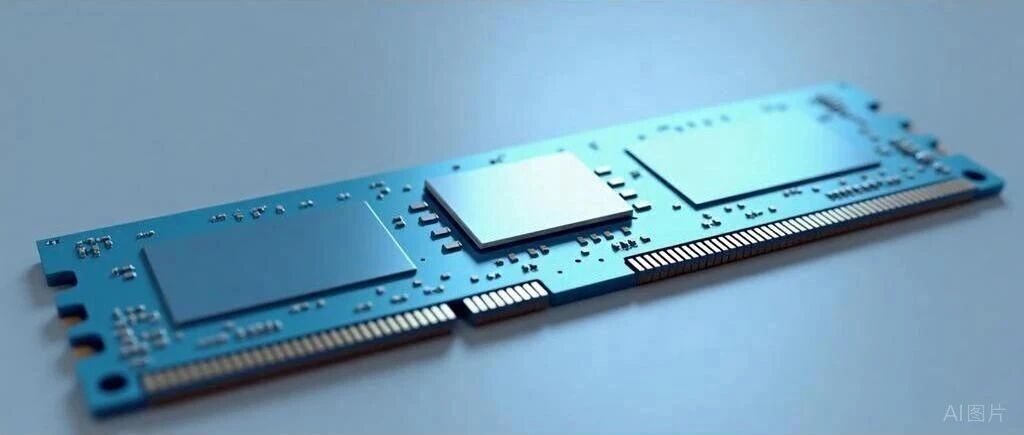
DDR4的这一轮"疯牛"行情,并非单一因素导致,而是由AI热潮、巨头逐利、市场炒作共同催生。 DDR4 内 存 价 格 暴 涨 已 延 续 近 一 年 , ——DDR4 16Gb 内 存 模 块 现 货 价 格 在 一 年 内 暴 涨 1800%,甚至出现历史性价格倒挂,旧款DDR4比新款DDR5还贵一倍。 2025年起,DDR4市场的需求错配就初现端倪,随着多家国际大厂纷纷发出DDR4 EOL,市场端 对"供给收缩"的预期就已引发渠道与下游客户囤货行为。部分渠道商基于"DDR4供应减少将涨 价"的判断提前囤积库存;下游客户则因担忧断供,主动增加安全库存。 据 1 月 17 日行业消息,长鑫存储计划在其新技术平台推出新一代 DDR4 产品,并规划了部分产能, 以缓解国内 DDR4 供应短缺的状况。 如上述信息准确,无异于为焦灼的市场供需带来缓冲,DDR4 的需求缺口与价格暴涨有望得到缓解。 DDR4供需缘何焦灼? 据公开信息显示,长鑫存储是目前国内唯一能实现大规模量产DRAM的国产厂商,目前在北京、 合 肥 建 有 3 座 12 英 寸 DRAM 晶 圆 厂 , 产 能 规 模 位 居 中 国 第 一 、 全 ...
特朗普救助掩盖困境 华尔街日报:英特尔错失良机被“打回原形”
Feng Huang Wang· 2026-01-26 04:15
Core Viewpoint - Intel is facing significant operational challenges despite initial optimism from government support and rising product demand, leading to a sharp decline in stock price after disappointing quarterly results [1][3][6]. Group 1: Financial Performance and Market Reaction - Intel's stock price surged by 120% over five months following President Trump's promise of nearly $9 billion in funding, but dropped 17% after revealing operational failures in meeting AI CPU demand [1][2]. - The company reported a loss exceeding $10 billion in its manufacturing business last year, exacerbated by the inability to capitalize on the AI data center CPU demand surge [7][11]. Group 2: Operational Challenges - Intel has not secured customers for its next-generation 14A chip manufacturing technology, creating a "chicken or egg" dilemma where customer demand is needed to justify investment in new factories [4][11]. - The company has been unable to meet the sudden surge in orders for older CPU models due to prior capacity reductions, resulting in missed opportunities [5][9]. Group 3: Strategic Adjustments - CEO Lip-Bu Tan expressed disappointment over the company's failure to meet market demand, indicating a struggle to maintain production levels [6][12]. - Intel is attempting to cut costs by limiting spending on older technologies and delaying new factory investments, while also planning to increase capital expenditures for the 14A technology [8][11].


招银国际每日投资策略-20260123
Zhao Yin Guo Ji· 2026-01-23 04:51
Group 1: Market Overview - Global stock markets showed mixed performance, with the Hang Seng Index closing at 26,630, up 0.17% for the day and 3.90% year-to-date [1] - The Shanghai Composite Index rose by 0.14% to 4,123, while the Shenzhen Composite Index increased by 0.69% to 2,714, reflecting a positive trend in the Chinese market [1] - The US markets also experienced gains, with the Dow Jones up 0.63% and the S&P 500 up 0.55%, indicating a favorable environment for equities [1] Group 2: Sector Performance - In the Hong Kong market, the real estate sector led gains with a 1.62% increase, while the financial sector saw a decline of 0.37% [2] - The energy, real estate, and public utilities sectors in Hong Kong outperformed, while materials, healthcare, and information technology sectors lagged [3] - The A-share market saw significant gains in construction materials, defense, and oil & petrochemicals, while beauty care, banking, and pharmaceuticals underperformed [3] Group 3: Company Analysis - 康龙化成 (300759 CH) - 康龙化成 is recognized as a leading integrated CXO service provider in China, offering comprehensive drug development services [4] - The company is expected to benefit from the growing global demand for pharmaceutical R&D outsourcing, with a target price set at 38.08 RMB and a "buy" rating [4][8] - The company has established a one-stop CXO service platform, significantly reducing operational risks and costs for clients, which is crucial in the current biopharmaceutical landscape [4] Group 4: Business Growth and Projections - 康龙化成's laboratory services are projected to see over 15% growth in new orders in 2024, providing a solid foundation for revenue [5] - The small molecule CDMO segment is expected to grow over 35% in new orders in 2024, driven by commercialized projects [5] - The company anticipates revenue growth of 14.2% in 2025, with non-IFRS net profit expected to increase by 12.3% [8]
美国“电荒”,中国“电卷”
创业邦· 2026-01-18 03:48
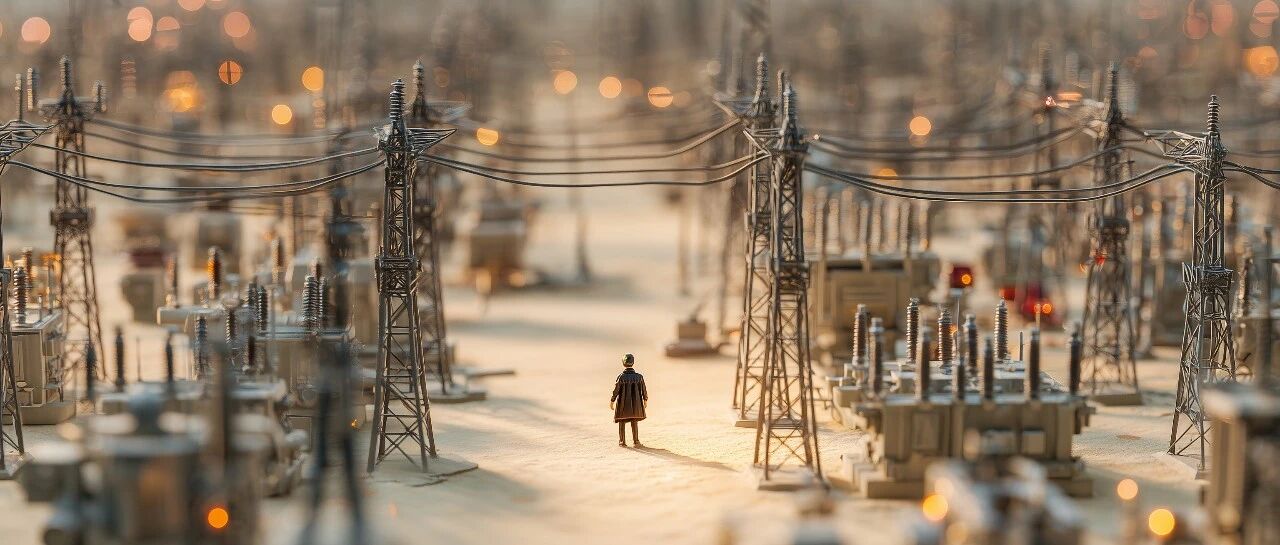
Core Viewpoint - The article contrasts the electricity pricing dynamics in the United States and China, highlighting the stark differences in how each country manages electricity supply and demand, leading to divergent pricing trends. Group 1: U.S. Electricity Market Dynamics - In the U.S., electricity shortages manifest through immediate price increases, reflecting a brutal pricing mechanism that signals supply constraints to consumers [10][12]. - The average electricity price in the U.S. has been rising over the past two years, driven by necessary infrastructure upgrades and capital expenditures [11]. - The pricing mechanism in the U.S. is designed to encourage investment in power generation and to prompt consumers to reduce usage during shortages [10][12]. Group 2: Chinese Electricity Market Dynamics - In contrast, China's electricity prices are experiencing a downward trend, with a reported 10% year-on-year decrease in purchasing prices as of early 2025 [6]. - The Chinese electricity market is characterized by a "passive clearing" process, where supply outpaces demand, leading to lower prices despite increasing electricity consumption from data centers and manufacturing [15][18]. - The integration of renewable energy sources in China has not raised costs as seen in Europe; instead, it has driven prices down due to near-zero marginal costs [16]. Group 3: Implications of Pricing Mechanisms - The U.S. model places the burden of rising costs on end-users, resulting in visible public discontent and protests against high electricity bills [20]. - Conversely, in China, the costs are absorbed by the supply side, with power generation companies and equipment manufacturers facing pressure to maintain low prices, leading to reduced profitability [21][22]. - The article suggests that the different approaches to electricity pricing reflect broader economic strategies, with the U.S. focusing on market-driven solutions and China prioritizing stability and accessibility [22].
新浪财经资讯AI速递:昨夜今晨财经热点一览 丨2026年1月17日
Sou Hu Cai Jing· 2026-01-16 23:23
Group 1: US Stock Market - The three major US stock indices experienced slight declines, with all recording losses for the week as the earnings season began cautiously [1] - Bank stocks faced pressure due to the impact of the credit card interest rate cap plan by TransUnion, while chip stocks continued to rise, with Micron Technology surging over 7%, pushing its market value above $400 billion [1] - Investors are closely monitoring upcoming corporate earnings to assess the economic fundamentals and are scrutinizing high valuations amid the AI boom [1] Group 2: A-share Market Regulation - The A-share market has seen rapid increases, prompting regulatory authorities to implement measures to prevent excessive volatility [4] - The Shanghai and Shenzhen stock exchanges conducted over 800 regulatory actions within a week, including raising financing margin ratios for counter-cyclical adjustments [4] - The China Securities Regulatory Commission has emphasized strengthening trading and information disclosure regulations to maintain fair trading and guide long-term rational investment [4] Group 3: US Federal Reserve Leadership - US Treasury Secretary Becerra indicated that the pool of candidates for the Federal Reserve Chair has been narrowed down to four, with a final decision expected around the Davos Forum [5] - Former President Trump has completed interviews with the last candidate, Rick Reed, but has not disclosed his preference to the Treasury Secretary [5] Group 4: Financial Policy in China - The People's Bank of China and the State Administration of Foreign Exchange detailed the effectiveness of monetary policy in 2025 and measures for 2026, highlighting a moderately loose monetary policy that has led to total credit growth and structural optimization [6] - In 2026, the continuation of moderately loose monetary policy will be implemented, with a focus on counter-cyclical adjustments and eight measures to enhance structural support [6] Group 5: Real Estate Market Dynamics - Jingrui Holdings is auctioning off 120 luxury apartments and over 200 parking spaces in Beijing to repay a debt of approximately 720 million yuan, reflecting a trend among distressed real estate companies to liquidate assets in major cities to alleviate debt pressure [9]