AI算力竞赛

Search documents
从“星际之门”到AWS算力大单 OpenAI猛签AI算力合约 英伟达(NVDA.US)与存储巨头们赢麻了
智通财经网· 2025-11-04 02:40
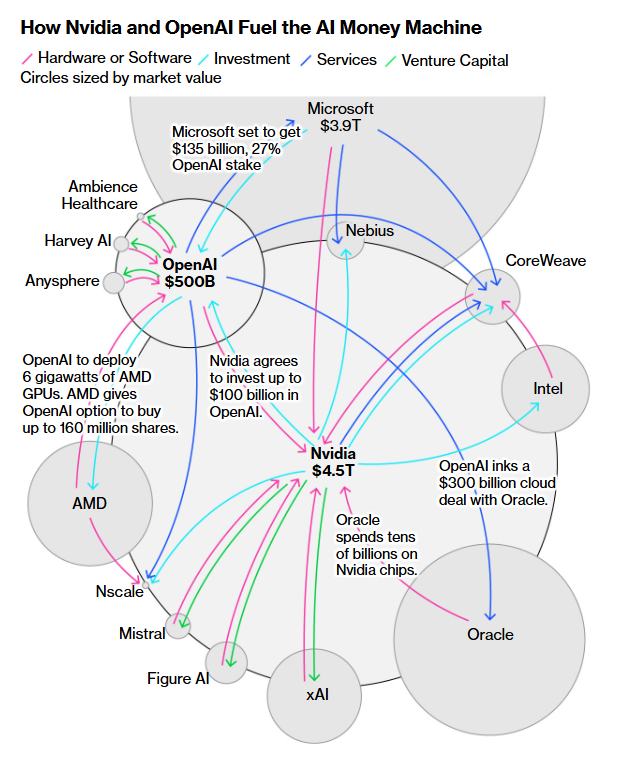
Core Insights - OpenAI has secured AI computing resource supply agreements totaling nearly $1 trillion, benefiting major players like Nvidia and data center storage companies [1][9][10] - The latest agreement with Amazon Web Services (AWS) is a seven-year deal worth $38 billion, allowing OpenAI to access a vast number of Nvidia AI GPU devices [4] - OpenAI's partnerships extend to various sectors, including e-commerce and digital payments, indicating a broadening ecosystem [7][8] Group 1: OpenAI's Agreements and Partnerships - OpenAI's recent agreements include a $250 billion cloud AI computing supply deal with Microsoft, which removes Microsoft's preferential rights as a provider [4] - A long-term collaboration with Broadcom aims to develop a customized AI ASIC computing cluster with a capacity of up to 10 gigawatts [5] - OpenAI has also signed an innovative equity-based contract with AMD for deploying approximately 6 gigawatts of AMD AI GPU computing clusters [6] Group 2: Market Impact and Future Projections - The "Stargate Project," a massive AI infrastructure initiative, is expected to consume up to 40% of global DRAM production, significantly impacting storage suppliers like SK Hynix and Samsung [10][11] - Analysts predict that the HBM market will grow from $2.3 billion in 2023 to $30.2 billion by 2026, driven by strong demand for AI servers [11] - OpenAI's anticipated IPO could reach a valuation of $1 trillion, making it one of the largest IPOs in history [9] Group 3: Industry Winners - Nvidia is positioned as the primary beneficiary of the AI spending wave, with its market capitalization recently surpassing $5 trillion [10][14] - High-performance storage companies, including SK Hynix, Samsung, and Micron, are also expected to benefit significantly from the ongoing AI infrastructure investments [10][11] - The demand for AI computing resources is driving a "super cycle" in the storage market, with companies like Seagate and Western Digital seeing substantial stock price increases [11][14]


美国是否应该向中国出售B30A芯片?
傅里叶的猫· 2025-10-28 13:51
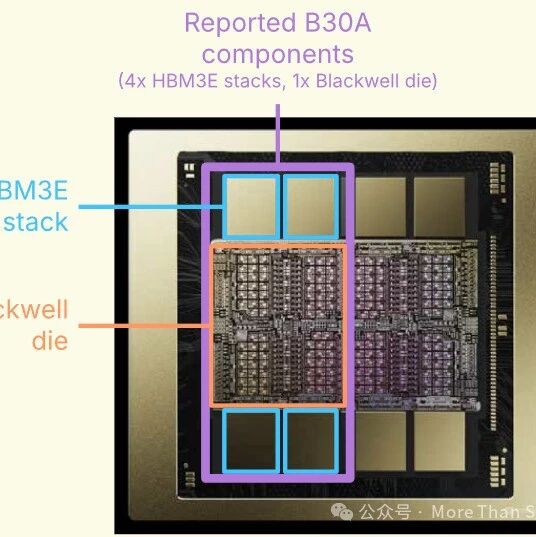
Core Viewpoint - The article discusses the potential implications of the B30A chip, designed by NVIDIA as a downgraded version of its flagship B300 chip, particularly in the context of U.S. export controls to China and the ongoing AI computing race [5][16]. Group 1: AI Computing Race and Export Controls - The U.S. government faces a complex decision regarding the export of the B30A chip to China, which could significantly enhance China's AI computing capabilities despite being a lower-performance version of the B300 [5][6]. - The Trump administration's AI action plan aims to maintain U.S. leadership in AI by restricting access to advanced AI computing resources, with the U.S. currently leading China in AI supercomputing capabilities by approximately five times [7]. Group 2: Hardware Configuration and Performance - The B30A chip has peak performance and memory bandwidth that are 50% lower than the B300, with a single B30A card priced at approximately $22,500 compared to the B300's $45,000 [8][12]. - A server with eight B30A GPUs consumes only 40% of the power of a B300 server, making it more energy-efficient [8]. Group 3: Cluster Cost Analysis - To achieve the same total computing power as a B300 cluster, a B30A cluster requires double the number of chips, leading to a 24% higher initial investment cost, although this is mitigated by Chinese government subsidies [11]. - The overall amortized cost of a B30A cluster, including server, network, and energy costs over five years, is approximately 1.24 times that of a B300 cluster, indicating a 20% higher cost [13]. Group 4: Strategic Implications of B30A Export - If the B30A is allowed for export, it could significantly narrow the AI computing gap between the U.S. and China, potentially reducing the disparity from over 31 times to below 4 times [14]. - The introduction of B30A could pressure domestic Chinese chip manufacturers, as its performance exceeds that of local alternatives while being more cost-effective [14][15]. Group 5: Global Supply Chain Impact - Allowing the export of B30A could disrupt the global chip supply chain, as NVIDIA's production capacity is limited, potentially leading to longer wait times for other markets [15]. - The B30A's established supply chain and controllable procurement costs make it an attractive option for China, representing a "low investment, high return" scenario [15]. Group 6: Technical and Geopolitical Interplay - The decision to allow B30A exports is complicated by geopolitical considerations, as it could undermine U.S. core advantages in AI while providing NVIDIA with significant revenue [16]. - The AI computing race is not solely a technological competition but also a geopolitical struggle, with the potential for U.S. market restrictions to accelerate China's domestic technology development [16].
不请投行、不请律所,OpenAI“独立完成”高达1.5万亿美元的交易,“专注算力,财务细节稍后再谈”
美股IPO· 2025-10-27 01:23
Core Insights - OpenAI's core executive team, led by CEO Sam Altman, successfully completed a $1.5 trillion chip supply deal with minimal external advisory involvement, focusing on speed and technical aspects over financial details [3][4][5] - The urgency of the AI arms race has overshadowed traditional business prudence, with OpenAI adopting a "get the chips first" approach [4][6] - The team demonstrated remarkable execution efficiency through various agreements, including a $119 billion power exchange deal with CoreWeave and a $350 billion chip procurement commitment with NVIDIA [3][4][7] Team Dynamics - Altman envisioned the partnerships, while key executives like Greg Brockman and Sarah Friar executed the structural design and governance arrangements [5][6] - Friar, a former CEO of Nextdoor, played a crucial role in securing financing for these transactions, leveraging her extensive financial background [6][7] - The small team led by Peter Hoeschele focused on enhancing computational supply to meet Altman's ambitious goal of 1 gigawatt per week [6][7] Transaction Models - The initial $119 billion agreement with CoreWeave involved purchasing computational power in exchange for equity, which later expanded to over $220 billion [7][8] - Many subsequent deals began with chip companies proactively reaching out to OpenAI for collaboration, relying on trust between Altman and the counterparties [8][9] - Direct negotiations with chip giants like NVIDIA and AMD were conducted without external advisors, streamlining the process [10][11] Strategic Partnerships - NVIDIA agreed to invest up to $100 billion in OpenAI in exchange for a commitment to spend up to $350 billion on 10 gigawatts of chips [11] - The partnership with AMD involved discussions over several years, culminating in a deal for purchasing 6 gigawatts of chips in exchange for warrants to buy up to 10% of AMD at a nominal price [11] - OpenAI's collaboration with Oracle, valued at $300 billion over five years, originated from a chance opportunity when a previous client exited a data center project [12]

铜,不够用了
3 6 Ke· 2025-10-20 00:16
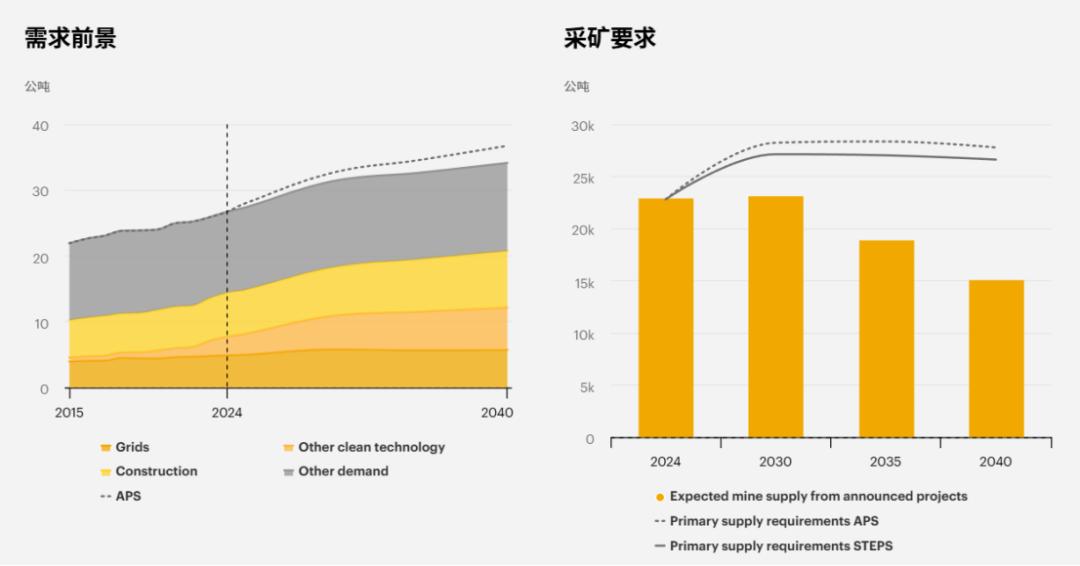
Core Insights - Copper is becoming an essential resource in the modern semiconductor industry, particularly in the context of the global AI computing power race and the energy transition [1][3] - The demand for copper is expected to surge due to its critical role in various applications, including semiconductor manufacturing and green energy technologies [9][10] - The global copper supply chain faces significant challenges, including production difficulties, transportation risks, and climate change impacts, leading to a potential systemic shortage by the 2030s [12][15][16] Group 1: Copper's Role in Semiconductor Industry - Copper is primarily used for manufacturing interconnect lines in semiconductors, acting as the "vascular system" of chips to ensure efficient electronic signal flow [4][8] - The unique physical properties of copper, such as lower resistivity and higher thermal stability compared to aluminum, make it irreplaceable in high-performance chips [5][6] - The adoption of the "Damascene Process" has enabled the large-scale application of copper in semiconductor manufacturing, overcoming previous limitations [6][7] Group 2: Demand Drivers - The demand for copper is being driven by the explosive growth in AI computing and the renewable energy sector, fundamentally changing the demand landscape [9] - For instance, the NVIDIA H100 chip consumes copper at a rate 100 times higher than traditional electronic devices, highlighting the increasing copper requirements in advanced technology [10][11] - Electric vehicles (EVs) are also contributing significantly to copper demand, with varying copper usage across different vehicle types [10][11] Group 3: Supply Challenges - The global copper supply is facing a long-term imbalance due to the slow pace of new mine development, with only 12 large copper mines under construction expected to add 3 million tons by 2030, while demand is projected to increase by 8 million tons [13] - Geographical disparities in copper resources and processing capabilities create vulnerabilities in the supply chain, with South America holding a significant portion of the world's copper reserves [14] - Climate change poses a major risk to copper supply, particularly in water-scarce regions where mining operations are heavily reliant on water resources [15] Group 4: Geopolitical Factors - Recent geopolitical developments, such as the proposed 50% tariff on imported copper by the U.S., are likely to disrupt global copper trade dynamics [16] - Countries are increasingly adopting resource nationalism and export restrictions, further complicating the global copper supply landscape [16]
市值1.2万亿的“组装厂”,成了A股高估之最
虎嗅APP· 2025-09-21 23:54
Core Viewpoint - Industrial Fulian is considered one of the most overvalued stocks in A-shares, with a market capitalization of 1.23 trillion yuan and a price-to-earnings ratio of 51 times, despite its low asset quality and profit margins [5][9][46]. Group 1: Stock Performance and Market Position - As of September 12, 2025, Industrial Fulian's stock price reached 61.9 yuan, with a cumulative increase of 195.2% from early July to mid-September 2025, driven by the demand for AI computing infrastructure [5][6]. - The valuation of Industrial Fulian is deemed excessive, especially when compared to industry leaders like Nvidia, as the company primarily benefits from the AI boom without substantial profit margins [7][9]. Group 2: Financial Performance and Growth - In 2024, Industrial Fulian reported revenue of 609.1 billion yuan, a year-on-year increase of 27.9%, and a net profit of 23.2 billion yuan, up 10.3% [12]. - For Q2 2025, the company achieved revenue of 200.35 billion yuan, a 35.9% increase year-on-year, and a net profit of 6.9 billion yuan, reflecting a 51.6% growth [14]. - The revenue growth from its main business segments, communication and cloud service equipment, has shown limited growth potential, with communication equipment revenue only increasing by 11.1% from 2018 to 2024 [18][22]. Group 3: Asset Quality and Profitability - Industrial Fulian's fixed assets are significantly lower than competitors, with a book value of only 22.63 billion yuan, compared to BYD's 280.8 billion yuan [8][43]. - The company's gross profit margins are low, with cloud service equipment yielding only a 5% margin compared to Nvidia's 50% [27]. - The company has a high proportion of low-efficiency overseas assets, which accounted for 66.6% of total assets by mid-2025, raising concerns about potential impairment losses [39][42]. Group 4: Risks and Challenges - The AI computing investment landscape faces challenges such as diminishing returns, energy constraints, and data scarcity, which could impact Industrial Fulian's growth prospects [28][30]. - The company's net profit margin has remained low, averaging 4.2% from 2018 to 2024, with R&D investment significantly lagging behind industry peers [32].


科创100ETF基金(588220)涨超3.6%,最新规模位居全市场同类第一
Xin Lang Cai Jing· 2025-09-11 07:45
Group 1 - The core viewpoint is that the 科创100ETF fund has shown significant growth, with a 3.63% increase and a total scale of 57.64 billion, making it the largest in its category [1][2] - Semiconductor stocks are experiencing a strong performance, driven by Oracle's announcement of a 359% year-on-year increase in unmet performance obligations, reaching 455 billion [1] - The ongoing global AI computing power competition is expected to drive demand in the semiconductor and consumer electronics sectors, with a focus on innovation and recovery in demand [1] Group 2 - The 科创100ETF fund closely tracks the 上证科创板100 index, which selects 100 securities from the Sci-Tech Innovation Board based on market capitalization and liquidity [2] - As of August 29, 2025, the top ten weighted stocks in the 上证科创板100 index account for 23.82% of the index, including companies like 东芯股份 and 华虹公司 [2]





董事长三年薪酬2200万,紫光股份带着800亿负债赴港输血
凤凰网财经· 2025-06-19 10:04
Core Viewpoint - Unisplendour Co., Ltd. has submitted its prospectus for a Hong Kong IPO, aiming to become a key player in the AI computing market, despite showing conflicting financial results over the past three years, with revenue growth but a significant decline in net profit and increasing debt levels [1][4][22]. Financial Performance - The company's total revenue increased from 73.75 billion RMB in 2022 to 79.02 billion RMB in 2024, while net profit fell from 3.74 billion RMB to 1.98 billion RMB, resulting in a net profit margin drop from 5.1% to 2.6% [1][4]. - Revenue growth of 7% over two years contrasts sharply with a 47% decline in net profit, highlighting a significant disparity in financial performance [4]. Business Segments - The decline in profitability is primarily attributed to a drop in gross margins across its two main business segments: digital solutions and ICT product distribution [5][7]. - Gross margins for the digital solutions segment decreased from 26.8% in 2022 to 20.6% in 2024, while the ICT product distribution segment saw a drop from 7.8% to 4.9% during the same period [5][7][8]. Debt Situation - The company's total liabilities surged from 36.24 billion RMB in 2022 to 72.7 billion RMB in 2024, with a corresponding increase in the debt-to-asset ratio from 48.91% to 81.87% [10][11]. - A significant acquisition of a 30% stake in H3C Technologies for approximately 15 billion RMB in 2024 was financed through loans, contributing to the increased debt levels [11][22]. Inventory and Cash Flow - Inventory levels rose dramatically from 18.88 billion RMB in 2022 to 33.95 billion RMB in 2024, with a further increase noted in Q1 2025 [14]. - The efficiency of inventory turnover worsened, with turnover days increasing from 111.3 days in 2022 to 163.8 days in 2024 [15]. Goodwill and Risks - The company's goodwill remained high at 13.99 billion RMB, constituting 86.9% of its net assets in 2024, raising concerns about potential goodwill impairment risks [16]. - The company has faced significant financial challenges, including a history of debt crises and restructuring, which may impact its future stability [18][22].

帮主郑重:美股大涨半导体新高,中长线看点在这!
Sou Hu Cai Jing· 2025-06-17 03:55
Group 1: Market Overview - The U.S. stock market experienced a significant rally, with all three major indices closing higher: Nasdaq up 1.52%, S&P 500 nearly 1%, and Dow Jones up 0.75% [1] - The Philadelphia Semiconductor Index surged over 3%, reaching its highest level since late February [1] Group 2: Semiconductor Sector Insights - The surge in the Philadelphia Semiconductor Index is attributed to the overall explosion in tech stocks, with major players like Meta, Intel, and Nvidia seeing substantial gains [3] - Key factors driving this rally include a perceived easing of Middle East tensions, a decline in oil prices reducing inflationary pressures, and the EU's acceptance of a 10% uniform tariff from the U.S., which has decreased trade uncertainties [3] - The long-term outlook for the semiconductor industry remains positive, driven by the global AI computing race and increasing demand for chips across various applications, including data centers and edge computing [3] Group 3: Chinese Stocks Performance - The Nasdaq Golden Dragon China Index rose over 2%, with notable gains in stocks like Futu (up over 10%) and Bilibili (up over 5%), indicating a recovery in foreign investor confidence towards Chinese internet companies [4] - The performance of leading Chinese platforms is bolstered by domestic consumption recovery and expansion into overseas markets, enhancing earnings certainty [4] Group 4: Economic Indicators and Risks - Long-term U.S. Treasury yields increased by 6 basis points, nearing 4.45%, reflecting market apprehension regarding the Federal Reserve's upcoming interest rate meeting [5] - Despite low expectations for rate hikes, a hawkish stance from the Fed on inflation could lead to short-term market volatility [5] - Geopolitical risks remain a concern, particularly with fluctuating oil prices influenced by statements regarding tensions in Tehran [5]