
AI 泡沫

Search documents
英伟达财报+谷歌新模型,指引AI板块盘整后再出发!
2025-11-24 01:46
Summary of Key Points from Conference Call Company: NVIDIA Financial Performance - NVIDIA's Q3 revenue increased by 205% year-over-year, reaching $57 billion, with a gross margin of 73.6% [1][2] - For Q4, the company expects a revenue midpoint of $65 billion, representing a 65% year-over-year growth, with an adjusted gross margin target of 75% [1][2] - NVIDIA anticipates maintaining a gross margin in the mid-70% range for fiscal year 2026, alleviating market concerns regarding potential impacts from storage price increases and ASIC advancements [1][2] Supply Chain and Manufacturing - NVIDIA is enhancing supply chain resilience by collaborating with TSMC to produce Blackwell wafers in the U.S. and expanding manufacturing capabilities with partners like Foxconn and Anker [1][4] - The company aims to ship 20 million units of Blackwell and Ruby series by 2026, targeting $50 billion in revenue, with potential upward adjustments [1][4] - New procurement agreements from Saudi Arabia are valued at approximately $10 billion, and additional collaboration with Anthropic is expected to generate $30-35 billion in demand [1][4] AI Market and Investment Strategy - NVIDIA's CEO Jensen Huang addressed concerns about AI bubbles and GPU depreciation cycles, asserting that a 5-6 year depreciation period for GPUs is reasonable and can extend with increased inference workloads [1][5] - The company maintains a proactive investment strategy in AI, ensuring that investments are contingent on the successful development of AI systems by partners [1][7] Market Demand and Supply Issues - NVIDIA faces a strong demand for GPUs, with many older models still in high demand, indicating a robust market environment [1][8] - Corwave reported a 95% renewal rate for H100 contracts, reflecting strong market demand for NVIDIA's products [1][8] Company: Google Product Launch and Market Impact - Google's release of the Gemini 3 model has positively impacted its stock and that of other cloud providers, indicating overall growth in the AI market [1][3][6] - Gemini 3 Pro achieved top scores in 19 out of 20 industry benchmarks, showcasing its superior performance in inference, multi-modal tasks, and programming capabilities [1][9] Industry Dynamics - The launch of Gemini 3 demonstrates the effectiveness of pre-training scaling laws and intensifies competition among major players in multi-modal technology [1][10] - Google's high pricing strategy for its top-tier models suggests that premium models can command higher fees, creating unique barriers and driving increased investment in computational power across the industry [1][10] Market Sentiment - Discussions around AI bubble risks have eased, with NVIDIA's financial results and Google's model launch contributing to a positive outlook for AI technology and its commercial applications [1][11][12]

美联储降息预期摇摆下的全球市场
2025-11-24 01:46
Summary of Key Points from Conference Call Records Industry Overview - **U.S. Stock Market**: Recent volatility influenced by mixed non-farm employment data, fluctuating confidence in tech and AI stocks, and uncertainty in Federal Reserve monetary policy [1][3][4] - **Hong Kong Stock Market**: Continued decline due to domestic economic conditions and overseas risk factors, with a potential for slight rebound but requiring more fundamental support for a trend reversal [1][6][11] - **Japanese Bond Market**: Rapid increase in long-term bond yields and depreciation of the yen raise concerns about carry trade unwinding, potentially affecting global capital flows [1][7][14] Core Insights and Arguments - **U.S. Economic Indicators**: Non-farm payrolls exceeded expectations with an increase of 119,000 jobs, but the unemployment rate rose, leading to mixed signals about the economy [4][5] - **Federal Reserve's Interest Rate Outlook**: Increased probability of a rate cut in December, rising from 30% to over 60%, which could alleviate liquidity pressures and boost the stock market [5][9][16] - **AI Industry Focus**: The AI sector remains a key area of interest, with potential IPOs like OpenAI expected to drive market sentiment. However, concerns about profitability and capital expenditures persist [4][13][16] Important but Overlooked Content - **Long-term Projections for China**: By 2026, China's economy is expected to undergo significant structural transformation, with policy guidance likely to enhance resilience compared to other countries [1][10] - **Market Sentiment on Hong Kong Stocks**: Current market adjustments viewed as healthy rather than panic-driven, with optimism for 2026 based on valuation and global comparisons [6][11][12] - **Risks from Japan's Economic Policies**: Discrepancies between aggressive fiscal policies and conservative monetary policies in Japan could lead to increased inflationary pressures and challenges for sustainable economic growth [14][17] Conclusion - The overall sentiment indicates cautious optimism for the U.S. and Hong Kong markets in the long term, contingent on monetary policy developments and economic fundamentals. The AI sector's trajectory will be critical in shaping market dynamics, while Japan's economic policies warrant close monitoring due to their potential global implications.
2026年,美股AI泡沫会破裂吗?
2025-11-18 01:15
Summary of Conference Call on AI Bubble and Market Outlook Industry Overview - The discussion centers around the AI bubble in the U.S. stock market, with a focus on its potential burst by 2026, drawing parallels to historical market bubbles such as the dot-com bubble in 2000 and the "Nifty Fifty" in the 1970s [1][2][5][18]. Key Points and Arguments - **Current Market Sentiment**: The AI bubble narrative is expected to persist until 2026, posing market risks. The current state of the U.S. tech sector is likened to the early stages of the 1998 dot-com bubble, with the S&P 100 valuation at historical highs but low IPO activity and capital expenditure [1][2][4]. - **Monetary Policy Impact**: Historical evidence suggests that tightening monetary policy is a critical factor in bursting bubbles. The transition from loose to tight monetary policy, particularly through interest rate hikes, has historically accelerated market corrections [3][5][18]. - **Federal Reserve's Stance**: There is significant market uncertainty regarding the Federal Reserve's potential interest rate cuts in December. Expectations dropped from 98% to around 40% due to hawkish comments from Fed officials, indicating limited room for aggressive easing [7][8]. - **Economic Resilience**: Despite short-term volatility in AI-related tech stocks, long-term prospects remain optimistic, supported by strong consumer resilience and liquidity from the government reopening. Companies like Nvidia are expected to provide critical earnings signals [11][12][18]. - **Future Scenarios**: Two potential scenarios for the Fed's actions are outlined: a dovish approach with multiple rate cuts leading to economic expansion and inflation risks, or a cautious approach with limited cuts that could act as a de facto rate hike [7][8]. Additional Important Insights - **Market Adjustments**: The U.S. government shutdown had a notable impact on market liquidity, but the resolution is expected to alleviate some pressure [9][10]. - **Sector Focus**: Investors are advised to focus on technology growth and cyclical sectors, particularly in the context of potential rate cuts. The real estate sector is highlighted as a promising area due to expected investment increases in a lower interest rate environment [15][19]. - **Global Market Trends**: The global stock market is anticipated to exhibit a resonance between economic and technological growth, with both the U.S. and China potentially entering a phase of synchronized expansion [14][18]. - **Investment Opportunities**: Specific sectors such as innovative pharmaceuticals and renewable energy (e.g., solar and lithium) are identified as areas of interest due to their cyclical nature and resilience in the current market environment [16][20]. This summary encapsulates the critical insights from the conference call regarding the AI bubble, market dynamics, and future investment strategies.
清仓英伟达股票后,软银高管称无法判断是否正处于 AI 泡沫之中
Sou Hu Cai Jing· 2025-11-13 10:21
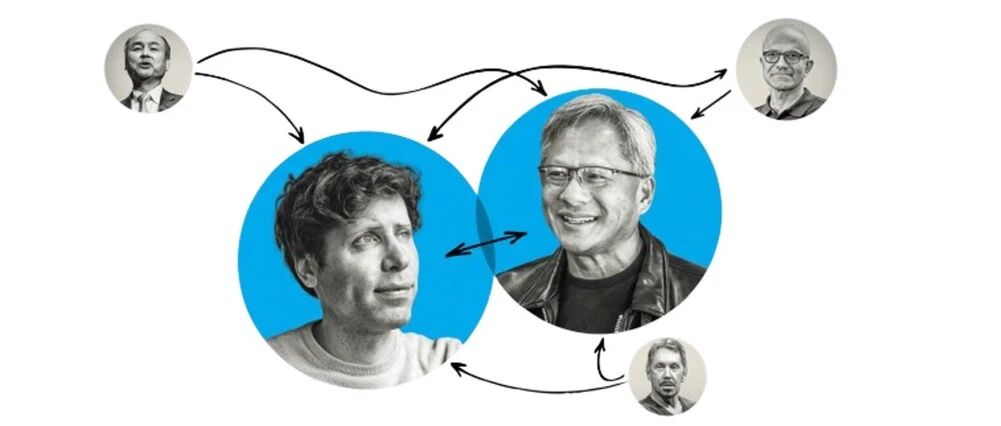
Core Viewpoint - SoftBank has completely sold its stake in Nvidia, valued at approximately £4.4 billion (around ¥41.08 billion), raising concerns in the market about a potential bubble in the AI-driven stock market [1][3]. Group 1: SoftBank's Actions - SoftBank has sold all 32.1 million shares of Nvidia it held, indicating growing anxiety over high valuations in the tech sector [3]. - The sale is intended to fund new AI investments, particularly supporting CEO Masayoshi Son's significant bet on OpenAI, requiring over $30 billion (approximately ¥213.44 billion) [3]. Group 2: Market Reactions - The CFO of SoftBank, Yoshimitsu Goto, expressed uncertainty about whether the market is in an AI bubble, which may cause investor unease [3]. - Analysts suggest that the reduction in holdings indicates that Masayoshi Son believes the momentum that pushed Nvidia to become the first company with a market cap of $5 trillion is waning [3]. - Recently, Nvidia's stock price fell by 3% in New York, despite maintaining a market cap of around $4.7 trillion, having doubled since April and increased over tenfold in three years [3]. Group 3: Broader Market Concerns - Concerns about an "AI bubble" have been escalating, with leaders from major investment banks like Goldman Sachs, JPMorgan, and Morgan Stanley warning of a potential market correction [3]. - Hedge fund manager Michael Burry has bet £835 million against Nvidia and Palantir, reflecting skepticism about the sustainability of current valuations [4].



微软获OpenAI授权独立研发AGI,AI领域竞争格局生变
Sou Hu Cai Jing· 2025-11-11 13:58
Core Insights - Microsoft is the largest shareholder of OpenAI, holding approximately $13 billion in shares, which raises concerns among investors about the sustainability of the current "AI bubble" and the unclear profitability model of OpenAI [1] - Tensions between Microsoft and OpenAI have escalated due to OpenAI's plans to transition into a for-profit entity, with rumors suggesting that Microsoft attempted to prevent this shift to protect its interests [1] Group 1 - A new "final agreement" has been signed between Microsoft and OpenAI, extending their collaboration and introducing new terms, including that OpenAI cannot unilaterally declare the achievement of AGI (Artificial General Intelligence) without validation from an independent expert panel [3] - The new agreement allows Microsoft to use OpenAI's models and products, including those developed post-AGI, until 2032, even if AGI is achieved before 2030 [3] - The agreement also permits Microsoft to independently or jointly develop AGI with other companies, effectively granting Microsoft significant control over AI advancements [3] Group 2 - Following the signing of the agreement, Microsoft has accelerated its efforts in the AI sector, with the CEO of its AI division stating that the company is pursuing "superintelligence" while ensuring that AI serves humanity [3] - Previously, Microsoft was restricted from independently pursuing AGI until 2030 to allow OpenAI to maintain its lead, but this limitation has now been lifted, enabling Microsoft to pursue its own initiatives [3] - The CEO emphasized that Microsoft will maintain an open technology approach and will not be overly committed to specific models, focusing solely on product usability [4]


美元“荒”与全球“慌”?
2025-11-11 01:01
Summary of Key Points from Conference Call Industry Overview - The discussion primarily revolves around the **U.S. liquidity crisis** and its impact on **global risk assets** and the **AI sector**. The focus is on the implications of the Federal Reserve's actions and market dynamics. Core Insights and Arguments 1. **Liquidity Crisis and Its Causes** The liquidity crisis is attributed to the Federal Reserve's balance sheet reduction, decreased bank reserves, and increased short-term liquidity demands, compounded by market sentiment fluctuations and concerns over AI bubbles [1][10][6]. 2. **Impact on Global Risk Assets** Tightening U.S. liquidity has negatively affected global risk assets, with the dollar index rising above 100. However, fundamental factors do not support a significant decline in the dollar [3][4]. 3. **Current Market Conditions** The market is experiencing a downturn, particularly in the tech sector, with the Nasdaq showing volatility. The Hong Kong stock market is also affected, fluctuating around 26,000 points [3][4][13]. 4. **AI Bubble Concerns** While there are concerns about an AI bubble, the valuation of major tech companies remains below 35 times earnings, which is not extreme compared to the internet bubble era. Key metrics such as demand, capability, leverage, and valuation do not indicate overheating [11][2]. 5. **Federal Reserve's Historical Context** The Fed's previous balance sheet reduction in 2019 led to a liquidity crisis, prompting a return to expansionary policies. Currently, the Fed has halted balance sheet reduction to prevent similar issues [9][10]. 6. **Future Dollar Trends** The dollar is expected to strengthen slightly in Q4 2023 to Q1 2024, influenced by potential aggressive policies from Trump and overall economic uncertainty [12]. 7. **E-commerce Performance** The performance of major e-commerce platforms during the Double Eleven shopping festival showed a slowdown, with Alibaba and JD.com experiencing single-digit growth, while Pinduoduo and Kuaishou saw double-digit growth [18][19]. 8. **AI Technology Integration** AI technology has been increasingly integrated into e-commerce platforms, enhancing user experience and operational efficiency. Companies like Alibaba are leveraging AI for various applications, indicating a growing trend in the sector [21][22]. 9. **Investment Outlook for Internet Sector** Caution is advised for the internet sector in Q4 due to consumer pressure and high base effects, but long-term optimism remains, particularly regarding technological advancements and AI investments [22][24]. 10. **Cloud Computing's Role in AI** Cloud computing is crucial for AI development, providing the necessary resources for model training and inference. The demand for AI is expected to benefit the cloud computing sector significantly [26]. Other Important Insights - **Market Sentiment and Investment Trends** The current market sentiment reflects a cautious approach, with investors advised to focus on dividend strategies and potential cyclical stock opportunities as the credit cycle peaks [13][17]. - **Future Capital Expenditure Projections** Capital expenditure growth expectations for major cloud service providers have been revised upward to 20%, indicating strong demand and backlog in orders [27]. - **Software Sector's Importance** A shift from hardware to software demand in the AI sector is anticipated, with strong performance in SaaS companies potentially supporting sustainable growth in AI investments [28][30]. This summary encapsulates the critical points discussed in the conference call, providing insights into the current market dynamics, challenges, and future outlooks within the relevant industries.
为什么说 AI 还没到泡沫?等四篇 | 42章经 AI Newsletter
42章经· 2025-11-09 13:19
Group 1 - Fal achieved a remarkable growth from $2 million to $100 million in ARR within a year, supported by a recent $250 million funding round led by Sequoia and KP, with a valuation exceeding $4 billion [2][4][5] - The company pivoted from data processing products to AI generative media cloud services, recognizing a significant user pain point during the GPU crisis and the emergence of Stable Diffusion [4][6][8] - Fal's strategic decision to focus on image and video generation rather than LLMs was based on the belief that the image market is a growing net market, unlike LLMs which compete directly with established giants like Google [8][9] Group 2 - The company adopted a PLG (Product-Led Growth) and sales strategy, starting with self-service for developers and then identifying high-potential customers for sales follow-up [15][18] - Fal's marketing strategy resonated with developers by creating relatable brand elements, such as themed merchandise and live demonstrations of new models [19][22] - The company identified opportunities in the AI ecosystem, suggesting the need for platforms that can scale AI data collection and labeling, as well as vertical advertising solutions [24][25] Group 3 - The article discusses the current perception of AI as a potential bubble, with 54% of fund managers believing it has entered a bubble phase, yet a detailed analysis by Coatue suggests otherwise [26][29] - Coatue's analysis indicates that current valuations, while high, are not excessive compared to historical bubbles, and the concentration of capital in tech giants is justified by their diversified business models [32][36] - The projected growth for AI revenues is significant, with expectations of reaching $1.9 trillion by 2030-2035, indicating a robust long-term outlook for the industry [52][54] Group 4 - The article emphasizes the importance of effective pricing strategies for AI products, highlighting that simplicity and clear value communication are crucial in early stages [68][69] - It suggests that founders should focus on co-creating business cases with clients during POCs (Proof of Concept) to demonstrate value effectively [74][76] - The need for continuous iteration of pricing strategies is highlighted, as the AI market evolves rapidly, necessitating frequent reassessment [72][79] Group 5 - Sandy Diao discusses the pitfalls of being overly data-driven in growth strategies, advocating for a balance between data insights and contextual understanding [82][84] - The concept of the power law of distribution in growth is introduced, where a small number of channels drive the majority of growth, emphasizing the need to identify core growth drivers [88][90] - The article concludes with insights on when to hire growth leaders, suggesting that early-stage companies should integrate growth strategies from the outset to address product-market fit challenges [92][93]
Coatue 最新报告:复盘 400 年、 30+ 次泡沫,我们离 AI 泡沫还很远
海外独角兽· 2025-10-29 12:33
Core Viewpoint - The article argues that AI is not a bubble but a genuine and long-term productivity revolution, supported by significant user growth and revenue from leading AI companies like OpenAI and Nvidia [2][3][7]. Market Analysis - This year marks the third year of the current AI bull market, with a historical probability of 48% for continued market growth next year [3][18]. - Investors should maintain patience regarding AI development, as significant returns often require time, as evidenced by Azure's six-year journey to positive ROIC [3][22]. - The AI sector has shown a remarkable return of 165% over the past three years, significantly outperforming the S&P 500 and non-AI companies [7][8]. AI Growth Dynamics - AI growth has diversified beyond the "Magnificent Seven" companies, with returns from AI sectors excluding these giants surpassing them for the first time in 2025 [10][13]. - New AI winners are emerging in sectors like energy, semiconductors, and software, with AI energy showing a 53% return year-to-date [13][15]. - The growth of AI is shifting towards energy, computing power, and foundational software, indicating a structural change in the industry [15]. Historical Context of "Bubble" - The article emphasizes the importance of long-term holding and understanding market cycles, suggesting that the probability of market growth remains significant even after multiple years of increases [17][20]. - A historical analysis indicates that the current market conditions do not exhibit the characteristics of a bubble, as the valuation metrics are not at extreme levels compared to past bubbles [38][40]. AI's Economic Impact - AI is expected to generate substantial revenue growth, with projections indicating a potential tenfold increase in AI-related profits over the next 5-10 years, reaching $1 trillion [3][90]. - The AI sector's revenue is anticipated to account for 4% of global corporate profits, highlighting its significant economic impact [3][90]. Investment Principles - The article outlines key investment principles for navigating the AI landscape, emphasizing the importance of not selling early during massive adoption phases and recognizing the distinct investment logic across different stages of AI development [117][119]. - Monitoring indicators such as OpenAI's progress and enterprise revenues is crucial for assessing the health and growth potential of the AI industry [122].




Tech Stocks Outperform on Back of Earnings
Youtube· 2025-10-24 18:47
Core Insights - The Bank of England is investigating data center lending due to concerns about potential air bubbles in the market [1] - There is a shift towards increased debt issuance among hyperscalers, which may indicate a broader range of financing is needed to meet investment targets [3] - The expected spending on data centers and computing is projected to reach $5 trillion by 2034, highlighting significant investment opportunities [5] Debt and Financing - The current market sentiment suggests a need for more aggressive debt issuance to support growth in the data center sector [4] - Active credit managers see opportunities in the credit market, but caution is advised due to tight spreads, which may pose valuation risks [6] Earnings and Market Valuation - Intel's recent performance indicates strong PC segment shipments, despite initial concerns about tariffs, suggesting resilience in earnings [7][8] - The overall market is experiencing high valuations across most sectors, with many companies in the ninth and tenth deciles of valuation relative to their historical performance [13][14] - Healthcare is identified as a more attractively priced sector with potential for growth, despite facing challenges [16]
AI基建投资,或正在复制2000年的互联网光纤泡沫
Hu Xiu· 2025-09-30 00:17
Core Insights - The current enthusiasm for artificial intelligence (AI) is reminiscent of the internet bubble of the late 1990s [1][2] - AI companies are being valued in the hundreds of billions, with significant capital expenditures directed towards AI infrastructure by tech giants [2][3] - There is a dual sentiment in the market, characterized by both skepticism and excitement regarding AI's potential [4] Group 1: Investment Trends - Global corporate investment in AI is projected to reach $252.3 billion in 2024, a 13-fold increase from 2014 [2] - Major tech companies, including Amazon, Google, Meta, and Microsoft, plan to spend a total of $320 billion on capital expenditures this year, primarily focused on AI infrastructure [2] - In the past two years, Microsoft, Meta, Tesla, Amazon, and Google have collectively invested approximately $560 billion in AI infrastructure, with only about $35 billion in clearly identifiable AI-related revenue [9] Group 2: Historical Parallels - The article draws parallels between the current AI investment climate and the over-investment in telecommunications infrastructure during the 2000 internet bubble, where excessive fiber optic cables became "dark fiber" due to overestimation of demand [5][8] - The business model of many internet companies in 2000 was hollow, with companies like Commerce One valued at $21 billion despite having no revenue [6][7] - The article suggests that the current AI landscape may face similar challenges if demand does not meet expectations, potentially leading to "dark compute" scenarios [8] Group 3: Economic Dynamics - The sustainability of AI infrastructure investments hinges on three critical curves: cost curve, demand curve, and capital curve [10][12] - The cost curve must show a continuous decline in computing and algorithm costs, while the demand curve needs to shift from pilot projects to essential production elements [10][12] - The capital curve is influenced by interest rates and risk premiums, which can compress the valuation of long-term cash flows if capital costs remain high [11][12] Group 4: Future Scenarios - The article outlines three potential paths for the AI sector: soft landing, phase-out of excess capacity, and structural differentiation between overcapacity in infrastructure and thriving applications [15] - It emphasizes the importance of focusing on operational metrics such as GPU utilization, cost efficiency, and customer retention rather than just narrative-driven valuations [15][16] - Historical lessons suggest that while AI will ultimately change the world, avoiding pitfalls similar to the internet bubble will depend on tangible economic indicators rather than market sentiment [16]

