UGC

Search documents
民谣歌手创业后,再获2000万投资:核心团队来自网易暴雪字节
Sou Hu Cai Jing· 2025-11-28 15:15
Group 1 - The core viewpoint of the article is that Fanxie Bird Technology has completed a Series A financing round of 20 million RMB, with a valuation of 200 million RMB, indicating strong investor confidence in its potential in the UGC gaming sector [1] - The lead investors, including Electric Soul Network and Lianzhang Portal, see the innovative potential of Fanxie Bird in the UGC space, which is expected to inject new vitality into the gaming industry [1][2] - Fanxie Bird's AIGC technology is positioned to reconstruct the entire game development process, complementing Electric Soul's content strategy and promoting cost reduction and efficiency [1][2] Group 2 - Fanxie Bird has achieved significant progress in the AIGC field, with over 10 million global users, primarily targeting the 9-24 age demographic, and aims for 85 million monthly active users by May 2025 [2] - The company plans to generate over 100 million RMB in sales by 2025 through various monetization strategies, including in-game purchases, advertising, IP licensing, and innovative entertainment hardware [2] - The founder and CEO, He Shihua, aims for Fanxie Bird to become the first publicly listed company in the AIGC + UGC gaming concept, leveraging this funding to enhance its global market share [2][3] Group 3 - Following the financing, Fanxie Bird will focus on three strategic initiatives: upgrading its AI toolchain, accelerating product launches, and building a hardware ecosystem to serve niche markets and young users [3] - Analysts suggest that the gaming industry is entering a golden decade driven by AIGC and UGC, with Fanxie Bird potentially becoming the first unicorn in China's UGC gaming sector due to its technological uniqueness and commercial pathways [3]

【大会特刊】生态为核 共创为翼——B站深耕影视生态的“破圈”之路
Sou Hu Cai Jing· 2025-11-21 16:05
Core Viewpoint - Bilibili (B站) is actively enhancing its film and television ecosystem by integrating user-generated content (UGC) with high-quality productions, establishing itself as a significant player in the industry, particularly among younger audiences [1][14]. Group 1: Bilibili's Content Strategy - Bilibili's short drama "Life's Cold Scene is Okay" has been selected for the "Excellent Micro-Short Drama Creation Support Plan" by the Ministry of Culture [1]. - The platform emphasizes a unique community atmosphere that combines UP creator contributions, user interaction, and star collaborations, differentiating itself from traditional one-way content distribution models [2]. - Bilibili has launched several high-quality short dramas focusing on female narratives, achieving a total of 660 million views across four series [3]. Group 2: User Engagement and Community Interaction - The platform's unique ecosystem allows for a high level of user interaction, with over 100 million interactions daily, enhancing the viewing experience through features like bullet comments [2]. - Bilibili's approach to content creation encourages users to produce derivative works, leading to a significant increase in engagement and viewership, with quality UGC contributing over 30% additional viewership for original content [6][7]. - The platform has become a vital space for film promotion, with notable directors engaging with users and creating content that resonates with the audience, exemplified by the extensive viewership of related videos [8]. Group 3: Long-term Development and Future Prospects - Bilibili's commitment to long-term content quality and creator support is evident in its various initiatives, including the "Xiguang Plan" for micro-short dramas and various creator incentive programs [13]. - The platform's focus on deep content consumption aligns with its strategy to foster a sustainable ecosystem that nurtures creators and engages audiences over time [11]. - Bilibili aims to continue innovating in the film and television sector, contributing to the high-quality development of China's online audiovisual industry while connecting with younger audiences [14].



游戏UGC“小赛道”有多香?一个平台日活3300万,单月创收破2000万元,腾讯、米哈游抢着布局
Sou Hu Cai Jing· 2025-11-19 03:38
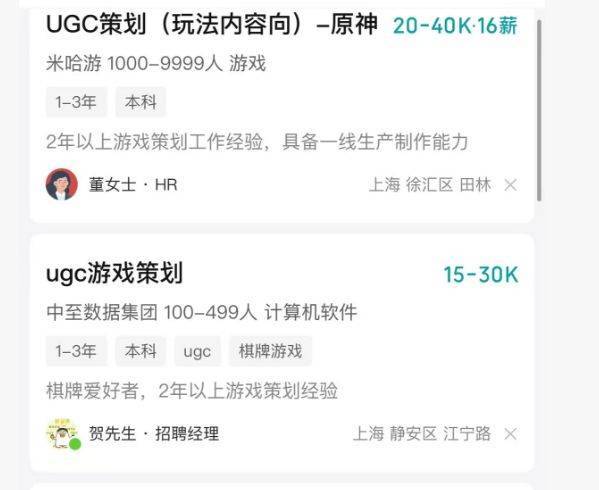
在这颠覆性数据背后,是厂商正扎堆布局游戏UGC。近日,《每日经济新闻》记者从BOSS直聘平台最 新招聘动态信息中发现,"游戏UGC策划"相关岗位招聘热度居高不下,米哈游、鹰角网络等头部企业开 出高薪抢人。 "" 图片来源:手机截图 "呆小凡工作室"就是一家专注于UGC游戏内容制作的工作室。公司创始人呆小凡近日在接受《每日经济 新闻》记者等媒体采访时表示,从商业化公司的视角来看,UGC赛道当前的市场规模显著小于App(应 用程序)赛道,甚至不及PC(个人电脑)游戏与独立游戏赛道,因此众多以纯粹商业收益为导向的企 业未给予足够重视。 但当前赛道市场规模有限,并不意味着未来增长空间受限。UGC赛道不仅具备无需投入买量成本、规 避发行环节压力的核心优势,更精准契合了行业发展红利——目前国内高DAU(日活跃用户数)游戏 的整体市场规模已突破3亿元量级,这类头部产品陆续开放UGC生态,将构成潜力广阔的发展赛道。 一个"草根"团队的5年 见证UGC赛道冷与热 以腾讯为代表的大厂,开始涉足曾经小众的游戏UGC(用户生产内容)领域。 《和平精英》的UGC平台——绿洲启元于近日公布,其日活跃用户数突破3300万大关,平台头部创作 ...
二创、弹幕、AI……正在给影视行业带来什么?
Zhong Guo Xin Wen Wang· 2025-10-31 06:13
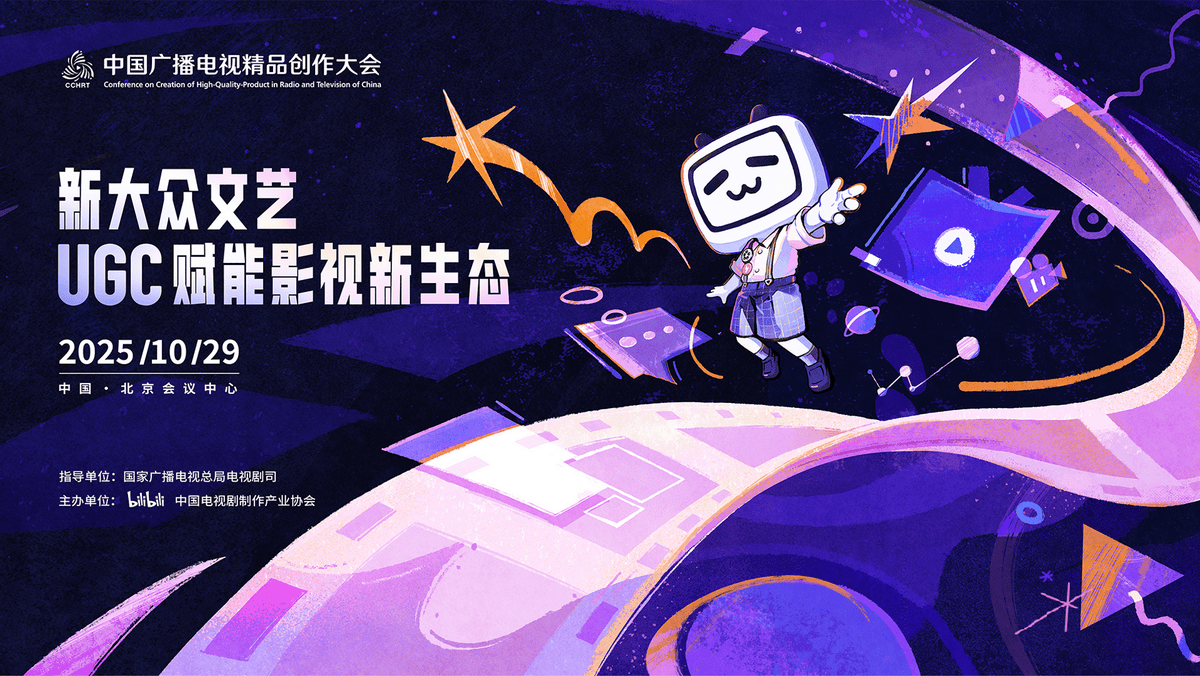
Core Insights - The event "New Public Literature: UGC Empowering a New Ecosystem in Film and Television" highlighted the revolutionary changes in the film industry driven by User Generated Content (UGC) and technology [1][3] Group 1: UGC and Its Impact - UGC has evolved from a simple dissemination relationship to a profound mutual nurturing between professional creators and users [3] - The relationship between UGC and professional content creators is likened to that of a rhinoceros and a bird, indicating a symbiotic connection [3] - Creators are now proactively designing their works to invite audience interaction, transforming the creative process from merely telling stories to building a creative ecosystem [3][5] Group 2: AI's Role in the Industry - The influence of AI in the film industry is increasing, prompting creators to reflect on maintaining authenticity and originality in their work [5] - AI should be viewed as a partner in the filmmaking process rather than the sole creator, emphasizing the importance of human experience in storytelling [5] - Creators are encouraged to embrace AI as a tool to enhance their craft rather than resist its integration into the creative process [5]

用“一键三连”激活新大众文艺:B站沙龙打破界限,探索UGC赋能影视的更多可能
Sou Hu Cai Jing· 2025-10-29 21:55
Core Insights - The salon highlighted the transformative impact of UGC (User-Generated Content) on the film and television industry, emphasizing its role as a core driving force rather than just an added value [10][12] - The integration of UGC and AIGC (AI-Generated Content) is reshaping the creative landscape, fostering a more open and inclusive ecosystem for content creation [8][10] Group 1: UGC's Role in the Industry - UGC has evolved from a supplementary aspect of the film industry to a central driving force, as evidenced by its prominent presence in high-level discussions [10] - The event showcased how UGC captures the emotional needs of different generations, reflecting a significant shift in audience engagement and content creation [3][4] - Bilibili's PUGC (Professional User-Generated Content) ecosystem is crucial in facilitating the transition from UGC to PGC (Professional Generated Content), enhancing the creative process [10][11] Group 2: Technological Integration - The rapid advancement of internet and AI technologies is significantly influencing UGC's role in film creation, allowing for more dynamic and responsive content production [3][5] - AI tools are lowering the barriers to entry for content creation, encouraging more users to engage in creative processes [8][9] - The collaboration between UGC creators and industry professionals is fostering a symbiotic relationship that enhances the overall creative output [7][8] Group 3: Future Outlook - The future of UGC in the film industry is expected to be characterized by deeper integration with professional content, leading to innovative storytelling and audience engagement [12] - Bilibili is positioned as a key player in this transformation, acting as a hub for creative talent and a facilitator of new content dynamics [10][11] - The ongoing evolution of UGC and AIGC will continue to redefine the boundaries of content creation, emphasizing the importance of human creativity alongside technological advancements [8][10]
互联网又要“死”了?
腾讯研究院· 2025-10-28 08:46
Core Viewpoint - The article discusses the notion that the internet is "dead," primarily due to the overwhelming presence of AI-generated content (AIGC) and its impact on user-generated content (UGC) [3][7][30]. Group 1: The State of the Internet - Alexis Ohanian, co-founder of Reddit, claims that much of the internet's content is "dead," highlighting the value of genuine human activity in the current attention economy [3][6]. - Sam Altman, a prominent figure in the AI industry, acknowledges the proliferation of AI-driven accounts on platforms like Twitter, suggesting a shift in content creation dynamics [5][6]. - The article raises the question of whether the internet is truly "dead" or if it is undergoing a transformation due to AIGC [7][8]. Group 2: The Impact of AIGC - AIGC content has become pervasive, with examples of AI-generated videos achieving millions of views, indicating a significant shift in content consumption [8][12]. - The distinction between UGC and AIGC is becoming increasingly blurred, challenging traditional measures of the internet's vitality [12][16]. - AIGC tools are seen as beneficial for creators, allowing them to realize their creative visions more easily, akin to how tube paints revolutionized painting in the 19th century [14][15]. Group 3: Concerns and Future Implications - There are concerns about the sustainability of AI models trained on synthetic data, which may lead to a decline in content quality and relevance [18][20]. - Research indicates that using synthetic data can degrade AI model performance, raising alarms about the future of AI-generated content [21][22]. - The article suggests that if AIGC continues to dominate, it could lead to a scenario where traditional UGC is entirely replaced, potentially validating the "internet is dead" theory [23][28]. Group 4: Historical Context and Evolution - The article draws parallels between the current state of the internet and historical shifts in entertainment, such as the decline of stereoscopic view cards in favor of motion pictures [24][27]. - It posits that technological evolution will always create new opportunities, even if it disrupts existing content creation paradigms [28][30]. - The narrative concludes that while the traditional internet may be changing, a new form of internet, co-created by AI and humans, is emerging [30].

为何 Sora 对 Meta、YouTube 和 TikTok 都意义重大-Weekend Media Blast Why Sora is great for Meta... and YouTube, and TikTok
2025-10-27 00:52
Summary of Key Points from the Conference Call Industry and Company Involved - **Industry**: Media and Technology - **Companies Mentioned**: OpenAI (Sora), Meta (Facebook), TikTok, YouTube, Google (Veo), ByteDance (CapCut) Core Insights and Arguments 1. **Sora's Impact on Media**: Sora, an AI-powered text-to-video generator, has rapidly gained popularity, reaching 1 million downloads in just five days, surpassing ChatGPT's launch speed. This success raises concerns for Meta regarding user engagement and time spent on its platforms [7][4][8]. 2. **Sora as a Creator Tool**: Sora is positioned as a creator tool, similar to CapCut, allowing users to produce high-quality videos with CGI effects. This democratizes video creation, potentially increasing content volume on platforms like Meta, TikTok, and YouTube [6][5][15]. 3. **User Engagement Dynamics**: The introduction of Sora may enhance user engagement on Meta's platforms by providing creators with advanced tools to produce content, which could lead to increased time spent on these platforms [6][4]. 4. **Comparison with TikTok**: Sora's emergence is compared to TikTok's disruptive influence on media consumption. While Sora does not fundamentally change the distribution model, it adds to the content pool available for algorithmic recommendations, potentially benefiting established platforms [24][19]. 5. **Creator Participation**: The 90-9-1 rule suggests that only a small percentage of users actively create content, with the majority being passive consumers. The challenge for Sora is to increase the number of active creators significantly to achieve network effects [16][19][20]. 6. **Quality Concerns**: There are concerns about "AI slop," referring to low-quality AI-generated content. However, advancements in AI tools like Sora are expected to improve content quality over time [32][34]. Other Important Insights 1. **Meta's Competitive Landscape**: Meta's recent launch of Vibes, an AI-generated video feed, did not achieve the same level of initial success as Sora, indicating a competitive pressure in the media space [10][9]. 2. **Content Consumption Trends**: The evolution of media consumption platforms is highlighted, with a shift towards algorithmically driven content feeds that prioritize user engagement and entertainment [22][24]. 3. **Future of Content Creation**: The potential for Sora to empower a new generation of creators is emphasized, with the possibility of high-quality content creation becoming more accessible to the general public [34][19]. This summary encapsulates the key points discussed in the conference call, focusing on the implications of Sora's launch for the media industry and its potential impact on companies like Meta and TikTok.


米哈游离自己的UGC梦想,还有多远?
雷峰网· 2025-10-24 09:09
Core Viewpoint - The essence of UGC (User Generated Content) is not merely tools and gameplay, but rather the ecosystem it creates [1]. Group 1: UGC Implementation in Genshin Impact - The recent update of Genshin Impact introduced the UGC module "Qianxing Qiyu," which has contributed to the game's rise to the second position on the iOS sales chart [2]. - The "Qianxing Qiyu" module consists of three main components: UGC gameplay content, a creator-oriented editor, and "Qiou" characters [3]. - The pricing for in-game appearances starts at 96 RMB per set, with the most rare five-star appearances requiring significant in-game purchases, potentially costing around 4000 RMB for full collection [3]. Group 2: Industry Expectations and Comparisons - UGC gameplay has become a standard feature in heavy mobile games, primarily aimed at enhancing player retention and community engagement [4]. - The current implementation of "Qianxing Qiyu" does not significantly differ from similar UGC modules in Tencent and NetEase games, which raises concerns about MiHoYo's position as an industry innovator [4]. - Despite having a development team of over 200 people, the output of MiHoYo's UGC module does not show a substantial advantage over Tencent's smaller team, which has only about 40 members [4]. Group 3: Monetization and Future Potential - A significant aspect of UGC is to provide financial incentives for active creators, as seen in NetEase's "Egg Party," which allows top creators to earn revenue [5]. - MiHoYo's approach to monetization, which centralizes all commercial aspects in its appearance shop, may hinder the effectiveness of the UGC module in enhancing player engagement [5]. - "Qianxing Qiyu" is still in its initial version, indicating that there is considerable growth potential, and it could evolve into a significant content engine for Genshin Impact in the future [5].

年轻人迷上在线下交换自制周边
Tai Mei Ti A P P· 2025-10-19 00:42
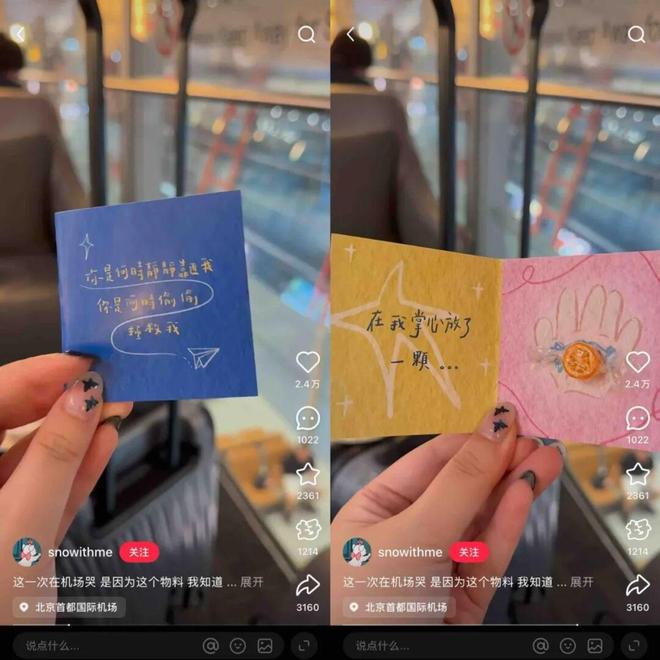
Core Insights - The article discusses the phenomenon of "free material" (无料) culture among young people, which has evolved from the subculture of the ACG (Anime, Comic, Game) community into a mainstream social interaction method at events like concerts and film festivals [1][5][20] - This culture emphasizes emotional consumption and community bonding, allowing individuals to express their love for certain IPs (intellectual properties) through the creation and exchange of handmade items [1][2][5] Group 1: Cultural Significance - "Free material" serves as a social currency, enabling fans to connect and share their passion in a tangible way, thus transforming individual content consumption into a more communal experience [2][5][25] - The act of creating and exchanging "free material" fosters a sense of belonging and emotional connection among fans, allowing them to return from an isolated state to a group dynamic [1][11] Group 2: Emotional Value - The emotional value of "free material" often surpasses its production value, as it encapsulates the creator's feelings and experiences, making it a meaningful gift rather than just a product [6][7] - The anticipation and excitement surrounding the creation and exchange of "free material" enhance the overall experience of attending events, turning waiting times into moments of joy [7][17] Group 3: Community and Identity - The exchange of "free material" has become a common practice at various events, providing opportunities for fans to meet and bond over shared interests, thus reinforcing their identities within specific communities [11][14][20] - This practice not only helps in forming new friendships but also allows individuals to express their creativity and personal style, contributing to a richer social experience [8][17] Group 4: Market Dynamics - The rise of "free material" culture is supported by social media and e-commerce platforms, which facilitate the sharing of ideas and the sourcing of materials for creation [20][24] - Platforms like Xiaohongshu (小红书) have played a significant role in popularizing this culture, bridging the gap between different fan communities and expanding the reach of "free material" beyond its original subculture [20][24] Group 5: Economic Implications - The "free material" trend reflects a broader "peripheral economy," where fans seek high-quality, diverse, and aesthetically pleasing merchandise that resonates with their emotional connections to their favorite IPs [25] - The demand for unique and personalized "free material" has led to the emergence of new business models, including low-cost custom production and community-driven initiatives, which cater to the evolving preferences of young consumers [24][25]
场景自带传播基因
Sou Hu Cai Jing· 2025-10-10 01:51
Core Insights - The article emphasizes that in the internet era, having a scene inherently brings traffic, making scene marketing a powerful tool for brands [1][30] - It discusses the importance of brand recognition and how scene marketing can achieve significant results even for lesser-known companies without substantial spending [3][14] - The article outlines a simplified business structure consisting of cognition, transaction, and relationship, highlighting the cyclical nature of these elements in commercial activities [4][14] Summary by Sections Scene Marketing - Scene marketing is described as having a strong inherent ability to generate traffic and is seen as a natural fit for integrated marketing communication (IMC) [5][24] - The article posits that scene marketing can effectively utilize various media and communication modes, including high-intensity and high-density recognition patterns [26][29] Recognition and Communication Models - Five classic cognitive communication models are identified: 1. Word-of-mouth and private domain models, characterized by high recognition intensity but slow dissemination [6][16] 2. Flow advertising model, which relies on high-density recognition through mass media [7][21] 3. Interactive recognition model, which emphasizes the interaction at sales points [9][15] 4. Public domain flow model, which leverages user-generated content (UGC) for mass recognition [19][20] 5. IMC model, which integrates all recognition modes into a cohesive strategy [11][19] The Role of Cognition - Cognition is identified as the starting point of the business structure, leading to transactions and relationships, which in turn feed back into cognition [4][14] - The article highlights that effective marketing begins with cognition, which is initiated through communication [5][30] Scene as a Communication Medium - Scenes are presented as versatile communication materials with natural dissemination capabilities, making them ideal for modern marketing strategies [5][29] - The article concludes that scenes possess a unique ability to evoke emotions, which is crucial for effective communication in the video era [29][31]