中美博弈

Search documents
中美博弈的走向
2025-09-23 02:34
Summary of Key Points from the Conference Call Industry or Company Involved - The discussion primarily revolves around the **China-U.S. trade relations** and its implications on various industries, including technology, pharmaceuticals, and manufacturing. Core Points and Arguments 1. **Current Status of China-U.S. Relations** The relationship is described as being in a prolonged stalemate, characterized by frequent communication but no significant improvements. The situation is compared to an L-shaped bottom, indicating a stable yet tense environment [4][7]. 2. **Negotiation Rounds in 2025** Four rounds of negotiations have taken place in 2025, with significant adjustments to tariffs. Initially, tariffs were as high as 145%, which were negotiated down to 54% through various discussions [5][6]. 3. **Tariff Levels and Future Adjustments** Current tariffs are approximately 50%, with potential for a 10%-15% reduction in the future, primarily influenced by fentanyl control measures. However, no significant changes are expected within the year [2][11]. 4. **TikTok Agreement** The TikTok agreement involves a technical licensing model where Oracle manages data without the sale of core algorithms, ensuring a balance of interests between the U.S. and China [2][12]. 5. **Impact of U.S. Tariff Policies on Companies** The Trump administration has adopted flexible strategies towards companies like Apple, allowing for temporary tariff exemptions in exchange for investment commitments. Apple has begun shifting some production to India to mitigate supply chain risks [2][15][23]. 6. **Agreements Between the U.S. and Europe** Agreements have been reached between the U.S. and Europe regarding tariffs on automobiles, semiconductors, and pharmaceuticals, which may indirectly benefit China by allowing it to export pharmaceuticals through the EU [2][16]. 7. **Fentanyl Control Discrepancies** There are significant differences between the U.S. and China regarding the control of fentanyl precursors, with China advocating for a more focused approach rather than a blanket control [8]. 8. **Market Expectations for Negotiation Outcomes** The market is skeptical about achieving substantial tariff reductions in the short term, with high tariffs expected to persist [9][10]. 9. **Future of U.S.-China Pharmaceutical Cooperation** Potential administrative orders may limit cooperation between U.S. pharmaceutical companies and Chinese firms, with a predicted reduction in collaboration by about 50% [18]. 10. **China's Export Outlook** China's exports are expected to perform well overall in 2025, despite a significant decline in exports to the U.S. due to tariffs, with a projected decrease of 20%-30% [25]. Other Important but Possibly Overlooked Content 1. **Potential for U.S.-EU Coordinated Action** There is a low probability of the U.S. unilaterally imposing stimulus tariffs on China, as the EU has not agreed to such measures [24]. 2. **NDAA and Biopharmaceutical Legislation** The likelihood of biopharmaceutical legislation being included in the National Defense Authorization Act (NDAA) is low, with significant resistance expected [19]. 3. **Impact of Tariffs on Global Supply Chains** The tariffs have prompted companies to reconsider their manufacturing locations, with a trend towards relocating production to countries like India and Vietnam [23]. 4. **Future of Nvidia's Chip Offerings** Nvidia is contemplating offering a new version of its chips to the Chinese market, pending government approval, to enhance its competitive position [3][21][22].
欧盟正在考虑对华制裁?欧企突然忍不住叫屈:还需要中国更多稀土
Sou Hu Cai Jing· 2025-09-19 07:25
Core Viewpoint - The European Union (EU) is caught in a dilemma between U.S. pressure to adopt a hardline stance against China and the urgent calls from European companies facing rare earth shortages, highlighting the economic implications of geopolitical tensions [1][5][13]. Group 1: Economic Implications - The EU's high-end manufacturing sector is heavily reliant on rare earth imports from China, with Germany alone depending on China for 65.5% of its rare earth needs by 2024 [3][9]. - The EU is experiencing a significant reduction in rare earth imports, with countries like Germany, France, and Spain seeing a nearly 60% year-on-year decline in total imports due to tightened export license approvals from China [7][10]. - The shortage of rare earths is causing production delays for major automotive companies like Mercedes and Renault, as well as layoffs in semiconductor manufacturing [7][9]. Group 2: Geopolitical Tensions - The U.S. is pushing its allies to impose tariffs on imports from China and India under the guise of punishing countries supporting Russia, complicating the EU's position [3][5]. - The EU's internal divisions are evident, with some members warning that losing access to the Chinese market could have more severe consequences than losing the U.S. market [10][11]. - The EU's strategic autonomy plan aims to reduce reliance on Chinese rare earths to below 10% by 2030, but the timeline for achieving this is lengthy and fraught with challenges [9][10]. Group 3: Supply Chain Challenges - The global rare earth supply chain is predominantly controlled by China, which holds over 90% of the refining capacity, making it difficult for the EU to find alternative sources quickly [4][9]. - The EU's attempts to initiate domestic rare earth mining projects and collaborate with countries like Australia and Canada face significant time, technical, and environmental hurdles [9][10]. - The EU's current predicament reflects the complexities of balancing geopolitical pressures with economic realities, as cooperation with China may be the only viable path forward [13].

4000吨稀土被转运美国?大陆停供台湾稀土,对台湾影响有多大?
Sou Hu Cai Jing· 2025-09-17 11:58
Group 1 - The article highlights the strategic importance of rare earth elements (REEs) in various high-tech applications, with China controlling over 90% of global refining capacity and Taiwan heavily reliant on imports from China [2][4] - In 2024, Taiwan imported 6,096 tons of rare earths from China, accounting for 96% of its total imports, but nearly 4,000 tons were rerouted to the U.S. through various channels [2][4] - The Chinese government has implemented export controls on key rare earth materials, directly impacting Taiwan's military and semiconductor industries, as eight Taiwanese companies were named in the export control list [4][7] Group 2 - The article details how rare earth materials, such as antimony oxide, were imported by Taiwan from China, relabeled in third-party countries like Thailand or Mexico, and then sold to the U.S. military production lines [5][7] - Taiwan's military and semiconductor sectors are particularly vulnerable, with companies like Hanxiang Aerospace and the Chungshan Institute of Science and Technology relying on rare earths for critical components [9][11] - The semiconductor industry, especially TSMC's 3nm production line, is at risk, as 90% of its rare earth needs come from China, potentially leading to a significant drop in chip yield rates [11][13] Group 3 - The article discusses Taiwan's attempts to seek alternative sources for rare earths from countries like Myanmar and Australia, but these efforts face challenges due to geopolitical instability and lower production capacities [11][13] - The U.S. is also struggling to secure rare earth supplies, leading to increased costs and reliance on recycled materials, further complicating the supply chain for Taiwan [13] - The long-term implications for Taiwan's economy and military autonomy are significant, as the current situation exposes vulnerabilities in its supply chain and reliance on imports [13]

特朗普收到盟友“求救信号”:快让中方高抬贵手,这次真的扛不住了!
Sou Hu Cai Jing· 2025-09-17 01:19
Group 1 - The complex dynamics of US-China relations are a focal point in the global economy, with recent trade talks in Madrid highlighting the challenges ahead [1] - The US's sanctions strategy against China has backfired, leading to significant supply chain issues for Western companies, particularly in the procurement of germanium [3] - The price of germanium has surged to nearly $5,000 per kilogram, reflecting the critical role it plays in high-tech industries such as semiconductors and optical communications [3] Group 2 - The US is struggling to find alternative suppliers for critical materials like germanium, with limited options that do not guarantee quality or quantity [5] - Domestic rare earth industries in the US are lagging, facing high costs and a lack of skilled labor, complicating efforts to restart production [5] - The trade war has not deterred China; instead, it has created new opportunities for China to assert control over key material supplies [5] Group 3 - US allies are reevaluating their strategies after experiencing supply crises due to blind adherence to US policies, leading to market share losses and technological setbacks [8] - The ongoing US-China competition will significantly influence global economic policies, supply chain restructuring, and strategic collaborations [8] - The interconnectedness of global economies means that the challenges posed by US-China relations require collective action and cooperation among nations to avoid becoming collateral damage in the geopolitical struggle [8]

5亿美金换“巴铁”稀土开发!美国砸钱,真能绕开中国吗?
Sou Hu Cai Jing· 2025-09-16 23:37
Core Viewpoint - The recent $500 million agreement between the U.S. and Pakistan for the joint development of strategic minerals like rare earths, antimony, and tungsten appears mutually beneficial but is fraught with geopolitical complexities and long-term risks [1][3]. Group 1: Financial Implications - The $500 million investment is crucial for Pakistan, providing much-needed foreign exchange and potentially strengthening its position in negotiations with the International Monetary Fund (IMF) [3]. - This partnership signals Pakistan's intent to diversify its international relationships and enhance its bargaining power through resource development [3]. Group 2: Strategic Intent - The agreement is not merely a mineral trade; it involves U.S. companies playing a central role throughout the entire supply chain, from exploration to export, while Pakistan provides land, labor, and security [3][4]. - The U.S. aims to reduce its reliance on China for rare earths, as most global processing and refining capacity is concentrated in China, posing a national security risk [3][4]. Group 3: Geopolitical Dynamics - Pakistan is strategically leveraging its position between the U.S. and China to maximize benefits from both sides, especially in light of its tense relations with India [4][5]. - However, the risks associated with this "bet on both sides" strategy are significant, including the potential for security issues in politically unstable regions like Balochistan [7]. Group 4: Long-term Considerations - The success of this partnership hinges on Pakistan's ability to maintain a delicate balance between its traditional ties with China and its new collaboration with the U.S. [8]. - While resource development may yield short-term benefits, it could also lead to long-term challenges if Pakistan inadvertently jeopardizes its relationship with China or faces severe security issues [8].
美国下马威,最高对华加税100%,芯片稀土成新筹码,马德里会谈将如何收场?
Sou Hu Cai Jing· 2025-09-15 10:16
Group 1 - The recent US-China trade talks in Madrid highlight the ongoing tensions and complex negotiations between the two nations, particularly in key sectors like semiconductors and biotechnology [1] - The US Department of Commerce unexpectedly added 23 Chinese companies to a control list, escalating the already tense negotiation atmosphere and indicating a strategy to gain leverage in talks [1][3] - China's immediate response included launching anti-dumping investigations on US-imported simulation chips, showcasing a firm stance against US actions [1] Group 2 - The decline in trade volume between the US and China, with a 13% year-on-year drop in the first eight months of 2025, reflects a trend of economic decoupling, raising concerns for global economic stability [3] - The negotiations encompass various issues beyond tariffs, including export controls and market access, with both sides seeking potential cooperation in supply chains amidst global resource constraints [3][5] - The ongoing tariff disputes, stemming from high tariffs imposed since 2018, complicate the negotiations, as any changes could impact political dynamics in the US [5] Group 3 - The US's use of export controls as a tool to maintain technological dominance poses risks to global supply chain stability, making compromise on this issue crucial for both parties [5] - China's control measures in critical sectors, such as rare earth exports, indicate a strong response to US pressure, while the US's actions, including tax policies and scrutiny of companies like TikTok, reflect a strategy to compel concessions from China [5][7] - The outcome of the Madrid talks could significantly influence not only US-China relations but also the broader global economic landscape, with potential implications for economic recovery [7]

牛市中的震荡如何演绎?
2025-09-15 01:49
Summary of Conference Call Records Industry Overview - The A-share market is currently experiencing a strong oscillation pattern, with limited upward potential and minimal downward risk, influenced by market sentiment, economic data, and Sino-U.S. relations [1][2][5] - The technology growth sector is performing exceptionally well, particularly companies with strong industrial trends. Cyclical industries and previously underperforming growth companies, such as the telecommunications sector, also present opportunities for low-cost positioning [1][3][12] Core Insights and Arguments - Key factors contributing to market oscillation include: 1. High-level financing leading to cooling risks, with a total inflow of nearly 60 billion since September 5, and financing balances exceeding 2.3 trillion, a historical high [5] 2. Economic data from August indicating a weak recovery, with export growth slowing to approximately 4% year-on-year and a decline in new social financing and RMB loans [5] 3. Increased risk from U.S.-China semiconductor sanctions, although ongoing trade negotiations may mitigate long-term impacts [5][10] - Historical patterns suggest that oscillations in bull markets typically end with significant policy changes or external events that positively influence risk appetite [6][12] - Current indicators for the end of the oscillation phase are not fully met: - The valuation percentile of the Shanghai Composite Index is around 66, above the neutral level of 50% [8] - Trading volume has decreased by a maximum of 37%, not exceeding the 50% threshold [8] - The turnover rate remains high at 72%, indicating insufficient cooling [8] Industry Rotation and Opportunities - Industry rotation is incomplete, with consumer and cyclical sectors not showing significant recovery. In the agriculture, forestry, animal husbandry, and fishery sector, only leading stocks have increased, with an average rise of 8.1%, while non-leading stocks only rose by 1.4% [9][12] - Recommended sectors for investment include: 1. Technology, Media, and Telecommunications (TMT) and non-ferrous metals, which are expected to continue their upward trend [13][14] 2. Telecommunications and innovative pharmaceuticals, which may show signs of recovery and potential for upward movement [13][14] Additional Important Insights - The current market sentiment remains relatively high, which could lead to a decrease in potential gains [5] - The overall liquidity environment is favorable, with policies supporting inflows and a low-risk external environment due to ongoing negotiations with the U.S. [11][12] - The short-term economic outlook remains weak, but there are signs of recovery in corporate earnings data, suggesting a potential for gradual improvement [11][12]
墨西哥“叛变”了?听懂了美国的言下之意,对华关税加至50%,中方没惯着,要动底牌了?
Sou Hu Cai Jing· 2025-09-14 02:55
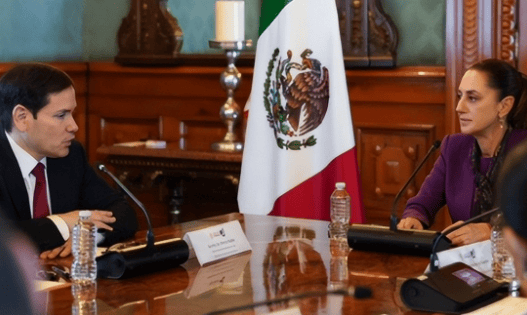
Group 1 - Mexico's decision to impose tariffs of up to 50% on Chinese products such as automobiles, parts, and steel is a strategic choice influenced by significant pressure from the United States [1][2] - The U.S. government has repeatedly urged Mexico to adopt a tougher stance on trade with China to protect American economic interests, particularly under the USMCA [1][2] - Mexico's tariff increase is seen as an attempt to appease the U.S. and secure trade benefits, reflecting a choice in the ongoing U.S.-China trade conflict [1][2] Group 2 - The Mexican government claims that the tariff increase aims to protect domestic industry and employment, but this justification lacks solid evidence as Chinese products are competitively priced [2] - The real motive behind Mexico's actions is to comply with U.S. demands, as the Trump administration has pressured other nations to adopt a more aggressive trade posture against China [2][3] Group 3 - China has responded strongly to Mexico's tariff increase, stating that such unilateral actions will harm the interests of multiple trade partners and negatively impact Mexico's business environment [3][5] - China emphasizes its commitment to defending its national interests and will not yield to U.S. pressure, indicating potential retaliatory measures if Mexico continues to act against Chinese interests [5][8] Group 4 - Mexico's tariff decision could significantly reduce China's market share in Mexico, particularly affecting high-tech exports like electric vehicles, and may lead to a decrease in Chinese investment in Mexico [6][8] - This move may also prompt other Latin American countries to reconsider their trade relationships, contributing to a fragmented global trade landscape and potentially hindering global economic recovery [6][8] Group 5 - The decision marks a critical turning point in China-Mexico relations, with Mexico aligning more closely with the U.S. amid the complexities of global trade dynamics [7][8] - The future of China-Mexico relations remains uncertain, as Mexico's choice to side with the U.S. may yield short-term benefits but risks long-term cooperation with China [8]
刚接中国国书,这国就倒向美国,对华加税50%,中方给出8字警告
Sou Hu Cai Jing· 2025-09-13 07:48
Core Points - Mexico has announced significant tariffs on approximately 1,400 products from China, including automobiles, steel, and textiles, with rates reaching up to 50% by the end of 2026 [1][3] - The policy targets imports valued at around $52 billion, exempting countries with trade agreements with Mexico, such as the US and Canada, indicating a clear political alignment with the US [1][3] - This move is seen as a response to US pressure, particularly under the Trump administration's "North American Fortress" strategy, which aims to synchronize trade policies between Mexico and the US to prevent Chinese goods from entering the US market [3][5] Industry Impact - The tariffs are intended to protect domestic employment and improve trade balance, but they contradict the growth of Mexico's automotive industry, which has benefited from Chinese investments and components [3][5] - Mexico's automotive sector has become a key destination for Chinese exports, with the country being the largest market for Chinese cars by mid-2025; the 50% tariff will severely restrict Chinese automotive products from entering Mexico [5][10] - Chinese companies have invested over $10 billion in Mexico across various sectors, including automotive and infrastructure; uncertainty in policy may lead to withdrawal of investments, resulting in job losses and diminished industrial capabilities [10][12] Economic Relations - Mexico's exports to China, including avocados, blueberries, and crude oil, may become targets for Chinese retaliatory tariffs, potentially harming Mexico's economy [8][10] - The Mexican government's reliance on the US, particularly through the US-Mexico-Canada Agreement (USMCA), poses risks, as any economic downturn or political shift in the US could lead to abrupt changes in trade policies [12][14] - Historical context suggests that Mexico's strategy of aligning closely with the US while compromising relations with China may lead to long-term economic disadvantages, as the US may continue to impose further demands [14]

受到中国的巨大刺激,特朗普下了两道命令,第二道将欧洲逼得太狠了,释放信号很强烈
Sou Hu Cai Jing· 2025-09-07 02:54
Group 1 - The recent actions by Trump, including tightening chip production restrictions on companies like Intel, Samsung, and SK Hynix in China, signal a shift in U.S. trade policy that could impact both American and allied companies negatively [1][3] - Following the announcement of new restrictions, stock prices for major chip manufacturers in the U.S. and allied countries dropped significantly, while Chinese chip companies saw substantial gains, indicating a potential shift in market dynamics [3] - The U.S. is pressuring Europe to cut off energy supplies from Russia, linking this to the ongoing conflict in Ukraine and suggesting that European purchases of Russian oil and gas indirectly fund military actions [4][6] Group 2 - The European Union has already committed to phasing out Russian oil and gas by 2028, but internal divisions among member states may complicate this goal, especially if the U.S. imposes secondary sanctions [6] - Trump's demands for Europe to stop purchasing Russian energy and to apply economic pressure on China could lead to increased tensions within the EU, as leaders express frustration over U.S. trade tactics [4][6] - The geopolitical landscape is becoming increasingly complex, with the U.S. leveraging energy and security issues to influence European decisions, potentially leading to a fragmented response from the EU [6][7]