
供应链管理

Search documents
森马服饰:公司积累了丰富的供应商资源
Zheng Quan Ri Bao Wang· 2025-09-19 15:13
Core Viewpoint - The company, Semir Apparel, emphasizes its strong position as an industry leader through strategic partnerships with suppliers and a robust supply chain management system [1] Group 1: Supply Chain Management - The company has established a Supply Chain Development Center that includes various departments such as Supplier Management, Quality Management, Cost Management, Supply Chain Planning, and Audit & Process Improvement [1] - There is a performance evaluation system for suppliers, assessing them quarterly on delivery time, quality, cost, and service, which promotes a competitive environment among suppliers [1] - The company conducts biannual evaluations of suppliers' financial status, payment conditions, and operational risks through third-party assessments to identify medium to high-risk suppliers [1] Group 2: Risk Management - Immediate termination of cooperation occurs with high-risk suppliers, while medium-risk suppliers are closely monitored to mitigate potential risks [1]

直播电商的黄金流量时代已成为过去 头部主播也带不动货了
Sou Hu Cai Jing· 2025-09-17 10:45
Core Insights - The era of top live-streaming hosts is coming to an end, with significant declines in viewership and sales figures observed in 2025 compared to previous years [2][3] - The live-streaming e-commerce model is becoming increasingly challenging for small and medium-sized businesses, with profitability concentrated among top hosts and established individual brands [3][5] - Future strategies for top hosts are shifting towards self-branded products, supply chain management, and content innovation to sustain growth [5][6] Group 1: Industry Trends - In June 2025, the average daily viewership for a leading live-streaming host dropped to 15.04 million, a 45% decrease from the same period in 2024 [2] - Sales figures for prominent hosts like Li Jiaqi have also shown a downward trend, with his sales during the 618 pre-sale event dropping from 49.77 billion in 2023 to 25-35 billion in 2024 [2] - The influx of wealthy investors and celebrities into the live-streaming space has made it increasingly difficult to generate profits, leading some experienced hosts to pivot to teaching rather than selling [3] Group 2: Business Model Evolution - Top hosts are reducing their live-streaming frequency and exploring alternative revenue streams, indicating a shift in the market dynamics [5] - The development of self-branded products is becoming a key focus for top hosts, allowing them to gain greater control over pricing and brand identity [5] - Short-form content, such as short dramas, is being utilized by hosts to create new traffic channels and enhance emotional connections with their audience [5][6]


今世缘在南京成立新公司含供应链管理服务业务
Xin Lang Cai Jing· 2025-09-17 04:37
Group 1 - Nanjing Jinshiyuan Liquor Co., Ltd. has been established recently with Yang Dong as the legal representative [1] - The company's business scope includes liquor operation, daily necessities sales, daily goods wholesale, gift and flower sales, and supply chain management [1]

宿州市通奕电子有限公司成立 注册资本500万人民币
Sou Hu Cai Jing· 2025-09-17 00:45
Core Viewpoint - Suzhou Tongyi Electronics Co., Ltd. has been established with a registered capital of 5 million RMB, indicating a new player in the electronics industry [1] Company Summary - The legal representative of the company is Ding Feng, which may suggest a centralized management structure [1] - The company’s registered capital is 5 million RMB, reflecting a moderate initial investment in the electronics sector [1] Business Scope - The company operates in various fields including retail and wholesale of electronic components, manufacturing of electronic devices, and mechanical parts processing [1] - It also engages in specialized services such as cloud computing technology services, supply chain management, software sales, and development [1] - Additional activities include laser marking, electroplating, and painting processing, indicating a diverse operational capability [1] - The company is involved in the manufacturing and sales of lighting fixtures, which expands its market reach within the electronics industry [1]
预制菜概念股ESG相关报告披露率为45% 专家认为提高透明度是关键
Mei Ri Jing Ji Xin Wen· 2025-09-16 11:46
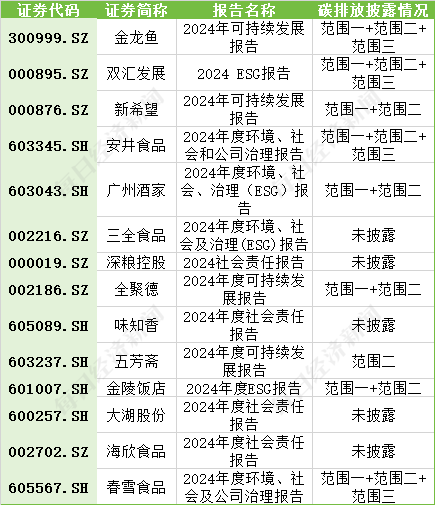
Core Viewpoint - The recent controversy surrounding pre-prepared meals has drawn significant attention to the industry, particularly following comments made by a prominent figure regarding the quality and pricing of dishes at a specific restaurant chain [1] Group 1: Industry Overview - The A-share market has 31 companies involved in the pre-prepared meal concept, with 14 of them disclosing ESG (Environmental, Social, and Governance) reports, resulting in a disclosure rate of 45% [1] - The focus of the industry includes key issues such as product safety and quality, supply chain management, and climate change response [3] Group 2: ESG Reporting - Among the 31 companies, 9 are rated A (including A+, A, A-), 9 are rated B, 8 are rated C, and 5 are rated D, indicating a relatively even distribution of ESG ratings [3] - The majority of companies emphasize the importance of transparency in their ESG reports, with a notable number focusing on sustainable development and social responsibility [2][3] Group 3: Environmental Initiatives - Companies like Jinlongyu and New Hope are implementing green logistics and sustainable packaging practices to reduce environmental impact [4] - Out of the 14 companies that disclosed ESG reports, 8 reported on Scope 1 (direct emissions) and Scope 2 (indirect emissions), while only 4 reported on Scope 3 (value chain emissions), highlighting a gap in comprehensive carbon footprint reporting [4] Group 4: Food Safety and Quality - The industry is shifting towards enhanced food safety and nutritional health management, driven by national strategies aimed at prioritizing public health [5] - New regulations on food additives are set to be implemented, requiring pre-prepared meal producers to adjust their product formulations to comply with stricter safety standards [5] Group 5: Supply Chain Management - Effective supply chain management is crucial for ensuring food safety, with companies like Jinlongyu and New Hope adopting rigorous supplier management practices [7] - The emphasis on transparency and responsible sourcing is seen as essential for maintaining consumer trust and ensuring product quality [8]


主流车企上半年账期观察:广汽、吉利、比亚迪付款最快
2 1 Shi Ji Jing Ji Bao Dao· 2025-09-14 14:15
Core Insights - The automotive industry is experiencing intensified competition, with collaboration with upstream suppliers becoming crucial for maintaining resilience in development [1] - The average payment cycle to upstream suppliers for ten major domestic automakers is 182 days, with GAC, Geely, and BYD having the shortest cycles at 137 days, 139 days, and 142 days respectively [1] - Approximately 60% of automakers have seen an increase in their payment cycles compared to the same period last year [1] Payment Cycle Analysis - Among the companies that reduced their payment cycles, XPeng decreased by 104 days, SAIC by 28 days, Changan by 12 days, and BYD by 10 days [1] - Shortening payment cycles by leading companies is believed to enhance the collaborative efficiency of the supply chain, contributing to a more effective supply system [1] - This trend is expected to foster a virtuous cycle of high-quality development within the industry [1]

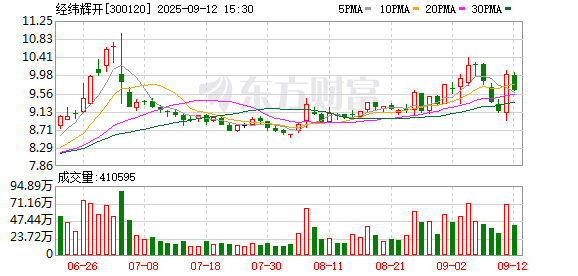
经纬辉开:公司通过ERP、MES等系统进行供应链管理,以提高存货周转速度
Zheng Quan Ri Bao· 2025-09-12 09:14
Group 1 - The company announced on September 12 that it utilizes ERP and MES systems for supply chain management to enhance inventory turnover speed [2] - Accelerating inventory turnover can significantly improve the efficiency of capital utilization for the company [2]

雅迪成立供应链公司,含电动汽车充电基础设施业务
Qi Cha Cha· 2025-09-12 06:45
Group 1 - Yadea Technology Group has established a new subsidiary named Shanghai Changxintong Supply Chain Co., Ltd. [1] - The new company is fully owned by Yadea Technology Group and its business scope includes supply chain management services, domestic freight forwarding, and electric vehicle charging infrastructure operations [1]

外卖补贴“散场”,茶饮、咖啡高增长如何“续杯”?
Mei Ri Jing Ji Xin Wen· 2025-09-11 13:33
Core Viewpoint - The recent subsidy wars among food delivery platforms have significantly impacted the ready-to-drink tea and coffee market, leading to unsustainable growth driven by external incentives rather than organic demand [1][5][8]. Group 1: Market Dynamics - The competition among major food delivery platforms like Meituan, Alibaba, and JD has intensified, resulting in substantial subsidies that have disrupted the pricing structure of the ready-to-drink tea and coffee market [2][3]. - In the first half of 2025, major brands such as Luckin Coffee, Gu Ming, and Mi Xue Ice City reported a combined revenue of 55 billion yuan, an increase of 13.5 billion yuan year-on-year, largely attributed to these subsidies [1][3]. Group 2: Financial Performance - Luckin Coffee reported a net income of 21.22 billion yuan in the first half of 2025, a 44.6% increase year-on-year, with a net profit of 1.78 billion yuan, up from 788 million yuan in the previous year [3]. - Gu Ming achieved a revenue of 5.663 billion yuan in the same period, marking a 41.2% year-on-year growth, while Mi Xue Ice City expanded its store count significantly, contributing to its revenue growth [3][4]. Group 3: Sustainability Concerns - Analysts express concerns regarding the sustainability of the growth driven by delivery subsidies, suggesting that the impressive financial results may not be replicable in the absence of such incentives [5][8]. - The reliance on delivery platforms has led to a decline in dine-in orders, which are more profitable for stores, raising questions about the long-term viability of the current business model [9]. Group 4: Future Strategies - The market regulator has indicated a shift towards more sustainable practices, urging platforms to control subsidies and enhance service quality, which may lead to a decline in sales growth for tea and coffee brands [7][10]. - Companies are now focusing on improving in-store efficiency, increasing customer retention, and exploring international markets as part of their long-term strategies [9][10].

万亿赛道龙头引领:途虎养车以“规模+技术”定义行业新范式
Guan Cha Zhe Wang· 2025-09-11 10:58
Industry Overview - The automotive service industry in China, driven by over 359 million vehicles, is undergoing a significant transformation, with the market expected to reach 1.9 trillion yuan by 2025 and 2.2 trillion yuan by 2030 [1] - The industry is characterized by a fragmented competitive landscape, comprising 4S dealerships, large chain platforms, regional chains, and numerous independent repair shops [1] Market Dynamics - The automotive after-market is currently in a deep adjustment phase, with a reported 5% decline in cumulative output value and a 4% decrease in service visits in the first half of 2025 [3] - Despite the overall market contraction, leading companies like Tuhu Car Maintenance have reported positive financial results, with a 10.5% year-on-year increase in revenue to 7.88 billion yuan and a 14.6% rise in adjusted net profit to 410 million yuan [3][4] Company Performance - Tuhu Car Maintenance's stock price surged by 11.44% following the release of its strong financial results, highlighting the impact of its sustained investment in technology and operational efficiency [5] - As of June 30, 2025, Tuhu has expanded its service network to 7,205 locations, a 14.2% increase year-on-year, with a significant focus on lower-tier cities [6] Strategic Initiatives - Tuhu has implemented various support measures for franchise stores, enhancing their operational vitality and achieving over 90% profitability among stores operating for more than six months [6] - The company employs a dual-track strategy, collaborating with both international brands and domestic manufacturers to cater to diverse consumer needs [7] Growth Areas - The fast repair segment has seen over 60% revenue growth, driven by increasing demand as vehicle ages rise [7] - Tuhu's new energy vehicle (NEV) segment has also experienced substantial growth, with NEV transaction users increasing by 83.5% year-on-year [8] Technological Advancements - Tuhu has integrated AI technology across its operations, enhancing service quality and operational efficiency, with a focus on data-driven decision-making [12][13] - The company has developed a comprehensive automotive parts database with a 99.99% accuracy rate, significantly improving inventory management and service delivery [12][14] Customer Experience - Tuhu's commitment to high service standards is reflected in the implementation of over 1,700 service SOPs and the use of AI for quality control, resulting in high customer satisfaction rates [11][14] - The company boasts a user base of 150 million registered users, with a 95% satisfaction rate and a 64% repurchase rate, reinforcing its market position [14][15]
