理性消费

Search documents
大家提前做好准备:因为大家都没钱,社会上或许已经发生了4大变化
Sou Hu Cai Jing· 2025-09-20 02:15
Group 1 - The core viewpoint of the article highlights a significant shift in consumer behavior towards frugality and cost-saving measures in response to economic pressures, indicating a societal transformation in spending habits and values [1][2][8] Group 2 - Change 1: Consumption downgrade is becoming mainstream, with a 187% increase in searches for affordable alternatives and a 203% rise in discussions around saving money, reflecting a shift from luxury to practicality in consumer choices [3][4] - Change 2: Social relationships are becoming more streamlined, with a 17.3% decrease in average interaction with friends, while interaction with close friends has increased by 25.6%, indicating a focus on deeper connections amidst economic constraints [4][5] - Change 3: Career choices are shifting towards stability, with a 32% increase in applications for traditional stable jobs like civil service and a 215% rise in searches for side jobs, reflecting a preference for security over high-risk opportunities [6][7] - Change 4: There is a return to simpler living philosophies, with a 175% increase in discussions around minimalism and essentialism, suggesting a reevaluation of life’s true meaning beyond material possessions [7][8]


平安银行海口分行“高管说消保”特别企划之适当投资、理性消费
Zhong Guo Jin Rong Xin Xi Wang· 2025-09-18 02:40
Core Insights - The discussion emphasized the importance of "suitability in sales" as a compliance requirement and a lifeline for banking operations, highlighting that trust is the foundation of financial services [1][2] - Consumers are encouraged to adopt a "rational consumption" mindset to avoid excessive debt and unnecessary spending, focusing on proper allocation of funds for savings and suitable investments for long-term financial stability [1] Group 1 - The bank constructs customer "risk profiles" through five dimensions and implements a complete closed-loop management process, including customer assessment, system matching, dual recording confirmation, and post-investment management [1] - Financial advisors assist clients in selecting products that match their investment willingness and risk tolerance, and the bank proactively suggests adjustments to credit limits or terms when clients request loans beyond their capacity [2] - The bank aims to deepen suitability management and transition wealth management services to a client-centered advisory model while enhancing education on rational investment and consumption [2]

中国品牌不惧“旺季不旺” 中国汽车还能“带货”芯片
Di Yi Cai Jing· 2025-09-17 14:08
Group 1 - The core viewpoint is that despite the challenges in the US and European markets, Chinese brands are demonstrating resilience and adaptability in their export strategies [1][5] - China's goods exports increased by 6.9% in the first eight months of the year, with August's export growth reaching 4.8%, driven by non-US exports and private enterprise exports [1][4] - The Trade Desk's insights indicate that Chinese companies are increasing investments in marketing and brand building, showcasing strong craftsmanship and technological innovation in AI and robotics [1][3] Group 2 - The automotive sector is enhancing the global recognition of Chinese chips, with companies like Naxin Micro seeing over 10% of their revenue coming from overseas by 2024 [3][5] - Chinese brands are diversifying their export markets, with significant growth in exports to the EU and ASEAN, indicating a shift away from reliance on the US market [4][5] - The trend of early preparation for the holiday shopping season reflects a more rational consumer mindset, with half of US consumers planning to complete their purchases before Black Friday [2][5] Group 3 - Chinese brands are transitioning from merely exporting products to establishing themselves as international brands, focusing on brand value and consumer trust [7][8] - The global expansion of Chinese manufacturing is evolving from low-end to high-end products, enhancing brand internationalization [8] - There is a notable difference in consumer perceptions between Chinese fast-moving consumer goods and international brands, highlighting the need for greater cultural understanding and marketing efforts [8]
食品饮料行业2025H1业绩综述报告:业绩增速明显放缓,只有啤酒、软饮料、调味品、肉制品营收利润双增长
Wanlian Securities· 2025-09-17 08:01
Investment Rating - The report maintains an "Outperform" rating for the food and beverage industry [5] Core Insights - The food and beverage sector is experiencing a significant slowdown in performance, with a year-on-year decline in net profit attributable to shareholders. The sector's revenue for H1 2025 reached 580.635 billion yuan, a year-on-year increase of 2.41%, while net profit attributable to shareholders was 127.508 billion yuan, reflecting a year-on-year decrease of 0.56% [2][16] - The report highlights that the growth rates of revenue and net profit have declined compared to H1 2024, with revenue growth down by 1.30 percentage points and net profit growth down by 14.52 percentage points. The sector's gross margin and net margin have also decreased year-on-year [2][16] Summary by Sections Overall Performance - The food and beverage sector's revenue growth has slowed significantly, ranking 14th among 31 sub-industries, while net profit growth ranked 20th [2][16] - The sector's gross margin and net margin have decreased year-on-year, although the expense ratio remains relatively stable [3][21] Sub-sector Performance - Snack foods, soft drinks, and fermented seasonings showed the highest revenue growth rates, with increases of 36.36%, 9.08%, and 4.66% respectively. In terms of net profit growth, beer, fermented seasonings, and soft drinks led with increases of 12.06%, 8.04%, and 4.89% respectively [2][25] - The beer sector achieved positive growth in both revenue and net profit, with revenue increasing by 2.75% and net profit by 12.06% in H1 2025. Major beer companies like Zhujiang Beer and Yanjing Beer performed well, with net profit growth exceeding 22% [8][41] Wine Sector - The wine sector experienced a slight decline in revenue and net profit, with H1 2025 revenue at 241.508 billion yuan, down 0.86% year-on-year, and net profit at 94.561 billion yuan, down 1.18% year-on-year. This marks the first negative growth since H1 2014 [4][28] - High-end wines showed resilience, with revenue growth of 6.17% and net profit growth of 5.49%. The market share of leading brands like Moutai and Wuliangye remained strong [34][35] Investment Recommendations - The report suggests structural investment opportunities in the food and beverage sector, particularly in the beverage, snack, and health food industries. It emphasizes the potential in energy drinks and innovative snack brands [10] - The beer, seasoning, and dairy sectors are identified as areas for marginal improvement, while the wine sector is viewed as being in a bottoming phase, with limited downside risk [10]






万亿本地生活赛道,“省”是朴素信条
远川研究所· 2025-09-16 13:05
Core Viewpoint - The article emphasizes the evolution and significance of Meituan's group buying model, highlighting its integration into local life and consumer behavior, and its role in promoting cost-effective consumption [2][4][11]. Group 1: Development of Meituan's Group Buying - Meituan was founded in 2010, initially focusing on group buying, which quickly became synonymous with saving money [4]. - Over the past 15 years, the group buying business has matured, with the O2O market in China expected to reach 3.89 trillion yuan in 2023, growing by 17.6% year-on-year [2][4]. - The new slogan "团啥都省" (Save on Everything) reflects Meituan's commitment to providing value and affordability in various consumer scenarios [2][8]. Group 2: Consumer Behavior and Trends - Group buying has become a key factor influencing consumer decisions, particularly among younger demographics, as seen in the popularity of affordable meal packages [6][7]. - The concept of "省" (saving) resonates deeply with consumers, driving a shift towards rational consumption where quality and affordability coexist [7][11]. - Data shows significant growth in various sectors, such as an 84% increase in orders related to leisure and beauty from January to November last year, and a 46% increase in wellness services this summer [7]. Group 3: Business Strategy and Market Position - Meituan's strategy is rooted in the "三高三低" (Three Highs and Three Lows) theory, focusing on high quality and low prices through efficient operations [13]. - The company reported a core local business revenue exceeding 250 billion yuan in the last fiscal year, with a 21% year-on-year growth [13]. - The brand aims to enhance consumer experiences and expand service offerings, thereby continuously adapting to changing market dynamics and consumer preferences [14].

比音勒芬的“黄金野心”:踩准中产理性奢的消费密码
Di Yi Cai Jing· 2025-09-15 09:19
Group 1 - The core viewpoint of the articles highlights a significant shift in consumer behavior towards rational consumption, with a notable increase in "value-for-money" products, as evidenced by a 380%+ growth in related content on Xiaohongshu [1] - The rise of "alternative" high-end products is driven by middle-class consumers who are now prioritizing actual product value and personalized expression over luxury branding [1][2] - The Chinese brand Biyinlefen is redefining its value system by launching the 2025 goose down series, emphasizing quality leadership rather than merely being an alternative to imported products [2] Group 2 - The global high-end goose down market has been dominated by European and North American brands, which have historically leveraged "origin branding" to inflate the value of imported goose down [4] - Despite being a major producer of goose down, China has long been absent in the high-end segment, with local high-quality down often being undervalued or used for private label products [4][9] - Biyinlefen's collaboration with China National Geography aims to showcase the unique qualities of Xinjiang goose down, positioning it as a "treasure" in the global market [6][13] Group 3 - Xinjiang's geographical advantages, including its cold climate and rich history of goose farming, contribute to the superior quality of its goose down, which has been rated highest in comparative studies against international samples [7][9] - The processing techniques employed by Biyinlefen ensure that their goose down meets and exceeds international standards, with a low residual fat rate and minimal dust content [10][11] - The launch of the 2025 goose down series signifies a transformation in Chinese brands from followers to leaders, challenging the notion that high-end products must be imported [13][17] Group 4 - Biyinlefen's approach reflects a broader trend in the industry where high-end positioning is achieved not through imitation of international brands but by leveraging China's unique advantages in natural resources and manufacturing [17] - The brand's commitment to long-termism and cultural confidence is evident in its efforts to narrate the story of Xinjiang goose down, linking it to China's ecological and cultural heritage [15][17] - The success of Biyinlefen in the high-end goose down market serves as a case study for other Chinese apparel brands, illustrating that high-end differentiation can be achieved through innovation and cultural storytelling [17]
比音勒芬的“黄金野心”:踩准中产理性奢的消费密码
第一财经· 2025-09-15 09:09
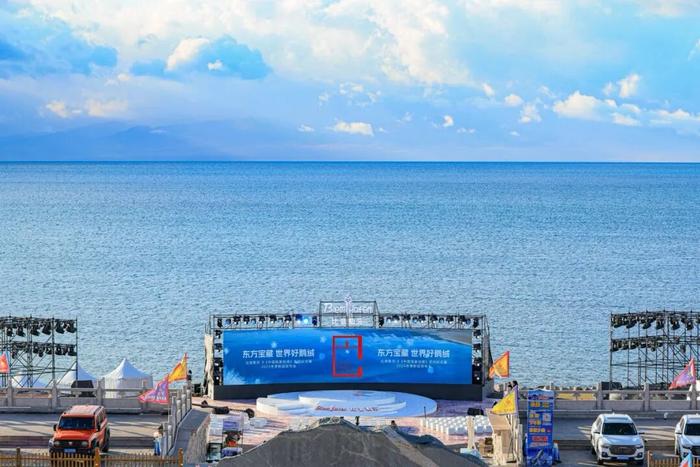
Core Insights - The article highlights a significant shift in consumer behavior towards rational consumption, emphasizing value over brand prestige, with a notable increase in "value-for-money" products [1][3][15] Group 1: Consumer Trends - The report indicates that "rational consumption" and "reverse consumption" notes on Xiaohongshu have surged by over 380% in the past year, with interaction volumes reaching tens of millions [1] - The keyword "alternative" saw a 57% increase in notes and over 135% growth in commercial notes, reflecting a collective awakening of consumer awareness [1][3] Group 2: Market Dynamics - The high-end consumer market is witnessing the emergence of high-quality, reasonably priced alternatives to luxury goods, driven by a focus on actual product value and personalized expression [3][15] - The article discusses the historical dominance of European and North American brands in the high-end down jacket market, which have leveraged "origin branding" to maintain control over the market [6][12] Group 3: Chinese Brand Development - Chinese brands are moving beyond mere imitation of international brands and are beginning to define their own value systems, as exemplified by the launch of the Biyinlefen 2025 down series [3][15] - The article emphasizes that Xinjiang down, produced in a region with optimal conditions for goose farming, is being positioned as a new global standard for high-end down [10][12] Group 4: Quality and Innovation - Xinjiang down has been shown to outperform international samples in key quality metrics, achieving a comprehensive score of 94.03, with a down fill power of FP800+ and a cleanliness level exceeding international standards [12][13] - Biyinlefen's meticulous processing techniques ensure that the final product meets high-quality standards, with a residual fat rate below 0.4% and dust content at only 0.1% [13] Group 5: Cultural Significance - The collaboration with "China National Geography" aims to enhance brand differentiation by showcasing China's geographical stories and cultural heritage [17][20] - The narrative surrounding Xinjiang down is not just about quality but also about the cultural and historical significance of the region, which adds to its appeal in the global market [20][22] Group 6: Strategic Vision - Biyinlefen's approach reflects a long-term commitment to cultural confidence and innovation, positioning itself as a leader in the high-end market rather than a follower [19][22] - The article concludes that the rational consumption trend allows consumers to enjoy luxury experiences without the associated brand premiums, redefining the value proposition in the high-end market [15][22]

国泰海通首次覆盖赢家时尚(03709):女装龙头锐意进取,25年盈利修复可期
智通财经网· 2025-09-15 07:45
Company Overview - Winner Fashion has established a strong presence in the mid-to-high-end women's apparel sector, with a brand matrix comprising seven brands, where core brands Koradior and NAERSI account for over 50% of revenue [1] - The company achieved a compound annual growth rate (CAGR) of 22% in revenue and 25% in net profit attributable to shareholders from 2018 to 2023, indicating robust growth momentum [1] - In 2024, the company expects a revenue decline of 4.7% year-on-year to 6.589 billion yuan due to weakened terminal consumption, although it has managed to increase its gross margin by 0.8 percentage points to 76.4% [1] Financial Performance - The average dividend payout ratio from 2020 to 2024 is over 57%, with a stable dividend yield of 3.5% to 5%, and plans to gradually increase the annual dividend payout ratio to 60%-70% over the next 2-3 years [1] - Forecasted net profits for 2025, 2026, and 2027 are 613 million yuan, 702 million yuan, and 796 million yuan, representing year-on-year growth rates of 31%, 14%, and 13% respectively [3] Industry Insights - The Chinese women's apparel market is projected to reach a scale of 1.06 trillion yuan in 2024, with a year-on-year growth of 1.48%, although the market remains fragmented with a CR10 of only 7.9% [1] - The trend of rational consumption is leading female consumers to place greater emphasis on the aesthetics, material quality, and brand strength of clothing products, which presents opportunities for differentiated mid-to-high-end brands [1] Competitive Advantages - Winner Fashion has competitive advantages in product, channel, and supply chain management, with a total of 5,894 SKUs planned for 2024, reflecting a year-on-year increase of approximately 7.4% [2] - The company is focused on optimizing its offline store network by reducing inefficient stores and increasing the proportion of shopping center locations, while also expanding its online presence with a CAGR of 33.5% in online revenue from 2016 to 2024 [2] - A robust supply chain system has been established, with the top five suppliers accounting for 30.41% of procurement, ensuring product quality and supply stability [2] Future Strategy - The company aims to build a light luxury brand management group, enhancing brand image through product development, endorsements, IP collaborations, and fashion shows [2] - Plans include opening flagship stores in prime locations and strengthening online partnerships, particularly with platforms like Xiaohongshu, to enhance brand influence [2][3]

西贝们最该做的,不是忙着和罗永浩打官司
3 6 Ke· 2025-09-15 04:43
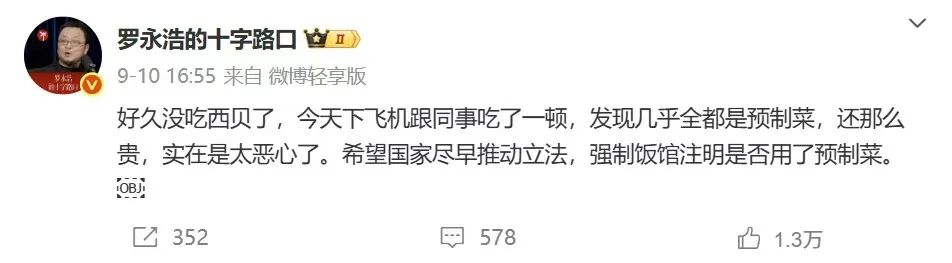
Core Viewpoint - The controversy surrounding the use of pre-prepared dishes in the restaurant industry has been ignited by a public complaint from a well-known figure, highlighting consumer demand for transparency and value in dining experiences [1][4][19]. Group 1: Incident Overview - Luo Yonghao criticized the high prices and perceived use of pre-prepared dishes at Xibei, prompting the founder, Jia Guolong, to respond defensively and announce legal action for defamation [2][4]. - Jia Guolong asserted that none of the dishes served were pre-prepared and invited customers to inspect the kitchens, launching a "Luo Yonghao Menu" with a money-back guarantee if the food was unsatisfactory [2][4][11]. Group 2: Consumer Sentiment and Industry Response - The incident has polarized public opinion, with many supporting Luo for voicing consumer concerns, while others criticize him for seeking attention without evidence [4][8]. - A significant portion of consumers (78.1%) reported that restaurants do not adequately inform them about the use of pre-prepared dishes, indicating a strong desire for transparency [18]. Group 3: Definition and Regulation of Pre-prepared Dishes - The definition of pre-prepared dishes has been clarified by regulatory bodies, distinguishing between industrially produced items and those prepared in-house by restaurants [14][15]. - Xibei claims that their dishes, prepared in a central kitchen and then cooked at the restaurant, do not fall under the category of pre-prepared dishes as per the new regulations [14][19]. Group 4: Market Trends and Consumer Expectations - The pre-prepared food market in China is projected to reach 485 billion yuan in 2024, growing at a rate of 33.8%, driven by consumer demand for convenience [18]. - Consumers are increasingly scrutinizing high-priced brands, expecting clear justification for costs, and are more sensitive to perceived value versus price [23][26].
光瓶酒冷热分化:牛栏山等失意,玻汾“封神”?
Nan Fang Du Shi Bao· 2025-09-15 03:33
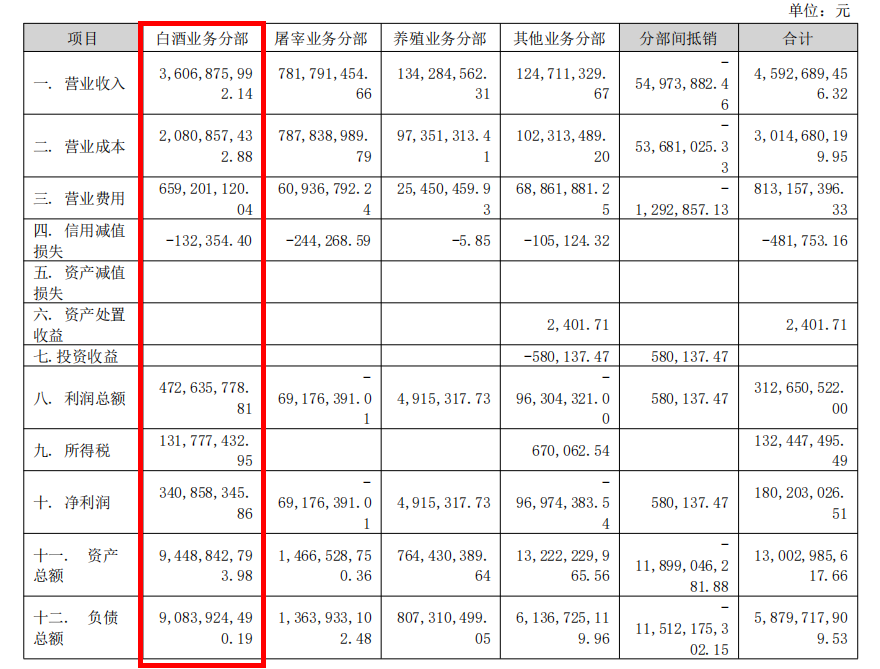
Core Viewpoint - The Chinese liquor market is experiencing a significant divide, with traditional brands like Niulanshan facing revenue declines and profit cuts, while products like Fenjiu's "Guofen" are in high demand, indicating a shift towards quality and value in consumer preferences [1][8]. Group 1: Market Trends - The light bottle liquor market is undergoing a "cold-hot differentiation," driven by industry reshuffling and consumption upgrades, where leading brands leverage quality and brand advantages to meet rational consumer demands [1][7]. - The transition from scale expansion to value competition in the liquor market is evident, with only companies that can ensure quality control, innovate in scenarios, and resonate with brands likely to succeed [1][8]. Group 2: Company Performance - Shunxin Agriculture reported a 19.24% decline in revenue to 4.593 billion yuan for the first half of 2025, with net profit dropping 59.09% to 173 million yuan, primarily due to reduced revenue from its liquor business [2][4]. - The liquor segment of Shunxin Agriculture saw revenue fall over 20% to 3.607 billion yuan, with net profit down more than 40% to 341 million yuan compared to the previous year [2][4]. Group 3: Consumer Preferences - Consumers are shifting from luxury packaging to a focus on quality and cost-effectiveness, particularly among younger demographics, as high-end liquor market growth stagnates [7][8]. - The popularity of Guofen and other light bottle liquors is attributed to their affordability and quality, with Guofen's sales expected to reach over 10 billion yuan by 2025 [5][6]. Group 4: Competitive Landscape - The competition in the light bottle liquor market is intensifying, with major liquor companies and retail giants entering the space, such as the collaboration between Hema and Chuanjiu Group to launch a series of light bottle liquors [9][8]. - New retail giants like Hema and PDD are partnering with liquor companies to accelerate their presence in the light bottle liquor market, reflecting a broader trend of market evolution and consumer behavior changes [9][8].