出口管制

Search documents
商务部召开专场外企圆桌会 与会企业:期待“十五五”规划提供更大发展空间
Zheng Quan Shi Bao Wang· 2025-10-21 12:25
商务部10月21日消息显示,10月20日,商务部副部长兼国际贸易谈判副代表凌激在京主持召开政策解读 专场外资企业圆桌会,170余家外资企业及在华外国商协会代表参会。与会外资企业表示,当前国际贸 易投资面临挑战增多,中国政府持续扩大开放,在稳外资、促发展方面展现出坚定决心与务实举措,期 待"十五五"规划为外资企业提供更大发展空间,愿继续加大在华投入,深化合作,助力中国高质量发 展。 今年9月,国务院办公厅发布了《关于在政府采购中实施本国产品标准及相关政策的通知》,规定各类 经营主体平等享受相关支持政策,有力保障外资企业参与政府采购的合法权益。 凌激表示,在后续出台具体产品标准时,商务部将做到依法依规、透明公正,欢迎包括外资企业在内的 各方提出意见建议。关于出口管制问题,凌激强调,中方对相关物项实施出口管制是坚定维护世界和平 和地区安全稳定、履行防扩散国际义务的负责任之举,同时依法审批合规贸易,维护全球产业链供应链 稳定。 凌激指出,"十四五"前四年,中国GDP增速平均为5.5%,在复杂严峻的外部环境下,中国经济展现出强 大韧性和巨大潜力,并充满活力,为外资企业带来广阔机遇和良好预期。 ...
不再贱卖,中国严格控制大宝贝出口,留给歼20战机加速量产
Sou Hu Cai Jing· 2025-10-21 06:35
Core Viewpoint - China's titanium resources are abundant, with significant reserves, particularly in Panzhihua, and the country is shifting from exporting raw materials to focusing on domestic high-end titanium alloy production to enhance value and meet military needs [1][6][35] Group 1: Resource and Industry Overview - China ranks among the top countries globally in titanium reserves, with a rich supply of vanadium-titanium magnetite [1] - Historically, China exported low-priced titanium ore and semi-finished products, leading to minimal profits, while advanced countries profited from deep processing [3][5] - The domestic demand for titanium has increased since the 1990s, particularly in military and chemical sectors, but exports remained significant until recent policy changes [5][6] Group 2: Policy Changes and Export Control - After 2010, domestic demand for titanium materials surged, with a peak in 2011, leading to increased production and the introduction of export controls for dual-use items, including titanium alloys [6][8] - New regulations effective from July 1, 2024, require export licenses for aerospace-related titanium materials, prioritizing military use and preventing sensitive technology outflow [8][10] - The export volume of titanium from China has decreased, with a rising proportion of domestic consumption [10][12] Group 3: Military Applications and Demand - The military sector, particularly advanced aircraft like the J-20, has significantly increased its titanium usage, with the J-20 utilizing 20% of its weight in titanium [16][20] - The demand for titanium in military applications is expected to grow, with the production of military aircraft accelerating due to improved domestic supply [20][24] - The transition to prioritizing military use of titanium resources has led to a more stable supply chain and reduced reliance on exports [24][26] Group 4: Technological Advancements - Continuous advancements in titanium technology have been made, including the development of titanium-aluminum single crystal alloys and titanium-based composite materials [28][30] - New manufacturing processes and equipment have improved the quality and strength of titanium alloys, enhancing their application in aerospace and military sectors [30][31] - The overall structure of the titanium industry is evolving, with a focus on high-quality development and innovation to maintain a competitive edge [33][35]


艾睿风波,竟然“帮TI 清了波库存”?
是说芯语· 2025-10-21 06:12
Core Viewpoint - Arrow Electronics has been removed from the U.S. Entity List by the Bureau of Industry and Security (BIS), which is expected to impact the semiconductor distribution market positively, particularly for Texas Instruments (TI) [5][10]. Group 1: Events Leading to Removal - On October 8, 2023, BIS placed Arrow Electronics' subsidiaries in mainland China and Hong Kong on the Entity List due to their involvement in procuring U.S. electronic components for organizations in Iran [9]. - The removal notification from BIS indicates that several Arrow Electronics subsidiaries, including Arrow China Electronics Trading Co., Ltd., have been cleared from the Entity List [6][8]. - A temporary authorization was granted by BIS, allowing Arrow Electronics and its partners to maintain trade of specific controlled items until February 14, 2026, or until the official removal notice is published [7]. Group 2: Market Impact - The removal of Arrow Electronics from the Entity List has led to increased demand for TI products, as Arrow was previously a significant distributor for TI [10]. - Following the removal announcement, there was a notable increase in the prices of TI components, although some market participants reported mixed feelings about price changes [11]. - The market has shown signs of becoming more cautious, with customers adopting a wait-and-see approach after the initial surge in demand [11].



稀土供需两端均迎催化,中期看好稀土表现
Mei Ri Jing Ji Xin Wen· 2025-10-21 01:16
Core Viewpoint - The rare earth sector has shown significant price increases this year, driven by supply-side export controls and strong demand from downstream industries like renewable energy [1][2]. Supply Side - Export controls have been a major factor affecting the supply of rare earths, with stricter regulations implemented in October [2]. - Myanmar's domestic issues have also contributed to changes in the supply landscape for rare earths [2]. - China holds approximately 44 billion tons of rare earth oxide reserves, accounting for nearly half of the global total of around 90 billion tons [1]. Demand Side - Demand for rare earths remains robust, particularly from sectors such as new energy vehicles and wind power, which are experiencing peak production seasons in the fourth quarter [2]. - The export licensing system is functioning normally, and there is potential for overseas stockpiling of rare earths due to supply constraints [2]. Market Outlook - The rare earth sector is expected to perform well in the medium term, supported by favorable supply and demand dynamics [2]. - The overall non-ferrous mining sector is experiencing a tight balance between supply and demand, benefiting from anticipated interest rate cuts by the Federal Reserve and strong downstream demand [3]. - The mining ETF tracking the non-ferrous mining index shows a high concentration of leading companies, with industrial metals, gold, and rare earths making up over 50% of the index [3].
聚焦关税进展与四季度方向
2025-10-20 14:49
Summary of Conference Call Records Industry or Company Involved - Focus on the impact of tariffs and market strategies for the fourth quarter of 2025 - Discussion on the strategic value of China's rare earth resources Core Points and Arguments Market Conditions and Strategies - Short-term market volatility is heavily influenced by sentiment, with technical support levels being more critical than fundamentals [1][2] - Investors who have reduced positions may consider selectively buying quality structural assets, while those who have not should avoid hasty adjustments based on emotional market fluctuations [1][2] - The U.S.-China tariff negotiations may see short-term progress, but long-term uncertainties are increasing, with high tariffs being detrimental to both sides [1][2][3] - The current market liquidity is abundant, leading to a pursuit of scarce returns, which has resulted in localized inflation [1][5] Asset Performance and Allocation - In Q4, the focus for asset allocation is on gold, dividends, and growth assets, which have all seen a rise this year, breaking traditional asset pricing logic [1][4] - The performance of these asset classes is influenced by various factors, including geopolitical tensions, global decoupling, and central bank gold purchases [1][4] - The U.S. market shows a disparity between strong growth in the tech sector and weakness in other areas, exacerbated by the acceleration of AI investments [1][6] Credit Cycle and Economic Outlook - The applicability of the Merrill Lynch clock framework in China is limited due to significant policy expectations and evident disparities in economic performance [2][7] - Future asset rotation can be analyzed through the intensity of credit expansion in both government and private sectors, with a focus on indirect financing [2][8] - The credit cycles in the U.S. and China may diverge, with the U.S. potentially moving towards recovery while China may experience stagnation or slight slowdown [2][9] Export Dynamics and Trade Relations - China's exports have exceeded expectations, with a year-to-date growth rate of 6.1% in dollar terms, despite a nearly 20% decline in exports to the U.S. [2][12][14] - The structure of China's exports is changing, with an increasing proportion of intermediate goods, which are essential for industrial production [2][12][13] - The strategic value of rare earth resources is highlighted, with China holding a dominant position in both reserves and the entire supply chain [2][21][22] Rare Earth Resources and Strategic Implications - China's rare earth resources account for 34% of global reserves, with a significant share in heavy rare earths [2][21] - Recent export control measures have enhanced China's control over rare earth resources, impacting global supply chains and U.S. companies [2][22] - The demand for high-performance permanent magnet materials is expected to grow, with a projected annual increase of over 10% in the coming years [2][22] Other Important but Possibly Overlooked Content - The current geopolitical landscape and the restructuring of the global dollar monetary system are influencing asset performance and investment strategies [1][4] - The potential for localized inflation due to abundant liquidity and the pursuit of scarce returns is a critical factor for investors to consider [1][5] - The implications of U.S.-China trade relations on agricultural commodities, particularly soybeans, are significant, with price pressures observed due to tariffs [2][17][19]
【A股收评】三大指数高开震荡,科技、煤炭齐上涨!
Sou Hu Cai Jing· 2025-10-20 09:31
Market Performance - The three major indices opened high and fluctuated, with the Shanghai Composite Index rising by 0.63%, the Shenzhen Component Index by 0.98%, the ChiNext Index by 1.98%, and the STAR Market 50 Index by 0.35% [2] - Over 3,800 stocks in the two markets rose, with a total trading volume of approximately 1.74 trillion yuan [2] Industry Highlights - The cultivated diamond and superhard materials sectors showed strong performance, with Huifeng Diamond rising by 29.98%, Sifangda by 19.98%, and Power Diamond by over 18% [2] - The Ministry of Commerce and the General Administration of Customs announced export controls on superhard materials, effective November 8, which is expected to enhance the supply protection for the domestic superhard materials industry and strengthen market expectations for the sector's scarcity and performance certainty [2] Coal Sector - The coal sector experienced a collective surge, with major companies like Dayou Energy, Yunmei Energy, and Shanxi Black Cat all rising by 10% [2] - The cold air mass affecting the northern regions is expected to increase coal demand during the winter, as a double La Niña weather pattern may lead to a colder winter in China [3] Technology and Robotics - The CPO and computing power sectors were active, with Cambridge Technology rising by 10% and other companies like Zhongji Xuchuang and Tianfu Communication increasing by over 7% [3] - Citibank indicated potential upward demand in the optical module industry, suggesting buying opportunities after recent stock price adjustments [3] - Robotics leader UBTECH won a project for the procurement and installation of intelligent data collection and testing center equipment in Guangxi, with an order amounting to 126 million yuan [4] - UBTECH's Walker series humanoid robots have secured over 630 million yuan in orders this year, excluding a joint development project with Beijing Guodi [4] Declines in Other Sectors - The precious metals sector saw significant declines, with Hunan Silver hitting a 10% limit down, alongside other companies like Xiaocheng Technology and Western Gold experiencing heavy losses [4] - New energy-related stocks also showed weakness, with Shengxin Lithium Energy and Tianqi Lithium experiencing declines [4]





稀土龙头天和磁材部分存款遭冻结,刚拟8.5亿元投资新项目
Sou Hu Cai Jing· 2025-10-20 07:31
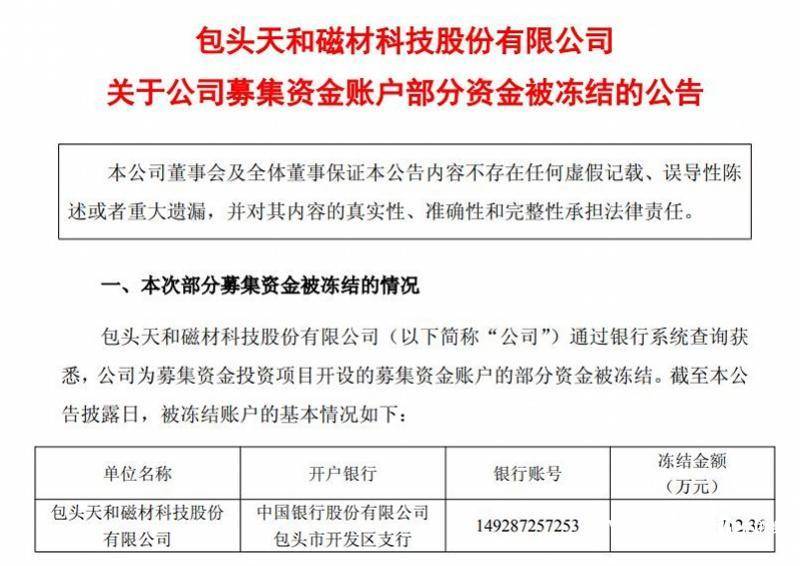
Core Viewpoint - Tianhe Magnetic Materials (603072.SH), a leading company in rare earth permanent magnets, is facing a minor financial setback due to the freezing of some funds related to a construction contract dispute, while simultaneously planning new investments in projects [1][5]. Financial Impact - The company announced that 7.1236 million yuan of its fundraising account has been frozen due to a legal dispute with Shanxi Erjian Group Co., Ltd. This amount represents 0.35% of the company's latest audited net assets and is not expected to significantly impact the company's fundraising or operational capabilities [5][6]. - The frozen funds are linked to a project aimed at producing 3,000 tons of high-performance neodymium-iron-boron for electric vehicles, with a total planned investment of 249 million yuan, of which 81 million yuan has been invested so far, indicating a progress rate of 32.63% [6]. Performance Trends - The company's revenue and net profit have been declining from 2022 to 2024, with revenues of 2.885 billion yuan, 2.651 billion yuan, and 2.590 billion yuan, and net profits of 190 million yuan, 161 million yuan, and 132 million yuan respectively. In the first half of 2025, revenue and net profit further dropped to 940 million yuan and 3.5 million yuan, reflecting year-on-year declines of 25.8% and 47.1% [7][8]. - The decline in performance is attributed to increased competition and a drop in product prices, with the average selling price of sintered neodymium-iron-boron decreasing by 35.22% from 474,400 yuan/ton to 307,300 yuan/ton between 2022 and 2024 [8][11]. Market Conditions - The rare earth materials market has seen fluctuations, with prices for key raw materials like praseodymium-neodymium rising from 423,200 yuan/ton in early 2024 to 543,400 yuan/ton by June 2025 [8]. - The company has been affected by export control policies, which have delayed shipments to overseas clients, but it is actively working to expand its domestic market presence [8]. Capacity and Expansion Plans - Tianhe Magnetic Materials has consistently operated at high capacity utilization rates, exceeding 100% in recent years, and is planning to invest 850 million yuan in a new project for high-performance rare earth magnets and components [9][10]. - The new project is expected to enhance production capabilities and address the ongoing competitive pressures in the market [9][10].
中国寸步不让,特朗普难以置信,美高官称3亿美国民众做好了准备
Sou Hu Cai Jing· 2025-10-20 03:41
前言 中美贸易战如今已走到一个危险的边缘,双方都亮出了各自的"杀手锏",互不妥协。美国方面不惜 以"民众意志"和"钢铁意志"进行极限施压,力图将对方逼入绝境。而中国则展现出不退让的姿态,背后 到底藏着什么样的底气? 特朗普将关税视作"压迫杠杆",出口管制则当作"终极武器"。但问题是,光有武器并不够,还需要合适 的战术、正确的节奏以及国内的支撑。美国如今面临内外困境:政府停摆、民众的不满以及政敌的反 对。在这种情况下,特朗普的"极限施压"其实反映了他的焦虑和孤立。不能成为谈判高手,就只能通过 关税这一"炸弹"来施加压力。然而,炸弹越多,控制力反而越差。 中国的反击:底气从何而来? 然而,这样的说法实际上隐含着风险。通过"民众动员"的话术,美国试图将公众的支持转化为政策合法 性,制造一种内部一致的假象。但美国的现实是,许多美国人并不认同特朗普的政策,也并不愿意与中 国进行彻底决斗。事实上,这种说辞往往是在掩饰美国政府缺乏真正后盾的窘境。如果强行推行一场贸 易战,而最终得到的是民众的反感而非团结,那么美国将变成孤立的"孤家寡人"。 美国高官的"3亿民众"论:煽动、虚张声势与悬崖 在一次福克斯采访中,美国贸易代表贾米 ...
荷兰经济事务部大臣透露“将在几天内与中方会面”,但仍在狡辩
Guan Cha Zhe Wang· 2025-10-20 02:21
【文/观察者网 熊超然】就在中美贸易博弈紧张持续之际,中资半导体企业在荷兰竟遭到"强行接管", 这个欧洲国家此时跳入这场纷争之中。 据路透社当地时间10月19日报道,荷兰经济事务部大臣文森特·卡雷曼斯(Vincent Karremans)当天在接 受本国电视节目《Buitenhof》采访时称,他预计将在几天内与中方官员会面,讨论如何解决围绕在安世 半导体(Nexperia)身上的僵局。 他找补说,荷兰外交官一直在努力化解僵局,他本人也将在数日内与负责此事的中方部长会面。他强 调,"此事已经上升至最高层级进行磋商"。 不过,卡雷曼斯仍然狡辩宣称,"中方认为荷兰正与美国联手干预安世半导体事务",但荷方此次行动的 目的,"是为了防止这家公司的前中国首席执行官将业务和知识产权转移出欧洲"。 就在几天前,据荷兰NOS广播公司当地时间10月17日报道,卡雷曼斯也曾狡辩称,荷兰对中资企业采 取"历史性干预"并未受到美国施压,甚至反诬中方"混淆事实"。 路透社指出,安世半导体的芯片虽然并非尖端产品,但其产量巨大,主要在德国汉堡生产,然后运往中 国进行封装与组装工序,最终销往全球汽车行业。当前,安世半导体事件正威胁着全球汽车供 ...


护“链”稳“技”,筑牢锂电池出口安全屏障
中国能源报· 2025-10-20 01:43
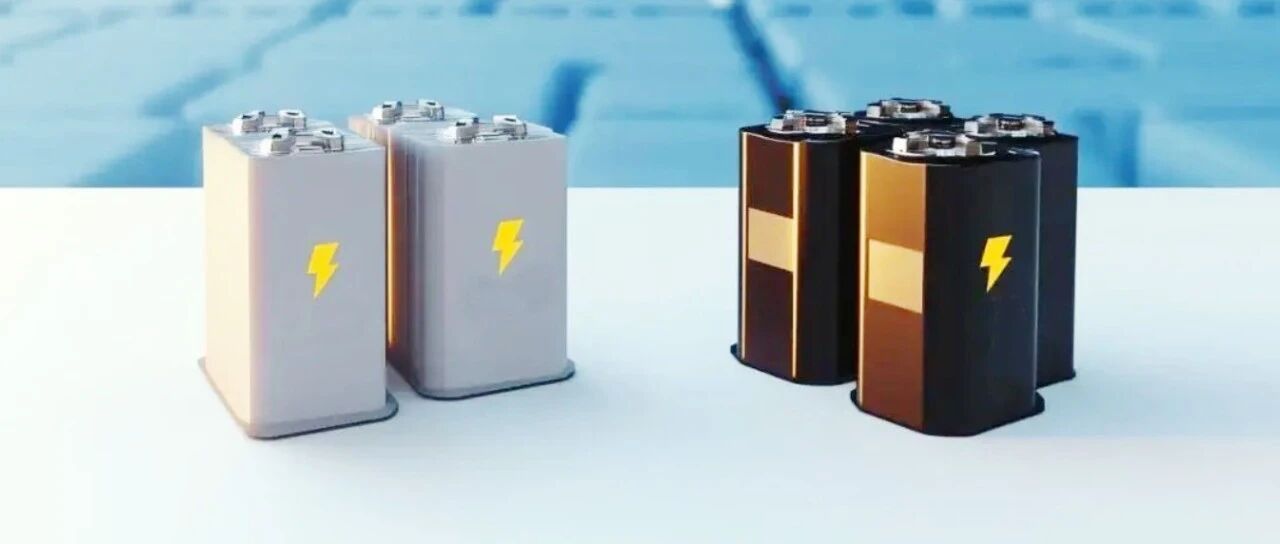
Core Viewpoint - The recent implementation of "technology-level" export controls in China's new energy equipment manufacturing sector is aimed at enhancing national security and protecting core technologies, rather than imposing trade restrictions [5][6][9]. Export Control Announcement - The Ministry of Commerce and the General Administration of Customs announced the implementation of export controls on lithium batteries and related manufacturing equipment, effective from November 8, 2025 [5]. - The updated export control list includes rechargeable lithium-ion batteries with an energy density of 300Wh/kg or more, high-pressure lithium iron phosphate cathode materials, artificial graphite anode materials, and related technologies [6][11]. Industry Impact - The new policy is expected to help maintain China's competitive advantage in the global lithium battery supply chain and prevent core technologies from leaking abroad [6][11]. - The export controls are seen as a "wind vane" that may reshape the development layout of Chinese lithium battery companies, encouraging them to invest overseas [8][11]. Technological Focus - The export controls specifically target high-end products and technologies, similar to export restrictions in the semiconductor industry [9][11]. - The measures are designed to create a "technical barrier" for the lithium battery industry, ensuring national security while promoting a shift towards high-end, technology-driven industrial transformation [11][15]. Market Dynamics - China's lithium battery products are experiencing strong demand overseas, with a reported 90% year-on-year growth in the overseas energy storage market [8]. - The export controls may lead to a temporary premium on high-end products due to their scarcity, while also tightening compliance approvals for overseas capacity expansion and core equipment exports [12][15]. Future Outlook - The export controls are expected to provide a regulatory framework that encourages companies to focus on core technology research and development, enhancing their market competitiveness [15]. - The global solid-state battery market is projected to grow at a compound annual growth rate of over 80% from 2024 to 2030, indicating significant opportunities for Chinese battery manufacturers [14][15].