
实体经济

Search documents
坚持有效市场和有为政府相结合建设现代化产业体系(深入学习贯彻习近平新时代中国特色社会主义思想)
Ren Min Ri Bao· 2025-11-18 22:51
Core Viewpoint - The construction of a modern industrial system is essential for China's modernization, emphasizing the need for a combination of effective markets and proactive government involvement to enhance the foundation of the real economy [1][2][3]. Group 1: Modern Industrial System - The modern industrial system is a crucial component of the modern economic system and a significant indicator of economic modernization, supported by technological innovation and the integration of various industries [3][4]. - The system aims to adapt to new technological revolutions and industrial transformations, focusing on high-quality development and the efficient gathering of global innovation elements [3][4]. Group 2: Role of Effective Market - An effective market can enhance the vitality and efficiency of the modern industrial system by driving technological innovation and optimizing resource allocation [4][5]. - The market acts as a catalyst for technological advancement, encouraging enterprises to increase R&D investment and facilitating the upgrade of traditional industries and the growth of emerging sectors [4][5]. Group 3: Role of Proactive Government - A proactive government is essential to address market failures and provide necessary support in areas like infrastructure, public goods, and market regulation [5][6]. - The government should guide long-term industrial development, enhance basic research, and ensure a conducive environment for the modern industrial system [5][6]. Group 4: Challenges and Strategies - The construction of a modern industrial system faces challenges such as global supply chain restructuring and domestic inefficiencies in resource allocation [8][9]. - Strategies to overcome these challenges include reinforcing advantages, breaking bottlenecks, and enhancing the synergy between effective markets and proactive government [8][9]. Group 5: Coordination and Integration - Achieving a modern industrial system requires coordination between market mechanisms and government actions to optimize industrial structure and resource allocation [13][14]. - The integration of innovation chains and industrial chains is vital for fostering new productive forces and enhancing competitiveness [10][11]. Group 6: Regional Development and Balance - Addressing regional disparities and promoting coordinated industrial layout is crucial for the modernization of the industrial system [11][12]. - The government and market must work together to eliminate barriers and create a unified national market to optimize resource allocation [12][13]. Group 7: Safety and Resilience - Balancing industrial safety with openness to global competition is necessary to enhance the resilience of the industrial system [12][16]. - The government should establish safeguards for industrial security while promoting international cooperation and competition [12][16].
宗馥莉缺席娃哈哈经销商大会,许思敏首次以娃哈哈集团总经理身份亮相
Feng Huang Wang· 2025-11-18 09:01
Group 1 - The core message of the news is that Wahaha Group is committed to steady growth despite a challenging market environment, emphasizing the importance of aligning with national strategies and deepening cooperation with distributors [1][2] - Wahaha Group's General Manager, Xu Simin, highlighted the company's resilience over the past decade, achieving stable growth amidst complex market conditions and intensified competition [1] - The company has been deeply rooted in the manufacturing industry for over 30 years, viewing its development as integral to the national agenda and recognizing the role of private enterprises in driving economic growth and job creation [1] Group 2 - The resignation of Zong Fuli from her positions as legal representative, director, and chairman of Wahaha Group has been officially processed through the company's shareholder and board meetings [2] - Zong Fuli is now the president of Hongsheng Group, and during the recent personnel changes at Wahaha, distributors were informed about the potential use of a new brand "Wah Xiaozong," but they later received confirmation to continue selling under the "Wahaha" brand next year [2]
天津滨海新区经济发展态势稳健
Jing Ji Ri Bao· 2025-11-18 04:07
天津滨海新区区委副书记、区长单泽峰说,新区坚定不移把发展着力点放在实体经济上,加快制造 业智能化、绿色化、融合化转型发展,现代化产业体系的支撑引领作用不断显现。前三季度,全区规上 工业增加值增长5.4%,较上半年提高0.2个百分点,工业经济韧性持续增强。 在中铁工程装备集团(天津)有限公司车间,记者看到盾构机大数据中心正通过数百个传感器实时 捕捉数据,实现自动"改错"和故障诊断。公司党委书记、董事蔡辉说,落户天津滨海新区以来,公司参 建天津地铁等多个项目,多台新型盾构机出口海外。 建设现场机械轰鸣,创新成果加速转化……除了制造业,天津滨海新区在项目建设、进出口以及科 技创新等方面也取得了不错成绩。前三季度,滨海新区基础设施投资增长34.4%,拉动全区投资增长8.2 个百分点;科学研究和技术服务业投资增长15.9%;外贸出口额达2079亿元,增长14.1%,增速较上半 年提高5个百分点。 成绩背后离不开金融支持。前三季度,滨海新区16家银行累计为482家科技企业授信51.89亿元。农 行天津市分行今年已完成部分金融租赁公司办理外币直接借款业务,金额合计超过2亿美元。 经济日报天津11月17日讯(记者周琳)作为天 ...
天津滨海新区经济发展态势稳健 前三季度地区生产总值增长5%
Jing Ji Ri Bao· 2025-11-18 00:01
建设现场机械轰鸣,创新成果加速转化……除了制造业,天津滨海新区在项目建设、进出口以及科技创 新等方面也取得了不错成绩。前三季度,滨海新区基础设施投资增长34.4%,拉动全区投资增长8.2个百 分点;科学研究和技术服务业投资增长15.9%;外贸出口额达2079亿元,增长14.1%,增速较上半年提 高5个百分点。 成绩背后离不开金融支持。前三季度,滨海新区16家银行累计为482家科技企业授信51.89亿元。农行天 津市分行今年已完成部分金融租赁公司办理外币直接借款业务,金额合计超过2亿美元。(记者周琳) 经济日报天津11月17日讯 作为天津高质量发展的战略引领区,天津滨海新区今年前三季度地区生产总 值同比增长5.0%,多项经济指标运行平稳、走势稳健,为顺利完成全年目标任务筑牢了基础。 天津滨海新区区委副书记、区长单泽峰说,新区坚定不移把发展着力点放在实体经济上,加快制造业智 能化、绿色化、融合化转型发展,现代化产业体系的支撑引领作用不断显现。前三季度,全区规上工业 增加值增长5.4%,较上半年提高0.2个百分点,工业经济韧性持续增强。 在中铁工程装备集团(天津)有限公司车间,记者看到盾构机大数据中心正通过数百个传 ...
前三季度地区生产总值增长5% 天津滨海新区经济发展态势稳健
Jing Ji Ri Bao· 2025-11-17 22:24
建设现场机械轰鸣,创新成果加速转化……除了制造业,天津滨海新区在项目建设、进出口以及科技创 新等方面也取得了不错成绩。前三季度,滨海新区基础设施投资增长34.4%,拉动全区投资增长8.2个百 分点;科学研究和技术服务业投资增长15.9%;外贸出口额达2079亿元,增长14.1%,增速较上半年提 高5个百分点。 成绩背后离不开金融支持。前三季度,滨海新区16家银行累计为482家科技企业授信51.89亿元。农行天 津市分行今年已完成部分金融租赁公司办理外币直接借款业务,金额合计超过2亿美元。 (文章来源:经济日报) 作为天津高质量发展的战略引领区,天津滨海新区今年前三季度地区生产总值同比增长5.0%,多项经 济指标运行平稳、走势稳健,为顺利完成全年目标任务筑牢了基础。 天津滨海新区区委副书记、区长单泽峰说,新区坚定不移把发展着力点放在实体经济上,加快制造业智 能化、绿色化、融合化转型发展,现代化产业体系的支撑引领作用不断显现。前三季度,全区规上工业 增加值增长5.4%,较上半年提高0.2个百分点,工业经济韧性持续增强。 在中铁工程装备集团(天津)有限公司车间,记者看到盾构机大数据中心正通过数百个传感器实时捕捉 数 ...
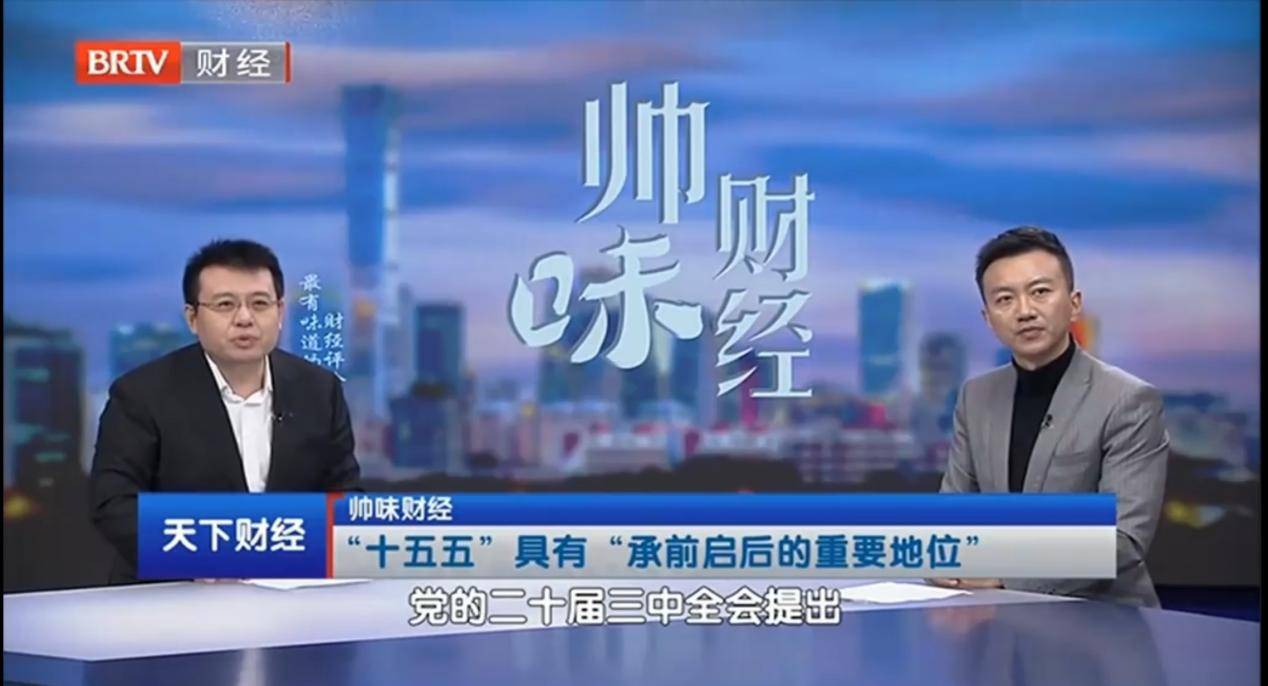
知名经济学家杜帅评论:“十五五” 现代化进程的关键中继与改革攻坚期
Sou Hu Cai Jing· 2025-11-17 09:09
Core Viewpoint - The "15th Five-Year Plan" (2026-2030) is a critical transitional phase for China, serving as a bridge between the "14th Five-Year Plan" and the "16th Five-Year Plan," and is essential for achieving socialist modernization by 2035 [1] Strategic Positioning - The "15th Five-Year Plan" is a unique observation and transition period to assess previous development outcomes and accumulate momentum for future acceleration [3] - It is a completion point for over 300 major reform tasks from the 20th National Congress, with specific milestones set for 2026-2029 to ensure reforms translate into tangible results [3] - This period is also a window for China to align with global rule restructuring, particularly in international trade and digital governance, which will impact its competitive position in global agreements like CPTPP and DEPA [3] Industrial Development Focus - The emphasis on "real economy" and "manufacturing reasonable proportion" is not merely about expanding capacity but is centered on "value-oriented" scientific layout [4] - As of the first half of 2025, China's manufacturing value added accounted for 25.7% of GDP, indicating a need to balance between too high and too low proportions to avoid resource strain and economic vulnerability [4] - The goal is to shift from a "scale-oriented" approach to a "value-oriented" one, focusing on core component R&D, independent intellectual property breakthroughs, and technological innovation to drive high-end, intelligent, and green transformation in manufacturing [4] Governance Philosophy Upgrade - The report elevates the concept of "people-centered" governance to "people first," emphasizing investment in human capital as a key infrastructure focus [6] - Over 120 reform tasks directly address critical life stages from birth to end-of-life, with quantifiable and accountable targets to ensure tangible improvements in quality of life [6] - The plan aims to convert demographic dividends into quality dividends through vocational training and equalization of public services, ensuring inclusivity in modernization efforts [6] Economic Long-Term Outlook - Despite challenges, the long-term positive trend of China's economy during the "15th Five-Year Plan" remains intact, supported by three main advantages: a vast market, latecomer advantages for industrial upgrades, and sustained competitive edge through technological innovation [8] - The large population and middle-income group provide a solid market foundation, while China's manufacturing scale and complete industrial system are unmatched globally [8] - The country can leverage its latecomer status to adopt advanced international practices in emerging fields like AI and quantum technology, exemplified by its rapid advancements in the renewable energy sector [8] Conclusion - The "15th Five-Year Plan" is positioned as a pivotal period for China to deepen reforms, strengthen industries, and enhance livelihoods, laying a solid foundation for achieving socialist modernization [9]

习言道|传统产业改造升级,也能发展新质生产力
Zhong Guo Xin Wen Wang· 2025-11-16 02:37
Core Viewpoint - The article emphasizes the importance of developing new quality productivity through technological innovation and green development, aligning with China's strategic goals for economic transformation and sustainability [1][8]. Group 1: New Quality Productivity - New quality productivity is primarily driven by revolutionary technological breakthroughs, which can lead to the emergence of new industries, models, and dynamics [3][4]. - The core elements of developing new quality productivity include enhancing technological innovation, particularly original and disruptive innovations, to achieve high-level self-reliance in technology [4][15]. Group 2: Green Development - Green development is highlighted as the foundation for high-quality development, with new quality productivity being inherently linked to green productivity [8]. - There is a strong emphasis on accelerating the green transformation of development methods to support carbon peak and carbon neutrality goals, promoting the idea that "lucid waters and lush mountains are invaluable assets" [8]. Group 3: Industry Transformation - The need to seize opportunities presented by a new round of technological revolutions and industrial transformations is stressed, with a call to increase innovation efforts and cultivate emerging industries [10][17]. - It is essential to balance the development of new quality productivity with the upgrading of traditional industries, avoiding a one-size-fits-all approach and ensuring localized strategies [12][14]. Group 4: Strategic Focus - The development of characteristic advantageous industries should be a primary focus, with an emphasis on region-specific strategies for emerging industries, particularly in the western regions of China [12][17]. - The integration of technological and industrial innovation is identified as a fundamental path for developing new quality productivity, ensuring that both traditional and emerging industries are advanced simultaneously [15][17].
《求是》杂志发表习近平总书记重要文章 因地制宜发展新质生产力
Ren Min Ri Bao· 2025-11-16 02:28
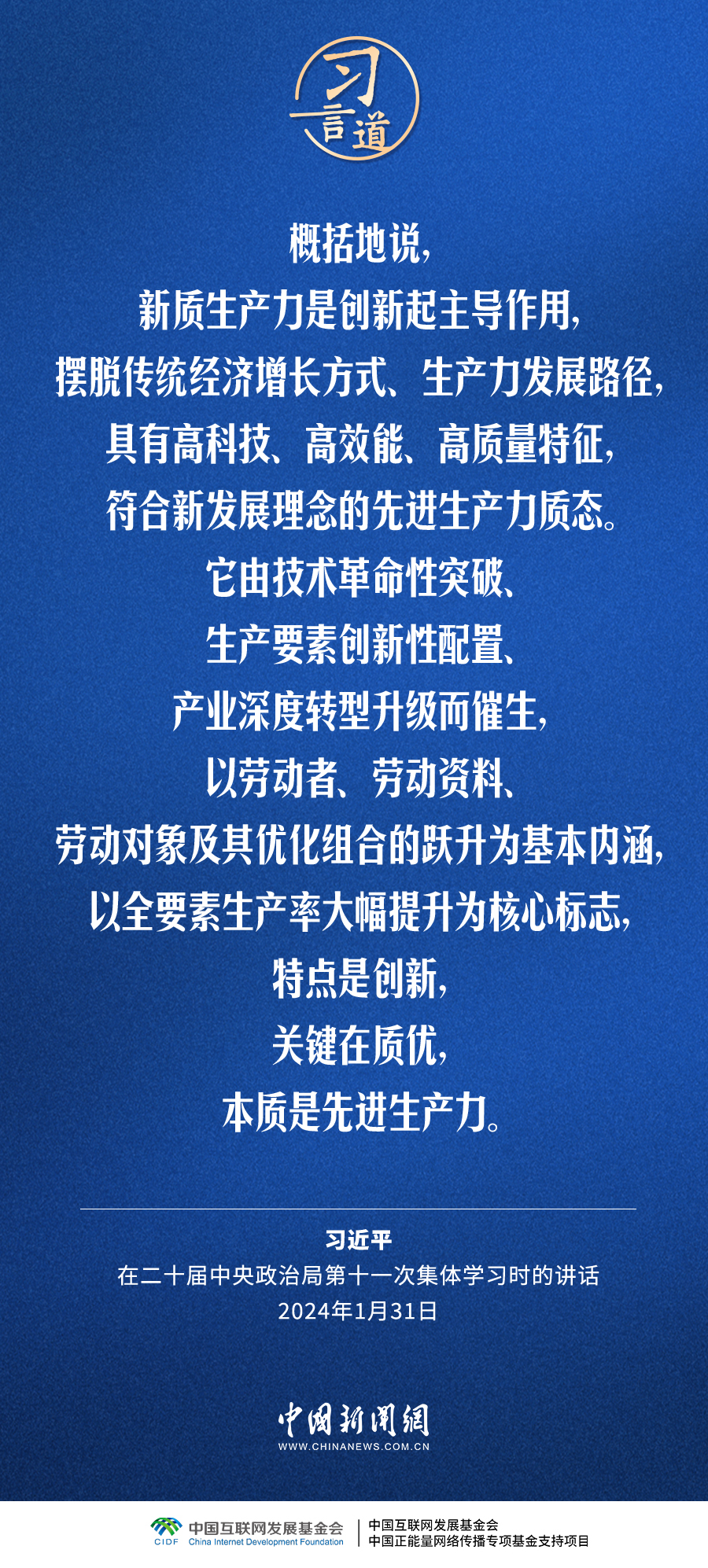
11月16日出版的第22期《求是》杂志将发表中共中央总书记、国家主席、中央军委主席习近平的重要文 章《因地制宜发展新质生产力》。这是习近平总书记2023年9月至2025年4月期间有关重要论述的节录。 文章强调,新质生产力是创新起主导作用,摆脱传统经济增长方式、生产力发展路径,具有高科技、高 效能、高质量特征,符合新发展理念的先进生产力质态。它由技术革命性突破、生产要素创新性配置、 产业深度转型升级而催生,以劳动者、劳动资料、劳动对象及其优化组合的跃升为基本内涵,以全要素 生产率大幅提升为核心标志,特点是创新,关键在质优,本质是先进生产力。 文章指出,科技创新和产业创新,是发展新质生产力的基本路径。科技创新能够催生新产业、新模式、 新动能,是发展新质生产力的核心要素。抓科技创新,要着眼建设现代化产业体系,既多出科技成果, 又把科技成果转化为实实在在的生产力。抓产业创新,要守牢实体经济这个根基,坚持推动传统产业改 造升级和开辟战略性新兴产业、未来产业新赛道并重。抓科技创新和产业创新融合,要搭建平台、健全 体制机制,强化企业创新主体地位,让创新链和产业链无缝对接。 文章指出,要坚决破除影响和制约高质量发展的体制机制 ...
《求是》杂志发表习近平总书记重要文章《因地制宜发展新质生产力》
证监会发布· 2025-11-15 08:17
全文可点击 "阅读原文" 。 文章指出,科技创新和产业创新,是发展新质生产力的基本路径。科技创新能够催 生新产业、新模式、新动能,是发展新质生产力的核心要素。抓科技创新,要着眼建设 现代化产业体系,既多出科技成果,又把科技成果转化为实实在在的生产力。抓产业创 新,要守牢实体经济这个根基,坚持推动传统产业改造升级和开辟战略性新兴产业、未 来产业新赛道并重。抓科技创新和产业创新融合,要搭建平台、健全体制机制,强化企 业创新主体地位,让创新链和产业链无缝对接。 文章指出,要坚决破除影响和制约高质量发展的体制机制弊端,完善与新质生产力 更相适应的生产关系。加强新领域新赛道制度供给,促进各类先进生产要素向发展新质 生产力集聚。完善国家创新体系,激发各类创新主体活力,在加强基础研究、提高原始 创新能力上持续用力,在突破关键核心技术、前沿技术上抓紧攻关。打通影响和制约全 面创新的卡点堵点,统筹推进教育科技人才一体发展,筑牢新质生产力发展的基础性、 战略性支撑。 文章强调,"十五五"时期,必须把因地制宜发展新质生产力摆在更加突出的战略位 置,以科技创新为引领、以实体经济为根基,加快建设现代化产业体系。各地要坚持从 实际出发, ...
《求是》杂志发表习近平总书记重要文章《因地制宜发展新质生产力》
Xin Hua She· 2025-11-15 07:04
新华社北京11月15日电 11月16日出版的第22期《求是》杂志将发表中共中央总书记、国家主席、中央 军委主席习近平的重要文章《因地制宜发展新质生产力》。这是习近平总书记2023年9月至2025年4月期 间有关重要论述的节录。 文章强调,"十五五"时期,必须把因地制宜发展新质生产力摆在更加突出的战略位置,以科技创新为引 领、以实体经济为根基,加快建设现代化产业体系。各地要坚持从实际出发,根据本地的资源禀赋、产 业基础、科研条件等,有选择地推动新产业、新模式、新动能发展,加快推动作为经济增长和就业收入 基本依托的传统产业改造升级,推动新旧发展动能平稳接续转换。 责任编辑:凌辰 文章强调,新质生产力是创新起主导作用,摆脱传统经济增长方式、生产力发展路径,具有高科技、高 效能、高质量特征,符合新发展理念的先进生产力质态。它由技术革命性突破、生产要素创新性配置、 产业深度转型升级而催生,以劳动者、劳动资料、劳动对象及其优化组合的跃升为基本内涵,以全要素 生产率大幅提升为核心标志,特点是创新,关键在质优,本质是先进生产力。 文章指出,科技创新和产业创新,是发展新质生产力的基本路径。科技创新能够催生新产业、新模式、 新动 ...