
食品安全监管

Search documents
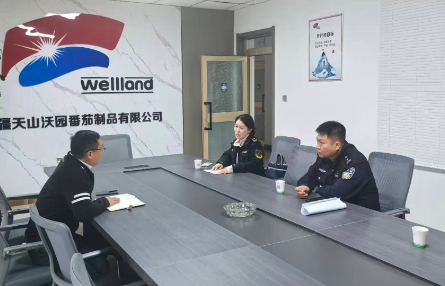
新疆乌苏市市场监管局开展走进企业看生产活动
Zhong Guo Shi Pin Wang· 2025-11-07 05:19
Group 1 - The core viewpoint is that the Urumqi Market Supervision Bureau is actively guiding food production enterprises to enhance compliance awareness and ensure food safety for consumers [1][3][4] Group 2 - The bureau emphasizes strict control over the production process, ensuring a clean and well-maintained production environment, and prohibiting the use of non-food materials in production [3] - A total of over 20 food production enterprises have been inspected, with 4 issues identified and rectified, effectively eliminating food safety risks [3] - The bureau is focused on ensuring proper labeling of food products, providing corrective guidance to enterprises with non-compliant labels [3] - The bureau has conducted 6 batches of food safety inspections with a 100% pass rate, focusing on edible oils, beverages, vegetable products, and alcoholic beverages [3] - Future plans include increasing regulatory guidance for food production enterprises and promoting standardization and normalization in the industry [4]

守护乡村“舌尖安全”:额敏县市场监督管理局开展村队专项检查
Zhong Guo Shi Pin Wang· 2025-11-05 14:44
Core Viewpoint - The article emphasizes the importance of ensuring food safety in rural areas through comprehensive inspections of food businesses, highlighting the need for regulatory compliance and proper food storage practices [1][2] Group 1: Food Safety Inspections - The market supervision bureau conducted thorough food safety inspections in rural areas from November 3 to 5, 2025, covering various food businesses such as supermarkets, small shops, and stalls [1] - A total of 26 village-level food businesses were inspected, revealing issues such as disorganized food placement and failure to address near-expiry products [1] - Enforcement officers required immediate rectification of identified issues and planned follow-up inspections to ensure compliance [1] Group 2: Regulatory Compliance and Education - Inspectors focused on verifying the legal operating status of food businesses, checking for valid food business licenses and operating permits [1] - The importance of food safety was emphasized to food business operators, urging them to adhere to safety responsibilities and maintain integrity in their operations [1] - The local market supervision authority plans to increase inspection frequency and expand the scope of checks to combat food safety violations effectively [2]
塔城市市场监督管理局:“靶向抽检”小区周边商超 织密食用农产品安全防护网
Zhong Guo Shi Pin Wang· 2025-11-05 08:56
Core Viewpoint - The article emphasizes the importance of ensuring food safety for consumers by implementing targeted inspections of edible agricultural products in local markets [1] Group 1: Inspection Strategy - The Peace Market Supervision Office has conducted inspections focusing on high-risk categories of food products, specifically targeting fruits and vegetables that are commonly consumed by residents [1] - A "targeted monitoring" strategy was employed to identify and address potential safety issues in food products [1] Group 2: Testing and Compliance - The inspection process included testing for pesticide residues, veterinary drug residues, and heavy metals, covering key safety indicators [1] - The sampling process involved collaboration between enforcement personnel and third-party testing agencies, ensuring strict adherence to protocols for sample handling and documentation [1] Group 3: Enforcement and Public Awareness - Non-compliant products identified during inspections will lead to immediate legal action, including the removal of products from shelves and public disclosure of results [1] - The initiative aims to enhance regulatory strategies and promote legal awareness among vendors to foster a trustworthy food safety environment for consumers [1]

大国五年丨中国市场,铸就公平竞争大舞台
Sou Hu Cai Jing· 2025-11-03 07:40
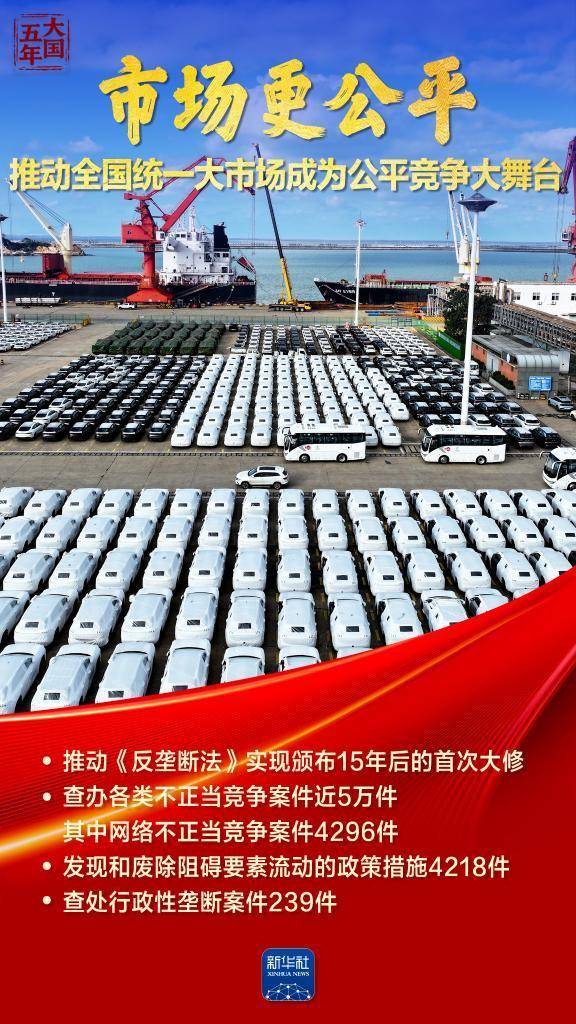
Core Viewpoint - The article emphasizes the transformation of China's market system, highlighting the establishment of a unified national market that enhances efficiency, openness, and innovation, ultimately benefiting consumers and businesses alike [1]. Group 1: Market Reforms - The revision of the Anti-Monopoly Law marks the first major update in 15 years, with nearly 50,000 cases of unfair competition investigated, including 4,296 cases related to online competition [2]. - A total of 4,218 policies that hinder the flow of production factors have been identified and abolished [2]. - Administrative monopoly cases have been addressed, with 239 cases reported [3]. Group 2: Business Environment - The revision of the Company Law allows for an extended capital contribution period of up to 5 years [5]. - The "one certificate, one license" separation reform has been fully implemented, enabling a streamlined online business registration process [5]. - The electronic business license has been downloaded 370 million times, with over 600 million uses recorded [5]. - The net increase in registered enterprises reached 19.999 million, while individual businesses saw a net increase of 33.946 million [5]. Group 3: Standards and Compliance - Over 13,000 national standards have been newly released, bringing the total to over 47,000, with the average development cycle reduced from 36 months to 16 months [7]. - More than 2,400 national standards in key areas such as artificial intelligence and smart manufacturing have been published [7]. - 15 product categories, including lithium batteries for electric bicycles, have been included in CCC certification management [9]. Group 4: Consumer Protection - A total of 454.1 million illegal product listings were removed from platforms, and 58,000 online stores were ordered to cease operations [11]. - Significant cases in the live-streaming e-commerce sector have been addressed, including major cases like "Three Sheep" and "Northeast Rain Sister" [11]. - Food safety cases numbered 2.2604 million, with high compliance rates for grain, meat, and dairy products maintained over the years [13]. - The drug inspection pass rate remains stable at over 99.4%, with over 200 innovative drugs and 265 innovative medical devices approved [15].
严格食品添加剂监管 市场监管总局介绍综合治理最新情况
Xin Hua Wang· 2025-10-31 11:30
Core Viewpoint - The article emphasizes the importance of strict regulation of food additives to ensure food safety, highlighting recent actions taken by the State Administration for Market Regulation (SAMR) in China to combat the abuse of food additives [1] Group 1: Regulatory Actions - The SAMR has reported 13,180 cases of illegal use of food additives, with a total amount involved of 23.31 million yuan and fines totaling 90.38 million yuan, including 89 cases referred to law enforcement for criminal prosecution [1] - A comprehensive management system for food additives has been established, covering risk assessment, standard formulation, production, and usage [2][3] Group 2: Approval and Licensing - New food additives must undergo a strict approval process by the State Health Administration, which includes risk assessment and confirmation of safety before use [2] - Companies producing food additives must obtain a production license, ensuring they meet specific requirements related to facilities, equipment, and personnel [2] Group 3: Monitoring and Compliance - The SAMR conducts regular supervision and sampling inspections to ensure compliance with national food safety standards during the production of food additives [3] - Food producers are required to use food additives within specified limits and must clearly label all additives used in their products [3][4] Group 4: Focus Areas - The SAMR is focusing on food categories such as agricultural products, vegetable products, and grain processing, particularly those labeled as "zero additive" or "no preservatives" [4] - New guidelines for meat products and beverages have been established to ensure that food additives are used according to safety standards, with specific attention to procurement, storage, and usage records [5]
重庆市涪陵区珍溪镇市场监管所集体约谈榨菜生产企业
Zhong Guo Zhi Liang Xin Wen Wang· 2025-10-30 05:32
Core Viewpoint - The Chongqing Fuling District Market Supervision Bureau has conducted a collective interview with over ten pickled vegetable production enterprises in response to consumer complaints regarding non-compliant labeling and other issues in the pickled vegetable processing industry [1][2] Group 1: Industry Issues - The Fuling District has reported issues in the pickled vegetable industry this year, including false advertising, non-compliant labeling, and excessive additives [1] - The market supervision authority has emphasized the importance of adhering to the Food Safety Law and fulfilling corporate responsibilities to prevent these issues [1] Group 2: Regulatory Actions - The market supervision bureau has required pickled vegetable producers to conduct self-inspections and rectifications to ensure the legal and compliant use of the "Fuling Pickled Vegetable" geographical indication [1] - The bureau plans to increase regulatory efforts through random inspections and special checks, imposing strict penalties on companies that fail to rectify issues [2] Group 3: Quality Control Measures - The market supervision authority highlighted that producing quality-compliant pickled vegetables is the most effective way to address professional compensation claims [1] - Producers are urged to maintain strict quality control over raw materials, storage, and product quality to prevent food safety risks and protect the brand image of Fuling pickled vegetables [1]

全国人大检查组:食安仪器设备落后,近半临近报废
仪器信息网· 2025-10-29 03:32
Core Viewpoint - The implementation of the Food Safety Law in China has shown positive results, but challenges remain, particularly in the areas of monitoring, equipment, and enforcement capabilities [3][4][5]. Group 1: Food Safety Law Implementation - The report from the National People's Congress indicates that the Food Safety Law has been effectively implemented, leading to a stable improvement in food safety conditions in China [3]. - Over the past five years, the compliance rate for food safety evaluations has remained high, reflecting the efforts of various government departments and local authorities [3][4]. Group 2: Food Safety Standards - A total of 1,693 national food safety standards have been established, covering over 340 types of food and involving 23,000 safety indicators, providing strong technical support for comprehensive regulation [4]. - However, the development of food safety standards has lagged behind the emergence of new food materials and production processes, indicating a need for updates and improvements [4][5]. Group 3: Monitoring and Inspection Challenges - There are significant limitations in the monitoring scope, with insufficient sample sizes for emerging food safety issues, particularly for new food types and business models [5]. - Many food safety monitoring and inspection institutions face long-term underinvestment and aging equipment, with over half of the rapid testing devices in some areas nearing obsolescence, leading to inefficiencies in testing [5]. - The enforcement capabilities are inadequate, with a shortage of regulatory personnel in some regions, which undermines the effectiveness of food safety oversight [5]. Group 4: Recommendations for Improvement - The report suggests eight areas for enhancing food safety regulation, including strengthening the food safety standard system, improving monitoring and enforcement capabilities, and addressing food safety in schools and new business models [6].

还有多少“老痰酸菜”流入了市场端上了餐桌?
Xin Jing Bao· 2025-10-28 02:29
Core Points - A recent incident involving unsanitary practices in sauerkraut production has raised significant concerns about food safety standards in the industry [1][2][3] - The rapid response from local authorities, including the seizure of contaminated sauerkraut, highlights the need for improved regulatory measures [2][3] - Historical issues with food safety in the sauerkraut industry suggest that systemic problems persist, despite existing regulations [2][3] Industry Summary - The incident involved a video showing a man engaging in inappropriate behavior in a sauerkraut production facility, leading to the immediate seizure of the affected batch [1] - Previous food safety scandals, such as the 2022 exposure of unsanitary practices in Hunan province, indicate ongoing issues within the industry [2] - The lack of adherence to established safety standards and regulations raises questions about the effectiveness of current oversight mechanisms [3] - Regulatory challenges include the prevalence of small-scale producers and the traditional methods used in sauerkraut production, which complicate enforcement [3] - Recommendations for improving oversight include increased inspection frequency, remote monitoring, and the establishment of a blacklist for non-compliant companies [3][4]
强化全链条监管 食品安全法实施取得积极成效
Xin Hua Wang· 2025-10-26 06:42
Core Viewpoint - The implementation of the Food Safety Law in China has achieved positive results, with the food safety situation improving steadily, although challenges remain that require enhanced regulatory efforts across the entire food supply chain [1][2]. Group 1: Legislative Background - The current Food Safety Law was enacted in 2009, comprehensively revised in 2015, and underwent two amendments in 2018 and 2021. A minor amendment was made this year to improve regulations on the transportation of liquid foods and the supervision of infant formula liquid milk [1]. Group 2: Inspection and Findings - The inspection team conducted checks from May to September this year, marking the fourth enforcement inspection since the law's implementation. They visited various food-related entities, including food enterprises, online food platforms, schools, and nursing homes, to assess compliance with the law [2]. - The report highlighted that the food safety evaluation pass rate has remained high over the past five years, indicating significant improvements in food safety conditions and increased public confidence in food safety [2]. Group 3: Standards and Responsibilities - The National Health Commission has established a comprehensive food safety standard management system, issuing 1,693 national food safety standards covering over 340 food categories and 23,000 safety indicators, which supports the full-chain regulatory approach [2]. - Food production and operation enterprises are identified as the primary responsible parties for food safety, with 3.098 million enterprises employing 1.15 million food safety directors and 9.49 million food safety personnel, implementing regular risk management practices [3]. Group 4: School Food Safety - School food safety has been a focal point, with 93.1% of primary and secondary schools establishing parent committees for meal supervision. Over 160,000 responsible supervisors conduct monthly food safety inspections in schools [3]. - A total of 10.3 billion yuan has been invested to improve school canteens, with the coverage of "Internet + Bright Kitchen" reaching 98.5% [3]. Group 5: Recommendations for Improvement - The report outlines eight recommendations for enhancing food safety regulation, including strengthening the regulatory framework, improving food safety standards, enhancing monitoring and enforcement capabilities, and addressing food safety in schools and surrounding areas [3].
人大常委会丨强化全链条监管 食品安全法实施取得积极成效
Xin Hua Wang· 2025-10-26 06:26
Core Viewpoint - The implementation of the Food Safety Law in China has achieved positive results, with ongoing improvements in food safety conditions, although challenges remain that necessitate enhanced regulatory measures across the entire food supply chain [1][2]. Group 1: Legislative and Regulatory Developments - The current Food Safety Law was enacted in 2009, with comprehensive revisions in 2015 and subsequent amendments in 2018 and 2021, and a recent minor amendment addressing the regulation of liquid food transportation and infant formula [1]. - The National People's Congress conducted its fourth enforcement inspection of the Food Safety Law from May to September this year, focusing on various food-related entities and practices [2]. Group 2: Food Safety Standards and Compliance - The report highlights that the implementation of the Food Safety Law has led to a high compliance rate in food safety evaluations, with significant improvements in public confidence regarding food safety [2]. - The National Health Commission has established a comprehensive food safety standard management system, issuing 1,693 national food safety standards covering over 340 food categories and 23,000 safety indicators [2]. Group 3: Responsibilities of Food Enterprises - Food production and operation enterprises are identified as the primary responsible parties for food safety, with 3.098 million enterprises employing 1.15 million food safety supervisors and 9.49 million food safety personnel [3]. - Schools have strengthened food safety measures, with 93.1% of primary and secondary schools establishing parent committees for dietary supervision and significant investments made to improve school canteens [3]. Group 4: Recommendations for Improvement - The report outlines eight recommendations for enhancing food safety regulation, including strengthening the food safety standard system, improving monitoring and enforcement capabilities, and addressing food safety in schools and new food business models [3].