低利率时代

Search documents
“新三金”流行,“收蛋人”上线,年轻人在怎样理财
Qi Lu Wan Bao Wang· 2025-05-27 05:33
Core Insights - The article discusses the shift in investment strategies among young people in response to declining interest rates, highlighting the emergence of a new investment combination termed "New Three Golds" which includes money market funds, bond funds, and gold ETFs [1][2][9] Group 1: Interest Rate Trends - Major state-owned banks have collectively reduced the one-year fixed deposit interest rate to 0.95%, with some private banks offering rates as low as 1.15% for one-year deposits and below 1.3% for three-year deposits [1][2] - The decline in interest rates has led to a significant outflow of deposits from banks, with a reported decrease of 1.39 trillion yuan in household deposits in April, while non-bank deposits increased by 1.57 trillion yuan [2] Group 2: Investment Behavior of Young People - As of April 2025, 9.37 million individuals born in the 1990s and 2000s have adopted the "New Three Golds" investment strategy, which is becoming a standard for young investors [2] - Young investors are increasingly favoring bond funds due to their low volatility and stable returns, with a notable increase in the issuance of short-term bond funds [6][8] Group 3: Gold ETFs as a Safe Haven - Gold ETFs are viewed as a "safe haven" in the "New Three Golds" strategy, with a 206% year-on-year increase in user searches for gold on Alipay in Q1 of this year [6][7] - The total scale of gold ETFs in China reached 101.99 billion yuan by the end of Q1, reflecting a 185% increase compared to the previous year [6] Group 4: Changing Investment Mindset - The investment mindset among young people is shifting from seeking quick wealth to pursuing sustainable, small returns, as evidenced by an 88% year-on-year increase in users purchasing "fixed income+" funds [8] - Social media discussions around practical investment strategies indicate a strong demand for stable and flexible investment options among young investors [8][9]

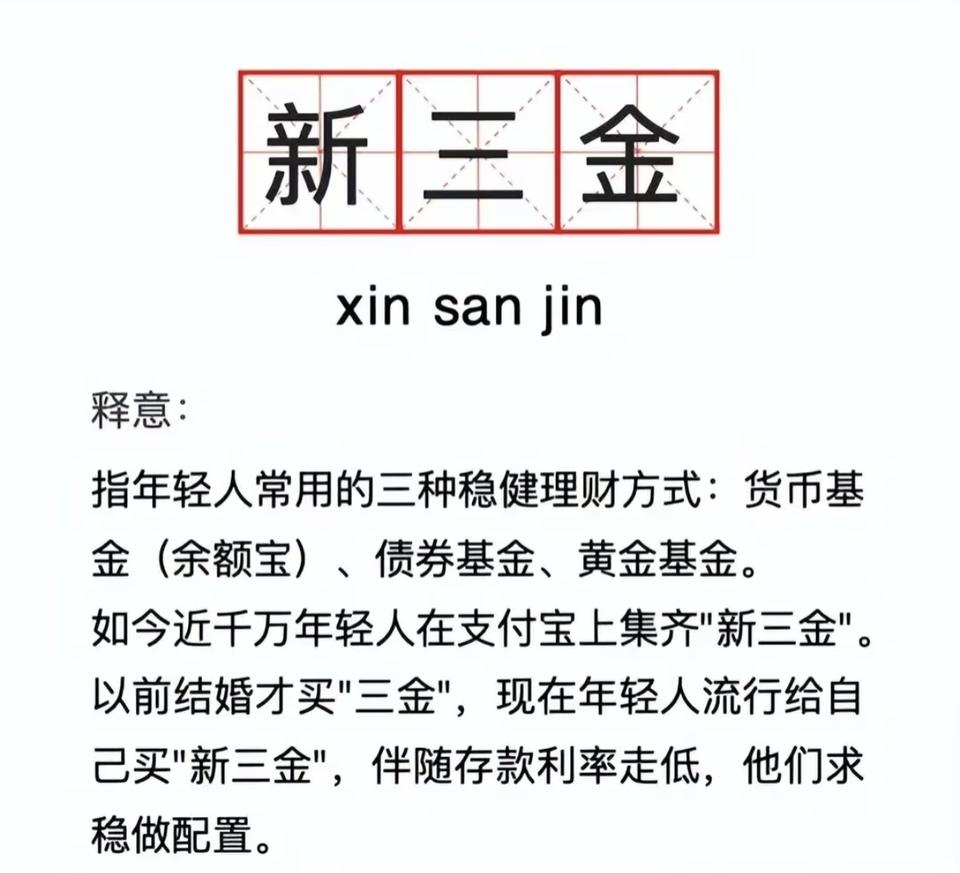
低利率时代要来了
大胡子说房· 2025-05-27 04:08
Core Viewpoint - The recent adjustment of the Loan Prime Rate (LPR) indicates a cautious approach to monetary policy, with the 1-year LPR set at 3% and the 5-year LPR at 3.5%, marking the first rate cut of the year [1][2][18]. Group 1: LPR Adjustment - The 5-year LPR was reduced by 10 basis points from 5% to 3.6% [1]. - The adjustment was anticipated following the May 7 meeting where the central bank announced a 0.1 percentage point reduction in policy rates [2][3]. - Some banks preemptively adjusted their LPR add-on rates before the official LPR cut, indicating a proactive stance in managing lending rates [4][5]. Group 2: Bank Responses - Major banks have adjusted their first loan rates, with some reducing their LPR add-on from LPR-60 basis points to LPR-50 basis points [5][6]. - The increase in add-on rates effectively neutralizes the impact of the LPR cut, maintaining the overall mortgage rates [8][9]. - Banks are raising add-on rates to mitigate risks associated with lower lending rates, particularly to avoid competition with public housing loan rates [10][11]. Group 3: Deposit Rate Changes - Alongside the LPR cut, deposit rates have also been reduced, with significant cuts across various terms [12][13]. - The reduction in deposit rates aims to maintain banks' interest margins amidst the LPR adjustments [14][15]. - The larger cut in deposit rates compared to LPR reflects banks' need to manage their funding costs and liquidity [22][23]. Group 4: Economic Context - The central bank's balance sheet has contracted, indicating a tightening of liquidity in the market, which complicates the monetary policy landscape [25]. - The need for increased government investment and liquidity measures is emphasized to address the challenges of insufficient loan demand [26]. - The potential shift towards zero or negative interest rates is highlighted, suggesting a need for alternative investment strategies to preserve capital [27].

金融破段子 | 存款利率进入“0字头”时代,“只求微赚”也有功课要做!
中泰证券资管· 2025-05-26 10:35
Core Viewpoint - The recent reduction in deposit interest rates by major state-owned banks indicates a shift towards a low-interest-rate environment, prompting investors to seek alternative investment opportunities such as bond funds [2][4]. Group 1: Deposit Rate Changes - Major state-owned banks have lowered their one-year fixed deposit rates to between 0.95% and 0.98%, reflecting a broader trend of declining interest rates amid global economic pressures [2]. - The current environment marks a significant shift, with deposit rates entering a "zero" era, contrasting sharply with the past when rates above 5% were common [2]. Group 2: Investment Trends - In response to low deposit rates, many investors are turning to bond funds as a relatively stable investment option, with younger investors showing a trend of frequent adjustments to their bond fund positions, averaging 10 times a year [2]. - A report from Xiaohongshu and Ant Wealth highlights that the phrase "Did you collect eggs?" has become common among young investors, indicating a focus on small, consistent gains from bond funds [2]. Group 3: Bond Fund Variations - Different types of bond funds exist, and investors need to understand the characteristics of each to select the most suitable options for their needs [4]. - The "Zhongtai Asset Management Fixed Income Family" offers various products tailored to different investment scenarios, helping investors navigate their choices [4]. Group 4: Specific Bond Fund Products - Zhongtai Shuangli Bond Fund focuses on low volatility and aims to capture more yield opportunities while maintaining a stable investment approach, suitable for those willing to accept some fluctuations for higher returns [6]. - Zhongtai Anyi Interest Rate Bond Fund specializes in government and policy financial bonds, providing a low-risk investment option with a notable performance record since its inception [10][14]. - Zhongtai Anhui Bond Fund invests primarily in AAA-rated credit bonds and liquid interest rate bonds, utilizing futures for risk hedging, making it suitable for long-term stable return seekers [19][21]. - Zhongtai Wenggu 30-Day Holding Short-Duration Bond Fund and Zhongtai Wenggu Weekly Purchase 12-Week Rolling Bond Fund both emphasize steady returns and disciplined investment strategies, appealing to conservative investors [23][26].

博时基金于善辉:AI赋能投研效率 多元配置把握低利率与复苏机遇
Xin Lang Ji Jin· 2025-05-26 01:36
文/博时基金投资决策委员会专职委员于善辉 最近两年,AI技术非常火热,AI赋能为公司的投研带来了显著的变化,主要体现在以下几个方面:信 息收集的效率更高,信息传播的速度更快,信息的覆盖面更广。 此外,AI通过智能化的加工手段,使我们获取信息变得更加容易。这些变化支持我们在投研上能够更 高效地做出决策。当然,AI并不是凭空产生的,它基于现有的信息进行高度浓缩、提炼和高效传播。 因此,有两点非常重要:一是基础信息的质量和噪音问题。我们需要面对并解决这些问题。二是信息本 身虽然重要,但并不能直接产生投资结果。关键在于独立判断和有效结合自己的能力。 在这个过程中,如何稳定获得超额收益,如何在复杂的信息中进行筛选,变得尤为重要。投资人或基金 经理需要有定力,适当做减法,不是所有信息都需要关注。同时,独立思考的时间也很重要,这有助于 形成更有价值和前瞻性的投资判断。信息的挖掘有助于提高胜率,但胜率的提升并不依赖于信息的狂轰 滥炸。 我们关注到,今年以来,FOF基金的业绩和发行规模有所回暖。FOF的规模膨胀达到4倍,这主要是因 为其体量相对较小,发展一波后倍数看起来较大。重要的是,FOF经过牛熊周期的检验,其风险收益特 征 ...
银行谋变低利率“逆风局”
21世纪经济报道· 2025-05-23 14:12
Core Viewpoint - The banking industry is transitioning into a low-interest-rate environment, which poses significant challenges for profitability and requires a strategic shift from a focus on asset scale to value-driven growth [3][4][6]. Summary by Sections Low-Interest Rate Era - The recent decline in LPR rates indicates a shift towards a low-interest-rate era in China, with net interest margins decreasing from 2.08% in 2021 to 1.43% in Q1 2025, a drop of 65 basis points [3][8]. - Historical experiences from Japan, the US, and Europe suggest that once a country enters a low-interest-rate environment, it may take over a decade to exit [7][8]. International Experience and Strategies - Japanese banks have successfully navigated low-interest rates through international expansion and diversification of non-interest income, providing a model for Chinese banks [4][11]. - Key strategies employed by Japanese banks include expanding overseas operations, adjusting loan structures, enhancing non-interest income, and pursuing mergers and acquisitions [12][13]. Domestic Banking Response - Chinese banks are adopting a combination of strategies to cope with the low-interest-rate environment, focusing on both increasing non-interest income and optimizing cost structures [18][20]. - Major banks like ICBC are emphasizing internationalization and comprehensive service offerings to support revenue growth, with international assets contributing 11.8% to the group's total [16][20]. Transformation and Future Outlook - The banking sector is moving from a reliance on interest income to a diversified income model, with a focus on wealth management and comprehensive financial services [21][22]. - Smaller banks are also adapting by deepening regional market engagement and offering tailored financial products to enhance customer loyalty [22]. Conclusion - The transition to a low-interest-rate environment necessitates a fundamental transformation in the banking industry, emphasizing strategic execution and the development of a multi-faceted income structure to ensure sustainable growth [15][22].

重磅来了
Zhong Guo Ji Jin Bao· 2025-05-23 12:58
Core Viewpoint - The asset management industry in China is transitioning towards high-quality development amidst low interest rates and stringent regulations, with a focus on shifting from "scale-driven" to "quality-led" growth [1] Group 1: Current Industry Landscape - As of the end of 2024, the total scale of China's asset management industry is expected to exceed 140 trillion yuan, becoming a significant force in wealth management and capital market resource allocation [1] - The industry faces both transformation pressures and opportunities, necessitating a profound shift in operational strategies [1] Group 2: Key Insights from Industry Leaders - The high-quality development of asset management institutions should focus on enhancing investment research capabilities and optimizing product offerings to meet diverse client needs [2][3] - The public fund industry has seen significant growth over the past 20 years, driven by high-level opening-up policies, which should continue to be pursued for further development [3][4] - Private equity firms must emphasize compliance and innovation to enhance their risk management capabilities and competitive edge [4] Group 3: Market Trends and Client Preferences - There is a notable shift in residents' asset allocation preferences, with a polarization in risk appetite: some investors are seeking safety while others are more willing to take risks due to policy influences [3][16] - The market is experiencing a structural challenge where quality assets are becoming increasingly scarce despite ample liquidity [3][16] Group 4: Strategies for High-Quality Development - Asset management institutions should prioritize value creation for clients, focusing on effective investment strategies and robust research capabilities [8][12] - Embracing digital transformation and integrating AI into investment processes are essential for enhancing operational efficiency and client service [12][35] - The development of diversified product lines that cater to varying risk appetites is crucial for meeting evolving client demands [18] Group 5: Regulatory and Policy Recommendations - There is a call for unified standards in performance benchmarks for financial products to foster a sustainable investment environment [30] - Continued support for international cooperation and knowledge exchange is vital for cultivating competitive asset management institutions [32][19]
深度丨银行谋变低利率“逆风局”
2 1 Shi Ji Jing Ji Bao Dao· 2025-05-23 12:29
Core Viewpoint - The banking industry is transitioning into a low-interest-rate environment, which poses significant challenges for profitability and requires a strategic shift in business models [1][3][4]. Group 1: Current Economic Environment - The recent decline in the Loan Prime Rate (LPR) and the continuous drop in the 10-year government bond yield indicate a shift towards a low-interest-rate era in China [1][4]. - Historical experiences from Japan, the US, and Europe suggest that once a low-interest-rate environment is established, it may take over a decade to exit [3][4]. Group 2: Impact on Banking Sector - The net interest margin for commercial banks in China has decreased from 2.08% in 2021 to an expected 1.43% by Q1 2025, marking a cumulative decline of 65 basis points [1][4]. - The low-interest-rate environment is expected to lead to a decline in interest income for listed banks, with a projected 2.2% decrease in 2024 [5]. Group 3: Strategic Responses - Some banks are adopting strategies similar to those of Japanese banks, such as international expansion and diversification into non-interest income [2][8]. - Major banks like ICBC are implementing a "second growth curve" strategy to adapt to the new environment, focusing on comprehensive financial services [13][16]. Group 4: Lessons from International Experience - Japanese banks have successfully navigated low-interest rates by expanding overseas, adjusting loan structures, and increasing non-interest income [8][10]. - The shift towards a diversified income model is crucial for banks to mitigate the impact of declining interest margins [10][11]. Group 5: Future Outlook - The banking sector is expected to continue evolving, with a focus on enhancing operational efficiency, optimizing asset-liability structures, and leveraging technology to support growth [14][18]. - The emphasis on wealth management and private banking is increasing as banks seek to meet rising demand for asset preservation in a low-interest-rate context [13][14].
专访曾刚:低利率时代不仅是数值变化,更是经济运行逻辑的转变
2 1 Shi Ji Jing Ji Bao Dao· 2025-05-23 07:15
21世纪经济报道记者张欣 北京报道 "低利率时代不仅是数值变化,更是经济运行逻辑的转变。" 5月23日,上海金融与发展实验室首席专家、主任曾刚在接受《21世 纪经济报道》(以下简称《21世纪》)记者专访时指出,当前我国结构性低利率已在部分领域显现。尽管我国利率水平仍高于 欧美极端低位,但商业银行净息差持续收窄、非息业务转型压力加剧,行业正面临从 "存贷依赖" 到 "综合服务" 的深层变革。 曾刚进一步分析,从利率绝对水平、实际利率视角及趋势走向看,国内利率环境呈现一定的低利率特征,但在潜在经济增长潜 力以及科技创新等积极因素支撑下,远未进入欧美 "常态化超低利率" 阶段。在利率下行的同时,银行非息业务发展也遭遇了监 管趋严、竞争加剧等多重挑战,如何实现转型?海外银行在资产负债管理、财富管理升级等方面的经验,为我国银行业转型提 供了有益的参考。 (上海金融与发展实验室首席专家、主任曾刚,来源:受访者提供) 以下为采访问答实录: 二是实际利率视角。名义利率减去通胀率得到的实际利率更具参考意义。当实际利率长期为负或接近于零,意味着资金成本实 质降低,这是低利率时代的核心特征。 三是利率趋势。利率的走向比单一时点更重 ...

存款利率跌至1%时代!温彬揭秘低利率背后的经济逻辑
Sou Hu Cai Jing· 2025-05-22 09:44
Core Viewpoint - The recent collective decision by nine joint-stock banks to lower deposit rates marks China's official entry into a low-interest-rate era, with significant implications for the banking sector and the economy as a whole [1]. Group 1: Interest Rate Trends - The deposit interest rates have seen a dramatic decline from 4% in 2014 to as low as 0.05% for current deposits and below 1% for one-year fixed deposits [1]. - Since 2022, commercial banks have implemented seven rounds of interest rate cuts, totaling a reduction of over 300 basis points [1]. - The one-year Loan Prime Rate (LPR) has decreased by 35 basis points, while the five-year LPR has dropped by 60 basis points in 2024 alone, indicating a rapid decline in interest rates [1]. Group 2: Banking Sector Implications - The net interest margin for banks has fallen below the critical threshold of 1.8%, with a current figure of 1.43%, raising concerns within the industry [4]. - The significant drop in deposit rates (up to 25 basis points) has outpaced the LPR reduction (10 basis points), reflecting a strategic choice by banks to alleviate operational pressures while ensuring lower financing costs for enterprises [4]. - This adjustment is projected to relieve the banking system of over 200 billion yuan annually, which can be redirected to support manufacturing and small enterprises [4]. Group 3: Investment Strategies - With the decline in deposit rates, there is a suggestion for depositors to consider alternative investment options, such as government bonds, cash management products, and long-term fixed-rate insurance products [5]. - Financial experts recommend diversifying investments, with allocations suggested for large-denomination certificates of deposit, money market funds, and bond funds, while maintaining some liquidity [5]. - The transition to a low-interest-rate environment necessitates a shift in investment strategies, encouraging investors to accept moderate risks to adapt to the new financial landscape [5]. Group 4: Economic Context - The trend of declining interest rates is not unique to China, as similar patterns have been observed in Japan and Europe, where low or negative interest rates have persisted for years [1]. - The capital return rate in China has decreased from 15% in 2007 to 5.8% in 2023, which is a key factor driving the downward trend in interest rates [1]. - The shift towards lower interest rates is viewed as a necessary phase in economic transformation rather than a regression of the financial system [7].

低利率时代零售银行转型样本启示
Jing Ji Guan Cha Wang· 2025-05-22 07:53
Group 1: Interest Rate Cuts and Banking Environment - A new round of deposit rate cuts has begun, effective from May 20, with major banks including Industrial, Agricultural, China, Construction, and Postal Savings banks reducing rates by 5-15 basis points for demand and one-year fixed deposits, and by 25 basis points for three and five-year fixed deposits [2] - The average daily balance of demand deposits at China Merchants Bank (CMB) reached 51.80%, significantly higher than the industry average, which reduces sensitivity to interest rate fluctuations during the rate cut cycle [3] - The overall banking industry is entering a low-interest-rate era, prompting institutions to rethink strategies to overcome challenges [3] Group 2: CMB's Performance and Challenges - CMB's Q1 2025 report showed declines in operating income and net profit, alongside a drop in ROA and ROE, raising concerns about growth and the retail banking model [3][4] - The decline in CMB's performance is attributed to multiple factors, including macroeconomic conditions, intensified industry competition, and the bank's own proactive adjustments [4][5] - CMB's proactive adjustments include a focus on wealth management and financial technology, which may temporarily impact traditional revenue streams [6] Group 3: Retail Banking Strengths - Despite short-term performance pressures, CMB's retail banking foundation remains solid, with a customer base of 2.12 billion and total retail assets of 15.57 trillion yuan, reflecting a 4.30% increase [8] - CMB's extensive service network and innovative product offerings, such as the "Zhangshang Life" app, enhance its competitive edge in retail banking [9] - The retail business model of CMB shows resilience against economic fluctuations, maintaining a high revenue share despite reduced corporate loan demand [9] Group 4: Wealth Management Focus - Wealth management is a key strategic direction for CMB, with significant investments aimed at building a robust wealth management system [10] - CMB's wealth management client base grew to 5.47 million, with private banking clients increasing by 4.43%, indicating a strong foundation for future growth [11] - The bank's wealth management capabilities are being enhanced through talent acquisition and product innovation, positioning it well for future market opportunities [12]