
成长风格

Search documents
前三季度宽基ETF规模增长3200亿元 份额却大减
Mei Ri Jing Ji Xin Wen· 2025-10-09 14:46
Core Insights - The market has shifted from a "buy and hold" strategy with broad-based ETFs to a more targeted approach focusing on industry and thematic ETFs, reflecting a change in investor sentiment and strategy [2][4] Market Performance - As of September 30, the total scale of broad-based ETFs reached 2.51 trillion yuan, an increase of 320 billion yuan from the beginning of the year, while the number of shares decreased by 224.15 billion to 924.77 billion shares [2][5] - Major broad-based indices showed strong performance in the first three quarters, with the CSI 300 index rising by 17.94%, the SSE 50 index by 11.33%, and the ChiNext index soaring by 51.2% [1][2] ETF Dynamics - There is a notable divergence within broad-based ETFs, with some maintaining steady growth while others, despite high returns, faced significant redemptions [1][6] - The top-performing broad-based ETFs are primarily from the ChiNext and Sci-Tech Innovation Board, with the top three performers showing gains of over 60% [3][4] Growth Factors - The growth in broad-based ETF scale is primarily driven by net asset value increases, which have masked some of the profit-taking activities by investors [2][6] - The rise of industry, thematic, and bond ETFs has contributed to the decline in market share of broad-based ETFs, indicating a shift towards more specialized investment strategies [2][4] Investor Behavior - A significant portion of the top broad-based ETFs experienced net redemptions, particularly those with over 50% annual returns, as investors opted to realize profits [6][7] - Among the 29 broad-based ETFs with over 10 billion yuan in scale, 17 experienced net redemptions, highlighting a trend of profit-taking among investors [6][7]
月度策略:均衡配置成长与价值风格,防范风格切换-20251009
Zhongyuan Securities· 2025-10-09 12:03
Macro Environment - The current macroeconomic situation is characterized as "weak recovery, low inflation," with policies focused on stabilizing growth and preventing risks [5][11] - The State Council issued a plan to optimize the market allocation of factors, which is expected to enhance economic efficiency and provide a more flexible policy environment for related industries [5][11] - Policies supporting traditional industries such as automotive, steel, and construction have been introduced, alongside new initiatives for emerging sectors like new energy storage and artificial intelligence [5][11] Market and Industry Performance - In September, the bond market showed significant differentiation, with the 10-year government bond futures index slightly rising by 0.02%, while the 30-year futures contract fell by 2.28% [48][51] - The equity market favored growth sectors, with the advanced manufacturing index rising by 8.99% and technology (TMT) by 5.6%, while sectors like healthcare and finance saw declines [53][58] - The top-performing industries in September included electric equipment (21.17%), non-ferrous metals (12.79%), and electronics (10.96%), while sectors like social services and non-bank financials faced declines [58][63] Monthly Allocation Recommendations - The report suggests a balanced allocation between growth and value styles, with a focus on sectors such as TMT, pharmaceuticals, and securities [6][69] - The anticipated easing of monetary policy by the Federal Reserve is expected to enhance market risk appetite, although the crowded midstream manufacturing sector may increase short-term volatility risks [6][69]

中金公司-A股策略:A股“长期”、“稳进”的四大条件-12页
中金· 2025-10-09 02:00
Investment Rating - The report suggests a "long-term" and "steady" investment outlook for the A-share market, indicating favorable conditions for sustained growth [8]. Core Insights - The A-share market has experienced a significant upward trend since last September, with the Shanghai Composite Index rising over 40% [2]. - Historical analysis of previous long-term upward phases in the A-share market reveals that these phases typically last 2-3 years, characterized by substantial overall gains and increased trading volumes driven by new capital inflows [2][3]. - The current market rally is supported by macroeconomic improvements and favorable liquidity conditions, alongside key industry trends such as AI, innovative pharmaceuticals, high-end manufacturing, and new energy [6][9]. Summary by Sections Historical Upward Phases - The report reviews past upward phases in the A-share market, noting that each phase began from significant market lows and was marked by investor pessimism, followed by a gradual increase in market volatility and investor behavior divergence [2][3]. - Key historical phases include 2005-2007, 2013-2015, and 2019-2021, each exhibiting distinct characteristics and driving factors [2][5]. Driving Factors - The report identifies macroeconomic recovery and liquidity improvements as primary drivers of the current market rally, with a focus on the growth of key industries [3][6]. - The ongoing capital market reforms and government policies are expected to enhance market vitality and support long-term growth [4][8]. Earnings and Valuation - The report anticipates a turnaround in earnings growth for A-share companies, projecting a 3.5% overall growth rate for the year, with non-financial sectors expected to exceed 8% growth [3][10]. - Current valuations of the A-share market remain reasonable, with the CSI 300 index trading at a PE ratio of approximately 14 times, which is relatively low compared to other global markets [10][11]. Market Characteristics - The report highlights that the current market phase is characterized by a clear focus on growth styles, particularly in technology and innovative sectors, with a rotation among leading industries [6][11]. - The report emphasizes the importance of policy support and fundamental improvements in driving market performance, suggesting that the current rally may have more sustainable characteristics compared to previous phases [8][9].

涨得越猛被卖得越狠?这类ETF前三季度规模增超3200亿元 份额却狂掉2200亿份
Mei Ri Jing Ji Xin Wen· 2025-10-05 07:16
Core Insights - The market for broad-based ETFs has seen significant growth in total scale, increasing from 2.19 trillion yuan to 2.51 trillion yuan, a rise of 320 billion yuan, while the number of shares has decreased by 224.15 billion [1][6][18] - The shift in investor behavior indicates a move from passive investment in broad-based ETFs to a more active strategy focusing on sector and thematic ETFs, as well as bond ETFs [1][7][18] - There is a notable internal differentiation within broad-based ETFs, with some maintaining steady growth while others, despite high returns, are experiencing significant redemptions [1][12][18] Market Performance - Major broad-based indices have shown strong performance in the first three quarters, with the CSI 300 index rising by 17.94%, the SSE 50 index by 11.33%, and the ChiNext index soaring by 51.2% [3][6] - As of September 30, the total number of broad-based ETFs reached 360, an increase of 98 since the beginning of the year [6] Investor Behavior - The decrease in shares despite the increase in scale is attributed to two main factors: significant net asset value increases leading to profit-taking, and a growing preference for sector-specific and thematic ETFs [1][6][18] - The trend reflects a broader market shift from "buy and hold" strategies to "precise targeting" of investment opportunities [7][18] Performance of Specific ETFs - 24 broad-based ETFs have recorded over 60% gains year-to-date, with the top performer being the Guotai Chuangye 50 ETF, which increased by 74.44% [8][10] - The top-performing ETFs are primarily linked to the ChiNext and STAR Market indices, indicating a strong preference for growth-oriented investments [12][18] Redemption Trends - Among the 29 broad-based ETFs with over 100 billion yuan in scale, 17 have experienced net redemptions, highlighting a trend of investors cashing in on profits [13][18] - Notably, three ETFs with over 50% gains have seen substantial redemptions, reflecting a cautious approach among investors amid market volatility [14][18] Strategic Recommendations - Fund companies are encouraged to enhance investor education on the long-term value of broad-based ETFs, optimize product offerings to match varying risk appetites, and improve services to help investors understand the benefits of long-term investment strategies [18]


这类ETF前三季度规模增超3200亿,份额狂掉2200亿份
Mei Ri Jing Ji Xin Wen· 2025-10-05 06:52
Core Insights - The market has shifted from a "buy and hold" strategy with broad-based ETFs to a more targeted approach focusing on specific sectors and themes, indicating a change in investor behavior [1][2][6] Group 1: Market Performance - In the first three quarters of the year, major broad-based indices in A-shares experienced significant gains, with the CSI 300 index rising by 17.94%, the SSE 50 index by 11.33%, and the ChiNext index soaring by 51.2% [2][5] - The total scale of broad-based ETFs increased from 2.19 trillion yuan to 2.51 trillion yuan, a growth of over 320 billion yuan, while the number of shares decreased by 224.15 billion to 924.77 billion [5][12] Group 2: ETF Dynamics - There is a notable divergence within broad-based ETFs, with some maintaining stable growth while others, despite high returns, faced significant redemptions [2][6] - As of September 30, 29 broad-based ETFs exceeded 100 billion yuan in scale, with the top four ETFs showing robust performance, each gaining over 20% [12][13] Group 3: Investor Behavior - Many investors are adopting a "take profit" strategy, leading to net redemptions in several high-performing ETFs, particularly those with over 50% annual gains [13][18] - The trend indicates a shift towards more precise investment strategies, with a focus on high-growth sectors such as AI, innovative pharmaceuticals, and new energy vehicles [11][19] Group 4: Future Outlook - Fund companies are encouraged to enhance investor education, optimize product offerings, and improve services to align with varying risk preferences and to promote the long-term value of broad-based ETFs [19]
懵了懵了!涨得越猛被卖得越狠?这类ETF前三季度规模增超3200亿元,份额却狂掉2200亿份
Mei Ri Jing Ji Xin Wen· 2025-10-05 06:26
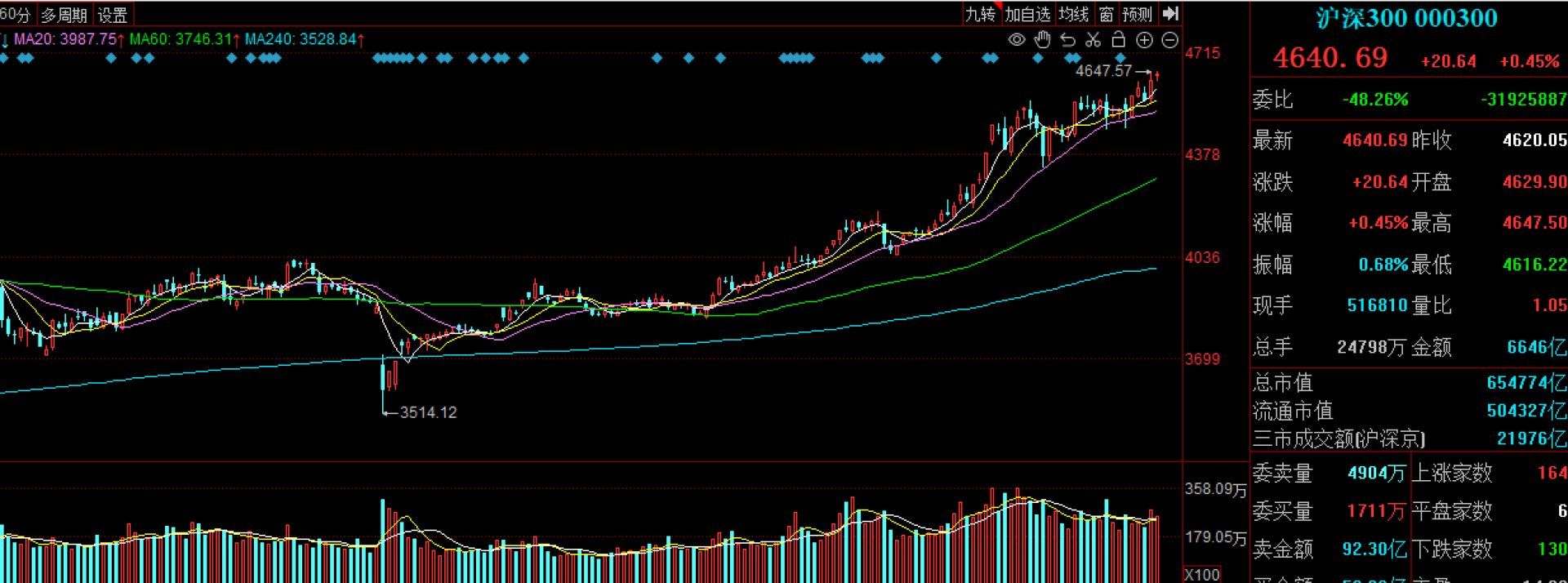
Core Viewpoint - The market has shifted from a "buy and hold broad-based ETFs" strategy to a more targeted approach focusing on specific sectors and themes, leading to a decline in the share of broad-based ETFs despite their overall growth in value [1][2][4]. Group 1: Market Performance - In the first three quarters of the year, major broad-based indices in A-shares experienced significant gains, with the CSI 300 index rising by 17.94%, the SSE 50 index by 11.33%, and the ChiNext index soaring by 51.2% [2][4]. - The total scale of broad-based ETFs increased from 2.19 trillion yuan to 2.51 trillion yuan, a growth of over 320 billion yuan, while the number of shares decreased by 224.15 billion to 924.77 billion [4][8]. - The number of broad-based ETFs reached 360 by September 30, an increase of 98 from the beginning of the year [4]. Group 2: Investor Behavior - Investors are increasingly opting for industry and thematic ETFs, as well as bond ETFs, which are perceived to be more aligned with current market trends and offer higher elasticity [1][4]. - There is a notable divergence within broad-based ETFs, with some maintaining stable growth while others, despite significant gains, faced substantial redemptions [2][4][12]. - Approximately 29 broad-based ETFs have a scale exceeding 100 billion yuan, with over half experiencing net redemptions, indicating a trend of investors cashing in on profits [8][10]. Group 3: Performance of Specific ETFs - As of September 30, 24 broad-based ETFs recorded gains exceeding 60% year-to-date, with the Guotai CSI 50 ETF leading at a 74.44% increase [4][6]. - The top-performing broad-based ETFs are primarily linked to the ChiNext and Sci-Tech Innovation Board indices, reflecting a strong performance in high-growth sectors [5][7]. - Among the top 20 performing broad-based ETFs, many are smaller in scale, with 9 products having a scale below 500 million yuan, highlighting a trend towards smaller, high-growth funds [6][9]. Group 4: Future Outlook - The success of growth-style ETFs is attributed to a combination of high-growth sectors, favorable index design, and market conditions, suggesting that this trend may continue if core growth themes remain stable [7][12]. - Fund companies are encouraged to enhance investor education, optimize product offerings, and improve services to align with varying risk preferences and reduce impulsive trading behaviors [13].
W127市场观察:低估值、红利风格交易活跃度继续回升
Changjiang Securities· 2025-09-29 23:30
Market Performance - The weekly trading volume slightly decreased, with the Shanghai Composite Index showing a minor increase, while the ChiNext Index rose nearly 2% for the week[2] - Growth styles continued to recover, particularly mid-cap growth, high volatility, and high beta stocks, which performed well[2] Trading Activity - The trading activity of dividend and low-valuation styles continued to rebound, while growth styles saw a slight pullback before rising again[2] - The crowding degree of micro-cap stocks continued to decline, indicating reduced congestion in this segment[2] Sector Analysis - Among primary sectors, oil and gas, food and beverage, and insurance remain at low crowding levels, suggesting potential opportunities[2] - The information technology and hardware sectors led the weekly performance within industry segments[2] Fund Performance - The fund-heavy index significantly outperformed the CSI 300 Index since the beginning of 2025, indicating strong institutional support for these stocks[2] - The top 50 fund-heavy stocks led the fund-heavy series indices, showcasing a robust performance relative to the broader market[2] Thematic Trends - The new tobacco and specialized innovation indices were among the top performers in thematic trading for the week[2]
风格轮动策略周报:当下价值、成长的赔率和胜率几何?-20250928
CMS· 2025-09-28 14:50
Group 1 - The core viewpoint of the report is the innovative approach to combining investment expectations based on odds and win rates to address the issue of value and growth style rotation [1][8] - The report indicates that the growth style portfolio had a return of -0.48% last week, while the value style portfolio had a return of -0.82% [1][8] Group 2 - The estimated odds for the growth style is 1.11, while the value style is estimated at 1.13, indicating a negative correlation between relative valuation levels and expected odds [2][14] - The current win rate for the growth style is 63.24%, compared to 36.76% for the value style, based on seven win rate indicators [3][16] Group 3 - The latest investment expectation for the growth style is calculated to be 0.33, while the value style's investment expectation is -0.22, leading to a recommendation for the growth style [4][18] - Since 2013, the annualized return of the style rotation model based on investment expectations is 28.06%, with a Sharpe ratio of 1.04 [4][19]
价值投资策略,真正的难点是什么?|投资小知识
银行螺丝钉· 2025-09-28 13:35
Core Viewpoint - The article discusses the cyclical nature of investment strategies in the A-share market, particularly the effectiveness of value investing versus growth investing over different market cycles [3][4][6]. Group 1: Market Trends - A-shares have experienced style rotation, where value investment strategies do not always yield consistent results, leading to investor impatience and abandonment of these strategies during underperformance periods [3][4]. - In the bull market from 2019 to 2021, growth stocks significantly outperformed value stocks, with the CSI 300 Growth Index rising over 150%, while the CSI 300 Value Index saw only a slight increase [3]. - Post-2022, value strategies began to recover in the A-share market, indicating a potential shift back to value investing [4][5]. Group 2: Investor Behavior - The article highlights that during periods when a particular investment strategy underperforms, it tests the patience of investors, which can lead to significant capital outflows from value-focused funds [3][6]. - The concept of "asset transfer from the impatient to the patient" is emphasized, suggesting that those who remain committed to value investing may benefit in the long run, as many investors lack the necessary patience [6].

单月增长9.7% ↑
Jin Rong Shi Bao· 2025-09-26 04:18
Group 1 - The number of listed companies in the domestic stock market has reached 5,435 as of the end of August, with a total market capitalization of 104.16 trillion yuan, reflecting a month-on-month increase of 9.7% [1][2] - There is a noticeable trend of companies going overseas, with over 70 domestic companies listed abroad this year, and more than 50 A-share companies applying for listing on the Hong Kong Stock Exchange [2][3] - The market capitalization of listed companies increased by 9.29 trillion yuan from the end of July, with significant contributions from the Shanghai and Shenzhen stock exchanges [4] Group 2 - The increase in market size is closely related to the recent investment sentiment in the A-share market, with a shift in asset allocation from conservative savings to equities [5][6] - The growth in the number of companies with market capitalizations exceeding 1 trillion yuan and 100 billion yuan indicates a robust market environment, with 7 companies valued over 1 trillion yuan [4] - The preference for high-dividend stocks and large-cap growth styles among insurance funds is expected to balance the market dynamics between large and small-cap stocks [6]