美联储降息

Search documents
周二A股继续走低吗?还是将向上走高收复4100点?我简单发表看法
Sou Hu Cai Jing· 2026-02-23 02:39
Group 1 - The core viewpoint is optimistic about the A-share market's performance on Tuesday, with expectations of recovering above 4100 points [5] - U.S. inflation data has cooled, increasing the probability of a Federal Reserve rate cut in June from 49.9% to 83%, which is favorable for global capital markets [3] - The U.S. has announced a new tariff of 10%, later adjusted to 15%, indicating a contradictory trade policy that may negatively impact U.S. markets, potentially leading to a decline in U.S. stocks [3] Group 2 - The overall sentiment is bullish for the A-share market on Tuesday, with expectations of a positive trend following the recent tariff adjustments [5] - The market is encouraged by the reduced tariff rate from a previous 20%, suggesting a more favorable environment for A-shares [3]

金荣中国:白银早盘大幅走高上涨,美国增加关税大棒利多银价
Sou Hu Cai Jing· 2026-02-23 02:27
基本面: 周一(02月23日)白银早盘大幅走高上涨,美国增加关税大棒利多银价,最新报87.30美元/盎司,白银的异动:值得特别注意的是上周五公布的经济数据及 关税裁决略微削弱了市场对美联储近期降息的预期。芝加哥商品交易所工具显示,市场对美联储6月会议至少降息25个基点的预期从前一日的58.6%回落至 53.8%。上周美元走强部分源于美伊紧张局势升级。特朗普上周五表示正考虑对伊朗实施有限军事打击,但未透露具体细节;伊朗外长则称上周核谈判后数 日内将准备好反提案草案。美国总统特朗普:将立即把对许多国家征收的10%全球关税提高到完全合法且经过法律检验的15%水平 特朗普在社交平台发文 称,基于对美国联邦最高法院20日就关税问题作出的裁决进行全面、详尽且完整的审查,谨此声明,作为美国总统,我将立即把对许多国家征收的10%全球 关税提高到完全合法且经过法律检验的15%水平。这些国家中许多几十年来一直在"剥削"美国,却未受到任何惩罚(直到我上台!)。在接下来的几个月 里,特朗普政府将确定并颁布新的合法关税,这将使美国再次伟大的非凡进程继续。 美联储到3月降息25个基点的概率为4.1%美联储到3月降息25个基点的概率为4. ...

任泽平:2026年美联储降息放水将超预期
Sou Hu Cai Jing· 2026-02-23 01:20
Group 1 - The core viewpoint of the articles highlights the rising expectations for interest rate cuts by the Federal Reserve due to significant economic slowdown and declining inflation in the U.S. [1][3] Group 2 - The first key data point indicates that the U.S. economy is slowing down, with the annualized real GDP growth rate for Q4 2025 at 1.4%, a sharp decline from 4.4% in Q3 2025, primarily due to decreased government spending and exports, along with a slowdown in consumer spending [1] - The second key data point reveals that the overall Consumer Price Index (CPI) in January increased by 2.4% year-on-year, down from 2.7% in December 2025, marking a new low for recent inflation [1] Group 3 - Following the data release, traders significantly increased the probability of a June interest rate cut by the Federal Reserve to 83%, up from 49.9% [3] - The White House National Economic Council Director Hassett stated that there is substantial room for the Federal Reserve to lower interest rates [3] - Former President Trump has frequently mentioned the need for lower interest rates, advocating for the U.S. to have the lowest rates globally, and suggesting that the Federal Reserve should focus on rate cuts [3] Group 4 - The U.S. debt reached $38.7 trillion as of February 2026, growing at an average annual rate of 7.2% over the past 15 years, significantly outpacing the 2% real GDP growth [3] - The net interest expenditure for the fiscal year 2025 is projected to be approximately $970 billion, accounting for about 3.2% of GDP [3] - Trump's strategy of "rate cuts + weak dollar" aims to reduce debt burdens and attract manufacturing back to the U.S. [3] Group 5 - In the context of "rate cuts + weak dollar," there is a surge in demand for commodities driven by AI, leading to significant price increases for physical assets such as precious metals, copper, rare metals, lithium carbonate, and chips, indicating a substantial depreciation of currency purchasing power [4]
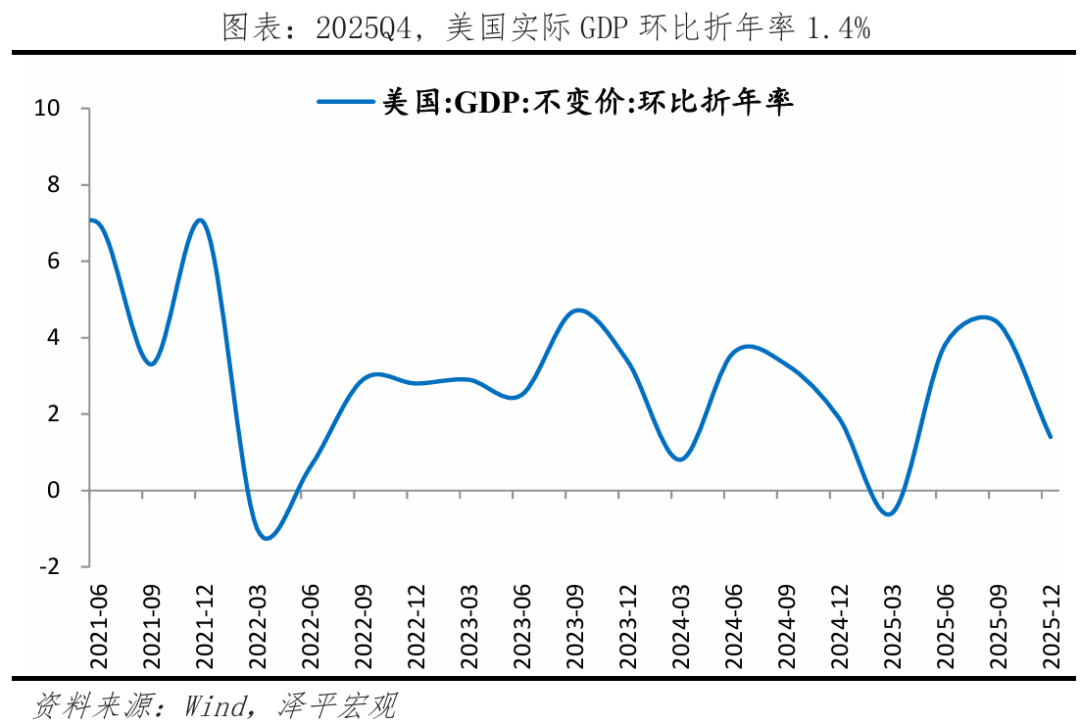
黄金、白银,直线拉涨!美国、伊朗,大消息!
Xin Lang Cai Jing· 2026-02-22 23:50
| < W | | | 伦敦金现 | | | | | | --- | --- | --- | --- | --- | --- | --- | --- | | | | | SPTAUUSDOZ.IDC | | | | | | 5145.519 "# | | | 5111.125 | | 总量 | | 0 | | +34.394 | +0.67% 升益 | | 5108.140 | | 现手 | | 0 | | 最高价 | 5150.940 持 | 仓 | 0 | | 会 醫 | | 0 | | 最低价 | 指 5097.720 | 仓 | | O | 内 盘 | | 0 | | 关于日本 | 目K 王日 | | 周K | | 月K | 曲家 | | | 叠加 | | | | | 均价:0.000 | | | | 5150.940 | | | | | 0.78% | 卖一 5145.926 | | | | | | | | | दी. 5145.519 | | | 5111.125 | | | | | 0.00% | 7:22 5145.468 7:22 5145.720 | 0 0 | | | | | | | | ...
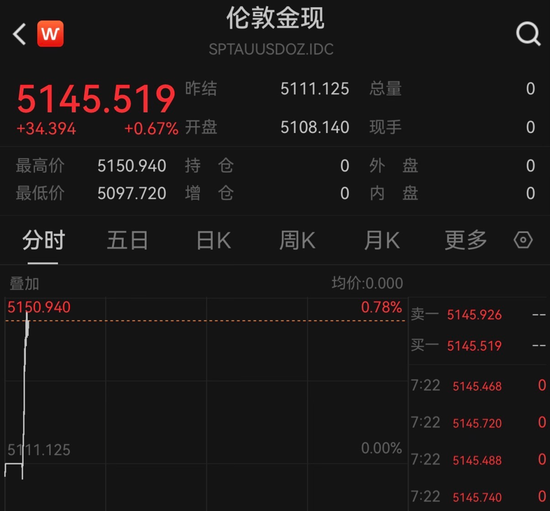
美国去年经济增速为2021年以来最低
Sou Hu Cai Jing· 2026-02-22 10:54
Economic Performance Summary - The U.S. economy is projected to grow at a rate of 2.2% in 2025, which is a decline from 2.8% in 2024 and represents the lowest growth rate since 2021 [1] - The initial annualized quarterly growth rate for Q4 2025 is estimated at 1.4%, significantly below the expected 2.8%, marking the slowest growth since the tariff impacts began in Q1 2025 [1] Economic Challenges - The U.S. economy faces multiple headwinds, including unpredictable tariff policies, a weak labor market, strict immigration policies, and record federal government shutdowns [1] - The economy experienced a contraction in Q1 2022 due to a surge in imports before tariffs were implemented, marking the first quarterly shrinkage since Q2 2022 and the worst performance in nearly three years [1] Consumer Spending and Investment - Consumer spending, which accounts for two-thirds of U.S. economic activity, increased by 3.5% and 2.4% in the last two quarters of the previous year [2] - The surge in technology stocks has boosted household wealth, leading to increased consumer spending, particularly in AI-driven computer and peripheral expenditures, which grew by 70% over the past year, exceeding $300 billion by the end of 2025 [2] Wealth Disparity and Economic Outlook - The economic landscape shows a widening wealth gap, with the top 10% of households controlling over two-thirds of national wealth, while the middle 40% has seen their wealth share decline from approximately 36% to below 30% [3] - Rising costs of living, including housing, healthcare, and childcare, are outpacing income growth for many Americans, complicating the economic outlook [3] Federal Reserve and Interest Rates - There is increasing pressure on the Federal Reserve to lower interest rates, as the government shutdown is projected to result in a GDP loss of at least two percentage points [3] - Despite calls for rate cuts, persistent inflation remains a significant barrier, with the core personal consumption expenditures price index rising to 3.0% in December, above the Fed's 2% target [3]
艾因霍恩:降息或超预期 重仓黄金
Sou Hu Cai Jing· 2026-02-22 07:37
Core Viewpoint - The article discusses the contrasting investment strategies in the context of the AI revolution, highlighting David Einhorn's cautious approach as a value investor amidst the hype surrounding AI technologies [2][4]. Group 1: Investment Philosophy - Greenlight Capital, led by David Einhorn, adheres to traditional value investing principles, focusing on fundamental research and investing in undervalued companies while shorting overvalued stocks [3]. - Einhorn expresses skepticism about the current market, likening it to the 1999 internet bubble, where capital inflows are driven by a fear of missing out rather than clear business return logic [2][4]. Group 2: AI Market Perspective - Einhorn acknowledges the significance of AI but remains on the sidelines, questioning the immediate profitability for shareholders despite massive investments in AI by companies [4][5]. - He believes that the current AI investment landscape resembles a forced arms race, where companies invest heavily to avoid falling behind competitors, rather than pursuing clear investment returns [4]. Group 3: Economic Indicators and Gold Investment - Einhorn predicts that interest rate cuts by the Federal Reserve will exceed market expectations, influenced by political pressures and economic conditions, which could support higher valuations [8]. - He maintains a bullish stance on gold, citing global central banks increasing their gold reserves and concerns over the long-term sustainability of the dollar system as key reasons for holding gold [8]. Group 4: Fund Management and Performance - Greenlight Capital has recently closed its fund to new investments, having achieved strong performance over the past five years, which has led to a stable asset size that allows for effective management [9].
大反转,关税被判违法后,特朗普硬刚全球加征10%,还要打5年官司,一夜之间全乱了,美国GDP增速腰斩,美联储降梦悬了
Sou Hu Cai Jing· 2026-02-22 03:58
Core Viewpoint - The U.S. Supreme Court ruled against Trump's global tariff policy, declaring it illegal, which led to Trump announcing a new 10% tariff on all imports to the U.S. under a different legal framework, but this new tariff can only last for 150 days without Congressional approval [1][3]. Group 1: Tariff Policy Changes - Trump's new tariff of 10% on all imports is set to take effect within three days, following the Supreme Court's ruling [1]. - The previous tariff policy, which generated over $175 billion, is now rendered ineffective due to the court's decision [3]. - The Supreme Court's ruling has left unresolved questions regarding the potential refund of over $100 billion in tariffs already paid by U.S. companies, which could lead to a lengthy legal battle [3]. Group 2: Economic Data and Market Reaction - Following the Supreme Court's ruling, U.S. stock indices saw a significant rise, indicating a temporary relief from concerns over Trump's tariff policies affecting corporate profits [4]. - However, subsequent economic data revealed a disappointing GDP growth rate of only 1.4% for Q4 2025, significantly below the expected 3.0% and marking the slowest growth since Q1 2025 [6][7]. - The government shutdown, which lasted 43 days, was cited as a major factor contributing to the GDP decline, with federal spending dropping sharply [7]. Group 3: Inflation and Federal Reserve Response - Despite weak economic growth, inflation remains a concern, with the PCE price index showing a year-over-year increase of 2.9% in December, exceeding expectations [10]. - The Federal Reserve faces challenges as inflation persists while economic growth slows, leading to a reversal in market expectations for interest rate cuts [10][12]. - A key Federal Reserve official, Stephen Milan, revised his stance on interest rate cuts, indicating a more cautious approach due to stronger-than-expected employment data and persistent inflation [12][13].
国联民生证券:今年美联储继续降息的概率依然不低
智通财经网· 2026-02-21 11:35
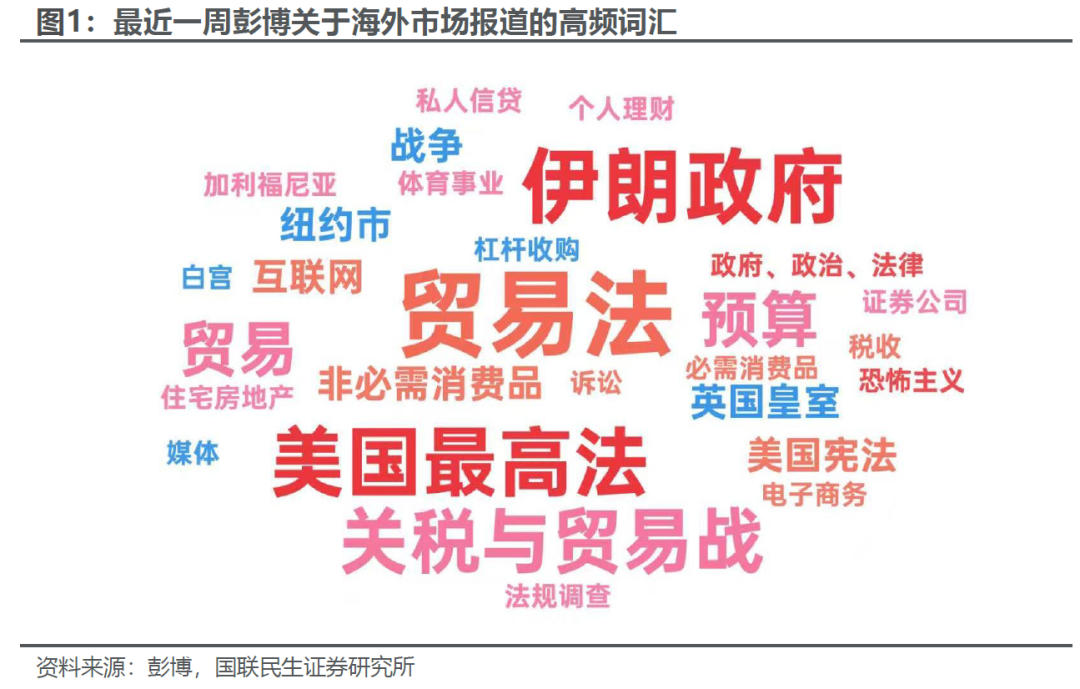
Group 1: Economic Outlook - The probability of the Federal Reserve continuing to cut interest rates this year remains high due to structural pressures on the economy and employment [1][16] - The U.S. GDP annualized quarter-on-quarter growth rate unexpectedly declined to 1.4% in the fourth quarter, indicating potential economic risks [1][16] - The K-shaped economic divergence in the U.S. is becoming more pronounced, with middle and low-income groups facing limited consumption capacity due to high inflation and stagnant wages [1][16] Group 2: Market Reactions - The overseas markets experienced significant movements during the Spring Festival, with oil prices leading among major assets due to the Iranian situation, while software stocks faced pressure from AI concerns [2] - The U.S. stock market was buoyed by earnings expectations and a recovery in risk appetite, despite concerns over potential fiscal pressures from the ruling on tariffs [2] Group 3: Geopolitical Factors - Geopolitical events, particularly the U.S.-Iran negotiations and developments in U.S.-China relations, are influencing global risk preferences and commodity prices [7][8] - The upcoming visit of former President Trump to China is seen as a critical moment for risk management and rule reconstruction between the two largest economies [8] Group 4: Tariff Developments - The Supreme Court's ruling that tariffs imposed by Trump were illegal represents a significant setback, leading to the potential return of approximately $175 billion in tariffs, which could exacerbate U.S. fiscal pressures [11][13] - Trump's administration is responding with temporary global tariffs under Section 122, which may reduce the impact of previous tariffs [11] Group 5: Investment Opportunities - Despite concerns over excessive investment in AI, the current adjustment in the AI sector is viewed as healthy, with structural opportunities still present, particularly in scarce hardware and quality model targets [5] - Gold is expected to regain its pricing value as volatility stabilizes, while oil prices may improve as supply-demand dynamics shift in the first quarter [7]

黄金涨完有色涨,2026年这波行情能持续多久?答案可能出乎你意料
Sou Hu Cai Jing· 2026-02-21 09:57
Core Viewpoint - The article emphasizes that the investment opportunities in the non-ferrous metals sector will continue into 2026, driven by inflation, resource scarcity, and expected interest rate cuts by the Federal Reserve. Group 1: Inflation and Resource Demand - The article highlights that inflation has surged due to unprecedented monetary expansion by central banks, leading to a significant increase in the prices of commodities, particularly non-ferrous metals like copper and silver [2][3]. - The demand for industrial metals is expected to remain robust due to the growth in AI infrastructure and renewable energy investments, with companies like Google and Amazon planning to invest heavily in AI-related capital expenditures [3][4]. Group 2: Federal Reserve's Interest Rate Policy - The article discusses the anticipated interest rate cuts by the Federal Reserve, with market expectations suggesting a reduction of 50 basis points in 2026, which would likely weaken the dollar and boost commodity prices [4][5]. - The dynamics between former President Trump and Fed Chair Powell are noted, indicating a potential shift in monetary policy that could favor lower interest rates [4]. Group 3: Market Trends and Investment Strategies - The article suggests that while the copper market may experience short-term fluctuations due to increased inventory levels, the long-term demand remains strong, and investors should look for entry points during price corrections [6][8]. - The small metals market, particularly tungsten and antimony, is highlighted as having significant growth potential due to supply constraints and strategic importance, with prices already showing substantial increases [7][8]. Group 4: Investment Approaches - The article recommends using ETFs as a way to mitigate risks associated with individual stock selection in the non-ferrous metals sector, allowing investors to benefit from overall market trends without the need for extensive research [9][10]. - It emphasizes the importance of maintaining a disciplined investment strategy, focusing on long-term trends rather than short-term market fluctuations [11][12].
反转!关税被判违法后,特朗普硬刚:全球加征10%,还要打5年官司
Sou Hu Cai Jing· 2026-02-21 00:42
Group 1 - The U.S. Supreme Court ruled that the tariffs imposed by the Trump administration were illegal, stating that there was no clear legal authority for such actions, which could lead to significant financial implications for the U.S. government and businesses [4][5]. - The ruling affects tariffs exceeding $175 billion, and there is uncertainty regarding the potential refund of tariffs already paid, which could amount to $170 billion [5]. - Following the ruling, U.S. stock indices saw a rise, indicating market relief over the potential easing of trade pressures on U.S. companies [5]. Group 2 - In response to the Supreme Court's decision, Trump announced an additional 10% tariff on all goods imported into the U.S., which is set to last for 150 days unless extended by Congress [6][7]. - This new tariff strategy reflects a shift in legal justification but indicates a significant limitation on Trump's ability to impose tariffs without congressional approval [6][7]. - The announcement has raised concerns about escalating trade tensions, particularly with major trading partners like the EU and Australia [7]. Group 3 - Recent economic data revealed a sharp decline in U.S. GDP growth, with the annualized rate for Q4 2025 at only 1.4%, significantly below expectations and previous quarters [8][9]. - The decline in GDP is attributed to a government shutdown that affected federal spending and consumer behavior, leading to an estimated economic activity reduction of $100 billion [9]. - Inflation remains a concern, with the PCE price index showing higher-than-expected growth, indicating persistent inflationary pressures on consumers [9][10]. Group 4 - The Federal Reserve's stance on interest rate cuts has shifted, with a key official indicating a reduction in the expected pace of rate cuts due to stronger-than-anticipated employment data and persistent inflation [10][11]. - This change in outlook has led to a reassessment of market expectations regarding the timing of potential rate cuts, with traders now anticipating a delay until mid-2025 [11][12]. - The independence of the Federal Reserve is under scrutiny, particularly in light of political pressures and criticisms regarding its economic research and policy decisions [12].