下沉市场

Search documents
下沉市场的红利快结束了
Hu Xiu· 2025-08-19 04:48
Core Insights - The article discusses the increasing number of bridges across the Yangtze River and the experience of driving with intelligent driving technology, highlighting the current state of the A-share market and its recovery to a total market value of over 100 trillion yuan, similar to its peak in 2015 [4][6]. Group 1: Market Trends - The A-share market has returned to a total market value of over 100 trillion yuan, indicating a recovery and correction of overall value over the past decade [4]. - Despite the market recovery, many retail investors have only recently returned to break even, suggesting that the majority have not profited significantly during this period [4][5]. Group 2: Consumer Behavior in Small Towns - There is an increasing presence of well-known chain brands in small towns, including Starbucks, McDonald's, and Hilton, which are competing in various sectors such as fast food, coffee, and hotels [7]. - Local businesses in small towns face growing pressure, particularly for new entrepreneurs who require strong products to succeed, as the market becomes more competitive [8]. - Trust within family and local communities remains strong, influencing business dynamics and the emergence of local power structures [8]. - Real estate investment in small towns is becoming less favorable due to low population and asset liquidity, leading to a trend towards renting rather than buying [8]. - The growth potential in lower-tier markets is diminishing as most opportunities have been tapped, and consumer income growth is needed for further market expansion [9].
只开夫妻店!广东城中村跑出黑马,已有1800+店
Sou Hu Cai Jing· 2025-08-18 10:29
Core Insights - A new "thousand-store brand" has emerged in the tea beverage market, focusing on rural and town markets in Guangdong and Guangxi, with over 1800 stores opened in the past two years, and plans to expand into Shanghai and Shenzhen [2][4][22] Market Positioning - The brand has successfully penetrated the saturated tea beverage market by targeting less competitive areas such as urban villages and towns, contrasting with competitors who focus on urban commercial districts [10][12] - The brand's first store opened in August 2021 in Zhongshan, Guangdong, and has since replicated its model across the region, with over 200 stores in urban villages alone [12] Business Model - The brand operates primarily through "couple-run stores," avoiding professional franchisees, which allows for lower labor costs and higher commitment from store owners [6][16] - The average price for a cup of their signature brown sugar pearl milk tea is 7 yuan, with a product range that includes over 40 SKUs, all priced below 10 yuan [15][13] Product Differentiation - The brand emphasizes a unique product offering with a focus on soft and flavorful pearls, which are made using a special process to enhance taste [20] - Over 50% of sales come from the brown sugar pearl milk tea, indicating a strong focus on a single product line while maintaining a diverse menu [20] Expansion Strategy - As the market in Guangdong and Guangxi becomes saturated, the brand is looking to expand into new regions like Shenzhen and Shanghai to sustain growth [22] - The founder acknowledges the need for a more structured approach to expansion and has relocated the headquarters to Guangzhou to facilitate this transition [24] Industry Insights - The brand's success highlights that there are alternative paths to growth in a competitive market, suggesting that traditional methods can still yield significant results [26] - The current market dynamics indicate a shift in business models, where companies that can predict future market trends and adapt their strategies accordingly will thrive [26]

只开夫妻店,广东城中村跑出黑马,已有1800+店
3 6 Ke· 2025-08-16 03:40
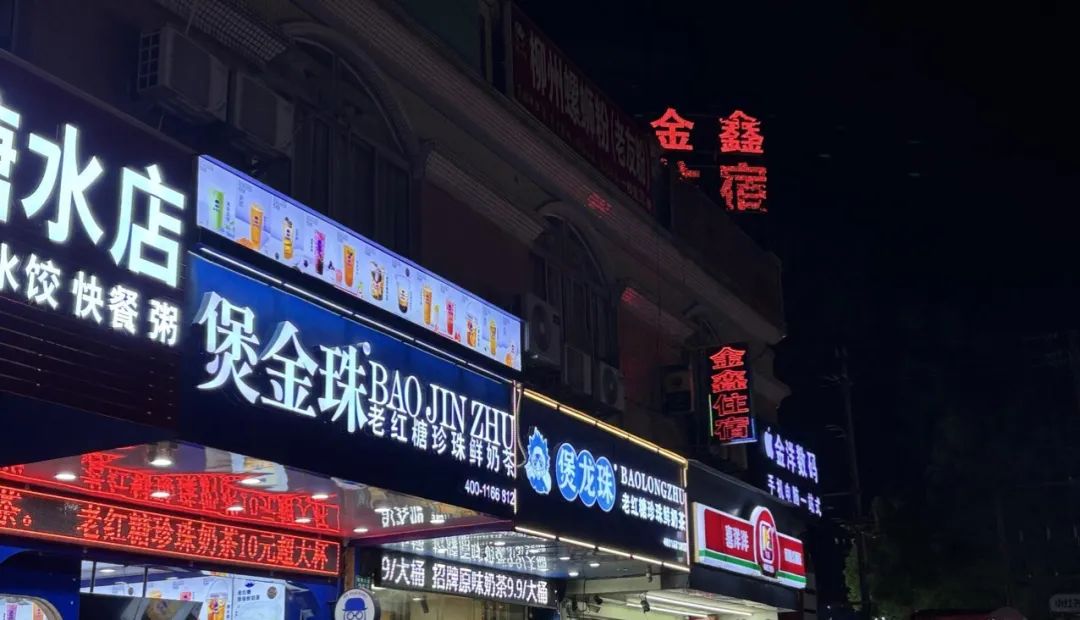
Core Insights - A new "thousand-store brand" has emerged in the tea beverage market, focusing on rural and town markets in Guangdong and Guangxi, with over 1800 stores opened in just four years, aiming to surpass 2000 stores this year [1][6][17] - The brand, known as "Baojinzhu," has successfully identified market gaps despite the saturation of the tea beverage market, employing a unique strategy of targeting less competitive areas [1][20] Market Strategy - The brand focuses on opening "couple-run stores," avoiding professional franchisees, which allows for lower operational costs and higher commitment from owners [3][12] - By leveraging word-of-mouth marketing through family and friends, the brand has expanded rapidly without relying on social media or traditional marketing channels [3][20] Product Offering - Baojinzhu offers a diverse menu with over 40 SKUs, primarily featuring old brown sugar pearl milk tea priced at 7 yuan per cup, ensuring affordability and variety for a wide customer base [11][9] - The brand emphasizes a "soft and chewy" texture for its pearls, which are made using a unique production process that enhances flavor absorption [16] Financial Performance - Individual stores reportedly achieve daily revenues exceeding 2000 yuan, with some stores generating over 10,000 yuan in peak sales [3][8] - The low rent and labor costs in rural areas contribute to an annual profit of approximately 200,000 yuan per store [3][12] Expansion Plans - With the saturation of the Guangdong and Guangxi markets, Baojinzhu is now expanding into cities like Shenzhen and Shanghai to sustain growth [17][19] - The founder acknowledges the need for a corporate transformation to support this expansion, focusing on improving brand management and operational efficiency [19][20]
哈根达斯与星巴克踏入同一条河流
Guan Cha Zhe Wang· 2025-08-15 02:16
Group 1: Company Overview - Häagen-Dazs' parent company, General Mills, is considering selling its ice cream stores in China, with potential transaction amounts between $500 million to $800 million [1] - Starbucks China is also evaluating over 20 interested institutions for a potential sale, while retaining a 30% stake in the business [1] - Both companies are facing significant challenges in maintaining their brand positioning and growth in the Chinese market [2][20] Group 2: Market Positioning and Strategy - Häagen-Dazs entered the Chinese market in 1996 with a high-end positioning, targeting affluent urban consumers [2][3] - The brand's premium pricing strategy, with ice cream priced at 25 yuan during a time when average monthly wages were around 500 yuan, aligned with its luxury image [3] - Starbucks adopted a similar strategy, initially entering through joint ventures and later transitioning to direct control of its stores in China [8][9] Group 3: Financial Performance and Challenges - Häagen-Dazs experienced rapid growth in China from 2006 to 2015, with annual sales growth rates around 23% [5] - However, by 2023, Häagen-Dazs began closing stores, with over 60 closures reported in 2024, reducing its total to approximately 250 stores [16][20] - Starbucks has also faced declining same-store sales for five consecutive quarters, with a market share drop from 42% in 2017 to an estimated 14% by 2024 [11][28] Group 4: Competitive Landscape - The rise of new tea brands and coffee competitors like Luckin Coffee has significantly impacted both Häagen-Dazs and Starbucks, leading to price wars and market share erosion [9][11] - Häagen-Dazs has started to pivot towards retail and e-commerce channels, while Starbucks is focusing on expanding into lower-tier cities [10][12][13] - The high fixed costs associated with their premium positioning have exposed structural weaknesses for both brands, leading to a search for external capital to alleviate current crises [20][21] Group 5: Future Outlook - The Chinese ice cream market is projected to reach 183.5 billion yuan in 2024, with new players entering the high-end segment [23] - Starbucks is exploring partnerships with major investment firms to enhance its market presence and supply chain in China [28] - Both Häagen-Dazs and Starbucks are navigating a challenging landscape, seeking to adapt their strategies to maintain relevance and profitability in a rapidly changing market [20][28]



财报2023|妙可蓝多如何走出奶酪消费困境-天天新动态
Hua Er Jie Jian Wen· 2025-08-13 23:12
Core Viewpoint - Despite expectations of consumer recovery, Miao Ke Lan Duo, a leading cheese brand, is facing growth bottlenecks, as evidenced by its declining revenue and profit figures in the latest quarterly report [1][3]. Financial Performance - In Q1, Miao Ke Lan Duo reported revenue of 1.023 billion yuan, a year-on-year decrease of 20.47%, and a net profit of 24.2 million yuan, down 67.08% year-on-year [1]. - For the full year of 2022, the company experienced a revenue growth of only 7.84%, while net profit and non-recurring net profit fell by 12.32% and 45.14%, respectively [3]. - The company's stock price has halved in less than a year, reaching a historical low of 23.47 yuan per share [3]. Market Challenges - Miao Ke Lan Duo's cheese sales are increasingly difficult, with quarterly revenue growth rates declining from 35.2% to -25% over the past year [4]. - The company attributes its performance issues to logistics disruptions, rising raw material costs, intensified competition, and weak consumer demand [4]. - The cost of goods sold for the cheese business increased by 33.54% to 2.293 billion yuan, leading to a significant drop in gross margin by 7.78 percentage points to 40.48% [4]. Market Dynamics - The retail scale of China's cheese market grew to 14.294 billion yuan in 2022, but the growth rate slowed to 8.9%, indicating a shrinking incremental market for Miao Ke Lan Duo, which holds a 32.7% market share [4]. - A declining birth rate poses a long-term concern for cheese products aimed at children, as evidenced by a drop in birth rates from 18.83 million in 2016 to 10.62 million in 2021 [5]. Competitive Landscape - The cheese stick market has seen a price war since 2020, with discounts ranging from 50% to 80%, making it increasingly challenging for Miao Ke Lan Duo to sell its products [6]. - Despite maintaining a revenue growth of 16% in its cheese business in 2022, the core instant nutrition series saw a slight revenue decline of 0.6% [6]. - Miao Ke Lan Duo's sales expense ratio increased from 16.74% in 2018 to 25.24% in 2022, while revenue growth slowed from 63.2% in 2020 to 7.84% in 2022 [6]. Strategic Initiatives - To address market challenges, Miao Ke Lan Duo launched a line of ambient cheese sticks in 2021, aiming to expand its reach in lower-tier markets [7]. - The company is attempting to replicate the success of the ambient yogurt brand Mosliyan, which achieved significant sales growth before facing competition [7]. - Miao Ke Lan Duo's distribution network is limited compared to competitors like Yili, which has a much larger number of retail outlets and distributors [8]. Distribution and Channel Management - As of 2022, 71.7% of Miao Ke Lan Duo's revenue came from distribution channels, with a net decrease of 145 distributors during the year [8]. - In Q1 of the current year, the number of distributors further declined by 53, attributed to a strategic decision to optimize distributor quality [9]. - The management believes that specialized cheese distributors may perform better than those who also sell liquid milk, indicating a potential shift in channel strategy [9].


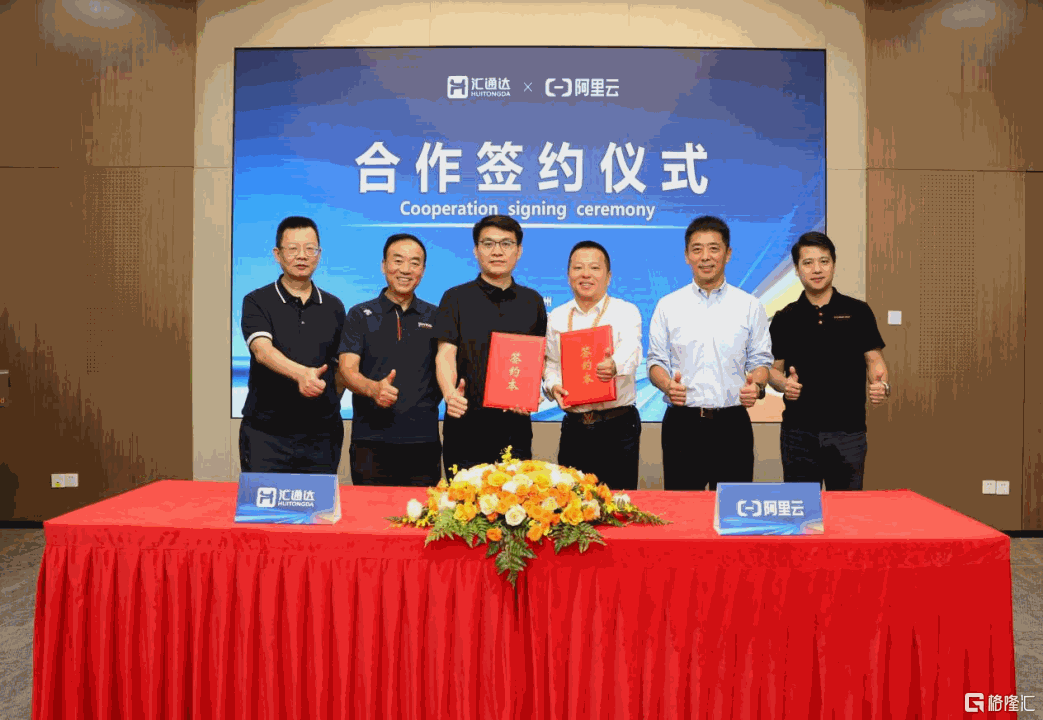
汇通达携手阿里云升级AI生态 下沉市场价值重估可期
Cai Fu Zai Xian· 2025-08-13 03:21
Core Insights - The year 2025 is anticipated to be a breakthrough year for AI applications, with AI Agents emerging as a key focus area, creating significant investment opportunities [1] - HuiTongDa Network (9878.HK) is positioned as a unique investment target in the AI Agent ecosystem for the lower-tier market, having established a comprehensive AI strategy in collaboration with Alibaba Cloud [1] Group 1: Strategic Collaboration - HuiTongDa Network has entered into a full-stack AI strategic partnership with Alibaba Cloud to develop a new "AI + Industry" ecosystem for the lower-tier market [1] - The collaboration focuses on three main areas: integrating Alibaba Cloud's Tongyi Qianwen large model for retail stores, providing cloud computing and high-performance computing support, and leveraging store transaction and consumption data for deeper cooperation [1] Group 2: AI Strategy and Product Development - HuiTongDa Network has launched an AI + strategy, introducing a self-developed product matrix and upgrading from "SaaS+" to "AI+" [1] - The original AI + strategy includes three major projects: "AI + Industry Platform," "AI + SaaS," and "AI + Smart Terminals," aimed at enhancing product circulation efficiency through the QianCheng F2B2C omnichannel system [1] Group 3: Market Potential and Demand - The lower-tier market is valued at over 20 trillion, with many small and medium-sized retailers needing digital upgrades [2] - HuiTongDa Network's low-threshold, high-efficiency AI application system is expected to accelerate market penetration and drive value reassessment [2]
最低3元/杯、和6家蜜雪PK,这家“神店”营收连涨13年
3 6 Ke· 2025-08-12 02:11
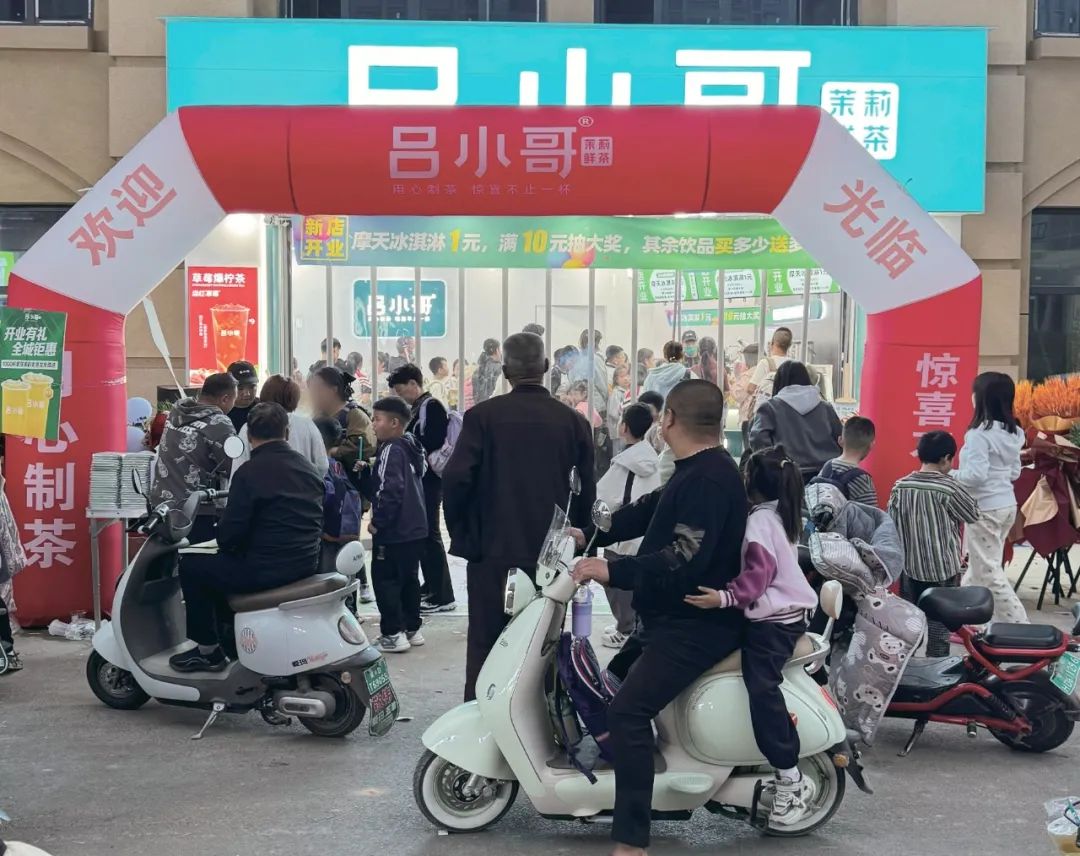
Core Insights - The article highlights the success of a local tea shop named "Lv Xiaoge" in a competitive market dominated by major brands like Mixue, showcasing its unique business model and strategies that have led to consistent revenue growth over 13 years [1][3][24] Group 1: Business Model and Performance - Lv Xiaoge operates over 410 stores, with 180 located in Anyang, and 60% of its stores in county towns, achieving an average daily revenue of over 3,000 yuan [3][24] - The shop's average daily revenue exceeds 10,000 yuan, with a peak of 2,000 cups sold in a single day [1][3] - The brand has maintained a 0% closure rate in the Anyang area, indicating strong operational stability [3] Group 2: Product Strategy - The shop offers high-value products at low prices, such as 2 yuan fresh milk ice cream and 3 yuan jasmine tea, appealing to local consumers [1][5] - The product lineup is limited, with only 6-7 new items introduced annually, focusing on quality over quantity [5][11] - The use of high-quality ingredients and unique preparation methods differentiates its products from competitors, such as a distinct lemon tea that emphasizes freshness and flavor [11][13] Group 3: Marketing and Brand Positioning - The brand relies on word-of-mouth marketing rather than traditional advertising, with a focus on building a strong local reputation [17][21] - The founder, Lv Zhiwei, is actively involved in product development and quality control, ensuring that every product meets high standards [18][20] - The brand's strategy emphasizes regional focus, avoiding rapid national expansion and prioritizing sustainable growth in local markets [23][24]
汇通达网络(9878.HK):全面携手阿里云扩大AI 应用优势,价值重估可期
Ge Long Hui· 2025-08-11 05:13
Core Viewpoint - The AI sector is experiencing significant breakthroughs, with 2023 being recognized as a pivotal year for AI applications, particularly in the AI Agent domain, creating new investment opportunities [1] Company Overview - Huitongda has entered a comprehensive collaboration with Alibaba Cloud to develop a new "AI + Industry" ecosystem targeting the lower-tier market [3] - The partnership will enable Huitongda to integrate Alibaba Cloud's Tongyi Qianwen model, creating specialized AI agents for retail stores, enhancing supply chain efficiency [3][4] - Huitongda's AI application strategy includes the launch of self-developed products and a shift from SaaS to AI+, indicating a robust foundation for rapid implementation [3][4] Market Potential - Huitongda's AI application scenarios show significant commercial potential, likely supporting continuous value release [4] - The lower-tier retail market still has a vast number of small businesses that require digital transformation, which Huitongda aims to facilitate [8] AI Application System - Huitongda's AI+ strategy encompasses three main projects: "AI + Industry Platform," "AI + SaaS," and "AI + Smart Terminals," designed to provide a low-threshold, high-efficiency AI application system for small and medium enterprises [6] - The "Qiancheng F2B2C All-Channel Business System" connects production, retail, and consumers, enhancing product circulation efficiency [6] - The "Qiancheng AI Super Store Manager" simplifies retail operations by employing AI for tasks such as product recommendations and promotional activities [6][7] Value Creation - Huitongda's AI application system integrates three layers of value, enhancing its ecosystem and creating a value loop that optimizes cost structures and boosts business efficiency [9] - The solutions provided by Huitongda address the digital capability gap in rural retail, facilitating the last-mile delivery of intelligent solutions [10] - The improvement in industry efficiency is expected to unlock consumer potential in the lower-tier market and contribute to rural revitalization [10] Market Trends - The current market context emphasizes the need to activate consumption potential in lower-tier markets, with a trend of consumers returning to offline shopping [12] - Huitongda is positioned as a key enabler in linking the lower-tier market with various industry chains, enhancing its role in the evolving retail landscape [13] Conclusion - Huitongda is rapidly advancing in the AI application field, with the potential to become an essential infrastructure for the digital transformation of the lower-tier retail market [14] - The company's evolving role is likely to lead to a revaluation and increase in its market valuation, warranting attention [15]
快手本地生活上线独立“外卖”入口,松延动力等多家具身智能公司融资|一周未来商业
Mei Ri Jing Ji Xin Wen· 2025-08-10 22:36
E-commerce Retail - JD.com announced a partnership with IKEA, launching the IKEA flagship store on JD.com with over 6,500 products across 168 categories, enhancing JD's home supply chain ecosystem and online presence for IKEA [1] - Taobao is set to launch a new membership system that integrates resources from Ele.me, Fliggy, and Hema, providing comprehensive services across shopping, food delivery, travel, and more, marking a strategic shift for Alibaba towards a broader consumer platform [2] - JD.com will open five discount supermarkets in Suqian, Jiangsu, and Zhuozhou, Hebei, focusing on direct sourcing and its private label, aiming to penetrate lower-tier markets [3] - Hema plans to open nearly 100 new stores within the fiscal year, expanding its presence to over 500 locations, while optimizing its store layout and operations to meet consumer demand for high-quality fresh products [4] Lifestyle Services - The Guizhou Provincial Market Supervision Administration has conducted talks with travel platforms including Ctrip, Tongcheng, Douyin, Meituan, and Fliggy, emphasizing the need for compliance with laws and regulations to maintain fair market practices [5] - Kuaishou has launched an independent "takeout" entry on its group purchase page, allowing users to order food through third-party mini-programs, which may enhance its position in the local lifestyle service market [6][7] Logistics and Supply Chain - SF Express and Tongcheng Travel have signed a strategic cooperation agreement to explore new logistics and tourism integration models, aiming to provide a comprehensive logistics solution for travel experiences [8] Innovation and Investment - Humanoid robot company Songyan Power has completed a multi-billion A++ round of financing, with plans to increase R&D investment and accelerate commercialization, having received orders for over 2,000 products this year [9] - JD.com led a new A round of financing for embodied intelligence company Pasini, indicating its strategic focus on the embodied intelligence sector [10] - The startup VITADynamic has completed an angel round of financing, which will support its product development and market promotion efforts in the consumer-grade embodied intelligence space [11]


奶粉下沉市场争夺战升级
Nan Fang Du Shi Bao· 2025-08-07 23:10
Core Insights - The article discusses the evolving landscape of the new consumption sector, highlighting trends and shifts in consumer behavior and preferences [2] Group 1: Industry Trends - The new consumption sector is experiencing significant growth, driven by changing consumer habits and the rise of e-commerce platforms [2] - There is an increasing demand for personalized and sustainable products, reflecting a shift towards more conscious consumerism [2] - The integration of technology in retail, such as AI and big data analytics, is enhancing customer experiences and operational efficiencies [2] Group 2: Company Implications - Companies in the new consumption space are adapting their strategies to align with consumer preferences for sustainability and personalization [2] - The competition among brands is intensifying, with a focus on innovation and unique value propositions to capture market share [2] - Investment in digital transformation is becoming crucial for companies to remain competitive in the rapidly changing market [2]