
产业集群

Search documents
寻找新动能,上海民营企业争做“先吃螃蟹的人”
Sou Hu Cai Jing· 2025-09-19 01:31
Group 1: Shanghai's Private Economy - The private economy in Shanghai plays a crucial role, contributing nearly 30% of the city's industrial output and fixed asset investment, and accounting for three-quarters of new employment in 2024 [1] - 80% of Shanghai's "specialized, refined, distinctive, and innovative" enterprises and "little giant" companies are private enterprises [1] Group 2: Embracing Change - Some Shanghai private enterprises are positioning themselves as "first movers" in their respective fields, such as Boxin Universe, which has successfully launched immersive experience projects [2] - The success of Boxin Universe's business model is attributed to breakthroughs in AI empowerment and equipment adaptability, allowing cultural and artistic resources to reach a global audience [2] Group 3: Digital Transformation - Black Lake Technology has assisted 30,000 factories in achieving digital transformation, becoming one of the largest industrial software developers in the Asia-Pacific region [3] - The increasing awareness of the importance of digital solutions among enterprises is a significant market opportunity for Black Lake Technology [3] Group 4: Industry Innovation and Collaboration - Union Medical, founded by Xue Min, has become a leading high-end medical equipment company in China, reversing the reliance on imported brands in the market [4] - Union Medical's products are now present in over 15,000 clinical and research institutions across nearly 90 countries, promoting the development of high-end medical equipment in China [4][5] - The collaboration with universities and hospitals enhances Union Medical's innovation capabilities, contributing to the establishment of a robust industrial innovation cluster [5] Group 5: Supportive Ecosystem - The supportive policies and healthy investment environment in Shanghai have been crucial for the rapid development of companies like He Yuan Bio, which has invested over 1.5 billion yuan in a new medical manufacturing base [6] - The integration of AI and practical applications is emphasized by companies like Xijing Technology, which is pioneering AI-driven solutions in complex environments such as airports [6]



医疗医药产业集群加速崛起胶州湾北岸
Qi Lu Wan Bao Wang· 2025-09-18 08:02
Group 1: Core Development Plan - The "China Health Bay" three-year action plan (2025-2027) aims to accelerate the development of the biomedicine and medical device sectors in Qingdao High-tech Zone, which has gathered one-third of the city's market entities in these fields [1] - Qingdao High-tech Zone is focusing on niche markets and enhancing policy and industry collaboration to establish a new industrial city characterized by health and wellness [1] Group 2: Technological Innovations - The KD9 lower limb exoskeleton gait training system developed by Kangdao Medical Technology Co., Ltd. is a notable innovation, priced at only 25% to 33% of similar imported products, and has been exported to over 20 countries [2] - Kanglitai Biomedicine's new drug, Interleukin-12, is in phase II clinical trials and is expected to provide a new treatment pathway for cancer with minimal side effects and lower costs compared to existing therapies [2] Group 3: Leading Enterprises and Ecosystem - Qingdao Haier Biomedical Co., Ltd. has evolved from producing ultra-low temperature freezers to creating a comprehensive smart sample management system, fostering a collaborative innovation ecosystem in the high-tech zone [3] - The high-tech zone currently hosts 628 high-tech enterprises, 126 municipal-level innovation centers, and 67 key laboratories in the biomedicine and medical device sectors [3] Group 4: Cluster Development - The Qingdao Blue Biological Medicine Industrial Park has created a supportive environment for enterprises, facilitating a "plug-and-play" setup for companies in the medical device and testing sectors [4] - The high-tech zone has implemented policies to promote the clustering of the medical and pharmaceutical industries, focusing on five key areas, and has attracted over 1,000 related enterprises [4] Group 5: Financial Support Initiatives - The introduction of "High-tech Loan 2.0" has increased credit limits for tech enterprises to a maximum of 20 million yuan, significantly reducing financing costs for over 230 companies [5] Group 6: Academic and Industry Collaboration - The collaboration between Qingdao High-tech Zone and Rehabilitation University aims to enhance talent acquisition and industry-academia integration, establishing key laboratories and innovation alliances [7] - The integration of research and market needs is creating a closed loop of basic research, applied research, and industrialization, positioning the high-tech zone as a hub for rehabilitation industry innovation [8]

射阳“三维发力”激活高质量发展新动能
Xin Hua Ri Bao· 2025-09-17 22:23
Group 1 - The Tian Shun Marine Intelligent Manufacturing Project in Sheyang County has a total investment of 1 billion yuan and is expected to produce 200,000 tons of ship segment modules annually, generating an estimated annual output value of 2 billion yuan [1] - In the first half of the year, Sheyang County achieved a GDP of 38.075 billion yuan, with a year-on-year growth of 6.3%, and all 13 major economic indicators exceeded expectations [1] - The county government has designated this year as the "Project Attack Year," focusing on project development as a key strategy for economic growth [1] Group 2 - Sheyang County has implemented a comprehensive service improvement initiative, reducing the time from land acquisition to construction permit issuance from over 100 days to just 1 day [2] - The county has completed the national platform public data resource registration and achieved full coverage of high-frequency matters at the grassroots level [2] Group 3 - Luxshare Precision's factory in Sheyang produces automotive wiring harnesses, holding a 30% market share among new energy vehicle companies in China, with an expected output value of 1.8 billion yuan this year [3] - The company plans to invest millions in R&D to upgrade equipment and enhance production efficiency [3] Group 4 - Jiangsu Kolidar Automotive Parts Co., Ltd. holds an 80% market share in hydrogen fuel cell products and is collaborating with Yancheng Institute of Technology on innovative technologies [4] - The company plans to establish a research and development center in Sheyang by 2026 to accelerate the transformation of laboratory results [4] Group 5 - Sheyang County has completed the first batch of 30 national high-tech enterprise applications and recognized 26 provincial specialized and innovative small and medium-sized enterprises [4] - The county aims to build a high-energy platform and support leading enterprises in establishing innovation alliances with universities and research institutions [5]


上海企业反“内卷”的底气,从何而来?解放日报调研本市民营经济→
Sou Hu Cai Jing· 2025-09-17 06:54
Group 1 - The private economy in Shanghai plays a crucial role, contributing nearly 30% of the city's industrial output and fixed asset investment, and accounting for three-quarters of new employment in 2024 [1] - Shanghai is home to 80% of the "specialized, refined, distinctive, and innovative" enterprises, as well as "little giant" companies, which are predominantly private enterprises [1] - The success of Black Lake Technology is attributed to breakthroughs in AI empowerment and equipment adaptability, enabling quality cultural and artistic resources to reach global markets without physical space limitations [3][4] Group 2 - Black Lake Technology has assisted over 30,000 factories in digital transformation, becoming the leading industrial software provider in the Asia-Pacific region [4] - The founder of Black Lake Technology noted that the digital transformation wave has led more enterprises to recognize the importance of digital solutions, which is a market opportunity for the company [4] - The establishment of Union Medical, which focuses on high-end medical equipment, has shifted the reliance on imported brands to domestic production, with products now in over 15,000 clinical and research institutions globally [6][8] Group 3 - Union Medical has formed deep collaborations with universities and hospitals, enhancing its innovation capabilities through industry-academia integration [8] - The company has cultivated nearly 1,000 quality domestic suppliers, including around 100 "specialized, refined, distinctive, and innovative" enterprises, contributing to the capital market [8] - The logistics technology company, Westwell Technology, has expanded its services from single logistics scenarios to multi-modal transport across 28 countries, emphasizing the importance of AI and application scenarios for product iteration [10]


滨州高端铝业:冠军制造,引领“工赋山东”新征程
Qi Lu Wan Bao Wang· 2025-09-16 07:32
Core Insights - The high-end aluminum industry in Binzhou has achieved the world's largest production capacity, showcasing a model of "champion manufacturing" that contributes to the high-quality development of Shandong's manufacturing sector [1][3] - The success of Binzhou's aluminum industry is attributed to a focus on innovation, with significant investments in research and development leading to advanced technologies and new materials [1][2] Group 1: Innovation and Technology - Weiqiao Group leads the industry by investing heavily in R&D, mastering the world's most advanced 600 kA electrolytic cell technology, and achieving zero wastewater discharge in alumina production [1] - The group has maintained a global market share of aluminum alloy rods for nine consecutive years, driven by its commitment to R&D and production of aluminum alloy materials [1] - The establishment of three national and 15 provincial technology platforms has enabled the industry to tackle technical challenges and advance products into high-end sectors such as aerospace, automotive lightweighting, and 3C electronics [1] Group 2: Industry Cluster and Collaboration - Binzhou has developed a complete aluminum industry chain, including bauxite, alumina, electrolytic aluminum, aluminum profiles, deep processing, and recycled aluminum, with significant national production shares [2] - The region's aluminum industry cluster includes 62 key enterprises, attracting global companies and enhancing overall competitiveness through resource sharing and collaboration [2] - The synergy within the cluster has resulted in a collaborative effect where the combined output of enterprises exceeds individual contributions [2] Group 3: Government Support and Policy - The Binzhou municipal government actively supports the aluminum industry by establishing leadership groups and implementing policies to foster technological innovation and brand development [2] - Government initiatives focus on securing raw material supply, promoting green transformation, and encouraging international market expansion for enterprises [2] - These supportive measures create a conducive environment for companies to focus on development and innovation [2]
“盛泽织造”:纺织小镇凭何供货爱马仕、HM?丨活力中国调研行
2 1 Shi Ji Jing Ji Bao Dao· 2025-09-16 04:26
Core Insights - The textile industry in Shengze, Suzhou, is thriving despite uncertainties in the international market, with companies like Suzhou Roman Roland Fashion Group and Minsk Trade Co. leading the way in innovation and market expansion [1][2][3] Group 1: Company Performance - Suzhou Roman Roland, a supplier for major brands like LVMH and Nike, has an average fabric price six times higher than its peers, showcasing its focus on high-end, innovative materials [1][3] - Minsk Trade Co. has seen a significant increase in exports to the Middle East, with sales exceeding $50 million in the first seven months of the year, marking a year-on-year growth of over 190% [1][5] - Shengze's industrial output reached nearly 50.8 billion yuan in the first half of the year, with total import and export value at 10.96 billion yuan, including 9.99 billion yuan in exports, reflecting an 8.4% increase year-on-year [2] Group 2: Market Strategy - Roman Roland's transformation from a traditional textile company to an innovative fabric developer has been driven by a commitment to R&D, with 7% of sales revenue reinvested into innovation [3] - Minsk's strategic pivot to the Middle East market has been successful due to its comprehensive production and transportation capabilities, allowing it to meet the specific demands of that region [5][6] - The establishment of the Shengze Oriental Textile City and the cross-border e-commerce industrial park has created a dual market platform, enhancing the region's textile trade capabilities [7][8] Group 3: Industry Development - Shengze has built a complete industrial chain from silk reeling to garment manufacturing, supported by leading companies like Hengli Group and Shenghong Group, which supply advanced raw materials [6][5] - The local government has facilitated the growth of the textile industry through initiatives like the "Shengze Design Boundary" platform, which supports designers and fosters brand development [9] - The region is focused on transitioning to a high-end textile industry, with ongoing efforts to cultivate local brands and enhance the overall market presence [9]


低空经济:国资国企发展,如何发展?
KPMG· 2025-09-15 12:45
Group 1: Low Altitude Economy Overview - 2024 is identified as the inaugural year for the low altitude economy, with significant growth potential anticipated[8] - By the end of 2024, there are expected to be 71,081 companies engaged in low altitude economy-related products and services, with 10,176 (approximately 14%) established after January 1, 2024[10] - The low altitude economy is supported by numerous national policies, including the inclusion of low altitude economy in strategic emerging industries by the Central Economic Work Conference in December 2023[8] Group 2: Role of State-Owned Enterprises (SOEs) - SOEs are encouraged to play a leading role in the low altitude economy, leveraging their strengths in technology innovation and industry chain integration[11] - SOEs should focus on long-term capital investment in low altitude industries, as they possess stronger risk resistance compared to private enterprises[12] - As of mid-2025, SOEs account for 27% of the 175 listed companies related to the low altitude economy, while private enterprises make up 67%[15] Group 3: Market Dynamics and Competition - The average asset size of SOEs is approximately 320 million yuan, which is 12.7 times larger than that of private enterprises, which average 25 million yuan[21] - From 2022 to 2024, SOEs exhibited a compound annual growth rate (CAGR) of 18.6%, while private enterprises had a CAGR of only 6.3%[22] - The low altitude economy sector is characterized by high competition, particularly in manufacturing, which comprises nearly 56% of the listed companies[21] Group 4: Differentiated Development Strategies - SOEs are advised to adopt differentiated development strategies to avoid homogenized competition and create sustainable competitive advantages[27] - Regional disparities in low altitude economy development necessitate tailored strategies that align with local market demands and resource advantages[49] - The establishment of low altitude economic clusters is encouraged, with various provinces actively planning and implementing cluster development strategies[69]
2025湖北省百强镇名单发布在京发布
Sou Hu Cai Jing· 2025-09-12 02:27
Core Insights - The report highlights the strong economic performance and competitiveness of towns in Hubei Province, with a focus on the top 100 towns by comprehensive competitiveness for 2025, led by Dongshi Town in Zhijiang City [1] Economic Performance - Hubei's town economies are showing steady growth, with significant increases in key economic indicators. The average general public budget revenue for the top 100 towns is 347 million yuan, up 22.9% year-on-year, and the average industrial output value is 10.853 billion yuan, up 19.2% [1] - The number of market entities is increasing, with an average of 1,653 registered enterprises, an increase of 61 from the previous year, and 45 large-scale industrial enterprises, an increase of 6 [1] - Retail sales are also on the rise, with an average social retail sales total of 2.243 billion yuan, up 21.5%, and an increase in the number of comprehensive stores or supermarkets [1] New Production Capacity - The development of new quality production capacity is driving economic upgrades in Hubei's top towns, with traditional industries undergoing technological upgrades and new industries being cultivated [2] - Traditional manufacturing is evolving towards high-end, intelligent, and green development, while resource-based industries are extending into high-value sectors [2] - The number of specialized and innovative small and medium-sized enterprises is steadily increasing, reflecting a shift towards high-tech and high-quality characteristics [2] Industrial Development - The leading industries in Hubei's top towns are becoming more robust, with a focus on 1-2 competitive industries that are being strengthened [2] - The report indicates a 58.2% increase in total fixed asset investment for the top towns, showcasing the initial effects of industrial clustering [2] Regional Integration - Many towns are deeply integrating into regional development, supporting urban agglomeration construction and providing components for key industries such as automotive and electronics [3] - Nearly 60% of Hubei's top towns are located in key urban agglomeration areas, enhancing industrial collaboration [3] Development Environment - The development environment is continuously improving, with significant enhancements in infrastructure and governance capabilities [3] - Initiatives like "Four Good Rural Roads" and digital rural construction are strengthening the foundational support for industrial growth and talent attraction [3] Strategic Importance - Hubei Province plays a crucial role in the strategic development of central China, with county economies being fundamental to this strategy, and towns serving as essential components for high-quality development [4] - The report evaluates the comprehensive competitiveness of 922 towns based on economic scale, vitality, and per capita levels, using data from 2024 [4]
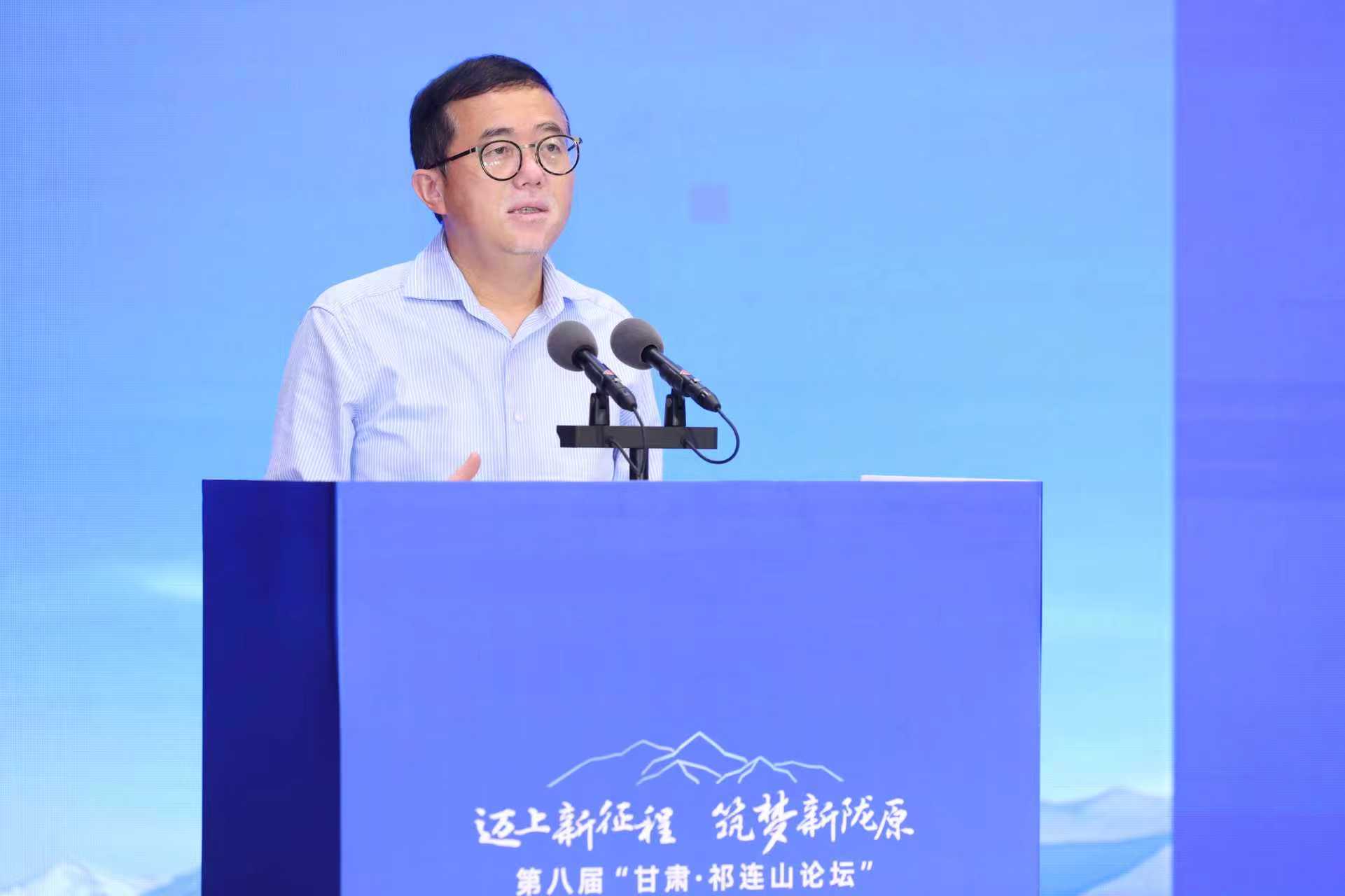
国是金融改革研究院刘胜军:用好资本市场有利于解决创新企业融资和激励问题
Xin Hua Cai Jing· 2025-09-10 14:52
Core Viewpoint - The forum emphasized the importance of financial support for high-quality development of industrial chains, particularly for small and medium-sized enterprises (SMEs) [1][4]. Group 1: Financial Support for Industries - Financial services need to be improved to better support the real economy, especially SMEs, through systemic and mechanistic changes [1][4]. - Capital markets should be leveraged to address financing and incentive issues for innovative enterprises [1][5]. - The development of industrial clusters is crucial for national competitive advantage, with Gansu forming 12 provincial advanced manufacturing clusters [3][4]. Group 2: Challenges in Financing - Despite numerous policies, the financing difficulties for SMEs and private enterprises remain unresolved due to high indirect financing ratios and slow elimination of "zombie" enterprises [4][6]. - Financial institutions need to enhance their risk assessment capabilities using data resources to better serve the real economy [5][6]. Group 3: Recommendations for Improvement - Promote market-oriented private equity and venture capital with a risk appetite to attract innovative talent, especially in artificial intelligence [5][6]. - Establish high-quality data platforms to convert data into credit assessment resources for financial institutions [5][6]. - Encourage financial institutions to provide financing services based on accounts receivable, inventory, and orders for SMEs [6].
广东发布10条措施加快扩大工业有效投资
Zhong Guo Chan Ye Jing Ji Xin Xi Wang· 2025-09-05 01:19
Core Viewpoint - The Guangdong Provincial Government has released a plan to accelerate effective industrial investment from 2025 to 2027, focusing on creating an "attraction field" for industrial investment, particularly in emerging sectors like artificial intelligence and robotics [1][4]. Group 1: Investment Measures - The plan outlines 10 measures to enhance industrial investment, including strengthening investment mechanisms, expanding investments in advantageous industries, and promoting innovation commercialization [2]. - Guangdong aims to consolidate traditional industries by increasing investments in sectors such as electronics, petrochemicals, automotive, and food and beverage, while also launching major projects like "Guangdong Strong Chip" [2][4]. - The province will actively pursue new industrial opportunities by establishing a mechanism for identifying and developing new sectors, focusing on industries like AI, robotics, and advanced materials [2][3]. Group 2: Innovation and Technology Transfer - To facilitate the transition of innovative results from laboratories to production lines, the plan proposes various methods to accelerate the development of new materials and advanced equipment [3]. - A new technology transfer system will be established to promote the conversion of scientific achievements into practical applications, utilizing models like "pay after use" and "off-site incubation" [3][4]. Group 3: Talent Development - The plan emphasizes the need for talent policies to focus on emerging sectors, supporting the targeted recruitment and cultivation of high-level talent in AI and robotics [5][6]. - Measures will be taken to select and support leading technology talents and innovative entrepreneurs, enhancing the autonomous innovation capabilities of enterprises [6]. Group 4: Industrial Governance and Environment - The plan aims to improve industrial governance by identifying key industrial chains and promoting a collaborative governance mechanism among government, enterprises, and social organizations [4]. - It also seeks to create industrial development clusters and new industrial parks to attract investment and enhance the overall industrial ecosystem [4]. Group 5: Financial Support - The establishment of a provincial industrial development investment fund is proposed to attract national and private capital for new industrial projects [4]. - The plan emphasizes the importance of financial backing for project implementation, encouraging various forms of investment to support new sector initiatives [4].