单边主义

Search documents
商务部指美方一边举着关税大棒一边标榜无辜 中国在世贸组织追加对美起诉是必要之举
Mei Ri Jing Ji Xin Wen· 2025-11-24 04:09
每经记者|张怀水 每经编辑|毕陆名 据报道,特朗普首席经济顾问库德洛近日却公开表示,美方就知识产权以及技术被中方抢夺窃取的现象 向中方提出过要求,但是中方没有采取过措施。"美方随时做好谈话的准备,但'球'在中国一方。"对 此,商务部新闻发言人高峰在7月19日举行的例行新闻发布会上指出,美方一边举着关税大棒,在全世 界实行贸易霸凌主义,一边又不断标榜自己的委屈和无辜,把所有的责任扣到对方头上。"我们看到最 近美方有不同的官员对外宣扬,中美谈判破裂的责任在中方,这不符合事实。" 高峰表示,针对美方拟对我2000亿美元产品加征关税,中方已在世贸组织对其提出追加起诉,这是捍卫 世贸组织基本原则的必要之举。 当日,中国外交部新闻发言人华春莹同样指出,中方一直在以最大诚意和耐心推动双方通过对话协商解 决分歧,为避免贸易摩擦升级尽了最大努力。"本来,美方出尔反尔、言而无信已是世界公认,但是当 着全世界人民的面,美方有关官员居然如此颠倒黑白、倒打一耙,还是超出了一般人的想象,令人感到 震惊。" 中方就缓解分歧多次努力 通过梳理可以发现,今年3月份以来,中方曾就妥善解决中美贸易分歧作过多次努力,中美双方曾就缓 解贸易摩擦进行过 ...

峰会宣言“罕见”提前发布,中方呼吁重回团结协作,南非G20峰会坚守多边主义
Huan Qiu Shi Bao· 2025-11-23 23:01
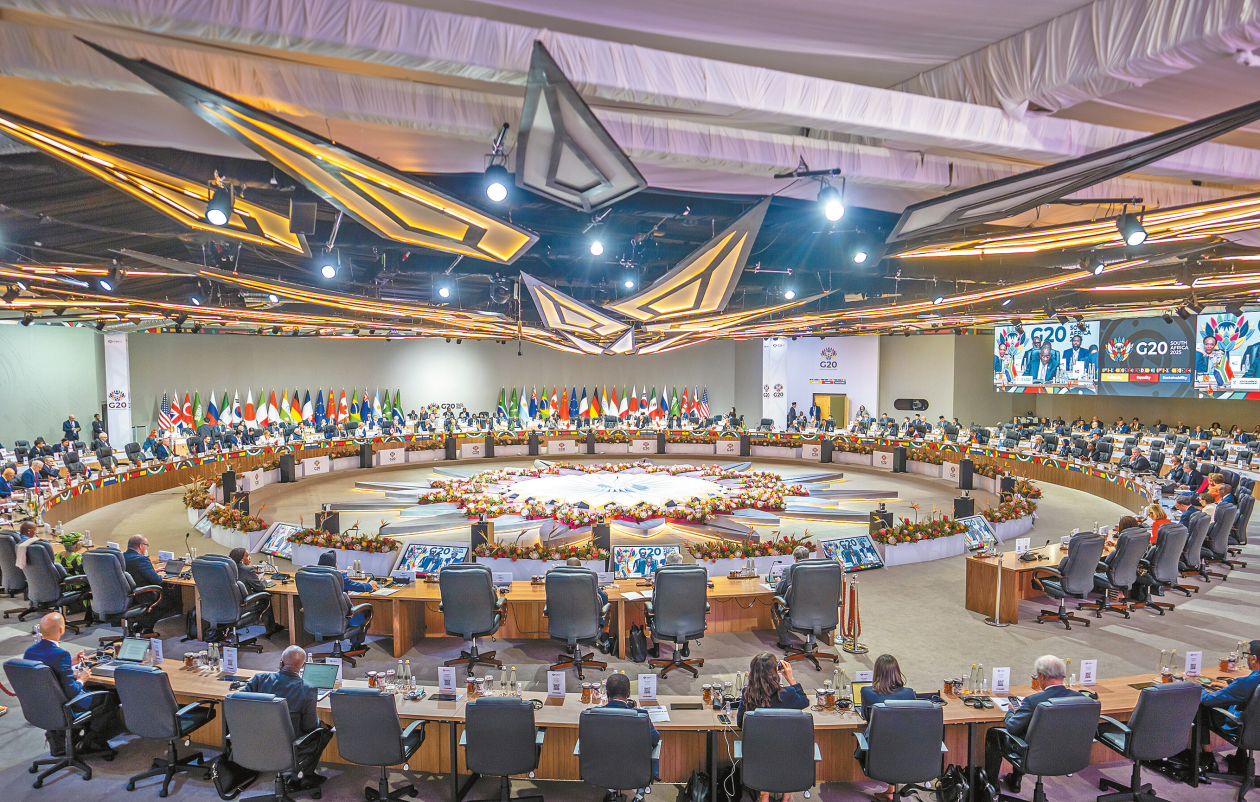
打破惯例,第一天通过领导人宣言 法新社称,来自世界主要经济体(包括欧洲、中国、印度、日本、土耳其、巴西和澳大利亚)的数十位领导人出席了南非G20峰会,这是G20峰会首次在非 洲举行。G20峰会一般在会议闭幕时发表领导人宣言,但这次却打破了惯例。22日下午,南非国际关系与合作部长拉莫拉在召开记者发布会时表示,与会各 方已就会议核心议程达成共识,并通过《二十国集团领导人约翰内斯堡峰会宣言》。宣言共包含122条内容,强调通过多边合作应对全球挑战,并呼吁加强 对发展中国家的支持,以推动包容性增长与可持续发展。 【环球时报驻南非特派记者 戴楷然 环球时报特约记者 于文】二十国集团(G20)领导人第二十次峰会22日至23日在南非约翰内斯堡举行。"南非G20峰会打 破以往惯例,罕见于会议开幕时便通过《二十国集团领导人约翰内斯堡峰会宣言》。"美联社称,美国因与东道国南非的外交摩擦而抵制这次峰会,还向南 非施压,要求其不要在未经美方同意下"以二十国集团共识为前提发表任何峰会成果文件"。南非政府则表示,美方抵制峰会,已失去"发言"资格,南非不会 屈服于美方胁迫。法新社称,当前全球秩序正受到美国单边主义政策、战争和日益加剧的地缘政 ...
闪评 | G20峰会通过联合宣言 美国缺席“聪明反被聪明误”
Yang Shi Xin Wen Ke Hu Duan· 2025-11-23 15:48
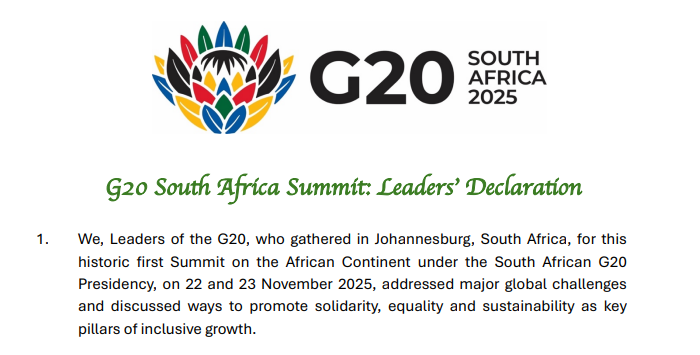
二十国集团(G20)领导人第二十次峰会当地时间11月22日在南非约翰内斯堡开幕。南非国际关系与合作部长罗纳德•拉莫拉在当天下午召开的记 者发布会上表示,与会各方已就会议核心议程达成共识,并通过了《二十国集团领导人约翰内斯堡峰会宣言》。 二是要加强团结合作。面对气候变化、可持续发展以及公共健康危机等全球性问题,只有国际社会团结起来才能够有效应对。 二十国集团领导人第二十次峰会官网截图 这是G20峰会首次于开幕当日通过联合宣言。峰会宣言共包含122条内容,强调通过多边合作应对全球挑战,并呼吁加强对发展中国家的支持,以 推动包容性增长与可持续发展。这反映了当前国际社会的共识与诉求,将重塑未来的国际秩序。 二十国集团领导人第二十次峰会现场 中国社科院西亚非洲研究所研究员朱伟东: 85 0:00 / 0:00 一是坚持多边主义。目前国际社会面临治理迟滞、和平迟滞、发展迟滞和安全迟滞等问题,这些问题的解决需要在多边框架下进行,而某些西方 大国奉行的单边主义、保护主义只会恶化这些全球性问题。 来源 | 总台环球资讯 三是要重视全球南方的呼声与需求。全球南方国家在西方主导的国际经济秩序中缺乏代表性和发言权,他们在应对气候变化 ...
终极审判在即,特朗普天价关税若遭否决,美国倒赔3万亿谁买单?
Sou Hu Cai Jing· 2025-11-22 08:18
Group 1 - The U.S. is facing significant economic challenges due to the tariff policies initiated by the Trump administration, with a potential loss exceeding $3 trillion if the Supreme Court rules against these tariffs [1][12] - As of September this year, tariffs collected from the controversial legislation have reached $89 billion, and if deemed illegal, refunds to businesses could surpass $1 trillion, exacerbating the already strained U.S. fiscal situation [3][12] - The number of U.S. manufacturing companies that have closed this year has reached 230, a 34% increase year-over-year, particularly affecting industries reliant on Chinese components [5][12] Group 2 - The tariff policy has led to a vicious cycle where increased taxation results in greater losses, undermining the intended economic benefits [6][12] - The tariffs have triggered inflation and a decline in consumer spending, with estimates suggesting that American households could pay an additional $7,700 annually for imported goods, leading to reduced purchasing power for millions [8][12] - The U.S. has lost significant market share in China, with its proportion of total imports and exports dropping to 11.2%, the lowest since China joined the WTO, and in the soybean market, U.S. share has decreased from 30% to 20% [10][12] Group 3 - The semiconductor industry in the U.S. has suffered losses exceeding $1 billion annually, with market gaps being filled by Chinese and other foreign companies, indicating a potentially irreversible market loss [13] - The unilateral tariff strategy has backfired, resulting in a loss of market orders and technological advantages for the U.S., highlighting the shortsightedness of such policies [12][15] - China has established a more diversified trade network through deeper cooperation with ASEAN and EU partners, making it challenging for the U.S. to reclaim lost market shares [13][15]
美国留下的三把“空椅子”
Xin Hua She· 2025-11-20 14:46
Group 1 - The article highlights the absence of the United States in three significant global governance discussions, symbolized by three "empty chairs" in Brazil, Switzerland, and South Africa, representing a retreat from climate, human rights, and economic governance [1][2][3] - In Brazil, the U.S. delegation was notably absent from the UN Climate Change Conference, which is seen as a disregard for the principle of "common but differentiated responsibilities" in addressing climate change [1] - The U.S. also missed a crucial human rights review in Geneva, marking a historic absence that has led to a stalemate in the review process, undermining its previous role as a self-proclaimed human rights judge [2] Group 2 - At the G20 summit in South Africa, the U.S. absence was particularly striking, as it missed an opportunity to engage in discussions on debt relief and multilateral reforms, reflecting a prioritization of its own interests over global cooperation [2][3] - The article suggests that the U.S. is attempting to counter a multipolar world through isolationist policies, viewing international rules as constraints rather than foundations for peace and development [3] - The empty chairs symbolize a significant shift in global governance dynamics, allowing for more diverse voices to emerge in international discussions, as emphasized by South African officials [3]
关税闹剧反噬太狠了,特朗普心急如焚,美国可能要倒赔2万亿
Sou Hu Cai Jing· 2025-11-20 07:26
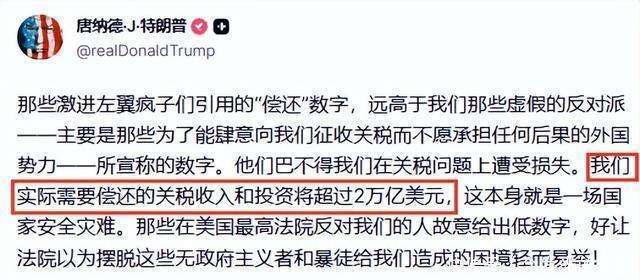
Core Viewpoint - Trump's warning about potential consequences of his tariff policies suggests that a Supreme Court ruling against him could lead to liabilities as high as $2 trillion, which could significantly impact the U.S. economy [1][7]. Tariff Policy and Economic Impact - Trump's administration has implemented a "America First" tariff policy aimed at protecting U.S. businesses and workers, resulting in a significant increase in tariff revenue, which reached $174 billion by September, a rise of $116 billion year-over-year [4]. - However, this policy has faced backlash from other countries and U.S. businesses, leading to legal challenges that have reached the Supreme Court, where initial hearings have shown skepticism from judges, including conservative ones [5]. Potential Liabilities - The estimated $2 trillion liability includes approximately $500 billion from potential refunds of collected tariffs and the risk of losing nearly $2 trillion in foreign investments tied to tariff negotiations with countries like Saudi Arabia, Qatar, Japan, and South Korea [6][7]. Domestic Economic Consequences - The tariff policy has led to increased costs for American consumers, as prices for imported goods have risen, effectively acting as a tax on households [13]. - U.S. farmers and businesses have also suffered due to retaliatory tariffs from countries like China, which have resulted in lost orders for American agricultural products [13]. Long-term Risks - The unilateral approach to tariffs could damage the U.S.'s international credibility, making other nations hesitant to engage in long-term trade agreements, potentially leading to a shift away from the dollar [14]. - Historical parallels are drawn to the Smoot-Hawley Tariff Act of 1930, which led to retaliatory measures and contributed to the Great Depression, suggesting that current policies may have similarly detrimental long-term effects [14]. Political Maneuvering - In response to the looming Supreme Court decision, Trump is employing strategies of intimidation and inducement, emphasizing the $2 trillion figure to pressure justices while also promising financial benefits to American citizens [11][15].
中国,全球气候治理可信赖的力量(权威论坛)
Ren Min Ri Bao· 2025-11-18 23:09
Core Points - The article emphasizes the importance of global cooperation in addressing climate change, particularly in the context of the 10th anniversary of the Paris Agreement and the ongoing COP30 conference in Brazil [1][2] - It highlights China's commitment to multilateralism and its proactive role in climate governance, showcasing its achievements and future goals in reducing carbon emissions and promoting green technology [3][4][5] Group 1: Global Climate Governance - The COP30 conference focuses on finding common solutions to the climate crisis, accelerating emission reductions, and promoting an inclusive transition [1] - The Paris Agreement has successfully lowered the projected global temperature rise from over 4°C to between 2.1°C and 2.8°C by the end of the century [1] - China has consistently advocated for multilateralism and has taken practical actions to support global climate governance, despite setbacks from some countries [2] Group 2: China's Climate Commitments - China has exceeded its 2020 carbon intensity reduction target and has set ambitious goals for 2030, including a transition from carbon intensity control to absolute emission reductions [3][4] - The country aims for non-fossil energy to account for 19.8% of primary energy consumption by 2024, ahead of its 2030 targets [5] - China's carbon trading market covers over 60% of national carbon emissions, showcasing its commitment to effective climate action [5] Group 3: International Cooperation and Support - China has provided over 177 billion RMB in funding for climate change projects in developing countries, supporting capacity building and technology transfer [6][9] - The "African Solar Belt" project exemplifies China's efforts to enhance clean energy access in Africa, providing solar systems to households in need [7] - China plays a crucial role in facilitating negotiations at climate conferences, helping to bridge gaps between developed and developing nations [8][9]
中美达成共识,德国却率先变脸,180度转变令各方错愕
Sou Hu Cai Jing· 2025-11-16 06:12
Group 1: Core Insights - The trade friction between China and the U.S. has been ongoing for years, but recent signs of easing have created a complex situation for surrounding countries, particularly the EU [1][3] - A preliminary consensus has been reached in U.S.-China trade negotiations, with China maintaining a proactive stance and core interests while the U.S. seeks stable rare earth supplies [3][11] - The agreement includes a one-year extension of tariffs, reducing certain tariffs to 10%, which is lower than those faced by Japan and South Korea, enhancing the attractiveness of China's supply chain [3][11] Group 2: Germany and EU Response - Germany has quickly shifted its stance, with Chancellor Merz emphasizing the need for Europe to not let the U.S. and China dictate technological futures, launching a "German High-Tech Agenda" [7][9] - The EU has historically attempted to benefit from the U.S.-China rivalry but has not gained significant advantages, leading to a strategic shortfall as the U.S. focuses on other allies [11][13] - The shift in Germany's position highlights the urgency for the EU to pursue technological independence, although internal divisions among member states may hinder cohesive action [11][13] Group 3: Global Trade Dynamics - The recent consensus between China and the U.S. is expected to reshape global trade dynamics, with Japan and South Korea investing heavily to secure lower tariffs, while the EU faces potential losses [13] - China's role as a stabilizer in global trade is emphasized, with trade agreements like RCEP and CPTPP gaining importance amid shifting geopolitical landscapes [13] - The need for substantive actions from Germany and the EU is critical to avoid further industrial pressures, as mere verbal commitments may not suffice [13]
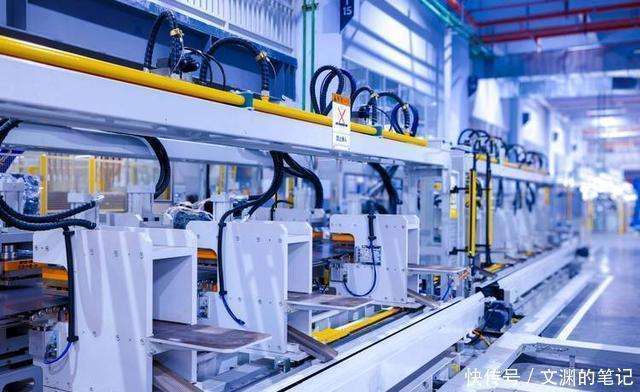
“保持制造业合理比重” 这个“合理”咋理解
Ren Min Ri Bao· 2025-11-13 13:51
Core Viewpoint - The article emphasizes the importance of maintaining a "reasonable proportion" of the manufacturing industry within China's economy, as outlined in the "14th Five-Year Plan" to strengthen the foundation of the real economy [1]. Group 1: Definition of "Reasonable Proportion" - The "reasonable proportion" refers to the share of manufacturing value added in the GDP, which is influenced by both manufacturing and other sectors like services [2]. - Over the years, as China's economy has grown and evolved, the proportion of manufacturing in GDP has decreased, while the service sector has increased, with service value added surpassing secondary industry for the first time in 2012 [2]. - The historical trend shows that while the absolute size of manufacturing is growing, its relative share in GDP cannot be excessively high, reflecting a common pattern in the development of other economies [2]. Group 2: Importance of Maintaining Manufacturing's Proportion - Manufacturing plays a crucial role in daily life, providing essential goods and services that meet basic needs [3]. - It serves as a solid foundation for the development of other industries, including agriculture and services, and is vital for job creation, employing over 100 million people, which accounts for 24.4% of the workforce in secondary and tertiary industries [3]. - The stability and growth of the economy, technological strength, and overall national power are closely tied to the health of the manufacturing sector [3]. Group 3: External Factors and Challenges - In the context of increasing international competition, manufacturing is a critical area for nations to focus on [4]. - Despite being the world's largest manufacturing country, China faces challenges from new technological revolutions and rising protectionism, which threaten global supply chains [4]. - To navigate these challenges, it is essential to focus on the real economy, enhance core technologies, and strengthen the resilience and competitiveness of supply chains [4]. Group 4: Strategies to Maintain Reasonable Proportion - The "14th Five-Year Plan" outlines specific tasks to build a modern industrial system centered on advanced manufacturing, optimize traditional industries, and cultivate emerging sectors [6]. - The goal is to enhance the quality and strength of manufacturing, with projections indicating that by 2024, China's manufacturing value added will account for nearly 30% of the global total [7]. - Addressing existing shortcomings, such as insufficient innovation capabilities and technological gaps, is crucial for advancing towards a manufacturing powerhouse [7].
美方通告全球:暂停对华301调查措施,中方做出回应,引发国际关注
Sou Hu Cai Jing· 2025-11-13 07:25
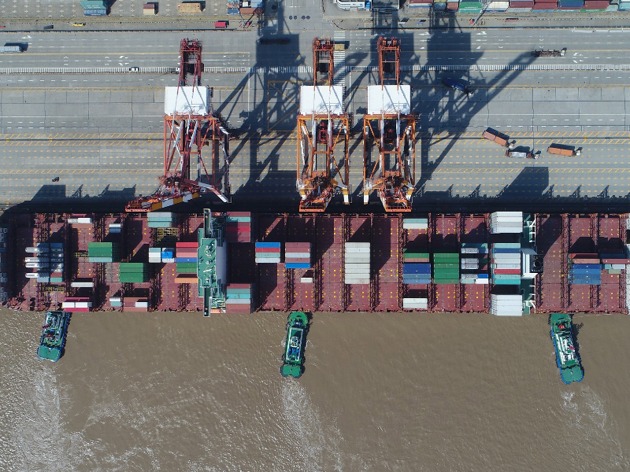
Group 1 - The U.S. announced a one-year suspension of the "301 investigation" into China's shipbuilding and crane industries starting November 10, signaling a potential easing of U.S.-China trade tensions [1][4] - China's response was positive, describing the U.S. action as a "mutual effort" and indicating a suspension of its own countermeasures, which has been interpreted as a "breaking the ice" moment in U.S.-China economic relations [2][6] - The U.S. decision reflects economic pressures, as the shipbuilding and crane industries are crucial for global shipping and port operations, with Chinese cranes holding over 80% of the global market share [4][5] Group 2 - The U.S. is facing significant economic pressures, including high inflation, which could worsen if tariffs on Chinese equipment were imposed, leading to increased costs for U.S. port operators and consumers [4][5] - The importance of Chinese manufacturing in the global supply chain is highlighted, as over half of the world's ship orders come from China, making it impractical for the U.S. to replace this capacity quickly [5][12] - The suspension of the investigation is seen as a pragmatic move by the U.S. to mitigate losses from aggressive unilateral policies that have not yielded the desired outcomes [5][10] Group 3 - China's response emphasizes a strategy of "reciprocal action," advocating for equal dialogue rather than unilateral pressure, which has garnered positive international attention [6][8] - The suspension is viewed as a signal of the irreversible nature of globalization, indicating that unilateralism is ineffective and that both countries are recognizing the interconnectedness of their economies [10][12] - The easing of tensions provides a potential opportunity for smaller countries reliant on U.S.-China trade, such as Vietnam and South Korea, to stabilize their economies [15]