
产业转型升级

Search documents
熊征宇调研东湖风景区、江汉区、青山区:加力提效实施“五改四好”城市更新,以城市发展方式转变带动经济发展方式转变
Chang Jiang Ri Bao· 2025-12-12 12:43
Group 1 - The core message emphasizes the implementation of the "Five Reforms and Four Goods" urban renewal strategy to promote high-quality urban development and economic transformation [1][2] - The focus is on ecological protection and green development in the East Lake Scenic Area, aiming to enhance tourism and improve infrastructure [1] - In Jianghan District, the strategy includes fostering new pillar industries and integrating cultural, tourism, and sports sectors to enhance urban renewal [2] Group 2 - In Qingshan District, the emphasis is on industrial transformation and innovation, particularly in traditional sectors like steel and petrochemicals, to revitalize the local economy [2] - The approach includes deepening cooperation between central and local governments, enhancing service mechanisms, and promoting community involvement in urban projects [2]

济民健康(603222.SH):拟与军民科技发起设立合资公司
Ge Long Hui A P P· 2025-12-12 08:12
Core Viewpoint - The company plans to establish a joint venture with Hubei Military-Civilian Technology Innovation Co., Ltd., aiming to enhance its core competitiveness and sustainable development through strategic asset integration and industry transformation [1] Investment Details - The registered capital of the joint venture, Hubei Jimin Military-Civilian Technology Innovation Co., Ltd., is set at 600 million yuan, with the company contributing 294 million yuan for a 49% stake, while the military-civilian technology firm will invest 306 million yuan for a 51% stake [1] Business Context - The company's main business includes medical services, medical devices, and large-volume infusion products, which have faced pressure due to intensified industry competition and external factors such as U.S. tariff policies, leading to a decline in overall performance [1] Strategic Purpose - The establishment of the joint venture is part of the company's long-term strategic planning, focusing on nurturing and integrating quality asset targets to promote industry transformation and upgrade [1]

山东投资:“三权联动”助力长三角数字基建,1亿元授信赋能“算力引擎”建设
Sou Hu Cai Jing· 2025-12-12 03:21
Core Viewpoint - Shandong Investment Co., Ltd. is providing a comprehensive credit facility of 100 million yuan to support the construction of the Nantong Big Data Cloud Computing Center project, which aligns with the national "East Data West Computing" strategy and promotes digital infrastructure development in the Yangtze River Delta region [1] Group 1: Project Financing - The Nantong Big Data Cloud Computing Center project will cover an area of approximately 29,200 square meters and aims to build 3,000 high-power cabinets, focusing on high computing power and low energy consumption for sectors like big data, industrial internet, artificial intelligence, and the Internet of Things [2] - To address funding pressures for purchasing essential equipment like diesel generators and UPS systems, Jinding Leasing and Lushin Huijin designed a comprehensive credit solution combining debt, equity, and asset rights [2] - Jinding Leasing provided 60 million yuan through direct leasing, while Lushin Huijin contributed 40 million yuan via trust funding, effectively bridging the funding gap for equipment procurement and project operation [2] Group 2: Risk Management - The project exemplifies cross-licensing collaboration within the Shandong Investment system, establishing a robust risk control framework through a three-tiered mechanism of asset, equity, and decision-making rights [3] - Jinding Leasing retains ownership of the equipment, while Lushin Huijin exercises decision-making authority through equity pledges and joint management of certificates, ensuring a veto power over financing and guarantee matters [3] Group 3: Economic Impact - As a key service industry project in Jiangsu Province, the first phase of the Nantong IDC project will provide 1,000 high-power cabinets, significantly enhancing computing power supply in the Yangtze River Delta [4] - The project will directly support advanced technology fields such as AI training, cloud computing, and big data, while also empowering the digital transformation of manufacturing and finance sectors, accelerating the implementation of industrial internet and smart city applications [4] - Shandong Investment is committed to supporting key areas like green economy, digital economy, and rural revitalization through innovative financial products and collaborative mechanisms, reflecting its dedication to the new infrastructure strategy [4]


闫萍:坚持投资于物和投资于人紧密结合
Jing Ji Ri Bao· 2025-12-12 00:17
Core Viewpoint - The integration of investment in physical assets and human capital is a significant enhancement of China's investment philosophy, aimed at optimizing investment structure and stimulating economic growth during the high-quality development phase [1] Group 1: Current Economic Context - China's economy is undergoing a critical transition in development methods, economic structure optimization, and growth momentum conversion, making the integration of investment in physical and human capital highly relevant and urgent [2] - Investment in both physical and human capital is essential for overcoming key technological bottlenecks and achieving self-reliance in technology, requiring funding for both infrastructure and talent development [2] - The shift from traditional comparative advantages to new advantages based on quality and brand necessitates a collaborative approach to investment in physical and human capital for industrial transformation and upgrading [3] Group 2: Domestic Circulation and Consumption - Enhancing human capital through education and skills training directly increases labor income, thereby boosting consumer confidence and laying a solid foundation for expanding consumption [3] - A strong domestic consumption market encourages enterprises to invest in technology and brand development, creating a dynamic balance between supply and demand [3] Group 3: Social Equity and Common Prosperity - Investment in infrastructure and public services is crucial for achieving social equity and promoting common prosperity, while human capital investment plays a significant role in reducing income disparities [4] - Developing a high-quality labor force through human capital investment enhances overall productivity and innovation capabilities, contributing to a larger and more equitably distributed economic "cake" [4] Group 4: Systematic Approach to Investment - The relationship between investment in physical and human capital is inherently unified, requiring a systematic approach to optimize the structure of existing capital and promote a virtuous cycle of economic development and improved livelihoods [5] - Both forms of investment are interdependent; physical capital provides the platform for human capital to realize its value, while human capital enhances the effectiveness and technological advancement of physical capital [5] Group 5: Long-term Mechanisms and Policy Framework - Establishing long-term mechanisms to improve the quality and efficiency of investments in both physical and human capital is essential for sustainable economic growth [8] - Coordinated development strategies should be integrated into national economic and social development plans, ensuring that policies for human capital development accompany industrial policies [8] - A collaborative evaluation system should be established to assess the contribution of human capital to the efficiency of physical capital, preventing disconnection between the two [8] Group 6: Investment Structure Optimization - Maintaining a reasonable scale of physical capital investment while optimizing investment layout is crucial, with increased focus on new infrastructure and advanced manufacturing [9] - Precision and effectiveness in human capital investment should be enhanced, with targeted training programs to meet the demands of new productive forces [9] - Encouraging diverse stakeholders through fiscal and financial policies can stimulate investment in advanced equipment and employee training [9] Group 7: Comprehensive Policy System - A comprehensive policy framework should address the entire lifecycle of human capital needs, from early childhood education to elderly care, ensuring continuous accumulation and quality improvement of human capital [10] - Investments should focus on enhancing educational quality, improving labor market matching, and providing adequate healthcare and housing support [10]
夯实东北全面振兴基础
Jing Ji Ri Bao· 2025-12-11 21:37
Group 1 - The core objective is to achieve a 500 billion yuan target for the silver economy industry in Jilin Province during the "14th Five-Year Plan" period, indicating a strong push for economic revitalization in Northeast China [1] - Northeast China is recognized as a crucial industrial base, grain production area, and ecological protection barrier, playing a vital role in national security and development [2] - The region has made significant progress in various fields, including state-owned enterprise reform in Liaoning, record grain production in Jilin, and notable achievements in the "4567" modern industrial system in Heilongjiang [2] Group 2 - The transformation of traditional industrial areas is a global challenge, with examples from Germany and the United States showcasing successful transitions to modern service and high-tech centers [3] - Northeast China possesses rich strategic resources and deep technological foundations, providing a strong basis for development in the context of China's modernization [3] - Challenges include the need to enhance technological innovation capabilities and the relatively slow development of emerging industries [3] Group 3 - There is a call to accelerate industrial structure adjustments, focusing on upgrading traditional industries and fostering strategic emerging industries such as aerospace and new materials [4] - Strengthening technological innovation is essential, with an emphasis on high-end machine tools and fine chemicals, and promoting local transformation of scientific achievements [4] - Environmental protection efforts are highlighted, including the preservation of black soil and the development of a circular economy to promote green and low-carbon transitions in industries [4]
【国企招聘】吉木萨尔县新准热电有限责任公司2025年招聘简章
Xin Lang Cai Jing· 2025-12-11 10:16
Group 1 - The company, Ordos Montai Thermal Power Industry Co., Ltd., is a wholly-owned subsidiary of Inner Mongolia Montai Group Co., Ltd., located in the Dongsheng District of Ordos City, primarily responsible for thermal power, heating, and renewable energy businesses [1][3] - In thermal power, the company manages the operation and maintenance of 2×330MW direct air-cooled and 2×660MW indirect air-cooled units [1][3] - The heating capacity for urban residents is 38 million square meters, with a sold heating area of approximately 24 million square meters [1][3] - In the renewable energy sector, the company focuses on photovoltaic and wind power projects, with a wind power installed capacity of 512MW and an annual power generation exceeding 1.4 billion kilowatt-hours [1][3] - The company aims to lead with technology, support with green initiatives, and integrate the necessary technology and talent for enterprise development with a global perspective, continuously promoting the transformation and upgrading of various industries to contribute to high-quality local economic and social development [1][3]

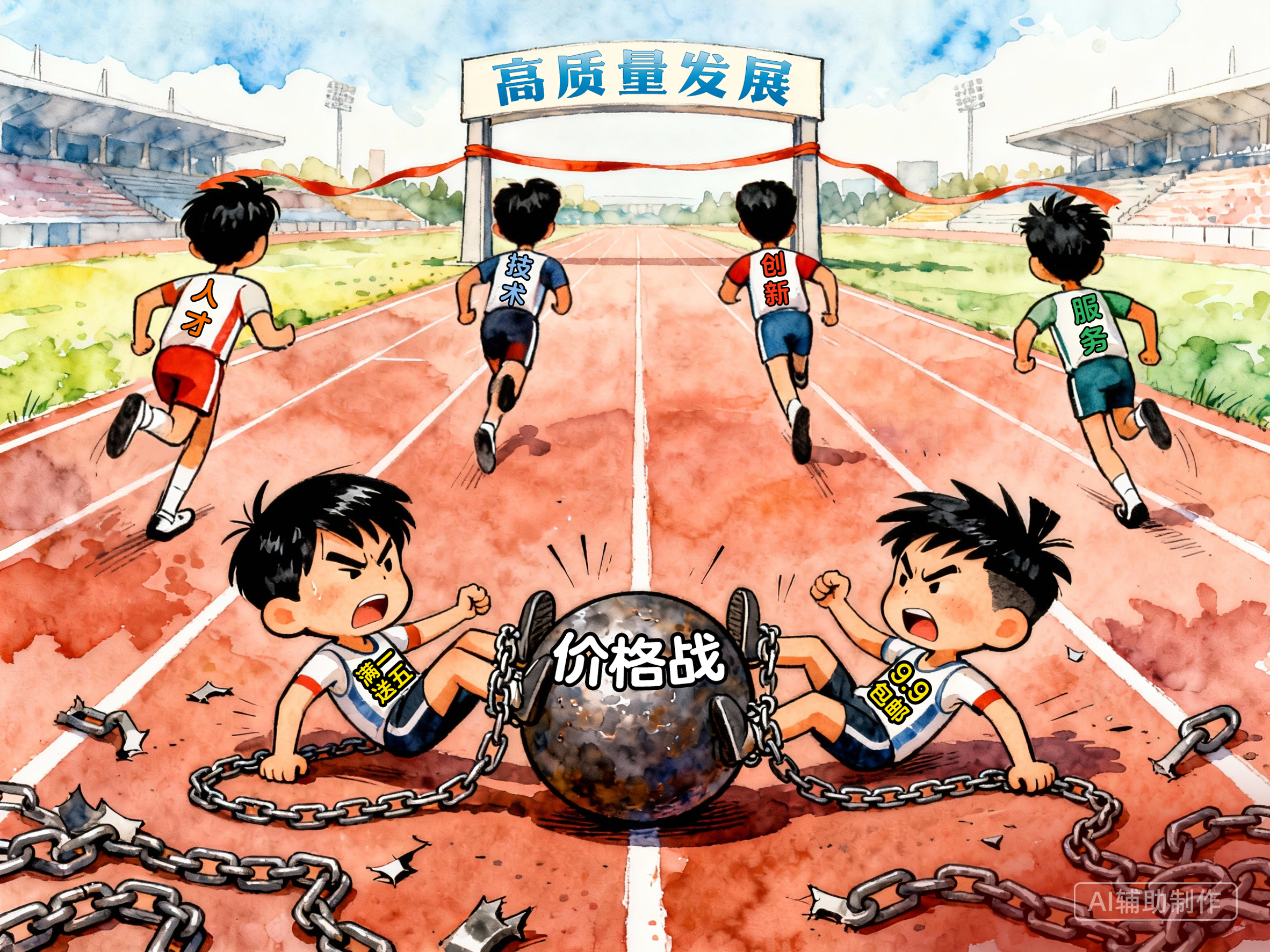
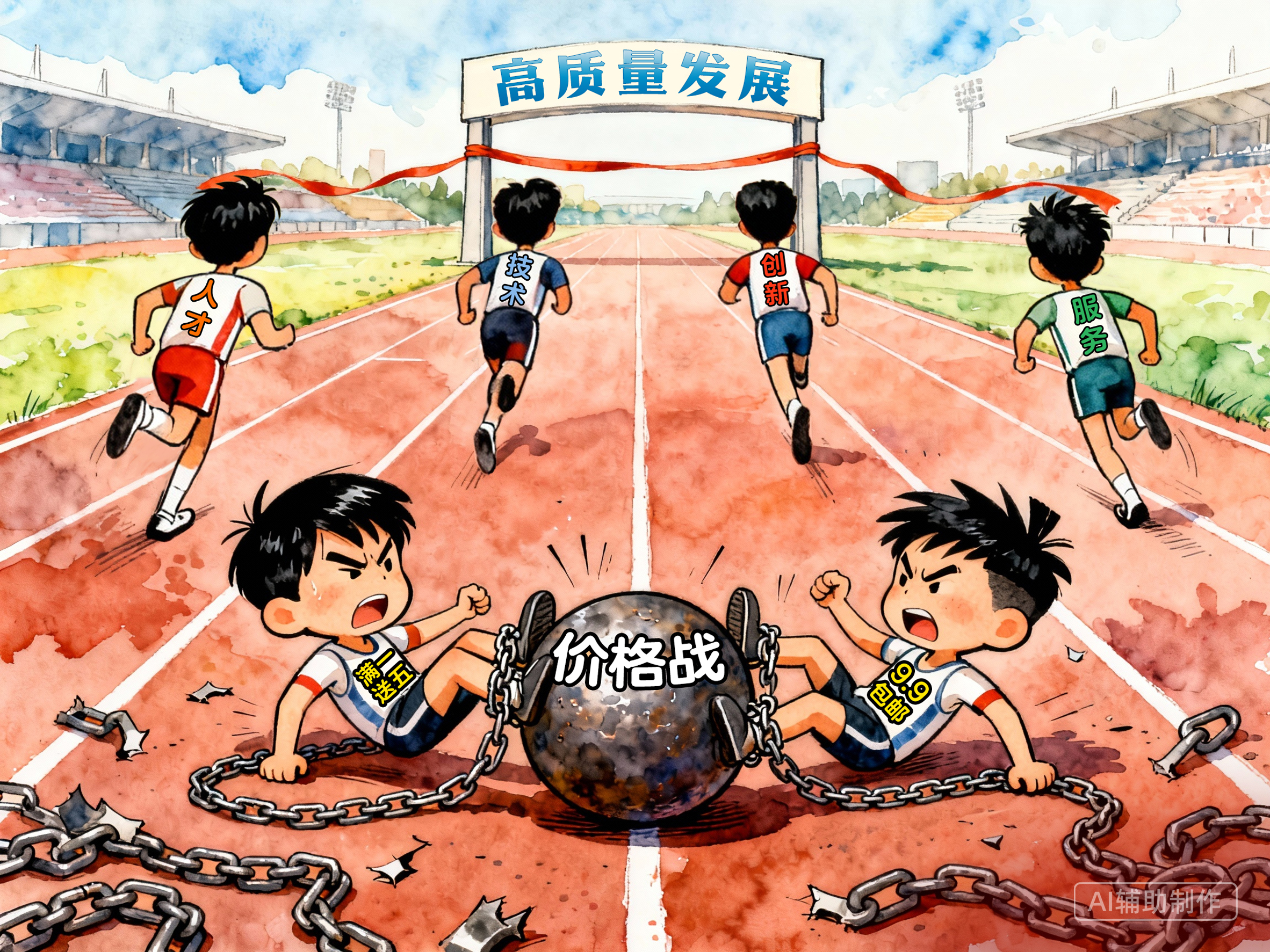
漫评全国统一大市场丨破"卷"而出 向"质"而生
Zhong Guo Jing Ji Wang· 2025-12-11 07:28
Core Viewpoint - The article emphasizes that the chaotic competition driven by "price wars" is hindering the industry's development, suggesting that a return to value-based competition is essential for achieving high-quality growth [2] Group 1: Industry Challenges - The industry is currently trapped in a cycle of low prices and homogeneous competition, which is stifling innovation and quality improvement [2] - The ongoing "price war" is described as a heavy burden that slows down the overall pace of industrial transformation and upgrading [2] Group 2: Proposed Solutions - To break the current predicament, it is crucial to guide market competition back to its value essence, clearly defining the boundaries of "healthy competition" [2] - The industry must return to a model where success is determined by core strengths, creating a positive cycle for high-quality development [2]
400亿转型金融落地 广东发布2项转型金融标准助力低碳转型
2 1 Shi Ji Jing Ji Bao Dao· 2025-12-11 05:17
登录新浪财经APP 搜索【信披】查看更多考评等级 南方财经记者 庞成 广州报道 传统高碳行业的绿色低碳转型,既是广东推进高质量发展的必由之路,更是落实"双碳"目标的关键抓 手。在"双碳"目标落实、产业转型升级的趋势下,无论是传统产业绿色转型、新兴低碳技术研发推广, 还是产业链供应链整体低碳转型,都需要金融部门提供更加精准的金融支持。 12月10日,2025年广东绿色金融改革创新推进会暨转型金融标准发布会"在广州南沙举行,会上发布了 《广东省造纸行业转型金融实施指南》《广州市转型金融实施指南》两项标准。 上述两项标准均以国家和广东省、广州市相关最新产业政策为指引,充分借鉴国内各地转型金融实践经 验,结合地方产业特点,提出了转型金融支持的基本原则,明确了转型主体和转型项目的认定条件,并 提出了信息披露要求,为造纸、化工、塑料和橡胶、医药等重点行业的低碳转型活动提供了清晰的操作 指引,有助于引导金融资源更精准、更规范地流向转型领域,不仅填补了相关高碳行业转型融资的标准 空白,而且为粤港澳大湾区乃至全国提供转型金融实践指引样本。 落地实践 据悉,在《广东省造纸行业转型金融实施指南》《广州市转型金融实施指南》《生物多样 ...

破"卷"而出 向"质"而生
Zhong Guo Jing Ji Wang· 2025-12-10 10:07
在冲刺高质量发展的赛道上,"价格战"的无序竞争如同沉重枷锁,让行业发展步履维艰。深陷低价内卷的泥沼,企业被"薄利低价""同质化竞争"标签牢牢捆 绑——既延缓了产业转型升级的整体节奏,也不断消耗着企业投入创新、打磨品质的内生动力。 - UL 理 9 80 n 2 Re 破解困局关键在于引导市场竞争回归价值本质,让市场清晰划定"良性竞逐"的红线,让行业回归"靠核心实力制胜"的正向循环。唯有如此,才能为高质量发 展扫清障碍,迈出稳健坚实的步伐。(图文杨淼、许子杰) ...
2025年11月进出口数据点评:出口增速回升转正,外贸仍具较强韧性
KAIYUAN SECURITIES· 2025-12-10 08:15
1. Report Industry Investment Rating There is no information provided regarding the report industry investment rating in the given content. 2. Core Viewpoints of the Report - The export growth rate rebounded and turned positive in November 2025, indicating strong resilience in foreign trade. The root cause of China's exports continuously exceeding expectations lies in the high cost - effectiveness of Chinese goods, which is the result of domestic "involution" and technological progress. Although the export growth rate may slow down in December due to the high base in 2024, the high cost - effectiveness of Chinese goods will remain unchanged, and China's exports will remain high for a long time. In the bond market, with the revision of economic expectations, bond yields are expected to rise trend - wise [1][5][6][7]. 3. Summary by Relevant Catalogs 3.1 11 - month Import and Export Data Highlights - In November 2025, the year - on - year growth rates of imports, exports, and trade surplus all rebounded. Exports increased by 5.9% year - on - year and 8.2% month - on - month, and the export amount reached a high level since 2021 [3][4]. 3.2 Reasons for the Rebound of Export Growth Rate in November - The negative year - on - year export growth in October was mainly due to the base dislocation in September and October 2024 and trade frictions. After the China - US talks in Kuala Lumpur and the meeting in Busan, the conclusion of trade agreements promoted the return of the export rhythm to normal. After the elimination of base disturbances, the export growth rate rebounded and turned positive in November [5]. 3.3 Analysis of Export Structure - As of November 2025, the cumulative year - on - year growth of mechanical and electrical products exports was 8.0%, and that of high - tech product exports was 6.6%, showing relatively high - speed growth. In contrast, the cumulative year - on - year decrease of labor - intensive goods was 4.2%, indicating a transformation from labor - intensive to high - tech products in exports, which may reflect China's industrial transformation and upgrading [6]. 3.4 Forecast of Export Growth Rate in December - Due to the high base caused by the rush to export in December 2024 after Trump's election and the resulting increase in trade policy uncertainty, the export growth rate in December 2025 may be under pressure. However, the high cost - effectiveness of Chinese goods will not change [7]. 3.5 Market Conditions - On December 8, the long - term yield first rose and then fell, showing an "M" - shaped trend. After the Politburo meeting mentioned the implementation of a more proactive fiscal policy and a moderately loose monetary policy, the long - term yield quickly declined. Attention should be paid to the Fed's interest rate decision and the Central Economic Work Conference [8]. 3.6 Bond Market Viewpoints - In the context of the revision of economic expectations, bond yields are expected to rise trend - wise. For stock and bond allocation, the previous views are maintained [9].