产业链整合

Search documents
每周股票复盘:沪光股份(605333)香港子公司完成注册,定增项目获批推进
Sou Hu Cai Jing· 2025-05-31 04:28
Summary of Key Points Core Viewpoint - Huguang Co., Ltd. (605333) has experienced a decline in stock price, closing at 28.53 yuan, down 5.87% from the previous week, with a current market capitalization of 12.461 billion yuan [1]. Company Announcements - The company has completed the registration of its wholly-owned subsidiary in Hong Kong, with a registered capital of 2 million yuan, named Huguang Hong Kong International Co., Ltd., established on May 22, 2025 [1]. - The company held an earnings briefing on May 28, 2025, revealing that the private placement project has been approved by the CSRC and is advancing the production project for automotive wiring harnesses [1][3]. - The first sample line for the robotics wiring harness project has been successfully completed, with some products already undergoing trial assembly at client sites [1][3]. - The company plans to enhance its competitiveness through technological upgrades, smart manufacturing improvements, and industry chain integration, while also expanding into overseas markets and increasing investment in drone and electric lawnmower wiring harness projects [1].

田野股份(832023) - 投资者关系活动记录表
2025-05-29 12:25
证券代码:832023 证券简称:田野股份 公告编号:2025-045 田野创新股份有限公司 投资者关系活动记录表 本公司及董事会全体成员保证公告内容的真实、准确和完整,没有虚假记载、误 导性陈述或者重大遗漏,并对其内容的真实性、准确性和完整性承担个别及连带法律 责任。 □其他 二、 投资者关系活动情况 活动时间:2025 年 5 月 27 日 一、 投资者关系活动类别 □特定对象调研 √业绩说明会 □媒体采访 □现场参观 □新闻发布会 □分析师会议 □路演活动 活动地点:公司通过全景网"投资者关系互动平台"(https://ir.p5w.net) 采用网络 远程的方式召开业绩说明会 参会单位及人员:通过网络方式参加公司 2024 年度业绩说明会的投资者 上市公司接待人员: 公司董事长:姚玖志先生 公司董事、总经理:单丹女士 公司副总经理、董事会秘书:张辉先生 公司副总经理、财务负责人:张雄斌先生 公司保荐代表人:张彦忠先生、薛羽先生 三、 投资者关系活动主要内容 本次业绩说明会通过年报视频解读的方式对公司 2024 年度经营情况进行了介绍。 同时,公司在业绩说明会上与投资者进行了互动交流,并就投资者普遍关注 ...
亿晶光电控股股东股份将被“清仓”拍卖 此前曾多次流拍
Xin Lang Zheng Quan· 2025-05-27 08:27
Core Viewpoint - The company is facing significant challenges due to the potential change in control and ongoing financial difficulties, highlighted by the judicial auction of shares held by its major shareholder, which may lead to a shift in ownership and management dynamics [1][2][4]. Group 1: Shareholder and Control Changes - The major shareholder, Shenzhen Weizhi Energy Co., Ltd., is set to auction 200 million unrestricted shares, representing 16.90% of the company's total equity, due to a debt default situation [1][2]. - The auction is a direct result of Weizhi Energy's involvement in 7 lawsuits related to a total debt of approximately 5.803 billion yuan, which necessitates the sale of its shares to settle these debts [2]. - If the auction is successful, Weizhi Energy will no longer hold any shares, resulting in a change of the company's controlling shareholder and actual controller, potentially leading to significant adjustments in the company's ownership structure [2][4]. Group 2: Financial Performance and Operational Challenges - The company reported a net loss of 2.09 billion yuan in 2024, with revenue declining by 57.07% year-on-year, indicating severe operational difficulties [3]. - In the first quarter of 2025, the company continued to incur losses of 53.14 million yuan, with a high debt-to-asset ratio of 92.8% and a current ratio of only 0.99, highlighting short-term repayment pressures [3]. - Production capacities for its 5GW PERC and 7.5GW TOPCon battery lines have been fully halted, with a low utilization rate of only 40% for its module production, reflecting weak integration capabilities within the industry [3]. Group 3: Potential Impacts of Control Change - Should the auction succeed, there is speculation that state-owned enterprises from Hohhot may intervene, as three individuals with such backgrounds have been nominated to the board, potentially paving the way for state capital involvement [4]. - The injection of state capital could alleviate financial pressures and promote technological upgrades, but if the auction fails again, uncertainty regarding control could exacerbate operational risks [4]. - Frequent changes in management, including multiple chairperson transitions since 2024, have already impacted the company's stability [4].

海光信息“吸并”中科曙光:产业布局优化的“必然选择”?
经济观察报· 2025-05-26 14:34
Core Viewpoint - The major asset restructuring between Haiguang Information Technology Co., Ltd. and Zhongke Shuguang Information Industry Co., Ltd. is expected to significantly reshape China's computing power industry landscape, potentially creating a computing industry conglomerate with a total market value exceeding 400 billion yuan, which will have a substantial impact on the future direction of China's semiconductor industry [1][2]. Group 1: Restructuring Details - On May 26, Haiguang Information and Zhongke Shuguang announced a suspension of trading due to a planned major asset restructuring, where Haiguang will issue A-shares to absorb and merge Zhongke Shuguang [2]. - The restructuring marks the first absorption merger transaction between A-share listed companies following the revision of the "Management Measures for Major Asset Restructuring of Listed Companies" on May 16 [2]. - Haiguang Information, valued at approximately 316 billion yuan, is a leading company in CPU design, while Zhongke Shuguang, valued at around 90.6 billion yuan, is a veteran in the server and high-performance computing market [2]. Group 2: Strategic Intentions - The merger aims to establish a solid capital foundation for long-term development and enhance profitability through economies of scale [3][8]. - The integration will optimize the industrial layout from chips to software and systems, gathering high-quality resources across the information industry chain [3][9]. - Both companies share a common "Chinese Academy of Sciences" background, which has facilitated their strategic alignment over the years [5][7]. Group 3: Financial Performance - In 2024, Haiguang Information reported revenues of 9.162 billion yuan and a net profit of 1.931 billion yuan, with a significant R&D investment of 3.446 billion yuan, accounting for 37.61% of its revenue [7]. - Zhongke Shuguang's 2024 revenue was 13.148 billion yuan, a decline of 8.4% year-on-year, while its net profit increased by 4.1% to 1.911 billion yuan [8]. - The first quarter of 2025 saw Haiguang's revenue grow by 50.76% year-on-year to 2.4 billion yuan, while Zhongke Shuguang's revenue increased by 4.34% to 2.586 billion yuan [7][8]. Group 4: Market Implications - If the merger is successful, the combined entity could achieve a revenue scale exceeding 22 billion yuan and a total R&D investment of over 6 billion yuan, enhancing its market competitiveness and technological capabilities [12]. - The merger is viewed as a positive signal for policy encouragement of strategic mergers and acquisitions in the capital market [13]. - The integration is expected to strengthen the domestic AI industry by pooling resources and enhancing capabilities in AI full-stack solutions [12][13].



海光信息“吸并”中科曙光:产业布局优化的“必然选择”
Jing Ji Guan Cha Wang· 2025-05-26 14:27
经济观察报记者郑晨烨 5月26日,海光信息技术股份有限公司(688041.SH,下称"海光信息")和曙光信息产业股份有限公司 (603019.SH,下称"中科曙光(603019)")分别发布了关于筹划重大资产重组的停牌公告:海光信息计 划通过向中科曙光全体A股换股股东发行A股股票的方式,换股吸收合并中科曙光,同时还将发行A股 股票募集配套资金;两家公司股票自5月26日起停牌,预计停牌时间不超过10个交易日。 海光信息和中科曙光都有中科院背景。其中,海光信息是一家在CPU(中央处理器)设计领域近年来迅速 崛起的头部企业,当前市值约为3160亿元;中科曙光则是一家服务器与高性能计算(HPC)市场的资深厂 商,当前市值约为906亿元。此次战略重组若顺利完成,将成为5月16日《上市公司重大资产重组管理办 法》正式修订发布后的首单A股上市公司之间的吸收合并交易。 这是一场可能深刻改写中国算力产业格局的重大资产重组。若交易最终完成,一个总市值超过4000亿元 的计算产业联合体或将正式诞生,并将实质影响中国半导体产业的未来走向。 在5月26日的业绩交流会上,海光信息总经理沙超群在回答经济观察报记者提问时表示,此次重组将"为 ...
芯片行业再现重磅收购,3000亿海光信息拟吸并900亿中科曙光
Huan Qiu Lao Hu Cai Jing· 2025-05-26 05:48
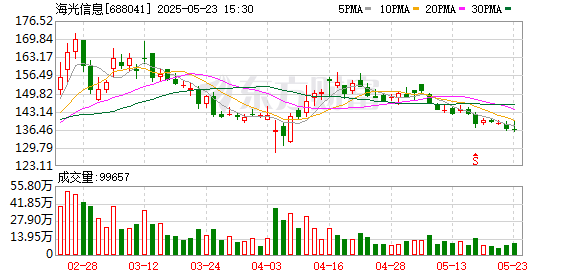
Core Viewpoint - The merger between Haiguang Information and Zhongke Shuguang aims to strengthen their core businesses and seize new opportunities in the information technology industry, following the recent regulatory changes that simplify the merger process for companies in the same industry [1][2]. Group 1: Merger Details - Haiguang Information plans to absorb Zhongke Shuguang through a share swap, issuing A-shares to all A-share shareholders of Zhongke Shuguang, while also raising supporting funds [1]. - This merger is the first disclosed absorption merger transaction following the revision of restructuring management measures on May 16 [1]. - Both companies have a history of deep collaboration, with Zhongke Shuguang being the largest shareholder of Haiguang Information, holding a 27.96% stake [1]. Group 2: Company Profiles - Haiguang Information focuses on the design of core chips such as domestic architecture CPUs and DCUs, while Zhongke Shuguang has strong capabilities in high-end computing, storage, and cloud computing [1]. - The merger is expected to consolidate high-quality resources across the information industry chain, enhancing the overall competitiveness and technological strength of the combined entity [1][2]. Group 3: Financial Performance - As of May 23, Haiguang Information had a market capitalization of 316.4 billion yuan, with a share price of 136.13 yuan, while Zhongke Shuguang had a market capitalization of 90.6 billion yuan, with a share price of 61.9 yuan [2]. - For 2024, Haiguang Information reported a revenue of 9.162 billion yuan, a year-on-year increase of 52.4%, and a net profit of 1.931 billion yuan, up 52.87% [2]. - In contrast, Zhongke Shuguang's 2024 revenue was 13.148 billion yuan, a decrease of 8.4%, with a net profit of 1.911 billion yuan, reflecting a growth of 4.1% [2].
科创板再现重磅吸并交易 中科曙光与海光信息宣布战略重组
Xin Hua Cai Jing· 2025-05-25 11:52
Group 1 - Shuguang Information Industry Co., Ltd. and Haiguang Information Technology Co., Ltd. announced a strategic restructuring through a share swap merger, with trading of their A-shares suspended starting May 26 for up to 10 trading days [2] - The merger aims to optimize the industrial layout from chips to software and systems, leveraging high-quality resources across the information industry chain to enhance the leading role of major enterprises [2] - This transaction marks the first absorption merger following the revision of the Major Asset Restructuring Management Measures on May 16 [2] Group 2 - The new policies encourage absorption mergers, focusing on enhancing the integration of listed companies within the industry chain, particularly for leading companies [3] - The revised Major Asset Restructuring Management Measures established a simplified review process for absorption mergers, aiming to unlock transaction potential [4] - Since the introduction of the "Science and Technology Innovation Board Eight Articles," there have been 102 new merger transactions on the Sci-Tech Innovation Board, with disclosed transaction amounts exceeding 26 billion [4]
635亿元收购!002379 拟重大资产重组
Zhong Guo Zheng Quan Bao· 2025-05-22 15:04
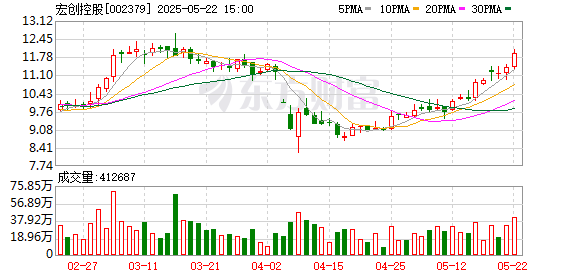
Core Viewpoint - Hongchuang Holdings plans to acquire 100% equity of Shandong Hongtu Industrial Co., Ltd. from Shandong Weiqiao Aluminum & Electricity Co., Ltd. for a transaction price of 63.518 billion yuan, marking a significant asset restructuring that does not constitute a reverse listing [2][6]. Group 1: Transaction Details - The transaction price for acquiring Shandong Hongtu Industrial is set at 63.518 billion yuan [2]. - The total assets of the target company are projected to be approximately 1,050.43 billion yuan, while the listed company’s total assets are expected to be around 31.27 billion yuan, indicating a significant increase in asset scale [4]. - The transaction will involve issuing approximately 11.895 billion shares at a price of 5.34 yuan per share, resulting in a total share capital of about 13.031 billion shares post-transaction [9]. Group 2: Financial Impact - Post-transaction, total assets of Hongchuang Holdings will increase from 31.27 billion yuan to 1080.26 billion yuan, and net profit is expected to turn from a loss of 0.69 billion yuan to a profit of 18.082 billion yuan [9]. - The basic earnings per share will improve from -0.06 yuan to 1.39 yuan, reflecting a substantial enhancement in profitability [9]. - The target company, Hongtu Industrial, is projected to achieve an operating income of 149.289 billion yuan and a net profit of 18.182 billion yuan in 2024 [8]. Group 3: Strategic Implications - The acquisition will enable Hongchuang Holdings to transition from a single aluminum deep processing business to a comprehensive company integrating electrolytic aluminum, alumina, and aluminum deep processing, enhancing the overall competitiveness in the aluminum industry [6][10]. - The restructuring aims to eliminate related party transactions and industry competition with the controlling shareholder, thereby improving operational efficiency [10]. - The transaction is expected to elevate the company's status from a regional competitor to a global leader in the aluminum manufacturing sector [10].

【私募调研记录】摩旗投资调研星球石墨
Zheng Quan Zhi Xing· 2025-05-20 00:13
Group 1 - The core viewpoint of the article highlights the recent research conducted by Moqi Investment on a listed company, Planet Graphite, which is a major player in China's graphite chemical equipment sector, focusing on innovation and development of graphite equipment and systems [1] - Planet Graphite has developed several core technologies and has participated in setting multiple international and industry standards, with key products including graphite synthesis furnaces, heat exchangers, and tower equipment, achieving international advanced levels in technology [1] - The company emphasizes overseas market expansion, having established Beijing Plannide Engineering Technology Co., Ltd. in 2024 to promote its products internationally, successfully signing multiple orders [1] Group 2 - Planet Graphite holds the leading market share in the chlor-alkali industry with its combined by-product steam graphite hydrochloric acid synthesis furnace, which features energy-saving and environmentally friendly technologies [1] - The graphite industry is expected to experience multidimensional growth, driven by increasing market demand, technological innovation, accelerated industry chain integration, and faster internationalization [1] - The company plans to focus on merger and acquisition opportunities to optimize its business layout, enhance competitiveness, and build a comprehensive industry structure encompassing materials, equipment, systems, and services [1]

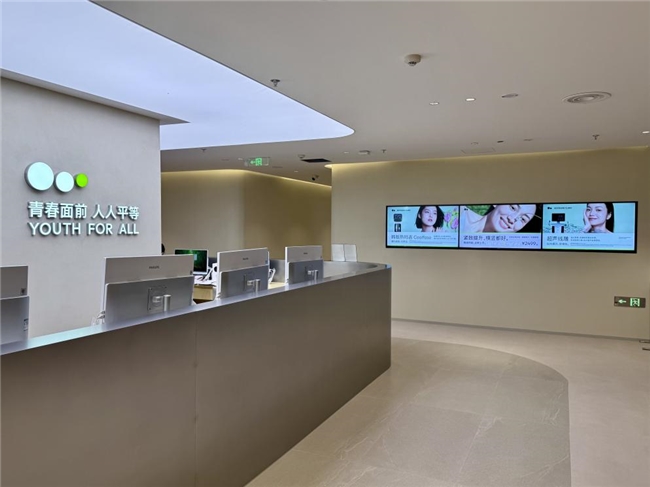
新氧发布Q1财报:集团战略转型渐入佳境 轻医美连锁单季营收创历史新高
Sou Hu Wang· 2025-05-19 02:39
Core Viewpoint - New Oxygen (SY) reported a strong financial performance for Q1 2025, with revenue reaching 297 million yuan, driven by a significant growth in its light medical beauty chain business, which achieved 98.88 million yuan in revenue, marking a 551% year-on-year increase, indicating a successful strategic transformation [1][4]. Group 1: Financial Performance - In Q1 2025, New Oxygen's revenue was 297 million yuan, with the light medical beauty chain business contributing 98.88 million yuan, a 551% increase year-on-year, achieving a record high for a single quarter [1]. - The chain business has shown continuous growth for six consecutive quarters, with over 92,900 projects redeemed in the quarter, a 989% increase year-on-year, and over 45,500 paid users, an 874% increase [4]. Group 2: Business Strategy and Growth - The company is focusing on its transformation strategy, emphasizing the development of the light medical beauty chain business and investing in vertical integration and business diversification to strengthen its competitive position in the evolving medical beauty sector [1][8]. - New Oxygen has established its first light medical beauty chain store in May 2023, rapidly expanding its presence and becoming a leading player in the industry [1]. Group 3: Customer Satisfaction and Service Model - New Oxygen's service model emphasizes transparency, high quality, and cost-effectiveness, leading to a user satisfaction score of 4.98 out of 5 in Q1 [5]. - The company has expanded its professional doctor team with a 10% acceptance rate, ensuring consistent quality in medical delivery through systematic training and digital management [6]. Group 4: Product and Platform Development - The company has developed a robust upstream product ecosystem, with over 1,500 service institutions and a 14% year-on-year increase in the shipment of its hyaluronic acid brand, exceeding 27,900 units in Q1 2025 [8]. - New Oxygen is transitioning its platform to a "premium mall" model to enhance user experience and conversion rates, with a total transaction value (GMV) of 303 million yuan in Q1 2025 [8].