
碳市场

Search documents
全国碳市场行情简报(2025年第123期)-20250728
Guo Tai Jun An Qi Huo· 2025-07-28 03:05
1. Report Industry Investment Rating - No information provided 2. Core Viewpoints of the Report - The forced circulation quota exhaustion node could be a real support for the carbon price reversal, with the exhaustion expected in mid - early October, but anticipatory trading may lead to signs of a carbon price reversal in Q3 [6] - Before August, due to slow release of forced circulation quotas and low trading willingness, the carbon price may remain volatile. From September, as compliance pressure emerges, the upward momentum may be released and the price may rise [6] - It is recommended that deficit enterprises make batch purchases at low prices before the end of August [4] 3. Summary by Relevant Catalog Today's Market - The main carbon trading targets showed weak trends, and market transactions were mainly through listing agreements [4] - For CEA, the main target barely closed in the positive territory, with 41.7 tons listed and 12.4 tons in bulk transactions [4] - For CCER, the listing agreement trading volume was 0.16 tons, and the average trading price was 81.94 yuan/ton, with a 0.45% increase [4][10] Carbon Quota (CEA) Market Details | Carbon Quota | Closing Price (yuan/ton) | Daily Change (%) | New - Old Price Difference (yuan/ton) | Bulk Transaction Average Price (yuan/ton) | Total Trading Volume (tons) | Listing Agreement Trading Volume (tons) | Bulk Agreement Trading Volume (tons) | Total Transaction Amount (ten thousand yuan) | | --- | --- | --- | --- | --- | --- | --- | --- | --- | | CEA19 - 20 | 71.34 | 0.00% | - | N/A | 0.00 | 0.00 | 0.00 | 2232.13 | | CEA21 | 74.40 | 0.00% | 3.06 | N/A | 0.00 | 0.00 | 0.00 | 0.00 | | CEA22 | 74.50 | 0.40% | 0.10 | N/A | 0.00 | 0.00 | 0.00 | 0.00 | | CEA23 | 74.44 | - 0.25% | - 0.06 | 70.81 | 30.59 | 18.17 | 12.42 | 0.01 | | CEA24 | 74.51 | 0.01% | 0.07 | N/A | 23.49 | 23.49 | 0.00 | 1750.60 | [8][9] CCER Market Details - The average trading price was 81.94 yuan/ton, with a 0.45% increase, the transaction amount was 13.11 ten thousand yuan, the trading volume was 0.16 tons, and the cumulative trading volume was 239.07 tons [10]
综合晨报:美欧达成贸易协议,马棕出口数据表现不佳-20250728
Dong Zheng Qi Huo· 2025-07-28 00:44
1. Report Industry Investment Rating No relevant content provided. 2. Core Views of the Report - The US and the EU have reached a 15% tariff rate agreement. The EU will increase its investment in the US by $600 billion, purchase US military equipment, and buy $750 billion worth of US energy products. This will lead to a short - term decline in the US dollar index [15]. - The central bank conducted 789.3 billion yuan of 7 - day reverse repurchase operations. Market sentiment is expected to ease temporarily next week, but risk appetite will be strong in Q3, and there will still be fluctuations in the bond market [3]. - The 10 - department joint issuance of the plan to promote agricultural product consumption aims to boost agricultural product consumption through various measures. The decline in industrial enterprise profits in June has narrowed, and the new kinetic energy industry represented by the equipment industry has seen rapid profit growth [17][18]. - The export data of Malaysian palm oil is poor, and the domestic oil mill operating rate is expected to increase. Steel prices have risen significantly due to the continuous increase in coking coal and coke prices and the relatively strong fundamentals of finished products, but there is a risk of overvaluation [5]. - Polysilicon is expected to correct in the short term, and it is advisable to consider short - selling lightly through options [6]. 3. Summary by Directory 3.1 Financial News and Comments 3.1.1 Macro Strategy (Foreign Exchange Futures - US Dollar Index) - The US and the EU have reached a 15% tariff rate agreement. Trump has the right to restore higher tariff levels if other countries fail to fulfill their investment commitments. The EU hopes to continue discussions on steel and aluminum tariffs with the US. The applicable tariff will be the higher of the "most - favored - nation tariff" or 15%. The short - term market risk preference will moderately recover, and the US dollar index will decline in the short term [13][15]. - Investment advice: The US dollar index will decline in the short term [16]. 3.1.2 Macro Strategy (Stock Index Futures) - 10 departments jointly issued the "Implementation Plan for Promoting Agricultural Product Consumption" to promote agricultural product consumption through various measures. In June, the profits of industrial enterprises above designated size decreased by 4.3% year - on - year, and the decline has narrowed. The new kinetic energy industry represented by the equipment industry has seen rapid profit growth. The US and the EU have reached a 15% tariff agreement, which may set an example for upcoming China - US tariffs. A Politburo meeting will be held this week, and attention should be paid to its statements on the economic work in the second half of the year [17][18][19]. - Investment advice: It is recommended to allocate stock indexes evenly [20]. 3.1.3 Macro Strategy (US Stock Index Futures) - The US and the EU have reached a 15% tariff agreement, but there are still differences in key industry tariffs. The US durable goods orders in June decreased by 9.3% month - on - month, better than the expected - 10.7%. The core data excluding Boeing orders performed well. The US - EU tariff negotiation has accelerated, and the risk of further deterioration of the tariff level has decreased, supporting market risk preference [21][22]. - Investment advice: The trade negotiation is moving in a positive direction, and it will still fluctuate strongly in the short term, but attention should be paid to the risk of correction [22]. 3.1.4 Macro Strategy (Treasury Bond Futures) - The central bank conducted 789.3 billion yuan of 7 - day reverse repurchase operations, with a net investment of 601.8 billion yuan. Market sentiment is expected to ease temporarily next week, and the funds are expected to become looser after the end of the month. However, risk appetite will be strong in Q3, and there will still be fluctuations in the bond market [23]. - Investment advice: It is recommended to cautiously bet on the opportunity of oversold rebound next week. Do not be bearish in the long term, but the market will be volatile in Q3, and it may be too early for allocation buyers to go long at present [24]. 3.2 Commodity News and Comments 3.2.1 Black Metals (Coking Coal/Coke) - The coking coal price in the Linfen market is running strongly. The recent futures price increase is mainly due to macro - policies. The National Energy Administration plans to conduct a verification of coal mine production in key coal - producing provinces, but the actual impact of checking over - production may be limited. The price may return to the fundamentals. The supply of coking coal has recovered partially this week, and the coke price has increased for the third time, with some steel mills accepting the increase [25][26]. - Investment advice: The market sentiment for coking coal is still strong, but the risk is high as the price rises significantly. Pay attention to position management [27]. 3.2.2 Agricultural Products (Soybean Oil/Rapeseed Oil/Palm Oil) - The actual soybean crushing volume of domestic oil mills in the 30th week was 2.2389 million tons, with an operating rate of 62.94%. It is expected to reach 2.3726 million tons and 66.69% in the 31st week. From July 1 - 25, the export of Malaysian palm oil decreased by 9.23% month - on - month. The production of Malaysian palm oil in July is expected to increase, and the inventory will increase significantly. China may export 100,000 - 120,000 tons of soybean oil to India [28][29]. - Investment advice: The data from Malaysia is bearish for palm oil. It is not recommended to short unilaterally. Consider buying put options or waiting for opportunities to go long at low prices. For international soybean oil, focus on US weather and bio - fuel policies. For domestic soybean oil, if exports to India increase, it will support prices [30]. 3.2.3 Agricultural Products (Sugar) - The international sugar price has fluctuated greatly. The expected increase in production in Brazil and India and the rumor of India's export in the 2025/26 season have put pressure on the price. India's sugar export may be unfeasible at current international prices. The sugar mills of Guangxi Nanhua have cleared their warehouses, and the spot price in Guangxi has remained stable with a narrow - range shock. The sugarcane yield in the central - southern region of Brazil has decreased in June [31][33][34]. - Investment advice: The international sugar market is under pressure from supply. The Zhengzhou sugar futures are expected to fluctuate mainly. Pay attention to the resistance level of 5900 yuan [35]. 3.2.4 Agricultural Products (Cotton) - In the first half of 2025, China's cotton product exports increased under pressure. As of mid - July, the pre - sale progress of Brazilian cotton in 2025 was 65%. As of July 17, the weekly net signing of US cotton in the 25/26 season was 30,100 tons, a year - on - year decrease of 54%. The ICE cotton price is expected to be in a low - level shock pattern in the short term [36][37][39]. - Investment advice: The lack of news about increased import quotas in China, tight old - cotton inventory, and high operating rates in Xinjiang spinning mills will support cotton prices in the short term. However, the demand from inland spinning mills is weakening, and the increase in warehouse receipts and the expectation of increased production in the 25/26 season may limit the upward trend of cotton prices [40]. 3.2.5 Agricultural Products (Soybean Meal) - Argentina has lowered the export tariffs on soybeans, soybean meal, and soybean oil. The operating rate of domestic oil mills has remained high. China has stopped purchasing US soybeans since the end of May, and the pre - sale of US new - crop soybeans is significantly lower than the normal level in previous years [41][42]. - Investment advice: CBOT soybeans and soybean meal are expected to fluctuate. Focus on the development of the China - US trade war. Soybean meal inventory will continue to accumulate, and the spot basis will remain weak [42]. 3.2.6 Black Metals (Steam Coal) - Most coal mines in Ordos maintained normal production on July 23, and the coal price was stable with a slight increase. The implementation of the over - production policy and high summer temperatures are expected to keep the coal price strong. The power plant's inventory has decreased slightly, and the coal price is expected to return to around the long - term agreement price of 670 yuan [43][44]. - Investment advice: The coal price is expected to remain strong, and it is expected to return to around 670 yuan, the long - term agreement price [44]. 3.2.7 Black Metals (Iron Ore) - The iron ore production and sales of Mount Gibson in the second quarter decreased year - on - year. Affected by coking coal and coke, the iron ore price has fluctuated strongly, but it has encountered resistance after breaking through $105. The long - term increase in the price center of coking coal and coke will suppress the upside potential of iron ore [45]. - Investment advice: Observe the follow - up of the spot market after the price pull - back. The market sentiment fluctuates greatly, so it is recommended to reduce the position [46]. 3.2.8 Black Metals (Rebar/Hot - Rolled Coil) - The fifth blast furnace of Vietnam's Hoa Phat Group's Dung Quat Steel Complex has been put into operation, increasing the annual production capacity by 5.6 million tons. The total new - signed contract value of the top seven construction central enterprises in the first six months exceeded 5.9 trillion yuan. South Korea will impose temporary anti - dumping duties on hot - rolled steel plates imported from China and Japan. Steel prices have risen significantly, but there is a risk of overvaluation [47][49][50]. - Investment advice: Steel prices will remain strong in the short term. It is recommended to observe cautiously [51]. 3.2.9 Agricultural Products (Corn Starch) - The consumption of corn starch sugar is average, and the operating rate has decreased. The consumption of corn and corn starch has decreased this week [52]. - Investment advice: Starch enterprises may continue to face losses, and the operating rate is expected to remain low. This is not favorable for the rice - flour price difference [53][54]. 3.2.10 Agricultural Products (Corn) - In June 2025, the national industrial feed production was 27.67 million tons, a year - on - year increase of 6.6%. The proportion of corn in compound feed increased by 2.5 percentage points year - on - year. The "anti - involution" policy in the breeding industry may reduce the corn demand in the new year [55]. - Investment advice: The stalemate in the spot market may continue until the new corn is on the market. The 09 contract may weaken in advance. Hold the short positions of new - crop corn and look for opportunities to add positions on rebounds [55]. 3.2.11 Non - Ferrous Metals (Lithium Carbonate) - The Guangzhou Futures Exchange has adjusted the trading limit for the LC2509 contract of lithium carbonate futures. The price of lithium carbonate has increased, and there are rumors about production cuts in some areas. The limit - trading measure is expected to stabilize the market [56][57]. - Investment advice: Before the production cuts are confirmed, there is no upward momentum for the price. Pay attention to the downstream procurement. It is recommended to pay attention to the opportunity of holding inventory and reverse arbitrage [58]. 3.2.12 Non - Ferrous Metals (Copper) - The EU has started monitoring the trade of scrap copper and aluminum. Teck Resources has lowered the production forecast of its Chilean copper mine. Freeport's Indonesian subsidiary has started its new smelter [59][60][61]. - Investment advice: Unilaterally, be cautious about the repeated macro - expectations. The copper price is expected to remain high and fluctuate. It is recommended to observe. For arbitrage, pay attention to the opportunity of domestic - foreign reverse arbitrage [62]. 3.2.13 Non - Ferrous Metals (Polysilicon) - The Guangzhou Futures Exchange has adjusted the trading limit, daily limit, margin, and handling fees for industrial silicon and polysilicon futures. The spot price of polysilicon has increased slightly, but the actual transaction has not changed much. The production of polysilicon is expected to increase in July and August, with a monthly surplus of 100,000 - 200,000 tons [63][64][65]. - Investment advice: The delivery price of polysilicon sets a lower limit for the futures price. However, due to the difficulty of the spot price to keep up with the futures price increase, the short - term price is expected to correct. Consider short - selling lightly through options and look for opportunities to go long after the correction [66]. 3.2.14 Non - Ferrous Metals (Industrial Silicon) - The production and operating rate of industrial silicon in Xinjiang, the Northwest, Yunnan, and Sichuan have shown different trends. The social inventory has decreased, and the factory inventory has increased. The supply is expected to increase with the resumption of production, and the supply - demand gap will narrow in August [67][68][69]. - Investment advice: After the price increase, the basis of industrial silicon has weakened rapidly. Pay attention to the opportunity of short - selling at high prices or selling out - of - the - money call options [69]. 3.2.15 Non - Ferrous Metals (Nickel) - Danantara is considering acquiring the GNI smelter in Indonesia. The nickel price has been strong recently but fell on Friday night. There are different statements about Indonesia's nickel export policy. The price of Philippine nickel ore has decreased, and the price of nickel iron has increased, but the steel mills' purchasing intention is not strong [70][71]. - Investment advice: The nickel price is closely related to macro - sentiment. It is recommended to use options for hedging in unilateral trading. Holders can sell for hedging at high prices [72]. 3.2.16 Non - Ferrous Metals (Lead) - From January to June 2025, the number of electric bicycles recycled and replaced was 8.465 million each. The new national standard for electric bicycles will be implemented on September 1. The overseas macro - situation has limited fluctuations. The supply of primary lead is tight, and the production of secondary lead has increased slightly. The demand from end - users has not improved significantly, but the lead social inventory may turn around [73][74][75]. - Investment advice: In the short term, pay attention to the opportunity of buying at low prices and manage the position well. For arbitrage, it is recommended to observe temporarily [76]. 3.2.17 Non - Ferrous Metals (Zinc) - The port inventory of zinc concentrate has decreased by 860,000 tons compared with last week. The 0 - 3 cash spread of LME zinc has turned negative, but the注销仓单 is still high. The zinc smelting profit may improve in August, and the supply is expected to remain high. The demand from primary processing industries is differentiated, and the social inventory has increased significantly [77][78]. - Investment advice: Unilaterally, the risk is high, and it is recommended to observe. For arbitrage, pay attention to the opportunity of medium - term calendar spread positive arbitrage. It is recommended to observe in terms of domestic - foreign trading [79]. 3.2.18 Energy Chemicals (Carbon Emissions) - On July 25, the closing price of the EUA main contract was 71.34 euros/ton, a 0.65% increase from the previous day and a 2.07% increase from last week. The investment funds reduced their net long positions by 100,000 tons last week. The carbon price is expected to be volatile in the short term [80]. - Investment advice: The EU carbon price will be volatile in the short term [81]. 3.2.19 Energy Chemicals (Crude Oil) - The number of US oil rigs has decreased. The Middle - East oil price has strengthened relative to Brent. The increase in the Middle - East oil export volume is limited. The strong diesel crack spread and EU sanctions on Russia support the Middle - East oil price [82][83]. - Investment advice: The oil price will remain volatile. Pay attention to the OPEC+ meeting and market risk preference [84]. 3.2.20 Energy Chemicals (Caustic Soda) - On July 25, the price of liquid caustic soda in Shandong was slightly adjusted. The supply has increased, and the demand is average. The caustic soda futures price has increased due to the overall positive sentiment in the commodity market, but the increase is limited [85][86]. - Investment advice: The caustic soda valuation is not low, and the speculative demand is difficult to stimulate, resulting in a small increase [86]. 3.2.21 Energy Chemicals (Pulp) - The spot price of imported wood pulp is generally stable, with individual prices increasing slightly. The futures price has continued to rise, but the downstream paper mills' follow - up is not strong, and high - price transactions are difficult [87]. - Investment advice: Due to the "anti - involution" policy, low - valued pulp may be targeted by funds. Investors should pay attention to the risks [88]. 3.
面向“十五五”,钢铁行业如何节能降碳?
Di Yi Cai Jing· 2025-07-27 09:15
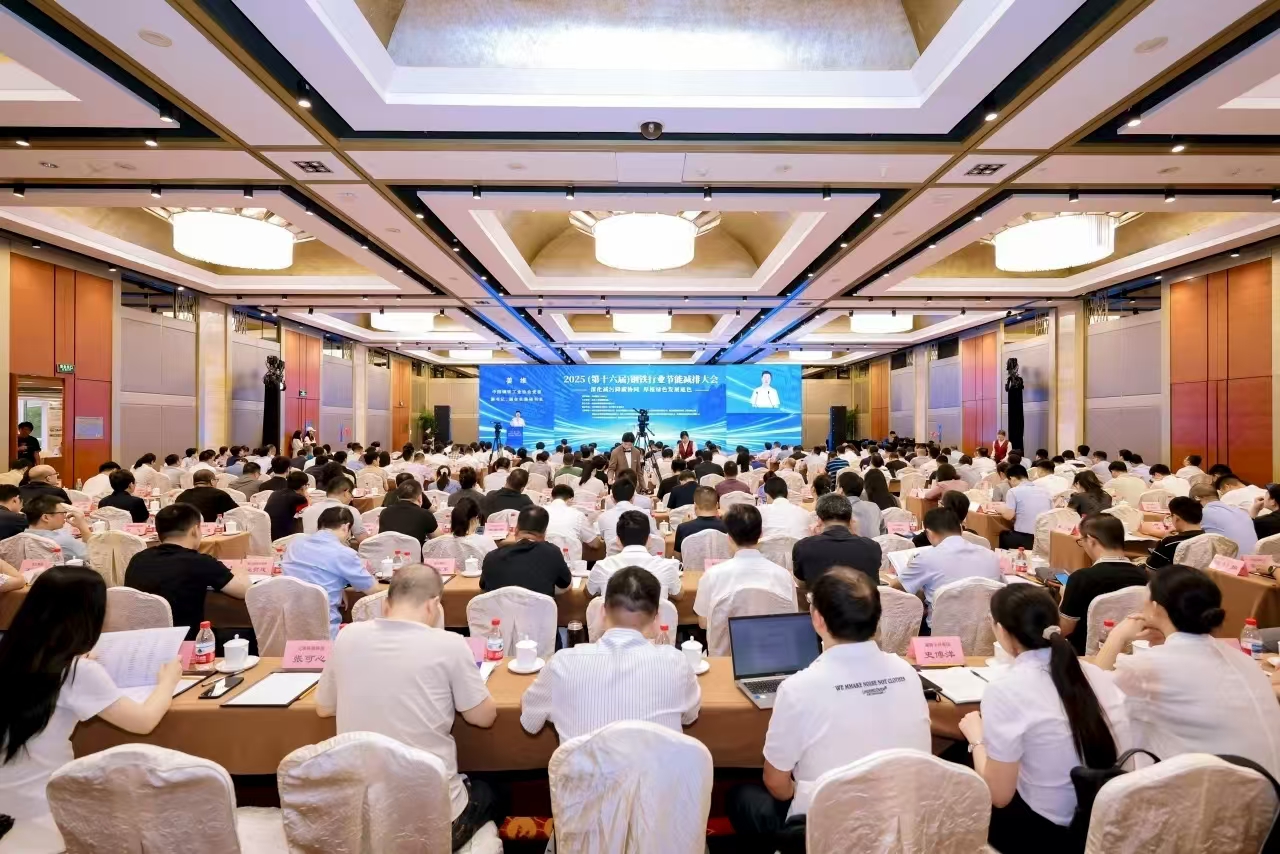
Core Viewpoint - The steel industry is a critical sector for achieving industrial energy conservation and carbon reduction in China, accounting for approximately 15% of the country's total carbon emissions, making it the highest among manufacturing industries [1] Group 1: Industry Challenges and Goals - The steel industry is currently in a phase of reduction and deep transformation, facing structural contradictions such as excess low-end products and insufficient high-end products, indicating significant room for improvement in energy conservation and carbon reduction [1] - The National Development and Reform Commission (NDRC) emphasizes the need for continuous optimization of product structure and vigorous efforts in energy conservation, carbon reduction, and coal substitution to promote quality upgrades and green low-carbon transformation [1] Group 2: Policy and Management Initiatives - Since the 14th Five-Year Plan, China has made positive progress in energy conservation and carbon reduction, establishing a comprehensive policy framework and accelerating the green low-carbon transformation of the energy structure [1] - The NDRC plans to strengthen management of key energy consumption and carbon emission units, implement comprehensive management of energy conservation reviews and carbon emission evaluations, and continuously improve the policy system and market mechanisms [1] Group 3: Industry Collaboration and Carbon Market - The China Iron and Steel Association highlights the need for a collaborative approach in the steel industry to navigate opportunities and challenges, focusing on achieving ultra-low emissions, enhancing energy efficiency, and advancing low-carbon transformation [3] - Traditional industries, including steel and cement, have officially joined the national carbon market, which is seen as a crucial tool for achieving carbon neutrality goals [3] - The carbon market allows key emission units to use up to 5% of their carbon emission quotas for compliance, providing flexible pathways for companies to reduce emissions and manage carbon assets effectively [4] Group 4: Progress in Emission Reduction - As of July 2025, 197 steel companies have completed ultra-low emission modifications, with 600 million tons of crude steel capacity undergoing full-process ultra-low emission modifications, representing over 80% of the national total capacity [4]

全国碳市场行情简报(2025年第122期)-20250724
Guo Tai Jun An Qi Huo· 2025-07-24 09:47
Report Summary 1. Report Industry Investment Rating - No information provided on the report industry investment rating. 2. Core Viewpoints - The depletion of mandatory circulation allowances may support a carbon price reversal, with expected signs in Q3, though the actual depletion is projected for mid - early October. Before August, carbon prices may fluctuate due to slow release of allowances and low trading willingness. From September, as compliance pressure mounts, prices may rise [8]. 3. Summary by Relevant Catalogs Market Conditions - CEA: The main target barely closed in the positive. There were 464,000 tons of listed allowances and 223,000 tons of bulk allowances. CCER: The listed agreement trading volume was 2,300 tons, with an average trading price of 81.57 yuan/ton, a decrease of 0.83% [6]. - The closing prices of CEA19 - 20, CEA21, CEA22, CEA23, and CEA24 were 71.34 yuan/ton, 74.40 yuan/ton, 74.20 yuan/ton, 74.63 yuan/ton, and 74.50 yuan/ton respectively, with daily changes of 0.00%, 3.33%, 0.00%, 0.17%, and 0.04% [10]. - The total trading volumes of CEA19 - 20, CEA21, CEA22, CEA23, and CEA24 were 0.00 tons, 20,000 tons, 123,000 tons, 492,300 tons, and 72,000 tons respectively [10]. - The total trading amounts of CEA19 - 20, CEA21, CEA22, CEA23, and CEA24 were 6.3886 million yuan, 0.00 yuan, 36.4735 million yuan, 53.641 million yuan, and 14,700 yuan respectively [11]. - The average trading price of CCER was 81.57 yuan/ton, with a decrease of 0.83%, a trading amount of 1.835 million yuan, a trading volume of 2,300 tons, and a cumulative trading volume of 238,910 tons [12]. Strategies - Deficit enterprises are advised to make batch purchases at low prices before the end of August [6].
专访赖晓明:持续推动全国碳市场各项机制发展与完善
2 1 Shi Ji Jing Ji Bao Dao· 2025-07-23 08:44
Core Insights - The national carbon market has been operating for four years, showing a healthy and orderly development with a cumulative trading volume exceeding 670 million tons and a transaction value of 46 billion yuan [1][2][3] - The introduction of the "Interim Regulations on Carbon Emission Trading Management" in 2024 provides a strong legal framework for the market, with the first expansion planned for 2025 to include steel, cement, and aluminum industries [2][3][9] - The market price has shown a positive trend, with the average closing price surpassing 100 yuan per ton in April 2024, and recent prices fluctuating between 70-80 yuan per ton [3] Market Development - The national carbon market has seen accelerated development in 2024, with the introduction of new trading methods such as single-direction bidding to enhance trading efficiency [2][3] - The trading system's continuous improvement has positively impacted market activity and price formation mechanisms, with trading prices remaining within a reasonable range [2] Regional Market Coordination - The implementation of the regulations on May 1, 2024, clarifies the boundaries between national and local carbon markets, preventing overlapping controls [4] - Shanghai's carbon market has introduced various carbon financial products, significantly increasing green electricity consumption and achieving a 72% growth in carbon reduction credits used for compliance [5][6] Financial Products and Innovations - Shanghai has launched multiple innovative carbon financial products, including carbon pledges, carbon repurchase, and carbon insurance, effectively mobilizing over 800 million tons of carbon assets [6][7] - The introduction of the carbon neutrality index and the upcoming capital market transformation index aims to enhance the synergy between carbon markets and financial markets [7] International Context and Challenges - The EU's Carbon Border Adjustment Mechanism (CBAM) poses challenges and opportunities for Chinese export enterprises, particularly in high-carbon industries [8] - Companies are encouraged to track domestic and international policies, build carbon data management systems, and enhance their low-carbon management practices to adapt to evolving trade rules [8][9]
今日全国碳市场收盘价73.30元/吨,较前一日上涨0.25%
news flash· 2025-07-22 08:32
Core Insights - The national carbon market closed at 73.30 yuan per ton, reflecting a 0.25% increase from the previous day [1] Trading Activity - The opening price was 73.07 yuan per ton, with a highest price of 73.31 yuan and a lowest price of 73.07 yuan [1] - The total trading volume for the day was 1,105,900 tons, with a total transaction value of 78,444,770 yuan [1] - The agreement trading volume was 205,900 tons, amounting to 15,336,770 yuan, while the bulk agreement trading volume was 900,000 tons, totaling 63,108,000 yuan [1] Cumulative Data - From January 1, 2025, to July 22, 2025, the total carbon emission allowance trading volume reached 46,803,844 tons, with a cumulative transaction value of 3,498,670,450.04 yuan [1]
全国碳市场交易机制“上新” 单向竞价开启新篇章
Zhong Guo Neng Yuan Wang· 2025-07-22 03:04
Core Viewpoint - The Shanghai Environment and Energy Exchange has announced the implementation of a one-way bidding trading method for the national carbon emission trading system, marking a significant step towards market-oriented pricing and standardized operation in China's carbon market [1][2]. Summary by Relevant Sections Trading Mechanism - The one-way bidding trading method is a common practice in mature trading markets, providing a more dynamic trading mechanism compared to the previous negotiated trading method, which relied heavily on individual trading intentions [2][3]. - This new method allows for a unified price transaction or a bid price transaction, with minimum bid quantities and price limits set, enhancing market stability and reducing price volatility caused by individual premium differences [2][3]. Price Discovery and Market Efficiency - The mechanism significantly strengthens the market price discovery function, establishing a fair value benchmark for carbon quotas and allowing prices to better reflect market supply and demand [3]. - The one-way bidding method is expected to improve the efficiency and credibility of price formation, as it aggregates market acceptance and releases segmented market demand elasticity [3]. Impact on Participants - The minimum bid quantity for sellers is set at no less than 100,000 tons of CO2 equivalent, with price limits established to prevent market manipulation and speculation, ultimately enhancing market fairness and stability [4][5]. - The new trading method is designed to lower hidden transaction costs for enterprises by providing more time for internal approvals and funding arrangements, thus improving trading efficiency [5][6]. Future Development Path - The implementation of one-way bidding is seen as a foundational step for the future development of China's carbon market, which is still in its early stages [6][7]. - There are suggestions for exploring carbon derivatives, such as carbon futures and options, to enhance market liquidity and risk management capabilities [6][7]. - The carbon market is expected to evolve in phases, emphasizing its role as a policy tool for controlling greenhouse gas emissions while gradually enhancing its financial attributes [7].
全国碳市场上线四周年 中碳登累计交易额超462亿元
Zhong Guo Xin Wen Wang· 2025-07-16 16:58
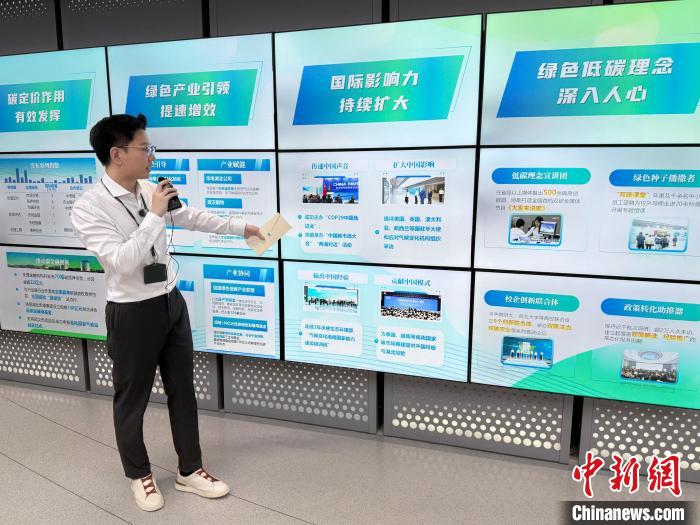
Group 1 - The national carbon emission trading market has been operational for four years, with a total trading volume of 673 million tons and a trading value of 46.249 billion yuan as of July 15 [1][4] - The carbon market has included approximately 3,700 key emission units across four major industries: power generation, steel, cement, and aluminum smelting, covering an annual greenhouse gas emission volume of about 8 billion tons [4] - The establishment of the carbon registration and settlement institution, known as "Zhongtan Dengdeng," in Wuchang District has positioned it as the "carbon asset brain" and "carbon trading hub" for the national carbon market [4] Group 2 - The open day event attracted representatives from communities, schools, environmental organizations, and enterprises, showcasing the achievements of the carbon market and allowing participants to engage in simulated carbon trading [2][3] - Wuchang District is actively developing a dual-carbon economic belt centered around the Zhongtan Dengdeng building, attracting over 90 companies and research institutions in carbon trading, management, finance, and technology [4]
市场扩容迎新机 金融赋能促发展
Jin Rong Shi Bao· 2025-07-14 03:14
Core Insights - The national carbon market in China is approaching its fourth anniversary, with significant progress in emissions reduction and market stability, achieving a cumulative transaction value exceeding 46.2 billion RMB and an average price of over 74 RMB per ton [1] - The market is evolving towards maturity, with ongoing improvements in regulatory frameworks and mechanisms to facilitate carbon pricing and trading [1][2] Market Expansion - The national carbon market has completed three compliance cycles and is expanding to include steel, cement, and electrolytic aluminum industries, which are significant contributors to emissions [2] - This expansion is designed to be gradual, allowing new sectors to adapt to the rules and enhance their participation in carbon trading [2] Financial Mechanisms - Carbon markets offer unique advantages over traditional financing methods, such as shorter financing cycles and better mobilization of private capital, particularly beneficial for developing countries [3] - The development of carbon financial products, including futures and derivatives, is expected to enhance market liquidity, risk management, and pricing mechanisms [6][7] Data Utilization - There is a need for improved carbon accounting and disclosure mechanisms, as many companies lack robust carbon data, which is crucial for financial institutions [4] - Financial institutions are increasingly engaging in carbon accounting and climate risk stress testing, with 535 institutions conducting carbon accounting and 134 performing climate risk assessments in 2022 [4] Regulatory Developments - The People's Bank of China is revising guidelines for environmental information disclosure to encourage innovation in sustainable reporting among financial institutions [5] - The introduction of sustainable development reporting guidelines by major exchanges aims to enhance the quality of corporate sustainability disclosures [5] Future Directions - Experts emphasize the importance of developing a diverse range of carbon financial products to support small and medium enterprises in their carbon reduction efforts [7] - Initiatives like carbon accounts and rating systems are being piloted to link corporate emissions reductions with financing costs, fostering a sustainable reduction mechanism [7]
136号文转变行业发展逻辑,利好因素累积绿电有望否极泰来
2025-07-14 00:36
Summary of Key Points from the Conference Call Industry Overview - The conference call focuses on the green electricity (绿电) sector in China, particularly in relation to the impact of the 136 Document released by the National Development and Reform Commission in early 2025 [1][3][9]. Core Insights and Arguments - **Valuation of Green Electricity Sector**: The price-to-book (PB) ratio for green electricity operators has fallen to approximately 0.7 to 0.8, reflecting a significant decline over the past three years. Despite this, favorable policy developments are expected to enhance the sector's attractiveness [2][4]. - **Impact of the 136 Document**: The 136 Document mandates that all new energy grid-connected electricity enters market-based trading, stabilizing revenue expectations for existing projects through a price difference settlement mechanism. This has led to increased competition among operators [3][9][10]. - **Cash Flow Improvement**: The cautious investment approach in the sector is anticipated to improve cash flow and alleviate the financial pressures caused by previous rapid capacity expansions [4][14]. - **Accounts Receivable Issues**: Many green electricity operators face high accounts receivable due to historical subsidy shortfalls. If these issues are resolved, it could lead to significant upward potential for these companies [5][16]. - **Green Value as Competitive Advantage**: The green value of electricity is highlighted as a core competitive advantage, with the gradual improvement of China's green certificate system gaining international recognition [1][6][20]. Additional Important Content - **Historical Context of the Green Electricity Market**: The market has experienced three distinct phases, with the current phase characterized by low valuations and high policy support, making it an attractive investment opportunity [7][8]. - **Future Directions for Green Electricity Consumption**: The ongoing development of a green electricity consumption system is crucial, with policies aimed at ensuring fair competition and enhancing overall industry efficiency [17][22]. - **Cross-Province Trading Dynamics**: Currently, 92% of transactions in the green electricity market are cross-province, with provinces rich in renewable resources selling to high-energy-consuming provinces [21]. - **Government Measures to Promote Green Energy**: The government is implementing dual control measures on energy consumption and renewable energy consumption weights to drive the growth of green energy [22][24]. Conclusion - The green electricity sector in China is positioned for potential growth due to favorable policy changes, improved cash flow prospects, and a strong competitive edge based on environmental value. The current low valuation presents a compelling investment opportunity for operators like Datang Renewable Power, Jinneng Clean Energy, and Longyuan Power [24].