
自动化

Search documents
全球“机器人第一大国”:中国
Hua Er Jie Jian Wen· 2025-10-02 10:16
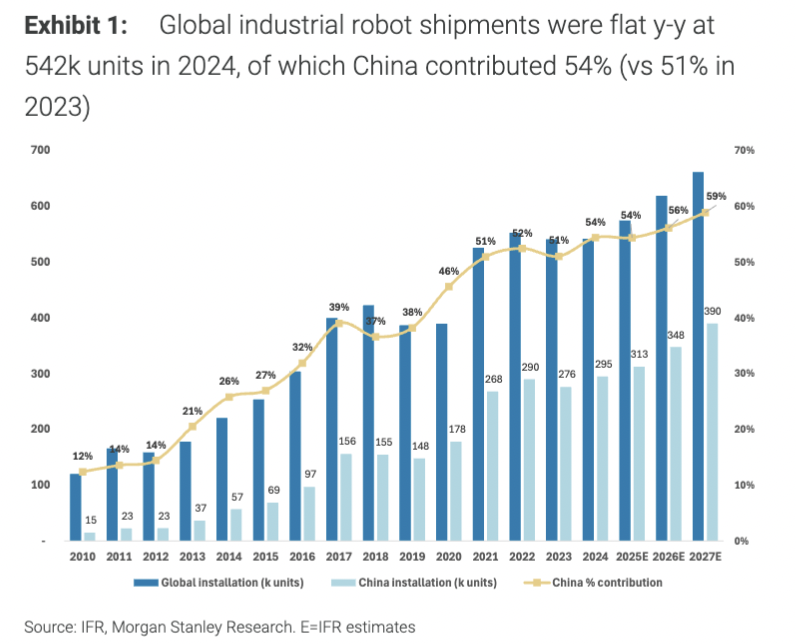
Core Insights - China is solidifying its position as a global leader in robotics technology, with significant growth in industrial robot installations, ownership, and production, reshaping the global supply chain [1][4][9] Market Performance - In 2024, China's industrial robot installations grew by 7%, reaching 295,000 units, which accounted for 54% of the global total, marking a new high [1][8] - The total number of operational industrial robots globally reached 4.66 million, with China holding 2 million units, representing 43% of the global total, an increase from 41% in 2023 [4] Domestic Brand Growth - Chinese domestic brands are rapidly increasing their market share, with projections indicating that their share in the industrial robot market will rise from 47% in 2023 to 58% in 2024 [3][9] - By 2024, the domestic brand Estun has become the second-largest player in the Chinese market by sales, following Japan's Fanuc [9] Global Market Dynamics - Despite a slowdown in demand across major global economies, China has emerged as a key driver of industry growth, with the overall global industrial robot installations remaining stable at 542,000 units [5][8] - The Asian market, buoyed by China's performance, is expected to see a 5% year-on-year growth, contrasting with declines in Europe and the Americas [5] Emerging Applications - The growth in the robotics market is diversifying, with traditional sectors like automotive and electronics experiencing weaker demand, while general industrial applications are seeing a rise, with installations reaching 287,000 units, accounting for about 53% of the global total [10] - Collaborative robots are gaining traction, with a 12% year-on-year increase in global installations, achieving a penetration rate of 12% in the industrial robot segment [12] - Demand for professional service robots is also strong, with global installations reaching 200,000 units, a 9% increase, particularly in logistics and transportation, which saw a 14% growth [14] Future Outlook - The industry outlook is optimistic, with the International Federation of Robotics (IFR) raising its forecast for global industrial robot installations from 2025 to 2027 by 4-10% [15] - The global industrial robot installations are projected to grow at a compound annual growth rate (CAGR) of 7%, reaching 708,000 units by 2028, with Asia leading this growth [15]


Ignore the Shutdown – Watch the Jobs Picture
Investor Place· 2025-10-01 21:11
Government Shutdown and Market Impact - The recent U.S. government shutdown is viewed as inconsequential for Wall Street, with historical data showing that shutdowns typically last about a week and have minimal impact on stock movements [1][2] - Over a dozen shutdowns have occurred since 1980, averaging one every three years, reinforcing the notion that they are largely a temporary distraction for investors [2] Labor Market and Consumer Confidence - The Conference Board's September survey indicates a decline in consumer optimism, with assessments of business conditions and job availability reaching new lows [6][7] - ADP's latest report revealed a loss of 32,000 jobs, contrary to expectations of a gain, marking the worst performance since March 2023 [8][9] - Seasonal hiring is projected to be the weakest in years, with retail hiring expected to fall below 500,000 positions in the last quarter of 2025, the lowest since 2009 [10][11] Economic Disparities - There is a growing divide between high-income and low-income households, with the top 10% accounting for 49.2% of U.S. spending, the highest since 1989 [13][14] - The economy is bifurcating into a booming AI Economy, which saw a ~30% investment increase in the first half of 2025, and a stagnant Everything Else Economy, which grew only 0.1% [15][16] Investment Opportunities in AI and Robotics - AI stocks are significantly outperforming non-tech stocks, with an 86% increase in AI/robotics ETFs compared to a 12% rise in non-tech proxies over the past year [16][17] - Investment strategies focusing on AI technology leaders are recommended as a means to thrive in the current economic landscape [19]

AI+自动化带来驾驶新体验 仍存在技术、伦理与法律挑战
Ke Ji Ri Bao· 2025-09-30 23:47
Core Insights - The automotive industry is undergoing a transformation driven by advancements in AI, automation, connectivity, and safety systems, leading to smarter and more interconnected vehicles [1][2] - AI and automation are redefining transportation methods and enhancing driving experiences, making them safer, richer, more comfortable, and sustainable [1][2] Group 1: Smart Vehicles - Modern vehicles have evolved into integrated digital platforms equipped with embedded safety systems and real-time connectivity [2] - Advanced Driver Assistance Systems (ADAS) and Automatic Emergency Braking (AEB) are becoming standard features in new cars, with regulations in the EU and the US mandating their inclusion [2] - AI-driven systems utilize sensors, cameras, and machine learning to support autonomous driving, helping drivers make safer decisions and optimize routes [2] Group 2: Personalized Driving Experience - AI technology enhances the driving experience by personalizing settings based on driver habits and preferences, creating a tailored cabin environment [2] - AI voice assistants allow drivers to control vehicle functions through natural conversation, improving convenience and comfort [2] Group 3: AI in Claims Processing - AI is revolutionizing the accident claims process, with nearly 30% of auto insurance claims in the US initiated through digital photos, enabling quick responses from insurers and repair shops [4] - AI tools can assess vehicle damage and generate repair estimates within seconds, improving efficiency in claims and repair coordination [4] - Investment in AI within the financial services sector is projected to grow from $35 billion in 2023 to $97 billion by 2027, covering insurance, banking, and payment sectors [4] Group 4: Challenges and Governance - Despite rapid advancements, autonomous driving faces unresolved challenges, including complex road conditions and unpredictable behaviors of other road users [5][6] - Ethical and legal questions arise regarding liability in accidents and the moral decisions AI must make, highlighting the need for improved regulatory frameworks [6] - The industry is increasing investments in AI governance and safety, with initiatives from the US Department of Transportation to promote responsible AI development in transportation [6][7] Group 5: Future Outlook - The integration of AI and autonomous driving technologies is expected to reshape the automotive landscape, supported by new infrastructure like 5G communication and vehicle-to-everything (V2X) networks [7]
WTW Poised for Growth Amid Margin Pressures and FX Challenges
ZACKS· 2025-09-30 15:21
Core Insights - Willis Towers Watson (WTW) is focusing on efficiency and client-driven strategies to shape its growth trajectory, leading to consistent gains in commissions and fees, solid client retention, and new business additions [1][9] - The company is targeting high-growth areas such as Risk & Broking and the Individual Marketplace, prioritizing organic investments to diversify its business mix and strengthen its presence in the insurance value chain [2][9] - WTW aims to improve operating margins through efficiency, scale, and automation, with ongoing transformation initiatives designed to streamline processes and enhance productivity [3][9] - The company is committed to enhancing shareholder value, having increased its dividend six times over the past five years and planning to repurchase approximately $1.5 billion in shares in 2025 [4] Challenges Faced - Despite strong growth momentum, WTW has experienced margin pressures, highlighting the need for disciplined cost control [5] - The company's return on equity for the trailing 12 months is 21.6%, below the industry average of 24.7%, indicating a need to better convert growth initiatives into financial results [6] Earnings Performance - WTW has generally performed well, beating estimates in three of the last four quarters, with an average positive surprise of 4.14% [7] Industry Comparisons - Other players in the Insurance - Brokerage sector include Arthur J. Gallagher & Co. (AJG), Brown & Brown, Inc. (BRO), and Aon plc (AON), each demonstrating varying degrees of earnings performance and growth strategies [8][10][11]


韩国教授金英顺谈“机器人税”:技术进步也要确保社会稳定
经济观察报· 2025-09-30 09:42
Core Viewpoint - The concept of a "robot tax" is not intended to penalize corporate innovation but to ensure that technological advancement progresses alongside social stability and inclusivity [3][5]. Group 1: Current Status and Proposals - No country or region has yet implemented a "robot tax" in any form, although some local proposals have been made, such as discussions in the European Parliament in 2017 and a proposal in San Francisco [2][6]. - Various academic proposals for a "robot tax" exist, aiming for social fairness and welfare, but they differ significantly in implementation methods, ranging from direct taxation to reducing related incentives [2][6]. Group 2: Purpose and Justification - The "robot tax" serves as a modern tool for renegotiating the social contract, allowing for a fairer distribution of automation benefits to fund retraining programs and maintain social safety nets [3][4]. - The tax aims to address three main objectives: compensating for lost tax revenue due to automation, moderating rapid automation development to prevent social unrest, and providing funding for retraining initiatives and potential universal basic income projects [7][8]. Group 3: Implementation Challenges - If only one country unilaterally imposes a "robot tax," it risks losing corporate competitiveness, leading to capital and technology outflow to countries with lower tax rates [8][9]. - Effective implementation of a "robot tax" may require international coordination to avoid harmful competition among nations, similar to the concept of a "global minimum corporate tax" [8][9]. Group 4: Alternative Approaches - Alternatives to a direct "robot tax" include eliminating excessive capital depreciation benefits, providing wage subsidies or tax credits to encourage hiring, and establishing employer-funded training funds [10]. - A differentiated global framework may be necessary, allowing developing countries to delay taxation to attract investment while developed countries could pilot such taxes due to their more robust social safety nets [10][11]. Group 5: Tax Base and Compliance - To prevent the "robot tax" from becoming a tool for base erosion and profit shifting (BEPS), it should be linked to the actual use of automation rather than just the location of corporate profits [11]. - Strong transparency rules and compliance measures aligned with BEPS principles are essential for ensuring fairness and preventing tax avoidance [11].

贝斯特(300580.SZ):子公司宇华精机全面布局直线运动部件领域
Ge Long Hui· 2025-09-29 07:21
Core Viewpoint - Best (300580.SZ) is expanding its presence in the linear motion components sector through its wholly-owned subsidiary, Yuhua Precision Machinery, targeting high-end machine tools, semiconductor equipment, automation, humanoid robots, and intelligent connected vehicles [1] Group 1 - The company is focusing on high-precision products such as ball screw assemblies, linear guideways, planetary roller screws, micro screws, and linear actuators [1] - The strategic expansion aims to penetrate various industries including mid-to-high-end machine tools and automation sectors [1]

行业聚焦:全球平板式砂磨机市场头部企业份额调研(附Top10 厂商名单)
QYResearch· 2025-09-28 04:23
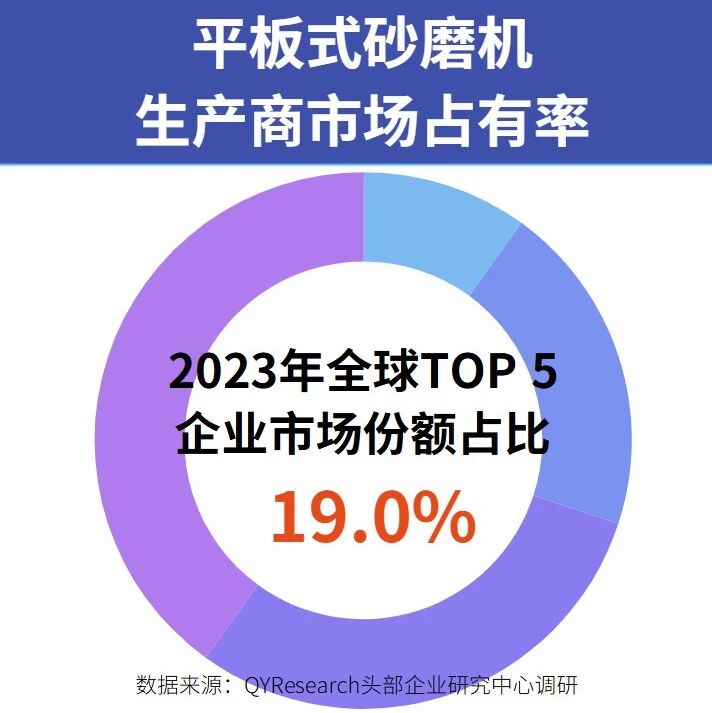
Core Insights - The global market for flat sanders is projected to reach $530 million by 2030, with a compound annual growth rate (CAGR) of 7.8% in the coming years [1]. Market Overview - The flat sander market is primarily driven by electric sanders, which hold approximately 60.6% of the market share [6]. - Online sales dominate the sales channels, accounting for 74.4% of the market [6]. Key Players - Major manufacturers in the global flat sander market include Bosch, Stanley, Makita, Dewalt, and Mirka, with the top five companies holding about 19.0% of the market share in 2023 [6][12][14]. Industry Trends - The flat sander industry benefits from national policies promoting high-quality manufacturing and industrial upgrades, including tax incentives and special funding [9]. - The industry is moving towards smart technology (integrating IoT and remote monitoring), automation (reducing labor costs), and green initiatives (energy-saving designs and pollution reduction) [9]. Challenges - The industry faces challenges such as intense homogenization competition, ongoing pressure for technological innovation, and technical bottlenecks related to grinding media optimization and cooling system efficiency [9]. - Barriers to entry include the need for technological research and development, significant capital investment for high-end equipment manufacturing, brand reputation, and compliance with stringent environmental and technical standards [9].
中国制造业升级,为何能打破“产业转移魔咒”?
Hu Xiu· 2025-09-26 13:16
Core Insights - The manufacturing sectors in the Yangtze River Delta and the Pearl River Delta have distinct developmental timelines, with the former being about 5 to 10 years behind the latter in terms of industrialization and investment attraction [1][2] - The Pearl River Delta has a higher concentration of labor-intensive industries, while the Yangtze River Delta has more advanced manufacturing processes and larger industrial parks [2][3] - The automation wave, referred to as "machine replacement," has affected both regions similarly, driven by national policies and the need for labor due to workforce shortages [3][5] Group 1: Regional Differences - The Pearl River Delta began its industrialization earlier, attracting significant investment in the 1980s, while the Yangtze River Delta saw large-scale industrialization in the 1990s [1] - Industrial parks in the Pearl River Delta are often smaller and less organized, leading to a predominance of small, labor-intensive factories [2] - In contrast, the Yangtze River Delta has larger, more modern industrial parks with better living conditions for workers, reflecting a higher level of land development [2] Group 2: Automation and Labor Dynamics - The automation trend began around 2014-2015, influenced by both government policies and the internal drive of companies facing labor shortages [3][5] - Despite the rise of automation, there has not been a significant increase in layoffs; instead, workforce reductions have occurred through natural attrition [6][7] - The labor force in manufacturing has decreased significantly over the past decade, with many workers transitioning to the service industry, particularly after 2015 [10][11] Group 3: Global Context and Future Trends - Developed countries experienced automation earlier, but faced limitations due to high labor costs and technological bottlenecks, leading to industrial transfers to China [12][13] - China's labor costs have risen, making automation more economically viable, while the country has also begun transferring labor-intensive industries to Southeast Asia [14][15] - The automation rate in low-end, repetitive tasks has reached 80-90%, particularly in the automotive sector, while assembly processes remain around 70% automated [21][22] Group 4: Labor Market Shifts - Workers displaced by automation have often transitioned to new roles within companies or returned to rural areas where industrial development has increased [24][25] - The shift from manufacturing to service industries has been significant, with many workers finding opportunities in sectors like ride-sharing and delivery services [10][11] - The future of automation in manufacturing may plateau, with more focus shifting towards artificial intelligence in service-oriented roles [38]
天岳先进:长晶炉已实现国产化
Ju Chao Zi Xun· 2025-09-25 16:38
Group 1 - The company Tianyue Advanced (688234.SH) has achieved the localization of its main production equipment, the crystal growth furnace, with the design of the thermal field, control software, and assembly being completed independently by the company, marking it as a core technology [1] - The company emphasizes the intelligent and automated construction of its production facilities, exemplified by its Shanghai production base, which was designed as a smart factory equipped with high-performance intelligent devices and continuously optimized through AI and digital technologies [3] - The company utilizes information systems for real-time analysis, monitoring, and early warning of production quality, achieving comprehensive informatization in process control, information collection, and operational aspects [3] Group 2 - The company has deployed robotic systems and intelligent device units to automate the operation control and management of the main production equipment, the crystal growth furnace, laying a foundation for increasing capacity, reducing costs, and ensuring product quality [3]


Jabil(JBL) - 2025 Q4 - Earnings Call Transcript
2025-09-25 13:32
Financial Data and Key Metrics Changes - For Q4, the company reported approximately $8.3 billion in revenue, exceeding guidance by roughly $800 million, with core operating income at $519 million and core operating margin at 6.3%, a 50 basis point improvement year-over-year [9][10] - Core diluted earnings per share was $3.29, while GAAP diluted earnings per share came in at $1.99 [9][10] - Full-year adjusted free cash flow was over $1.3 billion, with a healthy balance sheet showing a debt-to-core EBITDA ratio of 1.3x and cash balances of approximately $1.9 billion [12][13] Segment Performance Changes - Regulated Industries revenue was $3.1 billion, with a year-over-year increase of approximately 3% and core operating margin expanding by 40 basis points to 6.5% [10] - Intelligent Infrastructure revenue reached $3.7 billion, $400 million above expectations, with a core operating margin of 5.9% [10][11] - Connected Living and Digital Commerce revenue totaled $1.4 billion, reflecting a year-over-year decline of approximately 14%, but core operating margin improved by 210 basis points to 6.6% [11][34] Market Data and Key Metrics Changes - The automotive and transportation market is experiencing a decline of 5% due to slowing demand for battery electric vehicles in the U.S. and Europe, while healthcare outsourcing is expected to enter a growth phase [49][50] - The company anticipates Intelligent Infrastructure revenue to grow by 18% in FY 2026, driven by AI-related demand across capital equipment and cloud infrastructure [54][55] Company Strategy and Industry Competition - The company is focusing on system-level integration across its segments, particularly in Intelligent Infrastructure, to enhance customer deployment speed and reduce costs [51][52] - A deliberate shift in the Connected Living and Digital Commerce segment is underway, moving away from lower-margin legacy consumer programs towards higher-margin automation and advanced technologies [7][56] Management's Comments on Operating Environment and Future Outlook - Management highlighted the resilience of the diversified model despite mixed dynamics across end markets, with strong performance in AI-related sectors offsetting weaknesses in automotive and renewables [36][60] - The company expects approximately 5% revenue growth for FY 2026, with core operating margin expanding to around 5.6% [57][58] Other Important Information - The company completed a $1 billion share repurchase authorization and plans to return 80% of annual adjusted free cash flow to shareholders [12][14] - The company is investing in AI and automation across its operations to enhance efficiency and competitiveness [44][46] Q&A Session Summary Question: Can you provide details on growth areas in AI? - The company expects 25% year-over-year growth in AI revenue, with significant growth in capital equipment and cloud infrastructure, while maintaining strong positions in existing markets [64][65]
