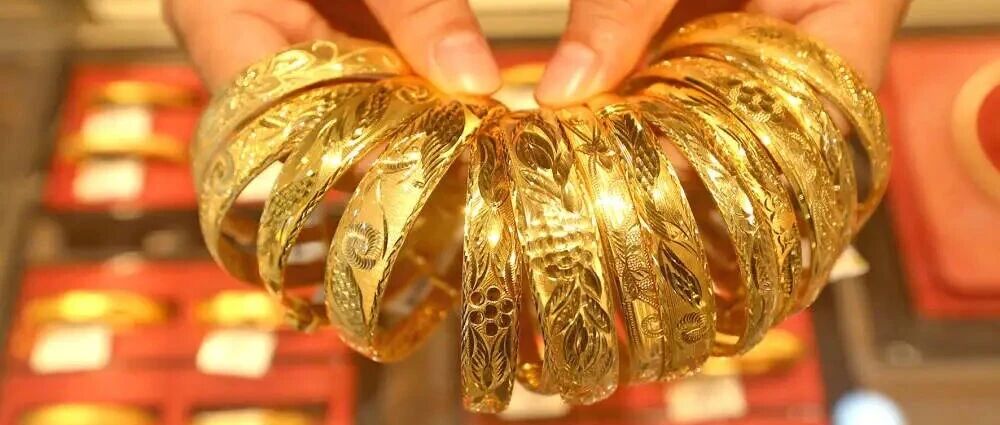
黄金牛市

Search documents
金荣中国:金价亚盘区间震荡盘整,短线支撑位多单布局方案
Sou Hu Cai Jing· 2025-12-31 06:13
基本面: 周三(12月31日周三(12月31日)亚市早盘,现货黄金窄幅震荡,目前交投于4336.95美元/盎司。这反映出市场对避险资产的持续需求与美元走强之间的拉 锯。然而,纵观全年,黄金价格已累计上涨66%,有望成为自1979年以来表现最为亮眼的一年。这一现象不仅源于美联储的货币政策调整,还受到央行购 金、资金流入以及国际热点事件的综合影响。金价近期波动:反弹强劲却尾盘回吐,逢低买盘成关键支撑进入2025年末,黄金市场经历了剧烈的过山车行 情。周一,现货黄金从上周五创下的历史高点4549.71美元/盎司大幅回落,最低触及4303美元附近,创下自10月21日以来的最大单日百分比跌幅。这一回落 主要源于获利了结的压力,投资者在连续上涨后选择锁定利润,导致市场短期调整。然而,这种下跌迅速吸引了逢低买盘的介入,推动黄金在周二展开强劲 反弹。现货黄金一度上涨1.64%,触及4404美元/盎司附近,显示出市场对黄金避险属性的持续认可。避险买盘的涌入,进一步强化了这一反弹势头,因为投 资者重新关注全球地缘政治和经济风险,将黄金视为安全的港湾。 ----操作策略----- 黄金图表: ---趋势判断---- 目前黄金行情为 ...


金价飙涨中的世界经济趋势观察
Xin Hua Wang· 2025-12-31 05:25
2025年,黄金经历了历史性牛市,国际金价年内涨幅一度超过约70%。这一暴涨既有此前数年价格上行 的蓄势而发,也有当前世界经济多重困境的催化。在国际秩序深度重构背景下,全球发展信心的显著变 化、世界经济前景的潜在风险以及历史周期的微妙镜像,都映照在黄金"狂飙"中。 国际金价迎来历史性牛市 2025年黄金价格飙升,出现自1979年石油危机以来最大涨幅,期货黄金和现货黄金在年末均一度逼近每 盎司4600美元,迎来数十年来最大牛市。 通过数据分析,本轮金价从2019年下半年逐步开启上行通道,当年涨幅约为18%;2020年至2023年间, 国际金价多次突破2000美元,在此期间正是新冠疫情全球蔓延、世界经济遭受冲击、地缘政治局势紧 张、美联储实行量化宽松之际。从年度涨幅来看,2020年和2024年国际金价涨幅均超过25%。进入2025 年,金价一骑绝尘,3月突破3000美元,10月突破4000美元,并于年末再创新高,逼近4600美元。 在黄金行情带动下,其他贵金属价格也水涨船高,国际白银期价一度突破每盎司80美元,年内上涨约 150%。铂金期货价格飙升至历史新高,首次突破每盎司2300美元大关。此外,铜价年内持续上涨 ...
世金协析黄金牛市但其日线星高悬
Jin Tou Wang· 2025-12-31 03:11
摘要今日周三(12月31日)亚盘时段,现货黄金目前交投于4328.09美元附近,截至发稿,现货黄金最新报 4369.21美元/盎司,涨幅0.74%,最高上探至4372.97美元/盎司,最低触及4328.09美元/盎司。目前来 看,现货黄金短线偏向看涨走势。 今日周三(12月31日)亚盘时段,现货黄金目前交投于4328.09美元附近,截至发稿,现货黄金最新报 4369.21美元/盎司,涨幅0.74%,最高上探至4372.97美元/盎司,最低触及4328.09美元/盎司。目前来 看,现货黄金短线偏向看涨走势。 【要闻速递】 2025年,黄金跃居主要资产类别涨幅榜首。世界黄金协会全球研究负责人胡安.卡洛斯.阿尔蒂加斯指 出,金价创新高得益于四大驱动因素,各贡献约10%,且全年保持一致性,还将主导2026年走势。 他称,两大宏观动力是关键:一是地缘政治经济高度紧张,二是美元疲软与利率温和下行。叠加积极价 格动能,投资需求支撑显著。央行持续净买入,虽速度较前两年放缓,但动能亦为重要推力。 展望2026年,阿尔蒂加斯表示,当前金价反映宏观共识预期,若经济符合预期则区间波动,但偏离更常 见。若美国经济温和下滑,美联储降息、 ...
国金宏观:换一种思路看待金价的“无人区”
Xin Lang Cai Jing· 2025-12-31 02:58
Core Viewpoint - The market's perception of "AI unknown" has not changed, creating a favorable environment for gold as a hedge against chaos, while silver, possessing both gold-like attributes and AI narratives, shows higher elasticity. The focus is on waiting for clearer AI narratives by 2026 [3][40]. Central Bank Gold Purchases - Central banks have gradually increased gold reserves over the past three years, particularly among geopolitical powers and traditional neutral countries, despite a slowdown in purchasing rates [4][41]. - The average quarterly gold purchases by global central banks rose from 100-200 tons to 200-400 tons post-Q3 2022, with central bank purchases accounting for 54% of gold investment demand by Q4 2024 [4][41]. - Currently, global central banks are still underweight in gold, with gold reserves making up about 22% of total reserves, a 7 percentage point increase from three years ago, but still below historical geopolitical turning points [4][42]. Market Funds and Investment Strategies - Gold is viewed as a crucial hedging tool in asset allocation due to its low correlation with traditional stock and bond assets, with a typical allocation of 8-10% in risk parity strategies [11][45]. - The correlation between U.S. stocks and bonds has been positive, highlighting the need for alternative assets like gold for diversification, especially in a high inflation environment [14][49]. - Major banks are shifting to a "60/20/20" asset allocation model (60% stocks, 20% bonds, 20% gold) to mitigate inflation and market volatility, reflecting a transformation in traditional asset strategies [14][50]. Historical Context of Gold Prices - Historical references indicate that gold prices have not shown significant signs of being overvalued in the current bull market compared to past periods, such as the 1970s when gold prices surged dramatically [20][59]. - Since 2008, gold prices have increased by 5.7 times, and by 2.4 times since the 2022 geopolitical events, suggesting that the current bull market has room for growth compared to historical peaks [23][61]. Potential Spillover Effects - If the AI bubble continues to expand, gold's bull market may have spillover effects on related metals like silver and copper, which are essential in AI-related manufacturing [27][64]. - The relationship between gold and strategic metals may evolve, with potential for synchronized price movements as geopolitical tensions drive demand for these assets [34][70].

黄金,2025交卷倒计时!考的如何?
Sou Hu Cai Jing· 2025-12-31 02:48
Core Viewpoint - The recent significant drop in precious metals, particularly gold and silver, has raised concerns about market stability and future price movements, despite many investors having had a profitable year [1][3]. Group 1: Market Performance - Precious metals, including gold and silver, experienced a decline of over 10% recently, reversing previous gains and impacting investor sentiment [1]. - Most investors have still seen substantial returns this year, with varying degrees of profitability depending on individual strategies [3]. Group 2: Future Outlook - The short-term outlook for gold suggests limited potential to reach $4,550, with current market conditions indicating a possible adjustment phase before any significant recovery [3]. - The upcoming New Year holiday period is expected to introduce volatility, with the potential for market movements to occur [3]. - The long-term bullish trend for gold remains intact, supported by factors such as the Federal Reserve's interest rate policies, ongoing geopolitical tensions, and unresolved trade issues [3][5]. Group 3: Technical Analysis - Recent price movements indicate that the market is in a corrective phase, with potential support levels around $4,300 and resistance near $4,400 [4]. - The market is currently experiencing a phase of consolidation, with no clear direction established, emphasizing the importance of understanding market fluctuations [4]. Group 4: Policy Implications - The anticipated nomination of a new Federal Reserve chair by Trump post-New Year could lead to further monetary easing, which may serve as a catalyst for gold price increases in the future [5].
换一种思路看待金价的“无人区”(国金宏观陈瀚学)
雪涛宏观笔记· 2025-12-31 02:40
Core Viewpoint - The article discusses the current state and future outlook of gold and silver in the context of market dynamics influenced by AI narratives and geopolitical factors, suggesting that gold remains a favorable asset amidst disorder, while silver, with its dual attributes, may exhibit higher elasticity as AI narratives evolve [2][35]. Group 1: Gold Market Dynamics - As of 2025, the London spot gold has risen by 71%, marking the highest annual increase since 1979, despite a slowdown in central bank purchases and a surge in speculative market investments [4]. - The central bank gold purchases have increased significantly, with quarterly purchases rising from an average of 100-200 tons to 200-400 tons post-2022, indicating a shift in global monetary policy and geopolitical dynamics [5]. - The current gold reserve percentage held by central banks is approximately 22%, up 7 percentage points from three years ago, but still below historical levels during significant geopolitical shifts [5]. Group 2: Market Funds and Investment Strategies - Investment institutions view gold as a crucial hedging tool due to its low volatility and low correlation with traditional assets, with typical allocations in risk parity strategies being 8%-10% [13]. - The correlation between U.S. stocks and bonds has been high, necessitating alternative assets like gold for diversification, especially in a high inflation environment where traditional bond hedging is less effective [15]. - A shift in asset allocation strategies is observed, with major banks adopting a "60/20/20" model (60% stocks, 20% bonds, 20% gold) to combat inflation and market volatility [16]. Group 3: Historical Context and Future Projections - Historical analysis shows that gold prices have not significantly exceeded previous highs, with current trends indicating a potential for continued appreciation linked to U.S. debt levels and inflation [20][25]. - The article suggests that unless AI technology significantly enhances productivity and fiscal efficiency, the gold bull market may persist, as the correlation between gold price increases and U.S. debt remains strong [25]. - The potential spillover effects of the gold bull market could benefit silver and other strategic metals, as they are increasingly viewed as complementary assets in the current geopolitical landscape [26][32]. Group 4: Silver and Other Strategic Metals - Silver, possessing both "gold-like" properties and relevance to AI narratives, is expected to show stronger elasticity in the market, particularly as AI narratives become clearer [35]. - The relationship between gold and other strategic metals like copper is highlighted, with expectations of a mean reversion in their price ratios as geopolitical tensions drive demand for these assets [32][34]. - The strategic metal index constructed from 19 rare metals indicates a potential bull market that may align with the gold bull market, driven by both private and public sector demand [34].

2025年日赚近1.4亿元 紫金矿业预告史上最好成绩单
Mei Ri Jing Ji Xin Wen· 2025-12-30 23:54
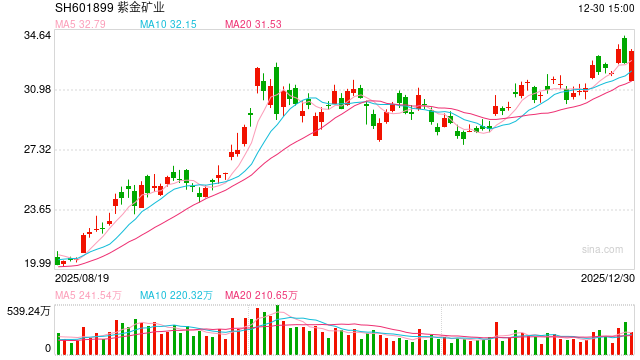
紫金矿业的这一"炸裂"业绩刷新了公司历史纪录,是成立以来的最好成绩单。 《每日经济新闻》记者注意到,黄金价格的上涨对紫金矿业的业绩增长功不可没,伦敦现货黄金在2025 年创下了自1980年以来的最高单年涨幅。站在2026年的门槛上,不少研究机构认为黄金牛市基础依然稳 固,上涨趋势未改。 预计2025年归母净利润超510亿元 热点栏目 自选股 数据中心 行情中心 资金流向 模拟交易 客户端 炒股就看金麒麟分析师研报,权威,专业,及时,全面,助您挖掘潜力主题机会! 12月30日,紫金矿业(SH601899,股价33.42元,市值8886亿元)发布业绩预增公告,预计2025年度归 母净利润将突破510亿元人民币,同比大增约60%。 据公司公告,紫金矿业预计2025年度实现归属于上市公司股东的净利润约人民币510亿元至520亿元。与 2024年同期320.51亿元的净利润相比,将增加约189亿元至199亿元,同比增加约59%至62%。 基于此,华福证券给出了明确的价格预测:预计2026年黄金价格将在2025年4300美元/盎司左右的峰值 水平基础上继续抬升。 除了宏观利率环境,全球央行的购金行为正在发生深刻的结构性变 ...

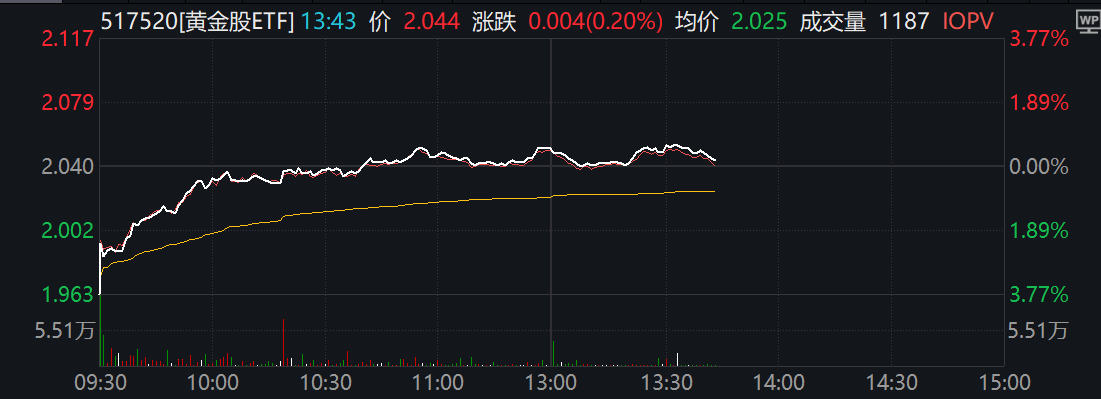
黄金股ETF(517520)企稳反弹,去美元化大趋势为金价提供长期支撑
Sou Hu Cai Jing· 2025-12-30 06:25
Group 1 - The overall commodity market has experienced significant volatility, with high-volatility assets like silver undergoing deep corrections, impacting gold prices [1] - Gold, as a hard currency, is expected to have stronger and longer-term upward momentum due to the ongoing de-dollarization trend and escalating geopolitical conflicts [1] - As of December 30, 2025, the CSI Gold Industry Stock Index (931238) rose by 0.06%, with notable increases in constituent stocks such as Zijin Mining (02899) up 2.87% and Jiangxi Copper (600362) up 2.84% [1] Group 2 - The US dollar has entered a depreciation cycle, with the dollar index dropping approximately 10% in 2025, which typically benefits gold prices due to their inverse relationship [3] - The tense situation in Venezuela and global geopolitical risks have heightened the market's focus on gold's safe-haven attributes, supporting gold prices [4] - Three key factors supporting the current gold bull market include the Federal Reserve's resumption of easing, declining confidence in the dollar, and escalating geopolitical risks [4] Group 3 - The Gold Stock ETF (517520) is known for its higher elasticity during gold price increases, making it an attractive investment for those looking to gain from rising gold prices [5] - The ETF closely tracks the CSI Gold Industry Stock Index (931238) and selects high-quality gold industry companies from the Shanghai, Shenzhen, and Hong Kong markets, allowing investors to capture gold price gains effectively [5] - Investing in this ETF can help diversify individual stock risks while providing exposure to the entire gold industry [5]



金饰克价跌破1400元,2026年黄金牛市能否延续
2 1 Shi Ji Jing Ji Bao Dao· 2025-12-30 03:32
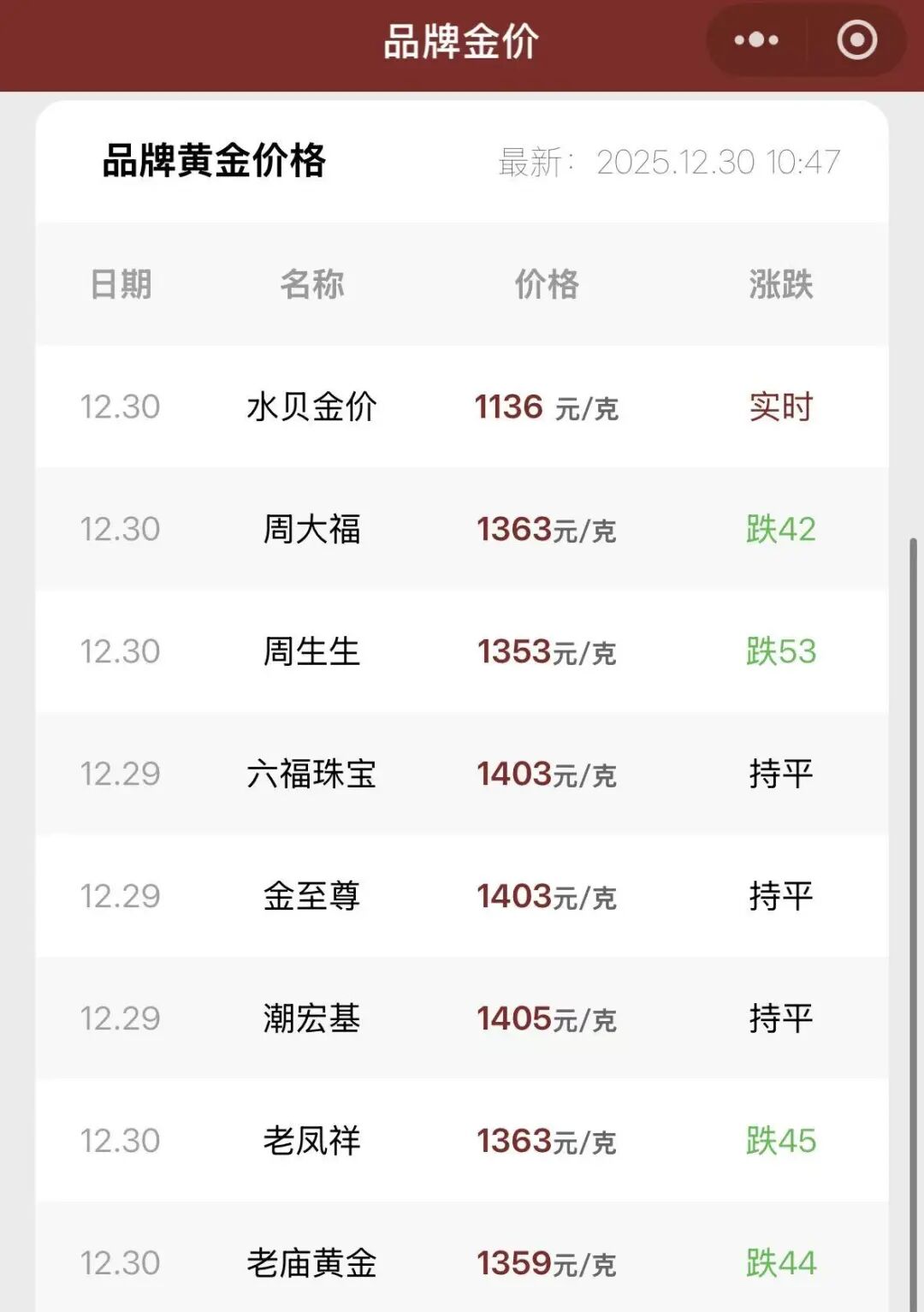
Group 1 - Domestic gold jewelry prices have significantly adjusted downwards, with major brands reporting the following prices: Lao Feng Xiang at 1363 CNY/g, Lao Miao Gold at 1359 CNY/g, Chow Sang Sang at 1353 CNY/g, and Chow Tai Fook at 1363 CNY/g, while Liufu Jewelry remains at 1403 CNY/g [1][2] - The price changes reflect a decrease, with Chow Tai Fook dropping by 42 CNY, Chow Sang Sang by 53 CNY, Lao Feng Xiang by 45 CNY, and Lao Miao Gold by 44 CNY [2] Group 2 - The outlook for the gold market in 2026 is supported by expectations of interest rate cuts by the Federal Reserve, with a likelihood of 2 to 3 cuts anticipated for the year [3] - Global central bank gold purchases are expanding beyond geopolitical nations, contributing to a shift in the global foreign exchange reserve composition, where the share of dollar assets has decreased from 72% to 56%, while gold reserves have increased to 25% [3] - Despite high gold prices, investor demand remains strong, with gold investment demand in the first three quarters of 2025 reaching 551.5 tons, 477.5 tons, and 537.2 tons, significantly higher than the same period in 2024 [3] Group 3 - Potential negative factors for gold in 2026 include easing inflation pressures in the U.S., which historically has led to declines in gold prices during periods of high inflation retreat [4] - Historical instances of central banks selling gold during liquidity pressures, such as in 1997 during the Asian financial crisis, could also pose risks to gold prices [4] - A significant easing of international geopolitical tensions may negatively impact gold demand and prices [4]
金饰克价跌破1400元,2026年黄金牛市能否延续
21世纪经济报道· 2025-12-30 03:27
Core Viewpoint - The article discusses the recent significant decline in domestic gold jewelry prices and analyzes the potential for a continued bull market in gold for 2026, influenced by various economic factors and investor behavior [1][3]. Price Comparison - As of December 30, 2025, several gold jewelry brands reported a notable price drop for domestic 24K gold jewelry, with Lao Feng Xiang and Chow Tai Fook both priced at 1363 CNY per gram, while Lao Miao Gold was at 1359 CNY per gram, and Chow Sang Sang at 1353 CNY per gram. Liufu Jewelry maintained a price of 1403 CNY per gram [1][2]. Market Dynamics - The international gold price has seen fluctuations, dropping from a previous high of 4550 USD to around 4350 USD. The article raises the question of whether the gold bull market can continue into 2026 [2][3]. Support for Gold Market - Key factors supporting the gold market include expectations of interest rate cuts by the Federal Reserve, with three cuts totaling 75 basis points in 2025 and an anticipated 2-3 cuts in 2026. Additionally, global central bank gold purchases are expanding beyond geopolitical nations, with the share of dollar assets in global reserves decreasing from 72% to 56%, while gold reserves have increased to 25% [3]. Investor Behavior - Gold investment returns and capital inflows are positively correlated, with significant demand for gold observed in 2025, totaling 551.5 tons, 477.5 tons, and 537.2 tons in the first three quarters, respectively. Gold ETF and derivatives investments also showed strong performance, with figures of 226.6 tons, 170.5 tons, and 221.7 tons, all higher than the previous year. Despite a decline in gold jewelry consumption compared to the previous year, quarterly consumption remains high at nearly 400 tons [3]. Potential Risks - Possible negative factors for gold in 2026 include easing inflation pressures in the U.S., which historically led to declines in gold prices during periods of high inflation retreat. Additionally, liquidity pressures could prompt central banks to sell gold, as seen during the 1997 Asian financial crisis when global central banks sold gold, leading to significant price drops [4].