新发展格局

Search documents
国务院重要批复!
中国能源报· 2025-12-04 01:31
Core Viewpoint - The article discusses the approval of the "Yangtze River Delta Land Spatial Planning (2023-2035)" by the State Council, emphasizing the need for systematic optimization of land space development and protection, infrastructure support, and coordinated planning implementation to promote sustainable development in the region [2][5]. Group 1: Planning Framework - The "Planning" serves as a national-level land spatial special plan, guiding spatial development and sustainable growth in the Yangtze River Delta, and is based on Xi Jinping's thoughts and the principles of the 20th National Congress of the Communist Party of China [2][3]. - The planning aims to integrate development and security, promote harmony between humans and nature, and support the construction of a world-class urban agglomeration [2][3]. Group 2: Safety and Environmental Protection - By 2035, the region's arable land must not be less than 16.148 million acres, with permanent basic farmland protection of at least 14.29 million acres, and ecological protection red line covering no less than 77,000 square kilometers [3]. - The plan includes identifying key areas for natural disaster risk prevention and establishing control lines for geological disasters and floods [3]. Group 3: Spatial Development Strategy - The plan emphasizes optimizing the spatial layout led by metropolitan areas, enhancing the integration of urban spaces, and supporting the construction of a world-class city cluster [4]. - It aims to strengthen cross-regional collaboration in technological and industrial innovation, ensuring the spatial needs of key innovation corridors and ecological economic belts are met [4]. Group 4: Implementation and Governance - The planning document is a comprehensive arrangement for land space protection, development, utilization, and restoration, requiring strict adherence and monitoring [5][6]. - Local governments are tasked with organizing leadership, clarifying responsibilities, and integrating the planning goals into local spatial planning systems [6].

“期待中国高质量发展带来更多机遇”(见证·中国机遇)
Ren Min Ri Bao· 2025-12-03 22:29
Core Viewpoint - The chairman of the Fattala Group emphasizes the opportunities brought by China's higher-level open economy and expresses a desire for deeper cooperation with Chinese partners for sustainable development and mutual benefits [2]. Group 1: Company Overview - The Fattala Group, established in 1948 and headquartered in Alexandria, Egypt, has been importing high-quality products from China for many years [2]. - The company operates the Gomla chain of wholesale supermarkets, which has gained popularity among local consumers, with 95 stores established in Egypt [2]. - Gomla has also set up factories in China to produce its own brand products, highlighting the quality and competitive pricing of Chinese-made goods [2]. Group 2: Market Insights - Egyptian consumers have a high acceptance of Chinese products, with a focus on selling high-quality items that are trusted by local buyers [3]. - In July, Gomla opened a special section for Chinese products in El-Bagour, which was well-received by consumers [3]. - China is Egypt's largest trading partner and a significant source of imports, with active investments in Egypt's manufacturing sector [3]. Group 3: Future Outlook - The chairman expresses confidence in the resilience of the Chinese economy and anticipates that China's high-quality development will create more opportunities for enhancing Egypt-China cooperation [3]. - The company aims to play a more active bridging role in the relationship between the two countries [3].

刘元春:以习近平经济思想助力推进中国式现代化|宏观经济
清华金融评论· 2025-12-03 09:48
Group 1 - The core viewpoint of the article emphasizes the significance of Xi Jinping's economic thought in guiding China's modernization and achieving the second centenary goal of building a modern socialist country [2][3]. - The article outlines that "Chinese-style modernization" is a new theoretical achievement that addresses the major issues of what kind of socialist modernization to build and how to achieve it, reflecting a comprehensive and high-quality development across various fields [4]. - It highlights five key characteristics of Chinese-style modernization: modernization with a large population, common prosperity for all, coordination between material and spiritual civilization, harmony between humanity and nature, and a path of peaceful development [4]. Group 2 - The article states that the strategic goal of Xi Jinping's economic thought is to promote Chinese-style modernization, with high-quality development being the primary task in building a modern socialist country [5]. - It emphasizes the importance of a new quality of productivity as a representative innovative theory within Xi Jinping's economic thought, which focuses on technological innovation and the optimization of production factors [6][7]. - The necessity of accelerating the development of new quality productivity is presented as an inevitable choice for advancing Chinese-style modernization, forming a theoretical foundation for the new development concepts and high-quality development [8]. Group 3 - The article discusses the pathways to promote Chinese-style modernization through Xi Jinping's economic thought, emphasizing the need for comprehensive deepening of reforms to enhance the internal driving force of economic and social development [10]. - It outlines the importance of developing new quality productivity, with specific paths including strengthening technological innovation, investing in strategic emerging industries, and promoting the digital transformation of traditional industries [10][11]. - The construction of a high-level socialist market economy system is highlighted as essential, focusing on enhancing market efficiency and ensuring a fair and vibrant market environment while balancing government and market roles [11].

万联晨会-20251203
Wanlian Securities· 2025-12-03 00:57
市 场 研 究 [Table_Title] 万联晨会 [Table_MeetReportDate] 2025 年 12 月 03 日 星期三 [Table_Summary] 概览 核心观点 【市场回顾】 周二 A 股三大股指全线收跌,上证指数下跌 0.42%,报 3897.71 点; 深证成指下跌 0.68%,报 13,056.70 点;创业板指下跌 0.69%,报 3071.15 点。A 股两市全天成交额 1.59 万亿元人民币,南向资金净买 入 41.01 亿港元。A 股两市个股超 3400 只个股下跌。申万行业方面, 石油石化、轻工制造及家用电器行业涨幅居前,传媒及有色金属行业 领跌;概念板块方面,福建自贸区及太赫兹概念指数涨幅居前,BC 电 池及 CRO 概念指数跌幅居前。恒生指数上涨 0.24%,恒生科技指数下 跌 0.37%;美国三大股指集体收涨,道指上涨 0.39%,报 47,474.46 点,标普 500 指数上涨 0.25%,报 6829.37 点,纳指上涨 0.59%,报 23,413.67 点。欧洲股市及亚太股市主要股指普遍上涨。 【重要新闻】 【国家发展改革委主任郑栅洁在《党建》杂志发 ...
2025企业家博鳌论坛系列活动启幕
Sou Hu Cai Jing· 2025-12-02 08:13
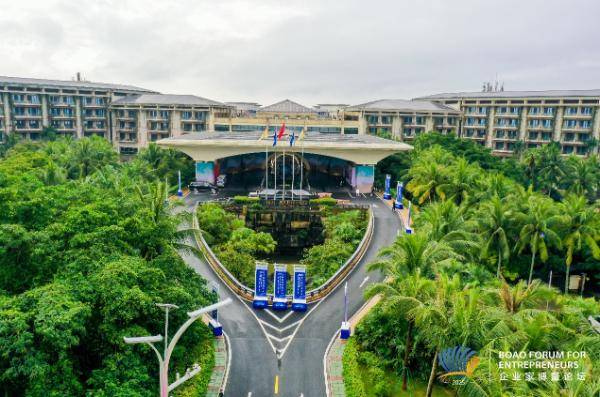
新华网海南博鳌12月2日电(记者 王日晨)12月2日,2025企业家博鳌论坛系列活动在海南博鳌正式拉 开帷幕。 2025企业家博鳌论坛现场。新华网发 2025企业家博鳌论坛系列活动以"链接全球,引领未来:'十五五'新机遇"为主题,包括世界500强、中 国500强和行业领军企业家在内的各界嘉宾汇聚一堂,共话"十五五"发展新机遇,共探新发展格局下企 业发展的新路径、新作为。 论坛系列活动为期四天,除主论坛之外,还设置了新华网"国际看点"纵论天下特别年会、数智科技创新 发展大会、未来生活发展论坛暨美好人居论坛等三十多场平行论坛和海南自由贸易港推介、草原优品产 销对接会、优质文旅资源暨自驾游特色线路推介会、公益之约等二十多场配套活动。 2025企业家博鳌论坛系列活动由新华社品牌工作办公室、新华网、新华社海南分社主办。企业家博鳌论 坛自2016年创办以来,已成功举办九届,今年是第十届。 2025企业家博鳌论坛现场。新华网发 2025企业家博鳌论坛现场道旗。新华网发 2025企业家博鳌论坛指定用车。新华网发 2025企业家博鳌论坛主题"链接全球,引领未来:'十五五'新机遇"。新华网发 2025企业家博鳌论坛迎宾大门。新华 ...
王岩:把握推动高质量发展的科学方法论
Jing Ji Ri Bao· 2025-12-02 00:09
Core Viewpoint - The 20th Central Committee's Fourth Plenary Session emphasizes "high-quality development" as a primary goal for the 15th Five-Year Plan, continuing the focus from the 14th Five-Year Plan and highlighting the need for a balanced approach between stability and progress [1][2] Group 1: Stability and Progress - "Stability" is identified as the foundation for high-quality development, requiring a focus on employment, enterprises, markets, and expectations to maintain economic stability [3] - "Progress" represents the goal of high-quality development, necessitating reforms in quality, efficiency, and driving forces to achieve a balance between qualitative improvement and reasonable quantitative growth [4] Group 2: Methodological Approach - The principle of "seeking progress while maintaining stability" serves as a methodological framework for economic work, advocating for macroeconomic regulation and the effective implementation of fiscal and monetary policies [5] - Emphasizing the need for a systematic approach, the strategy calls for a balance between government and market roles, speed and quality, and development and safety [5] Group 3: Coordinated Development - The strategy promotes "point" and "surface" coordination, focusing on key issues while ensuring overall systemic progress, enhancing the internal dynamics of high-quality development [6][8] - Identifying key breakthrough areas in industrial development, the strategy emphasizes the importance of focusing on the real economy and technological innovation to drive high-quality development [7] Group 4: Domestic and International Integration - Strengthening the domestic cycle is crucial for high-quality development, with a focus on expanding domestic demand and enhancing consumption as a primary driver of economic growth [11] - The strategy highlights the importance of facilitating both domestic and international dual circulation, promoting an open and competitive market environment to enhance the quality and efficiency of high-quality development [12][13]
这三个群体,收入分配要“多得”
Xin Hua Wang· 2025-12-01 23:53
Core Points - The article emphasizes the importance of improving the income distribution system to ensure that hard workers, skilled individuals, and innovators receive more rewards, aligning with the goals of the 14th Five-Year Plan [1][5][9] - The report highlights the steady growth of residents' disposable income, with a projected average of 41,314 yuan in 2024, reflecting a real annual growth rate of 5.5% from 2021 to 2024 [1][2] - The article discusses the strategic significance of income distribution reform in promoting common prosperity, fostering new productive forces, and establishing a new development pattern [2][3] Group 1: Income Distribution Mechanism - The article outlines the need for a coordinated system of primary distribution, redistribution, and third distribution to effectively adjust high incomes and increase low-income earners' earnings [2][3] - It stresses that the income distribution system should allow various production factors to participate in distribution based on their contributions, thereby recognizing the value of human capital [2][7][10] Group 2: Encouraging Hard Work and Skills - The concept of "more for more work" is highlighted, where employers set wage standards based on labor time, workload, and contributions, ensuring that diligent workers receive appropriate compensation [6][9] - The article notes that there are over 220 million skilled workers in China, with more than 72 million being high-skilled, emphasizing the need to enhance their compensation and social status [6][9] Group 3: Innovation Incentives - The article points out that innovation is crucial for economic development, with a focus on the need for a system that rewards innovators adequately, especially in high-risk fields like AI and digital economy [7][8] - It mentions that as of June this year, China has reached an average of 15.3 high-value invention patents per 10,000 people, indicating a strong emphasis on innovation [7][8] Group 4: Policy and Practice - The article discusses various policies and practices that have been implemented to support the three groups of "more for more," including the issuance of guidelines for skill talent compensation and the promotion of collective wage negotiations [9][10] - It highlights the importance of creating a fair competitive market environment and enhancing regulatory measures to ensure that contributions are evaluated and rewarded appropriately [10]
把握推动高质量发展的科学方法论
Jing Ji Ri Bao· 2025-12-01 22:26
Core Viewpoint - The article emphasizes the importance of "high-quality development" as a primary goal for China's 15th Five-Year Plan, highlighting the need for a balanced approach between stability and progress in economic and social development [1][2][5]. Group 1: Stability and Progress - "Stability" is identified as a prerequisite for high-quality development, reflecting a methodology that respects objective laws and emphasizes practical realities [3]. - The current development environment is characterized by complex changes, necessitating a focus on stabilizing employment, businesses, markets, and expectations to ensure economic operations remain within a reasonable range [3][5]. - "Progress" is framed as the goal and direction of high-quality development, requiring transformative changes in quality, efficiency, and momentum to achieve a balance between qualitative improvement and reasonable quantitative growth [4][5]. Group 2: Dynamic Balance - The article stresses the need for a dynamic balance between "stability" and "progress," which serves as a guiding principle for economic work, advocating for effective macroeconomic regulation and policy implementation [5]. - It highlights the importance of maintaining a systematic view to harmonize government and market roles, speed and quality, and development and safety [5]. Group 3: Coordinated Development - The concept of "point" and "surface" coordination is introduced, emphasizing the need for targeted breakthroughs in key areas while ensuring overall systemic advancement [6][7]. - The article suggests that breakthroughs in core issues can lead to broader systemic improvements, particularly in the context of developing a modern industrial system centered on advanced manufacturing [7][8]. Group 4: Internal and External Integration - The article discusses the necessity of integrating internal and external development, advocating for a strong domestic cycle while promoting international cooperation and trade [10][12]. - It notes that domestic consumption is a significant driver of economic growth, with a focus on enhancing consumer demand and optimizing investment structures [11][12]. Group 5: Institutional Support - The article calls for the establishment of a robust institutional framework to support high-quality development, including the construction of a high-level socialist market economy and the removal of barriers to market integration [9][13]. - It emphasizes the importance of creating a conducive business environment to facilitate the efficient allocation of resources and promote innovation [9][13].
罗文:坚决破除阻碍全国统一大市场建设卡点堵点
Sou Hu Cai Jing· 2025-12-01 09:19
Core Viewpoint - The construction of a nationwide unified market is a significant strategic decision made by the central government, emphasizing the need to eliminate barriers and enhance market efficiency [1][10]. Group 1: Basic Requirements for Advancing the Unified Market - The basic requirements for advancing the unified market include "five unifications and one openness," which are essential for reducing transaction costs and ensuring efficient market operation [2][3]. - Unified market infrastructure is necessary to facilitate logistics, capital flow, and information exchange, thereby promoting smooth market circulation [3][4]. - Standardizing government behavior is crucial to prevent local governments from distorting market mechanisms and ensuring fair competition [4][5]. - Unified market regulation is vital for fostering fair competition among various business entities, enhancing market vitality [5][6]. - Establishing a unified resource market is key to improving resource allocation efficiency and promoting productivity [6][7]. Group 2: Importance of Removing Barriers - The importance of removing barriers to the unified market is underscored by the need for a cohesive economic framework that supports high-quality development and a new development pattern [10][12]. - The transition from a planned economy to a market economy has led to fragmented rules and local protectionism, which need to be addressed [11][12]. Group 3: Key Tasks for Removing Barriers - Key tasks include unifying market rules, regulating local government economic promotion behaviors, and addressing "involution" competition issues [13][14]. - Strengthening anti-monopoly and fair competition regulations is essential for maintaining a fair market order and stimulating business vitality [9][15]. - Improving logistics efficiency and reducing costs are critical for enhancing market connectivity and operational efficiency [16][17].
张占斌:挖掘内需潜力 增强国内大循环内生动力和可靠性
Ren Min Wang· 2025-11-30 09:21
四是要以"补短板、强创新"优化供给体系,破解"产业链薄弱、投资低效"等问题。实施产业链"补链、强链、延链"工程,培育"链主"企业。优化投资结 构向民生与科技创新倾斜,落实减税降费,释放经营主体创新活力。 五是要以"扩开放、守底线"强化安全保障,破解"循环终端、风险冲击"等问题。对接国际规则,有序扩大开放。筑牢产业链安全屏障,加强金融、粮 食、能源保障。 11月29日,由人民网主办的2025国民消费大会在北京举行。与会专家学者共同聚焦消费领域前沿趋势和创新举措,围绕新型消费、健康消费、服务消费 等话题展开探讨,为提振消费、优化环境出谋划策。会上,中央党校(国家行政学院)中国式现代化研究中心主任、国家一级教授、博士生导师张占斌作 《着眼全局 做强国内大循环》主题分享。他认为,做强国内大循环是推动经济行稳致远的战略之举,要多措并举推动解决目前国内大循环存在的堵点、卡 点,增强国内大循环内生动力和可靠性。 二是要以"稳就业、增收入"筑牢消费根基。通过支持制造业、服务业技术改造吸纳就业、培育数字等新就业形态、鼓励平台企业开发灵活岗位等扩岗 位、稳就业。通过优化分配方式、加强社会保障体系建设等为消费增长注入动力。 "大国 ...