
智能化转型

Search documents
鸿路钢构(002541):税费拖累单吨盈利,吨毛利同环比均有改善
Tianfeng Securities· 2025-10-27 14:12
Investment Rating - The investment rating for the company is "Buy" with a target price not specified [6][17]. Core Views - The company has shown steady revenue growth with a slight decline in profit margins due to increased tax burdens, but overall performance is improving [1][2]. - The report highlights the potential for improved profitability through supply-side reforms in the steel industry, which may lead to better pricing and demand dynamics [4]. Financial Performance Summary - For the first three quarters of 2025, the company reported revenue of 15.92 billion, a year-on-year increase of 0.19%, while net profit attributable to the parent company was 496 million, down 24.3% year-on-year [1]. - In Q3 2025, the company achieved revenue of 5.367 billion, a decrease of 3.5% year-on-year, with net profit attributable to the parent company at 208 million, down 8.5% year-on-year [1]. - The gross profit margin for Q3 2025 was 11.17%, an increase of 1.97 percentage points year-on-year, with a single-ton gross profit of 500, an increase of 49.5 year-on-year [2]. Production and Cost Analysis - The production volume for the first nine months of 2025 was approximately 3.6102 million tons, a year-on-year increase of 11.06%, with Q3 production at about 1.2477 million tons, up 9% year-on-year [2]. - The report indicates that the increase in single-ton tax expenses has negatively impacted net profit, with Q3 tax expenses amounting to 69 million, an increase of 850,000 year-on-year [2]. Cash Flow and Expense Management - The company maintained a strong cash flow position with a cash flow from operations (CFO) of 378 million for the first three quarters, an increase of 51 million year-on-year [3]. - The period expense ratio for the first three quarters was 6.78%, a slight increase of 0.1 percentage points year-on-year, with various expense categories showing mixed trends [3]. Strategic Outlook - The report emphasizes the importance of the steel supply-side reform, which is expected to enhance the company's performance by potentially increasing order releases and improving profit margins [4]. - The company is focusing on technological advancements and automation in its production processes, which may contribute to additional profit streams [4].

兆新股份2025年前三季度归属于上市公司股东的净利润同比扭亏
Zheng Quan Ri Bao Wang· 2025-10-27 04:15
Core Insights - The company reported a significant improvement in performance for the first three quarters of 2025, with total revenue reaching 322 million yuan, a year-on-year increase of 34.45%, and a net profit of 4.91 million yuan, marking a turnaround from losses [1] Group 1: Business Performance - The substantial improvement in performance is attributed to enhanced management levels and the effects of recent acquisitions [1] - The company is gradually establishing a new pattern of high-quality development through structural improvements in profitability, the implementation of innovative technologies, and continuous enhancement of governance systems [1] Group 2: Main Business Upgrades - The company adheres to a dual-driven strategy of "fine chemicals + new energy," continuously promoting quality and efficiency across the industrial chain [2] - In the fine chemicals sector, the company is enhancing its R&D and production systems, leveraging a professional technical team to drive technological innovation and industrial upgrades [2] - The company is committed to ESG sustainable development principles, ensuring high standards in green production while providing quality products and services [2] Group 3: Innovation and Future Growth - The company focuses on innovation as a core driver for high-quality development, supported by "technological breakthroughs + governance optimization" [3] - Enhanced decision-making efficiency and risk management capabilities are achieved through optimized governance structures and collaboration with state-owned shareholders [3] - The company is accelerating its smart transformation by integrating AI technology into key areas such as product development, supply chain management, and operational analysis [3] - Future profitability is expected to significantly improve as the company deepens its strategic industrial layout and leverages technological empowerment [3]

新疆阿克苏:特色产业惠民生
Ren Min Ri Bao Hai Wai Ban· 2025-10-27 03:05
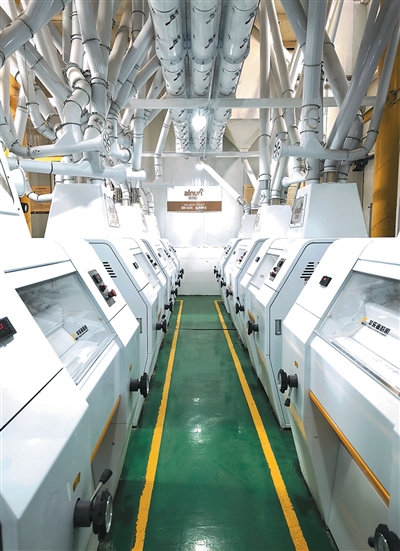
Core Insights - The article highlights the transformation of the Aksu region in Xinjiang, China, showcasing the development of modern agricultural practices and industries that enhance local economic growth and improve the livelihoods of residents [1] Group 1: Agricultural Development - Aksu, known as "White Water City," has seen the establishment of key agricultural enterprises like the Ailinu'er Agricultural Technology Development Co., which has evolved from a century-old water mill into a national key leading enterprise in agricultural industrialization [2] - The company employs advanced low-temperature, low-pressure, and low-speed processing techniques in its flour production, with high levels of automation in the production process [2] - The introduction of value-added products such as freeze-dried powder and raw pulp from specialty crops has contributed to higher profitability [2] Group 2: Cotton Industry - In Aksu County, modern cotton harvesting machines can efficiently harvest 200 acres of cotton fields daily with just one driver and one worker [6] - The Aksu Lihua Textile Co. has implemented a digitalized production line, enhancing the efficiency of traditional cotton processing through automation and requiring higher skill levels from workers [7] - The company is training employees to use a mobile app for monitoring production metrics, indicating a shift towards more technology-driven operations [7] Group 3: Greenhouse Agriculture - The Green Gobi Facility Agriculture Development Co. has transformed barren land into productive agricultural areas, utilizing innovative sand cultivation methods and government support for infrastructure development [8][10] - The company has diversified its offerings to include a variety of vegetables and tropical fruits, as well as seafood farming, demonstrating adaptability to market demands [10] - The facility has created stable employment for over 160 local residents, contributing to community development [10] Group 4: Camel Farming - The Keping County has shifted from traditional camel farming to a more organized and large-scale model, increasing the camel population to 56,000 and producing 7,500 tons of camel milk annually [13][14] - The camel industry has generated a total industrial chain value of 2 billion yuan, supported by government policies that incentivize infrastructure development and breeding [14] - The cooperative model allows small-scale farmers to benefit from larger enterprises, ensuring better returns and reduced risks in camel farming [14][15]

特色产业惠民生
Ren Min Ri Bao Hai Wai Ban· 2025-10-26 23:00
Core Insights - The article highlights the transformation of the Aksu region in Xinjiang, China, showcasing advancements in agriculture and livestock industries, leading to economic growth and improved livelihoods for local residents [3][9]. Group 1: Agricultural Innovations - Ailinu'er Agricultural Technology Development Co., Ltd. has evolved from a century-old water mill into a key national agricultural enterprise, focusing on low-temperature, low-pressure, and low-speed processing of flour [4]. - The company produces a variety of specialty foods, including camel milk naan and walnut naan, leveraging unique crops to create high-value products [4]. - The introduction of modern technology in cotton harvesting and processing has significantly increased efficiency, with machines capable of harvesting 200 acres of cotton per day with minimal labor [5][6]. Group 2: Facility Agriculture Development - The Green Gobi Facility Agriculture Development Co., Ltd. has transformed barren land into productive agricultural zones, utilizing innovative sand cultivation techniques supported by local government policies [7][8]. - The company cultivates a variety of crops, including tomatoes and tropical fruits, and has also ventured into seafood farming, responding to market demands [7][8]. - The facility has created stable employment for over 160 local residents, contributing to community development and individual prosperity [8]. Group 3: Livestock Industry Growth - The camel breeding industry in Keping County has shifted from traditional farming to a modern, large-scale operation, increasing the camel population to 56,000 and producing 7,500 tons of camel milk annually [9][10]. - The integration of tourism with camel farming has generated significant revenue, with the entire industry chain valued at 2 billion yuan [9][10]. - Supportive government policies have facilitated the growth of the camel industry, providing financial incentives for farmers and promoting cooperative models for livestock management [10][11].
年会预告 | 霍尼韦尔高性能材料将在2025高工锂电年会发表演讲
高工锂电· 2025-10-25 05:39
Core Viewpoint - The global lithium battery industry is accelerating its transition towards green and intelligent solutions, driven by the explosive growth of the electric vehicle and energy storage sectors, which increases the demand for efficient production control, reliable quality assurance, and safe, clean solutions [2]. Group 1: Event Overview - The 2025 (15th) Gaogong Lithium Battery Annual Conference will be held from November 18-20, 2025, at the JW Marriott Hotel in Shenzhen Qianhai, celebrating its 15th anniversary and featuring the Gaogong Golden Ball Awards ceremony [3][4]. - The event is organized by Gaogong Lithium Battery and Gaogong Research (GGII), with various sponsors including HaiMoxing Laser and Dazhu Lithium Battery [1]. Group 2: Industry Trends - The lithium battery industry is focusing on full-chain technology optimization and sustainable development as key themes [2]. - Honeywell, a Fortune Global 500 company, will provide comprehensive solutions for the lithium battery industry, enhancing production efficiency and ensuring battery safety [3]. Group 3: Conference Highlights - Honeywell High Performance Materials will present a keynote speech on "Honeywell Dry Electrode Coating Agent, Supporting Efficient Lithium Battery Manufacturing" during the conference [6]. - The conference will also feature a blue paper release and themed sessions addressing industry concerns [4].


广汽集团三季度环比双增,“启境”与海外市场成破局关键
Hua Xia Shi Bao· 2025-10-24 16:13
Core Insights - GAC Group reported a consolidated revenue of 24.318 billion yuan for Q3 2025, marking a quarter-on-quarter increase of 6.98%, with total vehicle sales reaching 428,400 units, up 11.49% from the previous quarter, indicating a positive trend in the company's performance following its integration reform [2][3] Financial Performance - The company achieved consecutive quarter-on-quarter growth in both revenue and sales for the second consecutive quarter, reflecting its operational resilience and strategic determination in a complex market environment [3] - The self-owned brand segment performed notably well, with Q3 sales surpassing 159,500 units, a quarter-on-quarter increase of 15.09%, driven by the strong market performance of the new AION V Home model [3] - The joint venture brands also showed resilience, with Q3 sales reaching 267,800 units, up 9.30% quarter-on-quarter, including GAC Honda's sales of 69,258 units, which grew by 11.85% [3] Market Expansion - GAC Group is actively seeking growth through overseas market expansion, with overseas terminal sales increasing by 36.5% year-on-year from January to September, covering 85 countries and regions [4] - The company successfully entered key European markets in Q3 and plans to deliver two global strategic models, AION V and AION UT, in early 2026, aiming for full coverage of the European market by 2028 [4][5] Technological Advancements - GAC is increasing its R&D investment, with plans to exceed 10 billion yuan in 2025, focusing on key areas such as intelligent driving assistance and electronic architecture [6] - The company has developed the ADiGO GSD intelligent driving assistance system, covering 99.9% of road scenarios, and has introduced a new generation of intelligent cockpit technology [6][7] Strategic Collaborations - GAC has made significant progress in collaboration with Huawei, launching a high-end smart electric vehicle brand "Qijing," with plans for a mid-2026 launch [7] - The company has also partnered with JD.com and CATL to introduce the "National Good Car" AION UT super, aiming to innovate automotive consumption models [7] Future Outlook - GAC's strategic positioning in the future mobility ecosystem is evident through its investments in flying cars and intelligent robots, indicating a long-term vision for technological advancement [8] - The company is at a critical juncture in transitioning from a traditional manufacturing enterprise to a technology-driven mobility ecosystem, with its three-pronged strategy showing initial effectiveness [8]

长安汽车:2025年前三季度营收微增3.58%,扣非净利增长20%
Hua Er Jie Jian Wen· 2025-10-24 15:05
Financial Performance - The company's revenue for the first three quarters reached 114.93 billion yuan, a year-on-year increase of 3.58% [1] - Net profit attributable to shareholders was 3.06 billion yuan, down 14.66% year-on-year [1] - Deducted non-recurring profit reached 2.02 billion yuan, showing a year-on-year increase of 20.08% [1] Core Business Progress - Sales expenses surged by 56.25% year-on-year, primarily due to increased sales from new energy vehicles and higher promotional costs [1][3] - Investment income saw a significant increase of 170.55% year-on-year, mainly from joint ventures [1] Asset and Liability Structure - Total assets decreased by 10.83% to 185.63 billion yuan compared to the beginning of the year [4] - Accounts receivable and other current assets increased significantly, while accounts payable and notes receivable decreased substantially [4] Development Strategy and Structural Adjustment - The adjustment of state-owned capital structure is ongoing, with changes in controlling rights being processed [7] - R&D expenses increased by 13.1% year-on-year, reflecting continued investment in new energy and intelligent transformation [6] Future Focus Areas - Key concerns include cash flow pressure, high sales expenses, sustainability of government subsidies, performance fluctuations of joint ventures, and developments in state-owned equity changes [1][8]

投资者必看!2025磁力拾音器市场前景分析:谁是下一个行业黑马?
Sou Hu Cai Jing· 2025-10-24 09:16
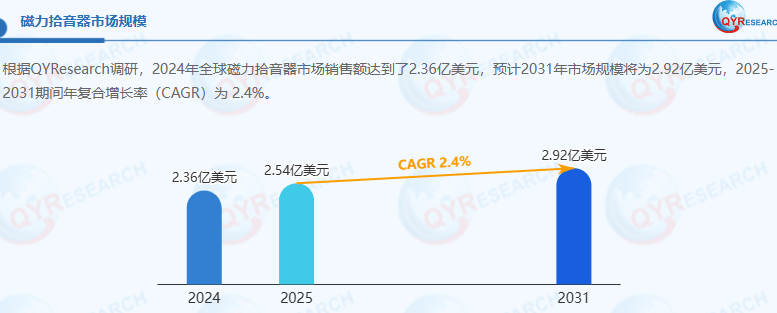
Market Size: Global and China Market Growth - The global magnetic pickup market is projected to reach $236 million in sales by 2024, with an expected market size of $292 million by 2031, reflecting a CAGR of 2.4% from 2025 to 2031, driven by the resurgence of vinyl records and industrial demand for magnetic pickup devices [2] - The Chinese magnetic pickup market is experiencing rapid growth, with a market size of 3.86 billion RMB in 2022 and an expected increase to over 5.6 billion RMB by 2025, showcasing a CAGR of 12.7% over the past five years [4] Competitive Landscape: Layered Competition and Global Layout - The global magnetic pickup market exhibits a clear tiered competitive structure, with top-tier companies like Audio-Technica and Goldring dominating the high-end market, each generating over $100 million in revenue [5] - Chinese companies are leveraging "technological innovation, cost control, and overseas expansion" to gain market share, with a 27.3% year-on-year increase in exports in 2023, particularly in the ASEAN market where the share has surpassed 39.7% [6] Technological Trends: Material Upgrades and Smart Integration - The performance enhancement of magnetic pickups heavily relies on breakthroughs in magnetic material technology, with neodymium-iron-boron magnets dominating the market, accounting for 82% of the global rare earth permanent magnet market, valued at $24.86 billion in 2023 [8] - Smart technology is becoming a core direction for product upgrades, with the market share of smart devices in the high-end segment rising from 12% in 2022 to 29% in 2024, and sales of IoT-enabled magnetic sorting systems increasing by 221% in the first half of 2024 [9]
汽车行业跟踪报告:中国汽车出海潜在市场研究(3):西班牙篇
Mai Gao Zheng Quan· 2025-10-24 08:17
Investment Rating - The industry investment rating is "Outperform" [1] Core Insights - The report highlights the robust performance of China's automotive exports, particularly in the electric vehicle (EV) segment, with a significant year-on-year growth of 107% in Q3 2025 [2][15] - The Spanish automotive market is recovering, with new car registrations increasing by 14.6% year-on-year in the first eight months of 2025, although still below pre-pandemic levels [2][22] - Chinese brands are gaining market share in Spain, with SAIC MG ranking among the top ten brands in terms of sales [2][29] Summary by Sections 1. Domestic Passenger Car Market Tracking (Q1-Q3 2025) - The wholesale sales of passenger cars in China reached 20.801 million units from January to September 2025, marking a 13.3% increase year-on-year [2][9] - New energy vehicle (NEV) wholesale sales totaled 10.375 million units, up 32.3% year-on-year, indicating strong market performance [2][12] - The export volume of passenger cars in Q3 2025 was 1.512 million units, reflecting a 23.3% increase year-on-year [2][15] 2. Characteristics of the Spanish Automotive Market - In the first eight months of 2025, Spain's new car registrations totaled 769,452 units, a 14.6% increase compared to the previous year [2][22] - NEVs accounted for 18% of total vehicle sales in Spain during the same period, supported by the "MOVES III" subsidy program [2][26] - The number of charging stations in Spain reached 52,107 by Q3 2025, with a total of 13,382 new stations added [2][41] 3. Beneficiaries of Local Manufacturing in Spain - Chery has established a joint venture with Ebro in Spain, marking it as the first Chinese automaker to have a production base in Europe, with the first model, EBRO S700, launched in November 2024 [2][50] - Leap Motor is set to utilize Stellantis' factory in Zaragoza for local production, with plans to start manufacturing in Q3 2026 [2][53] - Leap Motor's sales in Europe reached 13,443 units in the first nine months of 2025, ranking fourth among Chinese brands [2][60]

2025年中国半导体废气处理设备行业产业链图谱、运行现状、重点企业及未来发展趋势研判:国产替代与智能化转型加速,行业市场规模有望突破25亿元[图]
Chan Ye Xin Xi Wang· 2025-10-24 01:09
Core Insights - The semiconductor exhaust gas treatment equipment is essential for ensuring compliance with environmental regulations during wafer manufacturing and packaging testing, converting harmful substances into harmless ones through various methods [1][2][4] - The industry has received significant support from national policies, creating a comprehensive framework for development and a clear upgrade path, leading to a projected market size of 1,302.8 billion yuan by 2024 [1][4][5] - The market is transitioning from single equipment sales to a "technology + service" model, with increasing penetration of third-party treatment solutions [1][6][10] Industry Overview - Semiconductor exhaust gas treatment equipment is designed to handle various harmful substances produced during manufacturing, ensuring compliance with environmental regulations [2][3] - The equipment types include activated carbon adsorption, catalytic oxidation, thermal oxidation, biological filters, condensation absorption, and scrubbers, each targeting specific types of waste gas [3][4] Market Dynamics - The Chinese semiconductor market is expected to reach 1,302.8 billion yuan in 2024, a 47.2% increase from 884.8 billion yuan in 2020, with a compound annual growth rate (CAGR) of 10.5%, significantly outpacing the global growth rate of 5.2% [5][6] - The global semiconductor exhaust gas treatment market is projected to grow from approximately 1.38 billion USD in 2024 to 1.46 billion USD in 2025 [6] Policy Support - Recent national policies, including the "High-Quality Development Action Plan for Environmental Equipment Manufacturing Industry (2022-2025)" and the "Air Quality Continuous Improvement Action Plan," provide a clear upgrade path and broad market opportunities for the industry [4][5] Competitive Landscape - The industry features a mix of international giants and leading domestic companies, with firms like Edwards Vacuum and Ebara dominating the high-end market, while local companies like Shengjian Technology and Jingyi Equipment are expanding in the mid-range market [6][10] - The competition is shifting from price-based to technology and service capabilities, with local firms increasingly closing the gap with international brands [10][11] Future Trends - The industry is moving towards smart and low-carbon solutions, integrating IoT and AI for real-time monitoring and dynamic adjustments, enhancing operational efficiency [9][11] - The focus on carbon capture and resource recovery technologies is emerging, with some equipment already capable of recovering useful components from specific waste gases [11]

