
碳达峰

Search documents
刚刚,新能源重磅文件发布
Shang Hai Zheng Quan Bao· 2025-11-10 09:21
11月10日,国家发展改革委、国家能源局发布促进新能源消纳和调控的指导意见(以下简称《意 见》)。该文件聚焦新能源大规模开发与高质量消纳,提出分阶段目标及七大重点任务,旨在构建适配 高比例新能源的新型电力系统,支撑碳达峰及国家自主贡献目标。 《意见》提出,到2030年,协同高效的多层次新能源消纳调控体系基本建立,持续保障新能源顺利接 网、多元利用、高效运行,新增用电量需求主要由新增新能源发电满足。满足全国每年新增2亿千瓦以 上新能源合理消纳需求,助力实现碳达峰目标。到2035年,适配高比例新能源的新型电力系统基本建 成,新能源消纳调控体系进一步完善。 全文如下: 国家发展改革委 国家能源局关于促进 新能源消纳和调控的指导意见 发改能源〔2025〕1360号 各省、自治区、直辖市、新疆生产建设兵团发展改革委、能源局,北京市城市管理委员会,天津市工业 和信息化局、辽宁省工业和信息化厅、上海市经济和信息化委员会、重庆市经济和信息化委员会、甘肃 省工业和信息化厅,国家能源局各派出机构,有关中央企业: 为全面贯彻党的二十大和二十届历次全会精神,落实《中华人民共和国能源法》,完善新能源消纳和调 控政策措施,有力支撑新型能 ...
宁波能源(600982.SH):完成向参股公司甬德环境增资
Ge Long Hui A P P· 2025-11-10 08:32
Core Viewpoint - Ningbo Energy (600982.SH) has completed the business registration change for Yongde Environment, which is expected to enhance its operational capabilities and align with national carbon neutrality goals [1] Group 1 - The company holds a 40% stake in Yongde Environment, and the consolidation scope of its financial statements remains unchanged [1] - The recent capital increase is aimed at supporting the business development of Yongde Environment and improving its profitability [1] - This move is in line with the company's strategic development goals and the national objectives of "carbon peak and carbon neutrality" [1]

晨会纪要:对近期重要经济金融新闻、行业事件、公司公告等进行点评-20251110
Xiangcai Securities· 2025-11-10 03:22
Macro Strategy - In October, China's exports showed a year-on-year decline of -1.10%, marking the first negative growth since March 2025, which affected the cumulative year-on-year growth rate, decreasing from 6.10% in September to 5.30% in October. This decline is attributed to a high base in October 2024 and a temporary escalation in trade conflicts between China and the US in early October 2025 [3][4]. Market Overview - From November 3 to November 7, 2025, A-share indices experienced wide fluctuations, with the Shanghai Composite Index rising by 1.08% and the ChiNext Index increasing by 0.65%. The market is expected to continue a "slow bull" trend with wide fluctuations in November due to reduced short-term trade conflict risks between China and the US [4][5]. - Among the 31 first-level industries, the top performers were electric equipment and coal, with weekly increases of 4.98% and 4.52%, respectively. Conversely, the beauty care and computer sectors saw declines of -3.10% and -2.54% [6][7]. North Exchange Market - As of November 7, 2025, the North Exchange had 282 listed stocks, with an average total market value of 908.24 billion yuan, reflecting a 1.24% increase from the previous week. The liquidity decreased, with average trading volume dropping by 17.23% [11][12]. - The highest weekly gain was recorded by Danna Biological, which surged by 377.78% in its first week of trading, while the largest decline was seen in Beiyikang, which fell by 12.35% [13]. Vaccine Industry - The vaccine industry is experiencing structural differentiation, with companies like Kangtai Biological and Zhonghui Biological making significant advancements in vaccine development for specific populations, such as infants and pregnant women. The updated technical guidelines emphasize the importance of vaccination for high-risk groups [17][21]. - The vaccine sector's performance remains under pressure, with a year-to-date decline of -1.57%. The industry is focusing on innovation and international expansion to navigate current challenges [19][21]. - The vaccine sector's price-to-earnings ratio (PE) is currently at 99.07X, reflecting a decrease of 4.97X from the previous week, while the price-to-book ratio (PB) remains stable at 1.94X [20]. Investment Recommendations - The vaccine industry is advised to focus on innovation and international markets, as the current market conditions present challenges due to supply-demand imbalances and intense competition. Companies with strong technological capabilities and differentiated product lines are recommended for investment [21][23].
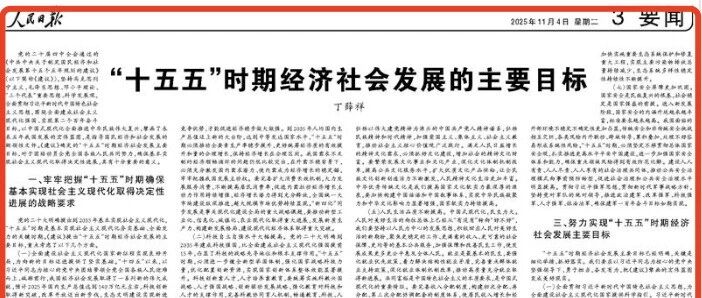
国务院副总理丁薛祥:确保2030年前碳达峰目标如期实现
中国有色金属工业协会硅业分会· 2025-11-10 01:49
Core Viewpoint - The article emphasizes the importance of achieving high-quality development and ecological protection during the "14th Five-Year Plan" period, with a focus on green transformation and sustainable development [1][21]. Summary by Sections 1. Strategic Requirements for Achieving Modernization - The "14th Five-Year Plan" period is crucial for laying the foundation for achieving socialist modernization by 2035, with a focus on economic growth, technological innovation, and ecological progress [12][11]. - The article outlines the need to identify strategic opportunities and challenges, emphasizing the importance of adapting to changes in the development environment [13]. 2. Scientific Connotation of Development Goals - High-quality development is essential, with a target for per capita GDP to reach the level of middle-income countries by 2035, focusing on enhancing domestic demand and consumption [15]. - The level of technological self-reliance must significantly improve, with an emphasis on strengthening the national innovation system and enhancing basic research capabilities [16]. - Comprehensive reforms are necessary to improve the socialist market economy, ensuring that market forces play a decisive role in resource allocation [17]. - Social and cultural development must be prioritized, enhancing both material and spiritual wealth, and promoting cultural confidence [19]. - The quality of life for citizens should continuously improve, with a focus on employment, income distribution, and social security systems [20]. - Significant progress in ecological construction is required, with a commitment to achieving peak carbon emissions before 2030 and promoting a green economy [21]. - National security must be reinforced, addressing both traditional and non-traditional security challenges [23]. 3. Implementation of Development Goals - The article stresses the need for a comprehensive understanding of Xi Jinping's thought to guide the modernization process [24]. - Strengthening the centralized leadership of the Communist Party is crucial for achieving development goals [25]. - A fighting spirit is necessary to effectively respond to various risks and challenges [26]. - Practical implementation of the outlined goals is essential, with a focus on actionable plans and collective efforts [26].

双碳研究 | 领跑全球储能赛道中国装机容量突破亿千瓦
Sou Hu Cai Jing· 2025-11-09 16:06
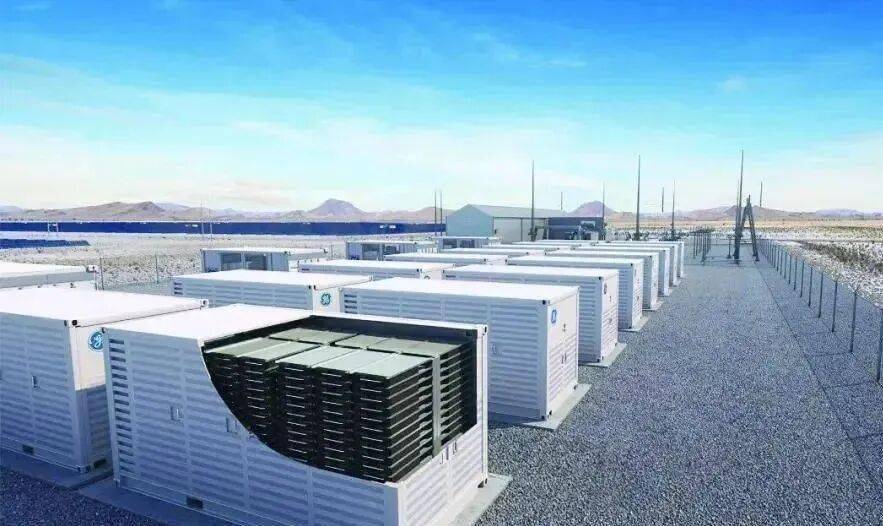
Core Insights - China's new energy storage capacity has surpassed 100 million kilowatts, marking a significant step towards the transition to a new energy system and reinforcing its global leadership in renewable energy development [3][4]. Group 1: Industry Growth - As of the end of September, China's new energy storage capacity has exceeded 100 million kilowatts, accounting for over 40% of the global total installed capacity [3][4]. - Since the 13th Five-Year Plan, China's new energy storage capacity has grown more than 30 times, indicating a shift from early commercialization to large-scale development [4]. Group 2: Technological Advancements - New energy storage systems are characterized by flexible deployment, rapid response, and short construction cycles, making them key technologies for supporting new energy and power systems [4]. - Emerging technologies such as solid-state batteries and hydrogen storage are rapidly developing, providing strong support for the future energy system's diverse and high-security storage needs [4]. Group 3: Investment and Economic Impact - Since the 14th Five-Year Plan, investment in new energy storage projects in China has exceeded 200 billion yuan (approximately 28 billion USD), driving over 1 trillion yuan in investments across the industry chain [4]. - Chinese products are contributing to the acceleration of global energy transition, showcasing China's role in the global green transformation [4]. Group 4: International Collaboration - Nicaragua has expressed strong interest in collaborating with China in the renewable energy sector, highlighting the need to expand energy supply due to rapidly growing industrial demand [5]. - Nicaragua currently sources 70% of its energy from renewable sources such as solar, wind, and geothermal energy, and is looking to expand cooperation with Chinese enterprises on photovoltaic and hydropower projects [5].
证券研究报告行业周报:碳中和“点绿成金”,废塑循环焕新机-20251109
GOLDEN SUN SECURITIES· 2025-11-09 12:10
Investment Rating - The report maintains a "Buy" rating for key companies in the environmental sector, including Huicheng Environmental and GaoNeng Environment [5]. Core Insights - The report emphasizes the importance of the "carbon neutrality" initiative, highlighting the government's focus on non-fossil energy sources and waste resource utilization, which opens up opportunities for companies in resource recycling and environmental monitoring [1][16]. - The newly implemented "Ecological Environment Monitoring Regulations" is expected to benefit the environmental monitoring industry by ensuring accurate data collection and penalizing data falsification [17][24]. - The environmental sector has shown strong performance, outperforming the broader market, with significant gains in various sub-sectors [28]. Summary by Sections Investment Views - The report discusses the release of the "China's Action on Carbon Peak and Carbon Neutrality" white paper, which outlines the country's commitment to carbon neutrality and emphasizes the development of non-fossil energy sources [9][16]. - The report highlights the issuance of the "Ecological Environment Monitoring Regulations," which mandates companies to install monitoring equipment and ensure data accuracy [17][24]. - It notes that the current macroeconomic environment, characterized by low interest rates, favors investments in high-dividend and growth-oriented assets [2][24]. Market Performance - The environmental sector has outperformed the market, with a reported increase of 6.38% compared to the Shanghai Composite Index's 1.08% [28]. - Specific sub-sectors such as energy conservation and air quality management have shown notable gains, while monitoring and water treatment have had mixed results [28]. Key Companies - Huicheng Environmental is recognized for its focus on hazardous waste projects and its innovative technology in plastic recycling, which is expected to drive future growth [25]. - GaoNeng Environment is highlighted for its comprehensive environmental services and strong project pipeline, positioning it as a leader in the hazardous waste management sector [25]. - Hongcheng Environment is noted for its consistent performance and high dividend yield, making it an attractive investment option [25].
2025内燃机产业发展大会将在南京举行
Zhong Guo Qi Che Bao Wang· 2025-11-08 04:58
展会同期召开小型动力设备分会、活塞运动组件分会、轴瓦分会、测试技术与设备分会、电机电器 分会、进排气机构分会等相关工作会议。 为充分体现内燃机行业助力"碳达峰、碳中和"目标实现的决心和落实的实力,由中国内燃机工业协 会主办的2025内燃机产业发展大会、2025国际内燃机及动力装备博览会将于11月11日在南京召开。 此外展会还将集中展示行业向低碳化、零碳化转型的最新成果和技术应用,不仅为企业搭建了学 习、交流、洽谈、展示、采购的一站式优质服务平台,更是以前瞻性引领动力装备产业加速向高质量发 展跃迁,助力内燃机行业高质量发展。 据介绍,该展会自1994年首届举办至今,已经成功举办二十多届,不仅全面展示了中国内燃机工业 各阶段光辉历程和先进技术,同时与时俱进,重磅加入新能源动力,覆盖整个动力产业链。 值得一提的是,中国内燃机工业协会第八次全国会员伐表大会暨八届一次理事会也将在南京举行。 中国内燃机工业协会第八次全国会员代表大会将审议《中国内燃机工业协会第七届理事会工作报告》、 《中国内燃机工业协会第七届理事会财务收支报告》、《中国内燃机工业协会第一届监事会工作报告》 以及《中国内燃机工业协会章程》修订案,审议《第八 ...
双碳研究 | 破纪录!2025年中国风电太阳能新增装机容量将达264吉瓦!
Sou Hu Cai Jing· 2025-11-07 17:12
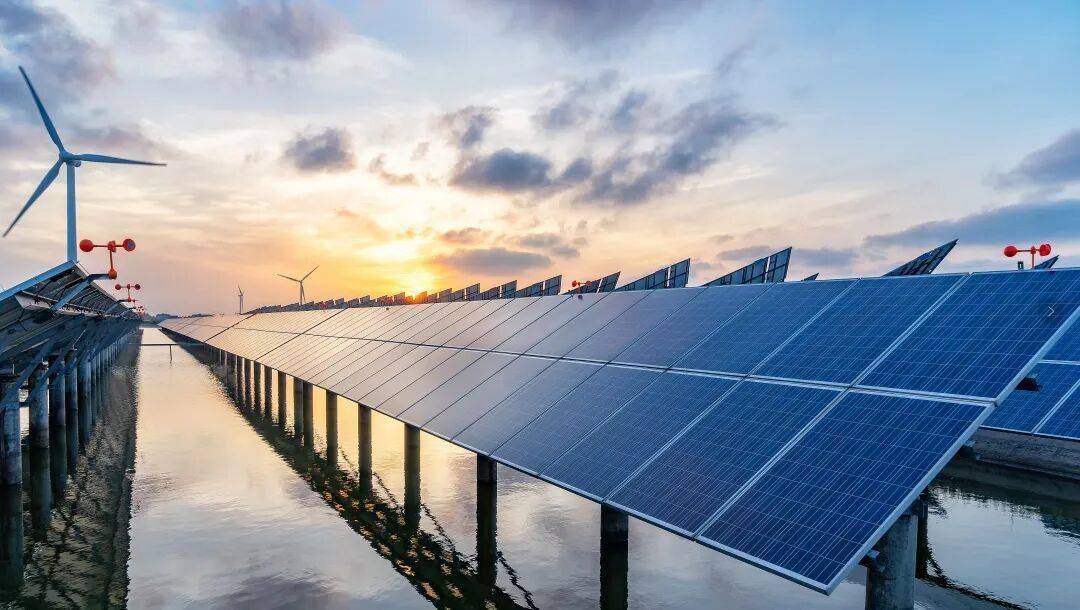
Core Insights - In the first half of 2025, China's new installed capacity for wind and solar energy reached a record 264 gigawatts, marking a significant milestone in renewable energy development [4][5][8] - The National Energy Administration (NEA) plans to achieve approximately 600 gigawatts of new capacity for the entire year, aiming for a total installed capacity of 1,680 gigawatts by the end of 2025 [4][5] - The rapid growth in renewable energy capacity is aligned with China's goal of reaching carbon peak by 2030, with wind and solar energy being crucial for this transition [4][7][8] Installed Capacity Growth - In the first half of 2025, solar power added 148 gigawatts, bringing the total solar capacity to 1,270 gigawatts, a 50% increase year-on-year [5] - Wind power saw an addition of 116 gigawatts, resulting in a total capacity of 704 gigawatts, reflecting a 75% year-on-year growth [5] - The combined installed capacity of wind and solar now accounts for 44% of China's total power generation capacity [5] Energy Generation and Consumption - Total electricity generation in the first half of 2025 reached 7,100 terawatt-hours, a 9.3% increase from the previous year [5][7] - Solar energy generation was 1,260 terawatt-hours, while wind energy generation was 1,210 terawatt-hours, together constituting 35% of total electricity generation, up from 28% the previous year [5] - For the first half of 2025, the share of fossil fuel generation dropped to 52%, down from 58% in the previous year, indicating a significant shift towards renewable energy [7] Strategic Implications - The surge in wind and solar capacity is a critical step towards achieving carbon neutrality and reducing reliance on fossil fuels [6][8] - The expansion of the renewable energy sector is supported by advanced solar panel manufacturing processes and a stable supply chain for key raw materials [5] - The NEA emphasizes the importance of improving the efficiency of renewable energy systems and reducing electricity waste to enhance overall energy management [7]

电解铝:攻守兼备,涨价潜力可期
Guotou Securities· 2025-11-07 14:45
Investment Rating - The report maintains an investment rating of "Outperform the Market - A" for the aluminum industry [5]. Core Viewpoints - The report highlights a tight supply-demand balance in the global electrolytic aluminum market, with domestic supply constraints leading to potential price increases in 2025 and 2026 [3][25]. - The domestic demand for electrolytic aluminum is expected to show resilience, driven by the recovery in the real estate sector and strong growth in the new energy vehicle market [2][3]. - The report anticipates a continued expansion of profit margins in the electrolytic aluminum industry due to declining raw material costs and rising aluminum prices [3][21]. Summary by Sections 1. Policy Side: Capacity Ceiling and Low-Carbon Policies - The Chinese electrolytic aluminum industry is undergoing a supply-side reform that locks in a total capacity ceiling, shifting the focus from quantity to sustainable quality development [14][15]. - The emphasis on energy conservation and carbon reduction is becoming the main theme, with policies aimed at optimizing capacity layout and energy structure [19][20]. 2. Supply Side: Domestic Capacity Nearing Ceiling, Limited Overseas Increment - Domestic electrolytic aluminum supply is constrained by a capacity ceiling, with net new capacity expected to be only 20,000 tons in 2025 and 56,000 tons in 2026 [28][29]. - The report notes that overseas production increases, particularly from Southeast Asia, will have limited impact on the domestic market due to the "strong external, weak internal" price dynamic [25][26]. 3. Demand Side: Strong Domestic Demand and Export Advantages - Domestic consumption of electrolytic aluminum is projected to grow at rates of 2.7% and 2.1% in 2025 and 2026, respectively, supported by a recovering real estate market and robust demand from the new energy vehicle sector [2][3]. - The report emphasizes that China's aluminum processing capacity remains significantly advantageous in the global market, reinforcing demand stability [2][3]. 4. Cost: Downward Pressure on Costs, High Profit Era Expected to Continue - The average complete cost of the electrolytic aluminum industry is expected to range between 16,000 and 16,400 RMB per ton, with aluminum prices projected to rise to approximately 20,600 RMB per ton in 2025 and 21,500 RMB per ton in 2026 [3][21]. - The combination of declining costs and rising prices is expected to expand profit margins, establishing a high-profit environment as a norm [3][21]. 5. Supply-Demand Balance: Continued Tight Balance, Price Expectations to Rise - The report indicates that the tight balance in supply and demand will persist, with expectations of rising aluminum prices due to domestic supply rigidity [3][25]. - The anticipated implementation of the Carbon Border Adjustment Mechanism (CBAM) in January 2026 is expected to further influence pricing dynamics in the industry [3][21]. 6. Key Companies to Watch - The report suggests focusing on companies with strong cost control capabilities and stable dividend returns, particularly those leading in low-carbon transitions, such as China Hongqiao, China Aluminum, and Nanshan Aluminum [3][21].
新朋股份携手格兰富水泵深化液冷技术合作 共拓绿色节能市场
Xin Lang Cai Jing· 2025-11-07 10:52
Core Viewpoint - Shanghai Xinpeng Industrial Co., Ltd. has signed a memorandum of cooperation with Grundfos Pumps (Shanghai) Co., Ltd. to collaborate on data center liquid cooling technology, green energy solutions, and global market expansion, which is expected to have a significant positive impact on the company's future business development and operational performance [1][2]. Cooperation Overview - The memorandum aims to deepen collaboration in low-carbon energy structures and energy-saving fields, focusing on five core areas: water system power optimization, liquid cooling infrastructure solutions, breakthroughs in single-phase immersion liquid cooling technology, utilization of industrial waste heat, and energy efficiency improvements [2]. - The memorandum is an intention document and does not involve specific transaction amounts or require board or shareholder approval, with formal agreements to follow [2]. Partner Background - Grundfos Pumps is a foreign-owned enterprise with a registered capital of 5 million USD, recognized as a global leader in water pump and water technology solutions, operating in over 55 countries [3]. - In China, Grundfos has established two production plants and the largest overseas R&D center, with products used in various sectors including construction, industry, infrastructure, regional heating, and wastewater treatment [3]. Strategic Significance - The cooperation is expected to leverage the complementary resources of both companies, with Grundfos's advanced experience in fluid control and energy efficiency management and Xinpeng's capabilities in liquid cooling technology and product manufacturing [4]. - The partnership aims to enhance the company's competitiveness in emerging fields such as data center liquid cooling and is not expected to affect the company's business independence or constitute a major asset restructuring [4].
