车路云一体化

Search documents
全球产业力量汇聚山城 共绘“车路云一体化”发展新图景
Zhong Guo Qi Che Bao Wang· 2025-09-28 02:04
Group 1 - The core concept of "vehicle-road-cloud integration" has become a global consensus as a key path for the development of intelligent connected vehicles [1][3] - The forum held in Chongqing aimed to create a high-end dialogue platform across multiple fields, including automotive, transportation, communication, and artificial intelligence, to promote cross-industry resource integration [1][3] - China's automotive industry has rapidly innovated, becoming the world's largest producer, consumer, and exporter of new energy vehicles, achieving significant breakthroughs in core technologies and industrial chains [3][4] Group 2 - The forum highlighted the importance of collaboration among various stakeholders in the intelligent transportation ecosystem, emphasizing the role of vehicles as the core carriers of smart traffic [9][11] - Major automotive companies shared their advancements in AI technology and its integration into vehicle-road-cloud systems, showcasing initiatives aimed at enhancing safety and operational efficiency [9][11] - The release of the "Vehicle-Road-Cloud Integration Economic Development 2025" report marks a significant step in providing strategic guidance for governments and enterprises, promoting efficient connections between technology, scenarios, and capital [12][14] Group 3 - The "Vehicle-Road-Cloud Integration Scale Verification Action" is set to launch in the fourth quarter of 2025 in Chongqing, involving large-scale joint testing by multiple automotive companies, focusing on critical scenarios for intelligent driving safety [14][16] - The forum served as a platform to showcase China's achievements in vehicle-road-cloud integration and to outline a clearer vision for the future of global smart transportation [16]


沈阳智能网联汽车大会:“车路云”遇冷,Robotaxi、无人物流车成主角
Jing Ji Guan Cha Wang· 2025-09-27 15:35
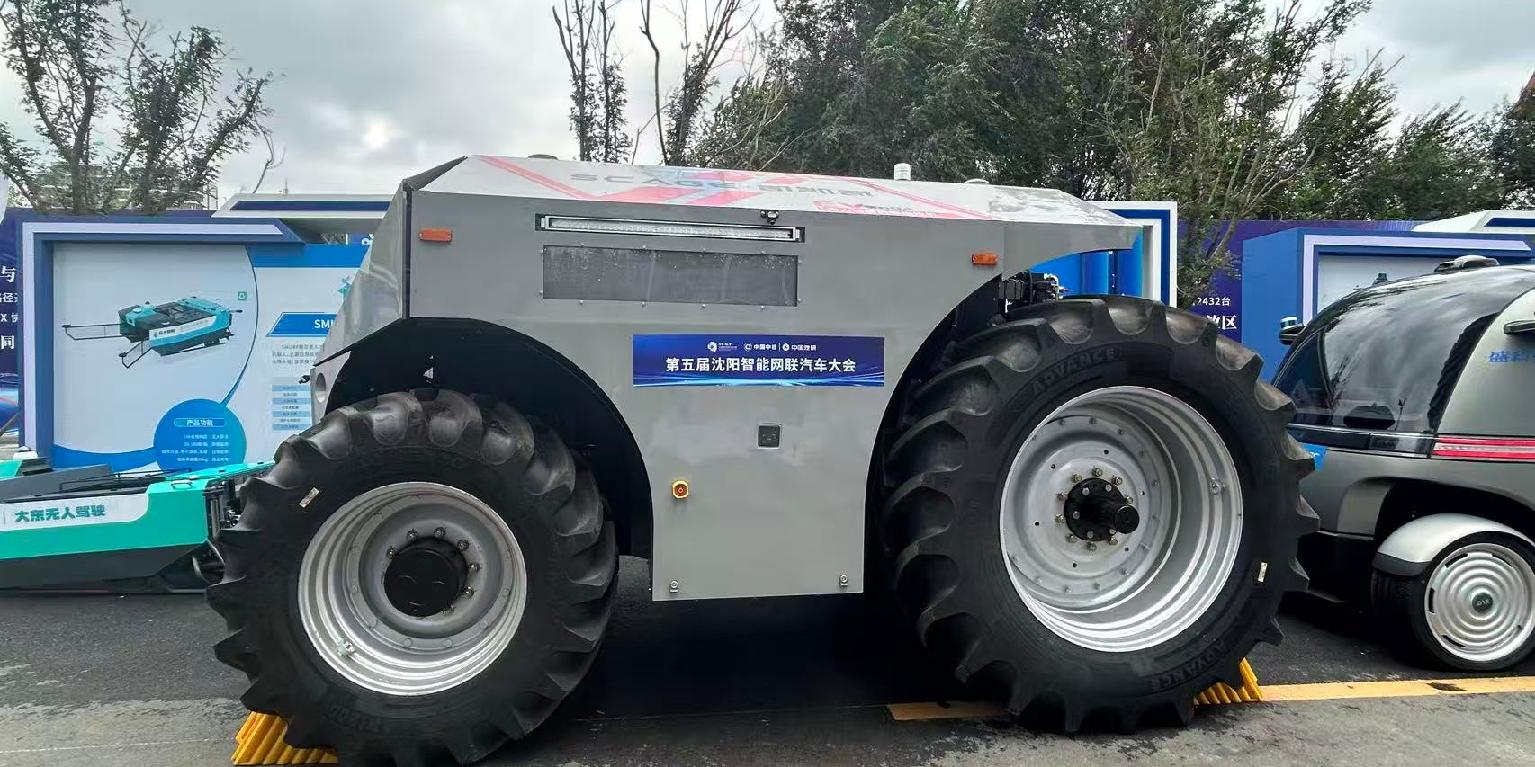
Group 1 - The fifth Shenyang Intelligent Connected Vehicle Conference highlighted the prominence of smart driving companies over traditional passenger vehicle manufacturers, with a focus on Robotaxi, unmanned agricultural machinery, and unmanned logistics delivery [2][3] - Shenyang aims to integrate AI, communication, and big data into its automotive manufacturing to overcome industry bottlenecks and foster new growth, marking a shift from traditional manufacturing to "smart manufacturing" [2] - The "Vehicle-Road-Cloud Integration" application, previously a key theme, has been downplayed in this conference, indicating challenges in its current implementation [3] Group 2 - The conference featured limited participation from passenger vehicle manufacturers, with notable entries including the Brilliance BMW 5 Series V2X retrofitted research vehicle and the Baidu Apollo and Jiangling New Energy collaboration [4] - The current trend in autonomous driving is leaning towards single-vehicle intelligence, particularly L3 level advanced driver assistance systems, while the "Vehicle-Road-Cloud Integration" model is less favored by companies due to high investment and long infrastructure development cycles [4] - A surge in L4 level Robotaxi and unmanned logistics vehicles has been observed, with significant investments such as the establishment of "Zhaofu Intelligent Technology Co., Ltd." with over 3 billion yuan in initial funding [5] Group 3 - Shenyang's intelligent connected vehicle industry is focusing on demonstration operations for Robotaxi, unmanned agricultural machinery, and various unmanned delivery vehicles [5] - The city has signed over 20 projects with industry partners, including collaborations with major logistics and technology companies [6] - Despite the emergence of unmanned logistics vehicles, many face profitability challenges, relying heavily on subsidies for operation [7] Group 4 - Most unmanned logistics vehicles currently operate on single-vehicle intelligence systems, lacking the benefits of "Vehicle-Road-Cloud Integration," which limits their effectiveness in complex environments [8] - Efforts are being made to address industry challenges, including collaboration among five northern cities to unify standards, enhance safety regulation, and promote data sharing [8]
呈现四大特色亮点,2025世界智能网联汽车大会定档10月
Zhong Guo Qing Nian Bao· 2025-09-26 20:22
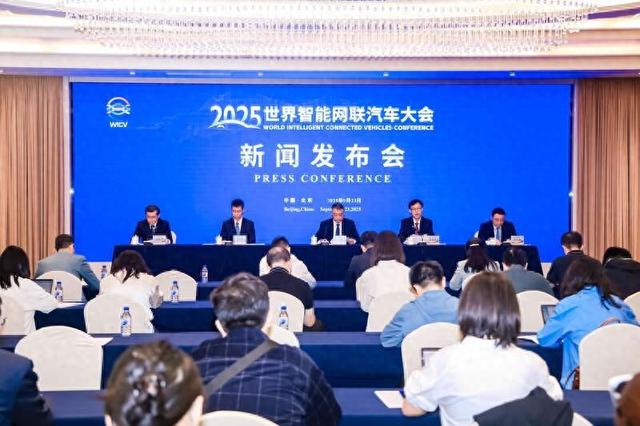
Core Viewpoint - The 2025 World Intelligent Connected Vehicle Conference aims to enhance collaboration and innovation in the automotive industry, focusing on the integration of advanced technologies such as AI, communication, and data utilization [2][3]. Group 1: Conference Overview - The conference will be held from October 16-18, 2025, at the Beijing Yichuang International Exhibition Center, co-hosted by the Ministry of Industry and Information Technology, the Ministry of Transport, and the Beijing Municipal Government [2]. - The theme of the conference is "Gathering Wisdom and Energy, Unlimited Connectivity," emphasizing its role as a bridge and link for global resources in the automotive sector [2]. Group 2: Key Features - The conference will focus on cutting-edge technologies in the automotive industry, including AI, communication, data utilization, and chips, featuring top global experts sharing insights on the latest breakthroughs and industry trends [2][3]. - It will promote international cooperation through various activities, including an international cooperation meeting and a delegation of ambassadors visiting the automotive industry, with nearly half of the speakers expected to be international guests [2][3]. - Multiple reports will be released during the conference, showcasing achievements in "vehicle-road-cloud integration," network technology, trusted data space, and "AI + automotive," highlighting developments during the 14th Five-Year Plan [3]. - The conference will enhance practical applications by expanding the range of autonomous vehicle shuttle services and providing AI translation devices for seamless communication among attendees [3]. Group 3: Industry Significance - Intelligent connected vehicles are seen as a key carrier for the integration of automotive and advanced technologies, becoming a strategic direction for global automotive transformation and upgrading [3]. - The Ministry of Industry and Information Technology is committed to advancing the development of the intelligent connected vehicle industry through technology breakthroughs, standard formulation, and application promotion [3]. - The World Intelligent Connected Vehicle Conference, established in 2018, is recognized as China's first national-level professional conference in this field, serving as a significant platform for technological innovation and international exchange in the global automotive industry [3].
共享出行平台行业深度报告:行业呈燎原之势,曹操出行的弯道超车机会在即
Minsheng Securities· 2025-09-26 05:58
Investment Rating - The report maintains a positive investment rating for the shared mobility industry, particularly highlighting the growth potential of Cao Cao Mobility as a unique "three-in-one" autonomous driving operation platform [6]. Core Insights - The Chinese mobility market is the largest globally, with a projected market size of 8 trillion yuan in 2024, and a compound annual growth rate (CAGR) of 5.4% expected from 2025 to 2029 [1][10]. - Cao Cao Mobility, backed by Geely, is positioned as the second-largest shared mobility platform in China, achieving a gross transaction value (GTV) of 10.95 billion yuan in the first half of 2025, reflecting a year-on-year growth of 53.6% [2][3]. - The rise of aggregation platforms is reshaping the industry ecosystem, with the proportion of ride-hailing orders completed through these platforms expected to reach 53.9% by 2029, providing opportunities for second-tier companies to break through [1][19]. Summary by Sections 1. Market Overview - The Chinese mobility market is projected to reach 10.56 trillion yuan by 2029, with a CAGR of 5.4% from 2025 to 2029, driven by increasing demand in lower-tier markets and the expansion of shared mobility [10]. - The shared mobility market is rapidly expanding, with a forecasted growth from 344.4 billion yuan in 2024 to 804.2 billion yuan by 2029, representing a CAGR of 17.0% [13]. 2. Company Analysis - Cao Cao Mobility is the only "three-in-one" autonomous driving operation platform in China, leveraging significant synergies with Geely to build the largest customized vehicle fleet in the country [2][3]. - The company has a notable cost advantage with its customized vehicles, achieving a total cost of ownership (TCO) reduction of 33% and 40% compared to typical electric vehicles [2]. 3. Technological Developments - The report emphasizes the importance of autonomous driving technology, with Cao Cao Mobility planning to launch customized vehicles designed for Level 4 autonomous driving by the end of 2026, aiming for nationwide coverage [3][27]. - The market penetration of Robotaxi is expected to reach 20-60% between 2026 and 2032, indicating significant growth potential for autonomous driving services [3][41]. 4. Competitive Landscape - The report outlines a highly concentrated market with Didi Chuxing holding a 70.4% market share in 2024, while Cao Cao Mobility and T3 Mobility hold 5.4% and 5.3% respectively [16][17]. - The rise of aggregation platforms is leading to a decentralization of user traffic, allowing second-tier companies like Cao Cao Mobility to gain market share [19]. 5. Investment Recommendations - The report suggests a focus on the long-term development of the shared mobility industry, particularly on Cao Cao Mobility as a key player in the autonomous driving sector [3].
北交所市场点评:北证50指数放量上涨2.03%,科技主线引领市场普涨
Western Securities· 2025-09-25 08:53
Investment Rating - The report indicates a strong rebound in the North Exchange, with a focus on the technology growth sector, particularly semiconductors and robotics, which are seen as core investment themes [4][9]. Core Insights - The North Exchange A-shares trading volume reached 20.69 billion yuan on September 24, a decrease of 3.72 billion yuan from the previous trading day, while the North Exchange 50 Index closed at 1578.92, up 2.03% [2][9]. - The North Exchange specialized and innovative index closed at 2762.51, increasing by 2.66% [2][9]. - Among the 276 companies listed on the North Exchange, 236 saw their stock prices rise, 2 remained flat, and 38 experienced declines [2][16]. Summary by Sections Market Review - On September 24, the North Exchange A-shares trading volume was 20.69 billion yuan, down from the previous day by 3.72 billion yuan [2][9]. - The North Exchange 50 Index increased by 2.03%, with a PE_TTM of 74.04 [2][9]. - The specialized and innovative index rose by 2.66% [2][9]. - The top five gainers included Henghe Co. (30.0%), Meizhigao (10.6%), Kaide Quartz (9.9%), Tiangang Co. (8.9%), and Yuanhang Precision (8.3%) [2][16]. - The top five decliners were Anhui Phoenix (-4.4%), Hongzhi Technology (-3.6%), Rongyi Precision (-3.0%), Wantong Hydraulic (-2.9%), and Tianma New Materials (-2.7%) [2][16]. Important News - Eight departments issued guidelines to promote digital consumption, proposing 14 tasks across four areas to enhance the digital consumption ecosystem [3][19]. - The "Vehicle-Road-Cloud Integration" pilot city construction is accelerating, with various cities, including Beijing and Haikou, advancing related projects [3][20]. Key Company Announcements - Kexin New Materials announced the acquisition of a utility model patent for a fixed device for transporting new energy crucibles [3][21]. - Xici Technology plans to invest up to 160 million yuan of idle funds in safe financial products [3][21].

美格智能:车规级5G+ C-V2X系列模组产品已与Tier-1客户合作
Mei Ri Jing Ji Xin Wen· 2025-09-25 07:55
Core Viewpoint - Meige Intelligent (002881) has initiated collaboration with Tier-1 customers for its automotive-grade 5G + C-V2X module products, focusing on customized solutions for overseas automotive brands [1] Group 1 - The company's 5G + C-V2X modules are designed for applications in integrated vehicle-road-cloud systems and advanced driver assistance systems [1]
万和财富早班车-20250925
Vanho Securities· 2025-09-25 02:06
Core Insights - The report highlights a steady growth in the national electrification rate, projected to reach approximately 35% by 2030, with an annual increase of about 1 percentage point [6] - The construction of "vehicle-road-cloud integration" pilot cities is accelerating, with companies rapidly expanding their layouts, indicating potential investment opportunities in related stocks [7] - The semiconductor and AI sectors are experiencing significant advancements, with companies like Zhongtai Co. and Guokewi planning to enhance their product offerings in AI chips and battery technologies [8] Domestic Financial Market - The Shanghai Composite Index closed at 3853.64, up 0.83%, while the Shenzhen Component Index rose by 1.80% to 13356.14, indicating a positive market sentiment [4] - The market saw a total trading volume of 2.33 trillion, a decrease of 167.6 billion from the previous trading day, suggesting a slight contraction in trading activity [9] Industry Developments - Six departments have prohibited the addition of new cement clinker and flat glass production capacity, requiring new projects to develop capacity replacement plans, which may impact related industries [6] - The "AI investment advisory brokerage" is nearing realization, with advancements in platforms like "Xiangcai + Dazhihui," indicating a shift towards AI-driven financial services [7] Company Focus - Zhongtai Co. is expected to achieve a net profit of 325 million to 355 million, representing a year-on-year growth of 71.36% to 87.19% by the third quarter of 2025 [8] - Guokewi plans to develop a full range of vehicle-mounted AI chips over the next three years, indicating a strong focus on innovation in the automotive sector [8] - The company Qiaocheng Ultrasonic has made progress in advanced semiconductor packaging, receiving formal orders for its products, which may enhance its market position [8]
第五届沈阳智能网联汽车大会举行
Xin Lang Cai Jing· 2025-09-25 00:33
Core Insights - The fifth Shenyang Intelligent Connected Vehicle Conference was held on September 24, showcasing advancements in autonomous vehicle technology and collaboration among cities in northern China [1] Group 1: Event Highlights - Haolo Group announced its development plan for Robotaxi during the conference [1] - The Shenyang Public Security Bureau Traffic Management Division released the "Implementation Guidelines for Road Traffic Safety Management of Intelligent Connected Vehicles" [1] - Shenyang Shengke Yukuang Technology Co., Ltd. unveiled L4 level autonomous driving smart vehicles, unmanned cleaning vehicles, and electric agricultural machinery products [1] Group 2: Collaborative Initiatives - Yuxin Zhixing Technology Company introduced an AI ecological solution covering "people, vehicles, and homes" [1] - A collaborative initiative named "Vehicle-Road-Cloud Integration" was launched among five cities: Beijing, Shenyang, Changchun, Jinan, and Ordos, focusing on standardization, data sharing, and practical applications [1] - 22 cooperative projects were signed on-site, including the Northeast headquarters of Haolo Intelligent Driving, vehicle-road-cloud ecological intelligence, unmanned vehicle operation centers, and smart parking optimization [1] Group 3: Educational Initiatives - A project for the integration of vocational education and industry in intelligent connected vehicles was also signed during the event [1]
“车路云一体化”推进,多方协作构建产业生态趋势
Huan Qiu Wang· 2025-09-25 00:29
Core Viewpoint - The Chinese government, through the Ministry of Commerce and eight other departments, has issued a plan to promote digital consumption, focusing on various initiatives including the development of smart connected vehicles and the encouragement of drone logistics [1][4] Group 1: Digital Consumption Initiatives - The plan outlines 14 tasks aimed at enriching the supply in the digital consumption sector, nurturing digital consumption entities, optimizing support systems, and creating a favorable environment for digital consumption [1] - Specific initiatives include pilot programs for smart connected vehicles and the orderly development of drone delivery services in certain regions [1] Group 2: Smart Driving Industry Insights - The report from Huayuan Securities highlights the continuous technological upgrades in smart driving, moving towards higher levels of automation and accelerated adoption, with improved collaboration across the industry chain [4] - The trend of "vehicle-road-cloud integration" is emphasized, indicating a collaborative effort to build an industrial ecosystem [4] Group 3: Investment Opportunities - Huayuan Securities identifies 11 companies listed on the Beijing Stock Exchange that are part of the smart driving industry chain, including firms specializing in automotive sensors, communication testing instruments, and traffic information solutions [4] - The identified companies include Kaite Co., Audiwei, Chuangyuan Xinke, Jianbang Technology, Wanyuantong, Luqiao Information, Lifang Holdings, Weichuang Optoelectronics, Yunxingyu, Hanxin Technology, and Laisai Laser [4]
“智慧引擎”驱动汽车工业——天津打造汽车产业高质量发展生态圈
Xin Hua Wang· 2025-09-24 12:51
Core Viewpoint - Tianjin is leveraging the transformation and upgrading of the manufacturing industry, focusing on the new energy and intelligent connected vehicle sectors, to build a regionally distinctive industrial advantage through technological innovation and industry chain collaboration [1][2]. Group 1: New Technology Constructs New Advantages - At the 2025 National New Energy and Intelligent Connected Vehicle Supply Chain Exhibition in Tianjin, a hydrogen heavy truck model was showcased, achieving a hydrogen consumption of only 8 kilograms per 100 kilometers and a maximum range of 700 kilometers, indicating industry-leading performance [2]. - Tianjin has deployed 860 hydrogen heavy trucks across various operational scenarios and established 12 hydrogen refueling stations, covering regions including Beijing-Tianjin-Hebei [2]. - The city has issued the "Implementation Plan for Accelerating the Development of New Energy and Intelligent Connected Vehicle Industry (2023-2027)," outlining development directions in manufacturing, intelligent networking, and automotive-grade chips [2]. - The Tianjin (Xiqing) National Connected Vehicle Pilot Zone has completed intelligent upgrades at key intersections, covering the entire Xiqing area and enabling information interconnectivity among major manufacturers' intelligent vehicle-road terminals [2][3]. Group 2: Multi-Platform Builds Industry Chain - The second "Enter Tianjin" event for vehicle manufacturers facilitated dialogues between 10 vehicle production companies and nearly 160 parts suppliers, resulting in over 20 cooperation intentions [5]. - Tianjin's automotive manufacturing industry achieved an output value exceeding 160 billion yuan, with a growth rate of 4.9% from January to August 2025, contributing 1.1 percentage points to the city's industrial added value growth [5]. - The Tianjin Economic and Technological Development Zone has formed a relatively complete industrial chain system with over 200 supporting businesses, focusing on high-quality development of the regional automotive industry [6]. Group 3: Collaborative Development in the Beijing-Tianjin-Hebei Region - The Beijing-Tianjin-Hebei automotive supply chain industry alliance was established in Tianjin, with over 300 member units, including vehicle manufacturers, parts suppliers, and research institutions [9][10]. - The region's automotive industry has significant potential, with a production volume of 2.85 million vehicles in 2024, a year-on-year increase of 11.8%, including 676,000 new energy vehicles, which saw a 154% increase [9]. - The combined output value of the automotive industry in the Beijing-Tianjin-Hebei region has surpassed 840 billion yuan [9].