
创新药

Search documents
最高达185亿美元!英制药巨头在华砸重金
Guan Cha Zhe Wang· 2026-01-30 14:20
Core Viewpoint - AstraZeneca has announced a collaboration with China National Pharmaceutical Group (CSPC) to develop obesity and diabetes drugs, with a maximum value of $18.5 billion, aiming to strengthen its position in a rapidly growing market [1][2]. Group 1: Collaboration Details - The agreement allows AstraZeneca exclusive global rights (excluding mainland China, Hong Kong, Macau, and Taiwan) to develop, produce, and commercialize a weight management product portfolio, including one project entering clinical trials and three preclinical projects [1]. - CSPC will receive a $1.2 billion upfront payment, with potential milestone payments of up to $3.5 billion for development and $13.8 billion for sales, plus a double-digit percentage royalty based on annual net sales of the licensed products [1][2]. Group 2: Market Context - If all milestones are achieved, CSPC could receive a total of $18.5 billion, making it the largest business development deal for the company to date [2]. - The deal is expected to surpass recent significant transactions in the obesity drug market, including Pfizer's acquisition of a weight loss drug startup for over $10 billion [5]. Group 3: Strategic Importance - This collaboration supports AstraZeneca's pipeline for obesity drugs, with three treatments currently in various stages of development, and positions the company to compete in a market dominated by Novo Nordisk and Eli Lilly [5]. - Analysts predict that the global obesity drug market could reach $100 billion by 2030, highlighting the strategic importance of this collaboration for AstraZeneca [5]. Group 4: Investment in China - AstraZeneca plans to invest $15 billion in the Chinese market by 2030 to enhance its capabilities in drug production and research, which is crucial for achieving its goal of launching 20 innovative drugs by 2030 [6]. - The partnership with CSPC is seen as a complement to this investment strategy, reflecting the increasing focus of multinational pharmaceutical companies on the Chinese market [6]. Group 5: Industry Trends - The Chinese pharmaceutical market is experiencing a surge in innovation, with projections indicating that by 2025, the total value of innovative drug licensing transactions will exceed $130 billion [7]. - The industry is evolving from simple licensing agreements to more complex collaborations, allowing Chinese pharmaceutical companies to capture a larger share of the global pharmaceutical value chain [7][8].


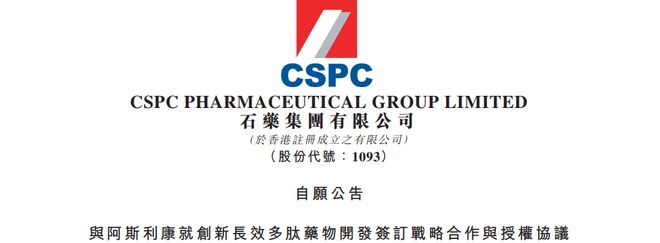
185亿美元!石药集团创纪录BD落地,股价反跌10%,什么情况?
Xin Lang Ji Jin· 2026-01-30 11:32
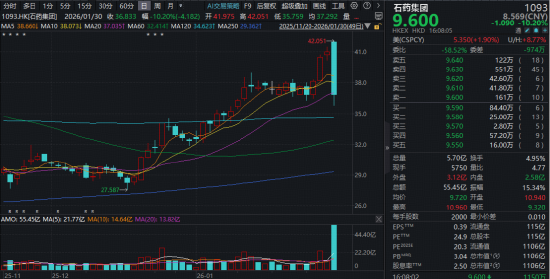
Core Viewpoint - The strategic collaboration between Shijiazhuang Pharmaceutical Group and AstraZeneca marks a significant milestone in the outbound business development (BD) of Chinese innovative drugs, with a potential total payment of up to $18.5 billion, setting a new record for BD transactions in the Chinese pharmaceutical industry [1][3]. Group 1: Transaction Details - Shijiazhuang Pharmaceutical has signed a strategic R&D cooperation and licensing agreement with AstraZeneca, utilizing its proprietary sustained-release drug delivery technology and peptide drug AI discovery platform to develop innovative long-acting peptide drugs [1]. - The total potential payment of $18.5 billion includes an upfront payment of $1.2 billion, with the remaining $17.3 billion contingent on achieving various R&D and sales milestones over the coming years [3]. Group 2: Market Reaction - Despite the significant deal, Shijiazhuang Pharmaceutical's stock experienced a sharp decline, dropping nearly 13% intraday and closing down 10.2%, attributed to profit-taking after a strong pre-announcement stock performance [1][3]. - The overall market sentiment was also negative, with major indices in Hong Kong, including the Hang Seng Index and the Hang Seng Biotechnology Index, falling over 2%, impacting the performance of other leading Chinese biopharmaceutical companies [3]. Group 3: Industry Outlook - Analysts suggest that the core logic of domestic innovative drugs remains solid, indicating a favorable window for investment as the BD of Chinese companies accelerates and the price gap for innovative drugs between China and the U.S. narrows, presenting significant long-term growth potential [5]. - The Hong Kong Stock Connect innovative drug ETF (520880) has seen substantial net subscriptions, indicating ongoing investor interest despite recent market volatility [4].
多家外资机构认为A股今年将延续涨势
21世纪经济报道· 2026-01-30 11:24
岁末年初,宏利投资管理、摩根资产管理、联博基金等多家外资机构相继发布2026年市场展 望, 看好A股配置价值已成为外资机构的普遍共识。 "2026年A股市场吸引力有望进一步提升,建议关注高景气核心资产、出海相关赛道以及供需 格局向好的领域。"摩根资产管理中国资深环球市场策略师蒋先威表示,随着外部不确定性减 弱,叠加国内企业盈利周期触底回升,以及"反内卷"政策对部分行业产能扩张的约束,工业企 业利润修复进程有望加快。 需求的增长,亚洲高股息资产配置价值凸显。 A股市场吸引力有望进一步提升,建议关注高景 气核心资产、出海相关赛道以及供需格局向好的领域。 宏利投资管理亚洲区股票投资部主管蔡尚琴持有相似观点,在她看来,2026年上半年,亚洲股 票前景依然向好,主要受惠于有利的货币环境及盈利能见度提升。她指出,全球投资者对亚洲 股票的配置比例仍处偏低水平,意味着存在较大的重新配置空间。 联博基金副总经理、投资总监朱良则建议关注中国"转型"契机下的资本市场表现。联博基金认 为,2026年较优配置应包含长期资产与部分红利型、营收健康的企业,尤其关注科技AI、创 新药与稳健新消费企业。 A股市场吸引力进一步提升 2025年, ...

2025招商证券“招财杯”ETF实盘大赛,圆满落幕!
券商中国· 2026-01-30 07:24
Core Viewpoint - The A-share market is experiencing a volatile upward trend, with the Shanghai Composite Index surpassing 4000 points in 2025. ETFs have become essential tools for investors to allocate assets and capture structural opportunities due to their high transparency, low fees, and strong liquidity [2]. Group 1: ETF Market Growth - By the end of 2025, the net inflow into China's ETF market reached approximately 1.18 trillion yuan, with the number of ETFs listed on domestic exchanges increasing to 1402, and the total market size rising from 3.7 trillion yuan to 6.0 trillion yuan, reflecting a growth of over 60% compared to the beginning of the year [2]. - The ETF product line has become increasingly diverse, offering investors a multi-layered toolbox to seize market opportunities, ranging from broad indices to niche sectors and from domestic investments to cross-border allocations [2]. Group 2: ETF Competition and Education - The "Zhaocai Cup" ETF live competition, held by China Merchants Securities since 2023, has attracted nearly 270,000 participants over three years, reaching over ten million investors through educational and event-related content, thereby fostering a positive ETF investment ecosystem [3]. - The 2025 competition saw over 880,000 views, with participant engagement increasing by over 60% compared to the previous year, indicating a growing interest in ETF investments [3]. Group 3: Performance and Market Trends - The A-share market showed strong performance in 2025, with major indices experiencing significant gains. The technology growth sector, particularly AI, semiconductors, robotics, aerospace, and innovative pharmaceuticals, emerged as the strongest market drivers [4]. - Participants in the "Zhaocai Cup" demonstrated impressive performance, focusing on broad-based ETFs and sector-specific themes such as biomedicine, communication equipment, and semiconductor chips, reflecting their attention to market hotspots and strategic adjustments [5]. Group 4: Comprehensive Support for Investors - The competition upgraded its offerings across four dimensions: education, investment, events, and services, providing comprehensive support to help investors progress steadily in their investment journeys [6]. - The "ETF Classroom" section was revamped to offer in-depth articles and interactive quizzes, reaching over 1.41 million participants, effectively enhancing investor education [7]. - The competition collaborated with ten major fund companies to launch "Hot Topics" and "Sector Topics," providing insights into market dynamics and investment opportunities, with nearly 460 million views across 45 live sessions [8]. Group 5: Tools and Professional Guidance - An "ETF Selection Tool" was introduced to enhance the investment experience, allowing participants to compare indices and ETFs using various quantitative metrics, aiding in understanding risk-return characteristics [9]. - Thousands of wealth advisors from China Merchants Securities participated in the competition, offering professional support and sharing diverse investment strategies, including stable allocation methods and industry rotation strategies [10].


科创板系列指数率先反弹,关注科创200ETF易方达(588270)、科创50ETF易方达(588080)等布局机会
Mei Ri Jing Ji Xin Wen· 2026-01-30 06:38
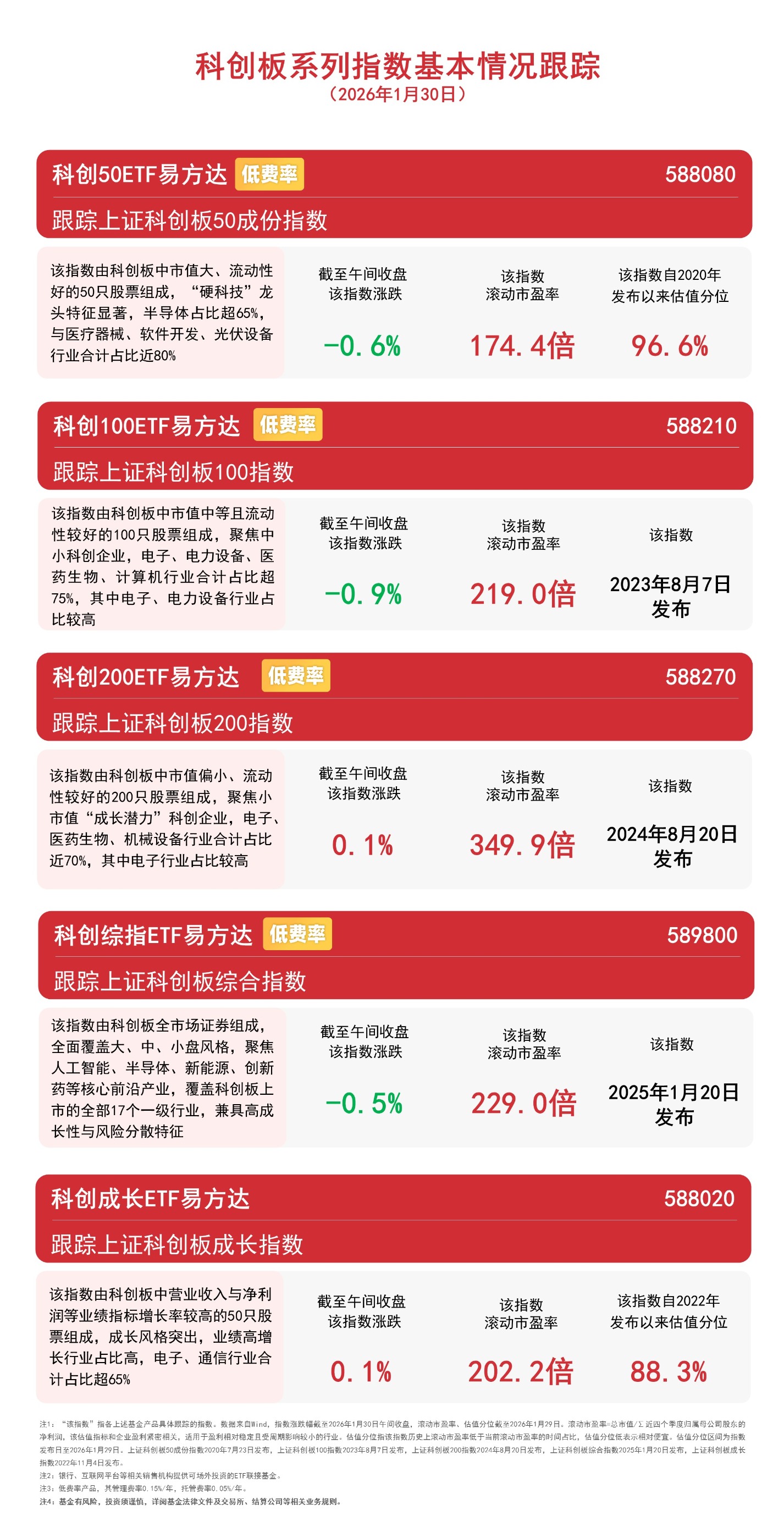
截至午间收盘 该指数涨跌 -0. 6% 该指数 滚动市盈率 174. 4倍 1月30日早盘,科创板下探后持续反弹,截至午间收盘。科创200指数、科创成长指数均上涨0.1%,科创宗指下跌0.5%,科创50指数下跌0.6%,科创100指数 下跌0.9%。 Wind数据显示,科创50ETF易方达(588080)连续2个交易日获净流入,合计5.7亿元。 科创板系列指数基本情况跟踪 (2026年1月30日) 科创50ETF易方达 低费率 跟踪上证科创板50成份指数 该指数由科创板中市值大、流动性 好的50只股票组成,"硬科技"龙 头特征显著,半导体占比超65%, 与医疗器械、软件开发、光伏设备 行业合计占比近80% 科创100ETF易方达 FF-5-33 跟踪上证科创板100指数 该指数由科创板中市值中等且流动 性较好的100只股票组成,聚焦中 小科创企业,电子、电力设备、医 药生物、计算机行业合计占比超 75%,其中电子、电力设备行业占 比较高 截至午间收盘 该指数涨跌 该指数 滚动市盈率 -0. 9% 219.0倍 科创200ETF易方达 FF = 跟踪上证科创板综合指数 该指数由科创板全市场证券组成, 全面覆盖大 ...
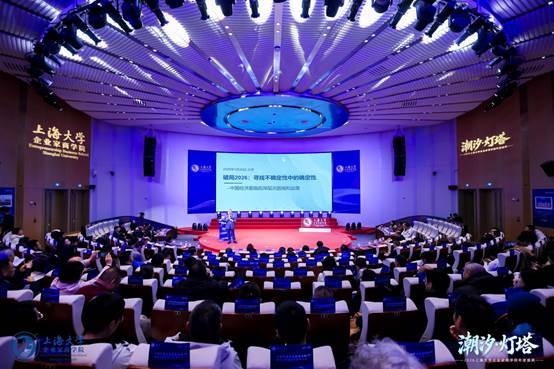
2026上海大学企业家商学院年度盛典圆满落幕,共话企业未来新航向
Sou Hu Cai Jing· 2026-01-30 02:15
Group 1 - The global economic growth momentum is undergoing a significant shift, with Chinese entrepreneurs facing a "tide era" filled with volatility and uncertainty [1] - The "Tide·Lighthouse" 2026 Shanghai University Entrepreneur Business School Annual Ceremony was held in Beijing, focusing on practical training combined with theoretical discussions for over 300 entrepreneurs [1][3] - The event featured prominent economists and entrepreneurs discussing macroeconomic trends, policy interpretations, and practical business operations, providing a framework for understanding the changing times [3] Group 2 - Economist Xiang Songzuo analyzed global and Chinese macroeconomic trends, highlighting the increasing uncertainty and the divergence between traditional industries and emerging sectors like AI, semiconductors, and innovative pharmaceuticals [3][5] - He emphasized that uncertainty presents opportunities for entrepreneurs to create value, urging them to focus on the "14th Five-Year Plan" priorities and leverage financial tools to navigate economic transitions [5] - Zhang Aoping provided insights into the new policy dividend release logic, detailing the "three-four-seven-twelve" policy cycle and the importance of aligning business development with national needs [5][7] Group 3 - The event adopted a "entrepreneurs teaching entrepreneurs" model, focusing on practical applications through real-world case studies and site visits [8] - Keynote speaker Song Zhiping discussed the importance of desire for success and lifelong learning among Chinese entrepreneurs, emphasizing the need to focus on core competitiveness and sustainable growth [8][10] - The event included practical sharing from various entrepreneurs in sectors like health, international business, and education, highlighting actionable strategies for navigating challenges [10] Group 4 - The ceremony served as a platform for knowledge exchange and collaboration, with a focus on creating an ecosystem for entrepreneurs [12] - The Shanghai University Entrepreneur Business School aims to empower growth-oriented entrepreneurs through practical experiences and resource sharing, distinguishing itself from traditional educational models [14] - The school announced strategic directions for 2026, focusing on profitability, quality of life, and succession planning for the next generation of entrepreneurs [14][16] Group 5 - The event culminated in the signing of strategic cooperation agreements with various organizations to enhance support for entrepreneurs in policy research, industry implementation, and international exchange [18][22] - The Shanghai University Entrepreneur Business School is transitioning from a teaching platform to a collaborative ecosystem, aiming to provide comprehensive support for entrepreneurs [22][23] - The school plans to integrate insights from the annual event into its curriculum, focusing on practical training and cross-industry discussions to guide entrepreneurs through changing economic landscapes [23]
乐普医疗预盈超8亿终结两连降 经营现金流持续为正负债率仅31%
Chang Jiang Shang Bao· 2026-01-30 01:07
Core Viewpoint - Lepu Medical (300003.SZ) has reversed its declining performance, projecting significant growth in its 2025 annual results, with expected net profit ranging from 800 million to 1.2 billion yuan, representing a year-on-year increase of 223.97% to 385.95% [1][2] Financial Performance - For 2025, Lepu Medical anticipates both net profit and non-net profit to be between 800 million and 1.2 billion yuan, with median estimates indicating a growth of approximately 304.86% and 352.49% compared to the previous year [2] - The company experienced a decline in revenue and net profit in 2023 and 2024, with net profit dropping by 42.91% and 80.37% respectively [3][4] Business Segments - The core business of cardiovascular interventional devices has shown stable revenue growth, while the pharmaceutical segment has achieved double-digit growth due to the completion of inventory clearance in retail channels [5] - Strategic emerging sectors, including innovative drugs and dermatology, have contributed to the performance increase [5] Research and Development - Lepu Medical has consistently invested over 1 billion yuan annually in R&D, with total R&D expenditures from 2021 to 2024 being 11.12 billion, 12.84 billion, 12.42 billion, and 11.65 billion yuan respectively [7] - The company has developed several "firsts" in domestic medical technology, including bioabsorbable stents and dual-chamber cardiac pacemakers, establishing a strong competitive edge in the cardiovascular field [7] Financial Health - As of September 2025, the company's debt-to-asset ratio is approximately 30.71%, indicating a solid financial position [8] - Lepu Medical's operating cash flow has consistently shown net inflows, with a projected year-on-year increase of about 95% for 2025 [8]

药品管理新规构建全链条创新激励生态
Zheng Quan Ri Bao· 2026-01-29 17:23
近日,新修订的《中华人民共和国药品管理法实施条例》(以下简称"新《条例》")正式公布,自2026 年5月15日起施行。 作为我国药品监管体系的重要配套法规,新《条例》从药品研制、生产、经营到使用和监管全链条作出 系统性优化,尤其强化了对中药、儿童用药、罕见病用药等领域的规范管理。 多位受访专家对记者表示,此次修订将为创新药产业注入强劲政策动能。 新药上市周期缩短 2020年发布实施的《药品注册管理办法》,首次设立突破性治疗药物、附条件批准、优先审评审批和特 别审批这4个药品上市加快通道,新《条例》进一步将这4条通道写入法条。国家药监局数据显示,截至 2025年12月份,已有395个品种纳入突破性治疗药物程序,158个通过附条件批准上市,508个品种进入 优先审评通道。创新药平均审评时限较2018年缩短25%。 "这相当于把过去'试点性'的审评改革成果制度化、法治化。"中国企业联合会特约研究员胡麒牧对《证 券日报》记者表示,企业可以更稳定地规划研发管线,投资者也能获得更清晰的政策预期。 以恒瑞医药为例,其自主研发的PD-1抑制剂卡瑞利珠单抗已通过优先审评获批多个适应症;百济神州 的泽布替尼凭借突破性疗法认定加速 ...
泰格医药最新公告:2025年净利同比预增105%-204%
Sou Hu Cai Jing· 2026-01-29 09:49
泰格医药(300347.SZ)公告称,预计2025年归属于上市公司股东的净利润为8.30亿元–12.30亿元,比上年 同期增长105%–204%。业绩变动主要系报告期内非经常性损益大幅增加,公司持有的非流动金融资产 (包括非上市公司股权、上市公司股份及医药基金)处置及持有收益显著提升,叠加中国创新药行业复 苏带动资产价值修复。公司的新签订单数量和金额均较去年同期实现较好增长。2025年,公司净新增订 单(新签订单剔除取消订单后)区间为人民币95亿元至人民币105亿元,2024年同期净新增订单为人民 币84.20亿元。 以上内容为证券之星据公开信息整理,由AI算法生成(网信算备310104345710301240019号),不构成 投资建议。 ...

国产降糖减重创新药研究成果登上《自然》主刊
Xin Lang Cai Jing· 2026-01-29 09:26
中新网北京1月29日电 (记者 赵方园)中国在降糖减重迎来重大科研突破。由中国科研人员主导、基于国 产创新药玛仕度肽的两项关键Ⅲ期临床研究(DREAMS-1和DREAMS-2)成果,近期在国际顶级学术期刊 《自然》上同步发表。 这是《自然》杂志创刊以来首次在代谢和内分泌疾病领域背靠背同步发表两项Ⅲ期临床研究。值得一提 的是,玛仕度肽的减重Ⅲ期研究成果(GLORY-1)已去年5月荣登国际医药研究顶级刊物《新英格兰医学 杂志》(NEJM)。 糖尿病是严重威胁我国居民健康的四大类慢性病之一,患者往往合并肥胖、高血压、血脂异常等多重代 谢异常。《健康中国行动(2019—2030年)》中专门设立了"糖尿病防治行动"。 此外,糖尿病与肥胖密切相关,超重会加重胰岛素抵抗,是导致2型糖尿病发生、进展和并发症增加的 主要因素之一。相关并发症可累及血管、眼睛、肾脏、足部等多个器官。 与欧美人不同,中国患者往往体重指数不高,但腹部肥胖突出,常合并多种代谢异常。但当前,中国 GLP-1药物的渗透率尚不足1%,且长期由跨国药企主导。 行业观察指出,中国正从"仿制药生产大国"向"创新药输出大国"坚实迈进,持续为全球患者提供品类更 全、选 ...