即时零售

Search documents
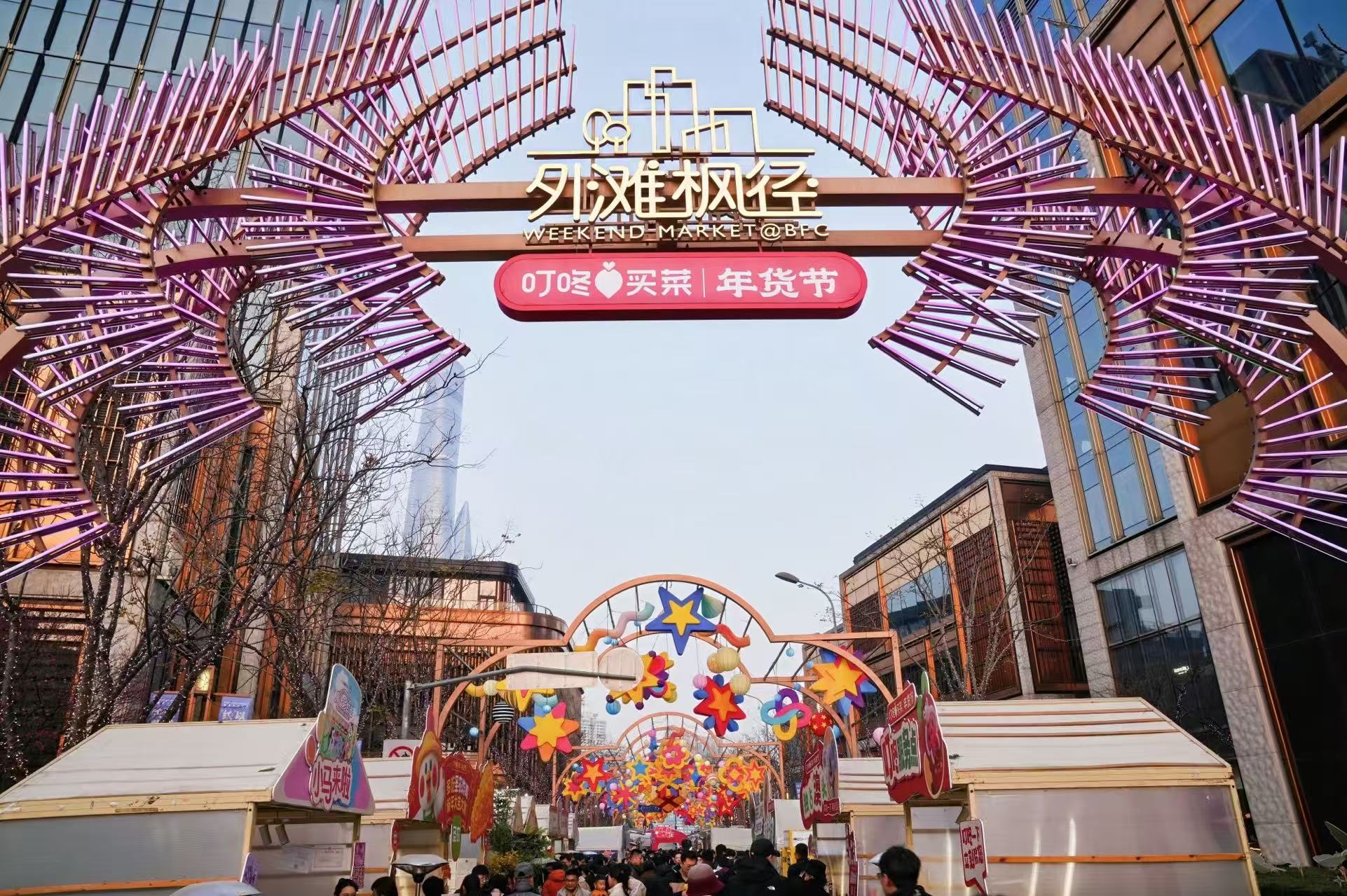
打造“边逛边尝、即选即购”年味新场景!叮咚买菜年货节空降上海BFC外滩枫径市集,百款全球美食免费吃
Xin Lang Cai Jing· 2026-01-24 14:30
Core Insights - The article highlights the launch of the "Dingdong Buy Vegetables New Year Festival" in Shanghai, featuring a variety of gourmet food options and a focus on high-quality, healthy products for the upcoming Chinese New Year [3][5]. Group 1: Event Highlights - The event took place from January 24 to January 25, showcasing a range of delicacies including oysters, sweet shrimp, and various beef and lamb dishes, aimed at creating a festive atmosphere for consumers [3]. - The festival also included a partnership with the Chilean Cherry Association, with a reported 40% year-on-year increase in cherry sales during the event [3]. Group 2: Product Offerings - Dingdong Buy Vegetables has upgraded its seafood and meat offerings, introducing organic and functional products, such as black pigs and free-range poultry, to meet consumer demand for safety and health [5][6]. - The company launched over ten health-focused snack gift boxes, featuring clean ingredient options like pork jerky and various nuts, catering to changing consumer preferences [6]. Group 3: Consumer Trends - The article notes a shift in consumer behavior, with younger generations prioritizing health and quality in their food choices, leading to increased sales of fresh juices and creative alcoholic beverages [6]. - The introduction of themed products, such as "马上来财" series and collaborations with popular brands, reflects the evolving tastes and preferences of younger consumers [6].


即时零售混战,拼多多“借腹生子”
Sou Hu Cai Jing· 2026-01-24 13:25
Core Insights - The competition in instant retail is intensifying, with major platforms like JD and Meituan significantly increasing their daily order volumes, indicating a shift in consumer expectations towards faster delivery services [3][6] - Pinduoduo is exploring a middle ground in the instant retail space by offering next-day and day-after delivery services, rather than directly competing in the immediate delivery segment [2][10] - The evolving consumer behavior shows a growing reliance on online food delivery, with a notable increase in users browsing and ordering through delivery apps [5][8] Group 1: Market Dynamics - Instant retail is blurring the lines between near-field and far-field e-commerce, with platforms like Taobao and JD offering rapid delivery options that challenge traditional e-commerce models [6][14] - The rapid growth in order volumes for non-food items reflects a broader trend where consumers are increasingly willing to purchase a variety of products through instant retail channels [3][5] - The competitive landscape is shifting, with platforms emphasizing speed ("fast") as a differentiator over price ("cheap"), which has been the traditional narrative in e-commerce [6][13] Group 2: Pinduoduo's Strategy - Pinduoduo has not fully engaged in the instant retail battle but is adapting its strategy by enhancing its warehousing and logistics capabilities to offer next-day delivery [2][9] - The company is testing a new service called "Billion Supermarket," which aims to cover a wide range of daily necessities while still operating within its traditional online retail framework [9][10] - Pinduoduo's cautious approach to instant retail aligns with its core user base, which tends to prioritize cost over immediate delivery [8][16] Group 3: Consumer Behavior - A significant portion of users has reported increased frequency in using food delivery apps, indicating a shift in consumer habits towards online dining options [5][8] - The expectation for faster delivery is becoming a natural consideration for consumers, influencing their purchasing decisions across multiple platforms [18][19] - The balance between speed and cost remains critical, as consumers weigh their options based on various factors beyond just delivery time [13][17]

酒便利实控人跑路后,800亿手机巨头入主
Sou Hu Cai Jing· 2026-01-24 03:44
Group 1 - The core point of the article is that after more than a year of turmoil due to the departure of its actual controller, Jiubianli has been acquired by Chuangdong Huake, with a 51% stake, marking a significant change in ownership [1] - Chuangdong Huake's largest investor is Tianyin Holdings, a company with projected revenues exceeding 80 billion in 2024, which has partnerships with major brands like Apple, Huawei, and Samsung [2] - Despite its large revenue, Tianyin Holdings reported a net loss of 57 million in the first three quarters of 2025, indicating challenges in its mobile phone business, prompting a shift towards the liquor retail sector [2] Group 2 - Prior to acquiring Jiubianli, Tianyin Holdings had already invested in the new retail platform "Jiukuai Dao" and holds shares in the liquor e-commerce platform "Jiuxian Wang," creating a clear distribution network in the liquor industry [3] - Jiubianli faced severe financial difficulties after its actual controller, Yu Zengyun, was confirmed to have left the country and was under investigation for fundraising fraud, leading to a 37% year-on-year revenue decline and a net loss exceeding 60 million in the first half of 2025 [5][6][7] - The acquisition represents a potential strategic partnership between a mobile giant and a struggling liquor chain, raising questions about whether the digital supply chain expertise can successfully transition into the liquor business [8]

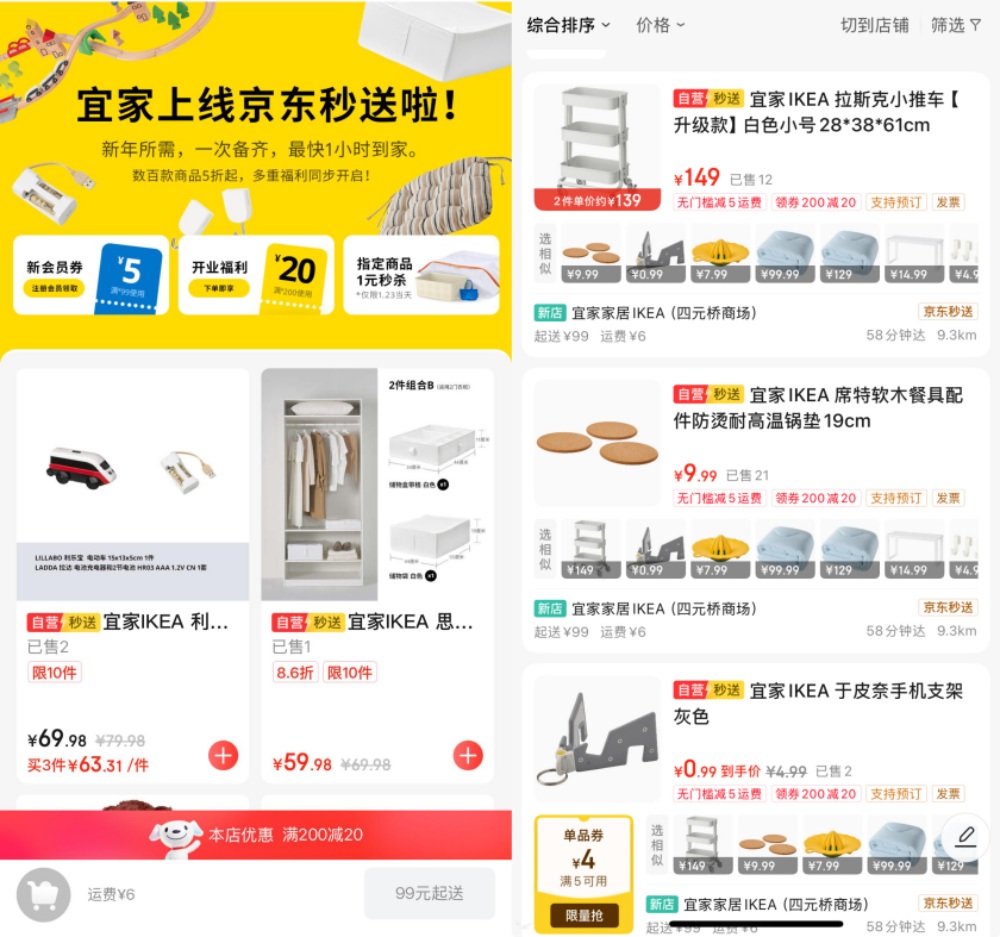
宜家上线京东秒送 首次推出即时零售服务
Zheng Quan Ri Bao Wang· 2026-01-23 13:45
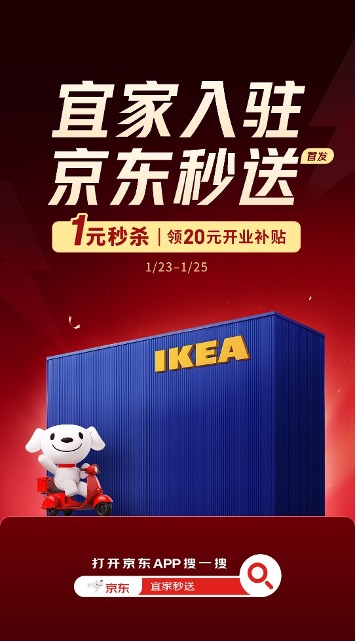
Group 1 - IKEA has launched a "秒送" (instant delivery) service in collaboration with JD.com, marking its first foray into this delivery model [1] - The service is available in 9 cities including Beijing, Guangzhou, Shenzhen, Hangzhou, Chengdu, Wuhan, Jinan, Kunming, and Foshan, with 13 IKEA stores participating [3] - Customers can order over 3,000 IKEA products through the JD app and enjoy immediate delivery, enhancing the shopping experience [3] Group 2 - During the promotional period from January 23 to January 25, JD.com is offering multiple discounts including a 1 yuan flash sale, a 99 yuan discount on purchases, and a 20 yuan limited-time subsidy [3] - The partnership between JD.com and IKEA began in August 2025 with the establishment of an official IKEA flagship store on JD.com [3] - The collaboration aims to activate various home consumption scenarios such as emergency purchases and daily home refreshes through efficient delivery [3]
从“5%”到“1351亿”,新酒饮正定义中国酒业下一个周期
Sou Hu Cai Jing· 2026-01-23 11:28
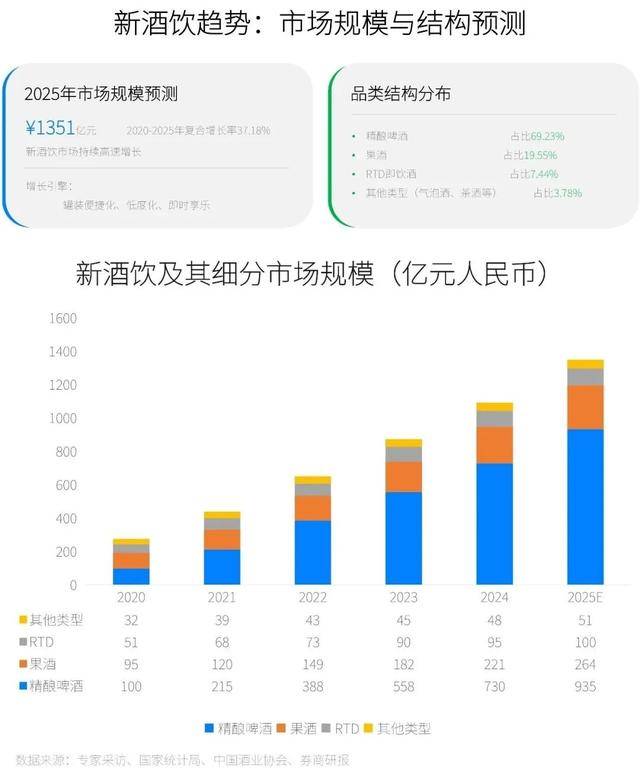
Core Insights - The Chinese alcoholic beverage industry is undergoing a profound structural transformation driven by generational consumption shifts, scene migration, and supply innovation [1][2] - Traditional segments like liquor, beer, and wine are experiencing stagnation, while the "new alcoholic beverages" category, characterized by low alcohol content and diverse flavors, is rapidly emerging as a new growth curve [1][2] - The new alcoholic beverage market is projected to reach 135.1 billion yuan by 2025, with a compound annual growth rate (CAGR) of 37.18% from 2020 to 2025, making it the fastest-growing segment in the industry [2][3] Consumption Trends - The report highlights a significant decline in traditional liquor consumption, with the share of public consumption of liquor dropping from 40% to 5% [2][3] - The new alcoholic beverage segment is gaining traction, with 42% of consumers indicating that "treating oneself" is a major consumption trend, and scenarios like "small gatherings" and "solo drinking" accounting for nearly 80% of new beverage purchases [7][9] Industry Dynamics - The rise of new alcoholic beverages is attributed to three key industry factors: product logic redefinition, consumer demographic evolution, and channel system revolution [9][10] - Traditional alcohol development focused on product-centric approaches, while new alcoholic beverages prioritize identifying target demographics and consumption scenarios before defining products [10][12] Consumer Demographics - The core users of new alcoholic beverages are predominantly women and younger consumers, with female users of fruit wine making up 64.72% and 76.7% of the 18-30 age group preferring low-alcohol beverages [12][13] - This demographic shift is leading to a more democratized consumption landscape, emphasizing individual experience over traditional male-dominated decision-making [12][13] Channel Innovations - The channel structure for new alcoholic beverages is undergoing a fundamental transformation, with instant retail (O2O) becoming a new growth engine, projected to increase from less than 6.8% in 2020 to over 15% by 2025 [13][14] - The shift from traditional distribution to instant retail reflects a change in channel functionality from storage and planned purchasing to immediate fulfillment within 30 minutes [13][14] Industry Restructuring - The emergence of new alcoholic beverages signifies a comprehensive restructuring of the industry, affecting every aspect of the value chain, including brands, distributors, and competitive dynamics [14][15] - Brands must transition from being product-centric to becoming scene-oriented operational companies, focusing on defining scenarios and providing comprehensive solutions for distribution [15][16] Future Trends - The future of the new alcoholic beverage market will focus on health and functionality, with products increasingly featuring low-sugar and low-calorie options, as well as functional ingredients [17][20] - There will be a parallel trend of value segmentation and premiumization, with high-end products emerging based on unique ingredients and cultural narratives, indicating a willingness among consumers to pay a premium for quality [17][20] - The market is shifting from a "broad product" era to a "precision cultivation" era, where brands will need to target specific consumer segments and high-value scenarios to build loyalty and brand barriers [20]
五城齐开,京东旗下七鲜小厨加速全国化布局
Guo Ji Jin Rong Bao· 2026-01-23 09:33
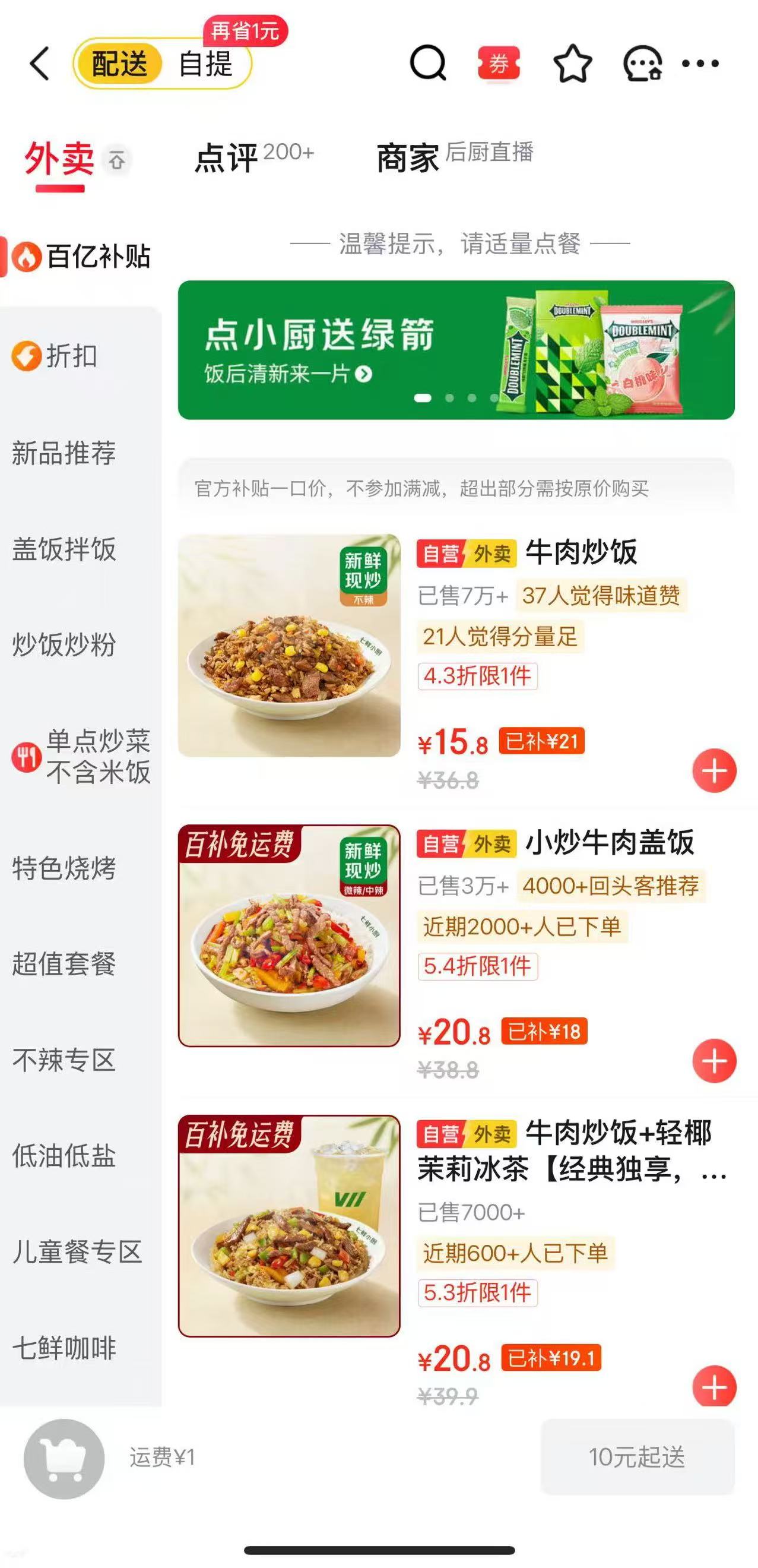
Core Insights - JD's "Qixian Kitchen" is rapidly expanding its national market presence, marking a new phase in its nationwide layout with openings in major cities like Shenzhen, Shanghai, and Guangzhou [1][2] Group 1: Business Expansion - "Qixian Kitchen" has opened 30 stores in Beijing within four months and has launched its first store in Harbin, indicating a strong growth trajectory [1] - The initiative aims to establish 10,000 stores across the country within three years, focusing on major urban areas [2][4] Group 2: Business Model and Strategy - The business model emphasizes a "takeout + self-pickup" approach, catering to convenient dining needs with a menu that includes various affordable dishes priced between 10 to 30 yuan [1][4] - JD has initiated a partner recruitment plan, investing 1 billion yuan to find quality partners for 1,000 signature dishes, allowing partners to focus on recipe development while JD handles production and quality control [4][5] Group 3: Competitive Advantage - The "Qixian Kitchen" model integrates supply chain management and technology to create a differentiated competitive path, addressing food safety concerns through "fresh cooking + transparent kitchen" practices [5] - The low-cost franchise model lowers entry barriers for small businesses, enhancing the overall ecosystem [5]

宜家首发上线京东秒送,首次推出即时零售服务
Zhong Jin Zai Xian· 2026-01-23 08:17
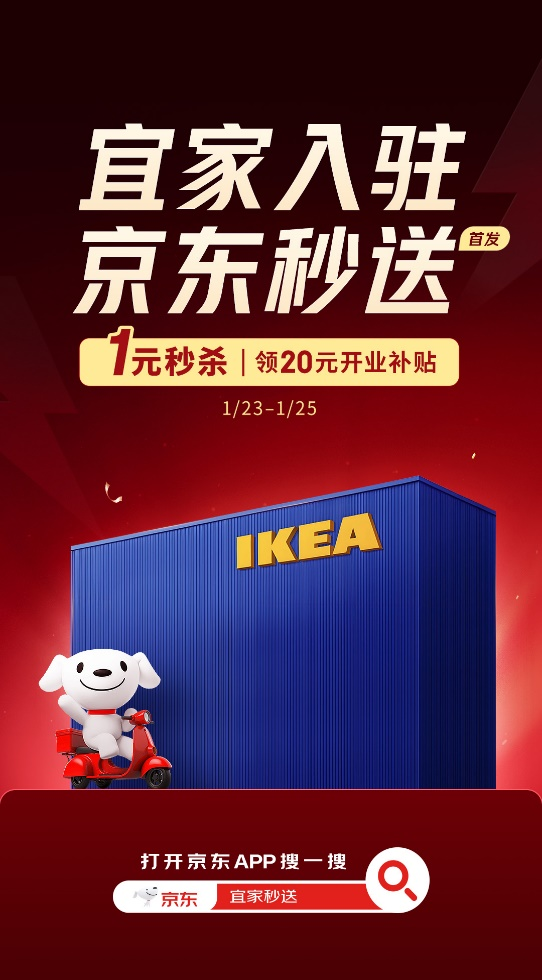
Group 1 - IKEA has launched a "秒送" (instant delivery) service in collaboration with JD.com, leveraging JD's efficient fulfillment system and IKEA's extensive product range for convenient online ordering and immediate delivery [1] - The service is initially available in 9 cities, including Beijing, Guangzhou, Shenzhen, Hangzhou, Chengdu, Wuhan, Jinan, Kunming, and Foshan, across 13 IKEA stores [3] - Consumers can easily purchase IKEA products through the JD app and enjoy instant delivery, with promotional offers available during the launch period, including a 1 yuan flash sale and various discounts [4] Group 2 - The partnership between JD.com and IKEA began in August 2025, when they established the official IKEA flagship store on JD, and this new instant retail collaboration aims to enhance consumer experiences [4] - JD's instant delivery service will support over 3,000 IKEA products for efficient delivery, catering to diverse home shopping scenarios such as emergency purchases and daily refreshes [4]
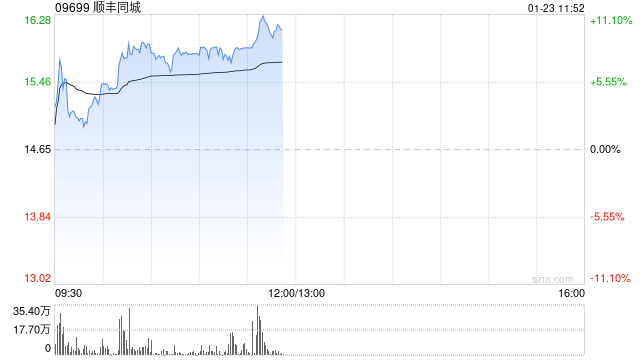
顺丰同城股价持续走高,机构称即时配送行业具备需求动力,公司业务增长与盈利预期向好
Zhi Tong Cai Jing· 2026-01-23 05:32
Core Viewpoint - The State Council's Anti-Monopoly and Anti-Unfair Competition Committee is investigating the market competition in the food delivery platform service industry, which is expected to lead to more compliant competition in the instant retail sector, driving growth in higher-priced categories and providing more growth opportunities for logistics [3] Group 1: Market Competition and Growth - The investigation is based on the Anti-Monopoly Law of the People's Republic of China, indicating a regulatory focus on fair competition in the food delivery sector [3] - Increased compliance in competition is anticipated to shift product categories from food and beverages to higher-priced items, enhancing growth potential for logistics services [3] Group 2: Consumer Behavior and Order Growth - High-frequency subsidies have successfully cultivated consumer habits, with increased investment expected to directly boost the scale of instant delivery orders, becoming a key source of industry demand growth [3] - During the New Year holiday period in 2026, daily average orders for same-city delivery increased by 55% year-on-year, with beverage orders doubling and fast food orders increasing by over 90% [3] Group 3: Category Performance - Categories such as supermarkets, beauty products, and electronics also saw significant year-on-year growth in order volume, with all food and non-food categories experiencing high double-digit growth, supporting holiday consumption and business operations [3] Group 4: Impact on Logistics Providers - The competitive landscape is favorable for third-party logistics service providers, with companies like SF Express benefiting from the overflow of delivery volumes from the food delivery battle, leading to positive business growth and profit expectations [3]
宜家首次支持即时零售:上线京东秒送,限时4公里内满99免运费
Xin Lang Cai Jing· 2026-01-23 04:26
Core Insights - IKEA has launched an instant retail service on JD.com, marking its entry into the instant retail sector, covering 9 cities and 13 stores in China [1][4] - The service offers a range of lightweight home products, with promotional activities to attract customers [1][3] Group 1: Instant Retail Launch - IKEA's instant retail service is available in cities including Beijing, Guangzhou, and Shenzhen, allowing consumers to order through the JD app [1] - The service features promotional offers such as 1 yuan flash sales and discounts for new customers [1][3] - The operating hours for the instant retail stores are from 10:00 to 20:00, shorter than traditional store hours [3] Group 2: Product Offering and Pricing - The product range includes storage items, tableware, kitchenware, bedding, lighting, and furniture, focusing on lighter items [3][4] - A specific example includes a drawer cabinet priced at 349 yuan, which can be purchased for 335.5 yuan after discounts and fees [3] Group 3: Market Context and Strategy - IKEA is facing a store closure trend in China, with plans to close 7 stores by February 2026 [5] - The company aims to shift from expansion to focused growth, planning to open over ten small stores in key markets like Beijing and Shenzhen [5] - IKEA's sales in China for FY2024 are projected to be approximately 11.15 billion yuan, a decline of nearly 1 billion yuan from the previous fiscal year [5]
顺丰同城午前涨近10% 机构指公司业务增长与盈利预期向好
Xin Lang Cai Jing· 2026-01-23 03:53
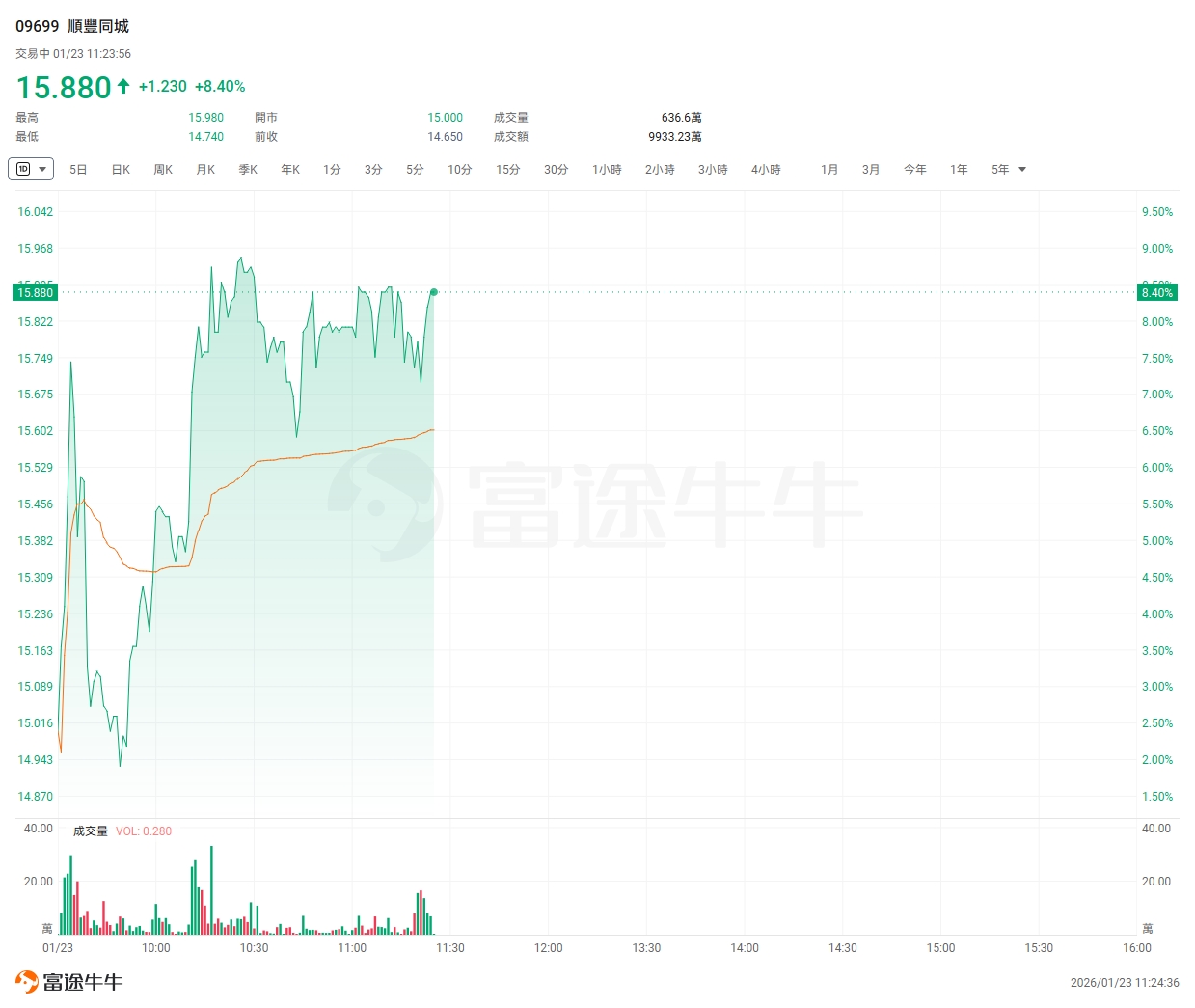
Core Viewpoint - SF Express City (09699) has seen a significant stock price increase of 9.83%, currently trading at HKD 16.09, with a transaction volume of HKD 132 million [5] Group 1: Company Performance - During the 2026 New Year holiday period, the average daily order volume for same-city delivery increased by 55% year-on-year, with beverage orders doubling and fast food orders increasing by over 90% [5] - Categories such as supermarkets, beauty products, and electronics also experienced high double-digit growth in order volume year-on-year, supporting holiday consumption and business operations [5] Group 2: Industry Insights - The competition in the instant retail sector is becoming more regulated, which is expected to drive the transition from lower-priced categories like food and beverages to higher-priced categories, providing more growth opportunities for logistics [5] - Increased investment in high-frequency subsidies has successfully cultivated consumer habits, which will directly boost the scale of instant delivery order growth, becoming a key source of industry demand increase [5] - The competitive landscape is favorable for third-party logistics service providers, with SF Express City benefiting from the overflow of order volume from the food delivery battle, leading to positive business growth and profit expectations [5]