
低碳转型

Search documents
中国工业低碳技术展望报告发布
Zhong Guo Hua Gong Bao· 2025-08-08 02:13
Core Insights - The report titled "Prospects for Low-Carbon Technologies in Industry under China's Carbon Neutrality Goals" was initiated by Tsinghua University's Carbon Neutrality Research Institute and supported by the Energy Foundation, focusing on China's industrial carbon neutrality strategy [1] Group 1: Industrial Carbon Neutrality Strategy - The report emphasizes that the industrial sector is a major source of energy consumption and carbon emissions in China, presenting significant opportunities for technological innovation and industrial upgrades [1] - By 2060, CO2 emissions from the industrial sector are expected to drop to 450 million tons, a reduction of approximately 95% compared to 2025, driven by three main factors: demand-side adjustments, technological innovations, and clean electricity substitution [1] - Four core technologies—hydrogen substitution, electrification coupled with clean electricity, raw material substitution, and waste recycling—are projected to contribute nearly 80% of the industrial decarbonization potential [1] Group 2: Development Pathways for Low-Carbon Technologies - The report outlines a "three-stage" pathway for the development of carbon neutrality technologies in the industrial sector: 1. Large-scale application of low-carbon process technologies (2025-2035), focusing on demand-side structural adjustments and short-process technologies, which are expected to contribute about 55% of the industrial carbon neutrality technology reduction [2] 2. Explosive application of disruptive technologies (2036-2050), where hydrogen technology, electrification, and CCUS will be scaled up to break the reliance on high-carbon pathways [2] 3. Deep application of carbon removal technologies (2051-2060), where the industrial sector will rely on CCUS to address hard-to-abate segments while other sectors achieve net-zero emissions [2] Group 3: Policy Recommendations - To accelerate the deployment of low-carbon technologies in the industrial sector, the report suggests several policy recommendations, including the planning and deployment of strategic major projects with demonstrative effects, enhancing the role of carbon markets and carbon finance, and establishing a supportive fiscal and tax policy framework for carbon neutrality technology development [3]
(活力中国调研行)浙江湖州:金融“含绿量” 持续赋能绿色发展“含金量”
Zhong Guo Xin Wen Wang· 2025-08-07 18:13
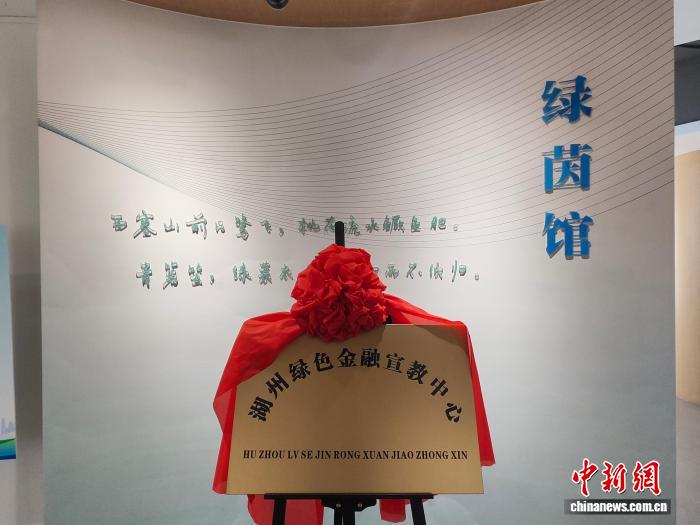
Core Viewpoint - Huzhou is leveraging green finance to support sustainable development and environmental protection, transforming its economy while addressing industrial pollution issues [1][2][3] Group 1: Green Finance Initiatives - Huzhou has established itself as a national pilot zone for green finance reform, implementing 28 green finance standards and creating over 150 green financial products [3] - The city has seen an average annual growth rate of over 40% in green credit balance from 2017 to 2024, with green credit accounting for over 33% of total credit, significantly higher than the national average [3] - Huzhou's green finance practices have been recognized as typical cases by the G20 Sustainable Finance Working Group [3] Group 2: Company Case Study - Zhejiang Mingjing Environmental Technology Group, founded by Wu Jian, has become a key player in hazardous waste disposal and resource recycling, with an annual hazardous waste disposal capacity of 186,800 tons [2] - The company received 140 million yuan in credit support from Huzhou Bank, which facilitated the construction of a facility capable of processing 90,000 tons of hazardous waste annually [2] - Over 90% of the hazardous waste processed by the company is converted into energy and recycled products, leading to a 15% reduction in electricity consumption and a 20% decrease in disposal costs [2] Group 3: Policy Support for Low-Carbon Transition - In 2022, Huzhou initiated a transformation finance reform, becoming the only pilot for such reforms in the province, with a focus on supporting low-carbon transitions in eight high-energy-consuming industries [4] - The city has developed a regional support directory for transformation finance, granting 59 billion yuan in credit to 317 transformation enterprises and projects [4] - Huzhou has implemented 31 policies to support low-carbon transition, including loan subsidies and special support for financial institutions [4]

活力中国调研行丨从乡村到园区,降碳“文章”这样写——浙江推进低碳转型发展见闻
Xin Hua Wang· 2025-08-07 05:23
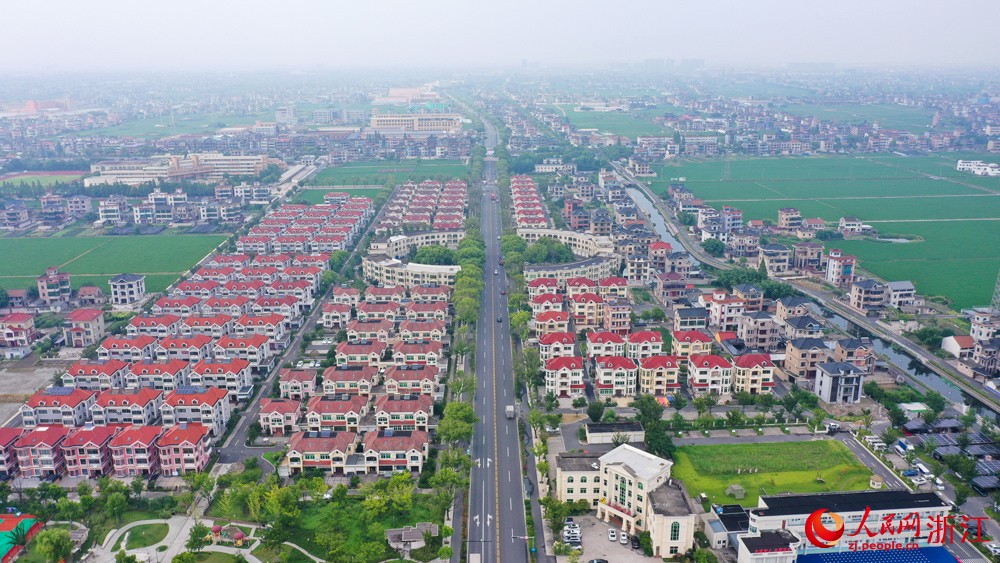
Core Insights - Zhejiang province is actively promoting low-carbon transformation through various initiatives in rural and industrial areas, showcasing a strong commitment to sustainable development [1][5]. Group 1: Rural Low-Carbon Initiatives - Meilin Village is developing a "low-carbon village" centered around photovoltaic (PV) power generation, with a distributed rooftop PV system generating over 160,000 kWh annually, reducing CO2 emissions by approximately 94 tons [2]. - The village's "fishing and solar" project integrates over 80 acres of ponds and 30 acres of land, expected to increase collective income by over 110,000 yuan annually [2]. - Residents are benefiting from surplus electricity sales to the grid, enhancing their financial well-being while contributing to environmental sustainability [2]. Group 2: Innovative Practices in Low-Carbon Living - Jing Shan Village is promoting a low-carbon lifestyle by replacing plastic products with bamboo alternatives, which has gained popularity among guests [3]. - The village has implemented a points system for waste sorting and green travel, encouraging residents to adopt sustainable practices [3]. - With a forest coverage rate of 96%, the village aims to leverage its ecological resources for carbon sequestration and promote carbon-labeled tea products [3]. Group 3: Industrial Low-Carbon Transformation - The Linping Economic and Technological Development Zone is launching a zero-carbon demonstration project, focusing on distributed PV power stations and energy management systems [4]. - The industrial park has achieved a green energy share of 63.2%, with annual savings of approximately 100,000 yuan in electricity and 1.58 million yuan in power generation revenue [4]. - The project is designed to be replicable and sustainable, with a payback period of about six years, contributing to the broader goal of carbon neutrality [4]. Group 4: Broader Implications for Development - The ongoing low-carbon transformation across various sectors, including households, parks, agriculture, and industry, is reinforcing the green foundation for high-quality development in the region [5].
活力中国调研行|杭州萧山梅林村:光伏驱动低碳新生活
Ren Min Wang· 2025-08-05 05:01
Core Viewpoint - The article highlights the successful implementation of photovoltaic (PV) systems in Meilin Village, Hangzhou, showcasing the transition towards a low-carbon lifestyle and the integration of renewable energy in both public and private sectors [7][8]. Group 1: Photovoltaic Implementation - Meilin Village has installed a distributed rooftop PV system with a capacity of 258 kilowatts, generating over 160,000 kilowatt-hours annually and reducing carbon dioxide emissions by approximately 94 tons [7]. - More than 50 households in the village have adopted rooftop PV systems, benefiting from clean energy and financial returns known as "sunshine income" [7]. - The village has expanded PV applications to smart fitness equipment powered by solar energy, reflecting a comprehensive integration of low-carbon principles into daily life [7]. Group 2: Historical Context and Development - Meilin Village transformed from an industrial and residential mix with environmental issues to a model of new rural construction starting in 1998, implementing a "three zones in one" approach [7]. - The village has undertaken various improvement projects over the past 20 years, including waste management and beautification initiatives, enhancing both the environment and the aesthetic appeal of the area [8]. Group 3: Economic Impact - The "fishing and solar" project integrates over 86 acres of ponds and 39 acres of land, generating dual income streams and expected to increase collective income by over 110,000 yuan annually [8]. - The local enterprise, Aideer, has established a 4.7 megawatt PV project, producing 5.5 million kilowatt-hours per year and reducing carbon emissions by 3,069 tons, supporting the village's low-carbon transition [8].
我国首个移动储能动力系统在钻井平台成功应用
Zhong Guo Chan Ye Jing Ji Xin Xi Wang· 2025-07-30 22:03
Core Viewpoint - The successful application of China's first mobile energy storage power system in oil and gas drilling marks a significant step towards reducing carbon emissions in the industry, transitioning from traditional diesel power to a green energy solution [1][2] Group 1: System Performance and Impact - The mobile energy storage system, provided by Jichai Power, generates over 4,000 kilowatt-hours of electricity daily and has successfully completed drilling for two wells [1] - The system has cumulatively generated 230,000 kilowatt-hours of electricity, reducing carbon emissions by 65 tons per well operation [1] - The equipment includes a 3.34 megawatt mobile energy storage cabin and integrates photovoltaic and energy storage technologies to create a zero-carbon power platform [1] Group 2: Technological Advancements and Collaboration - Jichai Power has focused on overcoming challenges related to the compatibility of energy storage with drilling equipment, enhancing system stability and compatibility [2] - The project team has developed a standardized battery swapping operation, achieving zero errors in 34 battery swaps and reducing the average swap time to 60% of the industry standard [2] - The mobile energy storage system is recognized for its low-carbon, intelligent, and flexible characteristics, addressing high energy consumption and carbon emissions in oil and gas exploration [2]
恒隆地产上半年总收入49.68亿港元
Zheng Quan Ri Bao· 2025-07-30 17:07
Core Viewpoint - Hang Lung Properties Limited reported a significant decline in property sales revenue, leading to a 19% year-on-year decrease in total revenue for the first half of 2025, amounting to HKD 4.968 billion, while rental income remained relatively stable [1] Group 1: Financial Performance - Total revenue decreased by 19% to HKD 4.968 billion due to an 87% drop in property sales [1] - Total rental income was HKD 4.678 billion, only down 3% year-on-year [1] - Shareholders' net profit for the first half was HKD 1.587 billion, reflecting a 9% decline [1] Group 2: Rental Business Insights - Rental income from mainland China was HKD 3.19 billion, a slight decrease of 2%, while rental income from Hong Kong was HKD 1.488 billion, down 4% [1] - Retail property occupancy rates remained high at 94% in mainland China and 93% in Hong Kong [1] Group 3: Strategic Developments - The company is focusing on enhancing customer experiences in its malls through innovative content and collaborations with brands [2] - The hotel business saw an 84% increase in revenue to HKD 129 million, signaling positive growth despite its small contribution [2] - The Hangzhou project is expected to be a key growth driver, with the first phase of the mall set to open in mid-2026 and a pre-leasing rate of 81% [2] Group 4: Future Outlook and Sustainability - The leasing agreement with Baida Group will enhance the retail space by 40%, improving visibility and accessibility [2] - Other key projects in mainland China are progressing, with the second phase of Wuxi Hang Lung Plaza set for phased delivery starting in late 2025 [3] - The company is committed to low-carbon transformation, with 80% of its mainland properties using renewable energy [3] - A mid-term dividend of HKD 0.12 per share was announced, with options for shareholders to receive new shares instead of cash [3] - The company expresses confidence in achieving "micro-growth" in future performance, while remaining cautious about market trends in the latter half of the year [3]

全国首单低碳转型挂钩中小微企业支持债券在深交所成功发行
Zheng Quan Ri Bao Wang· 2025-07-23 10:42
据悉,本期债券由国金证券担任牵头主承销商及簿记管理人,华鑫证券担任联席主承销商,发行规模3 亿元,期限为5年期,由重庆三峡融资担保集团提供全额担保。西安高新金服集团首次发行公司债券即 以2.34%的票面利率创西北地区AA+主体同期限公司债券市场新低,同时也是全国中小微企业支持债券 同期限所有评级市场新低。本期债券获得了机构投资者的踊跃认购,全场认购倍数高达7.23倍,充分彰 显资本市场对西安高新金服集团在支持实体经济发展与绿色金融创新方面的认可。 本期债券通过设置"低碳转型挂钩特殊条款",将业务开展与低碳转型领域中小微企业相结合,将普惠金 融与绿色金融相结合,是落实金融"五篇大文章"的重要实践,同时通过市场化机制将资金精准注入低碳 转型关键领域,为金融服务"双碳"经济提供可复制的创新样本。 本报讯(记者舒娅疆)近日,西安高新金融控股集团有限公司旗下西安高新金服企业管理集团有限公司(简 称"西安高新金服集团")在深圳证券交易所成功发行全国首单"低碳转型挂钩+中小微企业支持"公司债 券"25金服GTZ1"。 据介绍,西安高新金服集团作为西安高新金控旗下普惠金融核心平台,围绕西安高新"55611"现代产业 体系,打 ...
中国光伏企业助力哈萨克斯坦绿色能源产业发展
Yang Shi Wang· 2025-07-22 02:35
中国不仅有完备的绿色能源产业,更有成熟的低碳转型方案,国际有需求,全球找合作。在"一带一 路"沿线,哈萨克斯坦是一个燃煤发电占比较高的国家,那里正在积极推进能源结构转型。中国光伏企 业参与建设了哈萨克斯坦多座光伏电站。与中国企业合作的这些项目不仅为哈萨克斯坦带来了就业岗 位,还加速推动哈萨克斯坦在2030年前将可再生能源发电量提升至24.4%的战略目标。 哈萨克斯坦西南部的曼吉斯套州拥有广袤的荒漠。自2025年3月起,曼吉斯套州的谢特佩村悄然变身, 一片片太阳能光伏板覆盖了当地的干草地,装机容量达20兆瓦的太阳能电站正在紧锣密鼓地建设。 总台报道员 梅雷克·拉赫马舍娃:工程占地约44公顷,项目总投资额达56.78亿坚戈(约合7600万元人民 币)。该电站未来将接入哈萨克斯坦西部电网,项目在建设阶段为当地创造了超过100个就业岗位,电站 正式投入运营后,预计还将提供更多长期工作岗位。 哈萨克斯坦曼吉斯套州曼吉斯套区副区长 阿斯卡尔·阿克库洛:光伏板矩阵选址在里海水泥厂附近,这 里的平均日照时间相对长,电站平均每天可发电13个小时。这是我们地区最大的外国投资项目,是哈萨 克斯坦与中国的重点合作项目之一。 缓解电网 ...
掘金雅江 - 卡位超级工程的基建生态红利
2025-07-21 14:26
Summary of Key Points from Conference Call Records Industry and Company Involved - The conference call discusses the **Yalong Zangbu River downstream hydropower project**, which is a significant infrastructure initiative in China, with a total investment of approximately **1.2 trillion yuan** (equivalent to about **$180 billion**) [1][2][3]. Core Insights and Arguments - The Yalong Zangbu River project is a critical component of the national strategy for **"West-East Power Transmission"** and low-carbon transition, expected to drive over **100 billion yuan** in annual investment over the next decade, significantly impacting macroeconomic growth [1][2]. - The project aims for an installed capacity of **60 to 80 million kilowatts**, equivalent to three **Three Gorges Projects**, enhancing the balance of China's energy structure and stabilizing energy supply [1][3]. - The **resource market** has seen a notable increase in performance, particularly in the **steel, chemical, and agriculture sectors**, driven by rising commodity prices and positive mid-year performance forecasts [1][6]. - The **Motu Hydropower Station** project is expected to create substantial demand for the **power equipment industry**, with significant needs for turbines, gas-insulated lines (GIL), and ultra-high voltage transmission channels, leading to an estimated investment of **30 billion yuan** per line [1][8]. - The project will require **4 to 5 million tons of steel**, benefiting steel companies in regions like **Sichuan, Jiangxi, and Hunan** [1][9][10]. Additional Important Content - The establishment of the **Yalong Group** and its related hydropower projects are included in the **14th Five-Year Plan**, emphasizing their strategic importance for clean energy bases and supporting the national low-carbon goals [2]. - The **demand for civil explosives** is expected to rise significantly due to the project, with about **10%** of the total investment allocated to this sector, benefiting companies in the explosives industry [2][17]. - The **macro-economic environment** has shifted positively in 2025, with various factors enhancing market sentiment, including technological breakthroughs and recovery in real estate data [4][5]. - The **resource market** is projected to perform well in July, with high win rates in sectors like **military, steel, chemicals, and agriculture**, driven by seasonal factors and government policies aimed at stabilizing growth [6][7]. - The **electric power industry** will see long-term benefits from the Yalong Zangbu project, with expectations of higher electricity prices to meet investment return requirements, while also supporting the transition to cleaner energy sources [27]. Conclusion The Yalong Zangbu River downstream hydropower project represents a transformative investment in China's energy infrastructure, with broad implications for various sectors, including power equipment, steel, and civil explosives. The project aligns with national strategies for sustainable development and economic growth, presenting significant opportunities for related industries and companies.


第三届链博会签署合作协议、达成合作意向超六千项——“找朋友、找伙伴、找应用场景、找解决方案”(走进链博会)
Ren Min Ri Bao· 2025-07-20 21:46
Core Insights - The third Chain Expo successfully concluded in Beijing, with over 6,000 cooperation agreements signed and 1,200 participating companies and institutions, attracting more than 210,000 attendees, a 5% increase from the previous year [1][2]. Group 1: International Cooperation and Participation - The proportion of overseas exhibitors at the Chain Expo has increased from 26% in the first edition to 35% in the latest edition, with over 65% of exhibitors being Fortune 500 and industry-leading companies [2]. - The number of participating countries and regions expanded from 55 to 75, showcasing a growing international presence [2]. Group 2: Innovation and Technology - Numerous cutting-edge products and solutions were launched at the expo, covering fields such as information technology, artificial intelligence, and healthcare [3]. - Notable innovations included the world's first ultra-wide CT scanner by General Technology Group, which enhances scanning speed by eight times compared to traditional devices [3]. - The "Jiaoyin Venture Loan" by Bank of Communications Beijing Branch was introduced as a comprehensive financial service to support technology enterprises [3]. Group 3: Innovation Chain and Industry Integration - The newly established Innovation Chain Zone aimed to connect the entire process from intellectual property rights to industrialization, facilitating seamless integration between innovation and industry [4]. - Major technology trading institutions showcased their efficient technology trading systems and established cooperation intentions with nearly 100 enterprises and institutions [4]. Group 4: Long-term Collaboration Focus - The Chain Expo emphasizes fostering long-term mutually beneficial cooperation rather than short-term transaction volumes, helping exhibitors and professional audiences find partners and solutions [5]. Group 5: Global Supply Chain Stability - Companies like Rio Tinto and China Baowu showcased their collaborative efforts in the smart automotive sector, emphasizing the importance of building a low-carbon and resilient supply chain [6]. - Yili Group highlighted China's role as a stabilizing force in the global supply chain, with over 2,000 partners worldwide [6].