
关税

Search documents
伦敦金于4140上方蓄势 突破4180将打开上行空间
Jin Tou Wang· 2025-11-27 06:16
Group 1 - The current trading price of London gold is around $4150, with a latest quote of $4152.59 per ounce, reflecting a decline of 0.23% [1] - The highest price reached was $4168.19 per ounce, while the lowest was $4142.12 per ounce, indicating a short-term oscillating trend for London gold [1] Group 2 - The US dollar index continues to decline as Thanksgiving approaches, with September durable goods orders showing a month-on-month increase of 0.5%, which is a slowdown compared to August's 2.9% [2] - Core durable goods orders, excluding transportation, increased by 0.6%, significantly exceeding the expected 0.2% and previous value of 0.3% [2] - The Federal Reserve's Beige Book indicates that US economic activity is nearly stagnant, with half of the employers in 12 Federal Reserve districts showing decreased hiring intentions [2] Group 3 - The recent gold market analysis indicates a small upward movement, remaining above the 5-day moving average, with a double bottom established on the 4-hour chart [3] - The first resistance level to watch is around $4180, and if this level is broken, the market may target $4200 [3]
美联储“褐皮书”显示关税致美制造业和零售业成本承压
Sou Hu Cai Jing· 2025-11-27 03:54
Core Insights - The Federal Reserve's Beige Book indicates a further decline in overall consumer spending in the U.S. from early October to mid-November, with tariffs putting pressure on manufacturing and retail costs [1] Economic Conditions - The report highlights a moderate increase in prices during the reporting period, with manufacturing and retail sectors facing widespread cost pressures primarily due to tariffs [1] - Businesses connected to the Federal Reserve expect ongoing cost pressures, with some retailers noting that the federal government shutdown negatively impacted consumer spending [1] Manufacturing and Retail Impact - Tariffs and related uncertainties continue to weigh on manufacturing activity, while non-financial service sector revenues are mostly flat or declining [1] - Community organizations report an increased demand for food assistance, partly due to the federal government shutdown disrupting the issuance of benefits related to the Supplemental Nutrition Assistance Program [1] Labor Market Trends - The Beige Book indicates a slight decline in employment levels during the reporting period, with about half of the Federal Reserve districts reporting weakened labor demand [1] Federal Reserve Context - The Beige Book is published eight times a year and serves as an important reference for the Federal Reserve's monetary policy meetings, with the next meeting scheduled for December 9-10 [1]
美联储褐皮书:美国经济冷暖并存,消费市场“K型分化”加剧
Jin Shi Shu Ju· 2025-11-27 02:36
Economic Overview - The Federal Reserve's Beige Book indicates that U.S. economic activity has shown little change in recent weeks, with overall consumer spending declining except for high-income groups [1] - Employment levels have slightly decreased, while prices have risen moderately [1] - There is a growing risk of economic activity slowing in the coming months, although some optimism exists in the manufacturing sector [1] Consumer Spending - High-income consumers are maintaining spending levels, while middle and low-income households are tightening their budgets [1][10] - Retailers are experiencing a decline in sales for previously increased-priced items, indicating a shift in consumer behavior towards seeking discounts [6] Employment Trends - Companies are increasingly opting for hiring freezes and natural attrition instead of direct layoffs to manage labor costs [2][9] - There is a notable wage pressure in manufacturing, construction, and healthcare sectors due to a decrease in new immigrant labor [3] Impact of Government Shutdown - The recent government shutdown negatively affected consumer spending, with increased demand for food assistance noted during the interruption of SNAP benefits [4] - The shutdown has disrupted the collection and release of key economic data, complicating the Federal Reserve's decision-making process regarding interest rates [4] Interest Rate Outlook - The probability of a rate cut in December has risen to approximately 80% following supportive statements from key policymakers [5] Regional Economic Insights - In Boston, restaurant menu prices remain stable, but there are expectations of future price increases due to rising beef costs [6] - New York's financial and tech sectors continue to see strong demand for skilled labor, particularly in artificial intelligence [6] - In Philadelphia, consumer-facing businesses are struggling to raise prices as customers increasingly seek discounts [6] - In Cleveland, while AI data center demand remains strong, other sectors are experiencing weakness, leading to a cautious market outlook [6] - In Richmond, concerns about declining consumer confidence are affecting large purchases [7] - In Atlanta, businesses are planning to raise prices on in-demand products to mitigate the impact of overall price increases on consumption [7] - In San Francisco, low-income groups are cutting back on non-essential spending, while high-income consumers' demand remains stable [10]
突发!白宫进入封锁状态,特朗普发声
Shang Hai Zheng Quan Bao· 2025-11-27 00:57
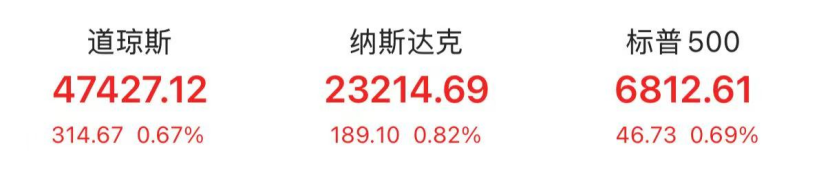
Market Performance - US stock markets experienced a rally ahead of Thanksgiving, with consumer-related retail stocks performing well and optimistic sentiment boosting technology stocks, alongside a resurgence in interest rate cut expectations [1][4] - The three major US indices closed higher: the Dow Jones increased by 0.67% to 47,427.12 points, the S&P 500 rose by 0.69% to 6,812.61 points, and the Nasdaq Composite gained 0.82% to 23,214.69 points [1][4] Sector Analysis - The S&P 500 Volatility Index (VIX), known as the "fear index," fell approximately 35% over four days, marking its largest decline since mid-April [5] - Companies related to GPUs saw stock price rebounds, with Deutsche Bank analyst maintaining a "buy" rating on Oracle, which rose over 4%; Nvidia and Microsoft both increased by over 1%, contributing to the overall market gains [5] - The Philadelphia Semiconductor Index rose by 2.76%, with all 30 component stocks closing higher, including notable gains from Teradyne (6.98%), Marvell Technology (5.14%), AMD (3.93%), ASML (3.76%), and Micron Technology (2.55%) [5] International Developments - The UK Office for Budget Responsibility (OBR) mistakenly released a report revealing a significant fiscal buffer in the UK spending plan, which exceeded market expectations [6][7] - The report indicated that the UK Chancellor Rachel Reeves expanded the fiscal buffer from £9.9 billion to £22 billion (approximately $29 billion), allowing for additional spending or tax cuts [7] - The OBR also projected that tax reforms would raise £26.1 billion by the end of the current parliamentary term, with tax revenue expected to reach a record 38% of GDP by the 2030-2031 fiscal year [7][8]

凌晨!美联储,重磅发布!
券商中国· 2025-11-26 23:36
Core Viewpoint - The expectation for a Federal Reserve interest rate cut is rising, with a significant probability of a 25 basis point cut in December, influenced by recent economic reports and market reactions [2][9]. Economic Activity - The latest Beige Book report indicates that overall economic activity in the U.S. has not changed significantly, with consumer spending continuing to decline. Some businesses are warning of increased risks of economic slowdown in the coming months [2][4]. - The report highlights that low-income groups are directly impacted by government shutdowns, leading to increased demand for food assistance programs [4]. Employment Market - The employment market shows slight declines, with about half of the districts noting weakened labor demand. Companies are opting for hiring freezes and natural attrition rather than direct layoffs [5][4]. - Some businesses report that AI is replacing entry-level positions, which is suppressing new hiring needs [5]. Price Pressures - Tariffs remain a major concern for businesses, particularly in manufacturing and retail, with many reporting increased input cost pressures. Some companies have noted that tariffs have tightened profit margins [6][7]. - High-end retail spending remains resilient, while middle and lower-end consumer segments are more adversely affected by the economic conditions [7]. Market Reactions - Following the Fed's signals, U.S. stock markets have seen a rise, with major indices experiencing collective gains. Notable increases were observed in large tech stocks [2][9]. - The probability of a 25 basis point rate cut in December has risen to 85%, with expectations for further cuts in January [9]. Future Outlook - The Federal Reserve's next meeting is scheduled for December 9-10, where the economic outlook and potential rate cuts will be discussed [4]. - The potential nomination of Kevin Hassett as the next Fed Chair could lead to a more dovish monetary policy approach, as he has indicated a preference for immediate rate cuts based on current data [10].

凌晨!美联储重磅发布!降息预期飙升
Zheng Quan Shi Bao Wang· 2025-11-26 23:35
Group 1 - The Federal Reserve's latest Beige Book indicates that overall economic activity in the U.S. has not changed significantly, with consumer spending continuing to decline [1][2] - The report highlights that the government shutdown has negatively impacted consumer decision-making, particularly affecting low-income groups [2][3] - There is a growing concern among businesses about the risk of economic activity slowing down in the coming months, although some optimism exists in the manufacturing sector [2][3] Group 2 - The probability of a 25 basis point rate cut by the Federal Reserve in December has risen to 85%, with a 67.2% chance of cumulative cuts by January [4][5] - JPMorgan has revised its forecast, now expecting the Fed to initiate rate cuts in December, reversing its previous stance of delaying until January [5][6] - The potential nomination of Kevin Hassett as the next Fed Chair could lead to a more dovish monetary policy, as he has expressed support for immediate rate cuts [6]
美联储褐皮书:消费者支出进一步走弱,经济活动变化不大
Feng Huang Wang· 2025-11-26 23:22
Economic Overview - The Federal Reserve indicates that overall economic activity in the U.S. has not changed significantly in recent weeks, with consumer spending declining further, except for high-income consumers whose spending remains robust [1] - The Fed's Beige Book highlights a rising risk of economic activity slowing in the coming months, although there is some optimism in the manufacturing sector [1] Consumer Spending - Regions including New York, Atlanta, and Minneapolis report that high-income consumers continue to show resilience in their spending [2] - In contrast, middle and low-income consumers are tightening their budgets, as noted by a respondent from the Minneapolis Fed [2] Employment Trends - Despite an increase in layoff announcements, many regions report that businesses are opting for cost-saving measures such as hiring freezes and natural attrition rather than direct layoffs [2][2] - The report notes that recent wage increases are generally in line with the Fed's inflation targets, but there are still "moderate" wage pressures in manufacturing, construction, and healthcare sectors [2] Price Pressures - Tariffs remain a significant concern for businesses, particularly in manufacturing and retail, with many reporting increased input cost pressures [2] - Some companies indicate that tariffs have led to tighter profit margins or increased financial pressure, while others report price declines due to decreased demand or postponed tariffs [2] Government Impact - The report was largely compiled during a federal government shutdown, which negatively affected consumer spending according to some retailers [3] - The shutdown disrupted the issuance of SNAP benefits, leading to an increase in demand for food assistance [3] Market Expectations - The Fed officials will not have access to most labor market and inflation data until after the December meeting, which has intensified internal divisions regarding potential interest rate cuts [3] - Market expectations for the December meeting fluctuate between "rate cut" and "no change," with the probability of a rate cut rising to approximately 80% following supportive comments from officials [3]
Fed: Some retailers see negative impact from government shutdown on consumers
Youtube· 2025-11-26 19:35
Economic Activity - Economic activity showed little change overall, with two districts experiencing modest declines in growth while one reported overall growth [1] - Consumer spending continued to decline, although high-end retail remained resilient despite some negative impacts from the government shutdown [1] Manufacturing and Employment - Manufacturing saw a slight increase, but faced headwinds from tariffs and tariff uncertainty [2] - Employment declined slightly, with half of the districts reporting weaker labor demand, primarily due to hiring freezes and attrition rather than layoffs [3][4] Food Assistance and Community Impact - Increased demand for food assistance was noted, attributed to disruptions in SNAP benefits, marking a significant concern for community organizations [3] - The impact of the government shutdown on food assistance was highlighted, suggesting a potential one-time spike in demand [7] Labor Market and Wages - The labor market grew at a modest pace, with rising health insurance premiums exerting upward pressure on labor costs [5] - AI technology has replaced some entry-level positions and increased productivity, allowing businesses to curb new hiring [5] Input Costs and Inflation - Input costs rose modestly across manufacturing and retail sectors, largely due to tariffs, leading to margin compression for many companies [6][7] - Companies are facing financial strains from tariffs, with mixed plans to raise prices in response to ongoing cost pressures [7]

美联储褐皮书:有多家报告显示,关税导致利润率收窄或企业面临财务压力。
Sou Hu Cai Jing· 2025-11-26 19:09
Core Insights - The Federal Reserve's Beige Book indicates that multiple reports show tariffs are leading to narrowed profit margins or financial pressure on companies [1] Group 1 - Several companies are experiencing reduced profit margins due to the impact of tariffs [1] - Financial pressure is being reported by various businesses as a consequence of the current tariff environment [1]
美国11月消费者信心指数跌至88.7 创7个月来最低值
Zhong Guo Xin Wen Wang· 2025-11-25 23:41
Group 1 - The US consumer confidence index for November dropped to 88.7, marking a seven-month low and falling short of market expectations [1] - The index decreased by 6.8 from the revised October figure, with the present situation index at 126.9, down 4.3, and the expectations index at 63.2, down 8.6 [1] - A reading below 80 typically indicates a potential recession [1] Group 2 - Consumers under 35 showed an increase in confidence, while those aged 35 and above experienced a decline, with the largest drop among those aged 55 and older [1] - The confidence index for consumers earning less than $15,000 increased, while other income groups saw declines [1] - Inflation and prices remain the primary concerns for consumers, followed by tariffs, trade, and political issues [2] Group 3 - Retail sales in September rose by 0.2% month-on-month, but the growth rate slowed compared to August and fell below market expectations [2] - Economists project a 3% growth for the US economy in Q3, with a slowdown expected in Q4, primarily due to the impact of the government shutdown [2]