
零售销售额

Search documents
纽约银价14日突破93美元/盎司关口
Xin Hua Cai Jing· 2026-01-15 01:03
Group 1 - The core viewpoint of the articles highlights the significant rise in gold and silver prices due to geopolitical tensions and strong economic data, with gold reaching a record high of $4650.5 per ounce and silver surpassing $93 per ounce [1] - On February 14, 2026, the most actively traded gold futures price increased by $39.8, closing at $4634.2 per ounce, marking a 0.87% rise [1] - Silver futures for March delivery rose by 632.5 cents, closing at $93.185 per ounce, reflecting a 7.28% increase [1] Group 2 - The U.S. Labor Department reported that the Producer Price Index (PPI) for November 2025 rose by 0.2% month-over-month, up from 0.1% in October, with the annual rate increasing from 2.8% to 3.0%, exceeding market expectations of 2.7% [1] - Core PPI also saw a slight increase from 2.9% to 3.0%, again surpassing the anticipated 2.7% [1] - Retail sales in the U.S. for November 2025 grew by 0.6% month-over-month, the largest increase since July, reversing a previous decline and exceeding the expected growth of 0.4% [1]
11月零售销售额增幅超预期
Xin Lang Cai Jing· 2026-01-14 15:08
Group 1: Retail Sales Performance - In November, U.S. retail sales increased by 0.6% month-over-month, significantly higher than the revised decline of 0.1% in October and exceeding the economist forecast of 0.4% [2][8] - Sales in various retail categories rose, with specialty stores (1.9%), gas stations (1.4%), and home improvement stores (1.3%) showing the highest growth [2][8] - Core retail sales, excluding volatile items, grew by 0.4% in November, far surpassing the predicted decline of 0.1% [2][8] - Only two categories saw a decline in sales: furniture stores decreased by 0.1%, and department stores fell significantly by 2.9% [2][8] Group 2: Economic Resilience - Despite concerns over the economic situation and a slowing job market, consumer spending remains strong, which is crucial as it constitutes about two-thirds of the U.S. economy [3][9] - The resilience of consumer spending is highlighted by the fact that retail sales play a significant role within overall consumer expenditure [3][9] Group 3: Future Economic Outlook - The economic outlook for 2026 is positive, with expectations of accelerated growth, particularly as tax refund funds are distributed to the public [4][10] - Analysts predict that total tax refunds in 2026 will reach $517 billion, the highest since 2017 when excluding pandemic-related stimulus years [4][10] - The anticipated increase in tax refunds, along with new tax cuts, could contribute 0.8 percentage points to the GDP growth in the first quarter of 2026 [6][11] - Many households are expected to receive $500 to $1,000 more in tax refunds compared to previous years, which could boost consumption or help pay off credit card debt [6][11] - The unemployment rate is projected to remain stable at a peak of 4.4% in 2026, with no signs of a drastic downturn in the job market [6][11]

纽约金价16日微跌
Xin Hua Cai Jing· 2025-12-17 00:56
Group 1 - The core viewpoint of the articles indicates that the recent economic data from the U.S. shows a stable economy, with no signs of overheating or rapid cooling, impacting gold and silver prices [1] - The February 2026 gold futures price decreased by 0.07%, closing at $4,332.20 per ounce, while silver futures for March delivery rose by 0.32%, closing at $63.80 per ounce [1][2] - The U.S. labor market showed volatility, with non-farm payrolls increasing by 64,000 in November after a decrease of 105,000 in October, and the unemployment rate rising to 4.6%, above the expected 4.5% [1] - Retail sales in the U.S. remained relatively unchanged in October, with declines in auto dealer sales and gasoline revenues offsetting strong growth in other spending categories [1] - The S&P Global Purchasing Managers' Index (PMI) composite output index fell to 53 in November from 54.2, with the manufacturing PMI slightly declining to 51.8, below the expected 52 [1] Group 2 - Analysts suggest that the surge in gold and silver prices since the 2015-2016 lows may be nearing its end, with potential adjustments expected to begin as early as next year [2] - The next bullish target for February gold futures is to break through the strong resistance level of $4,433, while the next bearish target for short-term declines is to fall below the strong technical support level of $4,200 [2]
美国11月消费者信心指数跌至88.7 创7个月来最低值
Zhong Guo Xin Wen Wang· 2025-11-25 23:41
Group 1 - The US consumer confidence index for November dropped to 88.7, marking a seven-month low and falling short of market expectations [1] - The index decreased by 6.8 from the revised October figure, with the present situation index at 126.9, down 4.3, and the expectations index at 63.2, down 8.6 [1] - A reading below 80 typically indicates a potential recession [1] Group 2 - Consumers under 35 showed an increase in confidence, while those aged 35 and above experienced a decline, with the largest drop among those aged 55 and older [1] - The confidence index for consumers earning less than $15,000 increased, while other income groups saw declines [1] - Inflation and prices remain the primary concerns for consumers, followed by tariffs, trade, and political issues [2] Group 3 - Retail sales in September rose by 0.2% month-on-month, but the growth rate slowed compared to August and fell below market expectations [2] - Economists project a 3% growth for the US economy in Q3, with a slowdown expected in Q4, primarily due to the impact of the government shutdown [2]
美国7月消费者信心指数升至61.8 创5个月来最高值
Zhong Guo Xin Wen Wang· 2025-07-19 00:51
Group 1 - The consumer confidence index in the U.S. rose to 61.8 in July, the highest level in nearly five months, reflecting a 1.8% increase from June's 60.7, but a 6.9% decrease year-over-year [1][2] - The index for current conditions increased to 66.8, up 3.1% month-over-month and 6.5% year-over-year, while the future expectations index rose to 58.6%, a 0.9% increase month-over-month but a 14.8% decrease year-over-year [1] - Consumer inflation expectations for the next year decreased to 4.4%, down 0.6 percentage points from June, and for the next five years, it fell to 3.6%, down 0.4 percentage points, marking the lowest expectations since February [1] Group 2 - Despite the increase in consumer confidence, it remains 16% lower than the December figures and significantly below historical averages, indicating ongoing concerns about inflation and economic stability [2] - The report suggests that consumer confidence is contingent on stable future inflation conditions, with external factors like trade policies playing a crucial role [2] - Recent government policies, such as the "big and beautiful" tax and spending bill, have had minimal impact on consumer confidence, highlighting the complexity of consumer sentiment in relation to policy changes [2]
无视特朗普关税?美国6月“恐怖数据”大超预期,黄金短线急坠
Jin Shi Shu Ju· 2025-07-17 13:03
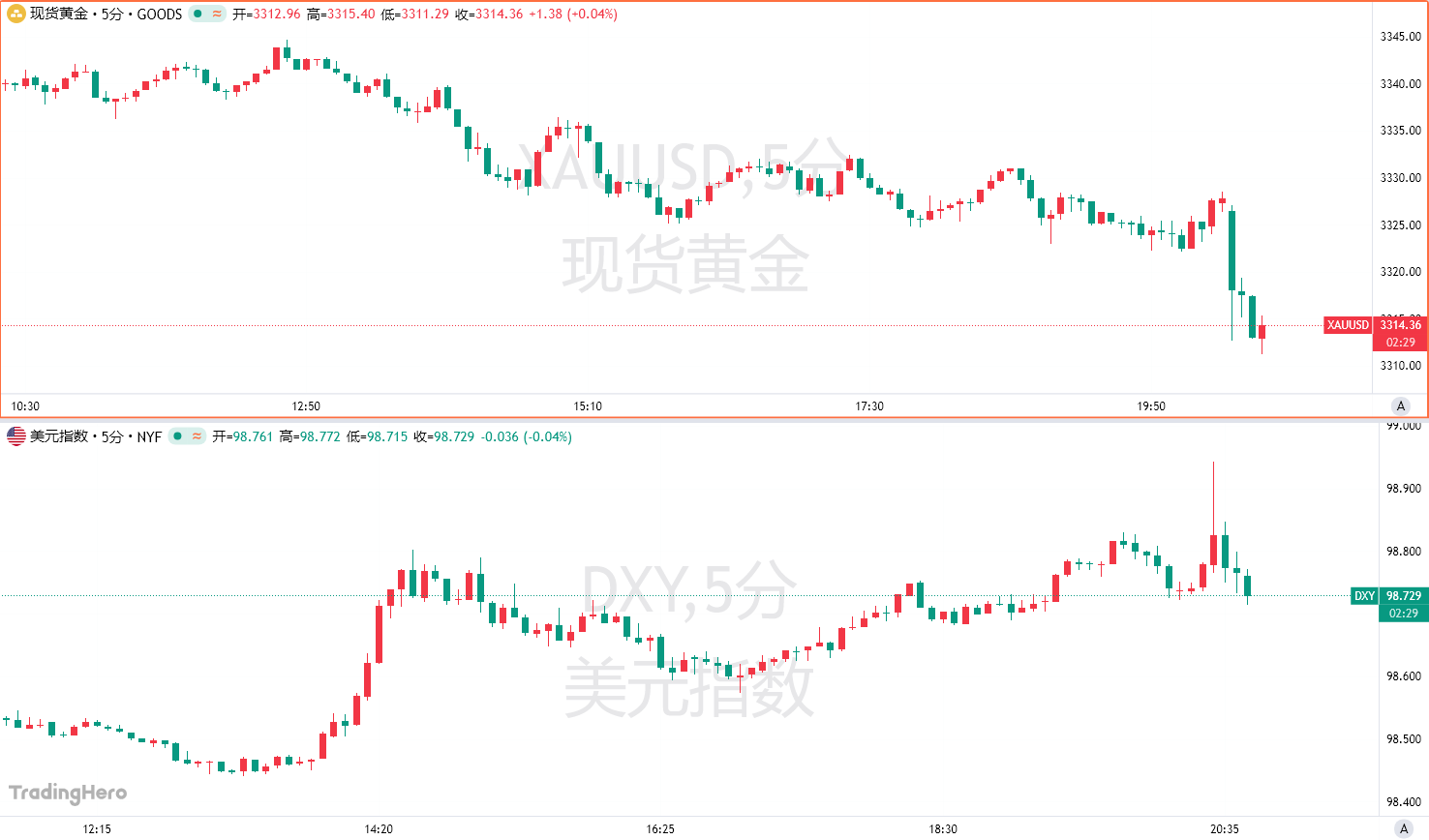
Core Insights - The U.S. retail sales for June increased by 0.6% month-over-month, rebounding from a sharp decline of 0.9% in May and significantly exceeding market expectations of a 0.1% increase [1] - The data indicates that 10 out of 13 retail categories experienced growth, driven by a rise in automobile sales, which had previously been declining [4] - Consumer spending, which accounts for about two-thirds of the U.S. economy, remains a focal point for investors and policymakers, especially in light of concerns over rising prices due to tariffs [4] Retail Sales Performance - The June retail sales data has been seasonally adjusted but not inflation-adjusted, suggesting that the growth may be influenced by price increases rather than actual sales volume [5] - Excluding automobiles, gasoline, building materials, and food services, retail sales rose by 0.5%, with May's figure revised down to 0.2% [5] Consumer Sentiment - Despite the recent uptick in retail sales, there are indications of a pessimistic outlook among Americans regarding their economic and financial conditions, largely due to ongoing cost-of-living pressures exacerbated by tariffs [4] - Some analysts caution that the growth in retail sales may be partially attributed to price hikes driven by tariffs rather than an increase in consumer demand [5]
【环球财经】2025年4月澳大利亚零售销售额环比下降0.1%
Xin Hua Cai Jing· 2025-05-30 02:30
Group 1 - Australia's retail sales in April 2025 increased by approximately 3.8% year-on-year but decreased by about 0.1% month-on-month, reaching around 37.208 billion AUD (approximately 172.281 billion CNY) [1] - In March 2025, Australia's retail sales saw a month-on-month increase of about 0.3%, while February recorded a month-on-month growth of approximately 0.2% [1] - The retail sector in Queensland has recovered from the impact of Tropical Cyclone Alfred in March, but overall household retail spending in Australia declined in April, particularly in clothing purchases [1] Group 2 - In April 2025, the food retail sector in Australia experienced a month-on-month sales decline of 0.3%, while the home goods retail sector saw a month-on-month increase of 0.6% [1] - Sales in the clothing, footwear, and personal accessories retail sector decreased by 2.5% month-on-month, and department store sales also fell by 2.5% [1] - The café, restaurant, and takeaway food services sector experienced a month-on-month sales increase of 1.1%, while other retail sectors saw a month-on-month growth of 0.7% [1] Group 3 - Australia's online retail sales in April 2025 increased by 7.3% year-on-year and grew by 0.6% month-on-month, reaching approximately 4.537 billion AUD [2] - In March 2025, food-related online sales grew by about 4.5% compared to February, amounting to approximately 1.402 billion AUD, while non-food-related sales decreased by 1.1% to around 3.135 billion AUD [2]