
制度创新

Search documents
奋勇争先,决战决胜“十四五”|青岛以开放主动赢得发展主动
Ren Min Ri Bao· 2025-08-12 01:45
Group 1 - AstraZeneca has made additional investments in Qingdao, Shandong for three consecutive years, with a new production base expected to be operational by the end of 2028 [1] - Germany's Almayer Group has also increased its investment for the fourth time, establishing a new calcined alumina plant in Qingdao, indicating strong foreign interest in the region [1] - The Chinese government emphasizes the importance of high-level opening up and reform, aiming to create new opportunities for economic development in Qingdao [1] Group 2 - The China-Europe Railway Express from Qingdao reaches Europe in just 17 days, while truck transport to Moscow takes only 7 days, showcasing the efficiency of logistics in the region [2] - Qingdao Port connects over 700 ports in more than 180 countries and regions, with regular shipping routes and a well-established international airport, enhancing its global trade capabilities [2] - The city is actively expanding its international logistics channels to support and integrate into the new development pattern, increasing its growth potential and dynamism [2] Group 3 - Qingdao's Free Trade Zone has implemented a "white list" system for medicinal and food products, significantly simplifying customs procedures and reducing transaction costs by 50% for related enterprises [3] - Over 60 companies in the medicinal and food sector have established operations in the Qingdao Free Trade Zone, creating a multi-industry chain that includes import, processing, and cross-border trade [3] - Recent reforms have eliminated restrictions on trade volume for small and medium-sized enterprises, allowing more businesses to benefit from the new trade facilitation measures [3] Group 4 - The establishment of the China-Shanghai Cooperation Organization Local Economic and Trade Cooperation Demonstration Zone in Qingdao aims to enhance industrial internet services and support for smart home appliance industries [4] - The Haier Group's industrial internet ecosystem has seen a significant increase in overall order volume, reflecting the growing demand for smart appliances [4] Group 5 - The Qingdao municipal government is focused on improving policy frameworks to enhance information sharing, logistics connectivity, and project collaboration among SCO member states [5] - In April, Shandong proposed 23 support measures across four areas to accelerate the development of the SCO demonstration zone, aiming for higher levels of openness and quality development [6]
战略新兴产业快速发展 进出口展现较强韧性——从数据看长三角经济稳健态势
Jing Ji Wang· 2025-08-11 03:36
Group 1: Emerging Industries and Regional Collaboration - The Yangtze River Delta (YRD) region is experiencing significant growth in strategic emerging industries, with Shanghai's leading manufacturing sectors showing a 9.1% year-on-year increase in output value, including a 12.3% rise in artificial intelligence manufacturing and an 11.7% increase in integrated circuit manufacturing [2] - Jiangsu's high-tech industry accounts for 51.8% of the total industrial output value, with a year-on-year increase of 11.8% in value added from high-tech manufacturing, contributing 2.7 percentage points to overall industrial growth [2] - The region's collaborative innovation matrix, encompassing research, transformation, manufacturing, and application, demonstrates strong vitality and resilience [2] Group 2: Biotechnology and Innovation - The approval of the weight-loss drug by Innovent Biologics in Jiangsu has garnered attention, indicating a potential wave of new treatments in the biotechnology sector [2] - Innovent's chairman highlighted the company's successful collaborations within the YRD, breaking import monopolies and anticipating breakthroughs in immuno-oncology and chronic disease treatments in the second half of the year [3] Group 3: Foreign Trade and Economic Performance - The YRD's import and export scale reached 8.16 trillion yuan in the first half of the year, a 5.4% increase year-on-year, accounting for 37.4% of the national total [4] - Jiangsu, Zhejiang, and Shanghai reported respective import and export values of 2.81 trillion, 2.73 trillion, and 2.15 trillion yuan, with growth rates of 11.1%, 9.4%, and 9.1% [4] Group 4: Logistics and Digital Innovation - The introduction of seamless iron-water intermodal transport in Jiangsu has significantly reduced shipping times from one week to as little as one day, enhancing logistics efficiency and reducing costs for exporters [5] - The establishment of a digital "trade chain" utilizing blockchain technology has improved the efficiency of trade processes, reducing document review times from two days to 30 minutes [5][6] Group 5: Infrastructure Development - The construction of the Nantong station as part of the North Jiangsu high-speed railway is expected to enhance regional connectivity and support the integration of urban areas [7] - The YRD's high-speed rail operating mileage has increased from 4,150 kilometers in 2018 to 7,700 kilometers, representing an over 85% growth [7] Group 6: Digital Economy and Computing Infrastructure - New computing infrastructure projects in the YRD are being developed to support the digital economy, with significant advancements in data center clusters and integrated computing networks [8] - These computing hubs are designed to optimize resource allocation and reduce costs for businesses, enhancing the region's competitive edge in the digital era [8]
海南封关,对广东意味着什么
Sou Hu Cai Jing· 2025-08-11 00:21
Core Viewpoint - The Hainan Free Trade Port will officially close its borders on December 18, 2025, marking a new phase of "one line open, two lines managed, and free flow within the island" [1][2] Group 1: Opportunities for Guangdong - The closure of Hainan's borders presents multiple opportunities for Guangdong, including promoting consumption upgrades and enhancing cooperation in industrial park construction between Guangdong and Hainan [2][3] - Guangdong will leverage its strong industrial foundation and Hainan's policy advantages to play a pivotal role in China's economic landscape, contributing to a dual circulation strategy [2][3] Group 2: Internal Factor Flow Activation - The "one line open" policy will facilitate easier international connections for Hainan, attracting global quality resources and paving the way for nationwide reform and opening-up [3][4] - Hainan will become a significant region with "domestic and foreign" management characteristics, enjoying zero tariffs and low tax rates under specific conditions [4][5] Group 3: Financial and Talent Flow - Future enterprises registered in Hainan will have more flexible cross-border financing options, free from the current restrictions imposed on mainland enterprises [4][5] - The free trade port system will create conditions for high-end talent flow, allowing individuals to benefit from a 15% personal income tax rate after working in Hainan for 183 days [4][5] Group 4: Industrial Cooperation and Upgrading - The closure of Hainan's borders will reshape the regional industrial landscape, transitioning from a "Guangdong manufacturing, Hong Kong export" model to a "Guangdong manufacturing, Hainan value-added, global sales" model [6][7] - Hainan's policy mandates that manufacturing enterprises must achieve a 30% value-added locally, preventing "hollowing out" of industries while promoting industrial upgrades in Guangdong [7][8] Group 5: Regional Development Framework - The future development of Guangdong and Hainan can be summarized as a combination of "three types of regions" and "two-level mechanisms," with specific roles assigned to different areas [8][9] - The establishment of a joint working group for Guangdong-Hainan cooperation will facilitate dynamic adjustments to industrial directories and regulatory rules [9]
前海梦工场孵化国高企业79家 “港澳e站通”提供服务事项380项
Shen Zhen Shang Bao· 2025-08-09 21:44
Group 1 - The total value of imports and exports in the Qianhai Shekou Free Trade Zone reached 260.86 billion yuan in the first half of the year, representing a year-on-year increase of 11.5%, accounting for about two-thirds of the total import and export value of Guangdong's free trade zones [1] - The Google Cross-Border E-commerce Acceleration Center (Shenzhen) has commenced operations in Qianhai, providing comprehensive services for cross-border e-commerce enterprises in Shenzhen and surrounding areas, enhancing the potential for overseas brand development [1] - Qianhai has achieved high-level openness in multiple areas such as personnel, finance, goods, and data, driven by institutional innovation, serving as a "vivid sample" for economic development [1] Group 2 - The modern service industry in Qianhai, represented by finance and legal services, has seen significant achievements, with over 400 financial institutions, including HSBC and UBS, establishing a presence in the Qianhai Shenzhen-Hong Kong International Financial City [2] - The QFLP fund scale in Qianhai accounts for over 90% of Shenzhen's total, while the QDIE quota represents 80% of the city's total, indicating a strong financial ecosystem [2] - Qianhai has been ranked first in institutional innovation capability and level among the 57 free trade pilot zones in China for four consecutive years, with 882 institutional innovation achievements, 104 of which have been replicated nationwide [2] Group 3 - The threshold for Hong Kong professionals to practice in Qianhai has been lowered, facilitating the practice of 26 types of professionals, including tax advisors and lawyers, through special mechanisms [3] - Qianhai Dream Factory has become a benchmark for the collaborative development of soft and hard power between Shenzhen and Hong Kong, with 556 teams in the park, including 463 from Hong Kong [3] - The living convenience for Hong Kong youth in Qianhai has been enhanced with services such as free short-term accommodation and direct transportation options to Hong Kong [3]
山东:制度创新与技术创新同频共振,释放赋能千行百业的裂变能量
Qi Lu Wan Bao· 2025-08-07 02:17
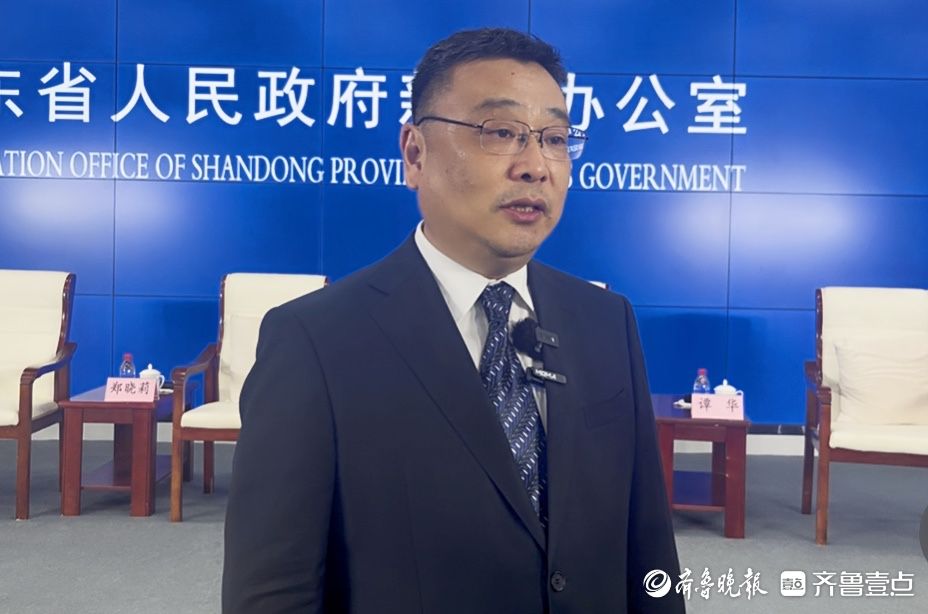
Core Insights - The event highlighted the strength of Shandong's artificial intelligence products and the new opportunities for industrial development in the intelligent era [1][3] Group 1: Institutional Innovation - Shandong has established artificial intelligence as one of its 19 key industrial chains, creating a cross-departmental collaboration mechanism to overcome bureaucratic challenges [4] - The province has introduced innovative policy tools such as model vouchers and data vouchers, allocating over 200 million yuan to address the computing power anxiety of small and medium-sized enterprises [4] - The policy framework has led to significant achievements, including the world's first industrialized model production system by Inspur Group, with an annual delivery capacity exceeding 1,000 customized models [4] Group 2: Resource Allocation - The provincial government has initiated a resource allocation revolution to support technological autonomy, establishing a distributed intelligent cloud network across the province [5] - A national first marine big data trading platform has been created, activating over 10 billion high-value data flows [5] - The development of the "Zhenghe Strategy" model by Zhenghe Technology has drastically improved service efficiency from monthly to minute-level [5] Group 3: Ecosystem Empowerment - The "Gongfu Hundred Scenes" strategy has facilitated the practical application of technology, enhancing operational efficiency across various industrial scenarios [6] - The "Enterprise Innovation Intelligent Body" developed by Zhenghe Technology has integrated into 30% of high-tech enterprises in the province, enabling intelligent transitions in R&D and patent risk assessment [7] - The collaborative innovation network formed by over 500 institutions along the "Jinan-Qingdao" innovation corridor is continuously amplifying the technological benefits within the industry [7] Group 4: Overall Impact - The integration of institutional and technological innovations has revealed a deep logic in artificial intelligence development, showcasing how institutional advantages can activate industrial ecosystems [7]


零碳园区“以绿制绿”重构产业生态
Zheng Quan Ri Bao· 2025-08-06 15:40
Core Viewpoint - The recent notice from the National Development and Reform Commission and the National Energy Administration emphasizes the construction of zero-carbon parks, aiming to promote low-carbon transformation in various industrial parks and enhance carbon reduction efficiency [1] Group 1: Zero-Carbon Parks Overview - Zero-carbon parks are defined as industrial parks that reduce carbon dioxide emissions to "near zero" through planning, design, technology, and management [1] - There are over 15,000 industrial parks in China, contributing to more than 30% of the national carbon emissions, highlighting the significance of their green transformation [1] Group 2: Energy Supply and Consumption Transformation - The collaboration between energy supply and consumption is crucial, exemplified by CATL's establishment of a zero-carbon energy division and the launch of the first 100% green electricity connected off-grid zero-carbon industrial park project [1][2] - The model focuses on "precise matching of supply and demand," utilizing distributed solar power and wind energy projects to achieve local green energy consumption [2] Group 3: Industrial Structure Optimization - Industrial parks should phase out high-energy-consuming and high-pollution industries while focusing on emerging sectors like new energy vehicles, semiconductors, and biomedicine [2] - The "green manufacturing" model is explored, where green energy is used to produce green products, creating a positive cycle within the industrial ecosystem [2] Group 4: Innovation in Technology and Policy - Sustainable development of zero-carbon parks relies on continuous innovation, with a need for pilot projects to test technologies like smart microgrids and distributed energy storage [3] - Policy innovation is necessary to simplify approval processes and lower market entry barriers, encouraging more companies to engage in technology development and project construction [3] - The construction of zero-carbon parks involves a systematic restructuring of energy, industry, and policy, driving the industry towards low-consumption, high-efficiency, and sustainable development [3]
扬州经开区“三拳开路”激活高质量发展新动能
Xin Hua Ri Bao· 2025-08-05 23:50
Core Insights - The establishment of a modular construction research institute in collaboration with Tongji University aims to industrialize the concept of "building houses like cars," targeting a 2 billion-level characteristic industry growth during the 14th Five-Year Plan period [1] - The Yangzhou Economic and Technological Development Zone (YEDZ) reported a GDP growth of 6.3%, a 6% increase in general public budget revenue, and a 16.8% rise in total import and export volume in the first half of the year [1] - The new display industry, led by Chuanqi Optoelectronics Technology (Yangzhou) Co., has successfully filled a global market gap for large-size color electronic paper, with an export value of 975 million yuan in the first half of the year [1][2] Industry Development - YEDZ has gathered 14 new display enterprises, including Zhongke and Canyang Optoelectronics, forming a complete industrial chain from core material research and development to key component manufacturing and terminal application integration [2] - The Yangzhou Zhongji Intelligent Manufacturing Industrial Park, with a total investment of 3 billion yuan, is set to become a significant R&D and manufacturing base for global wind power giant Vestas [2] - The YEDZ aims to achieve an industrial invoicing revenue of 8.45 billion yuan in 2024, with ongoing release of industrial chain cluster effects [2] Innovation and Business Environment - The "cluster registration" model allows multiple companies to share registration addresses, significantly reducing the time for company registration to just three days [3] - The "certificate renewal manager" service has reduced the average renewal processing time by 70%, achieving a 100% satisfaction rate among enterprises [3] - YEDZ has been approved as a pilot area for vehicle networking and intelligent connected vehicles, with the first batch of unmanned driving test roads opened [3]
IPO融资额重回全球第一,港交所为何能?
Sou Hu Cai Jing· 2025-08-05 12:07
Core Viewpoint - The Hong Kong IPO market has shown remarkable performance in the first half of the year, leading the global IPO market with a nearly 700% year-on-year increase in financing volume, with 44 new stocks listed and over 200 companies having submitted listing applications [2][3]. Group 1: Market Dynamics - The resurgence of Hong Kong's IPO market is attributed to a combination of policy reforms, market structure improvements, and capital flow, rather than a short-term rebound [2]. - The introduction of the "Special Line for Science and Technology Enterprises" has significantly reduced the IPO approval process from an average of 120 days to 30 days, enhancing the market's attractiveness for new economy enterprises [2][6]. - The "A+H" listing model has gained momentum, with over 30 blue-chip companies, including Heng Rui Pharmaceutical and Hai Tian Wei Ye, listing in Hong Kong, surpassing the total from the previous year [3]. Group 2: Capital Flow and Investment Trends - In the first half of the year, net inflows from southbound funds reached 72.59 billion HKD, providing strong support for the Hong Kong stock market [3]. - Foreign investment in Hong Kong stocks has increased, with foreign ownership rising to 49%, creating a liquidity spiral characterized by "domestic capital setting the stage and foreign capital performing" [3]. - The daily trading volume has exceeded 240 billion HKD, reflecting an 82% year-on-year increase, which has improved market liquidity and valuation [3][6]. Group 3: Regulatory and Structural Advantages - The regulatory environment in Hong Kong, including the VIE structure and dual-class share arrangements, provides a favorable framework for technology companies and facilitates the return of Chinese companies to the market [5][6]. - The Hong Kong Stock Exchange's ability to offer continuous financing options post-listing, such as through rights issues and convertible bonds, is crucial for high-growth technology firms [6]. - The current forward P/E ratio of the Hang Seng Technology Index is approximately 22 times, significantly lower than that of the Nasdaq, presenting a valuation opportunity for global investors [6]. Group 4: Future Outlook and Strategic Positioning - The synergy between the Hainan Free Trade Port and the Hong Kong Stock Exchange is expected to attract foreign investment and boost offshore financial services [4]. - The Hong Kong Stock Exchange is transitioning from being a "Chinese offshore portal" to an "Asian technology financing hub," emphasizing the need for policy support and service upgrades [7]. - The implementation of the "Stablecoin Regulation" in 2025 reflects Hong Kong's commitment to balancing innovation and risk management in the financial sector [8].

南沙港累计开通国际班轮航线170余条
Zhong Guo Xin Wen Wang· 2025-08-05 09:29
Core Viewpoint - Guangdong Province is actively promoting the development of the Nansha area as a key hub for international trade and transportation, enhancing its connectivity and service capabilities in the Guangdong-Hong Kong-Macao Greater Bay Area [1][2] Group 1: Infrastructure Development - Nansha Port has opened over 170 international shipping routes, improving its international shipping network and multi-modal transport services [1] - The Guangdong Provincial Greater Bay Area Office has included 100 major projects in Nansha in the key construction project plan over the past three years, supporting 32 major projects with the issuance of 53.5 billion yuan in local government special bonds [1] Group 2: Policy and Regulatory Framework - The Guangdong Provincial Greater Bay Area Office is seeking national approval to pilot market access and regulatory reforms in Nansha, allowing for innovative reforms in 15 areas, including emerging industries and foreign trade [1] - A new round of overall development planning for Nansha will be implemented to enhance the policy support system and accelerate the establishment of key hubs [2] Group 3: Economic Initiatives - The focus will be on implementing innovative, differentiated, and integrated institutional pilot projects in Nansha, including the establishment of the Guangzhou Futures Exchange and the Greater Bay Area International Commercial Bank [2]
河南以制度创新重塑开放新格局
Zhong Guo Chan Ye Jing Ji Xin Xi Wang· 2025-08-04 22:30
Group 1 - The core viewpoint of the articles highlights the significant progress and reforms in the Henan Free Trade Zone, showcasing the province's commitment to institutional innovation and opening up its economy [1][2][3] - The implementation of the "Regulations on Institutional Innovation in the China (Henan) Pilot Free Trade Zone" has catalyzed reforms, leading to a dynamic optimization of the investment negative list and upgrades in trade facilitation [1] - In the first half of the year, Henan's import and export volume reached 49.01 billion, a year-on-year increase of 29.4%, with 10,274 new enterprises established, totaling 151,000, which is 5.6 times the number before the establishment of the Free Trade Zone [1] Group 2 - The construction of a comprehensive international logistics system in Henan is accelerating, with Zhengzhou being selected as a global international postal express hub, handling 435,000 tons of cargo, a 23.9% increase [2] - The China-Europe Railway Express (Zhengzhou) has seen significant growth, with 1,522 trains operated, marking a 52.1% increase [2] - The province has optimized its foreign investment services, addressing 36 pain points for foreign enterprises, resulting in a 99.5% year-on-year increase in foreign visitor traffic [2] Group 3 - In the second half of the year, Henan's Free Trade Zone will align with international high-standard economic and trade rules, with 77 pilot measures set to be implemented [3] - The province aims to enhance the Zhengzhou-Luxembourg "Air Silk Road" and expand the China-Europe Railway Express routes to Europe, Central Asia, and ASEAN [3] - Henan is leveraging opportunities from international trade agreements like RCEP to strengthen its economic ties with regions such as the Greater Bay Area and the Chengdu-Chongqing Economic Circle [3]