
积极财政政策

Search documents
干预风险上升!日本财务大臣释放最强烈警告:日元大跌与基本面不符 若有必要将采取大胆行动
智通财经网· 2025-12-23 06:50
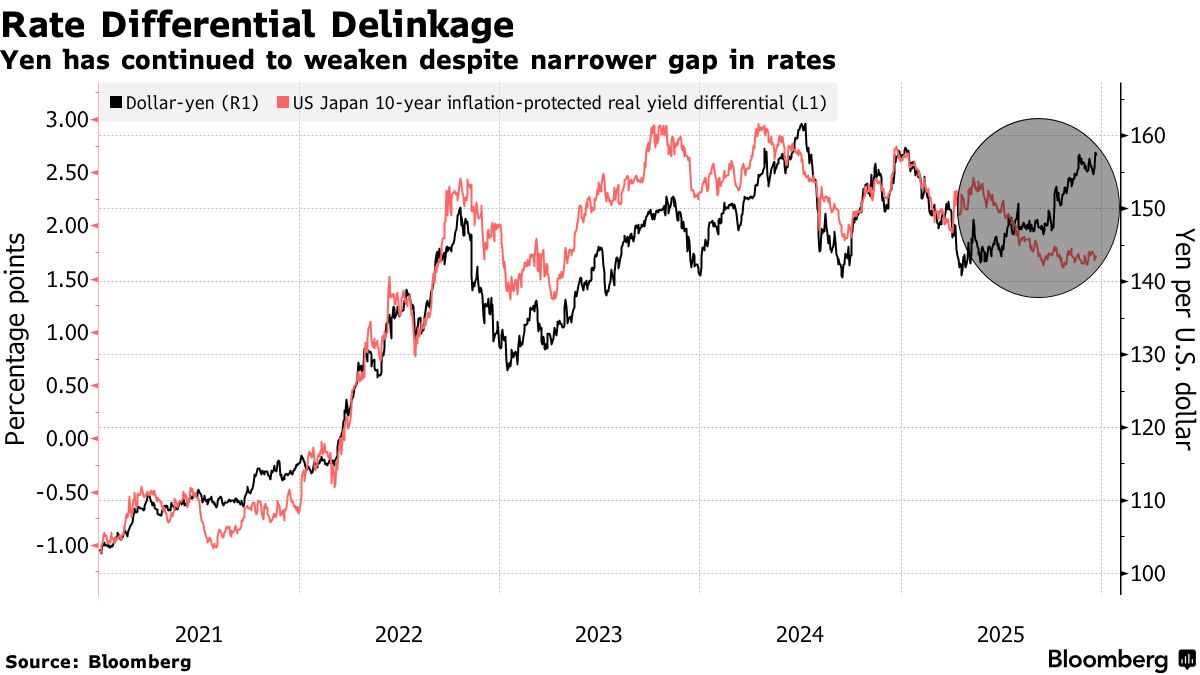
智通财经APP获悉,在日本央行加息后日元仍持续走弱之际,日本财务大臣片山皋月(Satsuki Katayama)发出迄今为止对投机者最强烈的警告,称如果货币走 势与基本面不符,日本当局"有绝对的自由"采取大胆行动。 日本央行在上周五如期加息25个基点,将基准利率上调至30年来的最高水平0.75%。然而,由于交易员对日本央行未能就未来货币紧缩的时机给出明确指引 感到失望,日元在上周五大幅贬值。 与此同时,日本政府拟于本周五最终敲定2026财年预算草案。草案显示,该国2026财年年度预算总规模将首次突破122万亿日元,创下历史新高。支出增长 主要受两大因素驱动:一是社会福利成本持续攀升,二是政府为缓解生活成本上涨对家庭与企业造成的冲击,计划推出新一轮财政支持措施。 日本政府届时还将公布日本国债的发行计划。市场参与者越来越担心,日本当局可能提高十年期日本国债发行量,以帮助填补财政缺口。而随着利率上升, 日本庞大的公共债务融资成本显著增加,引发外界对日本政府财政可持续性的担忧。 日本财务省预计,日本10年期国债收益率到2028年将升至2.5%,债务利息将从去年的7.9万亿日元增加到2028年的16.1万亿日元。而根据 ...

吉富星:加大政府债券投资于人力度
Jing Ji Ri Bao· 2025-12-23 00:03
接下来,政府债券需统筹兼顾供给与需求、消费与投资,进一步优化投向、提升效率,将重点更加 聚焦投资于人,为投资于物锚定新方向,持续优化债券的额度、投向及运作模式。 一方面,在现有政策框架基础上扩大民生领域专项债、国债等资金的额度,并加强项目谋划与储 备,确保资金有效落地。维持较高的政府债券规模以增强财力,腾出更多资金用于解决群众急难愁盼的 民生项目和人力资本领域。此外,延续特别国债支持以旧换新政策,促进消费与投资的良性循环,并加 快布局数字、绿色、智能等新型消费领域的政府债券项目。可利用政府债券资金作为项目资本金、"债 券资金+社会资本"等杠杆撬动或引导模式,吸引社会资本参与民生、消费领域的项目投资运营。 另一方面,应积极拓展政府债券使用范围、创新政府债券品种,允许部分政府债券投向符合条件的 民生或人力资本。例如,可借鉴国外经验设立人力资本债券、社会债券、可持续发展债券等新品种,专 门用于育儿、教育、医疗、养老等特定领域。继续强化财政与金融的协同,如通过政府债券补充银行资 本金、设立产业引导基金、"政府债券+市场化融资"等方式,支持相关领域发展。在此过程中,需充分 调动各方主体的积极性,既要关注人的能力提升和潜 ...
明年一季度地方计划发债超万亿元 积极财政政策发力
Di Yi Cai Jing· 2025-12-22 22:28
Core Viewpoint - Local governments are set to issue over 1 trillion yuan in bonds in early 2024 to support major project construction, reflecting a proactive fiscal policy aimed at stabilizing the economy and addressing local government debt risks [1][2][4]. Group 1: Bond Issuance Plans - At least 14 provinces and cities have announced plans to issue local government bonds in early 2024, with a cumulative issuance scale nearing 1.2 trillion yuan [1][2]. - Jiangsu province plans to issue a total of 1,056 billion yuan in government bonds in the first quarter, including 700 billion yuan in new bonds and 356 billion yuan in refinancing bonds [2]. - The actual bond issuance scale in the first quarter is expected to exceed the currently disclosed 1.2 trillion yuan as more provinces announce their plans [5]. Group 2: Debt Management and Policy - The National People's Congress requires approval for new local government debt limits each March, which typically leads to concentrated bond issuance in the second half of the year [2]. - The State Council has been authorized to advance the issuance limits for the following year, allowing local governments to issue bonds earlier in the year [2][3]. - The 2026 debt limit for local governments is expected to be set at 3.12 trillion yuan, adhering to a 60% cap on early issuance based on the previous year's limits [3]. Group 3: Economic Impact and Investment - The central government has emphasized the need for a more proactive fiscal policy in 2026 to stabilize investment and support economic growth [4]. - The early issuance of bonds is seen as a way to kickstart major projects, which is crucial for the economic foundation in the new five-year plan [4]. - The anticipated increase in bond issuance is expected to enhance government investment efficiency and stimulate social investment, significantly impacting economic growth [6]. Group 4: Refinancing and Debt Resolution - Refinancing bonds are primarily aimed at repaying old debts, with a significant portion of the funds used for this purpose [6]. - The Ministry of Finance plans to issue 2 trillion yuan in refinancing bonds in 2026 to address existing hidden debts and alleviate local government debt risks [6]. - The strategy of "exchanging time for space" will continue, with a focus on efficient fund allocation to support local governments [6]. Group 5: Special Bond Management - The management of special bonds will be optimized to improve their usage efficiency, with pilot programs allowing local governments more flexibility in project approval [7][8]. - The Ministry of Finance will guide local governments in accelerating project preparations and enhancing project quality, particularly in non-pilot areas [8].
日本财务大臣片山皋月称必要时“可以放手”就日元采取大胆行动
Xin Lang Cai Jing· 2025-12-22 15:04
Core Viewpoint - Japan's Finance Minister, Shunichi Suzuki, indicated a willingness to take bold actions against speculative currency fluctuations that do not align with economic fundamentals, particularly in light of the yen's continued weakness following the central bank's interest rate hike [1][4]. Group 1: Currency Intervention - Suzuki issued a stern warning to speculators regarding the recent significant depreciation of the yen, emphasizing that the current trend is driven by speculation rather than fundamentals [1][4]. - The yen strengthened after Suzuki's remarks, with the USD/JPY briefly falling below the 157 level [1]. - The Finance Minister hinted at potential direct intervention in the currency market, suggesting that she has received tacit approval from Washington to act without further consultation if necessary [4][7]. Group 2: Economic Growth and Fiscal Policy - Suzuki acknowledged that the government's push for stronger economic growth under Prime Minister Fumio Kishida may temporarily worsen Japan's fiscal situation, which is a point of concern for investors [4][7]. - She mentioned that any deterioration in fiscal conditions is expected to be temporary, with anticipated increases in investment and tax revenue over the next one to two years as the government implements spending to stimulate the economy [8]. - Suzuki stated that the initial fiscal data following a shift to more aggressive fiscal policies may show deterioration, but this is not a concern, as past measures have failed to accelerate economic growth [5][8].

日本,救市了
Zhong Guo Ji Jin Bao· 2025-12-22 14:25
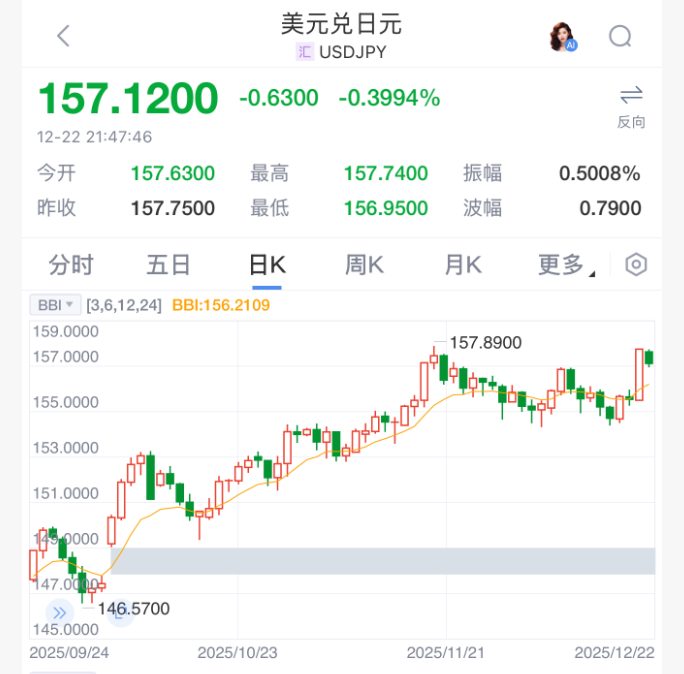
"这些走势显然并不符合基本面,而更像是投机行为。"片山在接受采访时表示,指的是上周五日元的快 速贬值。"针对这类走势,我们已经明确表态将果断行动,这一点也写在日美财长联合声明里。" 片山在暗示可能进行直接汇市干预的同时,也谈到:随着高市早苗政府推动更强劲的经济增长,日本短 期内的财政压力可能会加大——这同样是投资者关注的重点。 片山的表态,发生在外界再度猜测财务省可能出手干预之际。此前日本央行在高度"预告"的情况下,将 借贷成本上调至30年来最高水平,但日元在加息后反而走弱。日本央行行长植田和男在会后记者会上的 发言,被部分市场人士解读为对再次加息的信号不够强硬,结果触发日元进一步下滑。 日本政府,刚刚向外汇市场发出"救市"信号。 日本财务大臣片山皋月表示,日本在面对与基本面不符的汇率波动时"有充分回旋余地"采取果断行动。 这是她迄今对投机资金最强硬的警告之一。此前,日本央行加息后日元仍走弱,引发市场对当局可能干 预的猜测。 片山拒绝评论当前汇率水平,并称并不存在一个明确的"基准线"来界定何为过度或无序波动。 "每次情况都不同,所以如果期待每次都出现同样的模式,那是不对的。"她说,并解释称财务省在干预 问题上 ...
刚刚!日本,救市了!
Zhong Guo Ji Jin Bao· 2025-12-22 14:18
Core Viewpoint - The Japanese government signals a potential intervention in the foreign exchange market to stabilize the yen, which has been experiencing volatility not aligned with economic fundamentals [1][3]. Group 1: Government Actions and Statements - Japanese Finance Minister Shunichi Suzuki warns of decisive action against speculative movements in the yen's exchange rate, indicating that the recent depreciation does not reflect the country's economic fundamentals [1]. - The joint statement with the U.S. Treasury suggests that Japan has received tacit approval from Washington to intervene in the currency market without further consultation if necessary [3]. - The Finance Ministry previously intervened in the market, spending approximately $100 billion to support the yen when it traded around 160 yen per dollar [5]. Group 2: Economic Policies and Budget - The Japanese government is expected to announce an aggressive budget for the upcoming fiscal year, potentially exceeding a record 120 trillion yen (approximately $760 billion), up from an initial budget of 115 trillion yen [6]. - The recent supplementary budget of 18.3 trillion yen is the largest since the easing of pandemic restrictions, aimed at various expenditures including price relief and security enhancements [6]. - Concerns over public finances have led to a rise in the 10-year government bond yield to 2.1%, the highest in 27 years, although the Finance Minister believes this deterioration in fiscal indicators is temporary [6].
刚刚!日本,救市了!
中国基金报· 2025-12-22 14:12
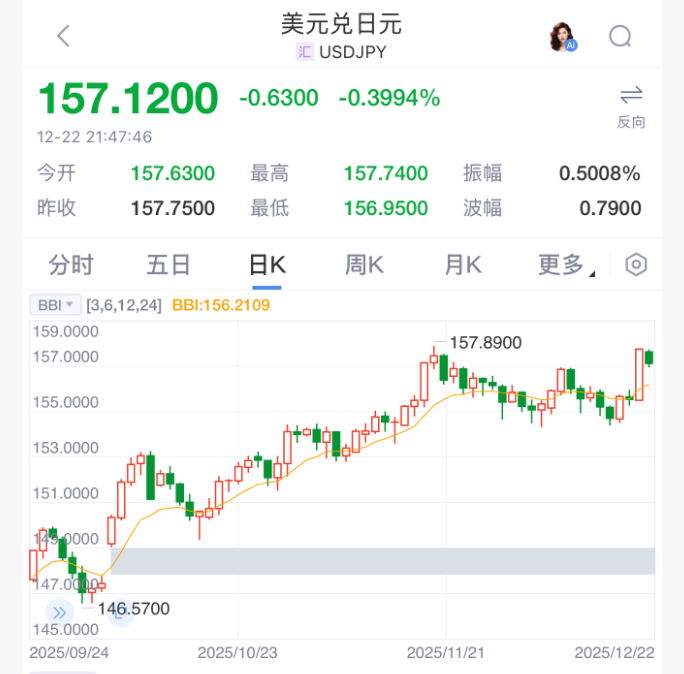
Core Viewpoint - The Japanese government has signaled a potential intervention in the foreign exchange market to stabilize the yen, which has been experiencing volatility not aligned with economic fundamentals [2][4]. Group 1: Government Actions and Statements - Japanese Finance Minister Kato Saki has indicated that the government has "ample room" to take decisive action against speculative currency movements, particularly following the recent rapid depreciation of the yen [2]. - The joint statement with the U.S. Treasury emphasizes that while market forces should determine exchange rates, there is still room for intervention during periods of excessive volatility [4]. - Kato's comments suggest that Japan has received tacit approval from Washington to act without further consultation if necessary [4][5]. Group 2: Economic Context and Budget Plans - The Japanese government is expected to expand its budget significantly, with projections for the new fiscal year starting in April to exceed a record 120 trillion yen (approximately 760 billion USD), up from an initial budget of 115 trillion yen [7][8]. - The recent supplementary budget approved by the government, amounting to 18.3 trillion yen, is the largest since the easing of pandemic restrictions and includes various expenditures from price relief to security enhancements [8]. - Concerns over public finances have led to a rise in the 10-year Japanese government bond yield to 2.1%, the highest in 27 years, although Kato believes this is a temporary situation [9]. Group 3: Market Reactions - Following Kato's statements, the yen experienced a short-term increase in value against the dollar, indicating market sensitivity to government interventions [5]. - The current exchange rate for USD/JPY is approximately 157.09, reflecting a decrease of 0.4184% [6].

明年一季度地方计划发债超万亿
Sou Hu Cai Jing· 2025-12-22 13:30
Core Viewpoint - Local governments are set to issue over 1 trillion yuan in bonds in early 2024 to support major project construction, reflecting a proactive fiscal policy aimed at stabilizing the economy and addressing hidden debt risks [1][2][4]. Group 1: Bond Issuance Plans - As of December 22, at least 14 provinces and municipalities have announced plans to issue local government bonds, with a cumulative issuance scale nearing 1.2 trillion yuan for the first quarter of 2024 [1][2]. - Jiangsu province plans to issue a total of 1,056 billion yuan in government bonds in the first quarter, including 700 billion yuan in new bonds and 356 billion yuan in refinancing bonds [2][4]. - The actual bond issuance scale for the first quarter is expected to exceed the currently disclosed 1.2 trillion yuan as more provinces announce their plans [5]. Group 2: Debt Management and Policy - The National People's Congress requires approval for the total amount of new local government debt each year, which typically leads to concentrated bond issuance in the second half of the year [2]. - The State Council has been authorized to advance the issuance limits for the following year, allowing local governments to receive part of the new debt issuance quota early [2][3]. - The 2026 new local government debt limit is expected to be set at 60% of the previous year's limit, which would be approximately 3.12 trillion yuan based on the 2025 limit of 5.2 trillion yuan [3]. Group 3: Economic Impact and Investment - The central government has emphasized the need for a more proactive fiscal policy in 2026 to stabilize investment, especially as fixed asset investment has seen a decline [4]. - Early bond issuance is anticipated to facilitate the commencement of significant projects, laying a solid foundation for economic growth in 2026 [4]. - The issuance of refinancing bonds is expected to be larger than new bonds, aimed at repaying old debts and alleviating hidden debt risks [6]. Group 4: Optimization of Bond Management - The Chinese government plans to optimize the management of local government special bonds to enhance their effectiveness and efficiency [7]. - A pilot program for "self-examination and self-issuance" of special bond projects has been implemented in several provinces, allowing local governments more flexibility in issuing bonds without national approval [7].
明年一季度地方计划发债超万亿
第一财经· 2025-12-22 13:18
当前地方财政收支矛盾较大,重大项目建设资金比较依赖地方政府发债。为了防控地方政府债务风 险,当年地方政府新增发债总额需要全国人大在每年3月份全国两会期间批准,而这又会使得地方发 债集中在下半年。 2025.12. 22 本文字数:2572,阅读时长大约4分钟 作者 | 第一财经 陈益刊 为了稳经济,地方政府正着手明年初发行政府债券筹资支持重大项目建设等,目前预计一季度筹资规 模已超过1万亿元。 第一财经梳理各地财政部门公开信息发现,截至12月22日,至少有四川、江苏、江西、贵州等14个 省市(自治区、直辖市、计划单列市)已经公开了明年一季度或1月当地政府债券发行计划,累计发 行规模近1.2万亿元。 多位地方债专家告诉第一财经,随着后续更多地方披露明年发债计划,这一发债规模会更大。这也体 现了明年更加积极财政政策靠前发力,以带动有效投资,持续化解地方政府隐性债务风险,从而助推 明年一季度经济平稳开局。 明年地方万亿级发债将启动 为了加快地方政府债券发行使用进度,保障重点领域重大项目资金需求,2018年底以来,全国人大 常委会授权国务院可以提前下达下一年度新增地方政府债务限额,这就使得地方提前收到财政部下达 的部 ...

明年一季度地方计划发债超万亿,积极财政政策靠前发力
Di Yi Cai Jing· 2025-12-22 12:48
Core Viewpoint - Local governments are planning to issue government bonds early next year to support major project construction, which will lay a solid foundation for economic growth in 2026 and ensure a good start for the "14th Five-Year Plan" [1][4] Group 1: Bond Issuance Plans - At least 14 provinces and cities have publicly disclosed plans to issue government bonds in the first quarter of next year, with a cumulative issuance scale nearing 1.2 trillion yuan [1][2] - Jiangsu plans to issue a total of 105.6 billion yuan in government bonds in the first quarter, including 70 billion yuan in new bonds and 35.6 billion yuan in refinancing bonds [2] - Ningbo is set to issue 32.6 billion yuan in new special bonds and 1 billion yuan in new general bonds in early January [5] Group 2: Debt Management and Risk Mitigation - The issuance of new bonds is primarily for project construction, while refinancing bonds are used to repay old debts, alleviating hidden debt risks [6] - The Ministry of Finance plans to issue 2 trillion yuan in refinancing bonds in 2026 to replace 2 trillion yuan of existing hidden debts, aiming to ease local government debt pressure [6] - The early issuance of local government debt limits is expected to follow a 60% ratio of the previous year's new debt limit, which for 2025 is set at 5.2 trillion yuan, meaning the 2026 limit cannot exceed 3.12 trillion yuan [3] Group 3: Policy Support and Strategic Focus - The Central Economic Work Conference emphasized the need for a more proactive fiscal policy in 2026 to stabilize investment and support major projects [4] - The Ministry of Finance will continue to guide local governments in accelerating project preparation and optimizing the review mechanism for special bond projects [8] - The pilot program for "self-examination and self-issuance" of special bonds will be expanded, allowing local governments more flexibility in issuing bonds without national review [7][8]