
全国统一大市场

Search documents
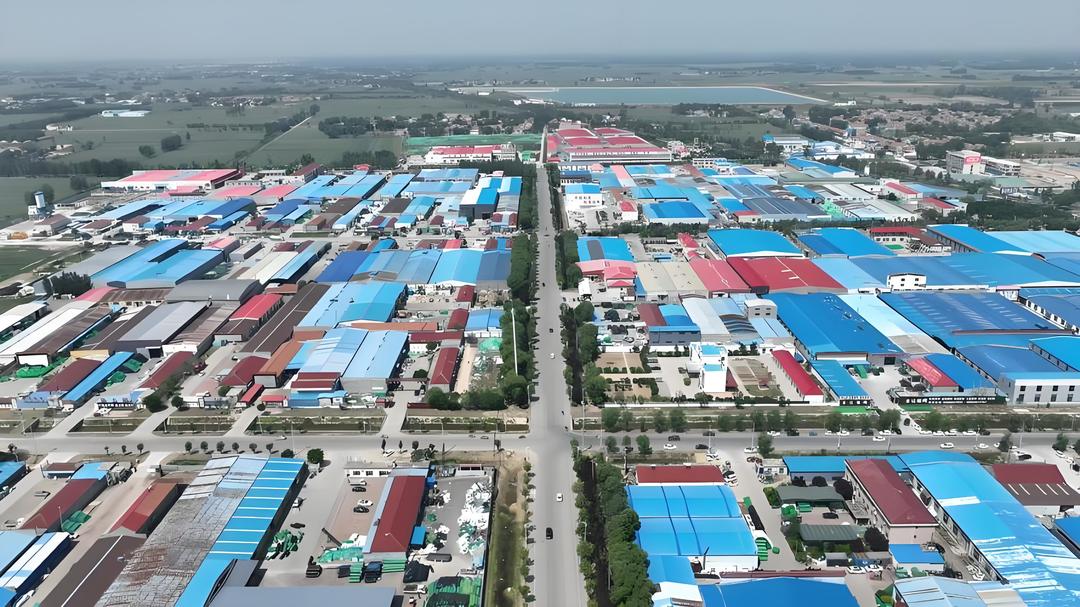
滨州今年将实施63项产城融合重点项目 推动县域协同共进
Qi Lu Wan Bao· 2026-01-20 08:52
Group 1 - The government work report emphasizes the importance of regional coordination and development, aiming to enhance competitiveness by optimizing productivity layout by 2026 [1] - The report highlights the active integration into regional cooperation, particularly through the Yellow River national strategy, fostering industrial collaboration and cultural exchange along the Yellow River [3] - The city plans to accelerate urban renewal and upgrade key districts, implementing 63 major projects focused on integrating industry and urban development, including the construction of a new fitness center [3] Group 2 - The report outlines a strategy for county-level collaborative development, supporting distinct economic growth in various districts, and enhancing modern service and high-tech industries [3] - It emphasizes the need for a coordinated development approach among different counties, aiming to strengthen local industries and improve urban functionality [3] - The implementation of a three-year action plan to enhance the quality and efficiency of development zones is also highlighted, focusing on building a competitive county development framework [3]

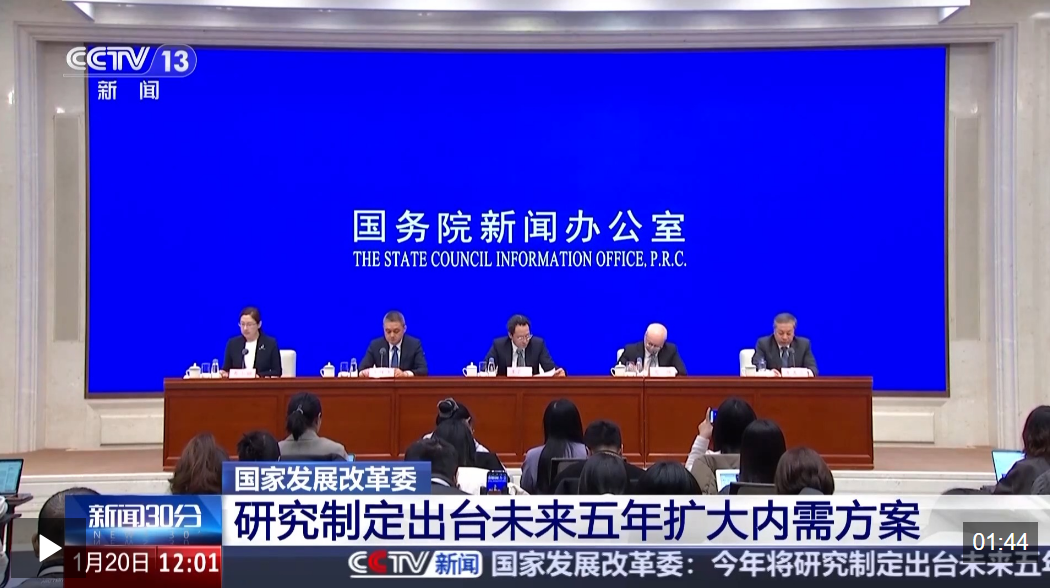
视频丨国家发改委:研究制定出台未来五年扩大内需战略实施方案
Yang Shi Xin Wen Ke Hu Duan· 2026-01-20 08:33
王昌林表示,目前我国正在谋划推进一批"十五五"时期的高技术产业标志性引领性重大工程。同时,围绕加快构建现代化产业体系,将研究设立国家级并购 基金,加强政府投资基金布局规划和投向指导,促进创新创业创造,加快培育和发展新质生产力。 此外,还将优化"两新"政策的支持范围和补贴标准,持续放大"两新"的政策效能。 国家发展改革委资源节约和环境保护司司长 王善成:在设备更新方面,进一步降低申报项目的投资门槛,加大对中小企业的支持力度,扩大政策惠及面。 在消费品以旧换新方面,综合考虑消费潜力、政策执行情况等因素,合理确定各地资金分配规模。对汽车报废更新、汽车置换更新、6类家电以旧换新、4类 数码和智能产品购新,在全国范围内执行统一的补贴标准。 今天,国务院新闻办举行新闻发布会,介绍推动"十五五"实现良好开局等有关情况。国家发展改革委有关负责人介绍,今年将研究制定出台2026—2030年扩 大内需战略实施方案,还将优化"两新"政策的支持范围和补贴标准。 国家发展改革委副主任王昌林表示,要坚持把宏观政策的发力点放在做强国内大循环上,全方位扩大国内需求。 国家发展改革委副主任 王昌林:重点是要适应需求升级的趋势,结合新一轮科技革 ...
国家发改委最新发声,释放四大重磅信号
21世纪经济报道· 2026-01-20 08:25
Core Viewpoint - The article discusses the implementation of the Central Economic Work Conference's spirit, focusing on achieving a good start for the "14th Five-Year Plan" with a projected GDP of 140.19 trillion yuan in 2025, reflecting a 5% growth compared to the previous year, which positions China among the leading global economies [1][10]. Economic Growth and Structure - By 2025, China's GDP is expected to reach 140 trillion yuan, achieving a 5% growth target, which is significant in the context of global economic performance [1]. - The National Development and Reform Commission emphasizes the need for strategic determination and effective measures to enhance economic quality and reasonable growth [1][10]. Innovation and Industry Development - The article highlights the importance of innovation-driven development, with a focus on key technologies in artificial intelligence, biomedicine, and robotics, which are leading globally [2]. - The manufacturing sector's added value has ranked first globally for 16 consecutive years, showcasing China's robust industrial capabilities [2]. Future Economic Outlook - By 2026, the economic structure is expected to continue improving, with new production capacities and significant development potential across consumption, investment, technology, and regional dynamics [5]. - New economic growth points are emerging in sectors like renewable energy, aerospace, and quantum technology, with new energy storage capacity exceeding 100 million kilowatts, accounting for over 40% of the global total [6]. Policy Measures for Demand and Supply - The article outlines the need to address the current economic imbalance characterized by strong supply and weak demand, emphasizing the importance of expanding domestic demand and optimizing supply [10]. - Key strategies include focusing macroeconomic policies on strengthening domestic circulation and adapting to demand upgrades through innovative measures [10][11]. Price Stability and Consumer Prices - In 2025, the Consumer Price Index (CPI) is expected to remain stable, while the Producer Price Index (PPI) is projected to decline by 2.6%, indicating a low overall price level [13]. - Recent trends show a positive shift in prices, with CPI rising by 0.8% year-on-year in December, marking a 34-month high [14]. Consumer and Investment Strategies - The government plans to implement a consumption boost initiative and a rural resident income increase plan, focusing on enhancing consumer capacity and optimizing supply [17]. - Investment strategies will emphasize both material and human capital, aiming to improve investment efficiency and promote job creation [17][18].
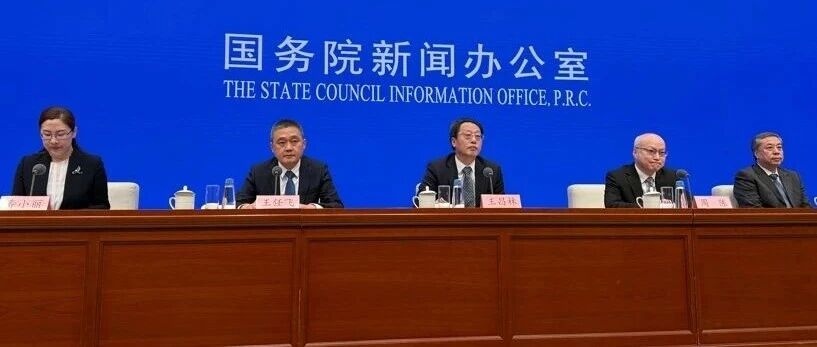
国新办就落实中央经济工作会议精神,推动“十五五”实现良好开局有关情况举行新闻发布会
Xin Hua Wang· 2026-01-20 07:40
Core Viewpoint - The press conference held by the National Development and Reform Commission (NDRC) highlighted the successful implementation of the central economic work conference's spirit, aiming for a strong start to the 14th Five-Year Plan, with a focus on economic resilience, technological independence, and social welfare improvements [3][7]. Group 1: Economic Performance and Policies - In 2025, China's economy achieved a total output of 140 trillion yuan, with a growth rate of 5%, maintaining a leading position among major global economies [3][4]. - The NDRC emphasized the implementation of proactive macroeconomic policies, including measures to stabilize employment and promote high-quality development, which contributed to a robust economic performance [3][5]. - The "Two New" policies, aimed at boosting investment and consumption, have shown significant effects, with over 3.6 billion people benefiting from consumption subsidies [22][24]. Group 2: Technological Development - The NDRC reported breakthroughs in new productive forces, particularly in artificial intelligence, biotechnology, and robotics, positioning China at the forefront of global innovation [4][15]. - The new energy storage capacity has surpassed 100 million kilowatts, accounting for over 40% of the global total, indicating strong growth in new technologies [13]. Group 3: Reform and Opening Up - The NDRC is advancing reforms to eliminate economic bottlenecks and enhance the competitive landscape, including the implementation of the Private Economy Promotion Law and regular communication with private enterprises [5][6]. - The total value of imports reached 18.48 trillion yuan, maintaining a 10% share of global imports, showcasing China's strong trade resilience [5]. Group 4: Regional Development and Urbanization - The urbanization rate reached 67.89% by the end of the year, with over 10 million people transitioning to urban living, reflecting ongoing efforts in new urbanization [6]. - The NDRC is focusing on regional coordinated development, with significant investments in infrastructure and public services in the central and western regions [56][58]. Group 5: Social Welfare and Employment - The average urban unemployment rate was 5.2%, with policies aimed at enhancing social welfare and employment opportunities [6][15]. - The NDRC is implementing measures to improve the quality of life for citizens, including childcare subsidies and free preschool education [6][15]. Group 6: Future Economic Strategy - The NDRC plans to continue expanding domestic demand and optimizing supply to achieve a dynamic balance in the economy, with a focus on enhancing the quality of the domestic market [17][18]. - The emphasis will be on integrating macroeconomic policies with structural reforms to stimulate economic growth and address supply-demand imbalances [42][52].
中国将研究制定未来五年扩大内需战略实施方案
Zhong Guo Xin Wen Wang· 2026-01-20 06:58
中国将研究制定未来五年扩大内需战略实施方案 一是要坚持把宏观政策的发力点放在做强国内大循环上,全方位扩大国内需求。重点是要适应需求升级 的趋势,结合新一轮科技革命和产业变革的需要,研究制定出台2026—2030年扩大内需战略实施方案, 为以新需求引领新供给、以新供给创造新需求提供强有力的创新举措和要素保障,努力实现供需互促、 循环升级。 二是坚持把发展经济的着力点放在实体经济上,加快构建现代化产业体系。要发挥好国家创业投资基金 行业标杆作用,研究设立国家级并购基金,加强政府投资基金布局规划和投向指导,促进创新创业创 造,加快培育和发展新质生产力。 三是坚持把市场运行的调控点放在纵深推进全国统一大市场建设上,充分激发市场活力。重点是要综合 整治"内卷式"竞争,实现从"卷价格"向优价值转变。要完善市场准入、公平竞争、产能退出等机制,加 强产能调控,积极化解供大于求的阶段性矛盾。进一步细化地方招商引资鼓励和禁止事项边界,规范地 方经济促进行为。加强重点行业价格监管,依法依规治理企业低价无序竞争,形成优质优价、良性竞争 的市场秩序。大力实施质量品牌战略,引导破解"内卷式"竞争。(完) 来源:中国新闻网 编辑:张嘉怡 ...
去年中国GDP跨越140万亿元大关
Ren Min Ri Bao Hai Wai Ban· 2026-01-20 06:19
Economic Performance - In 2025, China's GDP reached 140,187.9 billion yuan, marking a significant milestone with a 5% increase from the previous year at constant prices [1] - The primary industry added value was 93.347 billion yuan, growing by 3.9%; the secondary industry added value was 499.653 billion yuan, increasing by 4.5%; and the tertiary industry added value was 808.879 billion yuan, rising by 5.4% [1] - Quarterly GDP growth rates were 5.4% in Q1, 5.2% in Q2, 4.8% in Q3, and 4.5% in Q4, with a quarter-on-quarter growth of 1.2% in Q4 [1] Employment and Trade - The average urban survey unemployment rate for 2025 was 5.2%, indicating overall employment stability [1] - Goods trade reached new highs, with foreign exchange reserves exceeding 3.3 trillion USD [1] Economic Structure and Consumer Spending - The proportion of high-tech manufacturing value added in total industrial value added rose to 17.1% [1] - Final consumption expenditure contributed over 50% to economic growth, reflecting a strong consumer demand [1] - The actual growth of per capita disposable income for residents was 5%, aligning with economic growth [1] Future Economic Strategy - The economic outlook indicates a steady development amidst multiple pressures, with a focus on high-quality growth [2] - The government plans to implement more proactive macro policies, expand domestic demand, and optimize supply to enhance production quality and ensure reasonable growth [2]
扩大内需政策“暖”风频吹!大消费尝试修复
Mei Ri Jing Ji Xin Wen· 2026-01-20 06:13
Group 1 - The National Development and Reform Commission (NDRC) is formulating a strategy for expanding domestic demand from 2026 to 2030, focusing on improving supply structure and enhancing consumer capacity [1] - The consumer sector is experiencing negative performance, exemplified by Shui Jing Fang's (600779) forecast of a 42% year-on-year decline in revenue for 2025, indicating that the industry's pessimism is already reflected in prior adjustments [1] - Leading companies like Kweichow Moutai (600519) are adapting by launching market-oriented initiatives, such as online direct sales, to increase accessibility for consumers [1] Group 2 - The consumer ETF from Huaxia (510630.SH) has seen net inflows for three consecutive days, covering various consumer sub-sectors including liquor and dairy [2] - The food ETF from Huaxia (159151.SZ) focuses on daily consumer goods without including liquor or beer, emphasizing strong demand resilience [2] - The optional consumption ETF (562580.SH) covers sectors like automotive and retail, excluding food and beverage categories [2]
国家发改委:坚持把发展经济的着力点放在实体经济上 加强政府投资基金布局规划和投向指导
智通财经网· 2026-01-20 05:42
Core Viewpoint - The Chinese government emphasizes the importance of focusing on the real economy to achieve a good start for the "14th Five-Year Plan" by accelerating the construction of a modern industrial system and promoting innovation-driven development [1][4]. Group 1: Economic Development Strategies - The government aims to implement more proactive macro policies to enhance economic strength, targeting a total economic output of 140 trillion yuan with a growth rate of 5% in 2025, maintaining a leading position among major global economies [4]. - There is a strong focus on accelerating high-level technological self-reliance and breakthroughs in new productive forces, with significant advancements in artificial intelligence, biomedicine, and robotics [5]. - Efforts are being made to eliminate bottlenecks in economic circulation and deepen reforms, including the promotion of a unified national market and support for private enterprises [6]. Group 2: Regional and Urban Development - The government is promoting coordinated regional development strategies to address imbalances, with urbanization rates reaching 67.89% by the end of the year, indicating over 10 million people transitioning to urban living [7]. - The development of the Yangtze and Yellow River green development belts is being advanced, enhancing the balanced development of four major regional blocks [7]. Group 3: Social Welfare and Employment - The government is enhancing social welfare measures, aiming for a stable urban unemployment rate of 5.2% and implementing various policies to improve the quality of life for citizens [8]. - The focus is on creating new jobs through innovation and entrepreneurship, with an emphasis on nurturing emerging industries and future industries [1][17]. Group 4: Policy Implementation and Future Outlook - The government plans to continue the "Two New" policy, which has significantly boosted investment and consumption, with over 3.6 billion people benefiting from subsidies for replacing old consumer goods [22]. - The upcoming "Two New" policy for 2026 will further optimize support measures and enhance the effectiveness of funding allocation [23]. - The government is committed to promoting a reasonable recovery of prices while ensuring the stability of essential goods, with CPI showing signs of recovery [26][27].
事关货币政策、扩大内需、节假日安排!国家发改委重磅发声
Hua Xia Shi Bao· 2026-01-20 05:40
Core Viewpoint - The National Development and Reform Commission (NDRC) emphasizes the need for more proactive fiscal policies and moderately loose monetary policies to promote price recovery and stimulate economic growth [1][2]. Group 1: Economic Policies - The NDRC plans to implement a more proactive fiscal policy and moderately loose monetary policy, focusing on price recovery as a key consideration [1]. - A new strategy for expanding domestic demand from 2026 to 2030 will be developed, aiming to strengthen the domestic circulation and adapt to the upgrading of demand structure [2]. - The NDRC is studying the establishment of a national-level merger fund to enhance government investment and fund layout planning [3]. Group 2: Market Regulation - The NDRC will further regulate low-price disorderly competition among enterprises and strengthen price supervision in key industries to create a healthy market order [4]. - There will be a focus on promoting a transition from "price competition" to "value competition" and improving market access and fair competition mechanisms [5]. Group 3: Economic Development Goals - By 2025, the NDRC aims to complete major economic and social development goals, with a focus on implementing proactive macro policies and achieving breakthroughs in new productivity development [6]. - The urbanization rate is expected to reach 67.89% by the end of the year, an increase of 0.89 percentage points from the previous year [6]. Group 4: Employment and Social Welfare - The NDRC is committed to enhancing social welfare and employment, with an average urban survey unemployment rate of 5.2% for the year [7]. - Measures will be taken to optimize holiday arrangements and implement childcare subsidies to improve the quality of life for citizens [7]. Group 5: Technological and Industrial Development - The NDRC is planning to advance a series of significant projects in high-tech industries during the 14th Five-Year Plan period [8][9]. - By 2025, the digital economy's added value is expected to reach 49 trillion yuan, accounting for approximately 35% of GDP [9]. Group 6: Consumer and Investment Policies - The NDRC is developing actions to stabilize jobs and expand capacity, aiming to enhance residents' consumption capabilities [10]. - A comprehensive approach will be taken to address supply-demand imbalances and promote domestic circulation [11]. Group 7: Investment and Project Management - In 2025, approximately 8,400 projects will be supported by long-term special government bonds, driving total investment growth by 1.8 percentage points [12]. - The NDRC will lower investment thresholds for project applications and increase support for small and medium-sized enterprises [13][16]. Group 8: Environmental and Energy Policies - The NDRC aims to accelerate energy transition and increase the share of non-fossil energy consumption, promoting clean energy generation to meet new electricity demand [17]. - Efforts will be made to develop green and low-carbon industries while promoting energy-saving and carbon-reduction transformations in key sectors [18]. Group 9: Market Construction and Regulation - The NDRC is working on establishing regulations for a unified national market and will address issues that hinder market construction [19][20]. - Measures will be taken to eliminate unreasonable restrictions in the consumer sector and foster new growth points in consumption [21]. Group 10: Private Investment and Participation - The NDRC will implement measures to promote private investment and improve mechanisms for private enterprises' participation in major projects [22].
国家发展改革委:将研究设立国家级并购基金
Xin Hua Cai Jing· 2026-01-20 05:38
Group 1 - The National Development and Reform Commission emphasizes the importance of the National Venture Capital Fund as a benchmark to promote innovation and entrepreneurship, and plans to establish a national-level merger and acquisition fund [1][2] - There is a recognition of the current economic challenges in China, particularly the imbalance of strong supply and weak demand, necessitating a focus on expanding domestic demand [1] - A strategic plan for expanding domestic demand from 2026 to 2030 will be developed to align with the new trends in demand and the needs of the new technological revolution and industrial transformation [1] Group 2 - The focus will be on deepening the construction of a unified national market to enhance market vitality and shift from "price competition" to "value competition" [2] - Measures will be taken to regulate market entry, ensure fair competition, and manage capacity to address the temporary oversupply issues [2] - A quality brand strategy will be implemented to guide the resolution of "involution" competition and promote a healthy market order [2]