创新药出海

Search documents
这家来自中国的生物科技公司,要做医药行业的“泡泡玛特”
Di Yi Cai Jing· 2025-10-20 05:32
Core Insights - I-Mab is transitioning to NovaBridge Biosciences, focusing on a global biotech innovation platform and plans to dual-list on the Hong Kong Stock Exchange and NASDAQ [1][2] - The company aims to bridge Chinese biotech innovations with global markets, enhancing the value of domestic innovations [2][7] - The "Hub-and-Spoke" model will be adopted, allowing for independent development of various product lines under a centralized management structure [3][4] Company Strategy - The new management team, led by CEO Dr. Fu Xiyong, is focused on recruiting talent to support the transformation and maximize the value of Chinese innovative drugs [2][5] - NovaBridge will leverage its parent company, Kangqiao Capital's resources, to support its global expansion and development strategy [4][6] - The company plans to target clinical-stage projects with high differentiation and competitive advantages, aiming for significant value increases during the clinical trial phases [9][10] Market Context - China has become a hotspot for biopharmaceutical innovation, with a significant increase in drug development activities since 2015, leading to a robust pipeline of innovative drugs [7][8] - The value of BD transactions in China's pharmaceutical sector has surged, with over $66.8 billion in overseas licensing agreements in the first half of 2025 [8] - The company aims to capture a larger share of the value chain, potentially increasing the returns from licensing agreements from 10% to as high as 50% [8][9] Competitive Landscape - NovaBridge's approach is compared to Roivant, but with a broader opportunity set in China, where numerous companies are engaged in drug development [10] - The efficiency and cost-effectiveness of conducting clinical trials in China provide a competitive advantage over Western markets [10] - The company plans to utilize both business development and self-commercialization strategies to maximize the value of its drug pipeline [10][11]


港股集体大涨!AI医疗持续火热,机构看好创新药新一轮出海机会
Mei Ri Jing Ji Xin Wen· 2025-10-20 02:15
Group 1 - The market sentiment regarding US credit risk has eased, and Trump's tariff exemptions on certain products have boosted market confidence, leading to a significant rise in Hong Kong stocks, with the Hang Seng Tech Index opening up by 3.9% [1] - The Hong Kong pharmaceutical sector has rebounded, with AI medical concepts remaining active. Leading stocks include MicroPort, Crystal International, and JD Health, while the Hong Kong Medical ETF focusing on AI medical + CXO gained nearly 2% [1] - The 2025 European Society for Medical Oncology (ESMO) annual meeting commenced on October 17, showcasing multiple Chinese innovative drug data, with clinical data in PD1-PLUS bispecific antibodies and ADCs reaching international leading levels, potentially boosting opportunities for innovative drugs to enter overseas markets [1] Group 2 - Guotai Junan Securities indicated that the recent intensive business development (BD) activities have alleviated market concerns, and the logic for Chinese innovative drugs to expand overseas remains unchanged, with expectations for continued active BD transactions as the year-end approaches [1]
四季度催化剂密集,看好创新药反攻:医药行业周报(25/10/13-25/10/17)-20251019
Hua Yuan Zheng Quan· 2025-10-19 11:49
Investment Rating - The investment rating for the pharmaceutical industry is "Positive" (maintained) [3] Core Viewpoints - The report emphasizes that the fourth quarter is expected to see a rebound in innovative drugs, driven by a concentration of business development (BD) activities and upcoming events such as the ESMO conference and medical insurance negotiations [4][16] - The Chinese pharmaceutical industry has completed a transition from old to new growth drivers, with innovative drugs significantly opening new growth avenues for Chinese pharmaceutical companies [16][35] - The report suggests that the demand for healthcare will continue to rise due to an aging population, and the payment side is also expected to grow steadily, supported by the development of a multi-tiered payment system [35] Summary by Sections 1. BD + ESMO - The number of license-out transactions in China has been increasing, with 135 transactions occurring from January 1, 2025, to October 17, 2025, totaling $10.2996 billion [8][9] - The report highlights that the international pharmaceutical industry recognizes the value of Chinese innovative drug assets, which are characterized by high quality and low cost [8][9] - The ESMO conference will showcase 23 studies led by Chinese scholars, indicating a significant increase in international recognition of Chinese innovation [12][13] 2. Industry Perspective - The report maintains that innovative drugs will remain the main focus for the year, with attention on manufacturing, overseas expansion, and aging-related consumption [16][35] - The pharmaceutical index has shown a decline of 2.48% in the past week, but an increase of 18.85% year-to-date, indicating a mixed performance [16] - The report lists several companies to watch, including innovative drug manufacturers and those involved in the supply chain [38]





“高收益+低回撤”榜单来袭!百亿主动权益基金经理冠军赚近70%!中欧葛兰进入10强
私募排排网· 2025-10-19 03:03
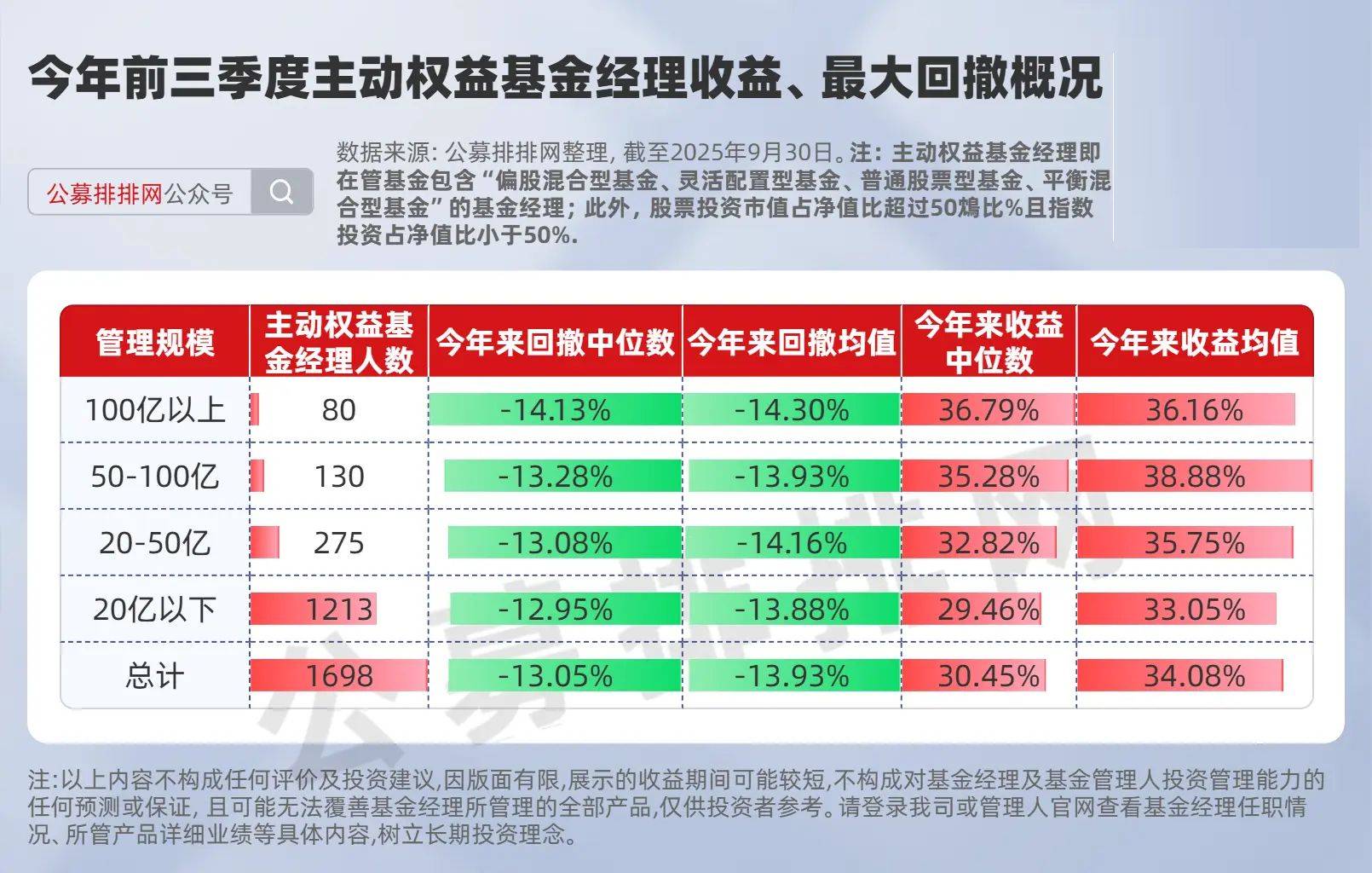
Core Viewpoint - The A-share market has shown a "slow bull" trend in the first three quarters of this year, with significant contributions from the TMT (Technology, Media, and Telecommunications) sector, particularly in AI, robotics, and semiconductors. Active equity fund managers who actively position in new directions have performed well, but the volatility in popular sectors and events like the "tariff shock" in early April have impacted their ability to manage drawdowns, affecting investor experiences [4]. Summary by Category Overall Performance of Active Equity Fund Managers - In the first three quarters of this year, there are 1,698 active equity fund managers with an average return of 34.08% and a median return of 30.45%. The average drawdown is -13.93%, with a median of -13.05% [4][5]. - Fund managers managing over 100 billion yuan have the highest median returns at 36.79%, but also face larger drawdowns [5]. Performance by Management Scale - **Over 100 Billion Yuan**: 80 managers, median return 36.79%, median drawdown -14.13%. Top performers include Zhang Wei from Huatai-PineBridge and Ge Lan from China Europe Fund, both heavily invested in the pharmaceutical sector [6][7]. - **50-100 Billion Yuan**: 130 managers, median return 35.28%, median drawdown -13.28%. Top performers include Zheng Ning from Zhongyin Fund, with a return of 95.01% [9][10]. - **20-50 Billion Yuan**: 275 managers, median return 32.82%, median drawdown -13.08%. Top performers include Dan Lin from Yongying Fund, with a return of 97.40% [13][14]. - **Below 20 Billion Yuan**: 1,213 managers, median return 29.46%, median drawdown -12.95%. Top performers include Wang Chao from Fortune Fund, with a return of 93.31% [16]. Notable Fund Managers - **Zhang Wei**: Achieved a return of 69.62% with a maximum drawdown of -10.01%, managing six funds [7][8]. - **Zheng Ning**: Focused on innovative drugs, achieving a return of 95.01% with a maximum drawdown of -13.06% [10][12]. - **Dan Lin**: Achieved a return of 97.40% with a maximum drawdown of -12.88% [14]. - **Zhao Longlong**: Managed to achieve a return of 62.08% with the smallest drawdown of -9.51% among his peers [15]. Investment Focus - Fund managers are increasingly focusing on sectors such as innovative pharmaceuticals and high-end medical devices, with a notable emphasis on the potential of Chinese innovative drugs in international markets [8][10].


创新药赛道再迎催化 两日5笔BD交易达成
Zhong Guo Zheng Quan Bao· 2025-10-19 01:20
Core Insights - The recent surge in Chinese innovative pharmaceuticals going global is marked by a series of significant business development (BD) transactions, indicating a collective effort in the industry rather than isolated breakthroughs [1][5][7] Group 1: Overseas Licensing Agreements - Hansoh Pharmaceutical signed a licensing agreement with Roche for HS-20110, receiving an upfront payment of $80 million, with potential milestone payments and royalties based on future sales [2] - AskGene Pharma, a subsidiary of Aosaikang, entered into a licensing agreement with Visara, securing an upfront payment of $7 million, with total transaction value reaching $96 million [2] - Pruijng announced a collaboration with Kite, receiving a total upfront payment of $120 million, with potential milestone payments up to $1.52 billion [3] - Valiant Biopharma established a global partnership with Dianthus, with an upfront payment of up to $38 million and total potential transaction value reaching $1 billion [3] - Haihe Pharmaceutical reached an exclusive licensing agreement with Japan's Daikyo Pharmaceutical for a PI3Kα inhibitor, which has already received orphan drug designation in Japan [4] Group 2: Market Trends and Drivers - A report from Zhongzheng Pengyuan indicates that the overseas licensing transaction amounts are expected to reach new highs in the first half of 2025, driven by factors such as patent expirations and ongoing R&D investments [5][6] - The Chinese pharmaceutical industry has undergone rapid transformation since the reform of drug approval systems in 2015, supported by government policies encouraging innovative drug development [5] - The trend of Chinese innovative drugs going global is primarily through BD models, with "license out" being the most common approach due to the high costs and uncertainties associated with independent overseas expansion [5][6] Group 3: Global Market Position - Chinese pharmaceutical companies have become one of the most active players in global business development, with approximately 50% of overseas licensing projects involving U.S. companies [7] - The increasing number and value of overseas licensing agreements reflect the global recognition of China's innovative drug development capabilities [7] - The trend of rising licensing revenues is expected to create a positive cycle of "R&D—licensing—reinvestment," providing financial support for ongoing innovation [7][8]



创新药赛道,再迎催化!两日5笔BD交易达成
Zhong Guo Zheng Quan Bao - Zhong Zheng Wang· 2025-10-18 14:55
Core Insights - The recent surge in Chinese innovative pharmaceuticals going global is marked by a series of significant business development (BD) transactions, particularly in the antibody-drug conjugate (ADC) sector, indicating a collective effort in the industry rather than isolated breakthroughs [1][5] Group 1: Recent Transactions - Hansoh Pharmaceutical signed a licensing agreement with Roche for HS-20110, receiving an upfront payment of $80 million, with potential milestone payments and royalties based on future sales [2] - AskGene Pharma, a subsidiary of Aosaikang, entered a licensing agreement with Visara for the innovative drug ASKG712, with an upfront payment of $7 million and a total transaction value of $96 million [2] - Pruijng reached a global collaboration with Kite, securing an upfront payment of $120 million and potential milestone payments up to $1.52 billion [3] - Valiant Biopharma announced a partnership with Dianthus for the dual-specificity fusion protein LBL-047, with a total potential transaction value of up to $1 billion [3] - Haihe Pharmaceutical established a licensing agreement with Japan's Daikou Pharmaceutical for a PI3Kα inhibitor, which has received orphan drug designation in Japan [4] Group 2: Market Trends and Drivers - A report from Zhongzheng Pengyuan indicates that the overseas licensing transaction amounts are expected to reach new highs in the first half of 2025, driven by factors such as patent expirations and ongoing R&D investments [5][6] - The Chinese pharmaceutical industry has undergone rapid transformation since the reform of drug approval systems in 2015, supported by government policies encouraging innovation [5] - The trend of Chinese innovative drugs going global is primarily through BD models, with "license out" being the most common approach due to the high costs and uncertainties associated with self-initiated overseas clinical trials [5] Group 3: Global Market Position - By 2025-2030, global pharmaceutical companies are projected to face a potential revenue loss of approximately $366 billion due to patent expirations, creating a demand for strategic partnerships and licensing agreements [6] - Chinese pharmaceutical companies have become one of the most active players in global BD, with around 50% of overseas licensing projects involving U.S. companies [7] - The continuous growth in licensing amounts and numbers reflects the global recognition of China's innovative drug development capabilities, transitioning from individual breakthroughs to collective global collaborations [7]
高收益+低回撤榜单来袭!百亿主动权益基金经理冠军赚近70%!
Sou Hu Cai Jing· 2025-10-17 10:13
Core Insights - The A-share market has shown a "slow bull" trend in the first three quarters of this year, with significant contributions from the TMT sector, particularly in AI, robotics, and semiconductors [1] - Active equity fund managers have performed well, but the volatility in popular sectors and events like the "tariff shock" in early April have impacted their ability to manage drawdowns [1] - The average return for active equity fund managers this year is 34.08%, with a median return of 30.45%, while the average drawdown is -13.93% and the median drawdown is -13.05% [1][3] Fund Manager Performance by Management Scale Over 100 Billion - Among the 80 active equity fund managers with over 100 billion in management scale, the median return is 36.79% and the median drawdown is -14.13% [3] - Notable fund managers include Zhang Wei from Huatai-PineBridge and Ge Lan from China Europe Fund, both heavily invested in the pharmaceutical sector [3][4] 50-100 Billion - In the 50-100 billion category, 130 fund managers have a median return of 35.28% and a median drawdown of -13.28% [8] - The top performer is Zheng Ning from Bank of China Fund, achieving a return of 95.01% with a maximum drawdown of -13.06% [9] 20-50 Billion - For managers with 20-50 billion in assets, the median return is 32.82% and the median drawdown is -13.08% [10] - The top three fund managers include Dan Lin from Yongying Fund, Jin Xiaofei from Penghua Fund, and Zhao Longlong from Morgan Fund [12] Below 20 Billion - In the category of managers with less than 20 billion, the median return is 29.46% and the median drawdown is -12.95% [15] - The top three fund managers are Wang Chao from Fortune Fund, Qi Zhen from Huabao Fund, and Liu Haixiao from Haifutong Fund [15]
罗氏锁定瀚森制药 创新药出海破浪
2 1 Shi Ji Jing Ji Bao Dao· 2025-10-17 05:09
Core Insights - The article highlights the strategic importance of business development (BD) for domestic innovative drug companies, exemplified by Hansoh Pharmaceutical's licensing agreement with Roche for HS-20110, a targeted antibody-drug conjugate (ADC) [2][3]. Group 1: Licensing Agreement Details - Hansoh Pharmaceutical signed a licensing agreement with Roche for HS-20110, granting Roche exclusive rights to develop and commercialize the drug globally, excluding mainland China, Hong Kong, Macau, and Taiwan [2]. - Hansoh will receive an upfront payment of $80 million, along with potential milestone payments and tiered royalties based on future sales [2]. - This agreement is part of a broader trend, as Hansoh has previously secured over $7 billion in license-out collaborations with companies like GSK and Merck [2]. Group 2: Market Implications - The partnership with Roche allows Hansoh to leverage Roche's extensive experience in antibody drug development and commercialization, addressing Hansoh's weaknesses in overseas channels [3]. - The ADC market is experiencing significant growth, driven by policy support, capital influx, and increasing demand, positioning companies with international perspectives and solid R&D capabilities to benefit [3]. Group 3: Financial Performance - Hansoh reported revenue of approximately 7.434 billion yuan, a year-on-year increase of about 14.3%, with sales from innovative drugs and collaborative products reaching approximately 6.145 billion yuan, up 22.1% [5]. - The revenue from innovative drugs and collaborative products accounted for about 82.7% of total revenue, indicating a strong performance in this segment [5]. Group 4: ADC Market Trends - The global ADC market is rapidly expanding, with the lung cancer ADC market projected to exceed $4 billion in 2024, and over $2.5 billion in sales in the first half of 2025 [8]. - As of October 2025, five ADC drugs have been approved for lung cancer treatment, marking a significant milestone in the field [8]. - The strong growth of the ADC market is attributed to its clinical advantages, combining antibody specificity with potent cytotoxic drugs to target cancer cells while minimizing damage to normal tissues [8]. Group 5: Future Outlook - The ADC market is expected to continue expanding, with Chinese ADC drugs gaining recognition globally since 2022-2023 [9]. - The market is still in a growth phase, with expectations for multiple product approvals in the coming years, highlighting the innovative capabilities of Chinese companies [9]. - The focus on new payloads and dual-target ADCs is anticipated to be a key area of development in the ADC industry [11].
罗氏锁定瀚森制药,创新药出海破浪
2 1 Shi Ji Jing Ji Bao Dao· 2025-10-17 04:43
Core Insights - The collaboration between Hansoh Pharmaceutical and Roche for HS-20110 marks a significant step in the strategic expansion of domestic innovative drugs, highlighting the importance of business development (BD) in the industry [1][2] - The ADC (antibody-drug conjugate) market is experiencing rapid growth, with increasing interest from both domestic and international pharmaceutical companies, indicating a shift towards innovative drug development in China [6][8] Company Summary - Hansoh Pharmaceutical has signed a licensing agreement with Roche for HS-20110, a targeted ADC, receiving an upfront payment of $80 million and potential milestone payments based on development progress [1] - This is not Hansoh's first major overseas licensing deal, having previously partnered with GSK, Merck, and Regeneron, totaling over $7 billion in license-out collaborations [1][2] - The company reported a revenue of approximately 7.434 billion yuan in the first half of 2025, a year-on-year increase of about 14.3%, with innovative drugs and collaborative product sales accounting for approximately 82.7% of total revenue [3] Industry Summary - The ADC market is projected to grow significantly, with the global lung cancer ADC market expected to exceed $4 billion by 2024, driven by the clinical advantages of ADCs [5][6] - The trend of increasing BD transactions in the Chinese pharmaceutical sector reflects a growing recognition of the value of innovative drugs, with a notable shift from "me-too" products to "first-in-class" and "best-in-class" assets [10][11] - The collaboration between Chinese pharmaceutical companies and multinational corporations is becoming more frequent, showcasing the international recognition of Chinese innovative drugs [8][10]
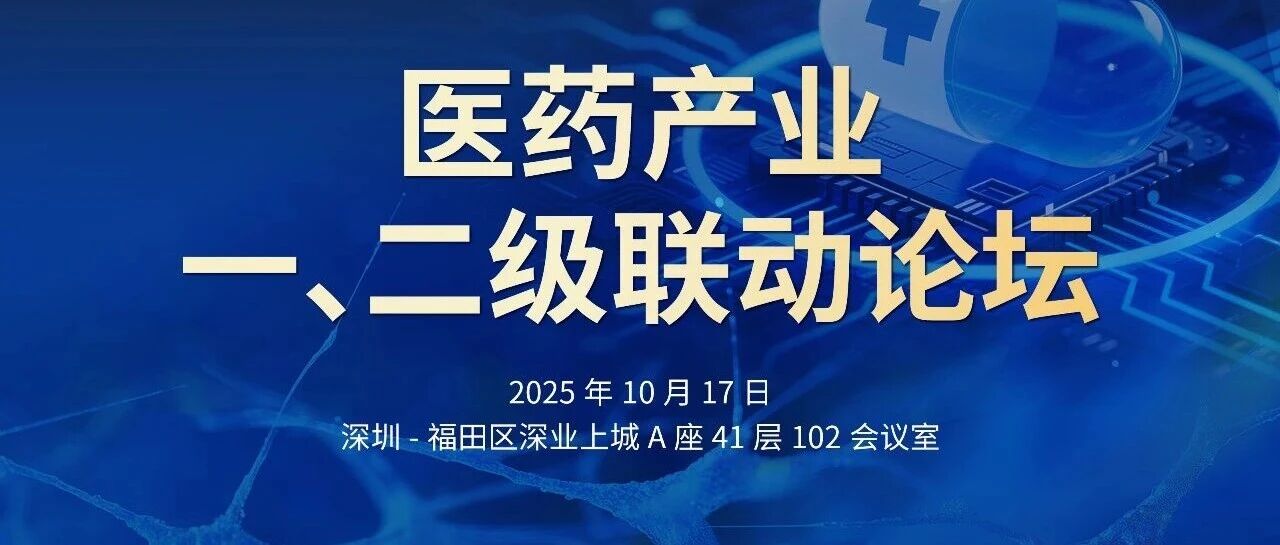
就在今天|国泰海通医药产业一、二级联动论坛
国泰海通证券研究· 2025-10-17 02:46
Group 1 - The core viewpoint of the article emphasizes the growing importance of innovative drugs in the global market, particularly focusing on the trend of Chinese innovative drugs going abroad [2]. - The forum discusses the increasing investment enthusiasm in dual antibodies, highlighting the global attention towards this area [2]. - The event features discussions on new trends in the development of Chinese innovative drugs from the perspective of angel investment [2].