
新旧动能转换

Search documents
上财报告:我国宏观经济基础仍然坚韧
Xin Hua Cai Jing· 2025-11-29 13:56
Group 1 - The core theme of the forum is "The 14th Five-Year Plan and the 15th Five-Year Plan: Innovation-Driven Growth Across Cycles," emphasizing the resilience of China's macroeconomic foundation with strong household demand, corporate motivation, and government capacity [1][3] - The report suggests that China can reshape its growth momentum through institutional innovation and structural optimization, transitioning from debt-driven to innovation-driven growth [1][3] - The "three 'has'" of China's macroeconomy—household demand, corporate motivation, and government capacity—form an internal logic chain for future economic recovery and transformation [3] Group 2 - Short-term policies should be stable and flexible to stabilize the real estate market and consumer confidence, while long-term growth relies on innovation to achieve economic rebalancing [3] - The current economic phase is characterized by a transition from the 14th to the 15th Five-Year Plan, facing global economic adjustments and domestic structural challenges [3] - A new development stage for China's economy is emerging, focusing on manufacturing and independent innovation, with national strategic security as a foundation [3][4] Group 3 - A comprehensive financial support system for technological innovation involves six stages, starting from fiscal funding and policy finance to guiding long-term capital investments [4] - The establishment of green channels for mature technologies will facilitate efficient exits for investments, promoting a virtuous cycle of early investment and reinvestment in innovation [4] - The Chinese capital market is expected to enter a phase of systematic valuation improvement, transforming high savings into innovation-driven growth, thereby supporting the construction of a modern industrial system [4]


7天破亿的AI大模型,量产人形机器,中国智造如何接棒房地产?
Sou Hu Cai Jing· 2025-11-29 08:41
Group 1 - The current market trend is driven by policy support, similar to historical events, indicating that the bull market may still have room to grow [1][3] - The 2024 market rally, referred to as the "9·24行情," saw the Shanghai Composite Index rise from 2600 to 3000 points in just six trading days, reflecting strong policy influence during an economic downturn [3][5] - Historical comparisons show that both the 1999 "5·19行情" and the current market rally are characterized by significant policy interventions aimed at boosting market confidence amid economic challenges [5][11] Group 2 - The current economic situation mirrors the transitional pains experienced from 1998 to 2000, with high reliance on real estate and a need for new economic drivers [9][17] - The real estate sector is facing significant challenges, with a projected 12% decline in real estate development investment in 2024, leading to negative growth in related industries [11][19] - Policies aimed at stabilizing asset prices, such as lowering mortgage rates and providing financing support to real estate companies, are crucial to breaking the cycle of deflation and restoring consumer confidence [11][13] Group 3 - The shift towards new economic sectors, particularly intelligent manufacturing, is gaining momentum, with significant government support expected to reach 500 billion yuan by 2025-2026 [15][17] - The proportion of new economy sectors in GDP is projected to exceed 35% by 2030, while the real estate sector's contribution is expected to decline significantly [17][19] - The emergence of AI, humanoid robots, and advanced manufacturing presents promising investment opportunities, while caution is advised regarding the risks associated with the real estate sector [19]

科源制药终止并购宏济堂 因市场环境变化
Zheng Quan Shi Bao Wang· 2025-11-28 13:36
Core Viewpoint - Koyuan Pharmaceutical has decided to terminate the issuance of shares for asset acquisition and related fundraising due to changes in the market environment, aiming to protect the long-term interests of all shareholders [1] Group 1: Termination of Acquisition - The board of Koyuan Pharmaceutical has approved the termination of the share issuance for acquiring 99.42% of Hongjitang for a consideration of 3.58 billion yuan and raising up to 700 million yuan in supporting funds [1] - The termination is described as a prudent decision to maintain the long-term interests of shareholders, with no significant adverse impact on the company's current operations [1] Group 2: Business Performance - For the first three quarters of the year, Koyuan Pharmaceutical reported revenue of 303 million yuan, a year-on-year decrease of 8.5%, and a net profit attributable to shareholders of 31.47 million yuan, down 20.7% [2] - The company's operating cash flow net amount was 27.24 million yuan, showing a year-on-year increase of 14.1% [2] Group 3: Strategic Developments - Koyuan Pharmaceutical's subsidiary, Linuo Pharmaceutical, has had its intelligent manufacturing project for injectables included in the list of major industrial projects for the province's new and old kinetic energy conversion in 2025 [2] - The intelligent manufacturing project, completed on September 28, covers an area of approximately 46,000 square meters and includes key areas such as quality inspection and R&D buildings, high-end injectable production workshops, and a comprehensive intelligent warehouse [2] - The project aims to leverage industrial internet, artificial intelligence, and big data technologies to create a comprehensive smart control system from R&D to production, meeting the standards of China GMP, US FDA, and EU GMP [2][3] Group 4: Future Outlook - Koyuan Pharmaceutical plans to use the inclusion of its project as an opportunity to increase innovation investment and empower industrial upgrades, contributing to the high-quality development of the pharmaceutical industry in Shandong Province [3]
万科债券展期,房地产市场何去何从
Sou Hu Cai Jing· 2025-11-28 11:11
Group 1 - Vanke, a leading real estate company, is seeking to extend a 2 billion yuan medium-term note due to credit risk concerns, indicating a potential decline in its bond and stock prices in the short term [1] - As of October 30, Vanke has repaid 28.89 billion yuan in public debt, while its largest shareholder, Shenzhen Metro Group, has provided 29.13 billion yuan in loans, highlighting the ongoing credit risk despite efforts from both the company and state-owned shareholders [1] - The extension of Vanke's debt reflects broader challenges in the real estate market, raising questions about the effectiveness of policies aimed at stabilizing the sector [1] Group 2 - The overall state of the real estate market remains poor, with a 6.8% year-on-year decline in sales area and a 9.6% drop in sales revenue for the first ten months of 2025, indicating a significant downturn [2] - The inventory digestion period has reached a historical high of 30 months, particularly severe in third and fourth-tier cities, suggesting a lack of market recovery [2] - Despite over 4 trillion yuan in white list loans and 300 billion yuan in special loans for project completion, market responses have been increasingly muted [2] Group 3 - From a macroeconomic perspective, increasing support for the real estate market is deemed necessary to prevent a prolonged downturn, as historical lessons from Japan's real estate bubble suggest the need for a swift transition of resources away from traditional sectors [3] - Housing prices have been declining for nearly four years, with some regions experiencing drops of over 40%, indicating that the market may be nearing a bottom [3] - The significant proportion of housing in household assets (nearly 60%) suggests that declines in housing value could severely impact consumer spending and confidence [4] Group 4 - Proposed solutions for rescuing the real estate market include stabilizing developers through various financial mechanisms, which may inadvertently lead to increased inventory and hinder market clearing [6] - Other suggestions focus on stimulating market activity through measures like lowering mortgage rates and removing purchase restrictions, although past efforts have shown limited long-term effectiveness [7] - A third approach emphasizes stabilizing prices as a core variable to change market expectations, though practical implementation remains challenging [7] Group 5 - To stabilize the real estate market, indirect and market-oriented measures are recommended, such as signaling supply reductions and establishing a housing stability fund to manage market fluctuations [8] - The upcoming Central Economic Work Conference in December is expected to address the need for continued efforts to stabilize the real estate market, with a focus on breaking the negative cycle of declining expectations and prices [9] - The real estate market's performance in 2026 will likely depend on external policy interventions to address supply-demand imbalances and improve market activity [9]

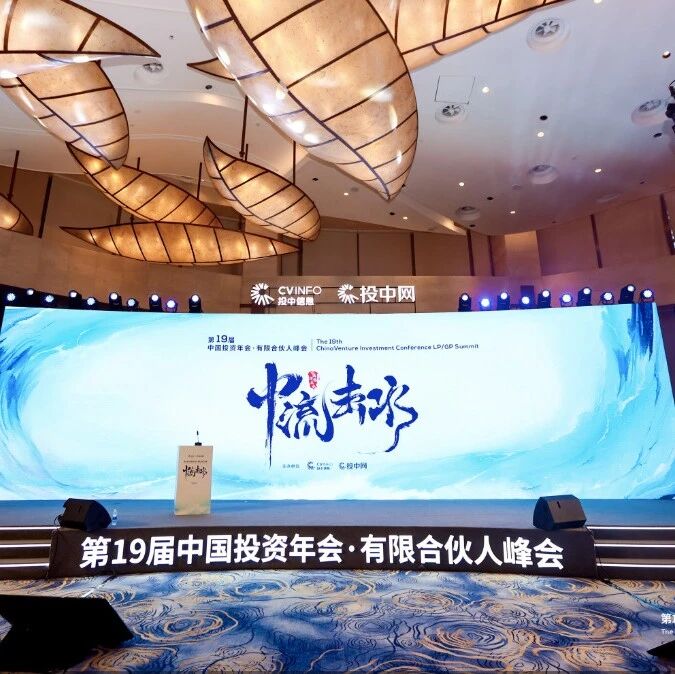
第19届中国投资年会·有限合伙人峰会在沪成功举办
投中网· 2025-11-28 06:54
Core Insights - The conference theme "Paddling in the Middle Stream" reflects the industry's recognition of deep changes in the primary market, emphasizing the need to accumulate strength for future progress [3] - The event gathered influential figures from various sectors, highlighting the importance of cross-capital collaboration and the evolving landscape of investment opportunities [3] Group 1: Market Trends and Insights - The CEO of 投中信息, Yang Xiaolei, indicated that the industry is at a turning point with improved sentiment and data, but it is unlikely to return to previous highs. He noted that state-owned capital now constitutes 75%-80% of market funding, acting as a stabilizing force [6] - Guo Xinyu, Chief Economist at Guo Xin Securities, discussed the transition period of China's economy, facing challenges like deflation and insufficient domestic demand, while policy support is aiding market recovery. He predicts that by 2026, multiple driving forces, especially in technology, will enhance market returns [8] - Qiu Zhongwei, Chairman of Taikang China, highlighted the growth potential of China's M&A funds, which focus on cash flow and operational management, and are expected to increase their market share to international levels [10] Group 2: Sector-Specific Developments - Jie Xiaoyong, President of Industrial Investment at Sunshine Power, emphasized the long-term potential of the renewable energy sector, particularly in solar and storage, and the importance of industrial mergers for competitive growth [12] - Xu Yirong, Vice President of Shanghai Guotou, discussed the company's innovative fund management practices and its focus on supporting long-term projects through a comprehensive fund matrix [14] - Lu Shengdong from ICBC Investment shared insights on AIC's investments in hard technology and strategic emerging industries, emphasizing a long-term and value-driven investment approach [16] Group 3: Historical Context and Future Directions - The conference featured discussions on the newly published book "History of Venture Capital in China," which chronicles the evolution of the venture capital industry over the past two decades, providing insights into key institutions and events that shaped the market [22] - The "2025 Annual Limited Partner List" was released, showcasing significant awards and rankings that reflect the dynamics of China's private equity market, serving as a reference for institutional positioning and strategy [23] - The event concluded with a call for continued collaboration and innovation in the private equity sector, aiming to drive sustainable growth and value creation in the future [24]
国信证券荀玉根:智能制造的发展潜力有望提高未来中国股市的回报中枢
Zhong Zheng Wang· 2025-11-28 06:00
据了解,本次大会以"中流击水"为主题,聚焦当下一级市场正在经历的深度变化。大会汇聚了荀玉根, 太盟中国董事长邱中伟,前海方舟董事长靳海涛,上海国投副总裁许业荣,阳光电源(300274)产业投 资总裁、阳电资本董事长解小勇,工银资本董事长陆胜东等多位行业嘉宾。 中证报中证网讯(记者王辉)11月27日,投中信息和投中网主办的第19届中国投资年会.有限合伙人峰会在 上海举行。国信证券首席经济学家、研究所所长荀玉根在本次大会上发表主题演讲时表示,智能制造的 发展潜力和高ROE行业的成长,有望提高未来中国股市的回报中枢。 结合历史经验,荀玉根判断,当前市场处于长期上行趋势的中期,基本面逐步改善,科技类行业仍 有"扩散空间",而智能制造的发展潜力和高ROE(净资产收益率)行业的成长,有望提高未来中国股市的 回报中枢,为资本市场和经济长期发展奠定基础。 荀玉根在"希望的田野——中国经济和资本市场展望"的主题演讲中,对中国经济和资本市场进行了深入 分析。荀玉根表示,当前中国经济正处于新旧动能转换期,面临内需不足等挑战,但政策持续宽松推动 股市回暖,为消费和投资信心提供支撑。展望2026年,宏观政策、外部环境和科技创新将形成多 ...

10月份中国经济呈现出稳中有进的态势,完成全年经济发展预期目标具备较多有利条件
Zhong Guo Fa Zhan Wang· 2025-11-28 03:30
2025年11月14日,国务院新闻办新闻发布会例行发布2025年三季度经济数据。总体而言,中国经济交出 了一份总体平稳的成绩单。国家统计局数据显示,当月规模以上工业增加值同比增长4.9%,环比增长 0.17%;社会消费品零售总额同比增长2.9%,环比增长0.16%;全国城镇调查失业率为5.1%,比上月下 降0.1个百分点;全国居民消费价格指数(CPI)同比上涨0.2%(上月为下降0.3%),环比上涨0.2%。 这些指标表明,在复杂多变的国际环境和国内结构调整的双重压力下,中国经济在10月份继续展现出了 较强韧性。笔者认为,整体回顾2025年前三季度的表现,国内生产总值同比增长5.2%,为实现全年预 期目标奠定了坚实基础,全年经济增长目标实现在即。 从10月份我国经济运行的基本情况来看,生产端保持稳定、新动能持续壮大是显著特点。10月份,工业 生产保持稳定增长态势:全国规模以上工业增加值同比增长4.9%,环比增长0.17%。分门类看,采矿 业、制造业以及电力、热力、燃气及水生产和供应业均实现平稳增长,分别增长4.5%、4.9%和5.4%。 同时,产业结构优化和升级的趋势正在持续显现,其中装备制造业和高技术制造业 ...
国信证券首席经济学家荀玉根:牛市远未结束
经济观察报· 2025-11-28 02:13
Core Viewpoint - The current bull market is still in its early stages, drawing parallels to the historical "5·19 market," which lasted two years with a 120% increase before policy withdrawal ended it. Current economic pressures and low CPI indicate that policy support is still needed [2][3]. Group 1: Market Analysis - The current bull market is expected to last 1-2 years, with signs indicating it is still early in the cycle. Characteristics typical of a late bull market, such as a surge of new investors and overconfidence among existing investors, have not yet emerged [2][3]. - The Shanghai Composite Index has reached a 10-year high despite a challenging macroeconomic environment, suggesting a disconnect between stock market performance and economic fundamentals [3]. Group 2: Economic Context - The Chinese economy is experiencing "growing pains" during its transition, reminiscent of the period from 1998 to 2000, characterized by overcapacity in traditional industries and a downturn in real estate [3]. - Real estate constitutes 60% of household wealth in China, with property prices in first-tier cities dropping by 30%-50%. For instance, property values in Shanghai have decreased by 35%, leading to significant wealth erosion for residents [3]. Group 3: Policy Implications - To reverse the trend of declining asset prices, policy intervention is crucial. Historical precedents show that timely policy measures can lead to rapid market recoveries, as seen in the "5·19 market" and the "9·24 market" [4]. - The external environment is shifting, with the Federal Reserve entering a rate-cutting cycle, which could provide more room for domestic policy easing in China [4]. Group 4: Future Outlook - The emergence of new economic sectors, particularly in intelligent manufacturing, is becoming evident. Innovations such as the DeepSeek-R1 model and humanoid robots are setting the stage for a significant industrial upgrade [5]. - China's manufacturing sector is benefiting from a large pool of graduates and engineers, which enhances its cost advantages and positions it for a successful transition from old to new economic drivers [5].

华泰证券今日早参-20251128
HTSC· 2025-11-28 01:49
Macro Insights - In October 2025, industrial enterprises' profits fell to -5.5% year-on-year from 21.6% in September, while revenue growth also declined to -3.3% from 3.1% [2] - The cash flow of industrial enterprises continues to improve, with cash and short-term investments rising to 5.3% year-on-year in September from 5% in August [2] Fixed Income Analysis - The report discusses the transition of China's economy into a new phase of old and new driving forces, emphasizing the need for a new framework for fundamental analysis [2] Consumer Sector Strategy - The real estate cycle, particularly changes in real estate prices, is crucial for assessing the recovery of consumption in 2026, with expectations of structural stabilization in housing prices [3] - The current allocation and valuation of the essential consumer sector are at historical lows, indicating a high probability of a bottoming out, suggesting opportunities for investment [3] Aerospace and Defense - The report highlights the advancements in reusable rocket technology, with China actively developing rockets like Zhuque-3 and Long March 12A, which are expected to enhance space transportation capacity and reduce costs [5] - The success of reusable rockets is anticipated to accelerate the construction of large satellite constellations, particularly in satellite internet [5] Company-Specific Insights - BOSS Zhipin (2076 HK) is rated "Buy" with a target price of 107.6 HKD, benefiting from its leading position in online recruitment and expected steady profit growth [6] - Advantest (6857 JP) is also rated "Buy" with a target price of 23,000 JPY, poised to benefit from the increasing complexity of AI chips and the growth of the semiconductor testing market [6] - Gaotu Group (GOTU US) reported a revenue of 1.58 billion CNY for Q3 2025, a year-on-year increase of 30.7%, with a focus on improving profitability through AI technology [9] - Atour (ATAT US) achieved a revenue of 2.628 billion CNY in Q3 2025, reflecting a year-on-year growth of 38.4%, with a strong outlook for both hotel and retail segments [10] - Zhongjiao Holdings (839 HK) reported a revenue of 7.363 billion CNY for FY25, indicating a year-on-year growth of 11.9%, transitioning towards a focus on internal growth and value enhancement [10]


深刻认识山东经济动能强劲的内在逻辑
Da Zhong Ri Bao· 2025-11-28 01:05
Core Viewpoint - Shandong's economic strength is attributed to multiple advantages, strategic guidance, and enhanced internal dynamics, reflecting a deep internal logic that supports its robust economic performance [2][6]. Group 1: Political Leadership - The comprehensive leadership of the Party is fundamental to the strong economic momentum, with the central government optimizing macro policies and providing guidance for local development [2][3]. - Shandong's government aligns closely with the central government's strategies, ensuring effective responses to economic fluctuations and promoting stable growth [2][3]. Group 2: Strong Real Economy - The solid foundation of the real economy serves as a stabilizing force, with Shandong leveraging its diverse industrial base to focus on the development of the real economy [3][4]. - The province emphasizes the importance of advanced manufacturing and the integration of digital and real economies to enhance industrial stability [3]. Group 3: New and Old Momentum Conversion - Continuous conversion between new and old economic drivers is crucial, with Shandong actively eliminating outdated capacities and fostering new growth areas [4][5]. - The province is undergoing a significant transformation, optimizing traditional industries while nurturing emerging sectors like high-end equipment and quantum technology [4]. Group 4: Innovation Leadership - Innovation is identified as the primary driver of economic momentum, with Shandong prioritizing technological advancements and the establishment of high-level innovation platforms [5][6]. - The province is witnessing a shift from resource-driven to innovation-driven development, significantly enhancing its growth potential [5]. Group 5: Geographic and Open Economy Advantages - Shandong's strategic geographic location facilitates extensive connectivity and trade, enhancing its economic dynamism [5][6]. - The province's open economic framework allows it to efficiently gather global resources, maintaining a leading position in import and export activities among northern provinces [5][6]. Group 6: Implementation of New Development Concepts - Shandong's economic dynamics reflect the effective implementation of new development concepts, showcasing the province's commitment to high-quality growth and national development goals [6].